Agapanthus — Flowering Perennial With Tall Flower Stems

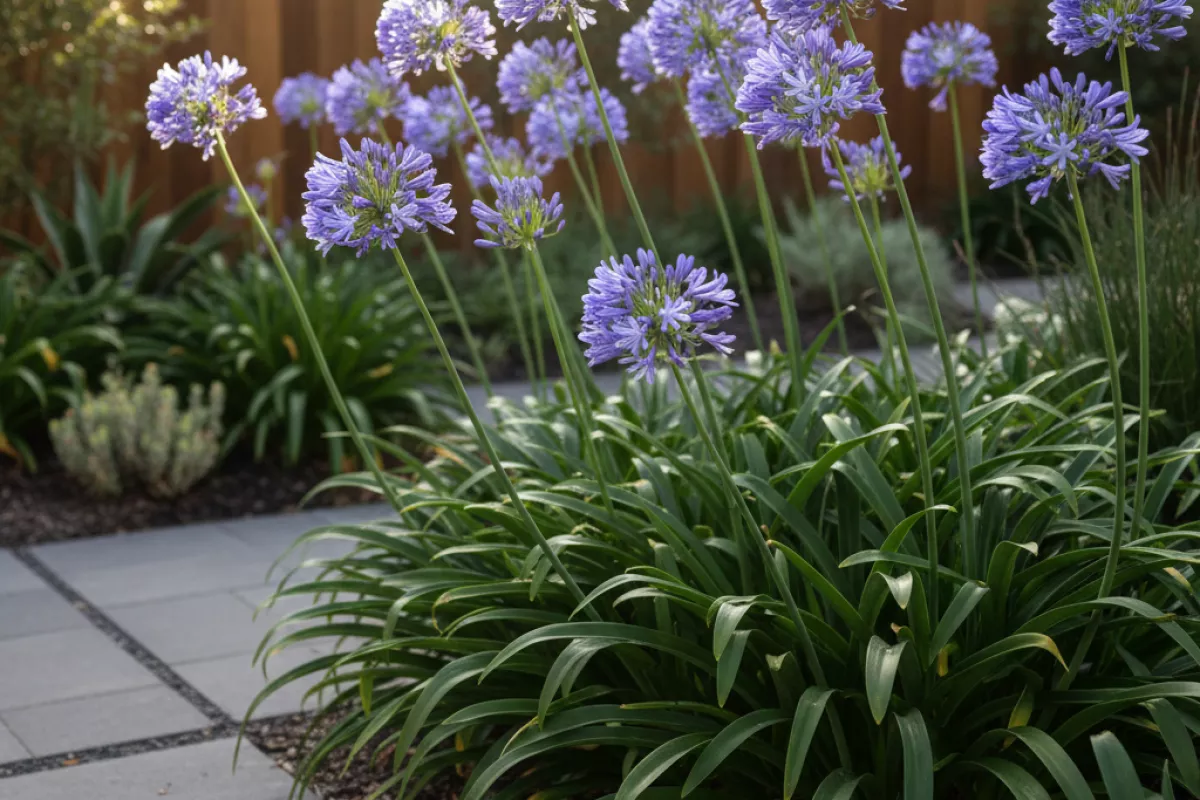 Covers Agapanthus basics: ornamental features, native habitats, and how leaf clumps and tall bloom stalks grow. Explains light, soil drainage, watering balance, temperature needs, routine maintenance, propagation by division or seed, the seasonal flowering cycle, and common pests or stress symptoms.
- Agapanthus overview and ornamental features
- Native habitats and natural range
- Leaf clumps and tall bloom stalks
- Light exposure for strong Agapanthus flowering
- Soil drainage and Agapanthus watering balance
- Temperature tolerance and Agapanthus climate needs
- Routine maintenance for perennial health
- Propagation through division or seed
- Seasonal flowering cycle
- Common Agapanthus pests and stress symptoms
Agapanthus is a dependable perennial that sends up tall, upright stems topped with blue or white flower clusters, making it ideal for borders and containers. Learn how to choose the right spot for strong flowering, water and feed it without overdoing it, and protect it in winter so clumps stay healthy, vigorous, and reliably bloom year after year in a wide range of gardens.
Agapanthus overview and ornamental features
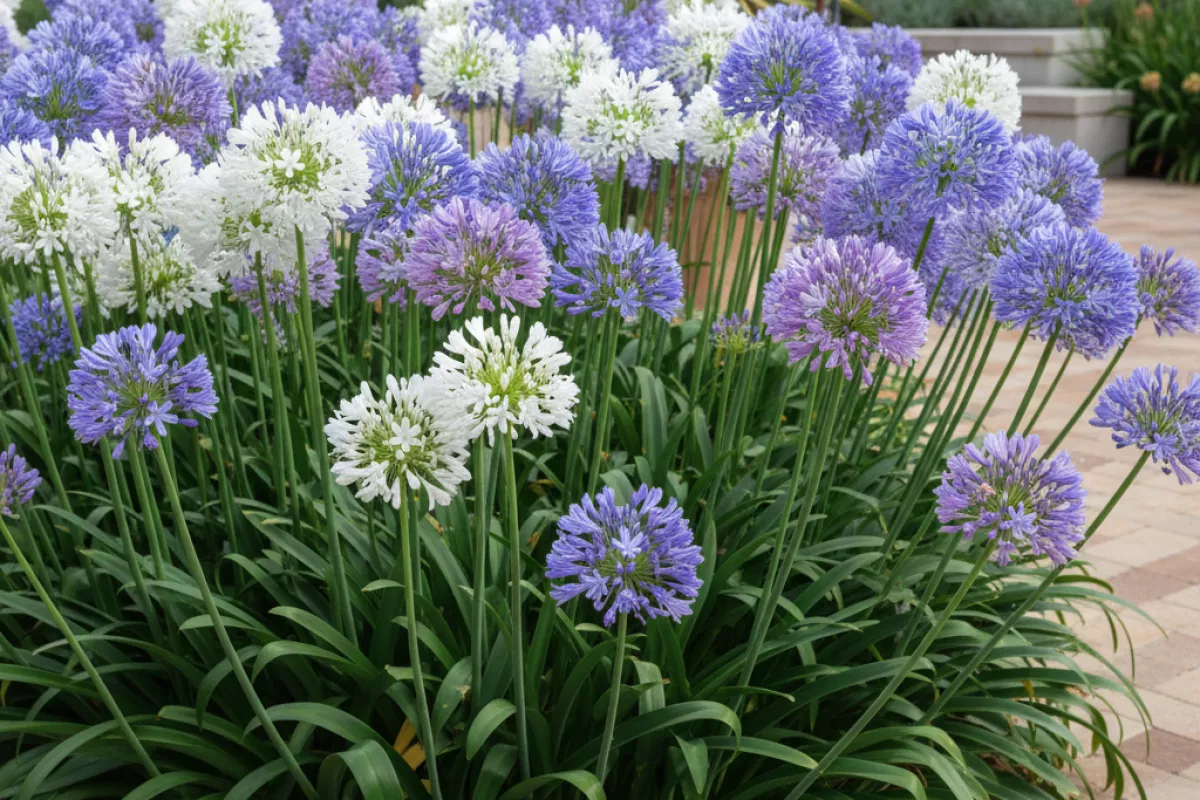
This clump-forming perennial is grown for its clean, strap-like foliage and the way its flowers rise well above the leaves on sturdy, upright stems. The overall look is architectural rather than fussy: a fountain of green at the base, topped by rounded clusters of blooms that read clearly from a distance.
Flowering typically happens in summer, with each stem carrying a globe-like umbel made up of many small, tubular blossoms. Depending on the selection, the palette runs from white through pale blue to deep violet, often with subtle striping. Even after peak bloom, the seed heads can add a dry, sculptural note if you leave them in place.
- Form and habit: Dense clumps that slowly expand, creating a reliable outline for borders and mixed beds.
- Foliage interest: Narrow, arching leaves provide texture from spring to autumn; in mild climates some types stay evergreen.
- Flower display: Tall stems lift the blooms above neighboring plants, making them useful as vertical accents and for repeating rhythm along a path.
- Color and contrast: Cool-toned flowers pair easily with silvers, whites, and warm summer colors without looking busy.
- Cut-flower value: Stems are commonly used in vases because the umbels hold their shape and read as a single, bold element.
Size varies by cultivar, but many garden forms flower on stems around 60–100 cm (24–39 in) tall, with clumps spreading roughly 45–75 cm (18–30 in) over time. That scale makes it easy to tuck into mid-border positions, where the leaves cover the ground while the blooms float above lower perennials, working especially well alongside other border plants for full sun.
In design terms, it works well as a repeating “anchor” plant: the foliage mass keeps the planting from looking sparse, while the flower stems add height without the heaviness of shrubs. Used in groups, the rounded heads create a calm, cohesive pattern; used singly, they act like punctuation among finer-textured plants.
Native habitats and natural range
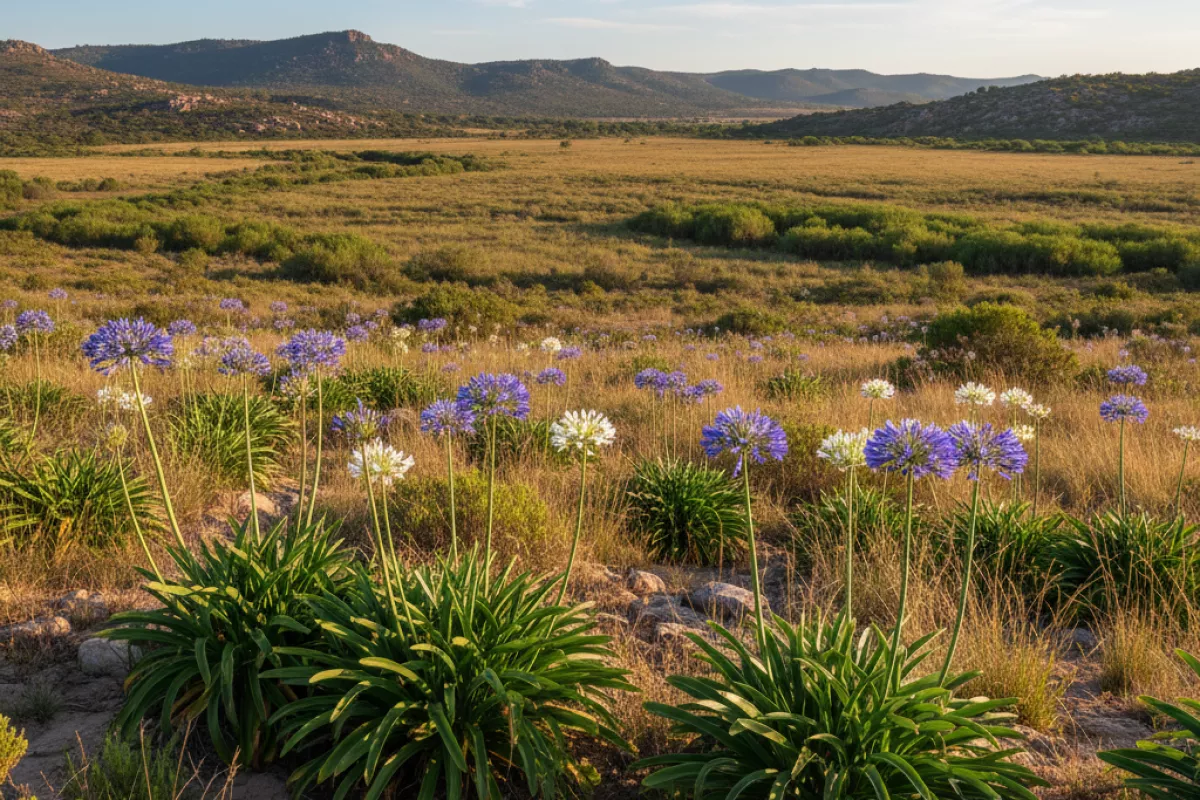
Agapanthus comes from southern Africa, where it grows in open, sunny places that swing between wet and dry seasons. In the wild, these perennials often sit at the edge of grasslands or on slopes where water drains away quickly, then surge into growth when rains return.
Most species are associated with South Africa’s coastal and inland regions, including areas with mild, frost-light winters and warm summers. Some forms are evergreen in climates that stay relatively even, while others die back and rest when conditions turn cool or dry.
- Typical settings: grassland margins, rocky hillsides, stream banks, and open scrub where light is abundant.
- Soils they cope with: well-drained sands and loams, plus shallow, stony ground; they’re less happy in persistently waterlogged sites.
- Moisture pattern: periods of regular rainfall followed by drier stretches, which encourages strong root and rhizome storage.
- Elevation range: from near sea level up into upland areas; exact tolerance varies by species and local ecotypes.
Because the plants store energy in thickened roots and rhizomes, they handle seasonal stress better than many soft-stemmed ornamentals. That background explains why established clumps can keep flowering through warm, bright weather, yet still tolerate short dry spells once rooted in.
Outside its original range, agapanthus has been planted widely in Mediterranean-type climates and other mild regions. In some places it can escape gardens and naturalize, especially where winters are not severe and soils stay on the drier side rather than saturated.
Leaf clumps and tall bloom stalks
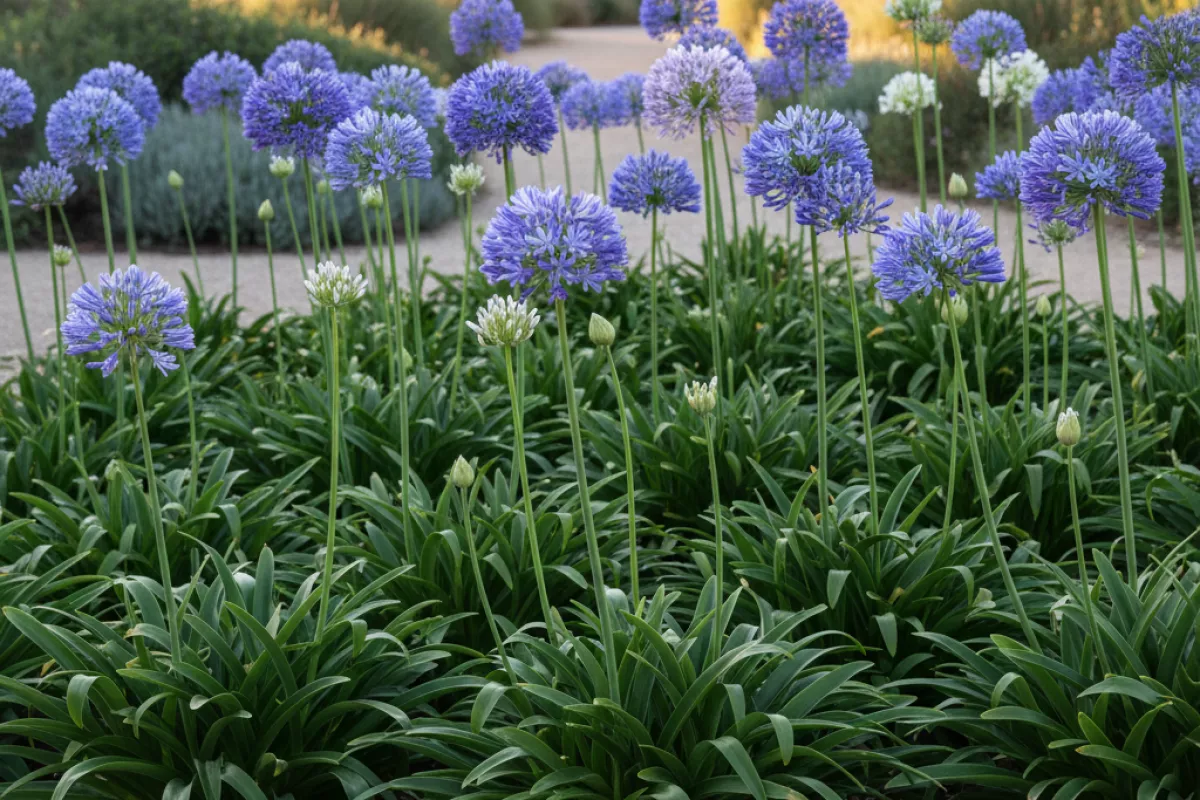
The plant’s structure is easy to read once you know what you’re looking at: a dense base of strap-like foliage and, in season, upright stems that rise above it to carry the flower heads. That contrast is part of why agapanthus looks tidy even when it’s not in bloom.
The foliage forms a rounded mound from the crown, with leaves typically arching outward rather than standing stiffly upright. Depending on the variety and growing conditions, the leafy mass often sits around 30–60 cm (12–24 in) tall, while the overall spread can reach 45–90 cm (18–35 in). In mild climates, evergreen types keep their leaves through winter; deciduous types die back and return from the crown when temperatures warm.
- Leaf texture and shape: Smooth, strap-like blades that can be narrow or broad; older leaves may bend and drape at the edges of the clump.
- How clumps expand: New fans emerge from the crown and rhizomes, gradually widening the mound; crowded plants can look vigorous but may bloom less until divided.
- Seasonal appearance: In cool weather, foliage may show tip browning or minor splitting; trimming only the damaged ends keeps the plant neat without stressing it.
Flowering stems (scape-like stalks) rise cleanly from the center of the plant and usually stand well above the leaves. Many cultivars send up stalks around 60–120 cm (24–47 in), and the stems are generally leafless, which gives the blooms a floating, architectural look. Each stalk ends in a rounded umbel made up of many small, tubular flowers.
| Feature | What to expect |
|---|---|
| Base growth | Dense foliage mound from a crown; gradually enlarges by rhizomes and offsets |
| Typical foliage height | About 30–60 cm (12–24 in), depending on cultivar and light |
| Bloom stem height | Commonly 60–120 cm (24–47 in); taller in rich soil with consistent moisture |
| Stem behavior | Mostly leafless, upright, and sturdy; may lean in shade or strong wind |
| After flowering | Seed heads can form; stalks can be cut back to the base once blooms fade |
If your plant produces lots of leaves but few stalks, it’s often a spacing or light issue rather than a health problem. A clump that’s packed tight in a pot, or shaded for much of the day, may prioritize foliage. Giving it more sun, dividing an overgrown crown, and avoiding excessive nitrogen can shift energy back toward tall bloom stems.
Light exposure for strong Agapanthus flowering
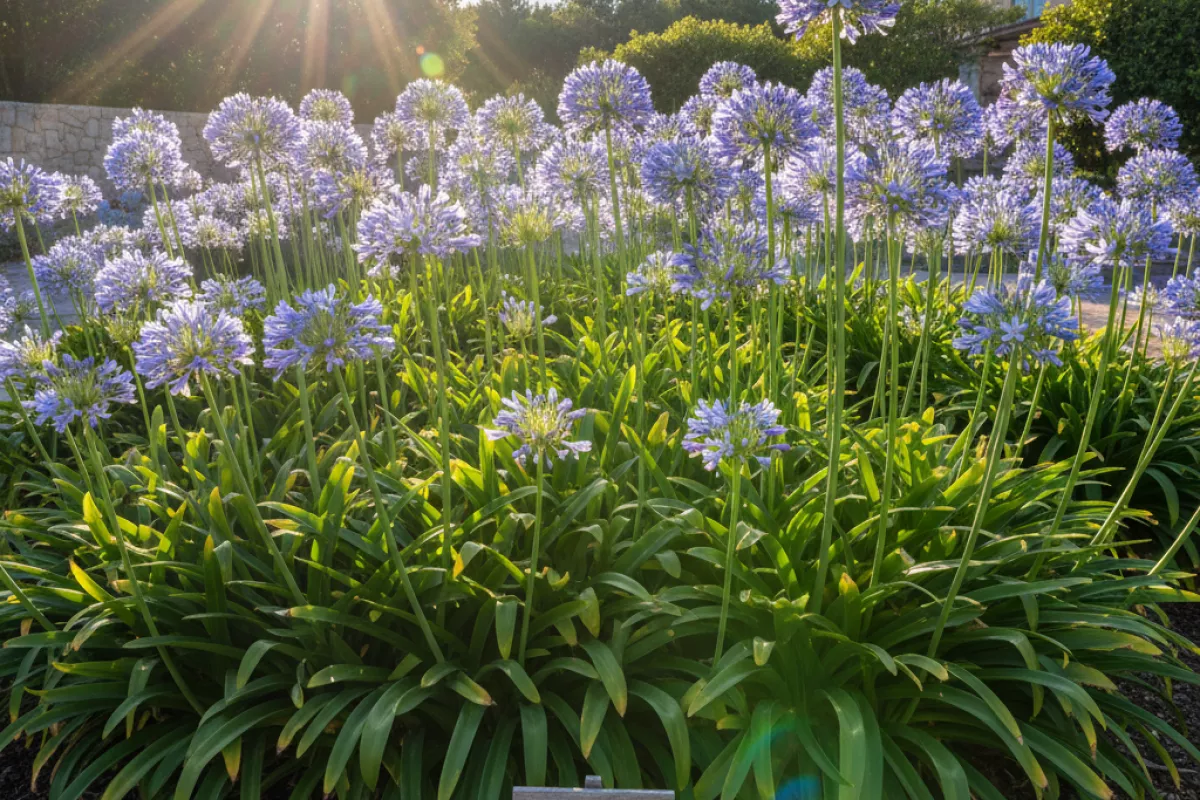
More sun usually means more blooms. Agapanthus can survive in partial shade, but flower stems are typically taller, sturdier, and more numerous when the plant gets long, bright days—especially in the weeks leading up to bud formation.
Aim for a spot with at least 6 hours of direct sun per day. In cooler regions, full sun all day is often ideal. In hot-summer climates, a little protection from intense afternoon sun can prevent leaf scorch without sacrificing flowering.
- Best overall: Full sun to light shade. Morning sun with some afternoon shade works well where summers are very hot.
- Too much shade: Lush leaves but fewer (or no) flower heads; stems may lean as they stretch toward light.
- Too much harsh sun + heat: Leaf tips can brown, and the plant may pause growth during heat stress; consistent watering helps, but relocating to a slightly gentler exposure can make a bigger difference.
| Exposure | What you’ll likely see | How to adjust for better flowering |
|---|---|---|
| Full sun (6–8+ hours) | Most reliable bloom, stronger stems, tighter clumps | Keep soil evenly moist during active growth; mulch 5 cm (2 in) to reduce heat swings |
| Morning sun + afternoon shade | Good flowering with less leaf scorch in hot areas | Choose bright, open shade (not deep shade under dense trees) |
| Bright partial shade (3–5 hours sun) | Some blooms, often later and fewer | Move to a sunnier position or thin overhead branches to increase direct light |
| Deep shade (under eaves/evergreens) | Strong foliage, weak or absent flowering | Relocate or container-grow and shift to a sunnier patio during spring and early summer |
If you’re growing agapanthus in pots, use the mobility to your advantage: place containers in the sunniest spot from spring through early summer, then shift them slightly if heat becomes extreme. A simple rule is to prioritize bright light during the period when flower stalks are being initiated; later, the plant tolerates a bit more shade without losing already-set buds.
Soil drainage and Agapanthus watering balance
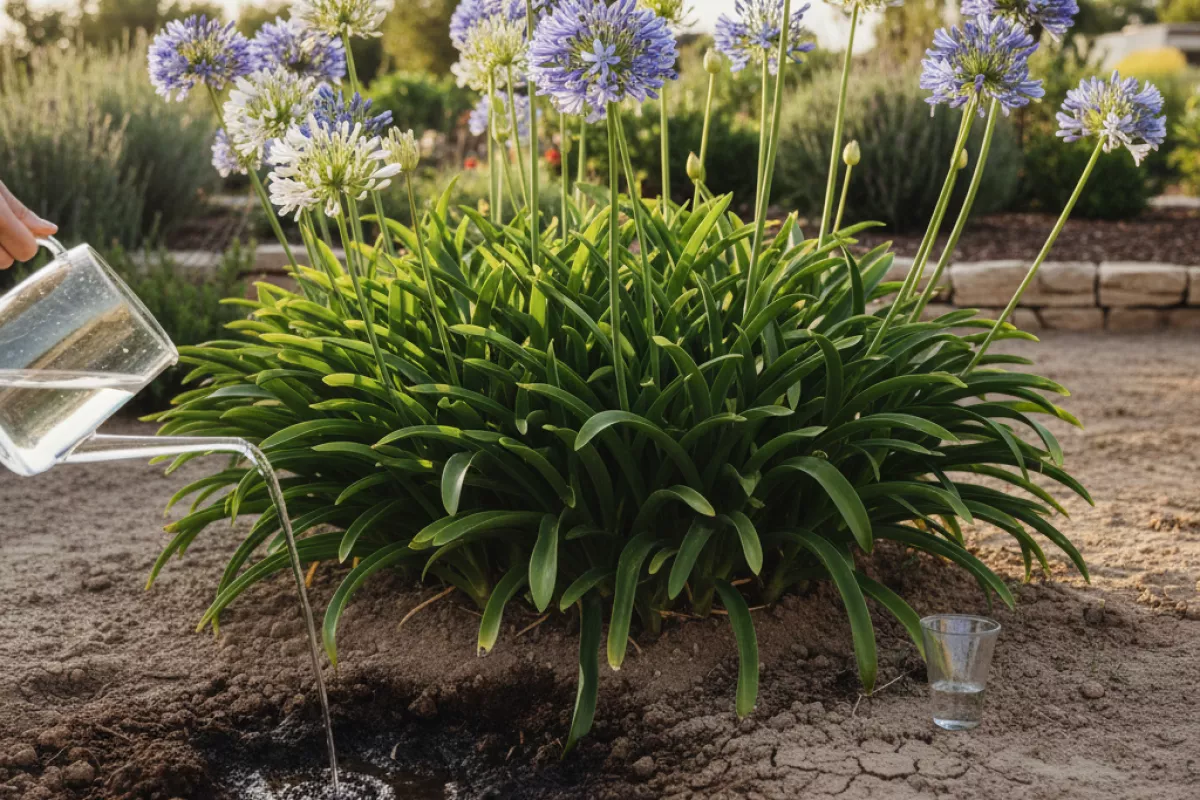
Healthy agapanthus comes down to one practical pairing: roots that can breathe and watering that matches the season. These plants tolerate short dry spells, but they resent sitting in soggy soil, which quickly leads to weak growth and root rot.
Start by checking how fast your planting area drains. After a thorough soak, the top layer should begin to dry within 24–48 hours, and the root zone should not stay wet for days. If water puddles or the soil feels sticky and airless, improve structure before increasing irrigation.
- In-ground soil: Aim for a loose, crumbly mix. If you have heavy clay, work in coarse mineral material (grit or sharp sand) and organic matter so water moves through instead of pooling.
- Containers: Use a free-draining potting mix and a pot with unobstructed drainage holes. A saucer is fine, but don’t let the pot sit in collected water after watering.
- Mulch: Keep mulch a few cm (1–2 in) back from the crown so the base stays drier and better ventilated.
| Situation | What you’ll notice | Likely cause | What to do next |
|---|---|---|---|
| Leaves flop and look dull, soil is dry | Tips may brown; flower stems can be shorter | Underwatering during active growth | Water deeply, then let the top 2–5 cm (1–2 in) dry before the next soak |
| Yellowing leaves with soft bases, soil stays wet | Slow growth; sometimes a sour smell | Poor drainage or overwatering | Reduce watering, improve drainage, and consider lifting/replanting into a freer mix |
| Lots of leaves, few flowers | Plant looks lush but blooms are sparse | Too much water and/or nitrogen, low light | Water less once established, avoid high-nitrogen feeds, and ensure strong sun exposure |
| Container dries out very fast in heat | Wilting midday, rebounds at night | Root-bound pot or small container volume | Water in the morning; repot after flowering into a slightly larger pot with fast drainage |
As a rule, water more often while the plant is pushing leaves and flower stalks, then ease off once blooming finishes. In cooler months, especially below about 10°C (50°F), keep soil only lightly moist; cold and wet together are the most common trigger for root problems.
A simple habit helps prevent mistakes: learn when to water based on soil moisture at root level before you irrigate. If the soil is still cool and damp 5–8 cm (2–3 in) down, wait. If it’s dry at that depth, a slow, deep watering is better than frequent splashes that only wet the surface.
Temperature tolerance and Agapanthus climate needs
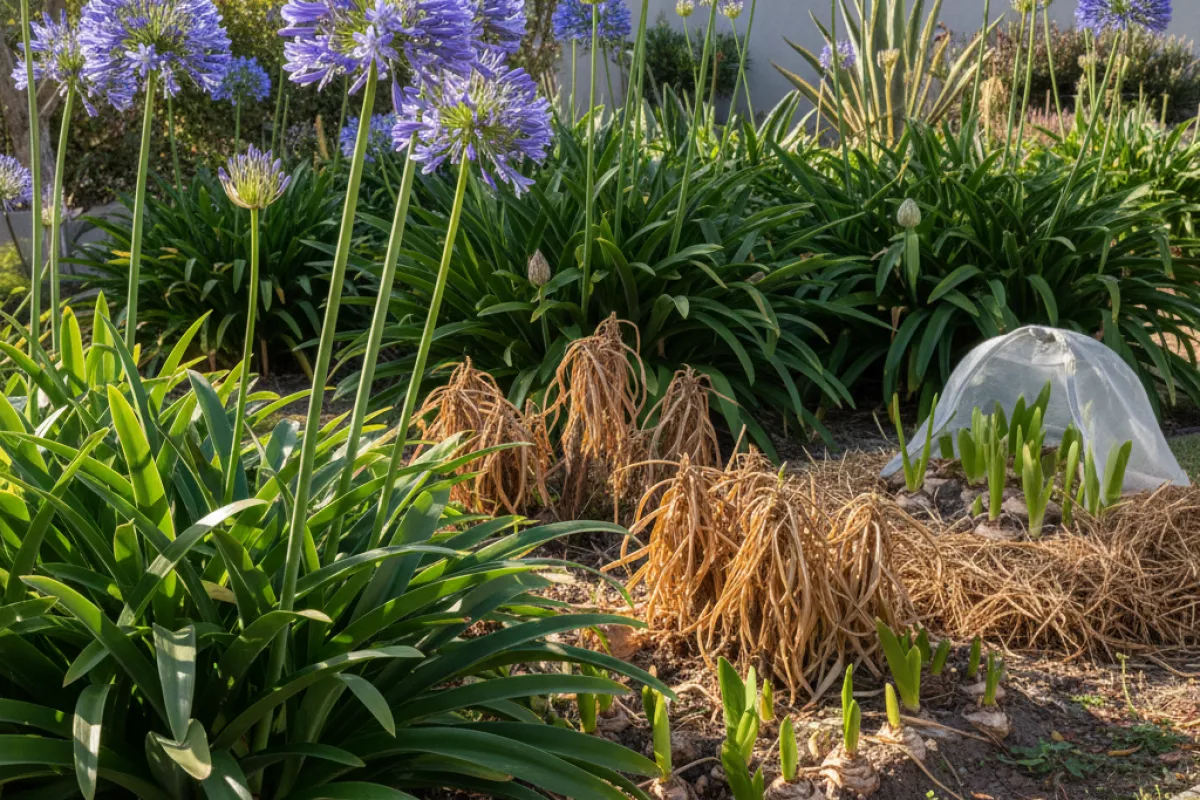
Agapanthus handles a wide range of conditions, but it performs best when you match the plant type to your winters. Evergreen forms prefer mild, frost-free weather, while deciduous types cope with colder seasons by dying back and resprouting when warmth returns. In most gardens, the main risks are prolonged freezing, winter wet around the crown, and sudden late frosts that catch new shoots.
| Situation | What Agapanthus prefers | What to do if your climate differs |
|---|---|---|
| Summer heat and sun | Full sun for best flowering; tolerates light shade in hot regions | In very hot areas, give afternoon shade and water deeply when the top 5 cm (2 in) dries out |
| Cool summers | Warmth helps bud formation and tall stems | Plant in a sheltered, south-facing spot; use a dark mulch or gravel to hold heat around the root zone |
| Light frost | Deciduous types usually tolerate brief cold snaps better than evergreen ones | Cover emerging shoots with fleece during nights below 0°C (32°F); remove in the morning |
| Hard freezes and long winters | Roots survive best when insulated and not waterlogged | Mulch 7–10 cm (3–4 in) over the crown after dieback; in colder zones, grow in pots and overwinter at 2–7°C (36–45°F) |
| Wet winters | Good drainage is often more important than absolute minimum temperature | Raise the planting area 10–15 cm (4–6 in), amend with grit, and avoid heavy mulch that stays soggy |
| Windy or coastal sites | Stems can snap in strong gusts; salt spray can scorch leaves | Use a windbreak, stake flower stems, and rinse foliage with fresh water after salty winds |
- Evergreen vs. deciduous matters: If you routinely see nights below -5°C (23°F), lean toward deciduous selections or plan on winter protection for evergreen plants.
- Drainage is your safety net: In cold climates, a dry crown often survives temperatures that would kill the same plant sitting in saturated soil.
- Containers give flexibility: A pot can be moved under cover before a cold spell; keep it barely moist through winter, then resume regular watering once growth restarts.
- Timing helps avoid frost damage: Don’t cut back evergreen leaves too early in autumn; they shield the crown. For deciduous forms, wait until foliage yellows, then tidy and mulch.
If you’re unsure which type you have, watch the leaves: plants that stay green through winter are typically less cold-hardy and appreciate extra protection. With the right siting and a little seasonal care, Agapanthus can flower reliably even where winters are challenging.
Routine maintenance for perennial health
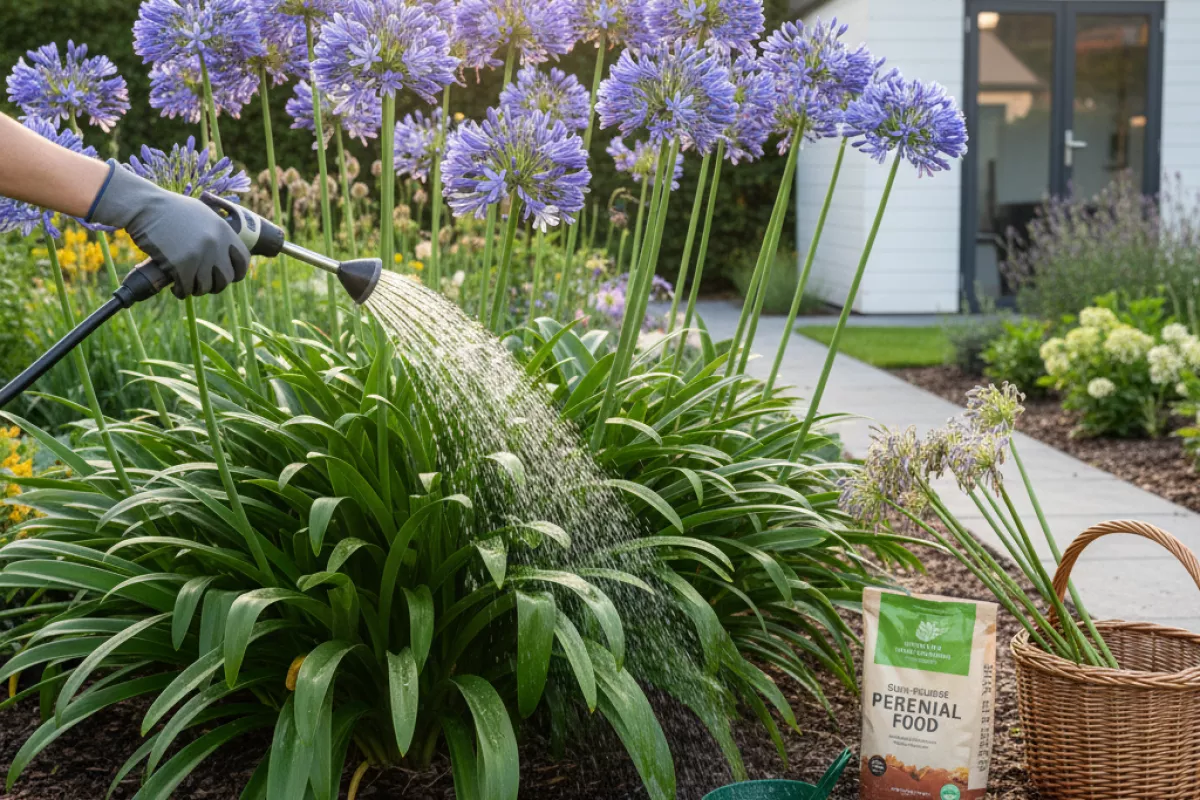
Keep agapanthus vigorous by focusing on a few repeatable habits: steady moisture while it’s actively growing, light feeding, and timely cleanup after flowering. These basics reflect widely recommended best watering practices for healthy roots. Most problems show up when plants sit wet in winter or get crowded for years, so a little seasonal attention goes a long way.
- Watering: During spring and summer growth, water deeply when the top 2–5 cm (1–2 in) of soil feels dry. In hot spells, container plants may need water every 1–3 days; in-ground clumps often do fine with weekly soaking unless rainfall is scarce. In autumn and winter, reduce watering sharply—especially in pots—so roots aren’t kept cold and wet.
- Mulching: Add a 5–8 cm (2–3 in) layer of mulch to moderate soil temperature and reduce evaporation, keeping it a few cm (about 1 in) away from the crown. In colder regions, a thicker winter mulch of 8–10 cm (3–4 in) helps protect roots, but remove or thin it in spring so new shoots don’t stay damp.
- Feeding: Apply a balanced, slow-release fertilizer in spring at label rates, or use a liquid feed every 3–4 weeks during active growth (about 21–28 days). Avoid heavy nitrogen; it can push lots of leaves with fewer flower stems. If blooms have been sparse, a bloom-leaning formula with higher potassium can help.
- Deadheading and stalk cleanup: After the umbels fade, cut the flower stem down near the base to prevent seed set and keep the plant tidy. Leave healthy leaves to recharge the rhizomes; remove only yellowing or damaged foliage as needed.
- Dividing crowded clumps: If flowering declines or the center becomes congested, divide every 3–5 years. Lift the clump in early spring or just after flowering, split into sections with several fans of leaves and roots, and replant at the same depth. Water in well and expect a short recovery period before peak blooming returns.
- Staking (only if needed): Tall varieties can lean in wind or shade. Use discreet supports early, before stems elongate, so ties don’t rub. Improving light and avoiding overly rich feeding often reduces flopping.
- Winter care: In mild climates, evergreen types may keep foliage; simply tidy and protect from waterlogging. In colder areas, move containers to a sheltered spot and keep the potting mix barely moist. If temperatures regularly drop below about -6°C (21°F), extra protection or overwintering indoors in a bright, cool place can prevent crown damage.
- Pest and disease watch: Slugs and snails may chew new growth; hand-pick or use barriers. Root and crown rot usually trace back to poor drainage—improve soil structure, raise the planting area by 10–15 cm (4–6 in) if necessary, and avoid saucers of standing water under pots.
| Season | What to do | Why it helps |
|---|---|---|
| Early spring | Remove winter mulch gradually; clean dead leaves; start feeding | Prevents damp crowns and fuels new shoots |
| Late spring to summer | Water when top 2–5 cm (1–2 in) dries; optional liquid feed every 21–28 days (3–4 weeks) | Supports strong stems and consistent flowering |
| After flowering | Cut spent stalks to the base; consider dividing if crowded | Redirects energy to roots and reduces congestion |
| Autumn to winter | Reduce watering; protect pots; keep crowns from staying wet | Lowers risk of rot and cold damage |
If your agapanthus looks lush but doesn’t bloom, the usual fixes are more sun, less nitrogen, and a division to relieve crowding. When leaves yellow from the base during the growing season, check drainage first—healthy plants prefer moisture, but they resent soggy soil.
Propagation through division or seed
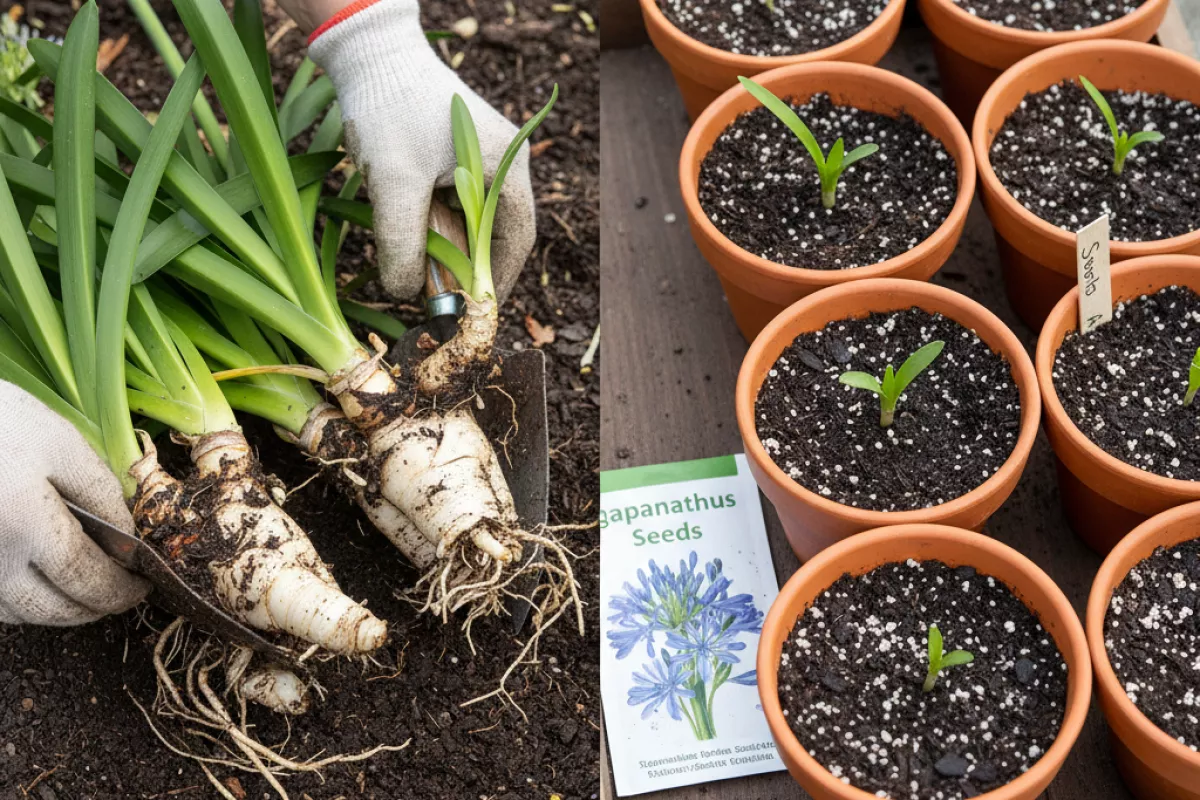
New plants can be made either by splitting established clumps or by raising seedlings. Division is the quicker, more predictable route if you want the same flower color and form as the parent, while seed growing is slower but useful for producing lots of plants and seeing natural variation.
Division (fastest way to get flowering-size plants)
- Best time: After flowering as growth slows, or in early spring as new shoots appear. In colder areas, spring division is often safer because plants have a full season to re-root.
- Lift the clump: Water the day before, then dig around the root mass. Agapanthus can be tight and fleshy-rooted, so work carefully to avoid snapping too many roots.
- Split into pieces: Use a sharp knife or spade to divide into sections with at least 2–3 growing points (fans) each. Very small pieces can survive, but they usually take longer to bloom.
- Replant promptly: Set divisions at the same depth they were growing. Space about 30–45 cm (12–18 in) apart in borders, or choose a pot only 2–5 cm (1–2 in) wider than the root mass if you’re container growing.
- Aftercare: Water in well, then keep evenly moist (not soggy) for the first 2–4 weeks. Hold off on strong feeding until you see new growth; a light, balanced fertilizer is enough.
If a divided plant skips flowering the first year, it’s usually just settling in. Keeping it slightly pot-bound in containers can encourage blooming, while overly rich soil and heavy nitrogen can push leaves at the expense of stems.
Seed (slower, but good for numbers and experimentation)
- What to expect: Seedlings may not match the parent plant, especially with named cultivars. Flowering commonly takes 2–4 years.
- Collecting seed: Let pods dry on the plant until they turn papery and begin to split. Store dry seed in a cool, dark place until sowing.
- When to sow: Late winter to spring indoors, or spring outdoors once frost risk has passed.
- Sowing method: Use a free-draining mix, press seed onto the surface, and cover lightly with about 3–6 mm (1/8–1/4 in) of mix or grit.
- Germination conditions: Bright light and steady warmth help; aim for around 18–22°C (64–72°F). Keep the medium lightly moist, never waterlogged.
- Potting on: Transplant when seedlings have several true leaves and a sturdy root system. Harden off gradually before moving outside.
| Method | Time to flowering | Will it stay true to the parent? | Best use |
|---|---|---|---|
| Division | Often 1 season to 1 year (sometimes same year if divisions are large) | Yes | Cloning a favorite plant; filling gaps quickly |
| Seed | Commonly 2–4 years | No (variation is normal) | Raising many plants; breeding and color variation |
| Offsets (small natural splits) | Usually 1–2 years | Yes | Gentle increase without fully lifting large clumps |
| Purchased young plants (plugs/pots) | Varies by size, often 1–2 years | Yes (for named varieties) | Starting a new planting with known colors |
Whichever approach you use, label your plants. It’s easy to forget which seedlings came from which parent, and even divided clumps can get mixed up during replanting.
Seasonal flowering cycle
Bloom timing in agapanthus follows a fairly predictable rhythm: leafy growth builds first, then tall stems rise, flowers open in waves, and the plant shifts to seed and storage. The exact schedule depends on whether you’re growing evergreen or deciduous types, plus how warm your summers are and how much sun the clump receives.
- Late winter to early spring: New leaves appear (or evergreen foliage perks up). This is when the plant is rebuilding energy reserves and setting up the year’s flowering stems.
- Mid to late spring: Bud initiation happens inside the crown. Consistent moisture helps, but avoid waterlogged soil; soggy roots can reduce the number of stems.
- Early to mid-summer: Flower scapes elongate quickly and buds swell. In many gardens, this is when you’ll first see the tall, leafless stalks standing above the foliage.
- Mid-summer to early fall: Peak display. Individual umbels open progressively, so a clump can stay showy for weeks. Removing spent heads can keep the planting tidier and may encourage a longer run of blooms in some varieties.
- Fall: Seed heads mature if left in place. The plant also starts shifting resources back to the roots/rhizomes, which supports next year’s flowering.
- Winter: Deciduous forms die back and rest; evergreen forms slow down but keep some leaves in mild climates. In colder areas, protecting the crown from repeated freeze-thaw cycles is often more important than keeping it warm.
If flowering is sparse, the most common cycle-related causes are too much shade, over-rich nitrogen feeding (lots of leaves, fewer stems), or a clump that’s either crowded enough to compete internally or, conversely, has been divided too recently and is rebuilding. As a rule of thumb, give divisions at least one full growing season to re-establish before expecting their best bloom.
| Season / stage | What you’ll see | What helps most |
|---|---|---|
| Spring (growth + bud set) | Fresh leaves; thicker clump; no stems yet | Bright light; steady watering; balanced feed rather than high nitrogen |
| Early summer (stem rise) | Tall scapes forming above foliage | Even moisture; avoid letting pots dry hard; keep plants in full sun where possible |
| Summer to early fall (flowering) | Umbels opening over time; pollinator activity | Deadhead for neatness; stake if exposed to wind; don’t overfeed |
| Fall to winter (seed + rest) | Seed heads (if left); slowing growth or dieback | Reduce watering; tidy old stems; protect crowns in cold snaps |
Container-grown plants often run slightly earlier or later than those in the ground because pots heat up and dry out faster. If your agapanthus is in a pot, keeping the root zone evenly moist during stem formation (without staying soggy) can make the difference between a few stalks and a full flush.
Common Agapanthus pests and stress symptoms
Most problems on agapanthus show up first as leaf changes: sticky residue, pale speckling, chewed edges, or tips turning brown. Fine stippling and webbing in hot, dry conditions often point to spider mites, and recognizing early spider mite signs and treatment helps prevent serious stress. Before treating anything, check the basics—soil that drains well, a consistent watering rhythm, and enough light—because stress from drought, waterlogging, or low sun often looks like “pest damage” at first glance.
| What you see | Likely cause | What to do (low-to-higher intervention) |
|---|---|---|
| Sticky leaves, shiny coating; black sooty film on foliage | Aphids or scale producing honeydew; sooty mold grows on the residue | Rinse plants with a firm water spray; wipe leaves; prune heavily infested stems; follow with insecticidal soap or horticultural oil, covering leaf undersides |
| Fine pale stippling, bronzing, or “dusty” leaves; tiny webbing in hot, dry weather | Spider mites, often triggered by heat and low humidity | Increase moisture around the plant (water at soil level, not leaves); hose off undersides; repeat soap sprays every 5–7 days; avoid drought stress |
| Silvery streaks or scarring on leaves; distorted new growth; tiny dark specks | Thrips feeding on tender tissue | Remove badly marked leaves; use blue/yellow sticky traps to monitor; apply soap or neem-based products to new growth; keep weeds down nearby |
| Chewed leaf edges; irregular holes; slime trails; damage worse after rain | Slugs and snails | Hand-pick at dusk; reduce hiding spots (boards, dense mulch); use iron phosphate bait as needed; water in the morning so surfaces dry by night |
| Leaves yellowing from the base; soft crown; sour smell in soil | Waterlogging and root/crown rot (often from heavy soil or overwatering) | Let soil dry slightly between waterings; improve drainage; lift and replant into amended soil; discard mushy crowns; sanitize tools |
| Leaf tips brown and crisp; curling; fewer flowers during heat | Drought stress, hot wind, or salt buildup from frequent fertilizer | Deep water, then allow partial drying; add mulch without burying the crown; flush containers with water until it drains freely; ease back on feeding |
| Lush leaves but few or no blooms | Too much shade, excess nitrogen, or overcrowded clumps | Move to brighter light; switch to a bloom-leaning feed; divide clumps every 3–5 years; keep crowns at soil level |
| Leaves split or shredded lengthwise; stems leaning after storms | Wind damage or hail; tall flower stems can act like sails | Stake flower stems early; cut torn leaves for neatness; plant where it gets sun but some wind protection |
- Quick check under the leaves: Many insects feed on undersides; sticky residue and distorted buds often signal aphids on flowers, so inspect tender growth before choosing a treatment.
- Repeat matters: Soaps and oils work best when applied thoroughly and repeated, since they don’t have long residual action.
- Watering cue: Aim to water when the top 2–5 cm (1–2 in) of soil feels dry; soggy soil is a bigger long-term risk than a short dry spell.
- When to remove foliage: If leaves are heavily spotted, torn, or sticky, trimming them back can reduce pest habitat and help the plant push clean growth.