Aconitum — Tall Perennial With Distinct Growing Requirements

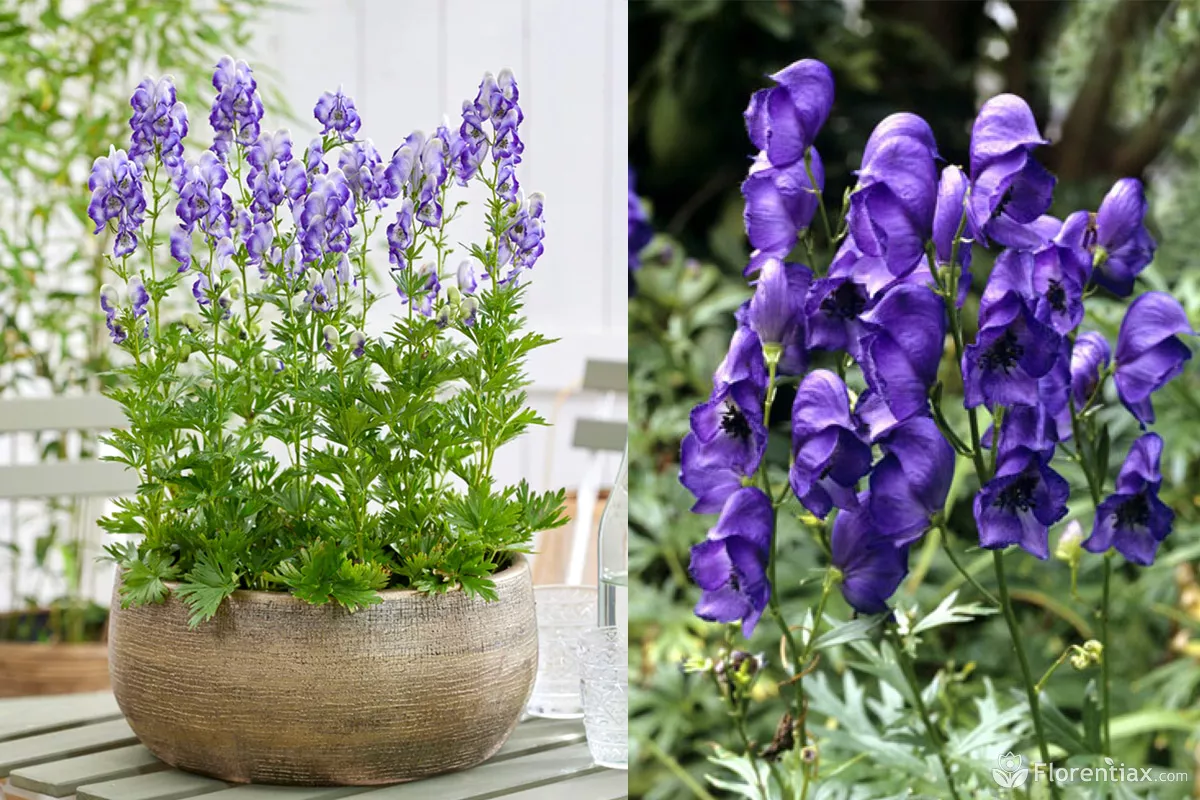 This article explains Aconitum’s key traits and mountain origins, including its tall stems and hooded flowers. It covers light, moist-soil watering needs, and temperature limits, plus upkeep for tall perennials, propagation options, seasonal growth and bloom timing, and common issues and safety.
- Aconitum plant overview and characteristics
- Native mountainous habitats and range
- Tall stems and distinctive flower structure
- Light exposure for upright growth
- Soil moisture and watering demands
- Temperature preferences and climate limits
- Maintenance practices for tall perennials
- Propagation methods for Aconitum plants
- Seasonal growth and flowering timing
- Common problems and safety considerations
Aconitum is a tall, long-lived perennial that rewards careful growers, but it has needs you shouldn’t ignore. It does best in cool-summer gardens with moisture-retentive, fertile soil and steady watering. Choose a sheltered site with light shade or gentle sun, protected from strong wind and scorching afternoon heat. With the right conditions, it will establish well and flower reliably year after year.
Aconitum plant overview and characteristics
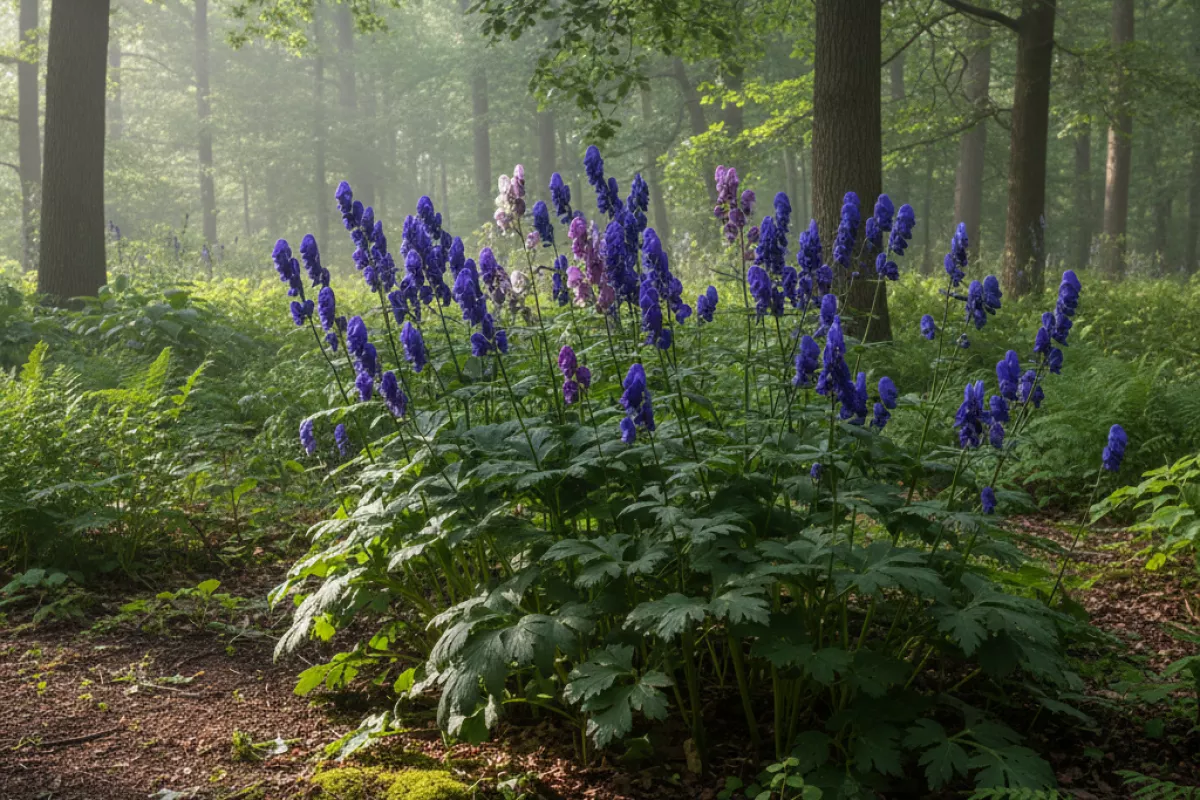
Monkshood (also called wolfsbane) is a tall, clump-forming perennial known for its hooded, helmet-like flowers and upright, architectural habit. It’s a plant that reads “woodland edge” more than “sun-baked border,” and its growth pattern reflects that: steady, moisture-dependent, and happiest in cooler conditions.
Most garden forms belong to the genus Aconitum, which includes species and hybrids flowering from mid-summer into early fall. Bloom color is often deep blue to violet, but white, bicolored, and softer lavender shades exist. The foliage is usually dark green and deeply divided, giving the plant a fine-textured look even before it flowers.
- Overall shape: Upright stems rising from a basal clump; plants tend to look narrow rather than sprawling.
- Typical height: Often 3–5 ft (about 90–150 cm), with some selections taller in rich, consistently moist soil.
- Flowers: Distinctive “hooded” blooms carried on vertical spikes; a strong vertical accent in mixed plantings.
- Leaves: Palmate, deeply lobed leaves that create a lacy, divided texture.
- Seasonal interest: Foliage is present from spring; flowering usually peaks later than many cottage-garden perennials.
One characteristic matters more than any other when planning where it goes: all parts of the plant are highly toxic if ingested. Sap can also irritate sensitive skin. That doesn’t mean it can’t be grown responsibly, but it does mean placement and handling should be deliberate, especially in gardens with children or pets.
| Characteristic | What to expect in the garden |
|---|---|
| Growth habit | Clump-forming perennial with strong vertical stems; generally not aggressive or running. |
| Bloom period | Mid- to late summer into early fall, depending on species/cultivar and climate. |
| Flower form and color | Hooded flowers on spikes; commonly blue-violet, sometimes white or bicolored. |
| Light preference | Performs best in partial shade or gentle morning sun; can struggle in hot, intense afternoon sun. |
| Moisture needs | Prefers evenly moist soil; drought stress often leads to stunting, leaf scorch, or poor flowering. |
| Cold tolerance | Generally hardy in colder regions; heat and humidity are more limiting than winter cold for many types. |
| Toxicity | Highly poisonous if eaten; handle with care and wash hands after cutting or dividing. |
Because it’s tall and relatively narrow, aconite works well threaded through mixed borders, behind lower perennials, or in woodland-style plantings where the soil stays cool and damp. In the right spot it looks composed and long-lived; in the wrong spot it tends to signal distress quickly through drooping, scorched leaves, or reduced bloom.
Native mountainous habitats and range

Aconitum species are plants of cool, elevated landscapes where summers are mild and moisture is dependable. In the wild, they’re most often found along mountain streams, in damp meadows, and at the edges of open woodland where the soil stays evenly moist but not stagnant. This background explains why they can struggle in hot, dry, lowland gardens unless you recreate the same conditions.
Most monkshoods are native across the Northern Hemisphere, with their greatest diversity concentrated in Asia and Europe. Different species occupy different bands of elevation, but many favor montane to subalpine zones where snowmelt feeds the ground well into summer and nights cool down quickly.
- Europe: Common in the Alps, Carpathians, Balkans, and other upland systems, typically in moist grasslands, ravines, and woodland margins.
- Asia: Especially diverse from the Himalaya through western China and into Siberian mountain regions, often on cool slopes, stream banks, and high meadows.
- North America: Several species occur in western mountain ranges (for example, the Rockies and Cascades) and in cooler northern habitats, usually where summer heat is moderated by elevation or latitude.
Across these regions, the recurring theme is a short growing season paired with steady water supply. Plants often emerge as snow recedes, grow rapidly in early summer, and flower when conditions are still relatively cool. In exposed alpine settings they may stay shorter and sturdier; in sheltered, nutrient-rich valley bottoms they can become the tall, lush perennials gardeners recognize.
| Wild setting | Typical conditions | What it suggests for cultivation |
|---|---|---|
| Stream banks and seepage areas | Consistent moisture, oxygenated soil, cool root zone | Keep soil evenly moist; avoid waterlogging with good structure and drainage |
| Montane meadows | Sun to light shade, deep soils, reliable rainfall or snowmelt | Provide sun with afternoon shade in warm climates; mulch to conserve moisture |
| Woodland edges and open forest | Dappled light, humus-rich soil, shelter from drying winds | Use partial shade and organic matter; protect from hot, desiccating exposure |
| Subalpine slopes | Cool nights, bright light, fast drainage with steady subsurface moisture | Prioritize cooler microclimates; avoid heat-reflecting walls and dry, sandy beds |
If you’re wondering why these plants have “distinct growing requirements,” their geography is the reason. They’re built for cool air, moist ground, and a root zone that doesn’t bake. When those elements are missing, growth may be weak, flowering can be brief, and the plant becomes more prone to stress-related problems.
Types of Aconitum (Monkshood)
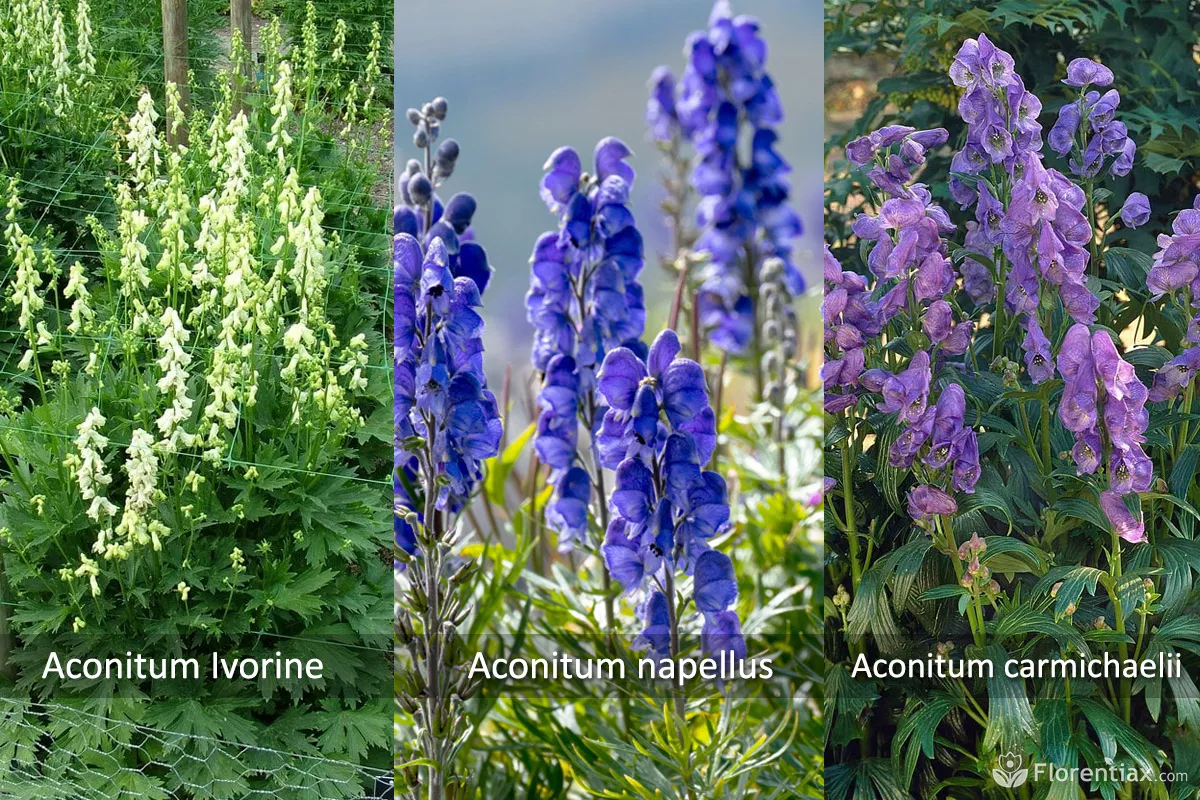
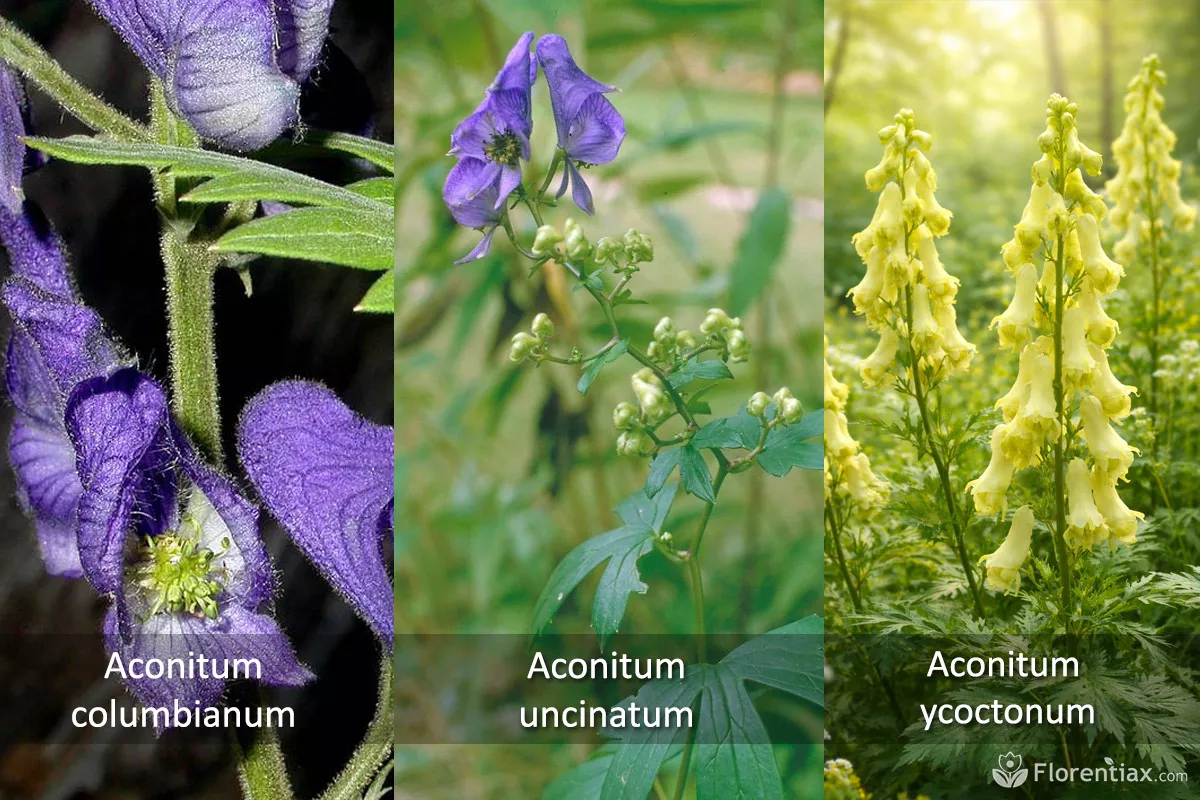
While monkshoods share a preference for cool, moist conditions, different Aconitum species and garden groups tend to match specific habitat patterns. Knowing the usual “wild setting” for each type makes it easier to recreate the right conditions in a garden.
- Aconitum napellus – A classic European monkshood of montane meadows, stream-fed grasslands, and woodland margins. Broad, palmately divided leaves; tall upright spikes; thrives in cool summers with evenly moist, humus-rich soil.
- Aconitum carmichaelii – An East Asian species adapted to cool slopes and moist forest edges, valued for later-season bloom. More finely divided foliage; prefers consistent moisture and cooler nights; often flowers in late summer to autumn.
- Aconitum × cammarum (garden hybrids) – Cultivated hybrids widely grown in temperate gardens, typically happiest in partial shade with deep, fertile soil. Dense clumps; variable leaf shape; includes violet, blue, and bicolored cultivars (for example, ‘Bicolor’) and pale forms (for example, ‘Ivorine’).
- Aconitum fischeri – A cool-climate Asian type associated with moist slopes and woodland edges. Moderately divided leaves; strong stems; performs best with steady moisture but tolerates short dry spells better than many monkshoods once established.
- Aconitum columbianum – A North American monkshood from stream banks and damp mountain woods of the western ranges. Typically found where soils stay cool and consistently moist; a good match for woodland gardens and riparian-style plantings.
- Aconitum uncinatum – An eastern North American species of shady, humid forests and rich ravines. Prefers dappled light, high organic matter, and steady moisture; often less tolerant of heat and drought exposure.
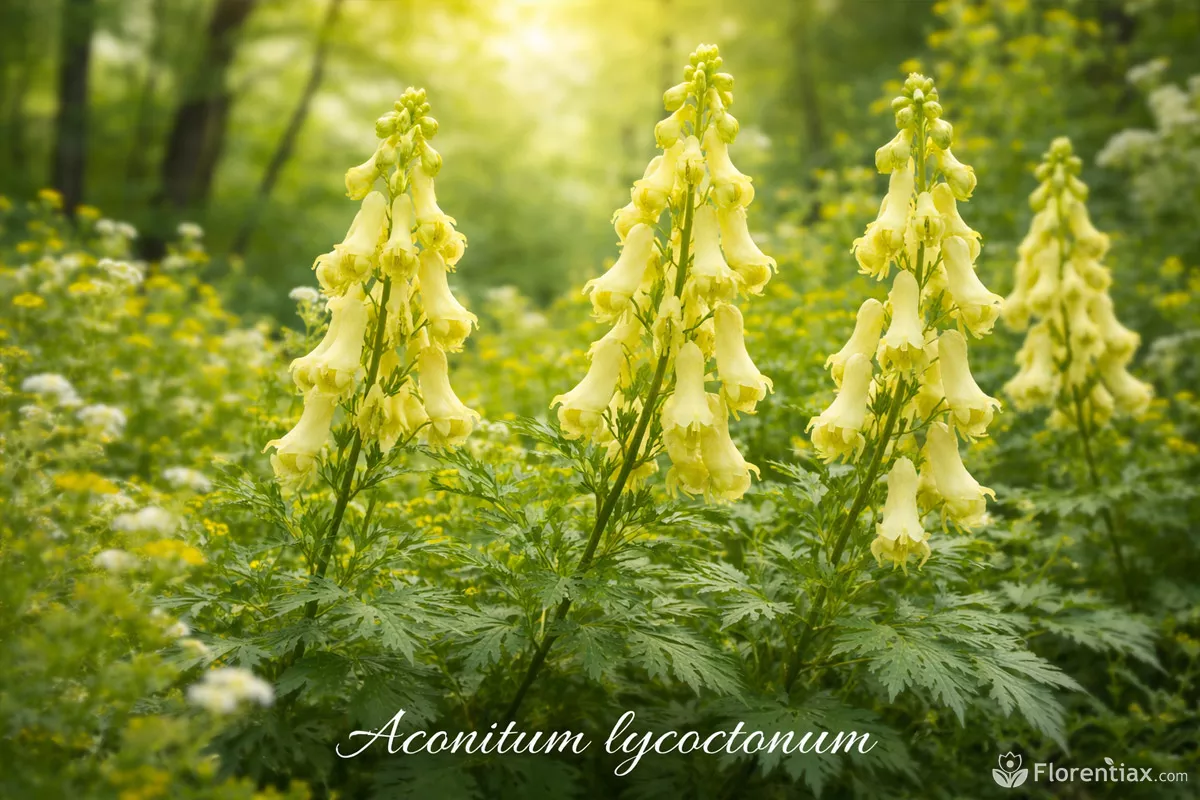
- Aconitum lycoctonum – A European species frequently associated with woodland and forest-edge habitats. Usually lighter-toned flowers (often pale yellow); tends to handle a bit more shade than many blue-flowered monkshoods.
Across all these types, the recurring theme is the same: a cool root zone, reliable moisture, and air that does not stay hot and dry for long stretches. When you match the plant type to its habitat pattern, growth is stronger and flowering is more dependable.
Tall Stems and Distinctive Flower Structure of Aconitum
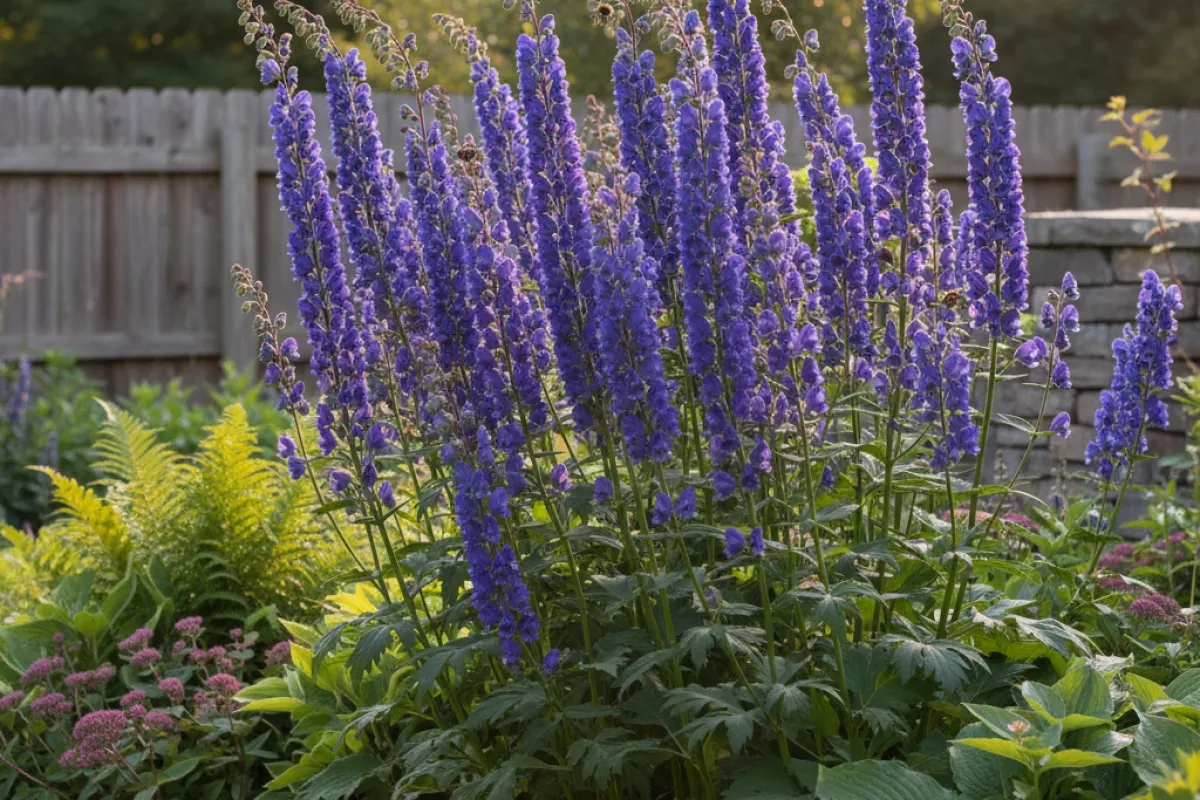
Aconitum stands out in the border because it grows with an upright, column-like habit that can rise well above neighboring perennials. Those vertical stems aren’t just for show: they influence where the plant should sit in the garden, how it handles wind and rain, and how the flower spikes present themselves for pollinators and for viewing.
The stems are typically firm but not indestructible. In rich soil or partial shade, growth can be especially lush, which sometimes means taller, softer stems that lean after heavy weather. Giving the plant enough space and steady moisture helps it build stronger tissue, while a sheltered position prevents the dramatic “flop” that can happen when long spikes catch wind.
- Height and stance: Most garden forms grow tall and narrow, making them useful as a back-of-border anchor or a vertical accent among mounded plants.
- Leaf arrangement: Foliage is deeply divided and held along the stem, creating a textured “ladder” effect that looks full even before flowering.
- Flower placement: Blooms are carried in elongated clusters near the top of the plant, so the display reads clearly from a distance.
- Weather response: Long stems can bend under pounding rain; discreet staking or a nearby support plant can keep spikes upright without looking rigid.
The flower form is the real signature. Each bloom has a hooded upper sepal that arches over the reproductive parts, giving rise to the common name “monkshood.” This helmet-like shape isn’t just decorative; it creates a partially enclosed chamber that guides visiting insects toward nectar while brushing them against pollen. In many species and cultivars, the blossoms are held close together on the spike, so the overall effect is a dense, tapering wand of color rather than individual flowers spaced far apart.
Because the flowers are structured and somewhat enclosed, they tend to look best when viewed from the side or slightly below, not only from above. Planting on a gentle slope, near a path, or behind lower perennials can make the hooded blooms easier to appreciate. After flowering, the spikes can be left to mature briefly for structure, then cut back to keep the clump tidy and to encourage the plant to focus on root and crown strength for the next season.
Light exposure for upright growth
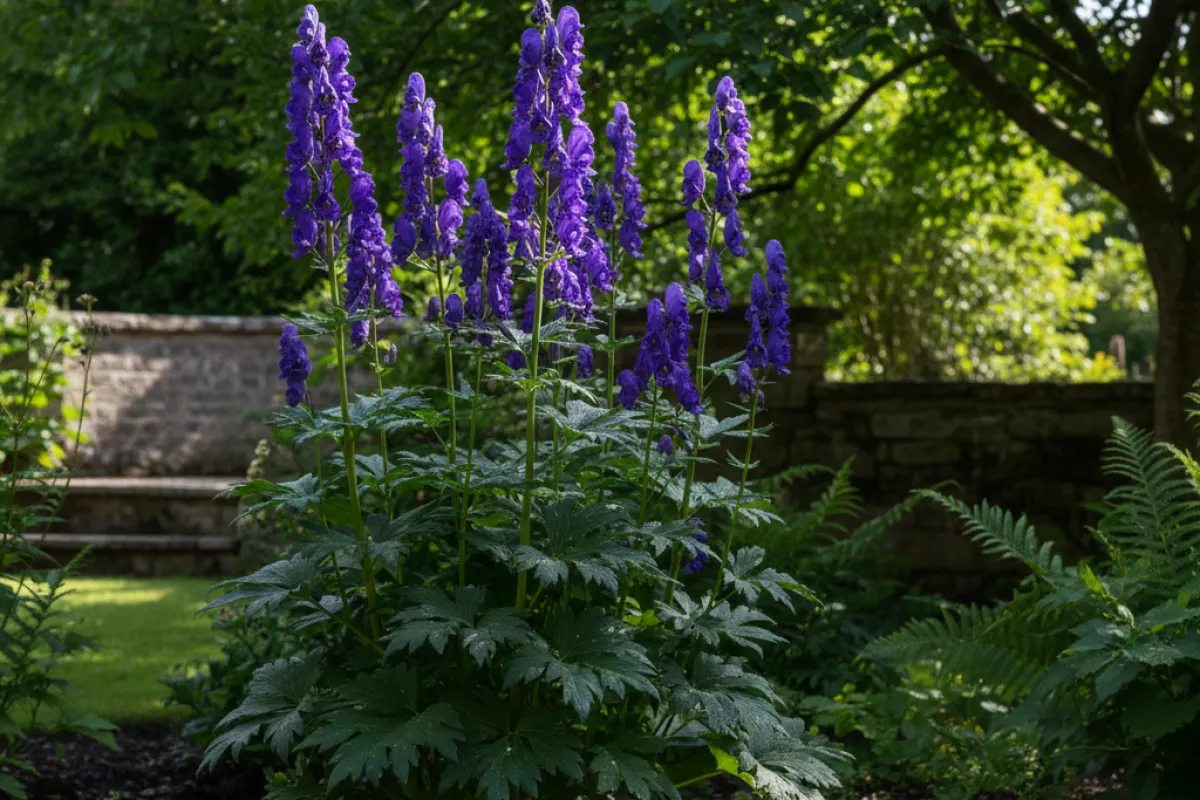
Stem strength in Aconitum is closely tied to how much sun it gets and how consistent that exposure is through the day. Too little light leads to lanky, leaning spikes that reach for brightness; too much hot sun can shorten bloom life and stress the plant, especially if soil dries out.
In most gardens, the sweet spot is morning sun with afternoon shade, or bright, dappled light beneath high tree canopies. This gives enough energy for sturdy vertical growth while avoiding the harshest heat that can make foliage flag and flowers fade faster.
If a planting area stays dim for most of the day, consider better choices for shaded indoor spaces, as monkshood still needs moderate light to keep its stems upright.
- Cool-summer climates: Full sun is often fine, and it can help keep stems compact. Watch moisture—sunny beds dry faster, and drought stress can still cause flopping.
- Warm-summer climates: Prioritize partial shade, ideally with sun before noon. Midday to late-afternoon sun is where plants most often lose turgor and start to lean.
- Woodland-edge settings: Bright shade works well, but avoid deep shade. If you notice long internodes (big gaps between leaves) and fewer flowers, it’s usually a sign the plant needs more light.
- Windy, exposed sites: Even with good sun, constant wind can push tall spikes off-vertical. A slightly sheltered position (near a fence or shrubs) often improves posture more than adding extra sun.
A simple way to “read” whether the plant is getting the right exposure is to look at the stalks by early summer: upright, thicker stems and evenly spaced leaves usually indicate adequate light. If stems bow toward one direction, rotate the emphasis of sun by relocating the plant in fall, or thin nearby plants that are shading it on one side.
If you are unsure about light levels near walls, trees, or indoor placements, you can check whether light intensity is actually sufficient rather than relying on visual guesswork.
| Exposure pattern | Typical effect on growth and flowering | What to adjust |
|---|---|---|
| Full sun (cool climates) | More compact stems; strong flowering if soil stays evenly moist | Mulch and water during dry spells to prevent stress-related leaning |
| Full sun (hot climates) | Heat stress, shorter bloom duration, midday droop; higher chance of flopping | Shift to morning sun/afternoon shade; increase soil moisture retention |
| Morning sun + afternoon shade | Balanced stem strength and bloom longevity; reliable upright habit | Maintain consistent moisture; avoid crowding that blocks early light |
| Bright, dappled shade | Good foliage quality; stems may be slightly taller but still stable | Thin overhead growth if flowering becomes sparse |
| Deep shade | Leggy growth, fewer blooms, stems stretch and tip toward light | Move to brighter conditions or open the canopy for more sun |
If you’re deciding between “a bit more sun” and “a bit more shade,” choose the option that keeps the root zone cool and evenly damp. Aconitum can tolerate brighter conditions when moisture is steady, but it rarely stays upright and floriferous in dry heat.
Soil moisture and watering demands
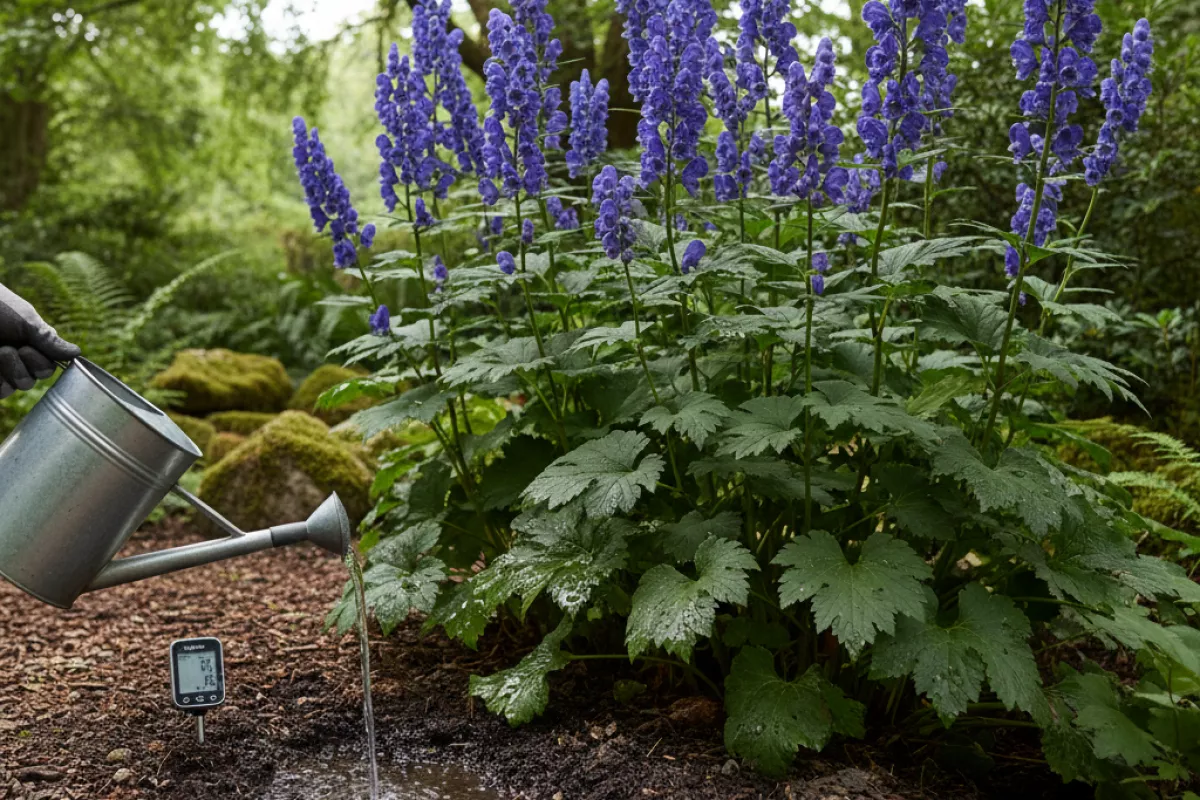
Aconitum grows best when the root zone stays evenly damp, not soggy. If moisture stress has already triggered discoloration, focus on safe ways to correct yellowing foliage before adjusting feeding or light. Think “cool woodland edge” conditions: consistent moisture, good drainage, and soil that doesn’t bake hard between waterings. Letting the plant swing from bone-dry to waterlogged is what usually triggers weak growth, leaf scorch, and root problems.
- Keep moisture steady: Water deeply so the top 15–20 cm of soil is moistened, then let the surface dry slightly before watering again. Frequent light sprinkling encourages shallow roots and makes the plant more stress-prone.
- Avoid standing water: Aconitum dislikes saturated soil, especially in cool weather. If puddles linger after rain or irrigation, improve drainage with organic matter and site selection rather than “watering less” only.
- Mulch for stability: A 5–8 cm layer of leaf mold, compost, or shredded bark reduces evaporation and keeps soil temperatures cooler. Keep mulch a few centimeters away from the crown to reduce rot risk.
- Adjust to sun and wind: In partial shade, the soil stays moist longer and irrigation can be less frequent. In brighter sites or windy exposures, expect higher water use and check moisture more often.
Instead of following a fixed calendar, it helps to adjust watering frequency to your conditions, taking into account light exposure, temperature, and soil type.
| Situation | What to do | What to watch for |
|---|---|---|
| Newly planted (first 4–6 weeks) | Water whenever the top few centimeters begin to dry; aim for consistent dampness while roots establish. | Wilting on mild days, slow recovery in evening, or dry soil pulling from the potting hole edges. |
| Established plants in normal weather | Deep soak, then allow a slight dry-down at the surface; check soil moisture rather than following a strict calendar. | Lower leaves yellowing from stress, reduced flowering, or crisp leaf margins if too dry. |
| Heat spell or unusually dry period | Increase frequency, water early in the day, and prioritize the root zone; add temporary shade if in full sun. | Midday droop that becomes persistent, scorched foliage, and stunted new growth. |
| Heavy soil or rainy stretch | Hold off on supplemental watering; ensure water can drain away and avoid compacting the soil around the plant. | Soft stems, blackened crown tissue, or a musty smell from the soil indicating poor aeration. |
A simple check beats guesswork: push a finger into the soil or use a trowel to look below the surface. If it’s dry a few centimeters down, water; if it’s still cool and damp, wait. This approach also helps you tailor irrigation to your specific site, since shade, soil texture, and mulch can change water needs dramatically even within the same garden.
Temperature Preferences and Climate Limits of Aconitum
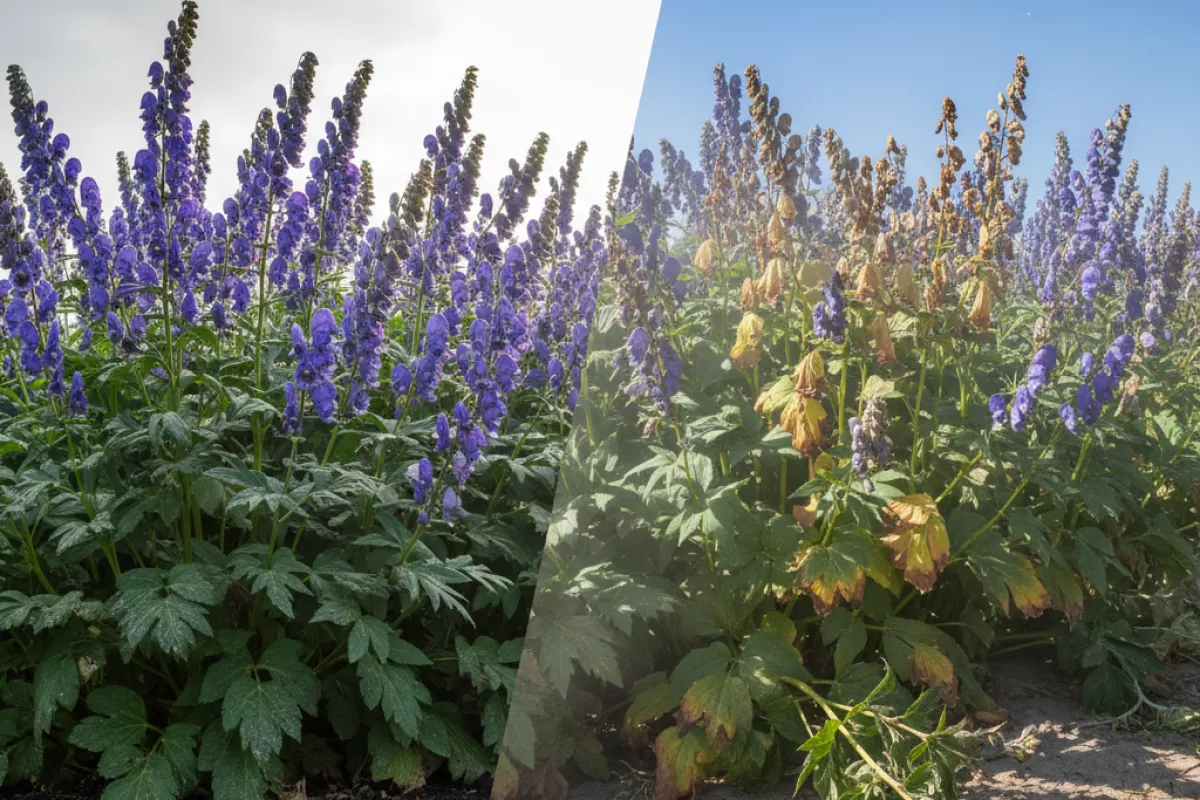
Aconitum performs best where summers stay moderate and the root zone remains consistently cool and moist. In hot, humid spells it can stall, scorch at the leaf edges, or collapse suddenly if the soil dries even briefly. In contrast, steady cool weather supports strong stems and longer-lasting blooms.
- Best general range: cool to mild conditions; nights that drop down noticeably help keep growth compact and reduce stress.
- Heat tolerance: limited. Prolonged daytime heat, especially with warm nights, often leads to wilting and reduced flowering. Afternoon shade and deep mulch can make the difference in warmer regions.
- Cold tolerance: generally high once established. Winter dormancy is normal; crowns and roots usually overwinter well when soil drainage is good.
- Humidity and air movement: muggy, still air increases disease pressure. Give plants spacing and avoid crowding them against dense shrubs or walls.
| Climate situation | What you may notice | How to keep plants steady |
|---|---|---|
| Cool-summer climates | Vigorous growth, sturdy stems, reliable flowering | Full sun to light shade; keep soil evenly moist |
| Warm summers with cool nights | Good growth, occasional midday droop | Morning sun with afternoon shade; mulch to protect the root zone |
| Hot summers and warm nights | Leaf scorch, shorter bloom, stress-related dieback | Site in bright shade; increase irrigation consistency; avoid reflective heat from paving |
| Cold winters with freeze–thaw cycles | Crown heaving, delayed spring emergence | Mulch after the ground freezes; ensure drainage to prevent winter rot |
| Wet winters or heavy soils | Root and crown rot, weak spring growth | Improve drainage, plant slightly high, avoid waterlogged spots |
If your garden runs warm, focus on keeping the soil cool rather than chasing air temperature. A 5–8 cm layer of leaf mold or compost, consistent watering, and a location with protection from late-day sun usually do more than any other adjustment.
Maintenance practices for tall perennials
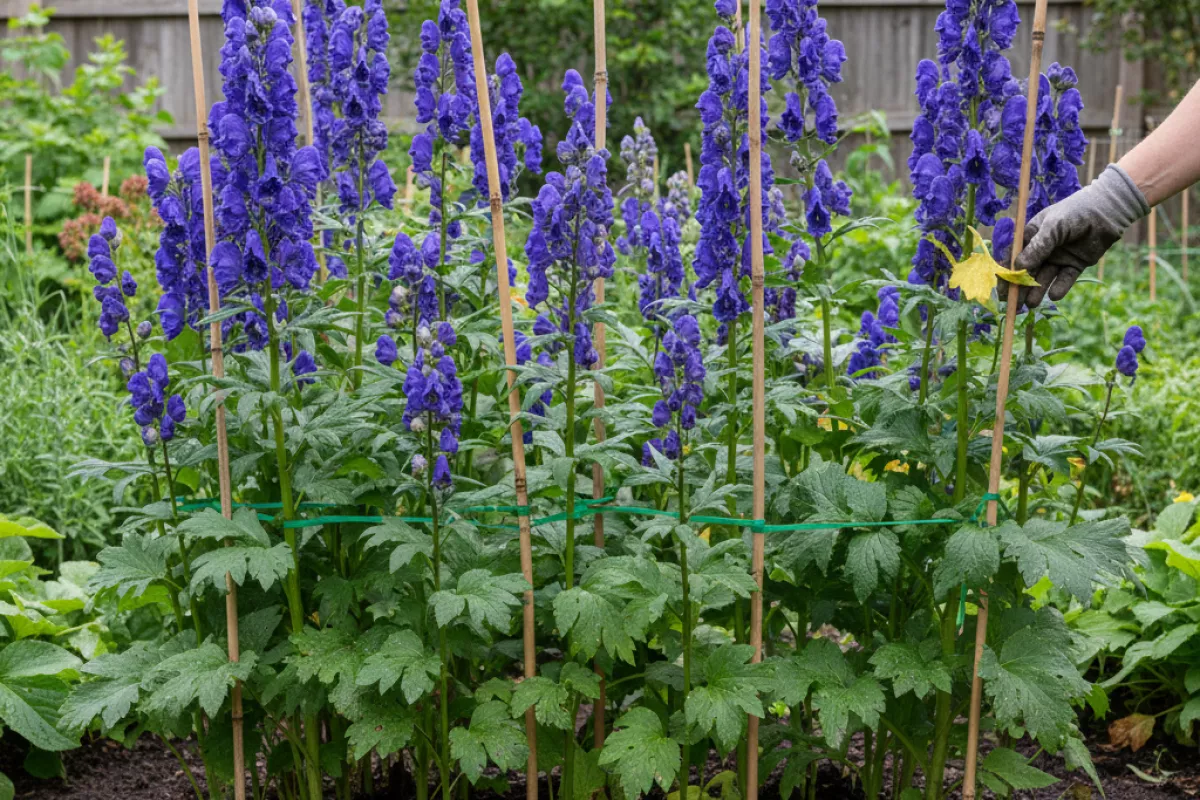
Keep tall, moisture-loving perennials upright and long-lived by focusing on three things: steady soil moisture, clean growth management, and support before stems get heavy. Aconitum in particular rewards a “little and often” approach rather than big interventions after it starts flopping or stressing.
- Watering: Aim for consistently damp (not soggy) soil during active growth. Deep watering once or twice a week is usually better than daily sprinkles, especially in warm spells. If leaves droop in the afternoon but recover by evening, that’s mild heat stress; if they stay limp, the root zone is drying out.
- Mulching: Apply a 5–8 cm layer of leaf mold, compost, or shredded bark to buffer temperature swings and slow evaporation. Keep mulch a few centimeters back from the crown to reduce rot risk.
- Feeding: Skip heavy nitrogen, which can push lush, weak stems. A light spring top-dress of compost is often enough. If growth is pale or slow in poor soils, use a balanced, modest feed once in spring and stop by mid-summer.
- Staking and support: Put supports in early, when shoots are 20–30 cm tall, so stems grow through them naturally. Ring supports, twiggy pea-sticks, or a discreet grid of canes work well. Waiting until flower spikes form usually means bending stems to fit, which can cause splits.
- Deadheading and cutting back: Remove spent flower spikes if you want to prevent self-seeding and encourage a tidier clump. If you prefer seedheads for structure, leave them until they brown, then cut down. After flowering, you can reduce the plant by about one-third to limit lodging, but avoid cutting to the ground while foliage is still feeding the crown.
- Division and rejuvenation: Many tall perennials dislike frequent disturbance. Divide only when the center thins or flowering declines, typically every 4–6 years. For Aconitum, divide in early spring as growth starts, keeping divisions large and replanting immediately to avoid drying roots.
- Weed control: Hand-weed around the crown rather than hoeing deeply; shallow roots and emerging shoots can be damaged easily. Mulch does most of the work once the clump is established.
- Winter care: After hard frost, cut stems down to a low framework (or to ground level once fully dormant). In colder or exposed gardens, leave a light mulch over the root zone for insulation, but remove excess in early spring so new shoots don’t sit wet.
- Pest and disease watch: Slugs can chew young shoots; protect early growth with barriers or targeted control. Good spacing and airflow reduce mildew and leaf spot. If foliage shows repeated spotting, remove affected leaves and avoid overhead watering late in the day.
- Safety note for handling: Wear gloves when cutting back, dividing, or disposing of stems and roots, and wash hands and tools afterward. Keep trimmings away from pets and children.
As a quick rule of thumb: if stems lean, add support earlier next season; if leaves scorch or wilt, increase moisture and mulch; if growth is lush but floppy, ease off feeding and give the clump more light and airflow.
Propagation methods for Aconitum plants
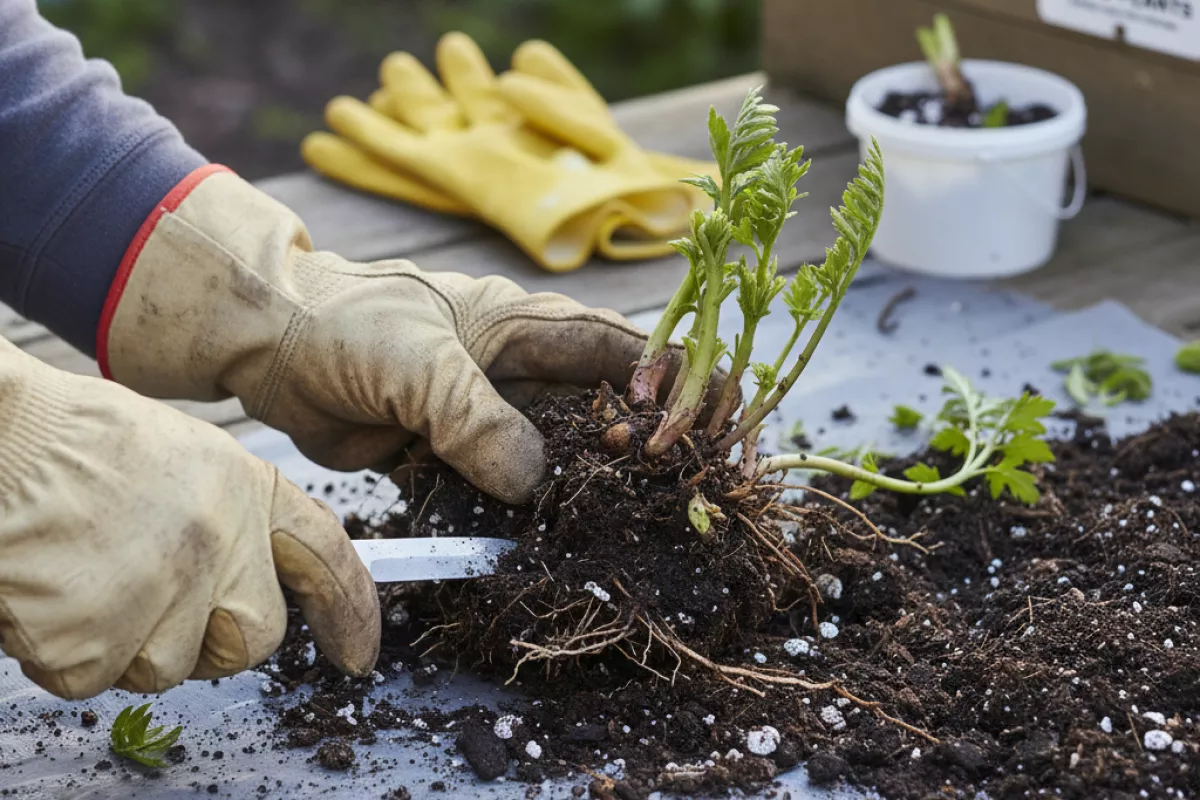
Monkshood can be increased in a few reliable ways, but the approach you choose matters because these plants resent root disturbance and all parts are highly toxic. Wear gloves, avoid touching your face, and keep prunings and divisions away from pets and children.
- Division (fastest and most predictable)
Best for established clumps that have slowed down or become crowded. Divide in early spring as shoots emerge, or in early autumn when heat has eased. Lift the clump carefully, split with a clean spade or knife so each section has several buds and a solid portion of root, then replant immediately at the same depth. Water well and keep evenly moist until you see strong new growth.
When dividing or moving plants into containers, it is important to choose the correct pot size when repotting, as excess soil volume can stay wet and increase the risk of root rot. - Basal cuttings (good for keeping a named plant true)
In spring, take young shoots from the base when they are still tender but a few inches tall. Pull or cut so each cutting includes a small “heel” of crown tissue if possible. Pot into a free-draining mix, keep humid and bright (not hot sun), and don’t let the medium dry out. Once rooted, harden off gradually before planting out. - Seed (useful for species, slower for flowering)
Seed-grown plants may vary, especially with hybrids or cultivars. Fresh seed typically germinates better and often benefits from a cold period. Sow in pots outdoors in autumn or chill in the fridge before sowing, then be patient: germination can be uneven and may take weeks to months. Grow seedlings on in pots for a season if they’re small, and expect flowering to take a couple of years.
| Method | When to do it | Pros | Watch-outs |
|---|---|---|---|
| Division | Early spring or early autumn | Quick results; usually flowers sooner; matches the parent plant | Handle roots gently; replant promptly to prevent drying; toxicity precautions |
| Basal cuttings | Spring, as new shoots appear | Clonal; avoids digging up the whole plant | Needs steady moisture and humidity; losses can happen if cuttings wilt |
| Seed | Autumn sowing or after cold treatment | Good for producing many plants; useful for species types | Variable offspring; slower to mature; germination can be erratic |
| Self-seeding (where allowed) | After flowering, if seed is left to ripen | Low effort; seedlings often adapt well to local conditions | Not true to type; seedlings may appear in awkward spots; thin early to reduce competition |
Whichever technique you use, aim to minimize stress: keep the crown at the original soil line, avoid letting roots dry out during handling, and provide consistent moisture while the plant re-establishes. If you’re working with a prized cultivar, division or basal cuttings are usually the safest way to keep the same flower color and form.
Seasonal Growth of Aconitum and Flowering Timing
Aconitum follows a fairly predictable yearly rhythm: it wakes late, builds height quickly once conditions are right, then puts its energy into spires of flowers before retreating back to the crown. Knowing when it is actively growing versus resting helps you time watering, feeding, staking, and division without stressing the plant.
| Season / phase | What the plant is doing | What to do (and avoid) |
|---|---|---|
| Late winter to early spring | Dormant crown and roots; buds begin to swell as soil warms. | Clear old stems; refresh mulch lightly; avoid deep digging near the crown where new shoots are forming. |
| Mid to late spring | Rapid vegetative growth; stems elongate and leaf mass increases. | Keep soil evenly moist; add a modest, balanced feed if growth is pale; install supports early so you are not pushing stakes through roots later. |
| Early to mid-summer | Bud formation and stem thickening; plant is tall and top-heavy. | Check ties and staking; water during dry spells; avoid high-nitrogen feeding that can make stems softer and more prone to flopping. |
| Mid-summer to early autumn (typical bloom window) | Flower spikes open progressively from the lower florets upward; nectar and pollen production peaks. | Deadhead to extend display if you do not want seed; keep moisture steady to prevent shortened bloom; avoid letting the root zone bake dry. |
| Autumn | Energy shifts back to the crown; seed heads mature if left; foliage begins to yellow. | Cut back once stems collapse or after frost; mark the clump location; divide only if necessary and early enough for re-rooting. |
| Winter | Fully dormant; crown is protected by soil and mulch. | Maintain a light mulch in colder areas; avoid waterlogged ground, which can encourage crown rot during dormancy. |
Flowering time varies by species, cultivar, and climate, but many garden forms bloom from mid-summer into early fall. In cooler regions, the display can shift later; in warmer zones, plants may start earlier but can finish sooner if heat and drought arrive.
- Cool, moist summers: taller stems, longer-lasting spikes, and a more even progression of blooms.
- Hot spells or dry soil: shorter flowering period, smaller spikes, and increased wilting during the day.
- Too much shade: later flowering and weaker stems; too much sun in hot climates can scorch foliage unless soil stays consistently damp.
- Late frosts: can nip emerging shoots; plants usually recover, but flowering may be delayed.
If you are planning maintenance around bloom, do the structural work early. Staking is easiest when shoots are 15–25 cm tall, and any light feeding is best during spring growth rather than right before flowering. Division is usually least disruptive in early spring as new growth starts, or in early autumn while soil is still warm enough for roots to re-establish.
Common Problems and Safety Considerations for Aconitum
Most issues with aconitum come down to two things: the plant is extremely poisonous, and it dislikes being disturbed once established. If you plan ahead for safe handling and give it steady conditions (even moisture, cool roots, and good air flow), it’s usually a dependable perennial.
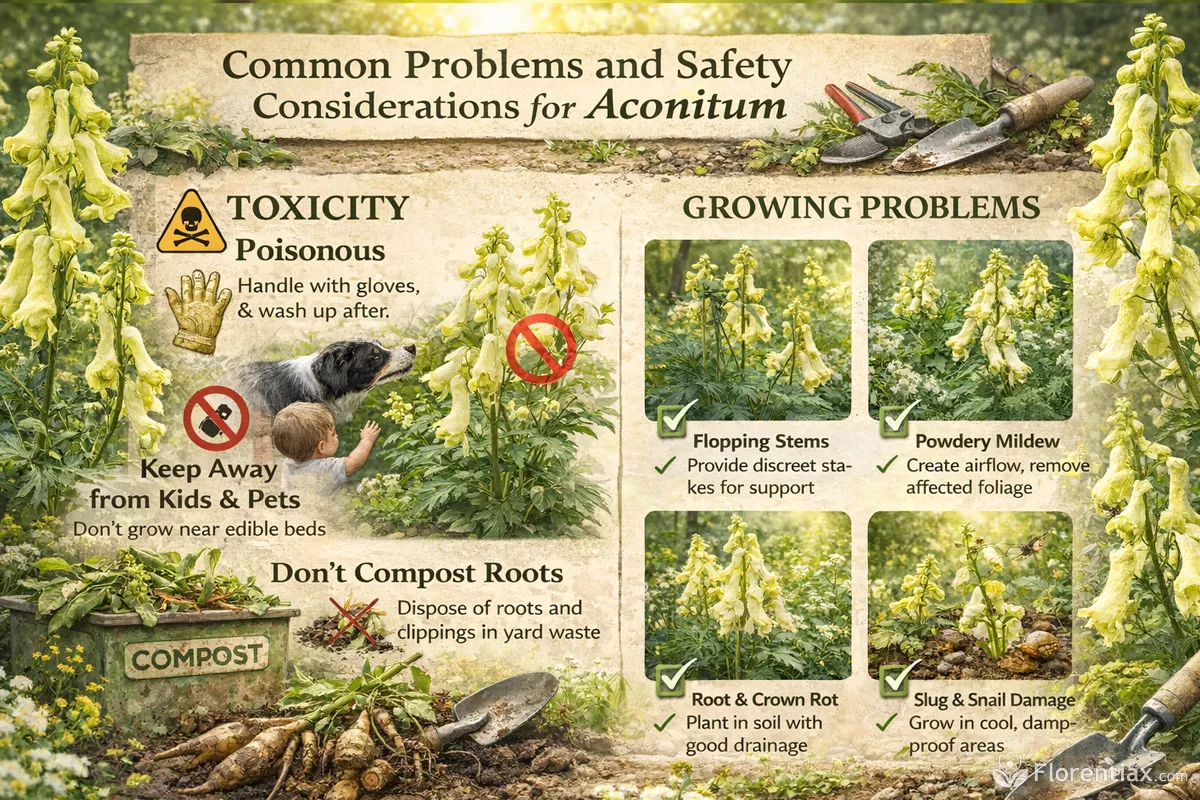
Toxicity and safe handling
- All parts are poisonous (including sap, roots, and seeds). Even small amounts can be dangerous if ingested.
- Skin contact can be a problem for some people, especially when cutting stems or dividing clumps. Wear gloves and avoid touching your face.
- Keep it away from children and pets, and don’t plant it where foraging or grazing animals can reach it.
- Be careful with deadheading and seed collection. Seeds and spent flowers still contain toxins; bag trimmings and dispose of them securely.
- Wash up and clean tools after working: soap and water for hands, and rinse pruners/spades before using them on edibles.
- Never compost roots or large amounts of fresh cuttings if your compost is used on vegetable beds; discard with yard waste instead.
Growing problems you’re most likely to see
| Problem | Typical cause | What to do |
|---|---|---|
| Flopping stems | Too much shade, rich nitrogen-heavy feeding, or exposed wind | Use discreet staking early, grow through a support ring, and avoid high-nitrogen fertilizer; give brighter light without hot afternoon sun. |
| Leaf scorch or stalled growth | Dry soil, hot sun, or warm reflected heat near walls/paving | Mulch to cool the root zone, water deeply during dry spells, and site it where mornings are bright and afternoons are cooler. |
| Poor flowering | Too much shade, drought stress, or frequent transplanting | Improve light levels, keep moisture consistent, and let plants settle for a full season; avoid moving it unless necessary. |
| Powdery mildew | Humid, still air and crowded growth | Thin nearby plants for airflow, water at the base, and remove badly affected foliage; avoid overhead watering late in the day. |
| Crown/root rot | Waterlogged soil, especially in winter | Improve drainage, plant slightly proud in heavy soils, and avoid soggy mulches pressed against the crown. |
| Slugs/snails on young shoots | Cool, damp conditions in spring | Protect emerging growth with barriers or traps and reduce hiding spots; check at dusk and remove pests promptly. |
Transplanting and division pitfalls
- Relocation can set it back. Aconitum often sulks after being moved; expect reduced flowering for a season.
- Division is not always necessary. Only divide if the clump is clearly overcrowded or declining, and do it in cool weather.
- Handle roots with extra care. The tuberous roots are the most hazardous part; keep them contained, don’t leave them where animals can dig, and replant immediately.
If you ever suspect accidental ingestion or significant exposure, treat it as urgent and seek immediate medical or veterinary help. When grown with sensible precautions, monkshood can be enjoyed safely as a striking, long-lived border plant.