Adenium — Succulent Plant With Unique Form and Care Needs

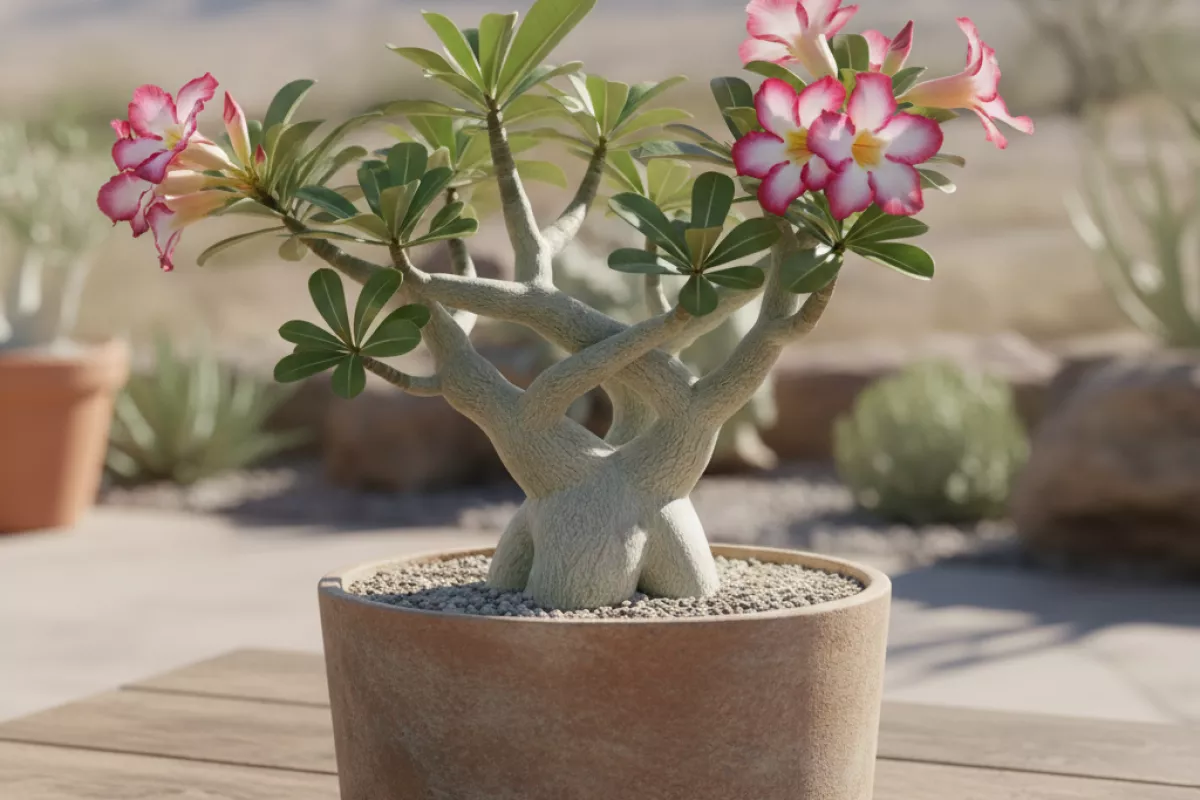 Covers Adenium basics and caudex features, including desert origins, growth shape, and how light, heat, soil drainage, and watering affect a compact, healthy trunk. Also explains maintenance, propagation from seed or cuttings, seasonal dormancy and flowering, plus common problems and rot risks.
- Adenium overview and caudex plant features
- Native desert regions and environmental adaptation
- Growth shape and thickened trunk structure
- Light exposure for compact Adenium form
- Soil drainage and watering strategy for Adenium
- Temperature tolerance and Adenium heat preferences
- Maintenance for healthy caudex development
- Propagation from seed and cuttings
- Seasonal dormancy and flowering cycle
- Common Adenium problems and rot risks
Desert rose adenium is a caudiciform succulent valued for its sculptural trunk and vivid blooms, but it needs care that differs from many houseplants. This guide explains how to balance strong sun, careful watering, and warm temperatures, pick a fast-draining gritty mix, and avoid common rot and pest problems so your plant stays compact, healthy, and blooming.
Adenium overview and caudex plant features
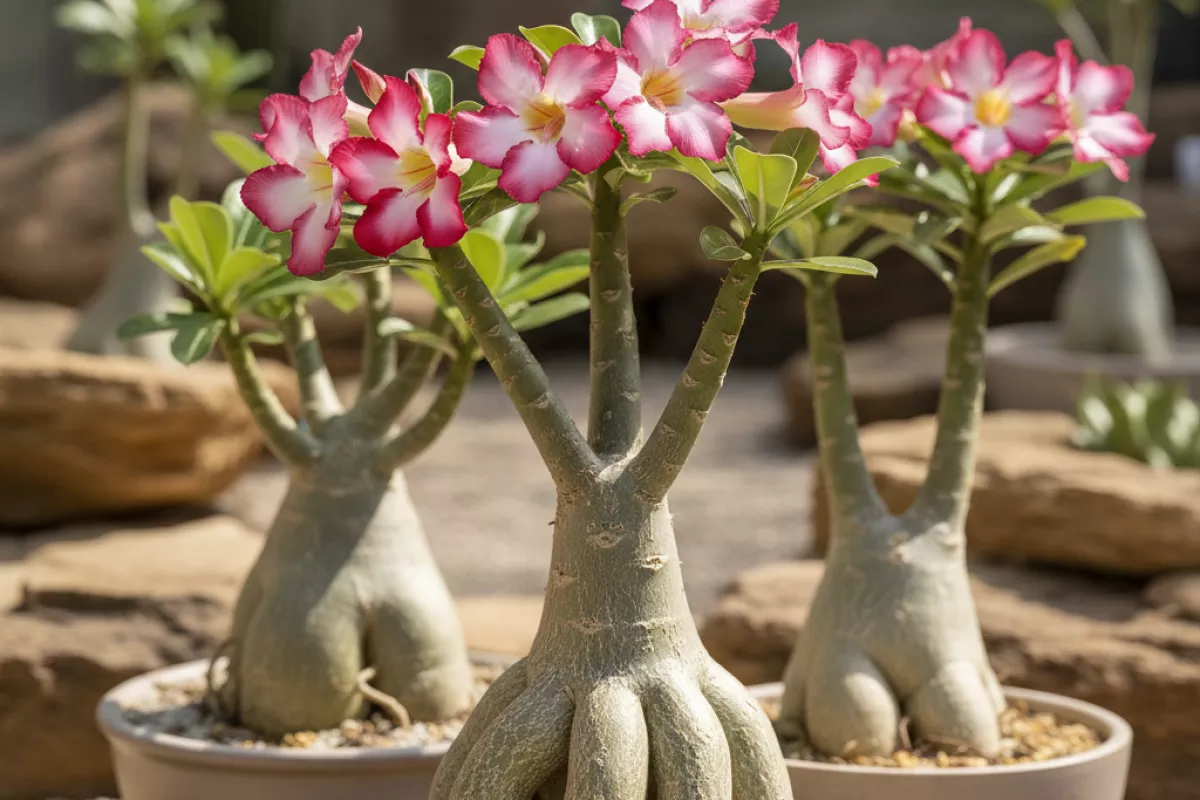
Adenium (often called desert rose) is a succulent shrub from dry regions of Africa and the Arabian Peninsula. What makes it stand out isn’t just the trumpet-shaped blooms, but the sculptural base that looks like a living bonsai trunk. This plant stores water in swollen tissues, so it behaves more like a drought-adapted succulent than a typical flowering houseplant.
Adenium is also extremely popular in Thailand, where it is widely grown both as an ornamental garden plant and as a collectible specimen. Locally, it is often called “Desert Rose” in English or referred to in Thai gardening circles as “Chuan Chom” (ชวนชม), a name associated with admiration and beauty. Thai growers have developed a strong cultivation culture around this plant, especially focusing on shaping the caudex and grafting multiple varieties onto a single trunk to create dramatic, multicolored blooms. Because the warm climate closely matches its native habitat, adenium thrives outdoors year-round in Thailand, which has helped make it one of the region’s most admired succulent ornamentals.
The signature feature is the caudex: a thickened stem base (sometimes blending into the upper roots) that acts as a reservoir. In cultivation, the caudex can be trained and displayed above the soil line, creating that “miniature tree” silhouette. Because it’s a storage organ, it also explains why adeniums dislike constantly wet mixes—waterlogged caudex tissue is prone to rot, so learning the early root rot warning signs helps you act before the base softens.
- Growth form: Woody, branching stems above a bulbous base; many plants naturally develop a bottle-shaped trunk over time.
- Leaves: Glossy, oval leaves that may drop during cool weather or drought; partial dormancy is normal.
- Flowers: Funnel-shaped blooms in pinks, reds, whites, and bicolors; flowering is strongest with high light and warm temperatures.
- Latex sap: Cut stems leak a milky sap that can irritate skin; keep it away from pets and children and wash hands after pruning.
Caudex development is slow and depends on genetics, light, and how the plant is grown. Seed-grown specimens usually form more natural, tapered bases, while many nursery plants are grafted for reliable flower color; grafted plants can still look impressive, but the trunk shape may be less symmetrical. If you ever “lift” the plant (raising it slightly at repotting), do it gradually—about 1–2 cm (0.4–0.8 in) per repot—so exposed roots can harden off without stressing the plant; a pot size calculator can help you choose the right container.
| Feature | What it means for the plant | What it means for care |
|---|---|---|
| Caudex (swollen base) | Stores water and energy for dry periods | Let the mix dry well; avoid frequent watering, especially below 20°C (68°F) |
| Succulent stems and roots | Efficient at holding moisture | Use a fast-draining, gritty substrate; pots with drainage are non-negotiable |
| Seasonal leaf drop | Protective response to cool temps or drought | Reduce water during dormancy; don’t panic if it looks bare for a while |
| Milky latex sap | Natural defense against herbivores | Wear gloves when pruning; keep sap off eyes and mouth |
| Grafted vs. seed-grown plants | Grafts stabilize flower traits; seedlings shape the base more naturally | Choose seedlings for caudex character, grafts for predictable blooms |
In short, the same traits that make this caudiciform succulent look dramatic—water storage, thickened tissues, and a slow, woody framework—also define its needs: bright light, warmth, and a drying cycle that respects the caudex’s role as a reservoir.
Native desert regions and environmental adaptation
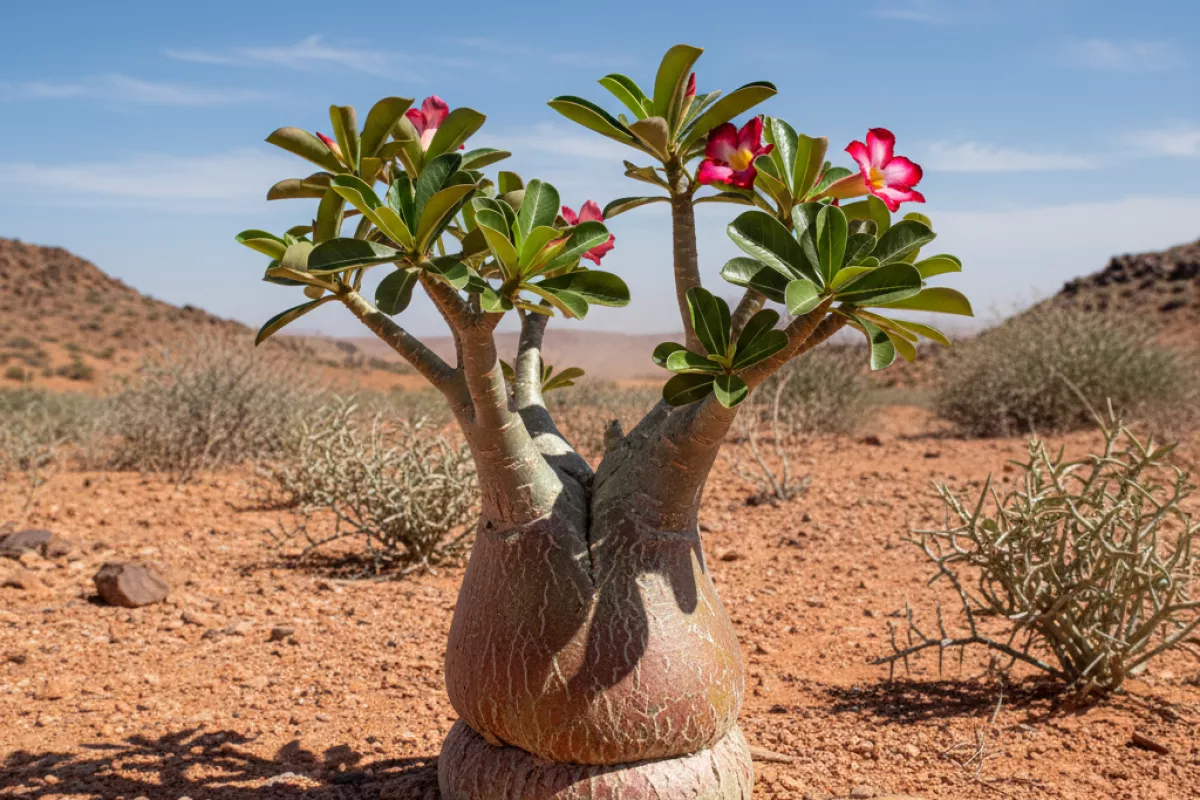
Adenium comes from hot, seasonally dry landscapes where rain arrives in bursts and the rest of the year can be bright, windy, and water-scarce. In those conditions, survival depends less on constant growth and more on storing resources, shutting down when it’s too dry, and restarting quickly when moisture returns.
The plant’s most recognizable feature, the swollen base (caudex), is essentially a built-in reservoir. It holds water and carbohydrates so the plant can keep vital tissues alive through drought, then push new leaves and flowers when conditions improve. This is also why it dislikes “always damp” potting mixes: in nature, roots dry fast between storms.
- Water storage and drought cycling: The caudex and thick stems buffer long dry spells. Growth often happens in pulses after rain rather than steadily year-round.
- Leaf strategy: Leaves may drop during extended dryness or cooler periods to reduce water loss, then return when warmth and moisture line up again.
- Sun and heat tolerance: Adapted to intense light and high temperatures, it performs best with strong sun and good airflow, which helps prevent fungal problems in cultivation.
- Fast-draining root expectations: Desert and scrub soils are typically gritty and oxygen-rich. Roots are built for quick soak-and-dry cycles, not stagnant moisture.
- Protective sap: Like many members of its family, it has milky latex that can deter browsing animals; it’s also a reminder to handle pruning cuts with care.
| Environmental pressure in the wild | Plant response | What it means for indoor/outdoor care |
|---|---|---|
| Long droughts between brief rains | Stores water in caudex; pauses growth | Water deeply, then let the mix dry well; don’t “sip-water” daily |
| Intense sun and high heat | Thrives with strong light; sturdy stems | Provide bright light or direct sun; acclimate gradually to avoid scorch |
| Oxygen-rich, gritty soils | Roots expect rapid drainage and air | Use a coarse, fast-draining substrate; avoid heavy peat-only blends |
| Seasonal shifts (dry/cooler periods) | Leaf drop and dormancy-like rest | Reduce watering during cooler spells; expect fewer leaves without panic |
Reading these adaptations makes the care logic clearer: mimic a warm, bright habitat with sharp drainage and distinct wet-dry rhythms. When the plant looks “still” for a while, it’s often doing what it evolved to do—waiting for the next favorable window rather than struggling through constant moisture.
Growth shape and thickened trunk structure
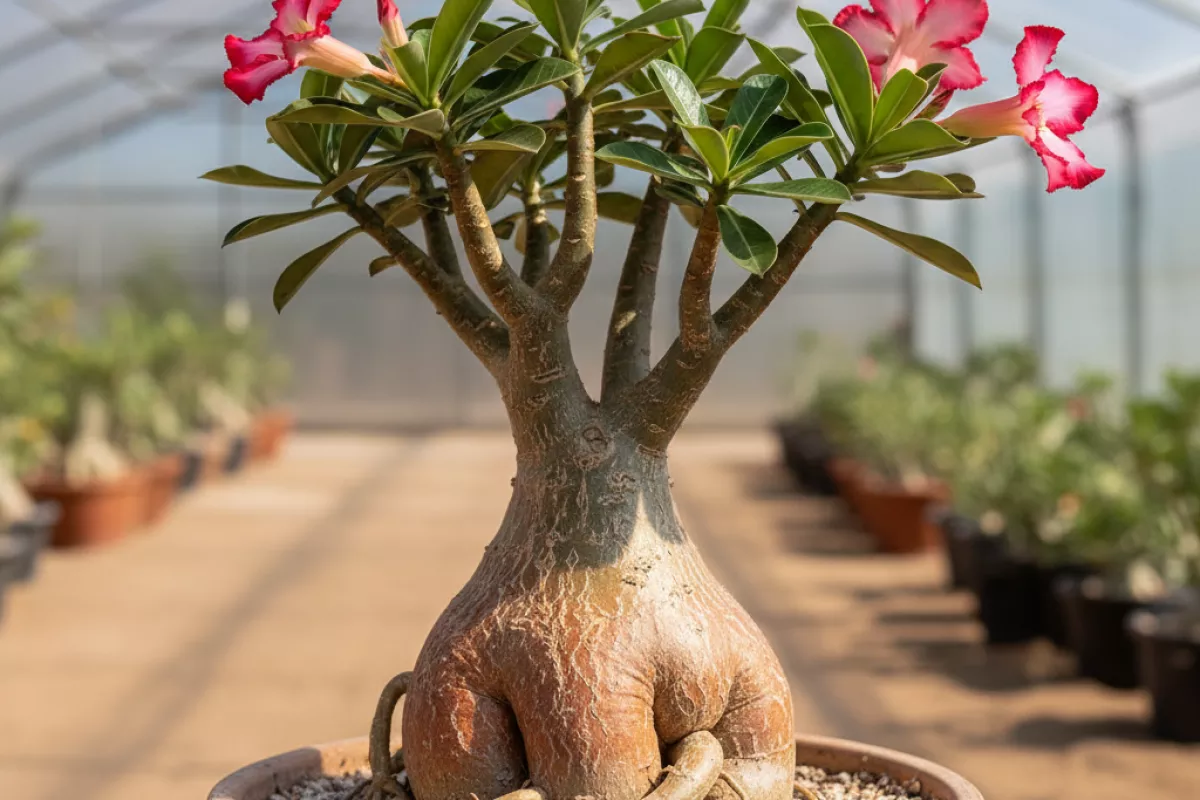
Adenium’s silhouette is defined by a swollen base and branching above it, which is why it can look like a miniature tree even in a pot. That enlarged trunk section is a caudex: a water- and nutrient-storing organ that helps the plant ride out dry spells. The shape you end up with depends on genetics, light levels, and how the roots and trunk are positioned over time.
The thickened stem isn’t just decorative; it’s part of the plant’s survival strategy. When watering is regular during warm growth, the caudex can expand and feel firm. During cooler rest or prolonged dryness, it may look slightly less full, but it should not become soft or wrinkled to the point of collapse. A healthy specimen keeps a sturdy, tapered look rather than a mushy one.
- Caudex (swollen trunk/base): Stores moisture; the “bottle” shape becomes more dramatic with strong light and careful watering cycles.
- Branching canopy: New shoots form after active growth and especially after pruning; this is what creates the bonsai-like crown.
- Root flare: Many growers gradually expose the upper roots to emphasize a sculptural base, but it should be done slowly to avoid stress.
- Natural asymmetry: Adenium often leans or twists toward light; rotating the pot can keep growth more balanced if you prefer symmetry.
If you want a thicker trunk, the main drivers are bright light, a warm growing season, and allowing the soil to dry between deep waterings. In practical terms, that means giving the plant enough sun to build energy, then watering thoroughly and waiting until the mix dries again so the roots stay healthy. A caudex that thickens steadily is usually paired with strong root growth; cramped conditions can slow that down.
Training the form is mostly about timing. Pruning is best done when the plant is actively growing, because it responds by pushing new branches. Repotting and root work are also easiest in the warm season; exposing an extra 1–2 cm (0.4–0.8 in) of the base per repot is a gentler approach than lifting it dramatically all at once. Whatever style you prefer, aim for a firm trunk, clean cuts, and gradual changes rather than forcing a shape quickly.
Light exposure for compact Adenium form
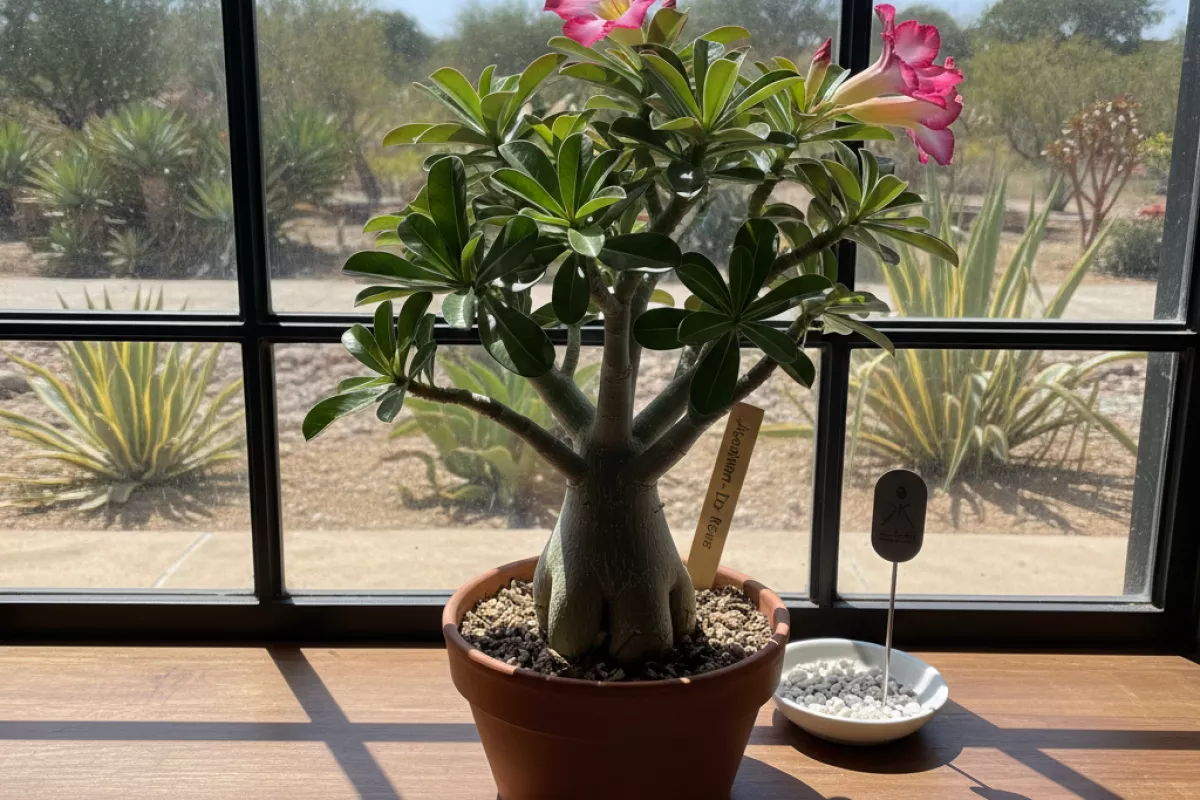
To keep Desert Rose short, sturdy, and well-proportioned, prioritize strong light from above and keep it consistent. When illumination is too weak or comes mainly from the side, stems stretch, internodes lengthen, and the caudex can look less “chunky” over time.
- Best placement indoors: a south- or west-facing window (north-facing is usually too dim). Rotate the pot about 90° every 7–10 days to prevent leaning and uneven growth.
- Outdoors in warm months: aim for 6–8 hours of direct sun daily. Introduce sun slowly over 7–14 days (start with morning sun, then extend exposure) to avoid sunburn.
- Signs it needs more light: long, thin shoots; wide gaps between leaves; pale new growth; the plant “reaches” toward the window.
- Signs it’s getting too much too fast: bleached patches, crisp edges, or sudden leaf drop after moving into intense sun. Provide light shade for a week and re-acclimate.
- Grow lights (if winter is dark): keep LEDs close enough to be effective but not hot—about 20–30 cm (8–12 in) above the canopy is a common starting range. Run them 12–14 hours per day to maintain compact growth.
- Heat through glass: in a very sunny window, leaves can overheat even when light is “right.” If the pane gets hot to the touch, add a sheer curtain or pull the plant back 10–20 cm (4–8 in) at midday.
| What you observe | What it usually means | What to adjust |
|---|---|---|
| Leggy stems, plant leans toward one side | Insufficient intensity and/or one-sided light | Move to a brighter spot, rotate weekly, or add a grow light 20–30 cm (8–12 in) above the plant |
| Small leaves, tight nodes, sturdy branches | Light level is supporting compact form | Keep conditions steady; avoid frequent location changes |
| Leaf scorch after moving outdoors | Sun shock from sudden exposure | Acclimate over 7–14 days; start with 1–2 hours of morning sun, then increase gradually |
| Leaves drop in winter despite no pests | Seasonal slowdown plus lower light (often normal) | Reduce watering and, if you want to hold shape, supplement 12–14 hours/day with LEDs |
One practical rule: if you’re trying to encourage a compact silhouette, fix light first before changing fertilizer or pruning. With strong illumination and a stable schedule, Adenium naturally builds thicker stems and a more balanced crown.
Soil drainage and watering strategy for Adenium
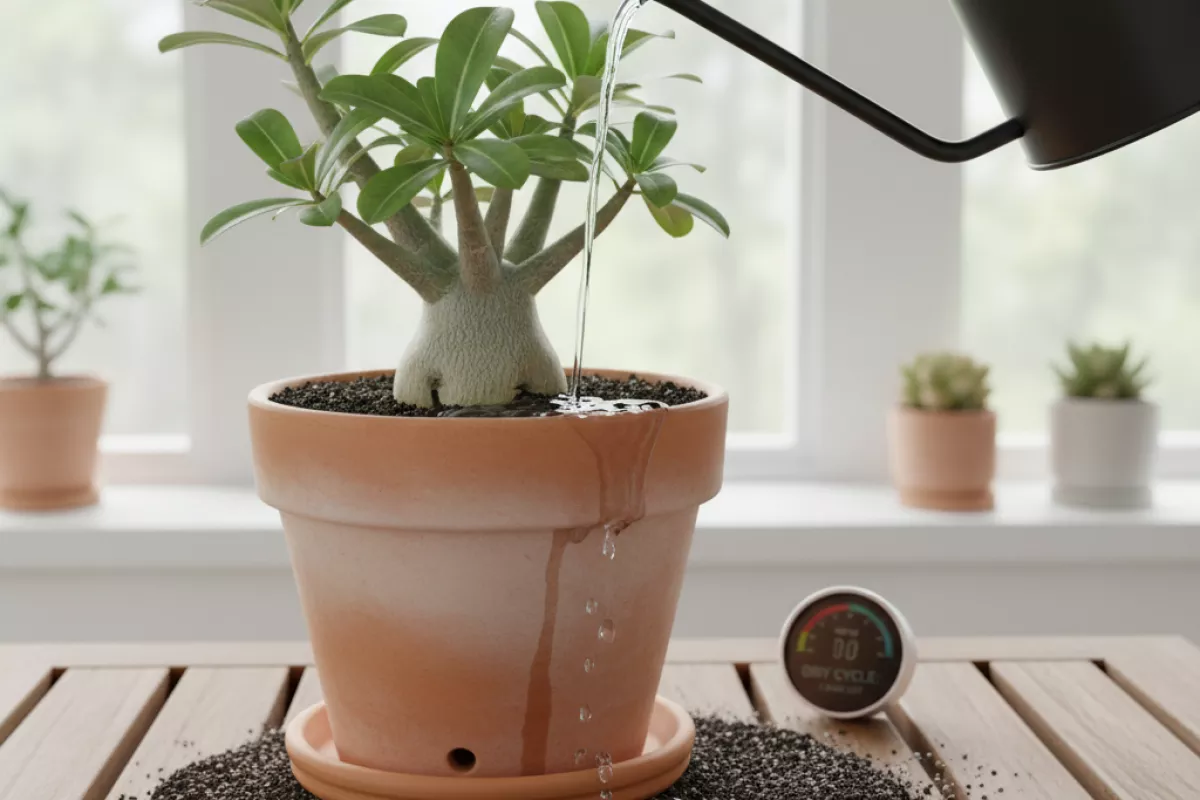
Root health is the whole game with desert roses: they want a fast-drying mix and a watering rhythm that matches active growth. If the root zone stays cool and wet for long, the caudex can soften and rot surprisingly quickly. Think “thorough soak, then real dryness,” not frequent sips. If you're unsure how often to water in your conditions, try a plant watering calculator to estimate a suitable schedule.
Drainage starts with the pot and the mix. Use a container with unobstructed drainage holes and avoid saucers that hold runoff. Terracotta dries faster than plastic, which can be helpful in humid homes. A gritty, airy substrate is safer than a peat-heavy houseplant soil because it keeps oxygen around the roots.
- Base mix idea: 50–70% mineral/gritty component (pumice, perlite, lava rock, coarse sand) + 30–50% organic component (cactus soil, fine bark, coco coir). The goal is a mix that drains in seconds and doesn’t stay soggy for days.
- Particle size matters: choose coarse material rather than powdery fines; dust compacts and slows drying.
- Skip “water-retaining” additives: heavy compost, garden soil, and moisture crystals keep the root zone wet too long.
- Top dressing (optional): a thin layer of gravel can reduce algae and fungus gnats, but don’t pile it thick enough to trap moisture.
Watering should follow the plant’s season. During warm, bright months, Adenium grows and can use more water; during cool or low-light periods, it slows down and needs far less. A reliable rule is to water only when the mix is dry most of the way down, not just on the surface.
| Situation | What to do | Why it works |
|---|---|---|
| Active growth in warm conditions (about 24–32°C (75–90°F)) | Water deeply until it drains freely, then wait until the pot is mostly dry before watering again. | Supports growth while preventing stagnant, oxygen-poor soil. |
| Cooler weather or low light (below about 18°C (64°F)) | Stretch intervals; water lightly or not at all if the plant is dormant and the mix stays damp. | Cold + wet is the most common trigger for rot. |
| After repotting | Let any root damage callus, then water sparingly at first; resume normal soaking once you see new growth. | Freshly disturbed roots are more vulnerable to infection. |
| High humidity or non-porous pot (plastic/glazed) | Use a grittier mix and extend dry time between waterings. | Slower evaporation means the root zone stays wet longer. |
How to check dryness without guessing: push a wooden skewer 5–8 cm (2–3 in) into the mix; if it comes out cool and dark, wait. You can also lift the pot—Adenium pots feel noticeably lighter when dry. If you use a moisture meter, treat it as a second opinion and still confirm by feel.
- Watering method: soak the entire root ball, then discard drainage water. Partial watering encourages shallow roots and leaves wet pockets.
- Watch the caudex: a slight give can be normal when very dry, but a soft, mushy feel (especially with yellowing leaves) is a warning sign.
- Common mistake: watering on a schedule. Light, temperature, pot type, and mix can double or halve drying time.
Temperature tolerance and Adenium heat preferences
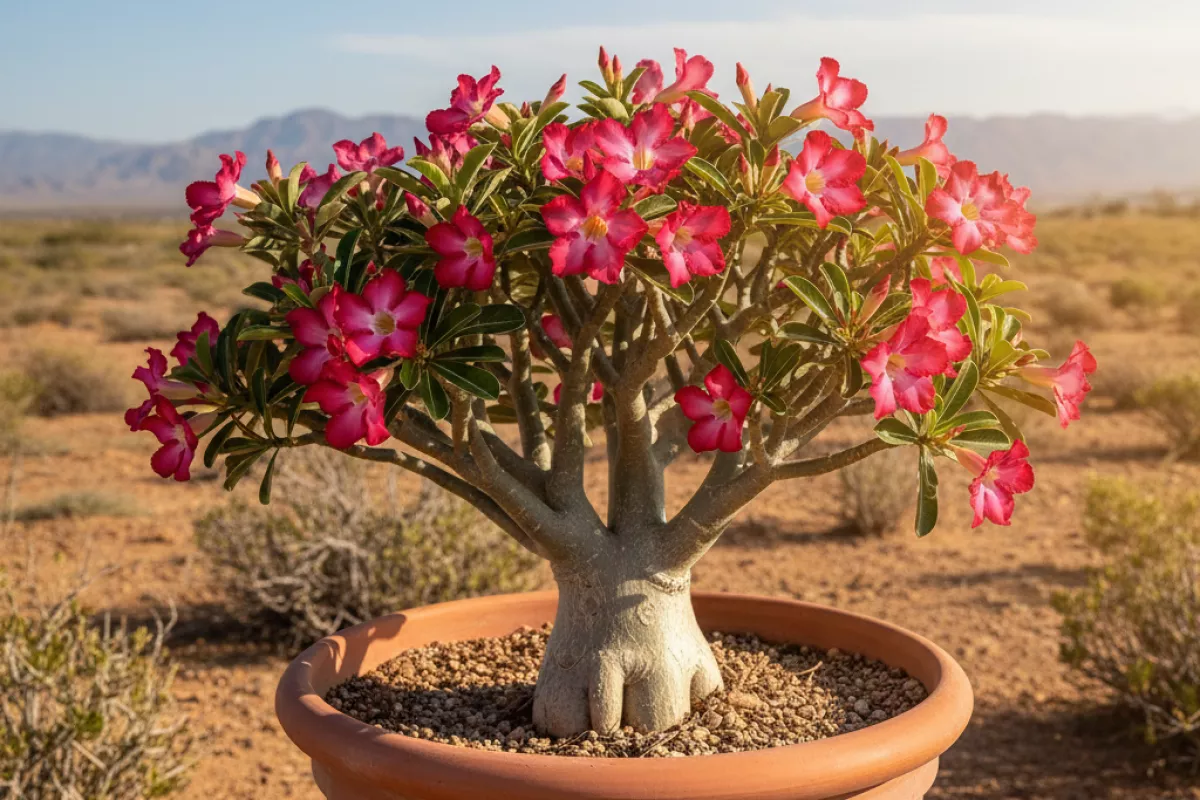
Adenium is built for warmth and bright light, and it behaves most predictably when days are hot and nights stay mild. In consistently warm conditions it keeps active growth, while cooler spells tend to slow it down or trigger leaf drop. Think of it as a plant that can handle heat far better than it can handle cold, especially when its roots are kept on the dry side.
| Temperature range | What Adenium typically does | What to do (quick guidance) |
|---|---|---|
| 30–40°C (86–104°F) | Thrives if light is strong; can dry fast and pause flowering if stressed | Water deeply but only after the mix dries; increase airflow; provide light mid-day shade if leaves scorch |
| 20–30°C (68–86°F) | Ideal zone for steady growth and blooming | Keep in full sun with gradual acclimation; fertilize lightly during active growth |
| 15–20°C (59–68°F) | Growth slows; may start dropping leaves, especially with low light | Reduce watering frequency; maximize light; avoid cool, wet soil |
| 10–15°C (50–59°F) | High risk of rot if watered; dormancy-like behavior common | Keep almost dry; move to a warmer spot; stop feeding until warmth returns |
| Below 10°C (below 50°F) | Cold damage risk; tissue can soften and blacken, especially if damp | Bring indoors before nights dip; keep dry; provide gentle warmth and bright light |
Heat itself usually isn’t the problem; the combination of heat and a too-dry root zone is what causes stress. Signs of overheating or drought stress include curled leaves, dull color, and buds that abort before opening. If the plant is in a small pot, the root ball can bake quickly on patios or in dark containers, so pot color and placement matter more than people expect.
- Acclimate to full sun gradually: a week or two of increasing exposure helps prevent sunburn, especially after indoor wintering.
- Keep roots warm, not soggy: warm soil plus frequent watering is fine only when the mix drains fast; cool soil plus watering is where rot starts.
- Watch night temperatures: when nights fall under about 15°C (59°F), treat it like a slowdown period and let the pot dry more between waterings.
- Use airflow as a heat tool: a breezy spot reduces leaf scorch and helps the potting mix dry evenly during hot spells.
If you grow Adenium outdoors seasonally, plan the move indoors early rather than “after the first cold night.” A single chilly, wet evening can set back roots for weeks. Indoors, aim for the warmest bright window or supplemental light, and keep watering conservative until temperatures return to a consistently warm range.
Maintenance for healthy caudex development
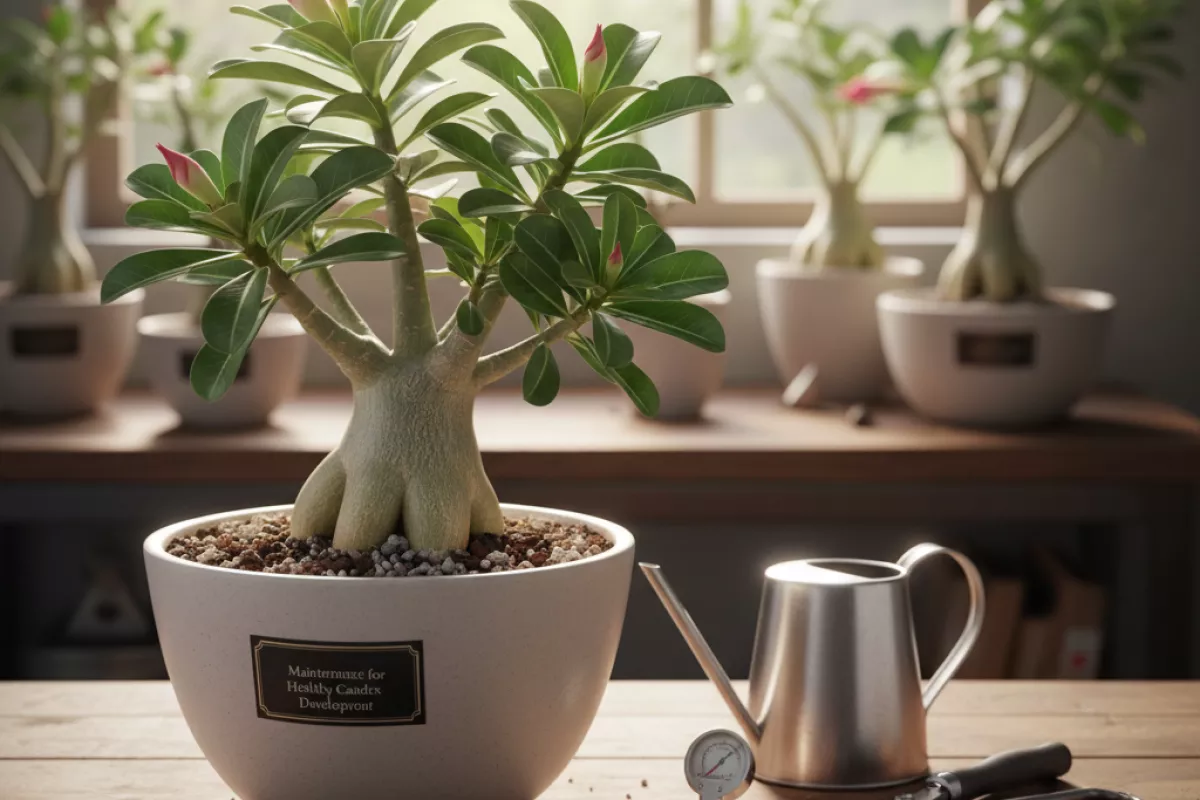
Thickening the swollen base is mostly about steady light, careful watering, and giving the roots room to breathe. The caudex stores moisture, so the goal is to encourage slow, sturdy growth rather than quick, soft tissue that can split or rot.
- Light first, then water. Keep the plant in very bright light with a few hours of direct sun when possible; stronger light helps the trunk stay compact and firm. If you move it outdoors, increase sun exposure over 7–14 days to avoid sunburn.
- Use a gritty, fast-draining mix. A mineral-heavy substrate (pumice, perlite, coarse sand, lava rock) reduces the chance of a waterlogged base. Organic material is fine in moderation, but the pot should never stay wet for days.
- Water deeply, then let it dry. During active growth, soak the mix until water runs out, then wait until it’s dry well below the surface before watering again. In cooler or low-light periods, stretch the interval; a caudiciform that stays damp is far more likely to rot than one that’s slightly dry.
- Match temperature to moisture. Warm conditions support safe watering; cool conditions do not. As a rough guide, be more conservative below about 18°C (65°F), and avoid leaving the mix wet overnight when temperatures drop.
- Choose the right pot shape. A shallow, wider pot can help spread roots and visually balance the swollen base, while still drying faster than a deep container. Whatever the shape, prioritize drainage holes and a pot that isn’t oversized.
- Repot on a sensible rhythm. Every 1–2 years, refresh the mix and inspect roots. Trim dead or mushy roots with a clean blade, then let cuts dry and callus for 24–72 hours before replanting (longer in humid conditions).
- Gradual “lifting” for form. If you want a more exposed, sculptural look, raise the plant a little at each repot rather than all at once. Lifting by about 1–2 cm (0.4–0.8 in) per repot reduces stress and helps newly exposed tissue harden without cracking.
- Feed lightly, not constantly. Use a diluted fertilizer during the growing season (for example, 1/4–1/2 strength). Too much nitrogen can push weak, watery growth; a balanced feed supports steady thickening and better flowering.
- Rotate for even swelling. Turn the pot about a quarter turn every 1–2 weeks so one side doesn’t stretch toward the light. More even light exposure helps the base develop symmetrically.
- Watch for early warning signs. A soft spot at the base, sour smell, or sudden yellowing can signal rot. Unpot immediately, remove affected tissue, let it dry, and re-root in a drier mix. Wrinkling with a firm trunk usually means it’s simply thirsty.
If you’re aiming for a thicker caudex, patience matters more than tricks. Consistent bright light, a drying cycle that fits your temperature, and periodic root checks will do more for long-term structure than frequent watering or heavy feeding.
Propagation from seed and cuttings
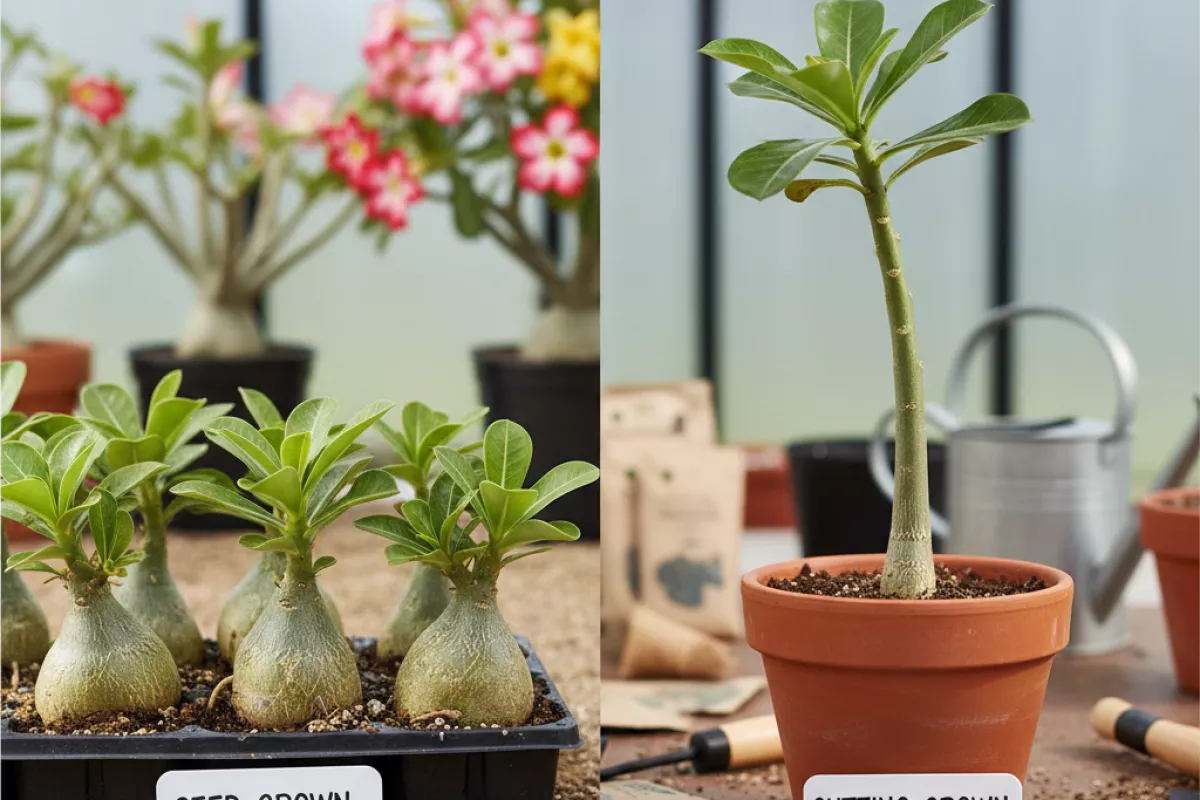
New plants can be started either by sowing seeds or by rooting stem pieces, and the method you choose affects the look of the mature adenium. Seed-grown plants tend to develop a fuller caudex (the swollen base) and more natural variation, while cuttings usually clone the parent’s flowers and branching but may stay slimmer at the base.
Growing adenium from seed
Seeds are the best route if you want that classic thickened trunk and don’t mind a bit of unpredictability in flower color. Fresh seed matters; older seed often germinates unevenly.
- Prep the mix: Use a fast-draining medium (for example, cactus mix cut with extra perlite or pumice). A shallow tray or small pots work well.
- Optional soak: Soak seeds 2–4 hours in clean water at room temperature 20–25°C (68–77°F) to speed hydration, then drain.
- Sow: Lay seeds on the surface and cover lightly with about 3–5 mm (0.1–0.2 in) of mix so they don’t dry out.
- Warmth and light: Keep at 26–32°C (79–90°F) in bright, indirect light. Bottom heat helps if your room is cool.
- Moisture control: Keep the medium lightly moist, not wet. Good airflow reduces damping-off.
- After sprouting: Once seedlings have several true leaves, gradually increase sun exposure and let the top layer dry slightly between waterings.
Transplant gently when roots fill the container; disturbing the young caudex can slow growth. If you’re shaping for a pronounced base, avoid burying the swollen portion too deeply during early pot-ups.
Rooting adenium from cuttings
Stem cuttings are useful when you want an exact copy of a favorite plant or you’re salvaging a broken branch. The trade-off is that the caudex often stays less dramatic than in seed-grown plants.
- Choose the cutting: Take a healthy, non-flowering tip about 10–15 cm (4–6 in) long. Remove lower leaves so the stem can sit cleanly in the medium.
- Let it callus: Allow the cut end to dry 2–7 days in a shaded, airy spot. This step is key for rot prevention.
- Plant in a gritty mix: Insert the callused end into a very free-draining medium. Keep the pot small to avoid staying wet too long.
- Water sparingly: Moisten once, then wait until the mix is mostly dry before watering again. Constant moisture is the fastest way to lose a cutting.
- Light and temperature: Provide bright light and warmth around 24–30°C (75–86°F). Avoid hot midday sun until roots form.
When you feel resistance after a gentle tug, roots are forming. At that point, shift toward normal care, but still err on the dry side until you see steady new growth.
| Method | Why choose it | Typical timeline | Main risk to manage |
|---|---|---|---|
| Seed sowing | Best chance of a thick caudex; lots of natural variation | Germination often in 3–10 days at 26–32°C (79–90°F) | Damping-off from stale air and excess moisture |
| Stem cuttings | Clones the parent; good for preserving flower traits | Callus 2–7 days, then rooting commonly in 2–6 weeks | Rot if planted before callusing or kept too wet |
| Grafting (advanced) | Fast way to combine a strong base with a chosen flower variety | Union typically stabilizes in 2–4 weeks in warm conditions | Failed union if cuts dry out or shift during healing |
| Division (rare) | Only possible with naturally multi-stemmed plants | Recovery often takes 4–8 weeks after separation | Stress and infection at cut surfaces |
Clean tools and patience matter more than additives. Use a sterile blade, keep cut surfaces dry while they heal, and don’t rush watering. With adenium, most propagation failures trace back to cool temperatures and a mix that stays damp too long.
Seasonal dormancy and flowering cycle
Adenium doesn’t grow at the same pace all year. It tends to alternate between an active phase (leafy growth and blooms) and a resting phase where it slows down, drops leaves, and focuses on conserving water in its caudex. Learning to read these shifts is one of the biggest “care upgrades,” because watering and feeding that work in summer can cause rot in winter.
What triggers the slowdown is usually a mix of shorter days, cooler temperatures, and reduced light indoors. In warm, bright conditions it may stay semi-active, but many plants still pause for a few weeks. Leaf drop alone isn’t automatically a problem; it’s often a normal response to seasonal change.
- Active growth: New leaves, longer shoots, and faster drying soil. This is when the plant uses water and nutrients efficiently.
- Rest period: Little to no new growth, possible yellowing and leaf drop, and soil that stays damp longer. This is when overwatering is most risky.
| Phase | Typical signs | Water approach | Feeding and pruning |
|---|---|---|---|
| Spring “wake-up” | Buds swell, fresh leaves appear, stems firm up | Increase gradually; water only after the mix dries fully | Start light feeding once steady growth begins; prune after new growth is evident |
| Summer growth and bloom | Fast growth, frequent drying, possible heavy flowering | Deep watering, then let it dry; don’t keep it constantly moist | Regular feeding at reduced strength; shape-prune after a bloom flush if needed |
| Autumn slowdown | Fewer new leaves, slower drying, blooms taper off | Stretch intervals; confirm dryness deeper in the pot before watering | Reduce fertilizer; avoid major pruning late in the season |
| Winter rest | Minimal growth, leaf drop, soil stays wet longer | Very sparing; in cool rooms many growers water lightly only when the caudex begins to soften | Stop feeding; postpone pruning until spring unless removing dead tissue |
Flowering is usually strongest when the plant has had a clear “on/off” rhythm: bright light during the active months, then a cooler, drier break. Many Adenium bloom on new growth, so a healthy spring push often sets up the next flush of flowers. If you’re aiming for more blooms, prioritize light and warmth during the growing season and avoid keeping the pot wet when the plant is resting.
Temperature matters. As a rough guide, growth slows noticeably below about 18°C (65°F), and dormancy is more likely if nights regularly dip near 15°C (59°F) or lower. If your plant is kept warmer than 22°C (72°F) with strong light, it may not go fully dormant, but you should still adjust watering to match how slowly the soil dries.
Common Adenium problems and rot risks
Most setbacks with desert rose come from one theme: the plant stores water in its caudex and roots, so it tolerates drought far better than constant moisture. When conditions stay cool, dim, or soggy, fungal and bacterial issues can move fast, and damage is often hidden until the trunk softens. On the opposite end, hot, dry indoor air can trigger pests like spider mites—and if the infestation is heavy, follow a dedicated spider mite treatment plan alongside correcting light and watering.
| What you notice | Likely cause | What to do now | How to prevent it next time |
|---|---|---|---|
| Caudex feels soft, squishy, or weeps; leaves yellow and drop quickly | Root/caudex rot from staying wet, especially below 18°C (65°F) | Unpot, remove all mushy tissue, let cuts dry 24–72 hours, then repot in gritty mix; water only after new growth | Fast-draining substrate, pot with drainage, water only when fully dry; keep warmer than 20°C (68°F) when watering |
| Blackened base, sour smell, sudden collapse | Advanced bacterial rot | Cut back to firm, clean tissue; disinfect tools; discard severely infected plants to protect others | Avoid splashing soil onto wounds, don’t water in cool/dim conditions, isolate new plants for 2–3 weeks (14–21 days) |
| Wrinkled caudex but soil is wet; roots look brown and brittle | Roots already failing, so the plant can’t take up water | Trim dead roots, dry out, repot; hold water until you see active growth | Use a pot size that matches the root ball; avoid “just in case” watering |
| Leaves curl, stipple, or turn silvery; fine webbing or tiny moving dots | Spider mites (common in hot, dry indoor air) | Rinse foliage, then treat with insecticidal soap or horticultural oil; repeat every 7 days (1 week) for 3 rounds | Improve airflow, inspect weekly, keep plant less stressed (bright light, correct watering) |
| White cottony clusters in leaf axils; sticky residue | Mealybugs | Remove with alcohol-dampened swab; follow with soap/oil treatment; isolate plant | Check undersides and nodes, avoid excess nitrogen, quarantine new arrivals for 14–21 days (2–3 weeks) |
| Soft new growth, clusters of small green/black insects; distorted buds | Aphids | Blast off with water, then treat with soap; focus on areas where aphids hide on plants | Don’t overfertilize; watch buds closely during active growth |
| Brown, sunken spots on leaves; leaf drop after cool nights | Cold stress or water sitting on foliage in cool air | Move to warmer, brighter spot; remove damaged leaves; keep foliage dry | Protect from drafts; keep above 12°C (54°F), and avoid watering late in the day when nights are cool |
| Bud drop or weak flowering despite healthy leaves | Not enough light, irregular watering, or sudden environment change | Stabilize care, increase light gradually, water deeply only after full dry-down | Provide strong light, rotate pot weekly, and keep a consistent routine during bud set |
- Quick rot check: press the caudex gently. Firm is good; any soft area that enlarges over 24–48 hours is a red flag.
- After pruning or repotting: keep the plant dry until cuts callus. In warm conditions around 25–30°C (77–86°F), this is often 1–3 days (24–72 hours).
- Season matters: in winter dormancy, water needs can drop sharply. If nights are under 18°C (65°F), err on the dry side.
- Tool hygiene: disinfect blades between cuts to avoid spreading rot; let the wound dry before any watering.
If you’re unsure whether you’re seeing drought stress or early decay, trust the roots and trunk more than the leaves. A slightly wrinkled caudex in dry mix is usually recoverable with a careful soak once temperatures are warm; a soft trunk in wet mix is an emergency that calls for drying and surgery, not more water.