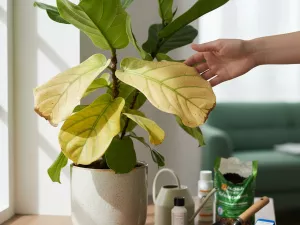
Overwatering Risk Calculator for Indoor Plants

 This overwatering risk calculator helps you understand if you are watering your indoor plant too much. It evaluates key factors such as pot size and material, drainage, soil mix, light level, temperature, airflow, and watering habits. You also can select visible symptoms like yellow leaves, soft stems, or fungus gnats. Based on your inputs, the tool estimates overwatering risk and explains the main causes and next steps.
- What Is Overwatering and Why It’s Dangerous
- Am I Overwatering My Plant?
- Common Signs and Symptoms of Overwatering
- How the Overwatering Risk Calculator Works
- How to Use the Calculator
- Factors That Increase Overwatering Risk
- Example Calculator Results Explained
- Common Watering Mistakes to Avoid
- What to Do If You Are Overwatering
- Frequently Asked Questions
Overwatering is one of the most common and misunderstood causes of indoor plant problems. Many symptoms that look like underwatering — yellow leaves, drooping, leaf drop — are actually caused by roots sitting in soil that stays wet for too long. This article explains what overwatering really is, why it damages plants, and how to understand whether your plant is getting too much water.
What Is Overwatering and Why It’s Dangerous
Overwatering does not mean watering too often by itself. A plant is considered overwatered when its roots remain in wet soil long enough to lose access to oxygen. Roots need both water and air. When soil pores stay filled with water, oxygen levels drop and root tissue begins to suffocate.
To better understand how often to water in your specific environment and avoid accidental overwatering, you can use a tool that helps you calculate watering frequency based on pot size, light, temperature, and soil mix — instead of guessing or relying on a fixed routine.
In well-aerated soil, excess water drains away and fresh air is pulled into the root zone. In compacted or constantly wet soil, this exchange stops. Within 24–72 hours of poor oxygen availability, fine feeder roots can begin to die. Once roots are damaged, the plant can no longer regulate water uptake properly.
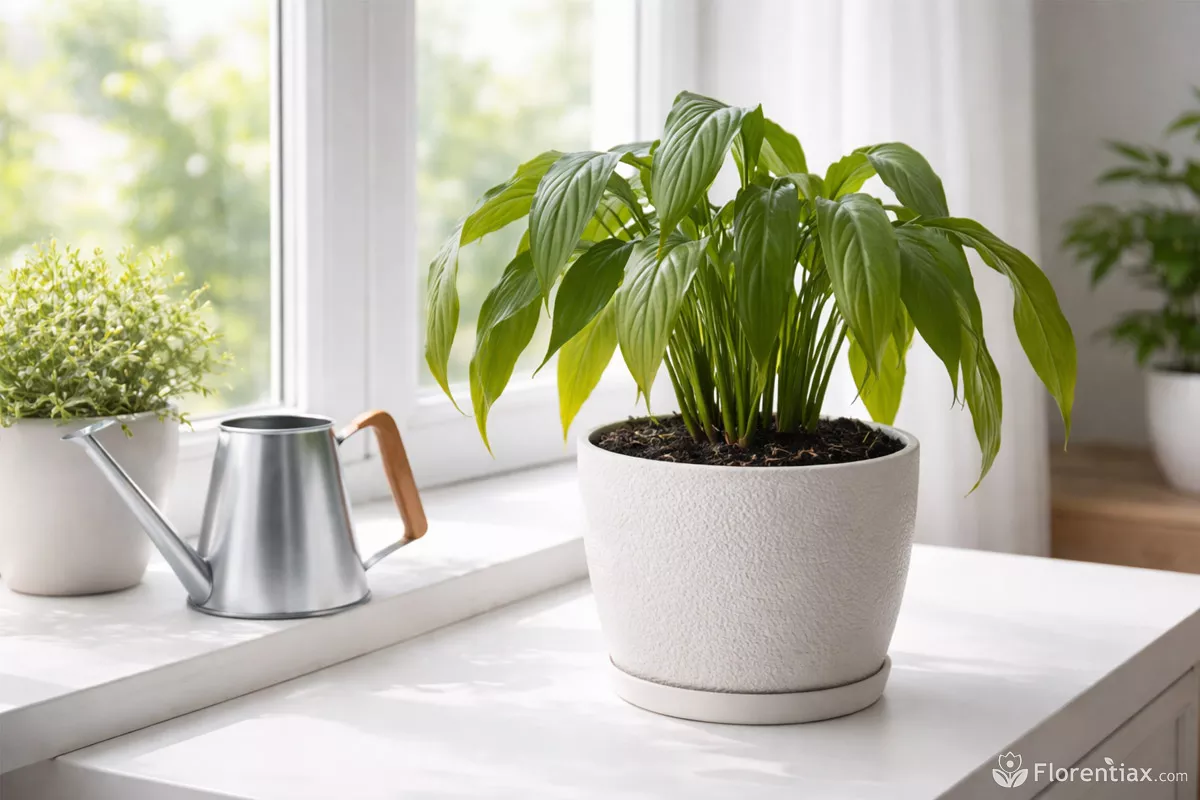
This is why overwatered plants often look thirsty even though the soil is wet. Damaged roots cannot absorb water efficiently, so leaves lose turgor, turn yellow, or fall off. Continued overwatering creates ideal conditions for fungal pathogens and root rot.
Maintaining proper soil moisture for roots is critical: moist enough for uptake but dry enough to allow air exchange. Balancing moisture instead of keeping the soil constantly wet helps roots stay healthy and prevents both oxygen deprivation and root diseases.
Overwatering is especially dangerous because:
- It develops gradually and is easy to miss early.
- Symptoms often mimic underwatering or nutrient deficiency.
- Root damage occurs before visible leaf symptoms appear.
- Recovery is slow once roots are compromised.
Factors like low light, cool temperatures, large pots, and poor drainage dramatically increase the risk. A plant watered “normally” in summer may become overwatered in winter even with the same routine.
Am I Overwatering My Plant?
Many plant owners ask this question only after visible damage appears. Unfortunately, by the time leaves turn yellow or start dropping, root stress may already be present. That is why understanding early indicators is critical.
Overwatering is likely if several of the following conditions apply at the same time:
- The soil stays wet for more than 4–5 days after watering.
- The pot has no drainage holes or poor drainage.
- The plant sits in low light or cool conditions below 20°C (68°F).
- The pot is large relative to the plant’s root system.
- The soil mix is dense, peat-heavy, or compacted.
Visual symptoms alone can be misleading. Yellow leaves, soft stems, leaf drop, and slow growth are often blamed on underwatering, but they are equally common in overwatered plants. Even wilting can occur when roots are unable to supply water due to oxygen deprivation.
The most reliable way to assess overwatering risk is to evaluate the entire setup: pot, soil, environment, and watering habits together. This is exactly what the overwatering risk calculator is designed to do — combine multiple factors instead of relying on a single sign.
If you are unsure whether your plant needs water, it is usually safer to wait. A slightly dry plant recovers faster than one with damaged roots.
Common Signs and Symptoms of Overwatering
Overwatering symptoms can be confusing because many of them look similar to underwatering or nutrient problems. The key difference is that overwatering affects the roots first. Leaves show damage only after the root system has already been stressed for some time.
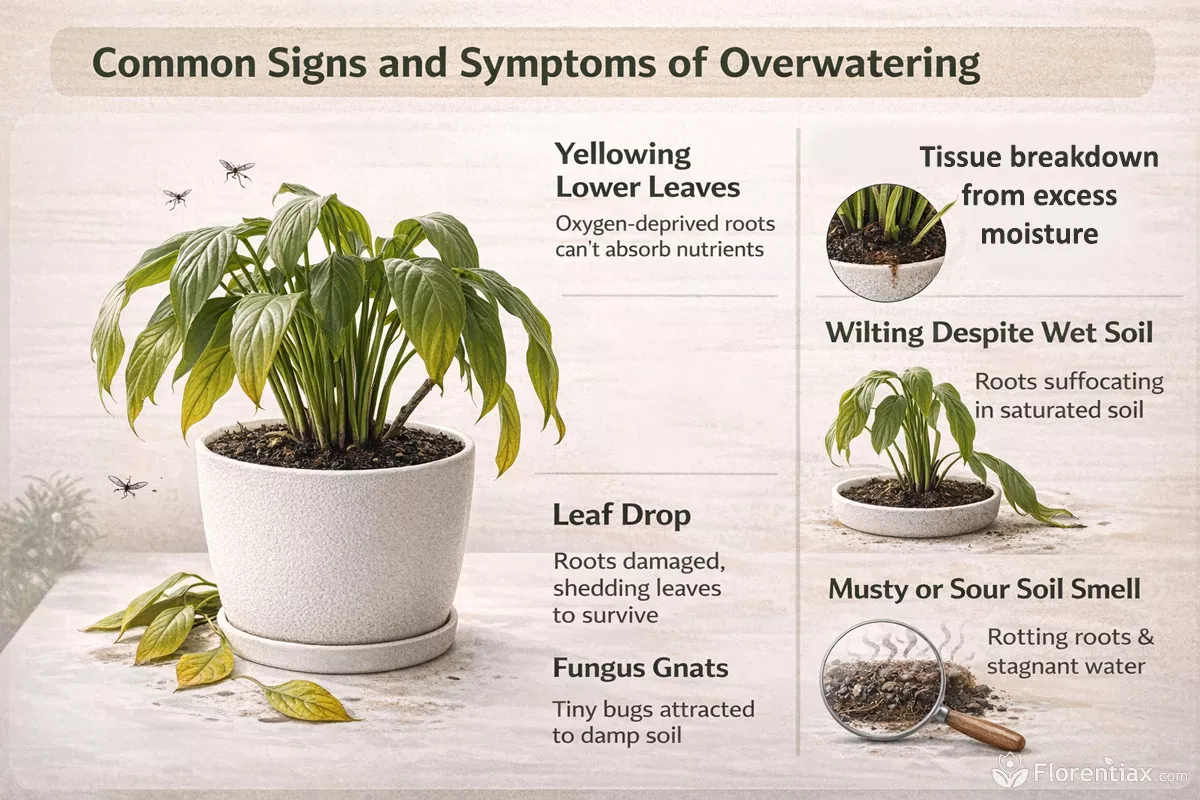
Below are the most common signs that indicate excess moisture in the root zone rather than a lack of water. Before diving into symptoms, it’s useful to understand how substrate matters: soil structure and root health are tightly linked. Soil texture and pore space control how water and air move around roots — and poor structure can make even good watering habits harmful.
| Visible sign | What it usually means |
|---|---|
| Yellowing lower leaves | Roots cannot absorb nutrients due to low oxygen in wet soil |
| Soft or mushy stems | Advanced moisture stress, often linked to early root rot |
| Leaf drop | Plant sheds leaves to reduce water demand when roots are damaged |
| Wilting despite wet soil | Roots are suffocating and cannot move water upward |
| Fungus gnats | Consistently moist soil creates ideal breeding conditions |
| Musty or sour soil smell | Anaerobic bacteria and decaying organic matter in waterlogged soil |
How the Overwatering Risk Calculator Works
The overwatering risk calculator evaluates how likely it is that a plant’s roots remain wet for too long under current conditions. Instead of asking only how often you water, it analyzes the entire growing setup.
The calculator assigns weighted values to each input group:
- Container factors — pot size, material, and drainage holes affect how long water stays in the soil.
- Soil behavior — dense mixes retain moisture longer than airy, well-draining substrates.
- Environmental conditions — light, temperature, and airflow influence evaporation and plant water use.
- Watering habits — frequency, method, and timing of the last watering.
- Observed symptoms — visible indicators that often appear when roots are stressed.
Each factor increases or decreases the overall risk score. For example, a large plastic pot in low light with dense soil will push the score higher, while good drainage, bright indirect light, and airy soil reduce risk.
The final result groups the total score into three categories: low, medium, or high overwatering risk. Along with the risk level, the calculator highlights which inputs contributed most to the outcome, helping you understand what to adjust first.
How to Use the Calculator
The overwatering risk calculator is designed to be simple, but accuracy depends on choosing options that reflect real conditions. Do not select what seems “correct” in theory — select what actually happens with your plant.
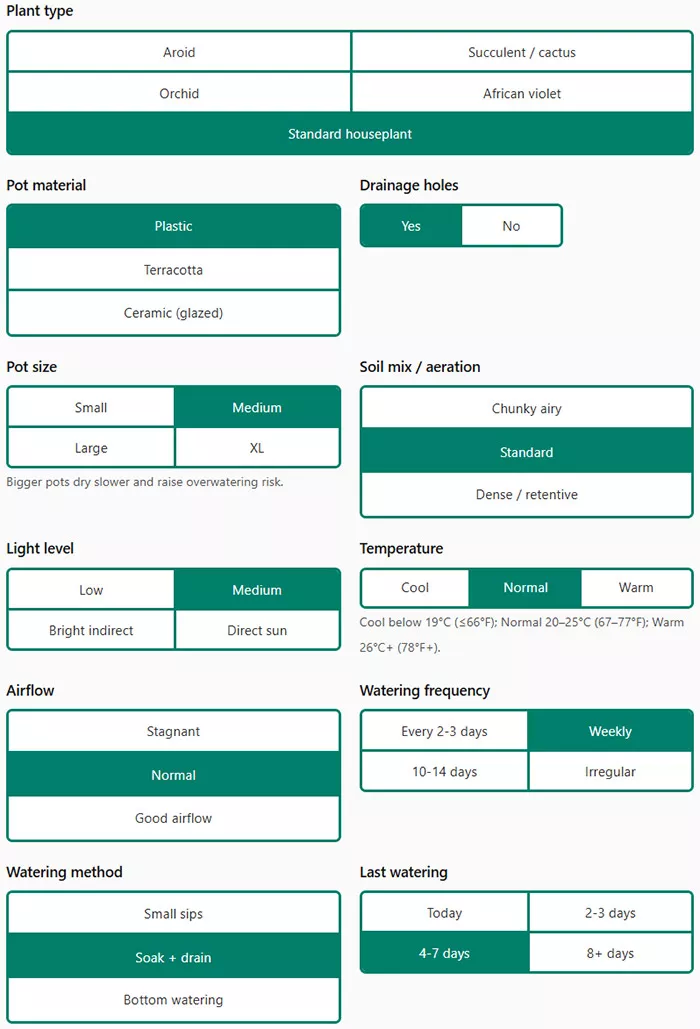
Use the calculator step by step:
- Select plant type
Different plants tolerate moisture differently. Succulents and cacti react much faster to excess water than most foliage plants. - Choose pot size and material
Larger pots and non-breathable materials like plastic or glazed ceramic slow drying. - Set soil mix and aeration
Dense, peat-heavy soil holds water longer than mixes with bark, perlite, or pumice. - Define light, temperature, and airflow
Low light and cool air slow evaporation. Higher light and airflow increase drying speed. - Describe watering habits
Include frequency, method (top watering, soaking, bottom watering), and time since last watering. - Add visible symptoms if present
Yellow leaves, soft stems, fungus gnats, or musty smell strongly affect the risk score.
If you are unsure between two options, choose the one closer to reality. The calculator is tolerant of small errors, but misleading inputs can distort the final risk level.
Factors That Increase Overwatering Risk
Overwatering rarely happens because of one mistake. It is usually the result of several risk factors combining together. Understanding these factors helps prevent problems before symptoms appear.
| Risk factor | Why it increases overwatering risk |
|---|---|
| Large pot for a small plant | Excess soil stays wet long after roots stop using water |
| No drainage holes | Water accumulates at the bottom and suffocates roots |
| Plastic or glazed ceramic pots | Moisture cannot escape through the pot walls |
| Dense or compacted soil | Air pockets collapse and oxygen supply drops |
| Low light conditions | Plants use less water and dry much slower |
| Cool temperatures | Evaporation slows below 20°C (68°F) |
| Frequent “small sips” watering | Soil never fully dries and remains constantly damp |
Any one of these factors alone may not cause problems. However, when several are present at the same time, even moderate watering can lead to chronic root stress.
Example Calculator Results Explained
The calculator result is more than a simple warning. It explains how different factors combine to create a low, medium, or high overwatering risk. Understanding these examples helps you interpret your own result correctly.
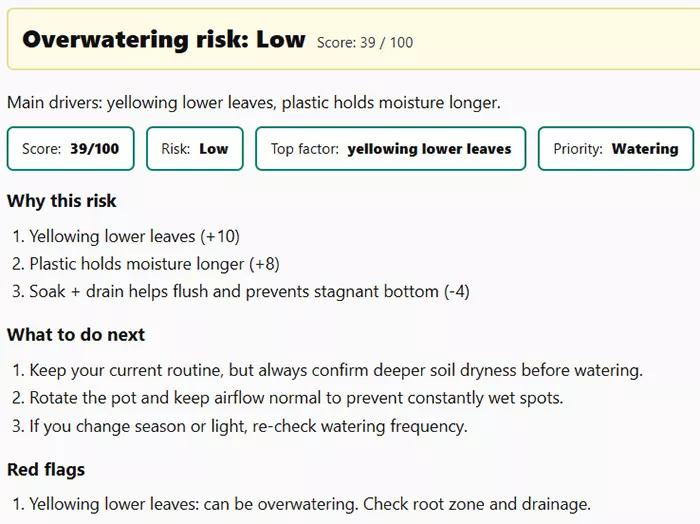
Below are typical result patterns and what they usually mean in real conditions.
| Result pattern | What it indicates |
|---|---|
| Low risk, no symptoms | Soil dries between waterings, roots receive enough oxygen |
| Medium risk, no visible damage | Conditions are borderline; small changes can prevent problems |
| Medium risk with yellow leaves | Early root stress, often caused by slow drying soil |
| High risk with soft stems | Roots likely sitting in wet soil too long; rot may be starting |
| High risk with fungus gnats | Chronic moisture retention and organic decay in soil |
A high-risk result does not always mean irreversible damage. In many cases, adjusting watering frequency, improving drainage, or increasing light can reverse early-stage stress before roots are permanently harmed.
Common Watering Mistakes to Avoid
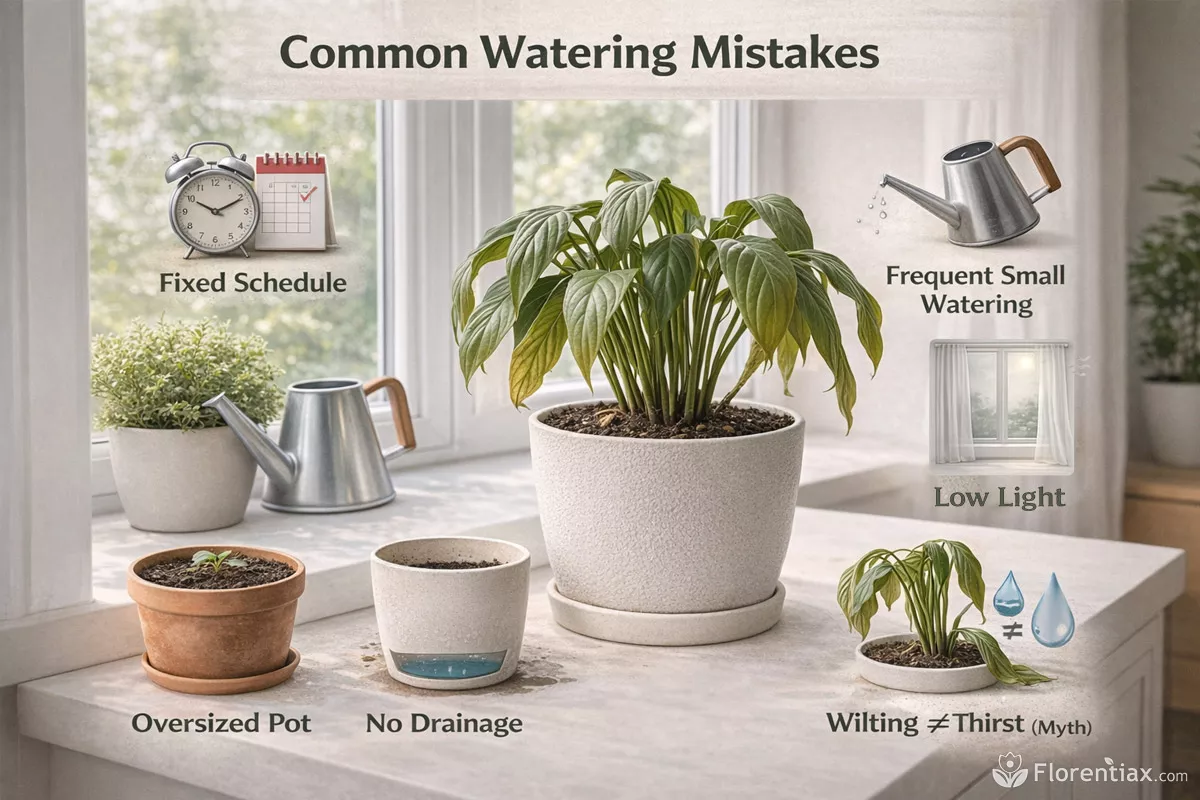
Most overwatering problems come from habits that feel helpful but actually keep soil too wet. These mistakes are extremely common, especially among careful plant owners.
| Common mistake | Why it causes problems |
|---|---|
| Watering on a fixed schedule | Ignores seasonal changes and drying speed |
| Adding small amounts frequently | Prevents soil from drying and traps moisture |
| Using oversized pots | Roots cannot dry the excess soil volume |
| No drainage layer or holes | Standing water accumulates at the bottom |
| Low light with normal watering | Plant uses less water but receives the same amount |
| Assuming wilting means thirst | Wilting often occurs in overwatered plants as well |
What to Do If You Are Overwatering
If the calculator shows medium or high overwatering risk, the most important thing is to act calmly and systematically. Overwatering damage usually develops gradually, which means early correction can fully restore plant health.
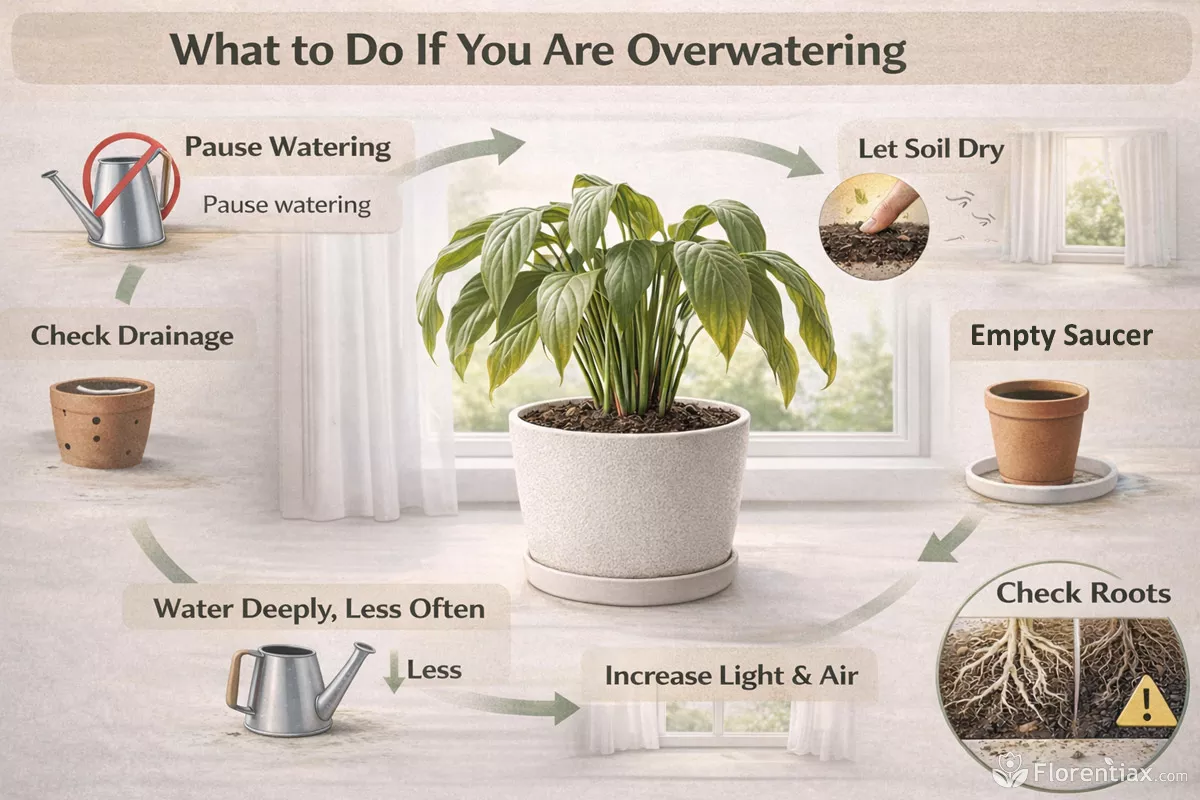
Start by adjusting watering habits first, before changing soil or repotting. In many cases, simple changes are enough.
- Stop watering temporarily. Allow the soil to dry until at least the top 5–7 cm (2–3 inches) is dry. For large pots, this may take several days longer.
- Check drainage. Make sure excess water can escape freely. If water stays in the saucer for more than 10–15 minutes, empty it immediately.
- Increase light exposure. Move the plant to brighter indirect light. More light increases water uptake and speeds soil drying.
- Improve airflow. Gentle air movement helps moisture evaporate from the soil surface and reduces fungal growth.
- Switch to deep, infrequent watering. When you water again, water thoroughly until runoff appears, then wait until the soil partially dries before the next watering.
If symptoms persist after improving watering habits, inspect the roots. Healthy roots are firm and light-colored. Brown, black, or mushy roots indicate rot and require immediate action.
In advanced cases, repot the plant into fresh, well-draining soil and remove damaged roots. This step is usually necessary only when soft stems, strong odor, or rapid leaf loss are present.
Most plants recover well once oxygen returns to the root zone. Consistent drying cycles and proper drainage are more important than any fertilizer or treatment when correcting overwatering.
Frequently Asked Questions
Below are the most common questions people ask when they suspect overwatering. These answers are based on practical indoor plant care experience and explain not only what is happening, but how to fix it correctly.
1. Why is my plant drooping — am I overwatering or underwatering?
Drooping can happen from both overwatering and underwatering — the difference is what the soil and leaves feel like. With overwatering, the soil is usually still damp 5–7 cm (2–3 inches) down, and leaves often feel soft, heavy, or slightly translucent. With underwatering, the soil is dry deeper down, the pot feels very light, and leaves look thin, limp, and may turn crispy at the edges.
Do a quick check: lift the pot and test deeper soil moisture. If the pot is heavy and the root zone is still moist, stop watering and let it dry. If the pot is very light and the soil is dry through the root zone, water thoroughly until water drains out, then wait until it partially dries again.
If drooping happens while the soil is wet and you also see yellowing lower leaves, fungus gnats, or a musty smell, treat it as overwatering and focus on drying, airflow, and drainage.
2. What are the most common signs of overwatering indoor plants?
Typical overwatering symptoms include yellowing lower leaves, soft or mushy stems, fungus gnats, musty soil smell, and leaf drop. These signs often appear together, not individually.
Unlike underwatering, overwatering damage progresses slowly and is often missed until roots are already stressed.
3. Can yellow leaves mean overwatering?
Yes, yellow leaves are one of the most common signs of overwatering, especially when they appear on lower leaves first. When roots remain wet and oxygen-deprived, nutrient uptake slows and chlorosis develops. In persistent cases, this pattern may indicate deeper problems related to yellow leaves and root rot, rather than a simple watering mistake. If yellow leaves feel soft rather than dry and crispy, excess water is the likely cause.
4. How often should I water my indoor plant?
There is no universal schedule. Watering frequency depends on pot size, soil mix, light level, temperature, and airflow.
Instead of watering by calendar, water only when the soil reaches the correct dryness level. Most indoor plants prefer drying slightly between waterings.
5. Can a plant recover from overwatering?
Yes, most plants can recover if overwatering is corrected early. Roots regenerate quickly once oxygen returns to the soil. Stop watering, improve drainage, increase light, and allow proper drying cycles. Only severe root rot requires repotting.
6. Is it better to underwater or overwater plants?
Underwatering is usually less dangerous than overwatering. Dry roots can recover quickly, while waterlogged roots may rot within days. It is safer to slightly underwater than to keep soil constantly wet.
7. How do I know if soil is too wet below the surface?
The soil surface can look dry while deeper layers remain saturated. Use a finger, wooden stick, or moisture meter to check deeper levels. If the stick comes out damp or dark after insertion, the soil is still too wet.
8. Does pot size affect overwatering risk?
Yes. Large pots hold more soil and dry much slower. Small root systems in oversized pots are especially vulnerable to overwatering. Choose a pot size that closely matches the root ball, with no more than 2–4 cm (1–2 inches) of extra space.
9. Do drainage holes really matter?
Drainage holes are critical. Without them, excess water has nowhere to escape, creating permanently wet soil. Even well-draining soil cannot compensate for a pot without drainage holes.
10. Can overwatering cause fungus gnats?
Yes. Fungus gnats thrive in consistently moist soil. Their presence is often a clear sign of overwatering. Allowing soil to dry properly between waterings usually eliminates gnats without chemicals.
11. Should I repot an overwatered plant immediately?
Not always. If roots are still firm and healthy, drying the soil is often enough. Repot only if you notice mushy roots, strong odor, or rapid decline despite correcting watering habits.
12. How can I prevent overwatering in the future?
Use a well-draining soil mix, choose the right pot size, ensure proper drainage, and adjust watering based on light and temperature. Tools like overwatering risk calculators help identify hidden risk factors before damage appears.