Root Rot Risk Calculator for Houseplants

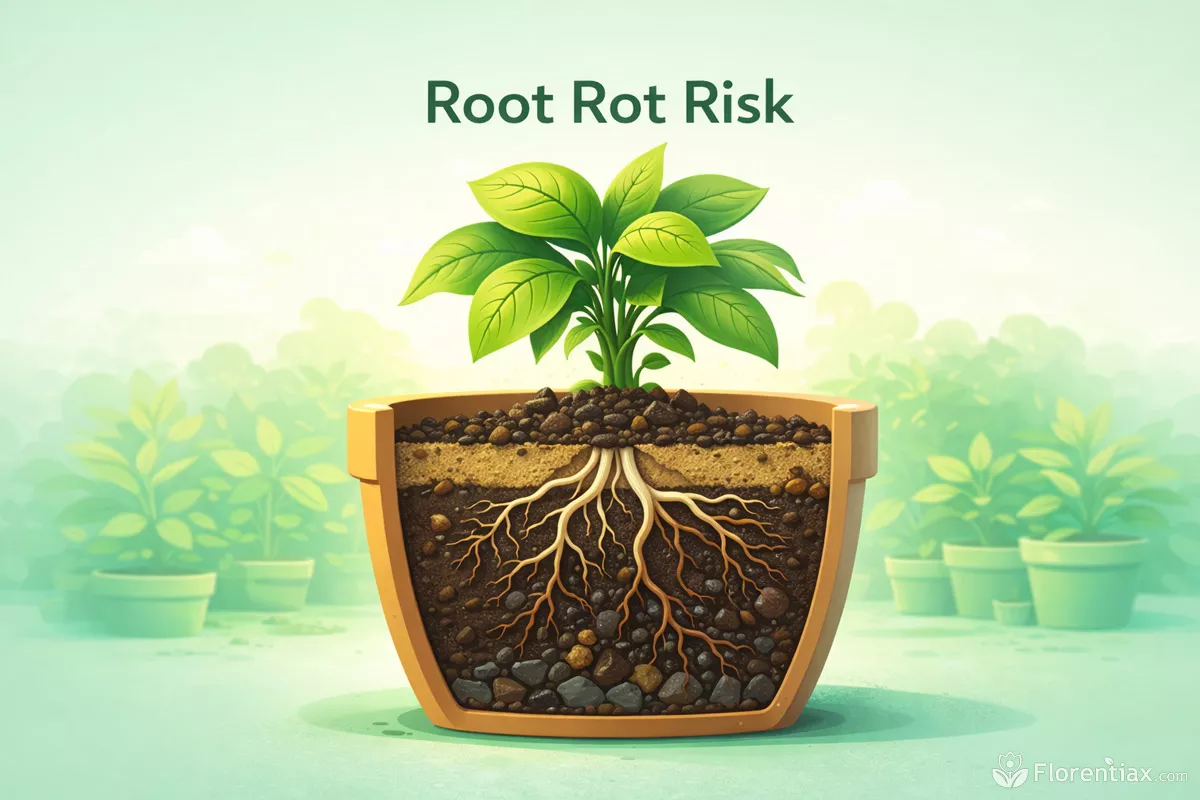 This root rot risk calculator helps you estimate how likely your houseplant is to develop root rot based on pot type, drainage, soil structure, watering habits, environment, and visible symptoms. By answering a few practical questions, you can quickly identify overwatering risks, spot early warning signs, and understand when root inspection or repotting is urgent. The tool is suitable for common houseplants, succulents, orchids, aroids, and African violets.
The root rot risk calculator is designed to help you quickly assess whether your houseplant is at risk of developing root rot due to overwatering, poor drainage, or unsuitable growing conditions. Root rot is one of the most common reasons indoor plants decline, and it often starts silently below the soil surface, long before visible damage appears.
By analyzing pot type, drainage, soil structure, watering habits, environmental factors, and early symptoms, this calculator provides a clear risk level and practical guidance. It works for common houseplants, succulents and cacti, orchids, aroids, and African violets, helping you decide when simple adjustments are enough and when urgent action is required.
How the root rot calculator works
The calculator evaluates multiple factors that directly influence oxygen availability and moisture retention in the root zone. Root rot develops when roots stay wet for too long and oxygen levels drop, which is why understanding proper watering methods is essential for maintaining healthy roots and preventing anaerobic decay.
Each input contributes to the overall score. High-risk conditions add more weight, while protective factors reduce the risk. Certain red-flag symptoms can override the score and push the result into a high-risk category even if other conditions seem acceptable.
| Factor | Why it affects root rot risk |
|---|---|
| Drainage holes | Pots without holes trap water, creating anaerobic conditions around roots. |
| Soil structure | Dense, fine soil holds water longer and limits oxygen flow to roots. |
| Soil drying time | Soil staying wet more than 5 days increases the chance of root decay. |
| Pot material | Plastic and glazed pots dry slower than terracotta. |
| Watering habits | Frequent watering or small sips prevent proper drying between waterings. |
| Temperature and light | Cool temperatures (15–18 °C / 59–64 °F) and low light slow evaporation. |
| Visible symptoms | Mushy stems, bad smells, or rotten roots indicate advanced risk. |
The final score is adjusted based on plant group. For example, succulents are more sensitive to excess moisture, while orchids and African violets have specific root oxygen needs that affect their tolerance to wet soil.
How to use the calculator step by step
Using the root rot risk calculator takes only a minute and does not require special tools. For the most accurate result, answer each question based on your plant’s normal care routine rather than a single unusual watering.
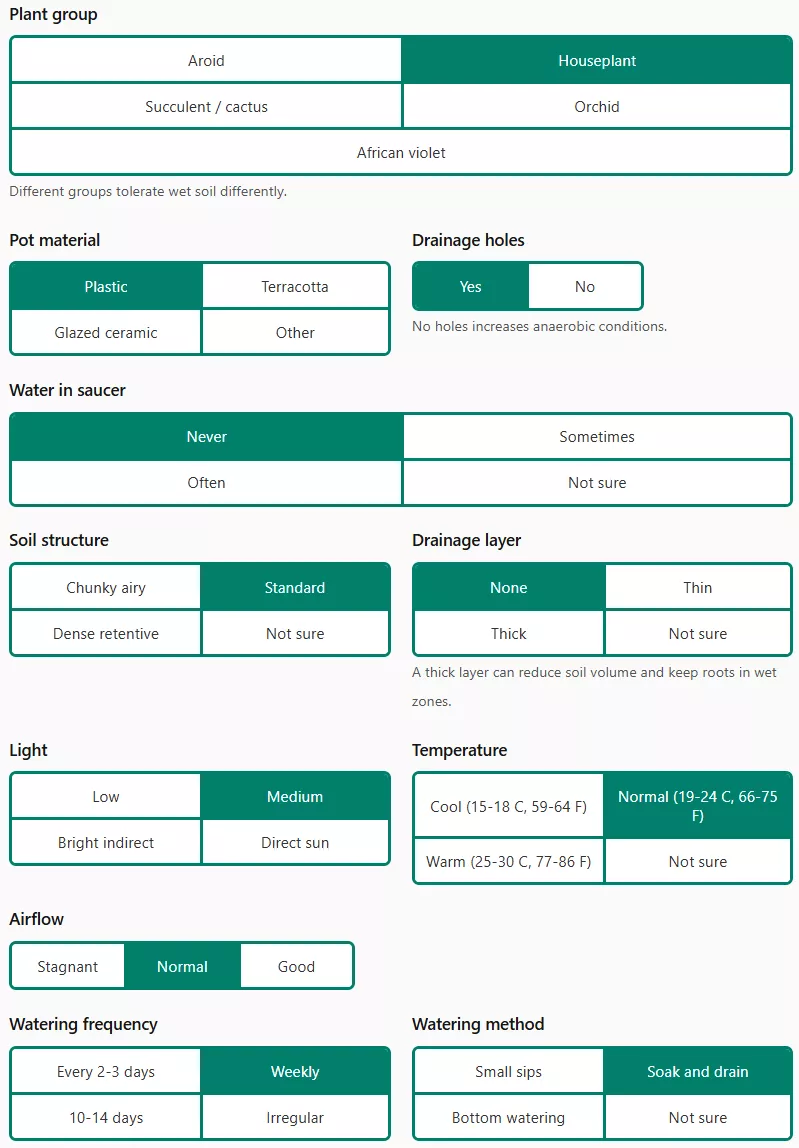
- Select the plant group that best matches your plant, such as houseplant, succulent, orchid, or aroid.
- Choose the pot material and confirm whether the pot has drainage holes.
- Indicate how often water remains in the saucer after watering.
- Select the soil structure and whether a drainage layer is present.
- Set the light level and average room temperature, for example normal indoor conditions (19–24 °C / 66–75 °F).
- Choose your typical watering frequency and method.
- Estimate how long the soil stays wet after watering.
- Check any visible symptoms that apply, such as yellowing with wilting, fungus gnats, or a mushy base.
If you enable the advanced options, you can also enter humidity percentage, moisture meter readings, and the number of days since the last repot. These inputs refine the result but are optional and not required for a reliable risk estimate.
After clicking “Calculate,” the tool shows your root rot risk level, the main factors driving the score, and clear recommendations on what to do next.
Factors that increase root rot risk
Root rot rarely happens because of a single mistake. In most cases, it develops from a combination of conditions that keep roots wet and deprive them of oxygen for extended periods. Understanding these factors helps you prevent problems before damage becomes irreversible.
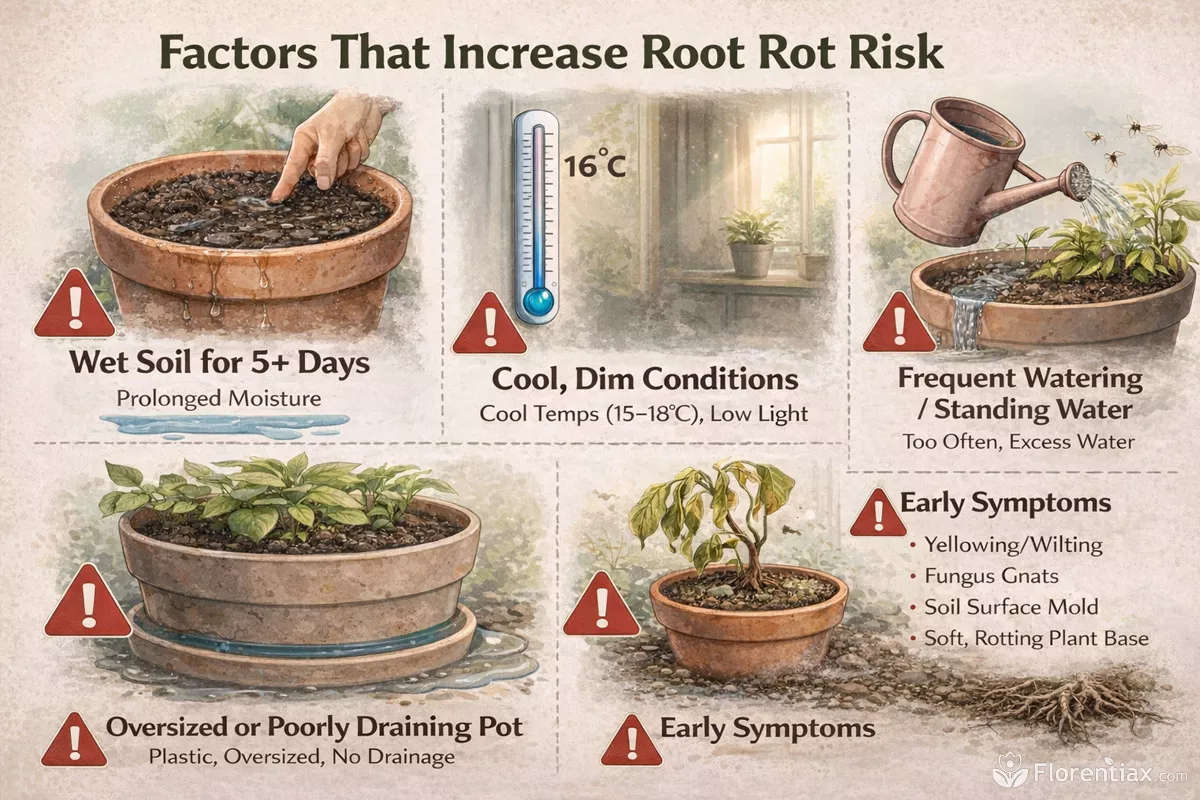
The most significant risk factor is prolonged moisture in the root zone. When soil remains wet for more than 5 days, oxygen levels drop sharply, especially in dense mixes and pots without drainage holes. Cool indoor temperatures (15–18 °C / 59–64 °F) and low light further slow evaporation, extending wet periods.
Pot choice also plays an important role. Plastic and glazed ceramic pots dry slower than terracotta, while oversized pots hold excess unused soil that stays wet longer. Drainage layers can help in some cases, but thick layers without proper separation often reduce usable soil volume and keep roots sitting in saturated zones.
Watering habits amplify these risks. Frequent watering, small “sips,” and leaving water in the saucer prevent natural dry cycles. Learning how to water indoor plants without overwatering is one of the most effective ways to reduce prolonged moisture in the root zone.
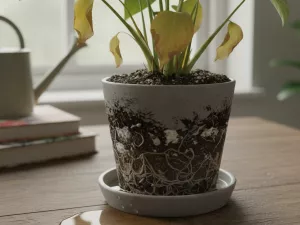
Finally, early symptoms should never be ignored. Yellowing combined with wilting, fungus gnats, mold on the soil surface, a musty smell, or a soft stem base all signal that moisture conditions are already stressing the roots. The relationship between yellow leaves and root rot is especially important to recognize before damage becomes irreversible.
How to interpret root rot risk results
The calculator provides a clear risk level based on your inputs. This result reflects how likely your plant is to develop root rot if current conditions remain unchanged. Used alongside tools that help assess overwatering risk, it becomes a practical decision-making system rather than a simple score.
| Risk level | Score range | What it means | Recommended action |
|---|---|---|---|
| Low | 0–33 | Soil dries adequately and roots receive enough oxygen. | Maintain current care and continue monitoring. |
| Medium | 34–66 | Early signs of overwatering or slow soil drying are present. | Adjust watering, improve drainage, and monitor closely. |
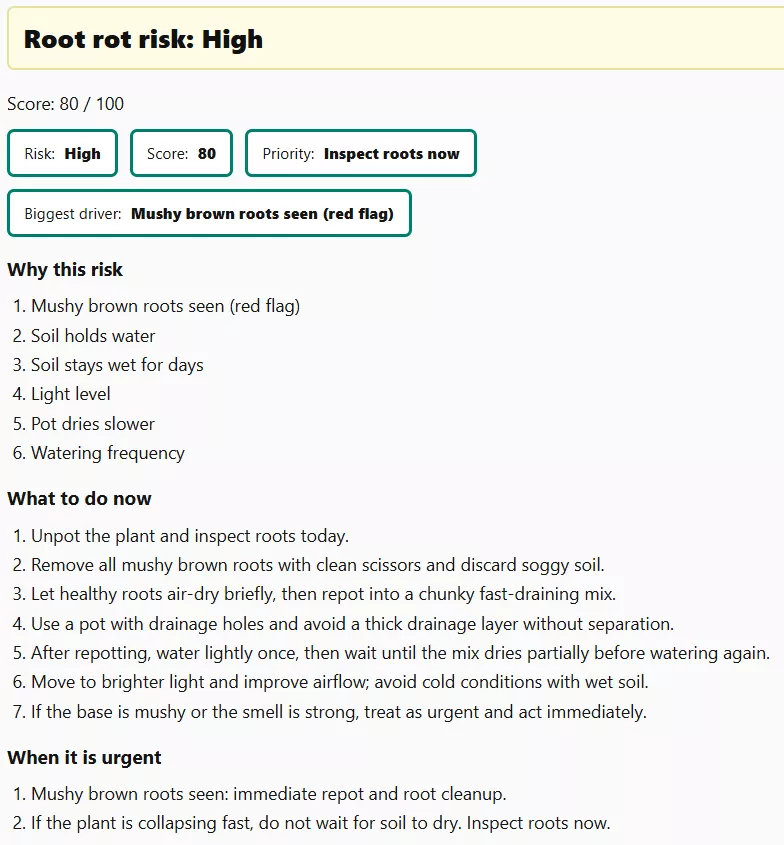
| High | 67–100 | Conditions strongly favor root rot or red-flag symptoms are detected. | Inspect roots immediately and take corrective action. |
If the result is Low, your current routine is generally safe. However, even low-risk plants should be monitored for changes in drying time or environment, especially during seasonal shifts.
A Medium risk result indicates that the plant may tolerate current conditions for now, but root health could decline if adjustments are not made. This is the ideal stage to reduce watering frequency, improve airflow, or plan a repot into a better-draining mix.
A High risk result means urgent attention is required. In many cases, the calculator elevates risk due to red-flag symptoms such as mushy roots, strong odors, or a soft stem base. At this stage, delaying action can lead to rapid collapse, and root inspection is strongly recommended.
When root rot requires urgent action
Root rot becomes an emergency when damage progresses beyond early stress and begins to destroy the root system or crown. At this stage, waiting for the soil to dry naturally can cause irreversible harm.
Immediate action is required if you notice a mushy or soft stem base, a strong musty or sour smell coming from the soil, or black and brown roots that feel slimy instead of firm. These signs indicate that anaerobic decay is already active in the root zone.
Another critical situation occurs when several high-risk conditions overlap. Pots without drainage holes combined with dense soil and soil staying wet for more than 10 days create an environment where roots cannot survive. In such cases, even if the plant still looks acceptable above the soil, internal damage may be advanced.
If the plant is rapidly wilting while the soil remains wet, do not wait. Remove the plant from the pot, inspect the roots, and act immediately. Healthy roots should be light-colored and firm. Any dark, mushy, or foul-smelling roots must be removed without delay.
Urgent intervention typically involves unpotting the plant, trimming rotted roots with clean scissors, discarding old soil, and repotting into a fresh, fast-draining mix. After repotting, watering should be light and controlled until new root growth begins.
How to reduce root rot risk
Reducing root rot risk focuses on improving oxygen availability in the root zone and allowing soil to dry at a healthy pace. Small adjustments in care often make a significant difference, especially when applied before severe symptoms appear.
The most effective prevention step is proper drainage. Always use pots with drainage holes and empty saucers within 10–15 minutes after watering. Soil should feel noticeably lighter before the next watering, rather than constantly moist.
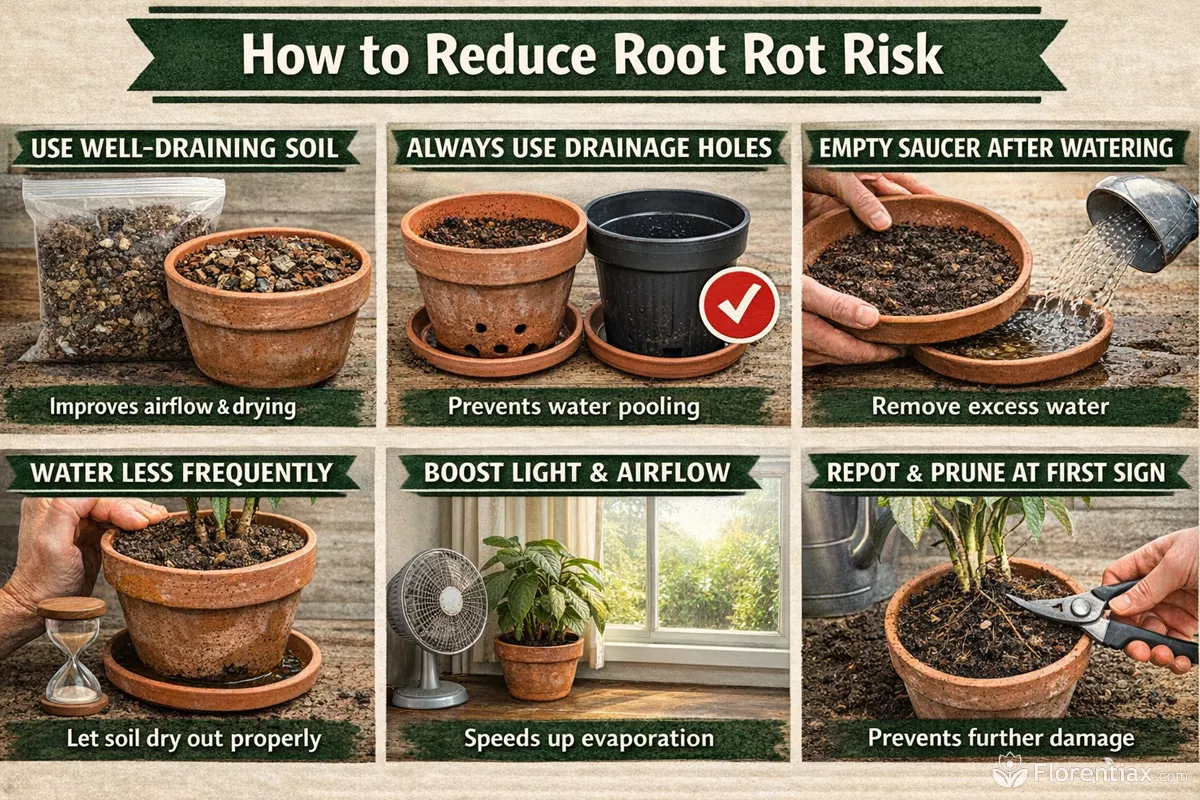
Soil structure is equally important. Chunky, well-aerated mixes dry more evenly and allow oxygen to reach roots. Understanding soil structure for healthy roots helps explain why fast-draining mixes reduce anaerobic conditions. For most houseplants, soil should dry within 2–5 days under normal indoor conditions (19–24 °C / 66–75 °F).
| Problem | What to change | Why it helps |
|---|---|---|
| Soil stays wet too long | Switch to a chunkier, fast-draining mix | Improves oxygen flow and prevents anaerobic conditions |
| No drainage holes | Repot into a pot with drainage holes | Allows excess water to escape instead of pooling |
| Frequent watering | Increase drying interval between waterings | Gives roots time to recover and breathe |
| Water left in saucer | Empty saucer after watering | Prevents roots from sitting in standing water |
| Fungus gnats | Dry soil more thoroughly and improve airflow | Gnats indicate persistent excess moisture |
Environmental adjustments also matter. Increasing light exposure and airflow speeds up evaporation, while avoiding cool, damp conditions reduces stress on roots. Fertilizer should be used cautiously in wet soil, as high salt concentrations can worsen root damage.
By addressing these factors early, you can significantly reduce the chance of root rot and keep your plants healthy long-term without frequent emergency repotting.
Root rot risk FAQ
This FAQ section answers the most common questions about root rot, overwatering, and how to use a root rot risk calculator effectively. These answers are based on practical plant care principles and help clarify when action is needed and how to prevent future problems.
1. What is a root rot risk calculator?
A root rot risk calculator is a tool that evaluates how likely a plant is to develop root rot based on factors such as watering frequency, soil structure, drainage, pot type, environmental conditions, and visible symptoms. It does not diagnose disease but helps identify risk levels and guide timely care decisions.
2. How accurate is a root rot calculator?
A root rot calculator is accurate for estimating risk, not for confirming damage. It reflects real conditions that cause root rot, such as prolonged wet soil and poor oxygen flow. High-risk results strongly suggest that root inspection is necessary, while low-risk results indicate safer conditions.
3. What are the earliest symptoms of root rot?
Early symptoms of root rot often include yellowing leaves combined with wilting, slowed growth, and fungus gnats. These signs usually appear before roots become mushy, making early detection critical for prevention.
4. Can overwatering alone cause root rot?
Yes, overwatering is the most common cause of root rot. Watering too frequently or keeping soil constantly moist prevents oxygen from reaching roots, leading to decay. This is especially risky in dense soil or pots without drainage holes.
5. How long should soil stay wet after watering?
For most houseplants, soil should begin drying within 2–5 days under normal indoor conditions (19–24 °C / 66–75 °F). If soil remains wet for more than 7–10 days, the risk of root rot increases significantly.
6. Does pot size affect root rot risk?
Yes, oversized pots increase root rot risk because excess soil holds moisture that roots cannot use. A pot should be only slightly larger than the root ball, allowing soil to dry evenly after watering.
7. Are drainage layers helpful or harmful?
Drainage layers can be misleading. Without proper separation, thick drainage layers often reduce usable soil volume and keep roots in saturated zones. Good soil structure and drainage holes are more important than adding gravel at the bottom.
8. Can a plant recover from root rot?
Plants can recover from root rot if healthy roots remain. Recovery requires removing all rotted roots, repotting into fresh fast-draining soil, and adjusting watering habits. Advanced rot affecting the crown is much harder to reverse.
9. Should I water less if I suspect root rot?
Yes, but simply watering less is not enough. If root rot is suspected, inspect the roots. Continuing to leave the plant in wet soil can worsen damage even if watering is reduced.
10. Is root rot contagious between plants?
Root rot itself is not contagious, but pathogens can spread through shared water, soil, or contaminated tools. Always sterilize tools and avoid reusing infected soil.
11. Do succulents and orchids get root rot differently?
Succulents and cacti are highly sensitive to excess moisture and develop root rot quickly. Orchids require high oxygen around roots and rot easily in compacted or constantly wet media. Both benefit from fast-drying, airy mixes.
12. How often should I use a root rot risk calculator?
You can use a root rot risk calculator whenever conditions change, such as seasonal shifts, repotting, or adjustments in watering routine. Regular checks help catch problems early before visible damage appears.
In summary, the root rot risk calculator is a practical tool for preventing one of the most common and destructive plant problems. By combining your observations with structured inputs, it helps you recognize overwatering risks, interpret symptoms correctly, and take timely action to keep your plants healthy and resilient.