When Yellow Leaves Need Immediate Action

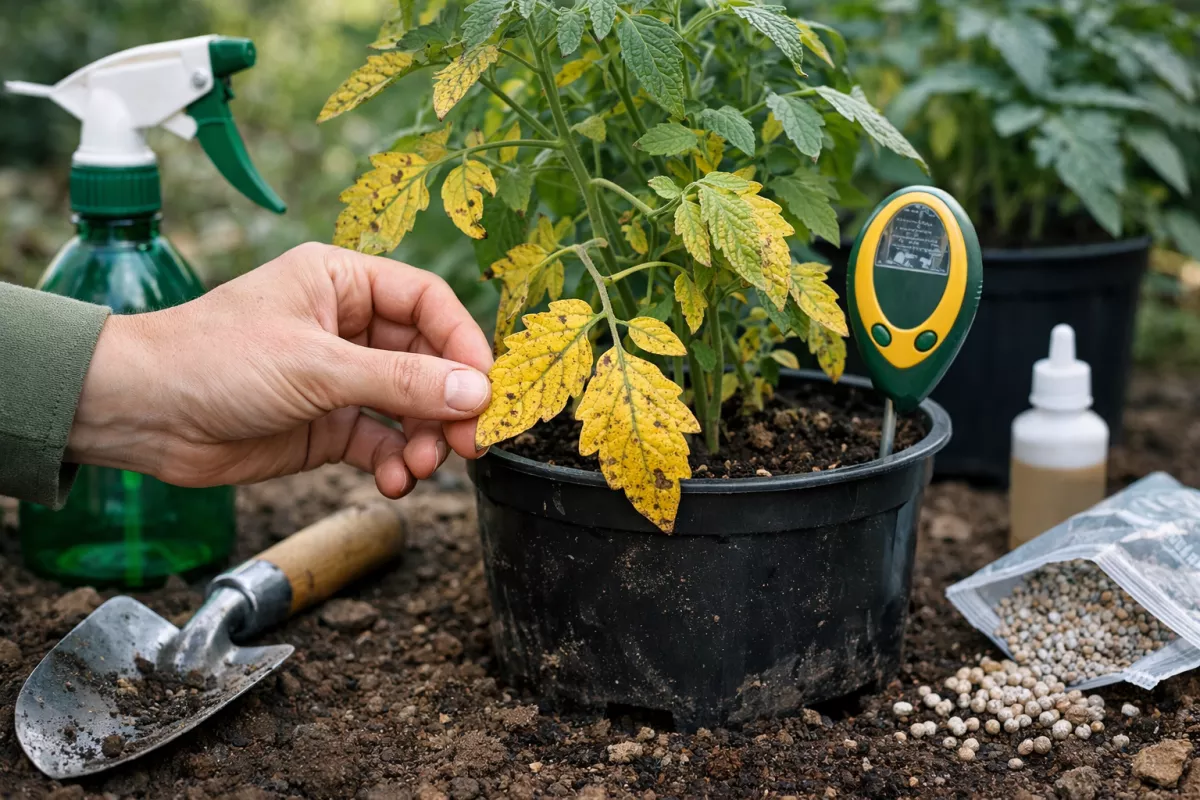 This article explains when yellow leaves signal urgent plant stress, how to tell rapid decline from harmless aging, and which symptoms need fast action. It also covers root or disease issues, quick stabilizing steps, mistakes to avoid, and why early response matters.
- Warning signs that yellow leaves indicate urgent plant stress
- How to recognize rapid decline vs slow harmless yellowing
- Critical symptoms that require immediate intervention
- When root damage or disease may be involved
- Quick actions to stabilize plants in emergency situations
- Mistakes to avoid when reacting too late or too aggressively
- How early response can prevent plant loss and recovery failure
Some yellowing leaves are harmless, but others warn that a plant is under stress and needs attention before it declines further. Changes in leaf color can point to disease, overwatering, underwatering, nutrient issues, or root damage. By checking where the yellowing starts, how fast it spreads, and whether the leaves are dry, limp, or spotted, you can often identify the cause early and take the right steps.
Warning signs that yellow leaves indicate urgent plant stress
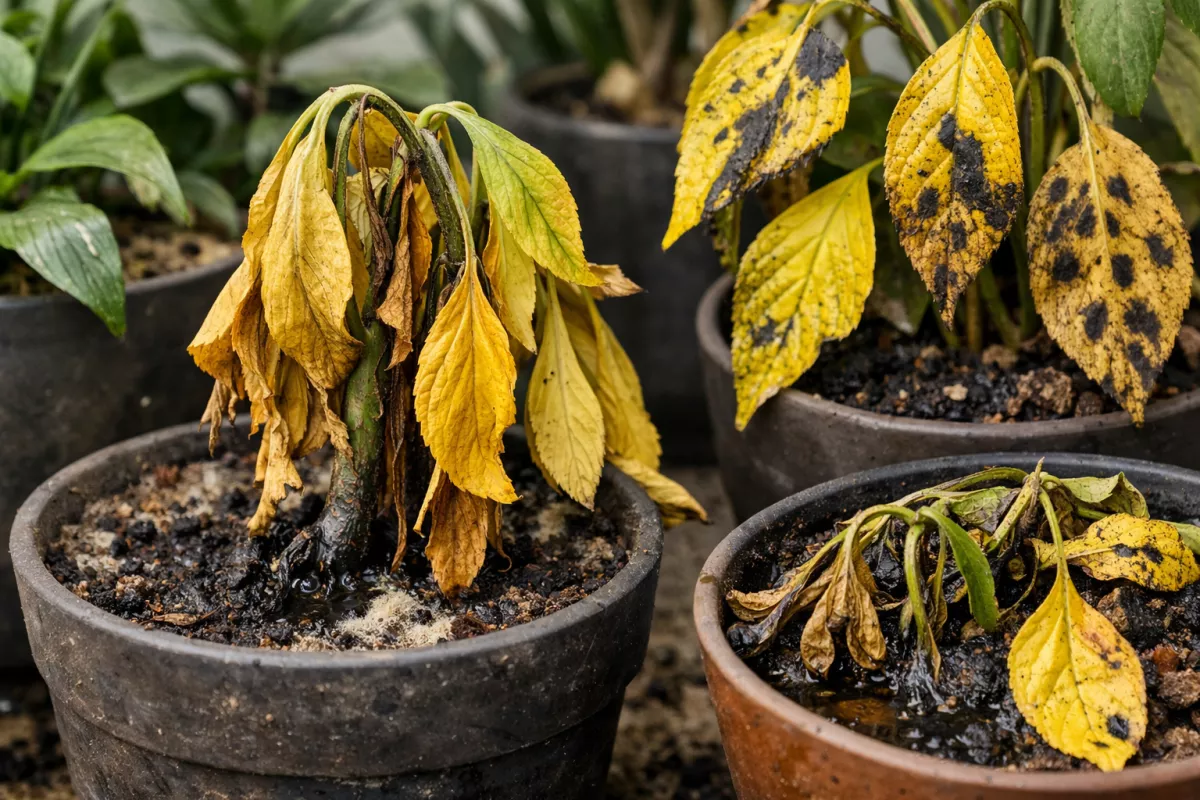
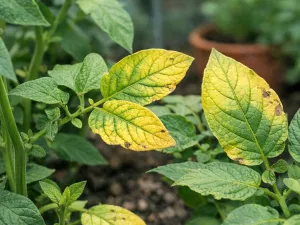
Yellow foliage does not always mean a plant is in immediate danger, but some patterns should raise concern quickly. The most serious cases involve yellowing that appears suddenly, spreads fast, or comes with other signs of collapse such as limp stems, black spots, or a sour smell from the soil. When discoloration is paired with loss of firmness, the issue is usually not cosmetic.
It also matters where the yellowing starts. A few older leaves fading at the base can be part of normal aging, especially after repotting or seasonal change. By contrast, new leaves turning pale, whole stems bleaching at once, or leaves yellowing unevenly with brown edges often point to stress that is actively worsening.
Patterns that suggest a plant is under pressure
Plants tend to show stress in recognizable ways. Looking at the speed, location, and texture of the yellowing helps separate a manageable issue from one that needs same-day attention.
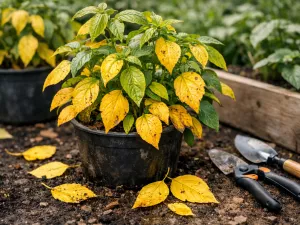
- Fast spread: Several leaves yellowing over 24 to 72 hours usually signals a root, watering, or temperature problem rather than natural aging.
- Top growth affected first: If the newest leaves are paling or collapsing, the plant may be dealing with root failure, nutrient lockout, or severe environmental shock.
- Soft yellow leaves: Limp, thin, or translucent foliage often points to overwatering, cold injury, or rot.
- Crisp yellow leaves: Dry, brittle yellowing is more often linked to prolonged drought, heat stress, or salt buildup from fertilizer.
- Whole-plant color change: When the entire plant looks washed out instead of one branch or one lower layer, the stress is usually systemic.
Another warning sign is yellowing after a recent change in care. A plant moved from shade to strong afternoon sun, watered heavily after staying dry for too long, or fed with concentrated fertilizer can react within days. In these cases, the yellow leaves are not the original problem; they are evidence that the plant is struggling to regulate water and nutrients.
Editor’s note: If a plant has gone yellow right after a move, repot, or heat spike, pause before adding more products. Correcting the environment is often more effective than reaching for fertilizer or leaf sprays.
How to recognize rapid decline vs slow harmless yellowing
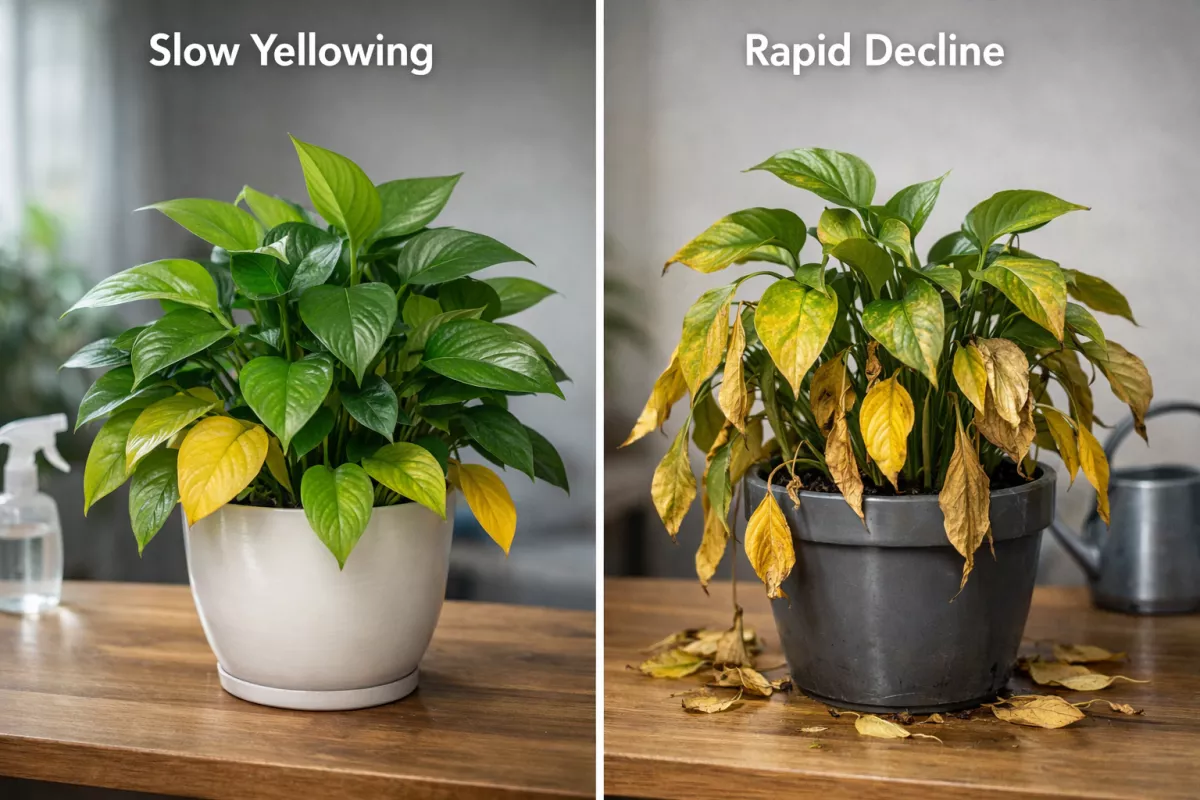
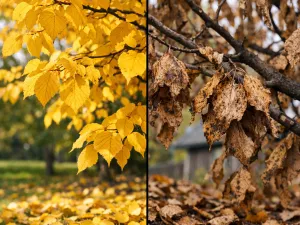
Not every yellow leaf deserves emergency treatment. Many healthy plants shed older foliage gradually, especially lower leaves that no longer receive enough light. The key difference is pace. Slow harmless yellowing usually affects one leaf at a time over weeks, while rapid decline changes the look of the plant in a matter of days.
A calm assessment saves plants from unnecessary intervention. If the roots are healthy, the stems are firm, and new growth remains green, the plant may simply be reallocating energy. If the plant is losing color across multiple areas and growth has stalled, it is more likely dealing with active stress.
What normal aging tends to look like
Natural leaf turnover follows a fairly predictable pattern. The oldest leaves fade first, often from green to pale yellow, then dry and drop without affecting the rest of the plant.
- Yellowing stays on the lowest or most shaded leaves.
- New growth remains normal in size and color.
- Stems stay upright and firm.
- The soil smells fresh rather than sour or swampy.
- The plant continues to produce leaves, buds, or roots.
Signs the decline is moving too fast
Rapid decline usually shows up as more than color loss. The plant begins to lose structure, moisture balance, or growth momentum. This is when yellow leaves become a symptom of a larger failure in the root zone or growing conditions.
| Feature | Slow harmless yellowing | Rapid decline |
|---|---|---|
| Speed | One or two leaves over several weeks | Multiple leaves within 1 to 3 days |
| Location | Mostly older, lower foliage | Lower and upper leaves, sometimes all at once |
| Leaf texture | Gradual fading, then drying | Wilting, softening, spotting, or edge burn |
| New growth | Still green and active | Pale, stalled, distorted, or collapsing |
| Plant posture | Stable overall shape | Drooping stems or loss of firmness |
When in doubt, observe the plant twice in one day: once in the morning and again in the evening. If the yellowing is spreading visibly or the plant looks weaker by night, the issue is active and should not be left for the weekend.
Critical symptoms that require immediate intervention
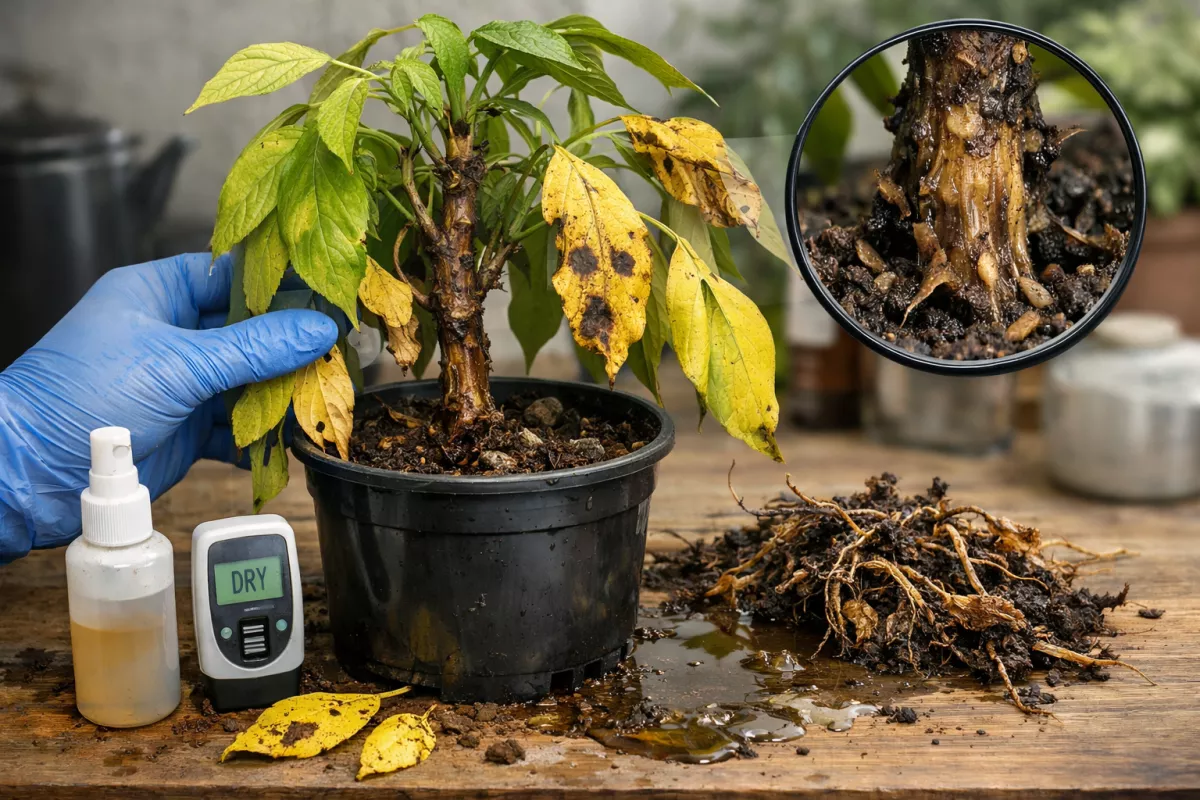
Some combinations of symptoms mean the plant may be close to irreversible damage. Yellow leaves alone can often wait for a careful diagnosis, but yellowing with collapse, odor, stem damage, or severe spotting calls for immediate action. These are the moments when delaying even 24 hours can reduce the chance of recovery.
Emergency symptoms usually point to failure in water movement, root function, or disease pressure. The goal is not to make the plant perfect right away. It is to stop the decline before tissue loss spreads.
High-risk signs to act on the same day
If you see any of the following, treat the situation as urgent rather than routine maintenance.
- Yellow leaves with wilting in wet soil: This often suggests roots are suffocating or rotting, not that the plant needs more water.
- Blackened stems or crown: Dark, mushy tissue near the base is a major warning sign of rot.
- Foul smell from the potting mix: A sour or rotten odor usually means anaerobic conditions or decaying roots.
- Leaves dropping in large numbers: Sudden leaf fall after yellowing can indicate severe stress from temperature shock, drought, or root damage.
- Yellowing with spotting or fuzzy growth: Fungal or bacterial disease may be involved, especially if spots enlarge rapidly.
- Burned margins after feeding: If yellow leaves also have brown, scorched edges shortly after fertilizer application, salts may be damaging the roots.
When environmental shock becomes a crisis
Plants can deteriorate quickly after exposure to extreme heat, cold drafts, or direct sun they were not acclimated to. A houseplant left near a window at 4°C (39°F), or a patio plant hit by 35°C (95°F) sun after growing in shade, may show yellowing within hours. In these cases, tissue damage can continue even after the plant is moved, so fast correction matters.
Watch especially for leaves that turn yellow and then develop water-soaked patches, papery white scorch, or sudden limpness. Those changes suggest cells have been physically damaged by temperature or sunlight, not just stressed by routine care issues.
Practical recommendation: Take a quick photo when symptoms first appear. Comparing images over 24 to 48 hours often reveals whether the problem is stable or accelerating, which is hard to judge from memory alone.
When root damage or disease may be involved
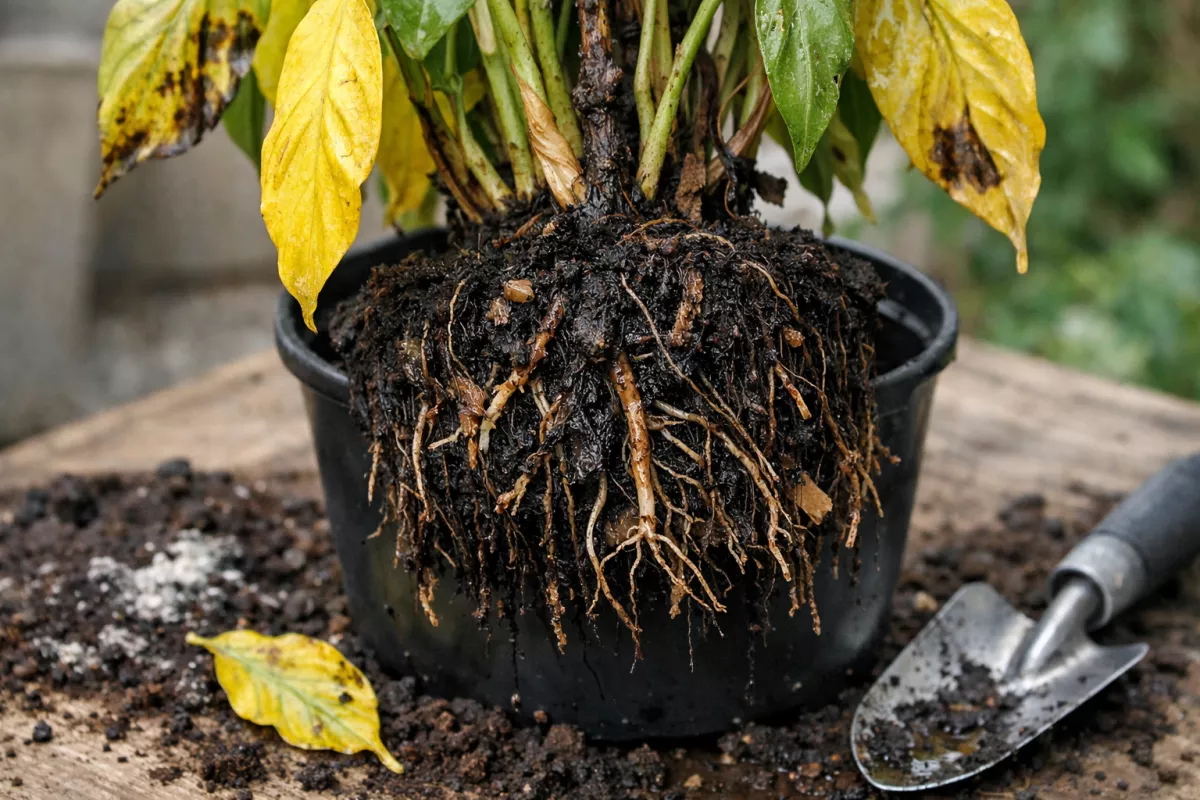
Yellow leaves are often the visible result of trouble below the soil line. Roots control water uptake, oxygen exchange, and nutrient access, so when they are damaged, the foliage loses color quickly. Root problems are especially likely when yellowing is paired with wilting that does not improve after watering, or when the pot stays wet for too long.
Disease should also be considered when the pattern looks patchy, streaked, spotted, or accompanied by lesions on stems. While many yellowing issues are cultural rather than infectious, ignoring disease can allow it to spread to the rest of the plant or nearby containers.
Clues that point to root trouble
You do not always need to unpot the plant immediately, but there are several signs that justify checking the root zone. Healthy roots are usually pale and firm. Damaged roots are often brown, gray, mushy, hollow, or dry and brittle.
- Pot remains heavy for days: Soil that stays saturated for more than 5 to 7 days in normal indoor conditions may be poorly draining or packed too tightly.
- Water runs straight through: Extremely dry root balls can shrink away from the pot, leaving roots unable to rehydrate properly.
- Plant wobbles in the pot: Loss of anchoring can mean root decay or severe root pruning damage.
- Yellowing after repotting: Broken roots, oversized pots, or dense new mix can interrupt uptake even if watering seems correct.
Signs disease may be part of the problem
Diseases often create patterns that ordinary watering mistakes do not. Look for spread that is irregular rather than uniform, and for tissue that changes from yellow to brown or black in defined spots or streaks.
- Concentric leaf spots that enlarge over several days
- Yellow halos around brown lesions
- Stem cankers, oozing areas, or blackened leaf joints
- White, gray, or fuzzy growth on leaves or soil surface
- Repeated yellowing despite corrected watering and light
If disease is suspected, isolate the plant from others right away. Remove fallen leaves, avoid wetting the foliage, and disinfect pruners after each cut. These steps do not cure every problem, but they reduce the chance of turning one stressed plant into several.
Quick actions to stabilize plants in emergency situations
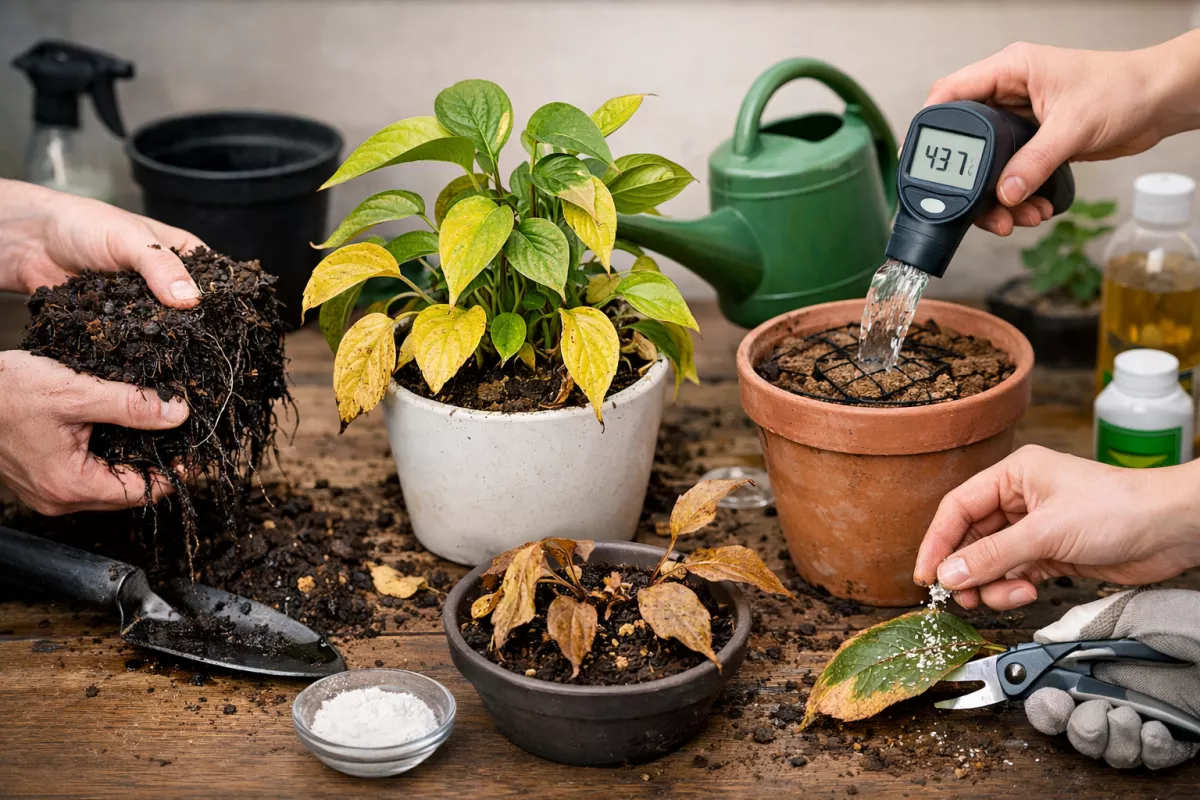
When yellow leaves signal a real emergency, the first priority is stabilization rather than full restoration. Plants recover best when the main stress is reduced quickly and then left alone long enough to respond. Overcorrecting with extra water, fertilizer, or repeated repotting usually makes the situation worse.
Start by identifying the most likely immediate threat: waterlogged roots, severe drought, heat or cold shock, fertilizer burn, or disease spread. Then take one or two targeted actions instead of trying every remedy at once.
First-response steps
These actions are useful in the first few hours after you notice serious yellowing. Adjust them to the plant type and the condition of the soil.
- Move the plant to stable conditions. Place it in bright, indirect light away from heaters, air conditioners, and direct afternoon sun. Aim for a moderate range such as 18 to 24°C (65 to 75°F) unless the species prefers otherwise.
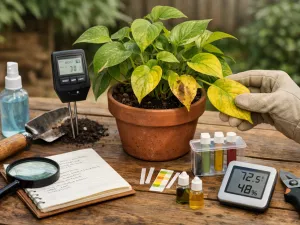
- Check soil moisture before watering. Insert a finger 5 cm (2 in) deep or use a moisture meter. If the mix is wet, do not add more water. If it is bone dry and pulling from the pot edges, rehydrate slowly.
- Improve drainage immediately if saturated. Empty saucers, remove decorative outer pots holding water, and increase airflow around the container.
- Flush only when fertilizer burn is likely. If salts are suspected, run clean water through the pot equal to roughly two times the container volume, allowing full drainage. For a 2 L pot (about 0.5 gal), use about 4 L (1.1 gal) of water.
- Trim only dead tissue. Remove leaves or stems that are fully collapsed, blackened, or clearly rotted, but do not strip every yellow leaf at once.
When emergency repotting helps
Repotting is not always the first move, but it can save a plant when the root zone is clearly failing. This is most appropriate if the soil smells rotten, the mix has turned dense and airless, or the roots are visibly decayed. Use a pot only 2 to 5 cm (1 to 2 in) wider than the root mass, with a loose, well-draining mix suited to the plant.
After repotting, water enough to settle the mix, then allow the plant to recover in steady light and temperature. Do not fertilize immediately. Damaged roots need oxygen and time more than extra nutrients.
Practical recommendation: If you must inspect roots, do it once and do it thoroughly. Repeatedly unpotting a stressed plant every few days causes fresh root breakage and delays recovery.
Mistakes to avoid when reacting too late or too aggressively
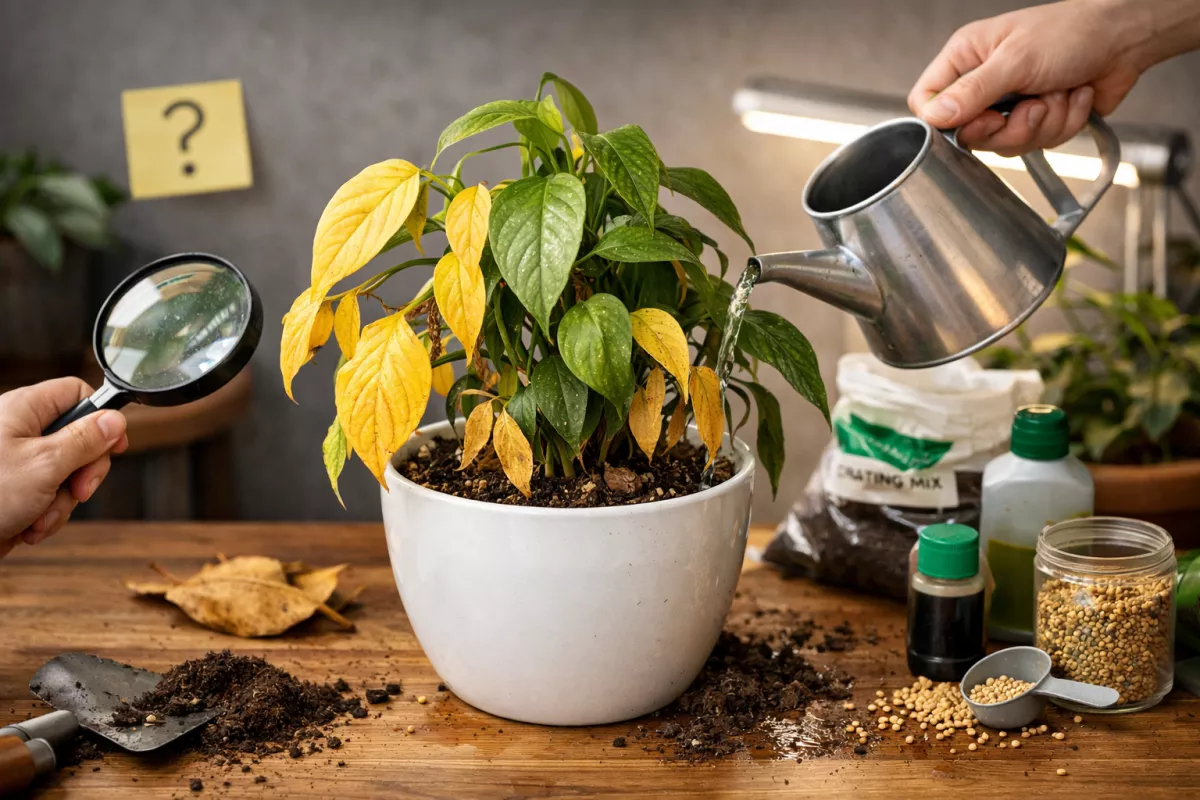
Plants are often lost not from the first problem, but from the sequence of rushed fixes that follow it. Yellow leaves make people want to act fast, yet frantic care can create a second layer of stress. The safest response is measured, observant, and based on what the plant is actually showing.
Waiting too long is one extreme. The other is changing watering, light, soil, and feeding all in the same day. Both approaches reduce the odds of recovery because they either allow damage to spread or prevent you from seeing what actually helped.
Common overreactions
These mistakes are especially common when yellowing appears suddenly and the cause is unclear.
- Adding more water to a wilted plant without checking soil: Plants with root rot wilt in wet soil too, and extra watering speeds decline.
- Fertilizing a stressed plant: Yellow leaves do not automatically mean nutrient deficiency. Feeding damaged roots can burn them further.
- Moving the plant repeatedly: Constant shifts between windows, rooms, and outdoors create more environmental instability.
- Removing too much foliage: Leaves that are partly green still help the plant produce energy during recovery.
- Using strong treatments too early: Oils, fungicides, or homemade sprays can worsen stress if the real problem is heat, drought, or poor roots.
Signs you waited too long
Late action often shows up when yellowing has already progressed into stem damage or root collapse. At that point, recovery is still possible, but it becomes slower and less predictable.
- Yellow leaves have turned brown and dropped from most stems.
- The crown or base has softened.
- The plant no longer takes up water normally.
- New growth has stopped for several weeks during active growing season.
- Roots are black, sparse, or smell rotten when checked.
A good rule is to make one evidence-based correction, then observe for 48 to 72 hours unless the plant is clearly collapsing. This avoids both neglect and panic-driven care.
How early response can prevent plant loss and recovery failure
Early action matters because plants usually decline in stages. Yellow leaves often appear before widespread root death, stem rot, or complete defoliation. Catching the problem at the color-change stage gives you a much better chance of preserving enough healthy tissue for recovery. Once the plant has lost too many roots or too much leaf area, even correct care may not be enough.
Responding early does not mean treating every yellow leaf like a disaster. It means noticing patterns, checking the root zone and environment promptly, and correcting the likely cause before the plant runs out of reserves. Good timing is often the difference between a brief setback and a full restart from cuttings.
Why prompt correction works
When stress is reduced early, the plant can redirect energy into root repair, water balance, and new growth instead of trying to survive ongoing damage. This is especially important for container plants, where roots have limited space and problems intensify faster than they do in the ground.
- Water stress is easier to reverse early: Slight dehydration or brief overwatering can often be corrected before roots are permanently damaged.
- Light issues are less harmful when caught quickly: Moving a plant before leaves scorch badly preserves more functioning foliage.
- Disease spread can be slowed: Early isolation and pruning may prevent infection from reaching stems, crowns, or nearby plants.
- Feeding mistakes are more manageable: Salt buildup is easier to flush before roots are burned severely.
Build a simple response habit
The best prevention is a repeatable routine whenever yellowing appears. Check moisture, inspect stems, look at new growth, and review any recent changes in light, watering, temperature, or feeding. That short review often reveals the cause faster than any product label will.
Keep notes if you care for many plants. Recording when the yellowing started, how wet the soil was, and what was changed in the previous week helps you spot patterns over time. A plant that recovers from one episode also teaches you what early warning signs matter most for that species.
Yellow leaves become urgent when they are fast, widespread, and tied to weakness elsewhere in the plant. Acting early, calmly, and with a clear diagnosis gives the plant the best chance to recover without long-term setback.