Aphids on Buds and Flowers – How to Stop Damage

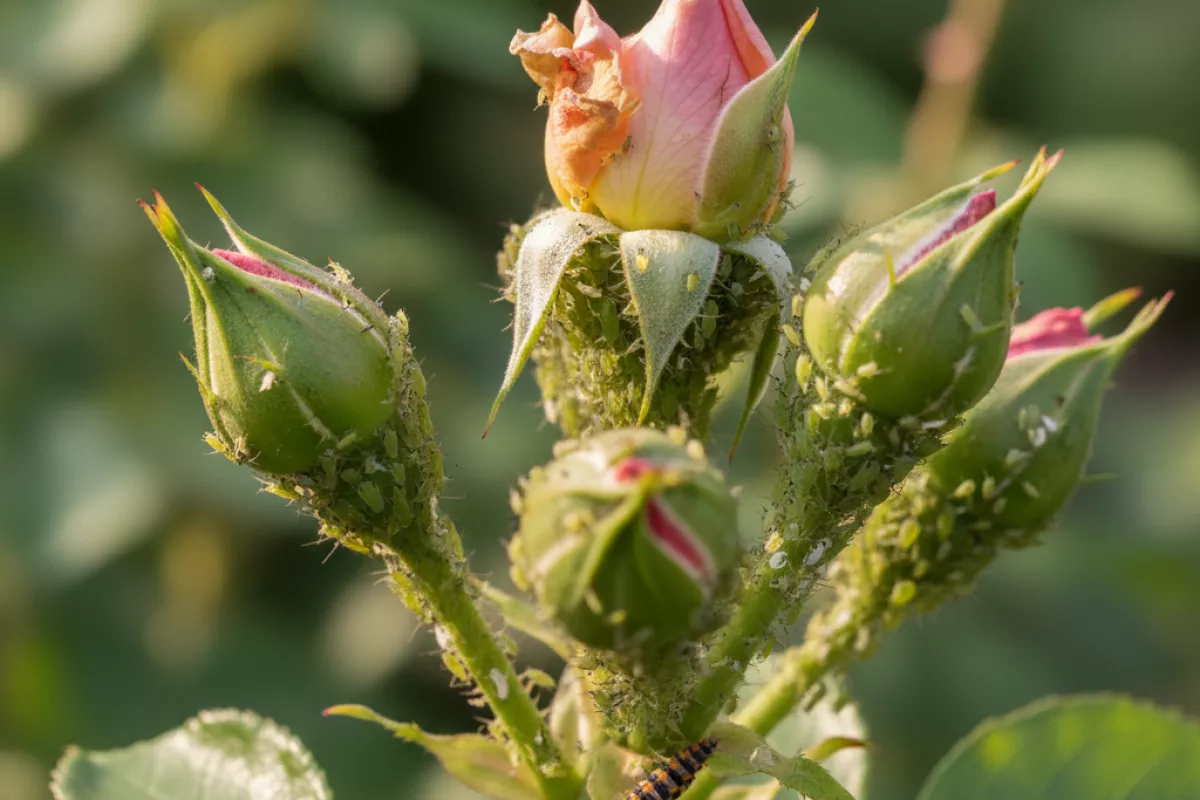 Explains why aphids hit buds first, how infestations disrupt blooming, and what to look for on petals and buds. Covers immediate protection steps, safe sprays for delicate blooms, ways to prevent flower deformation, and how to monitor through flowering season.
Aphids often cluster on flower buds and fresh blooms, sucking sap that twists new growth and spoils the display. Spotting them early can mean the difference between a little stickiness and weeks of stunted, misshapen flowers. This guide focuses on bud and flower damage specifically, but for a broader overview of species, life cycles, and prevention strategies, see how to control aphids on plants.
Why aphids attack buds first
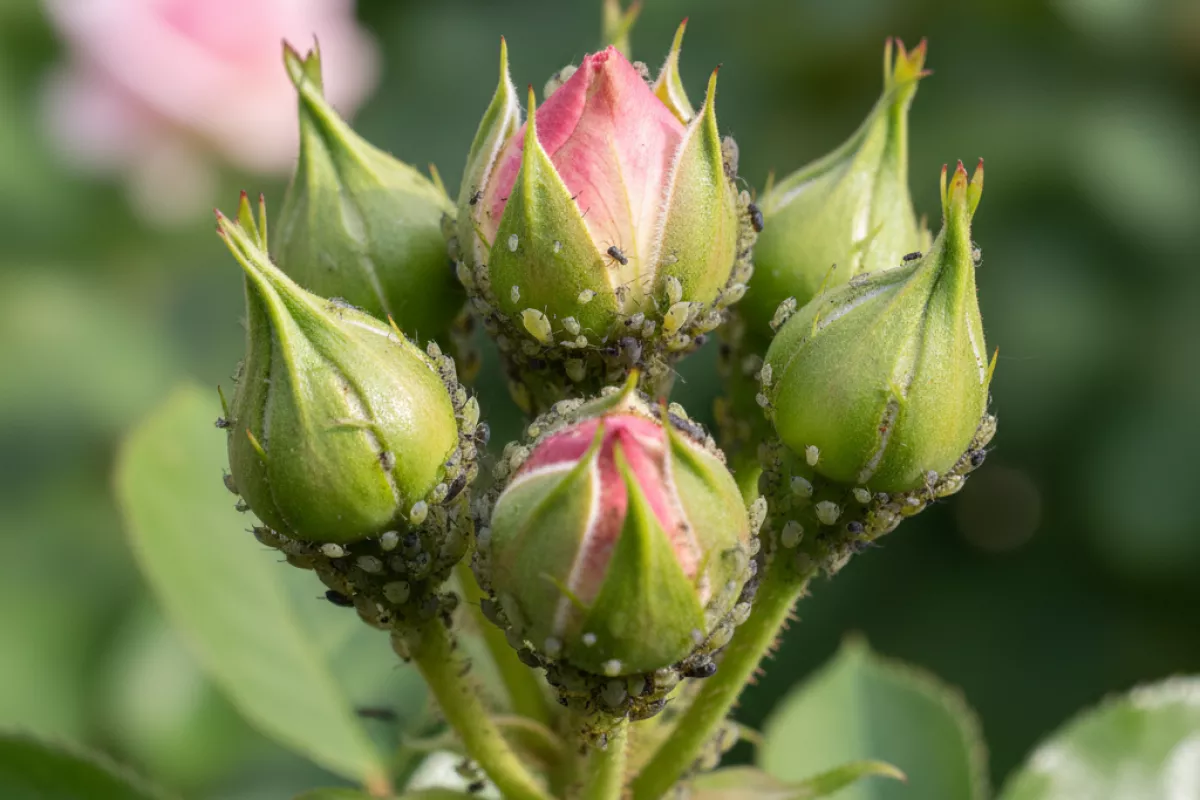
They home in on the newest growth because it’s the easiest place to feed. Unopened buds and fresh flower stems have thinner cell walls, higher water pressure, and a steady flow of sugary sap. For a soft-bodied insect with a straw-like mouthpart, that combination means less effort, faster meals, and quicker reproduction.
Buds also offer a bit of built-in shelter. The tight folds of bracts and petals protect aphids from wind, heavy rain, and some predators, and they can tuck themselves into creases where sprays and even ladybugs have a harder time reaching. That’s why infestations often seem to “appear overnight” right at the bud tips.
- Higher-quality sap: Developing flowers pull in carbohydrates and amino acids to build petals and pollen, so the sap is richer than on older leaves.
- More tender tissue: New growth is softer and easier to pierce, so colonies establish faster on bud clusters than on mature stems.
- Natural hiding spots: Bud scales and tightly packed petals create protected pockets that reduce exposure and improve survival.
- Less plant defense (at first): Plants often ramp up chemical defenses after damage starts; early on, the bud may be a “low resistance” target.
- Ant protection: If ants are present, they may guard aphids on buds in exchange for honeydew, discouraging predators right where the plant is most vulnerable.
Once they’re feeding there, the damage shows up quickly: distorted buds, sticky honeydew that glues petals together, and blotchy or misshapen flowers. Catching them at the bud stage matters because a small colony on a tight cluster can affect multiple blooms before you notice the first curled petal.
How infestations affect blooming
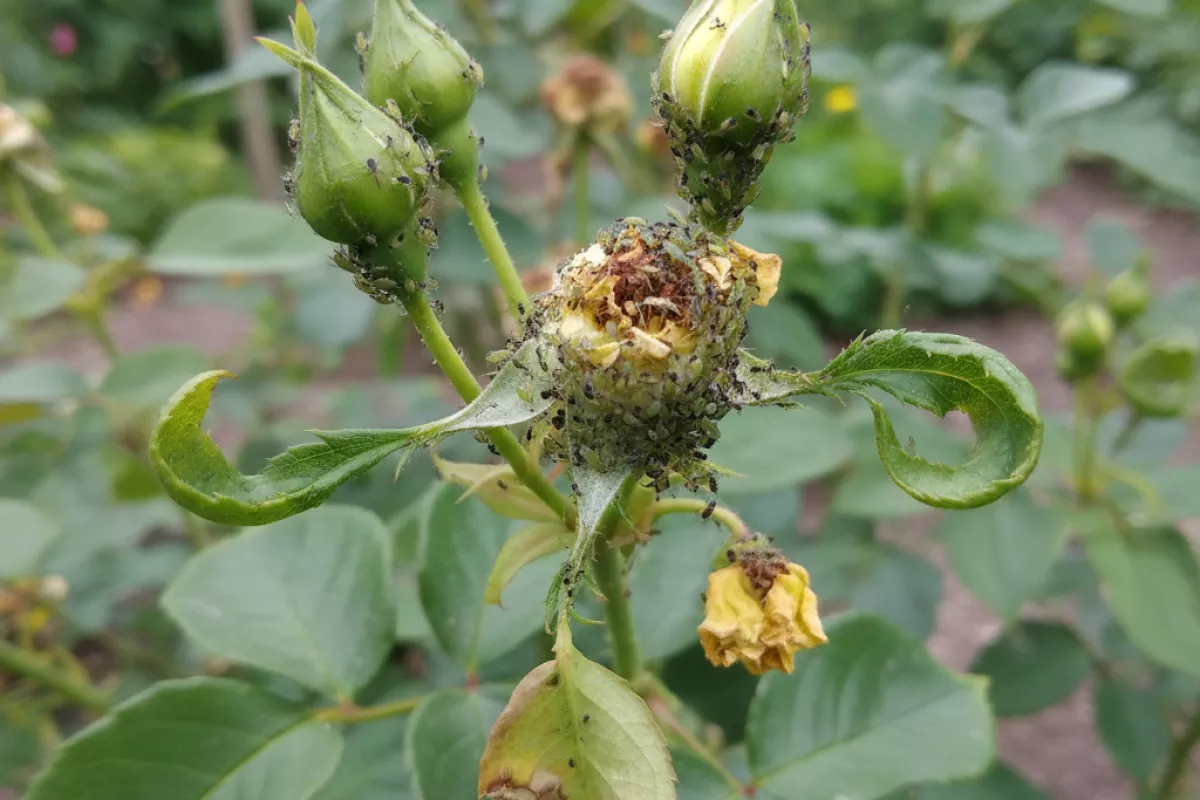
Aphids don’t just make plants look messy; when they cluster on tender growth, they can change how buds develop and whether flowers open normally. Because they feed by piercing tissue and sipping sap, the plant often redirects energy into repair and defense instead of building strong blooms.
- Bud drop and poor opening: Heavy feeding on developing buds can weaken the tissues that hold buds in place, so they yellow, dry, or fall before opening. Buds that do open may be smaller or partially formed.
- Distorted petals and misshapen blooms: Aphids prefer soft, expanding tissue. When they feed on buds and young flower parts, growth becomes uneven, leading to twisted petals, cupped flowers, or lopsided blooms.
- Sticky residue that interferes with flowering: Honeydew (the sugary waste aphids excrete) coats buds and petals. This tacky layer can make flowers stick together as they try to open and can leave blossoms looking dull or dirty.
- Sooty mold shading the plant: Honeydew often leads to black sooty mold on leaves and nearby flower parts. While the mold doesn’t infect the plant directly, it blocks light and reduces photosynthesis, which can mean fewer flowers and weaker color.
- Reduced fragrance and nectar production: When the plant is stressed, it may produce less nectar and scent. That can make blooms less attractive to pollinators, especially on plants that rely on insects for fruit set.
- Virus transmission that affects future blooms: Some aphids spread plant viruses as they feed. Viral infections can cause persistent streaking, ring spots, or long-term deformation in flowers, even after the insects are gone.
- Secondary problems on stressed plants: Damaged buds are more likely to brown, rot, or fail during heat or drought stress because the plant’s water balance is already compromised.
If you’re trying to judge whether the bloom issues are aphid-related, check the undersides of buds and the stems just below them. A telltale sign is a cluster of soft-bodied insects along with shiny honeydew, plus ants “farming” the area. Catching colonies early matters: once the bud tissue is distorted, that particular flower usually won’t return to normal even if you remove the pests.
Visible signs on petals and buds
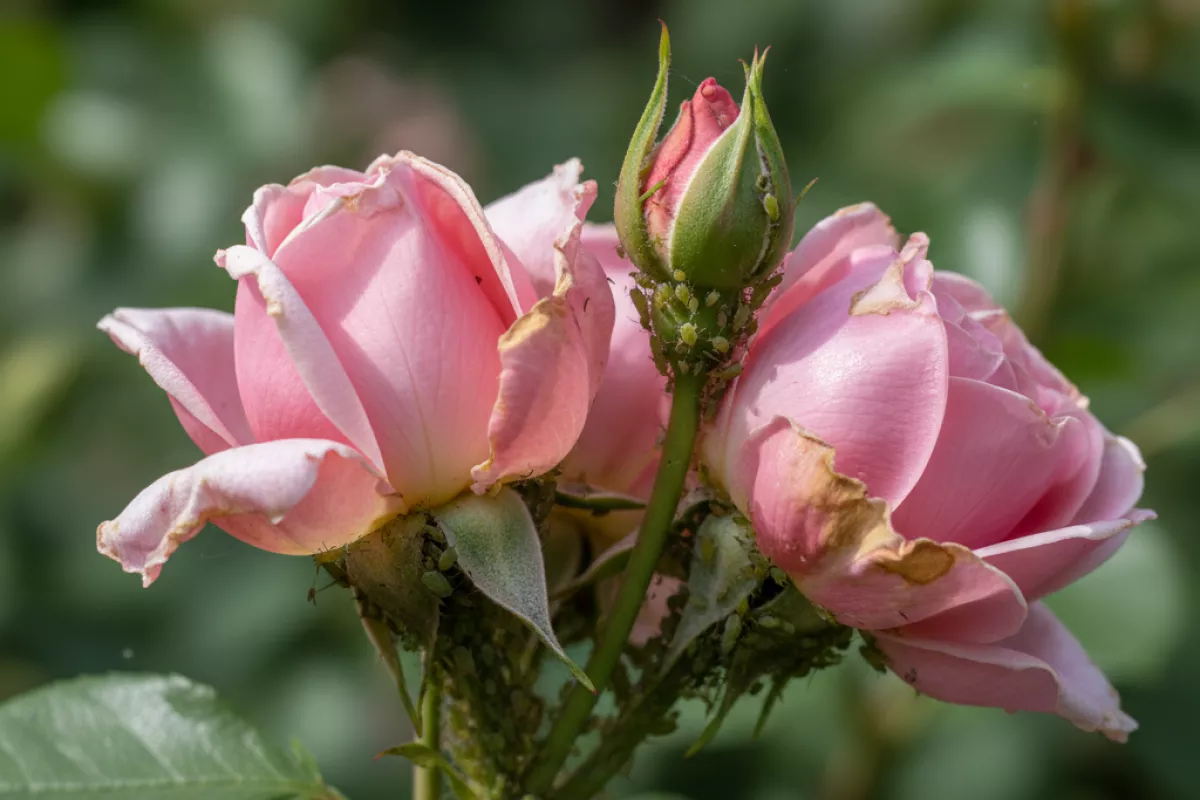
Feeding damage usually shows up first where growth is soft: the bud tips, the base of petals, and the flower stems. You may not spot the insects right away, but the plant often gives itself away through distorted growth, sticky residue, and changes in color or texture.
- Misshapen buds that don’t open properly (or open unevenly). Buds can look pinched, lopsided, or “stuck,” because sap loss and injected saliva disrupt normal expansion.
- Crinkled, curled, or puckered petals once the bloom starts to unfurl. This is common on roses, dahlias, and many annuals where petals are thin and easily deformed.
- Sticky honeydew on petals, sepals, or nearby leaves. Touch the flower base; if it feels tacky, aphids may be feeding higher up on the stem or inside the bud scales.
- Sooty mold (black, dusty-looking film) developing on top of that stickiness. While it doesn’t infect tissues directly, it can dull flower color and reduce photosynthesis on nearby leaves — often mistaken for disease or brown spots on leaves explained.
- Speckling, pale patches, or faint streaks on petals, especially on light-colored flowers. This can look like “bleaching” where cells were damaged during feeding.
- Petals that brown at the edges early or look scorched before the flower is fully mature. This is often paired with slowed bud growth.
- Clusters of soft-bodied insects tucked under sepals, along the bud neck, or on the flower stem. Colors vary (green, yellow, black, pink), and you may also see white shed skins.
- Ant activity around blooms (ants farming honeydew). If ants are repeatedly climbing to buds and flowers, it’s a strong clue that sap-feeders are present.
- Weak, drooping flower stems even when soil moisture is fine. Heavy feeding can reduce turgor pressure, making stems less firm.
A quick check that works well is to gently spread the sepals at the base of a bud and look into the folds. If you see sticky residue, tiny pear-shaped bodies, or white cast skins, you’re likely dealing with aphids rather than a nutrient issue or heat stress.
Immediate steps to protect flowers
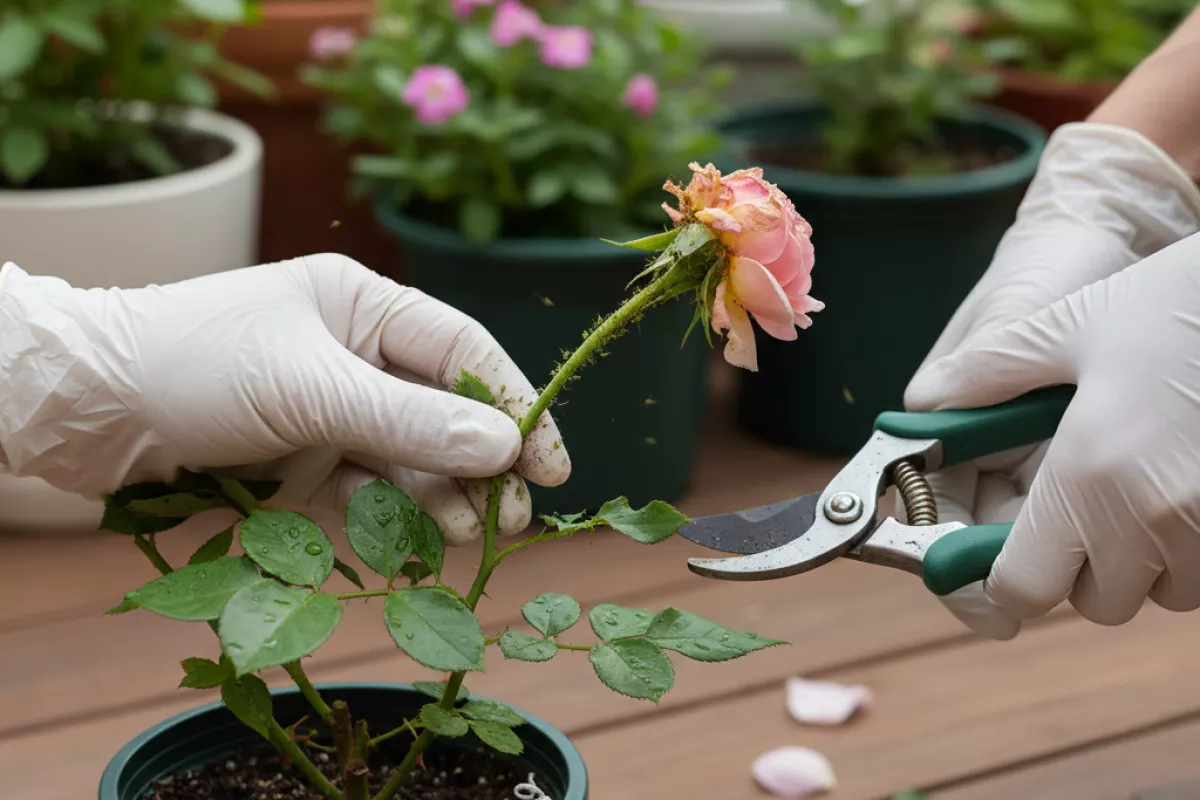
Act quickly when you spot clusters on buds or petals, because the soft tissue is where sap-feeders do the most visible harm. The goal is to knock numbers down fast, keep blooms clean, and avoid stressing the plant while you decide on longer-term control.
- Isolate the plant (if possible). Move pots a few meters/yards away from other ornamentals, or at least separate touching stems. This slows spread to nearby buds and makes treatment more targeted.
- Remove the worst-infested blooms and tips. Snip off heavily covered buds/flower clusters and discard them in the trash, not compost. This is the fastest way to reduce the population before it multiplies again.
- Rinse with a firm water spray. Use a hose or sprayer to blast the undersides of buds and flower stems, where colonies hide. Do it in the morning so flowers dry quickly; repeat every 1–2 days until you see a clear drop in numbers.
- Spot-treat with insecticidal soap or horticultural oil. These work by contact, so coverage matters. Spray until surfaces are evenly wet, focusing on buds, pedicels, and new growth. Avoid applying in heat or strong sun; a safer window is below about 29°C (85°F), and never on drought-stressed plants.
- Protect pollinators by timing and targeting. Treat at dusk or early morning when bees are less active, and aim for stems and bud bases rather than open petals whenever you can. If flowers are fully open and busy with visitors, stick to water sprays and pruning for a day or two.
- Deal with ants if you see them “farming” the pests. Ants defend colonies in exchange for honeydew, which makes control harder. Use sticky barriers on stems or the pot rim, and remove bridges like touching leaves or ties.
- Clean up honeydew and sooty mold. Gently rinse sticky residue off petals and leaves with water. If needed, wipe with a soft cloth dipped in a mild soap solution, then rinse again to reduce spotting and help buds open normally.
- Recheck and repeat on a short schedule. Inspect daily for 7–10 days, paying attention to fresh buds and the newest growth. Reapply soap/oil according to the label, since missed individuals can repopulate quickly.
If buds are deforming or turning brown despite these steps, pause and reassess: persistent pressure often means you’re missing hidden colonies (inside tight clusters) or the plant is stressed from heat, dryness, or excess nitrogen. For indoor plants, a more structured approach may be needed to get rid of aphids on plants without repeatedly damaging blooms.
Safe sprays for delicate blooms
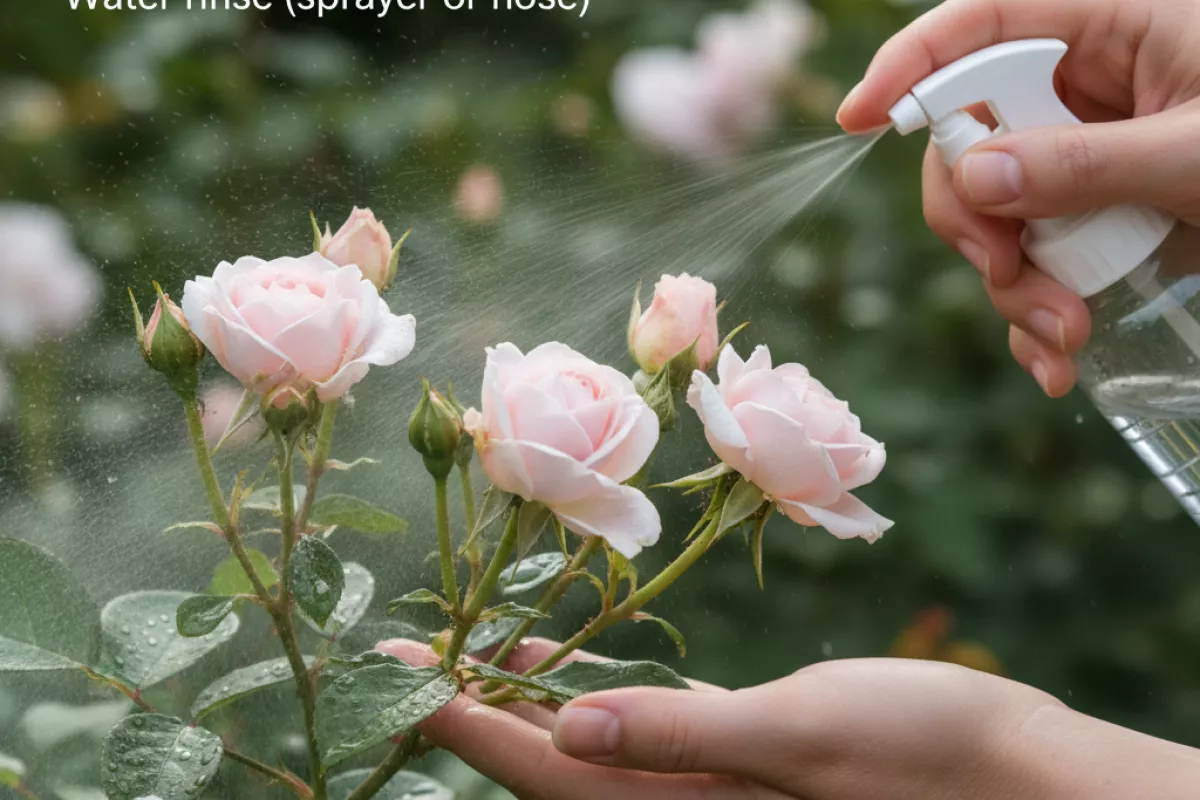
Use the gentlest option that still knocks aphids back, because petals and tight buds can spot, brown, or distort if the mix is too strong or applied at the wrong time. Start with water-based approaches, then move up to low-residue products only if colonies keep returning.
| Spray option | How to mix | Best use on flowers | Notes to avoid damage |
|---|---|---|---|
| Water rinse (sprayer or hose) | Plain water | First response for light infestations on buds | Aim at stems and undersides; avoid blasting open blooms. Repeat every 1–2 days. |
| Insecticidal soap | Ready-to-use, or follow label (commonly about 15–25 ml per 1 L (0.5–0.8 fl oz per 34 fl oz)) | Good for soft-bodied aphids clustered on new growth | Test on a few blossoms first; spray to wet, not drip. Rinse after 2–4 hours if petals look sensitive. |
| Neem (azadirachtin) or clarified hydrophobic neem oil | Follow label (often 2.5–5 ml per 1 L (0.08–0.17 fl oz per 34 fl oz)) | Useful when aphids keep reappearing and you need residual effect | More risk of spotting on pale petals; avoid spraying fully open flowers when possible. Apply at dusk and never in heat. |
| Horticultural oil (light summer oil) | Follow label (often 10–20 ml per 1 L (0.34–0.68 fl oz per 34 fl oz)) | Best on buds and stems before blooms fully open | Can burn petals in sun or high temps; don’t combine with sulfur products. Thorough coverage matters. |
| Botanical pyrethrins (short-lived contact spray) | Follow label | Last resort for heavy aphids on ornamentals when gentler sprays fail | Can harm beneficial insects if sprayed on them; apply at dusk and target only affected areas. |
- Spray timing matters more than strength. Treat in the cool part of the day, ideally below 27°C (80°F), and keep plants out of harsh sun until leaves and petals are dry.
- Cover the hiding places. Aphids sit on the underside of sepals, the backs of petals, and tender stem tips. Tilt blooms gently and spray from multiple angles.
- Use a “test bloom” first. Treat a small section, wait 24 hours, and check for browning, translucence, or petal edge crisping before you spray the whole plant.
- Repeat lightly instead of soaking once. Two gentler applications 3–5 days apart often outperform one heavy drench, especially on thin-petaled flowers.
- Watch for sticky residue. Honeydew can glue petals and invite sooty mold; a plain-water rinse the next morning can tidy blooms after a treatment.
If you’re treating plants that attract pollinators, avoid spraying directly onto open flowers. Target buds, stems, and leaf undersides instead, and apply at dusk so residues dry before morning activity.
How to prevent deformation of flowers
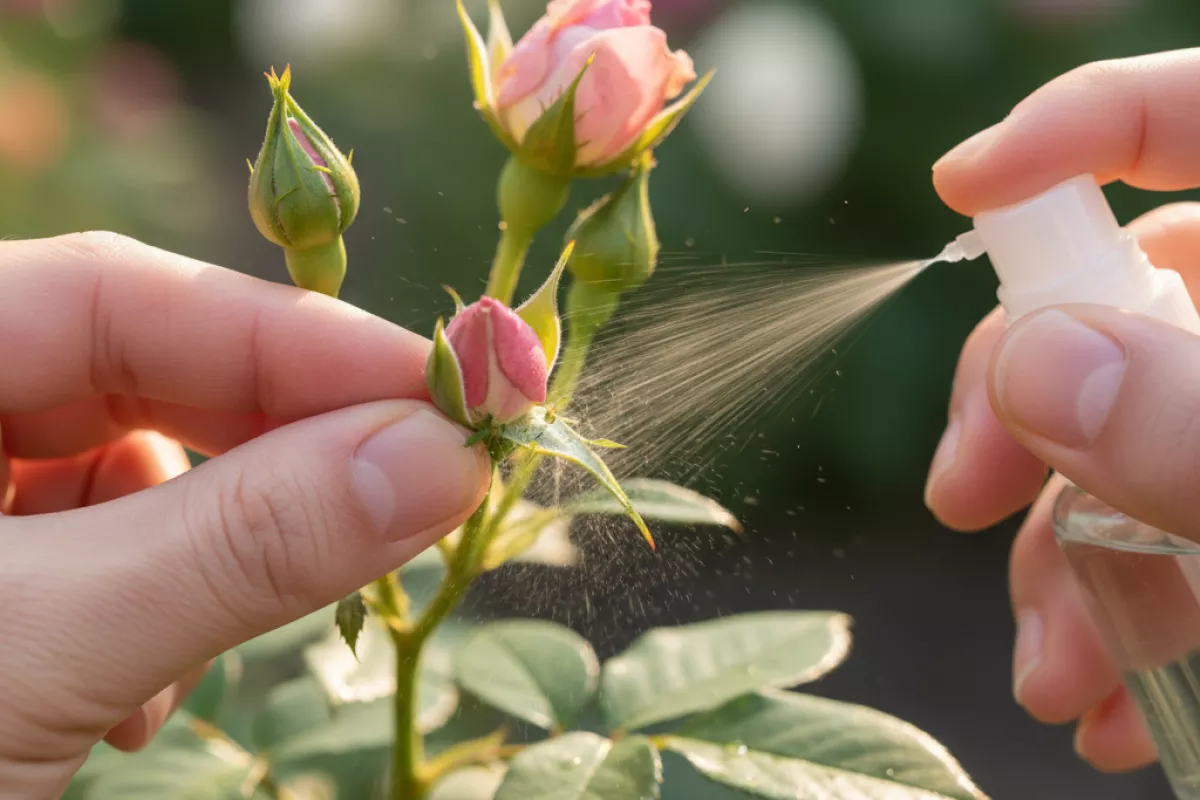
Misshapen buds and twisted petals usually happen when aphids feed early, before the flower fully expands. The goal is to protect new growth, reduce stress on the plant, and interrupt the aphid life cycle before colonies build up on tender stems and bud clusters.
- Inspect buds often, not just leaves. Check the undersides of sepals, the base of flower buds, and tight clusters where insects hide. Catching a few aphids early prevents the “stunted, puckered” look later.
- Rinse colonies off with water. A firm spray can remove many aphids without chemicals. Aim the stream at bud stems and the underside of blooms, and repeat every 2–3 days until numbers drop. Water early in the day so flowers dry before evening.
- Pinch or prune the worst tips. If a bud is already badly distorted or packed with aphids, remove that tip to stop spread and help the plant redirect energy to healthy blooms. Discard prunings in the trash rather than compost.
- Use insecticidal soap or horticultural oil correctly. These work by contact, so coverage matters. Spray to wet (not drip) the buds, stems, and leaf undersides. Test on a small area first, and avoid treating during heat or strong sun (for example, above 29°C (85°F)) to reduce the risk of flower spotting.
- Control ants that “farm” aphids. Ants protect aphids from predators, which lets infestations explode on flower clusters. Use sticky barriers on stems or physical ant baits placed away from blooms, and remove bridges like touching weeds or pots.
- Encourage natural predators. Lady beetles, lacewings, and hoverfly larvae often clean up aphids on buds when you avoid broad-spectrum insecticides. Leave a few small flowering herbs nearby and tolerate a low level of pests so predators stick around.
- Prevent soft, aphid-prone growth. Overfertilizing with nitrogen pushes tender shoots that aphids prefer. Feed lightly and combine it with watering methods that support root health so plants don’t swing between drought stress and waterlogging.
- Quarantine new plants and cut flowers. Aphids hitchhike on nursery plants and bouquets. Keep newcomers separate for 7–10 days, and inspect buds before placing them near prized flowering plants.
If you’re already seeing deformed blooms, focus on protecting the next flush: remove the most damaged buds, knock back aphids with water or soap, and keep the plant steady (even moisture, moderate feeding). New flowers often return to normal once feeding pressure is reduced on the developing buds.
Monitoring during flowering season
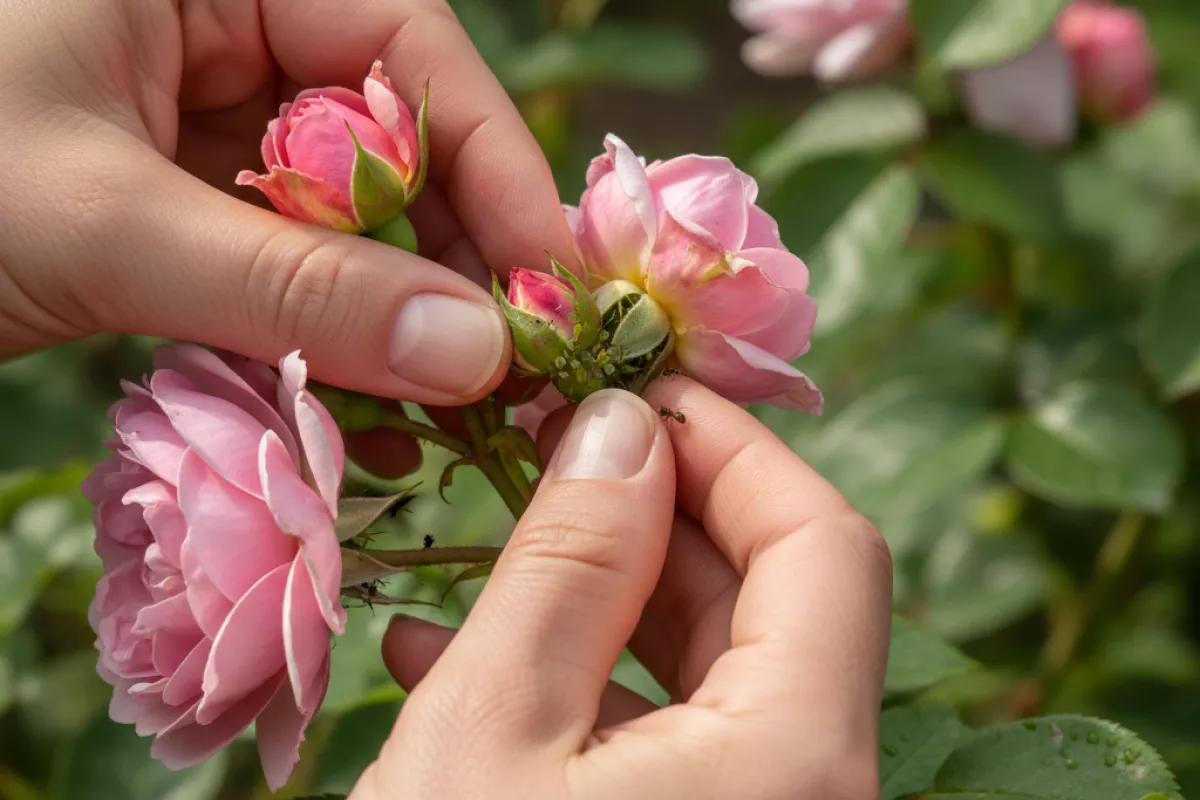
Catch aphids early by checking buds and blooms on a predictable schedule, not just when you notice distortion. During peak bloom, colonies can build fast on tender growth, and the first clues are often subtle: sticky residue, ants “patrolling” stems, or petals that look slightly crumpled before you see any insects.
Focus your inspection where aphids prefer to hide: the undersides of flower clusters, the base of buds, and new shoots just below the blooms. A quick look every 2–3 days is usually enough in mild weather, but tighten it to daily checks during warm spells around 24–30°C (75–86°F), when populations can surge.
At the same time, keep an eye on root conditions. Overly wet soil weakens plants and makes flower damage worse under pest pressure. If you’re unsure whether watering is contributing to stress, run a quick houseplant root rot risk assessment before adjusting care.
- Check the “hot spots” first: newest buds, tight flower clusters, and soft stem tips. Aphids often start there before spreading outward.
- Look for indirect signs: honeydew shine on petals/leaves, sooty mold starting as a gray film, and increased ant activity (ants protect aphids for the sugar).
- Do a gentle tap test: hold a white sheet of paper under a flower truss and tap the stem; small green/black/brown aphids will drop and become easier to spot.
- Inspect after watering or rain: water can knock some off, but it can also reveal survivors clustered in sheltered crevices around sepals and bud bases.
- Track beneficial insects: note lady beetle larvae, lacewing larvae, hoverfly larvae, and parasitized “mummy” aphids. If you’re seeing these, you may be able to avoid stronger interventions.
| What you observe on buds/flowers | What it usually means | What to do next |
|---|---|---|
| 1–5 aphids on a few buds; no distortion | Early colonization; easy to stop before damage shows | Pinch off the most infested buds, rinse with a firm spray, and recheck in 48 hours (2 days). |
| Sticky honeydew on petals; ants present | Active feeding and protection by ants; spread likely | Control ants (barriers or bait away from blooms), then treat aphids; reassess every 1–2 days. |
| Bud tips curled, petals crinkled, or blooms failing to open | Feeding damage already affecting flower development | Remove badly deformed buds/flowers, treat remaining clusters, and monitor daily until new growth looks normal. |
| Many aphids clustered deep in flower heads; few predators seen | Population outpacing natural control | Use a targeted control (e.g., insecticidal soap or horticultural oil) applied at cool times, and repeat per label if needed. |
| Lots of “mummy” aphids and predator larvae nearby | Biological control is working; numbers may drop soon | Hold off on broad sprays; spot-treat only the worst clusters and keep checking every 2–3 days. |
Keep notes for each plant or bed: where you found the first cluster, how many buds were affected, and whether predators were present. This makes it easier to spot patterns, like a particular cultivar that attracts aphids first, or a corner of the garden that stays sheltered and needs closer attention.
If you do treat during bloom, recheck the same sites the next morning and again after 48 hours (2 days). Aphids that survive often regroup on the next set of buds, so consistent follow-up is what prevents a small issue from turning into widespread flower damage.