Scale Insects on Outdoor Plants – How to Remove Them

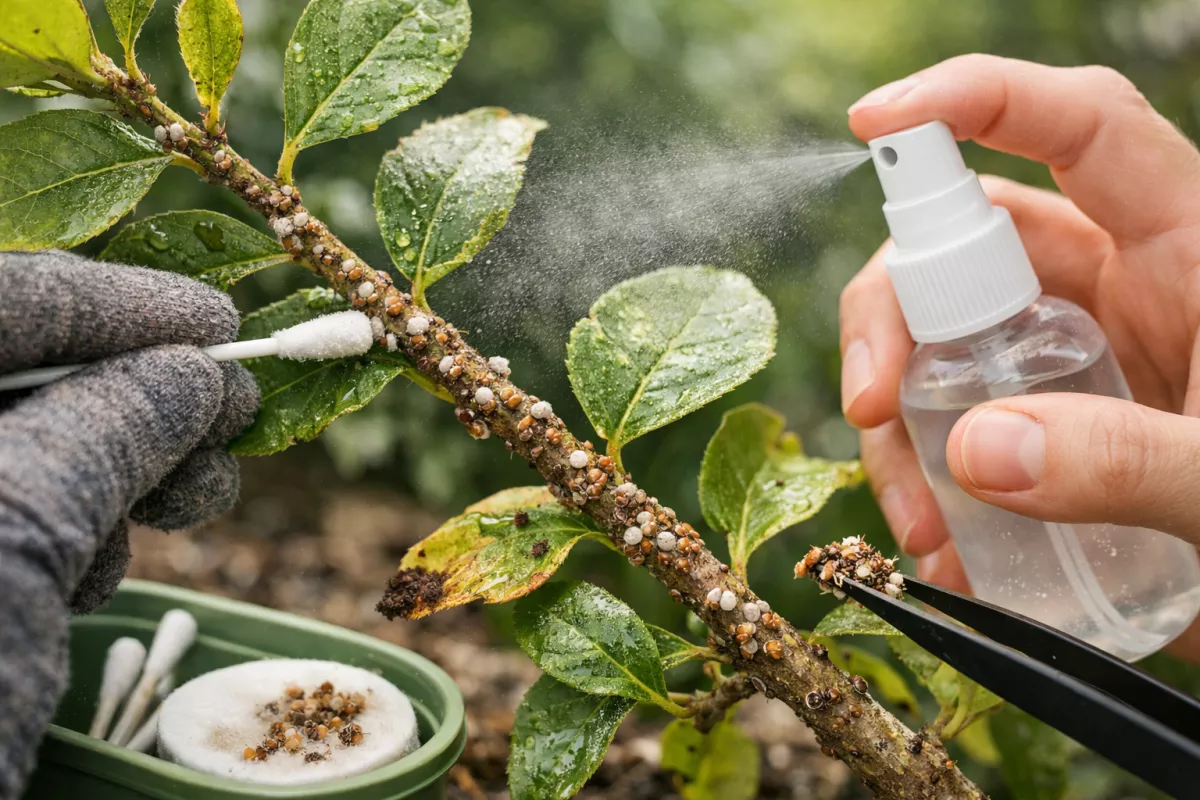 Here we why scale insects show up on outdoor plants during seasonal changes and how weather and plant stress make infestations worse. It explains when to inspect shrubs, trees, and garden plants, how to remove scale safely, when pruning helps, and how to handle repeat outbreaks with natural predators and garden-friendly treatments.
- Why outdoor plants get scale insects in seasonal conditions
- How weather and plant stress affect outdoor infestations
- Best time to inspect shrubs, trees, and garden plants
- How to remove scale insects safely on outdoor plants
- When pruning helps control heavy infestations
- Using natural predators and garden-friendly treatments
- How to manage repeat outbreaks during the growing season
Scale pests on garden and landscape plants are often overlooked until leaves turn yellow, stems weaken, or sticky residue appears on nearby surfaces. Outdoors, control usually depends on careful timing, regular inspection, and matching the treatment to both the plant and the severity of the infestation. Early action can prevent larger outbreaks and help plants recover with less stress and damage.
Why outdoor plants get scale insects in seasonal conditions
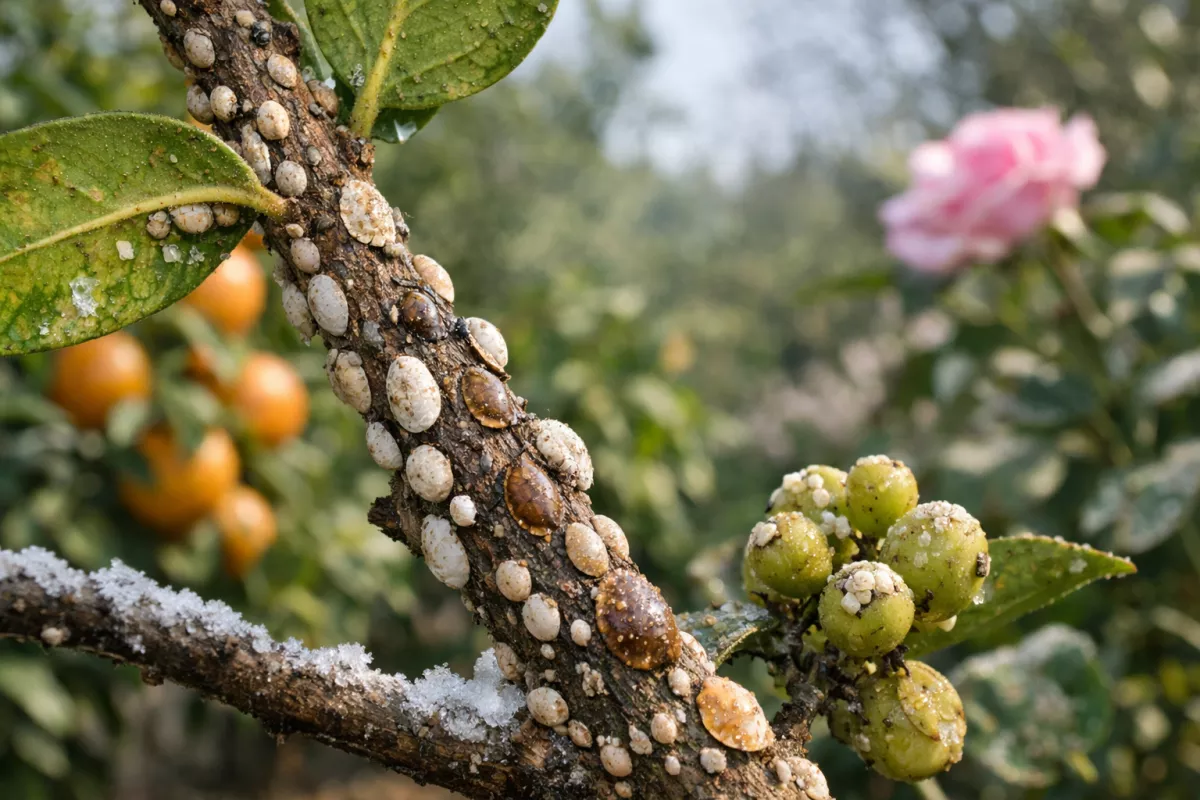
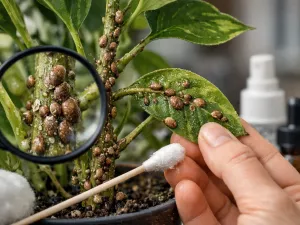
Scale insects often seem to appear suddenly on outdoor plants, but they usually build up quietly over time. These pests attach themselves to stems, leaf undersides, and twigs, where they feed on plant sap and stay well hidden beneath waxy or shell-like coverings. In gardens, they are especially common on shrubs, fruit trees, roses, camellias, euonymus, citrus, magnolia, and many evergreen plants.
Seasonal changes play a major role in how scale populations develop. Many species overwinter as eggs, immature nymphs, or attached adults on bark and stems. As temperatures rise in spring, the young “crawler” stage becomes active and spreads to fresh growth. That is the point when infestations can expand across a plant or move to nearby hosts.
Why outdoor settings favor scale
Unlike houseplants, garden plants are exposed to fluctuating temperatures, rain, wind, and periods of stress. Those conditions can weaken plant defenses or create sheltered spots where pests survive. Dense branching, rough bark, and crowded planting also make it easier for scale to remain unnoticed until honeydew, black sooty mold, or yellowing leaves become obvious.
- Mild winters: More insects survive cold months and reappear strongly in spring.
- Warm springs: Crawlers emerge earlier and may spread before gardeners begin routine checks.
- Protected microclimates: South-facing walls, enclosed courtyards, and sheltered hedges stay warmer and support faster pest activity.
- Evergreen structure: Plants that keep leaves year-round provide ongoing cover and feeding sites.
How scale spreads through the garden
Adult scale insects do not move much, which is why infestations are easy to underestimate. The crawler stage is tiny and mobile, and that is when spread happens. Crawlers can be carried by wind, birds, ants, tools, clothing, or direct branch-to-branch contact. If one shrub is heavily infested, nearby plants often become the next hosts.
Ant activity is another clue. Ants are attracted to the sugary honeydew produced by soft scale insects and may protect them from predators. When you see ants repeatedly moving up and down stems, it is worth checking for hidden colonies along the bark and leaf joints.
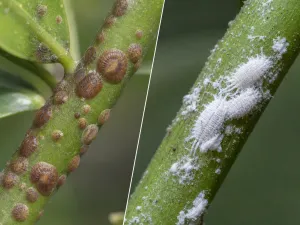
Editor’s note: If a plant looks dusty or dull even after rain, inspect it closely. What seems like rough bark texture can actually be a cluster of mature scale insects packed along the stems.
How weather and plant stress affect outdoor infestations

Weather does not create scale insects on its own, but it strongly influences how quickly they multiply and how well a plant can tolerate feeding damage. A healthy shrub may carry a small population with little visible harm, while a drought-stressed or root-bound plant can decline quickly under the same pressure.
Outdoor infestations often worsen after periods of environmental stress. Heat, erratic watering, compacted soil, and poor airflow all reduce the plant’s ability to replace lost sap and maintain vigorous growth. Once that balance shifts, scale insects become more than a cosmetic issue.
Conditions that encourage outbreaks
Some weather patterns consistently line up with heavier infestations. Warm, dry periods often favor survival of crawlers and reduce the washing effect of regular rain. On the other hand, prolonged dampness can increase sooty mold on honeydew-coated leaves, making the problem look even worse.
| Condition | Effect on the plant | Effect on scale insects |
|---|---|---|
| Extended drought | Reduces sap flow balance, causes leaf drop and stress | Plants become easier to exploit, especially on woody stems |
| Heat above 29°C (85°F) | Raises water demand and can scorch tender growth | Some species develop faster in warm sheltered spots |
| Mild winter temperatures above -1°C (30°F) | Less winter dieback on host plants | More overwintering insects survive into spring |
| Heavy nitrogen feeding | Pushes soft, lush growth | Fresh growth can attract crawlers and support rapid buildup |
Stress factors gardeners can control
Not every stress factor is avoidable, but several are manageable. Plants that are watered deeply, mulched properly, and grown in suitable light recover more effectively after pest feeding. By contrast, a shrub growing in reflected heat, dry soil, and overcrowded roots is more likely to suffer branch dieback and leaf yellowing.
- Watering: Deep soaking is better than frequent shallow sprinkling. Aim to moisten the root zone to around 15 to 20 cm (6 to 8 in) deep when conditions are dry.
- Mulch: A layer of 5 to 7.5 cm (2 to 3 in) helps stabilize soil moisture, but keep it a few centimeters away from the trunk or main stems.
- Feeding: Avoid pushing weak plants with high-nitrogen fertilizer during an active infestation.
- Light: Plants growing in too much shade often stay damp and crowded, while those in excessive sun may become drought-stressed. Both extremes can contribute to problems.
When scale keeps returning, the pest is often only part of the story. Looking at root health, watering habits, and planting position usually reveals why one plant is repeatedly affected while another nearby stays relatively clean.
Best time to inspect shrubs, trees, and garden plants
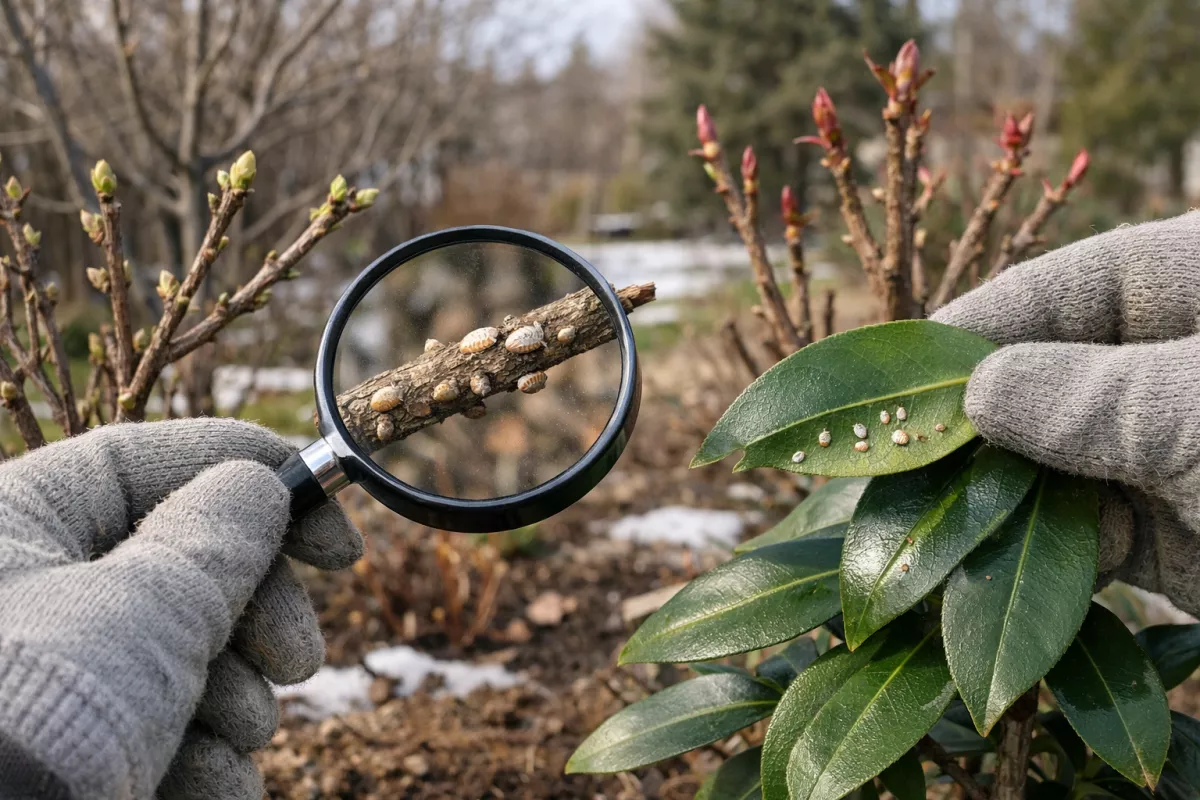
Regular inspection is the most effective way to catch scale before it becomes a major cleanup job. Because these insects blend into bark and stems, timing matters. The best checks happen when plants are not under obvious stress and when you can clearly see branch structure, leaf undersides, and new growth.
For many outdoor plants, the key inspection windows are late winter, early spring, and the period when crawlers are active. Mature insects are easier to spot, but crawler emergence is the stage when treatment works best because the protective covering has not fully formed.
Seasonal inspection rhythm
A simple schedule helps prevent missed outbreaks. Different plant types need slightly different timing, especially deciduous shrubs versus evergreen hedges and fruit trees.
- Late winter: Check bare branches for bumps, crusty patches, and twig dieback before new leaves hide the stems.
- Early spring: Inspect swelling buds and fresh shoots where crawlers often settle.
- Early summer: Recheck plants that had previous infestations, especially if you treated in spring.
- Late summer to early autumn: Look for renewed honeydew, ant activity, or black sooty mold on leaves and paving below.
Where to look first
Scale insects are rarely spread evenly across a plant. They usually start in protected areas, so a quick glance at the outer canopy is not enough. Focus on the parts of the plant that stay sheltered from wind and strong rain.
- Examine lower stems and inner branches first.
- Turn over several leaves, especially near the midrib.
- Check branch forks, pruning cuts, and rough bark.
- Look beneath any sticky leaves or areas with black mold.
- Inspect neighboring plants within about 1 m (3.3 ft), especially if branches touch.
If you are unsure whether a bump is scale or natural bark texture, gently scrape one with a fingernail. A true insect often lifts off as a small shell or soft body, while plant tissue will not separate in the same way. This simple test saves a lot of guessing.
Practical tip: Inspect in the morning or late afternoon rather than harsh midday sun. Side light makes raised scale coverings easier to see, especially on gray or brown bark.
How to remove scale insects safely on outdoor plants
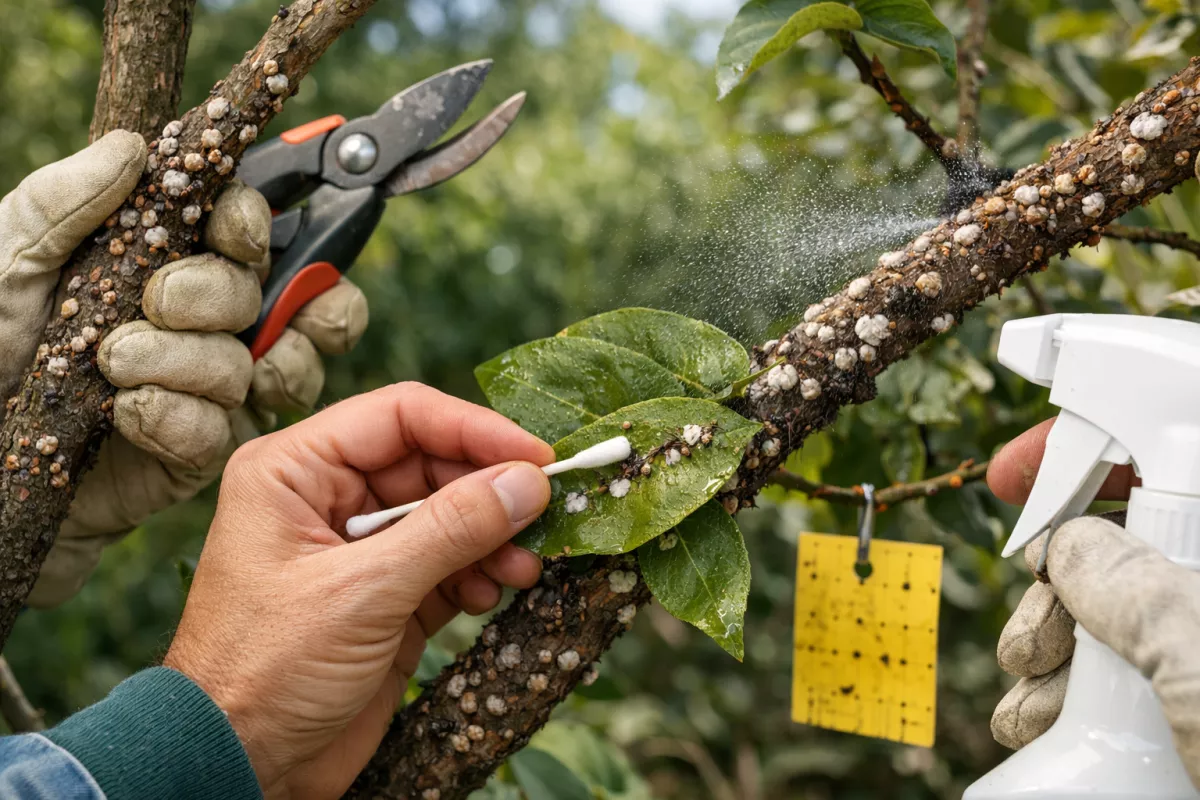
Removing scale from outdoor plants works best when methods are matched to the severity of the infestation. A light problem on a small shrub can often be handled by hand and followed with a horticultural oil spray. A larger outbreak on a tree may need a combination of pruning, repeated monitoring, and targeted treatment during crawler activity.
The main goal is to reduce the population without stressing the plant further or harming beneficial insects. Because mature scale insects are protected by their covering, timing and coverage matter more than simply spraying harder.
Step-by-step removal for light to moderate infestations
For manageable outbreaks, start with physical removal. This lowers numbers immediately and improves the effectiveness of any follow-up treatment.
- Isolate the worst areas: Mark heavily infested branches so you can return to them after cleaning.
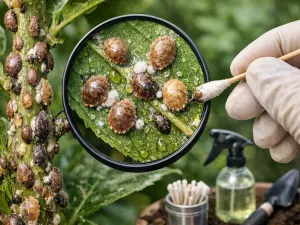
- Wipe or scrape gently: Use gloved fingers, a soft cloth, or a soft toothbrush to remove clusters from stems and leaf undersides.
- Rinse the plant: A firm stream of water can dislodge crawlers and honeydew, but avoid blasting tender growth.
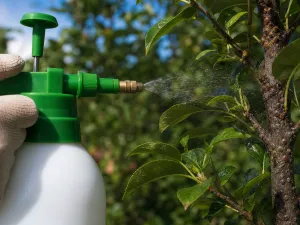
- Apply horticultural oil or insecticidal soap: Spray thoroughly, coating stems, branch joints, and leaf undersides. Follow label directions closely.
- Repeat if needed: Recheck after 7 to 14 days and treat again if new crawlers appear.
How to use oils and soaps safely outdoors
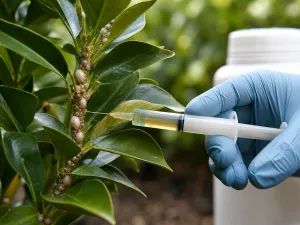
Horticultural oils are often the most practical garden treatment because they smother exposed insects and can be used on many woody plants. Insecticidal soaps help with crawler stages, but both products must be used carefully to avoid leaf damage.
- Spray in cooler conditions: Apply when temperatures are below 29°C (85°F), ideally on a calm day.
- Avoid drought-stressed plants: Water the root zone first if the plant is dry, then wait until foliage is no longer heat-stressed.
- Do a small test area: Some plants have sensitive foliage, especially blue conifers, ferns, and waxy leaves.
- Cover hidden surfaces: Missing the undersides of stems and leaves is a common reason treatment fails.
Do not mix homemade sprays casually. Outdoor plants vary widely in leaf sensitivity, and stronger is not better. A product labeled for ornamental or edible plants is safer than improvised mixtures that may burn foliage or disrupt helpful insects.
What to do with severe infestations
When stems are densely encrusted, leaves are yellowing, and honeydew is dripping onto surfaces below, a single treatment will not solve the problem. Start by removing the worst branches, cleaning up fallen debris, and then treating the remaining plant during the active crawler period. If a mature shrub or tree is badly weakened, improving watering and root-zone care becomes just as important as direct pest control.
Editor’s note: If you can rub off dozens of insects from one 10 cm (4 in) section of stem, think in terms of a control program rather than a one-day fix. Reinspection is what turns treatment into success.
When pruning helps control heavy infestations
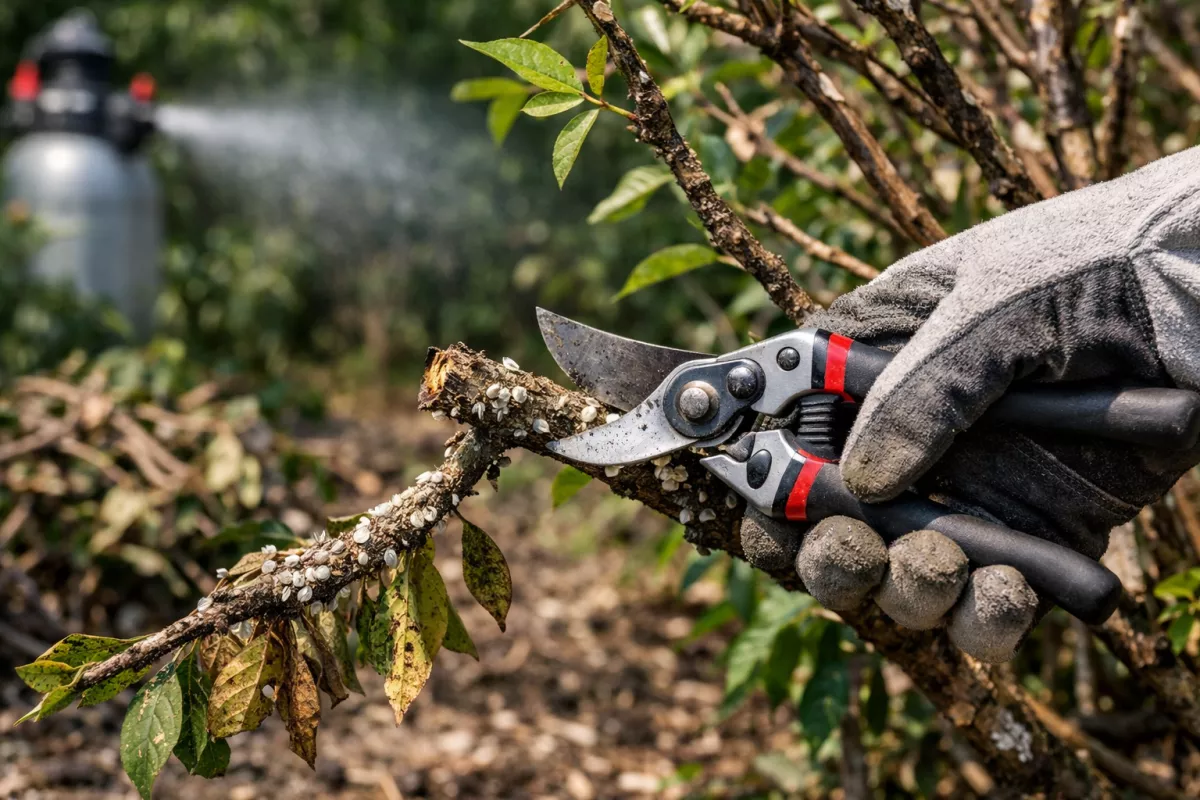
Pruning is one of the most useful tools for severe scale problems, especially on shrubs and small trees. It does not replace treatment, but it can remove the densest colonies, improve airflow, and make follow-up spraying much more effective. In many cases, gardeners get better results by cutting out a few badly affected stems than by trying to save every branch.
The key is to prune with a purpose. Random trimming can stimulate soft new growth that attracts more pests, while careful thinning reduces hiding places and helps the plant recover.
Best situations for pruning
Pruning is most helpful when infestation is concentrated rather than evenly spread. It is also useful when branches are already declining and unlikely to recover well.
- Dead or dying twigs: Remove these first, as they often hold dense clusters and no longer contribute to plant health.
- Crossing interior branches: Thinning crowded growth improves light and spray access.
- Localized outbreaks: If one side of a shrub is heavily affected, selective removal can sharply reduce the pest load.
- Suckers and water sprouts: These soft shoots are often colonized quickly and can be removed if not needed for structure.
How much to remove
Most garden shrubs respond well when no more than about one-quarter to one-third of the canopy is removed in one session. That is roughly 25 to 33% of the top growth. Taking more than that can stress the plant, especially during summer heat or drought.
Use clean, sharp tools and cut back to a healthy branch junction rather than leaving stubs. Bag or dispose of infested material promptly instead of leaving it beneath the plant. While scale does not leap back from prunings like some fungal diseases spread from debris, keeping the area clean reduces crawler movement and makes inspection easier.
Aftercare following pruning
Freshly pruned plants need steady support, not heavy feeding. Water deeply if rainfall is low, and maintain even soil moisture for the next few weeks. A balanced, moderate-care approach helps the plant replace lost foliage without producing a flush of weak, overly soft growth.
If the weather is hot, check the root zone every few days. Newly exposed stems and leaves may dry faster than before. A mulch layer of 5 cm (2 in) can help, provided it is kept away from the trunk and main stems.
Using natural predators and garden-friendly treatments
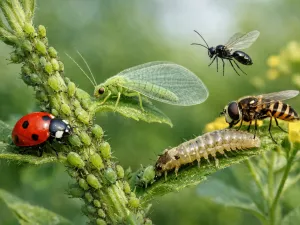
Outdoor plants benefit from natural checks that indoor plants rarely have. Ladybirds, lacewings, parasitic wasps, and other beneficial insects can reduce scale populations over time, especially when broad-spectrum pesticides are avoided. Garden-friendly control is about making the environment less favorable to pests while preserving these helpers.
This approach is especially useful for recurring but moderate infestations, where complete eradication is unrealistic but long-term suppression is achievable. Healthy planting conditions, selective treatment, and predator support often work better together than repeated harsh spraying.
Beneficial insects that help
Natural enemies are most effective when they are already present in the garden or can move in from nearby planting. Their impact is easy to miss because they work gradually rather than dramatically.
| Beneficial helper | What it targets | How to support it |
|---|---|---|
| Ladybirds and their larvae | Soft-bodied young stages and honeydew-producing pests | Avoid broad-spectrum insecticides and keep mixed planting nearby |
| Lacewing larvae | Crawlers and other small sap-feeding insects | Provide pollen and nectar sources in the garden |
| Parasitic wasps | Immature scale stages | Limit unnecessary spraying during active predator periods |
| Hoverflies | Associated soft-bodied pests around infested plants | Grow flowering herbs and avoid pesticide drift |
Garden-friendly treatment choices
Selective products fit well into an outdoor integrated approach. Horticultural oils, insecticidal soaps, and well-timed dormant oils are commonly used because they have less residual impact than many conventional insecticides. The trade-off is that they require good timing and thorough coverage.
- Dormant oil: Useful in late winter on suitable deciduous plants before bud break.
- Summer-weight horticultural oil: Good for exposed insects during the growing season when used in safe temperatures.
- Insecticidal soap: Most effective on crawlers and light infestations.
- Ant control barriers: Helpful where ants are protecting honeydew-producing scale from predators.
Companion planting alone will not remove an infestation, but a garden with flowering dill, alyssum, fennel, yarrow, or other nectar sources often supports more beneficial insects. That matters most after the first cleanup, when you are trying to prevent the next surge.
How to manage repeat outbreaks during the growing season
Repeat outbreaks are common because scale insects do not all hatch at once, and hidden colonies are easy to miss. A plant may look improved after treatment, only to show fresh honeydew or new bumps a few weeks later. That does not always mean the treatment failed completely; it often means the life cycle continued and monitoring stopped too soon.
The best way to stay ahead of recurring infestations is to combine follow-up checks with steady plant care. Outdoor plants under repeated attack need less stress, better airflow, and a clear inspection routine from spring through early autumn.
Build a simple follow-up plan
Instead of reacting only when damage is obvious, set a repeating schedule. This is particularly important for shrubs, espaliered fruit trees, and hedges where scale can hide deep inside the canopy.
- Inspect treated plants every 7 to 10 days during active growth.
- Recheck the undersides of leaves and inner stems after rain or irrigation.
- Watch for ants, sticky residue, and black sooty mold as early warning signs.
- Retreat only where needed, focusing on crawler stages and missed pockets.
- Compare plant vigor month to month rather than expecting instant visual recovery.
Reduce the conditions that invite return infestations
Long-term control depends on making the host plant less vulnerable. If the same shrub is attacked every year, look beyond the insects themselves. Root competition, reflected heat from paving, shallow watering, and excessive feeding are common hidden drivers.
- Water evenly: During dry spells, soak the root zone deeply rather than giving light daily watering.
- Avoid overfeeding: Use moderate fertilizer rates and skip high-nitrogen boosts on stressed plants.
- Thin crowded growth: Better airflow and light penetration make inspection easier and reduce sheltered pest zones.
- Check nearby hosts: Repeat problems often come from adjacent shrubs, hedges, or volunteer seedlings carrying unnoticed colonies.
Recovery can be gradual. Leaves damaged by sap loss or sooty mold may not look good again, but new growth should appear cleaner and stronger if the plant is improving. If a plant continues to decline despite repeated care, reassess whether the site suits it. Sometimes replacing a chronically stressed specimen with a better-adapted plant is the most practical solution.
Practical recommendation: Keep a short garden note with dates of crawler activity, pruning, and spray timing. Even a few lines each month can reveal a pattern that makes next season much easier to manage.