Abroma augusta — Tropical Asian Plant With Specific Care Requirements

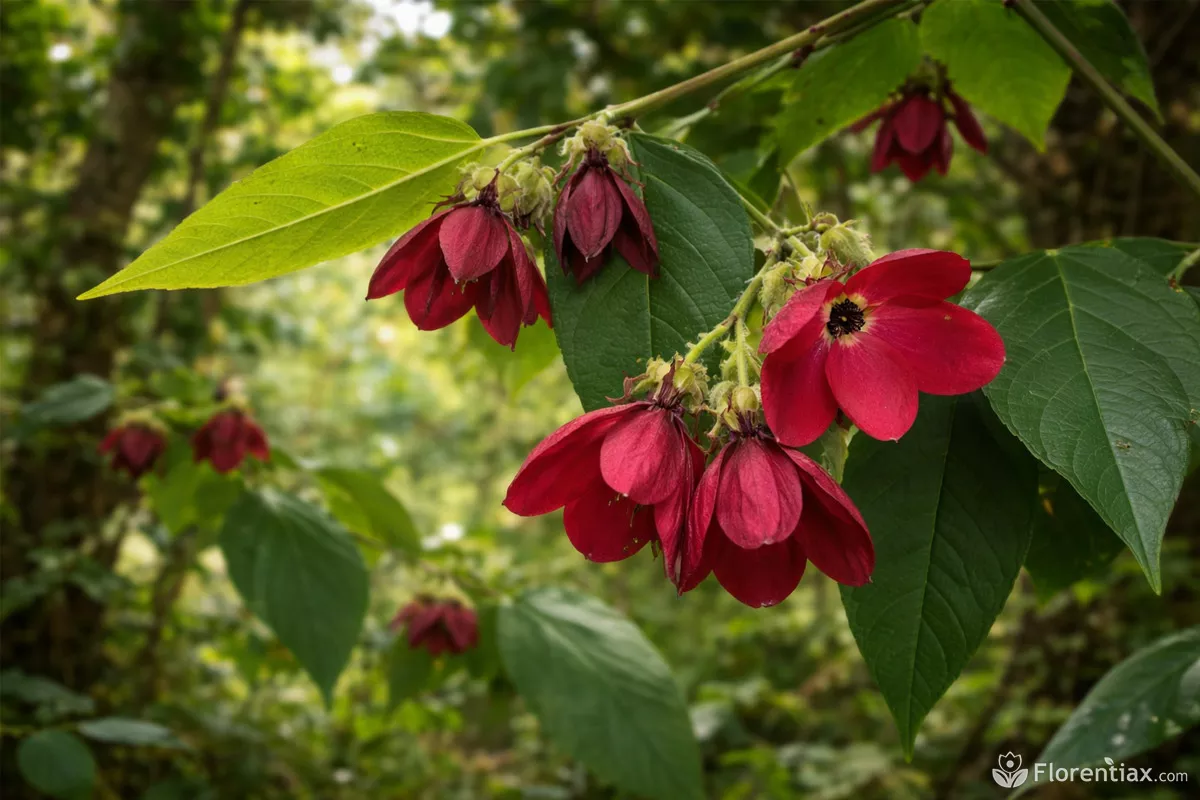 Here we Abroma’s key traits, tropical origins, ecological niche, and leaf growth pattern. It explains the best light, soil moisture and watering rhythm, warmth needs, daily care, propagation, seasonal growth in warm climates, and common health issues.
- Abroma plant overview and key traits
- Native tropical regions and ecological niche
- Leaf structure and growth pattern characteristics
- Light conditions for tropical foliage vigor
- Soil moisture and watering rhythm for Abroma
- Climate preferences and warmth requirements
- Daily care routine for stable growth
- Propagation techniques for tropical specimens
- Seasonal growth rhythm in warm climates
- Common issues affecting Abroma health
Growing Abroma, a tropical Asian plant, is rewarding when you meet its needs from the start. It prefers steady warmth, bright filtered light, and consistently moist soil that drains well. With good humidity and airflow it grows vigorously, but if the air turns dry or the pot stays soggy, leaf edges may brown or yellow. Use a rich mix, water when the top layer dries slightly, and avoid cold drafts.
Abroma plant overview and key traits
Abroma is a tropical shrub or small tree native to parts of South and Southeast Asia, best known for its bold foliage and its preference for consistently warm, humid conditions. In cultivation it tends to behave like a moisture-loving, heat-adapted plant: it grows steadily when nights stay warm, but it can stall or decline if exposed to cool drafts, dry indoor air, or irregular watering.
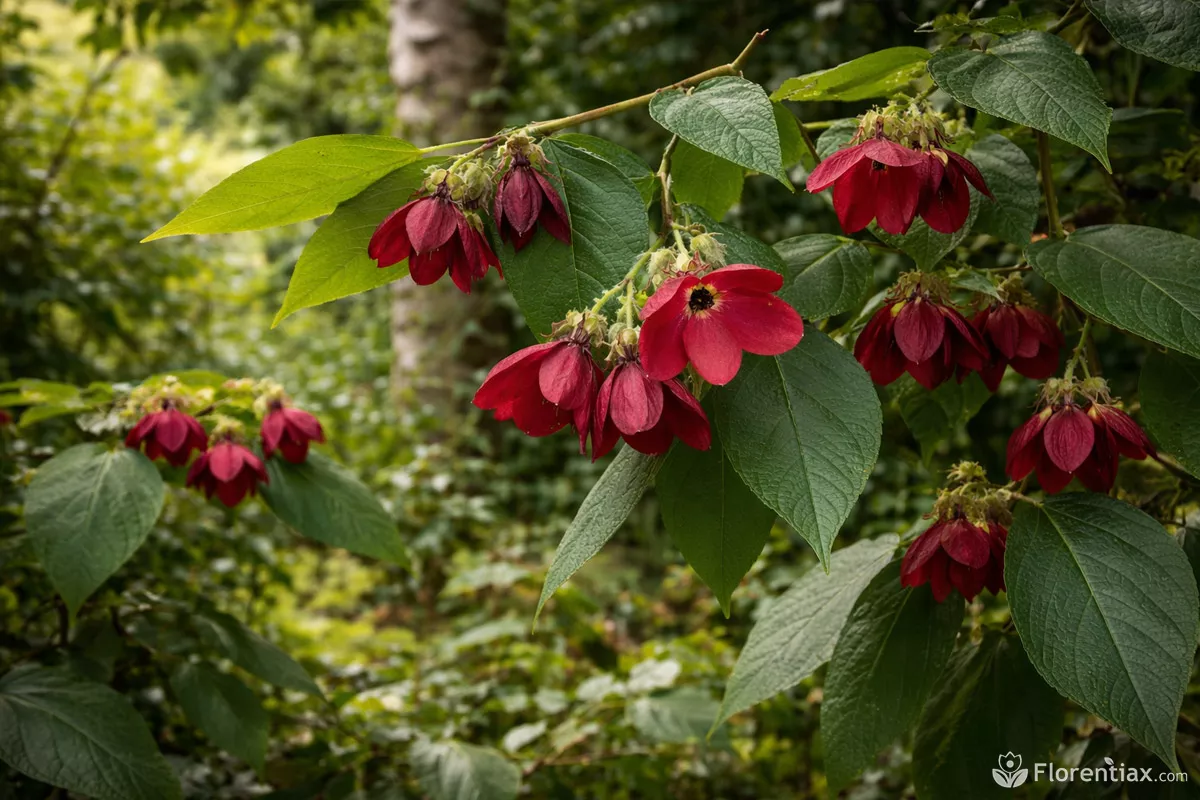
Botanically, the plant is commonly associated with Abroma augusta (often placed in the mallow family groupings in modern classifications). It develops a woody framework with soft young stems, and it can be grown as a container specimen where its environment is easier to control. When happy, it produces a quick flush of leafy growth and may flower, but most growers notice the leaves first.
- Growth habit: Upright, branching shrub to small tree form; can be pruned to stay compact in pots.
- Leaves: Large, textured, and often slightly rough to the touch; typically heart-shaped to broadly ovate, creating a dense, tropical look.
- Stems: Young growth is more flexible and can be damaged by cold or sudden dehydration; older stems become woody.
- Flowers: Unusual, dark-toned blooms may appear in warm seasons; flowering is more likely with strong light and stable humidity.
- Root behavior: Likes evenly moist soil with air space; reacts poorly to prolonged sogginess or repeated dry-outs.
- Climate sensitivity: Performs best with steady warmth; chilling and low humidity are common causes of leaf drop and slow recovery.
| Trait | What to expect | Why it matters for care |
|---|---|---|
| Temperature preference | Warm conditions year-round; dislikes cool nights | Keep it away from cold windows, air-conditioning vents, and sudden temperature swings |
| Humidity tolerance | Prefers moderate to high humidity | Dry air can trigger crispy edges and leaf drop; humidity support often improves vigor |
| Watering style | Even moisture, not saturation | Inconsistent watering is a frequent stressor; aim for a steady rhythm and good drainage |
| Light response | Bright light with some protection from harsh midday sun | Too little light leads to lanky growth; too much direct sun can scorch large leaves |
| Pruning response | Tolerates shaping and can branch after cuts | Useful for keeping a container plant full and preventing tall, weak stems |
A practical way to think about this species is as a “steady conditions” plant: it rewards consistency more than intensity. Provide warmth, bright light, and reliable moisture, and it typically maintains a lush canopy; let it swing between dry and wet or warm and chilly, and it tends to show stress quickly through foliage changes.
Native tropical regions and ecological niche
Abroma comes from warm, humid parts of tropical Asia, where temperatures stay fairly steady and the air rarely dries out for long. In the wild it behaves like a plant of forest edges and disturbed clearings: it takes advantage of bright, filtered light, moisture in the soil, and shelter from harsh wind. That background explains why it can struggle indoors when humidity is low or when it’s kept in a cool, dim corner.
You’ll most often see it associated with lowland to foothill habitats in South and Southeast Asia, especially in places that have a pronounced monsoon cycle. It isn’t a true swamp plant, but it does best where the ground stays evenly moist and organic matter is plentiful. When conditions match its native setting, it tends to grow quickly, producing large leaves and a more open, shrubby structure.
- Climate pattern: Tropical heat with seasonal rains; growth surges during warm, wet periods and slows when conditions turn cooler or drier.
- Light in habitat: Dappled sun or bright shade under taller vegetation; direct midday sun is often broken up by canopy or cloud cover.
- Typical setting: Woodland margins, hedgerows, river-adjacent thickets, and regenerating scrub where competition is moderate and light is available.
- Soil character: Loamy, humus-rich ground that drains but doesn’t dry fast; leaf litter and decomposing plant material are common.
- Moisture and airflow: Consistent moisture with moving air; stagnant, waterlogged soil is more risky than humid air.
| Habitat factor | What Abroma is adapted to | Care implication at home |
|---|---|---|
| Temperature | Warm days and mild nights; little exposure to cold snaps | Keep it away from cold windows and drafts; steady warmth supports leaf size and vigor |
| Humidity | Moist air for much of the year, especially in monsoon seasons | Low indoor humidity can cause crispy edges and stalled growth; aim for consistently humid air |
| Light | Bright, filtered light rather than relentless overhead sun | Provide strong indirect light; acclimate slowly if moving it to sunnier spots |
| Soil moisture | Even moisture with oxygen around the roots | Water thoroughly, then let the top layer begin to dry; avoid keeping the pot constantly soggy |
| Soil fertility | Nutrient input from decomposing organic matter | Use a rich but airy mix; periodic feeding during active growth mimics natural nutrient pulses |
Ecologically, Abroma fits the role of a fast-responding tropical shrub that capitalizes on gaps in vegetation. That’s why it often looks best when given room, warmth, and a moisture routine that stays regular rather than swinging between drought and saturation.
Leaf structure and growth pattern characteristics
Abroma develops a bold, broad-canopied look quickly because its leaves are large and held on long stalks, creating a layered, slightly drooping silhouette. New growth tends to be soft and flexible at first, then firms up as stems thicken, so the plant can look a bit “loose” in its early stages before it settles into a sturdier framework.
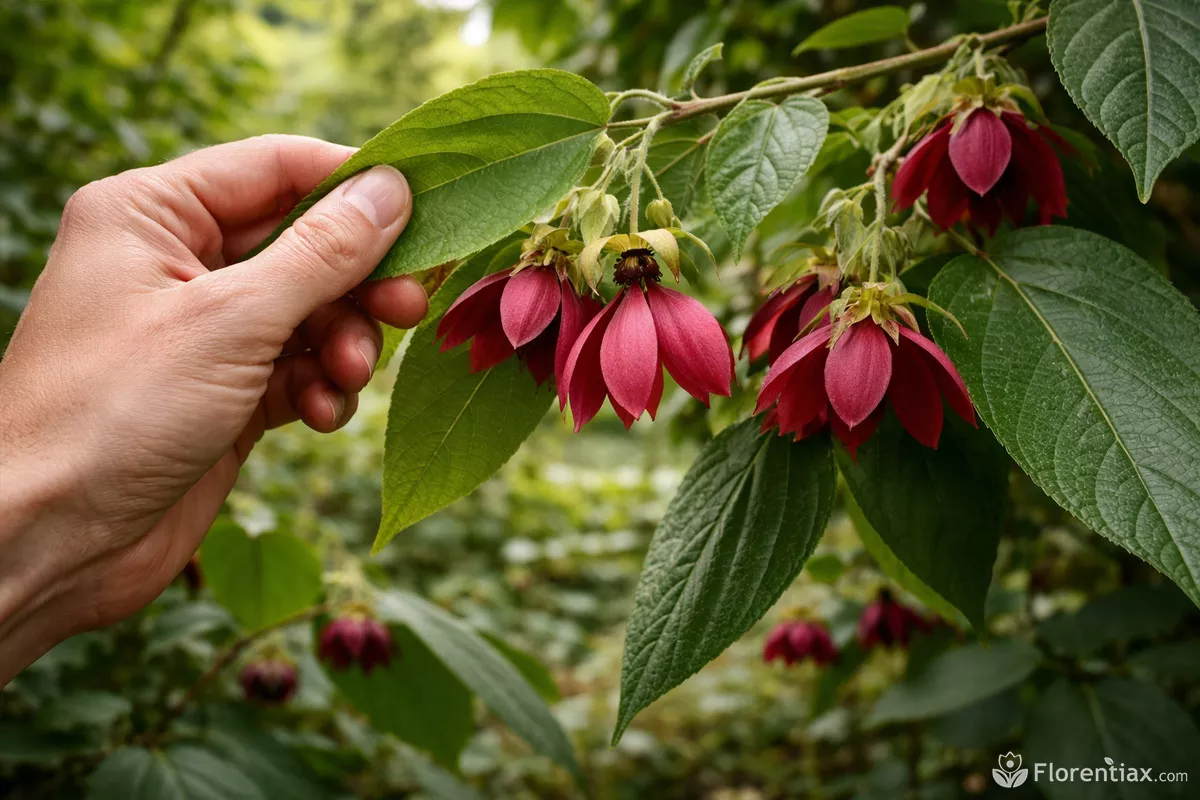
The foliage is typically simple and broad, often heart- to egg-shaped with a pointed tip and noticeable veins. Margins can appear finely toothed, and the surface may feel slightly rough or velvety depending on species and growing conditions. Because the blades are wide, they transpire readily, which is one reason Abroma responds so strongly to humidity and consistent moisture.
- Leaf arrangement: Commonly alternate along the stems, which gives the plant an airy spacing rather than a tight, stacked look.
- Petiole length: Often long enough that leaves “hover” away from the stem; this improves light capture but also makes foliage more prone to droop when water is low.
- Venation: Prominent midrib with branching side veins; the pattern is easy to see when the leaf is backlit.
- Texture and hairiness: Young leaves and shoots may show fine hairs; this can reduce water loss and sun stress, but it also means dust can cling more easily indoors.
Growth habit is usually upright to shrubby, with stems that can become somewhat woody over time. In warm, bright conditions, it may put on noticeable length between nodes, producing a more open structure; under lower light, internodes often stretch further, and the plant can look leggy. Pinching or selective pruning encourages branching, which helps maintain a fuller crown and distributes the weight of the big leaves more evenly.
Seasonally, Abroma tends to push the most leaf mass during periods of steady warmth. When temperatures dip or the root zone swings between wet and dry, it may pause, drop older leaves, or produce smaller new ones. Watching the newest leaves is useful: consistently smaller blades or elongated petioles often signal that light, water consistency, or humidity is limiting the plant’s normal leaf development.
Light conditions for tropical foliage vigor
Abroma grows best when it gets plenty of brightness without harsh, direct sun. Think of the kind of illumination you’d find at the edge of a tropical canopy: strong ambient light, softened by leaves overhead. Indoors, that usually means a bright window with some diffusion; outdoors, it’s typically dappled shade or morning sun with protection later in the day.
- Best overall: bright, indirect light for most of the day. This supports sturdy stems and fuller foliage without stressing the leaves.
- Morning sun can help: a few hours of gentle early light often improves vigor, especially in humid conditions.
- Avoid intense midday rays: strong direct sun can scorch leaf edges, fade color, and drive rapid moisture loss from both soil and foliage.
- Rotate for even growth: if grown in a pot, turning it periodically helps prevent leaning and keeps the canopy balanced.
| What you observe | Likely light issue | What to change |
|---|---|---|
| Long, weak stems; wide gaps between leaves | Too little light | Move closer to a brighter window or provide longer daily exposure to filtered light |
| Leaves look smaller than usual; growth slows | Light is adequate but not strong enough for active growth | Increase brightness (not heat): brighter placement, cleaner glass, lighter curtains |
| Bleached patches or crisp brown areas on the leaf surface | Sunscald from direct sun | Shift to dappled shade, add sheer diffusion, or avoid midday exposure |
| Leaf edges curl and feel dry soon after watering | Too much sun combined with low humidity | Reduce direct sun and raise humidity (group plants, use a humidifier, or sheltered outdoor spot) |
Seasonal changes matter more than people expect. In winter or during long rainy periods, the same spot can become effectively “low light,” so Abroma may need to sit closer to the brightest source available. If you want to check whether the plant is truly getting enough usable light, you can measure indoor light levels and convert lux to PPFD. In summer, that identical window can become too intense; a sheer curtain or moving the plant back from the glass often prevents leaf burn while keeping growth steady.
Soil moisture and watering rhythm for Abroma
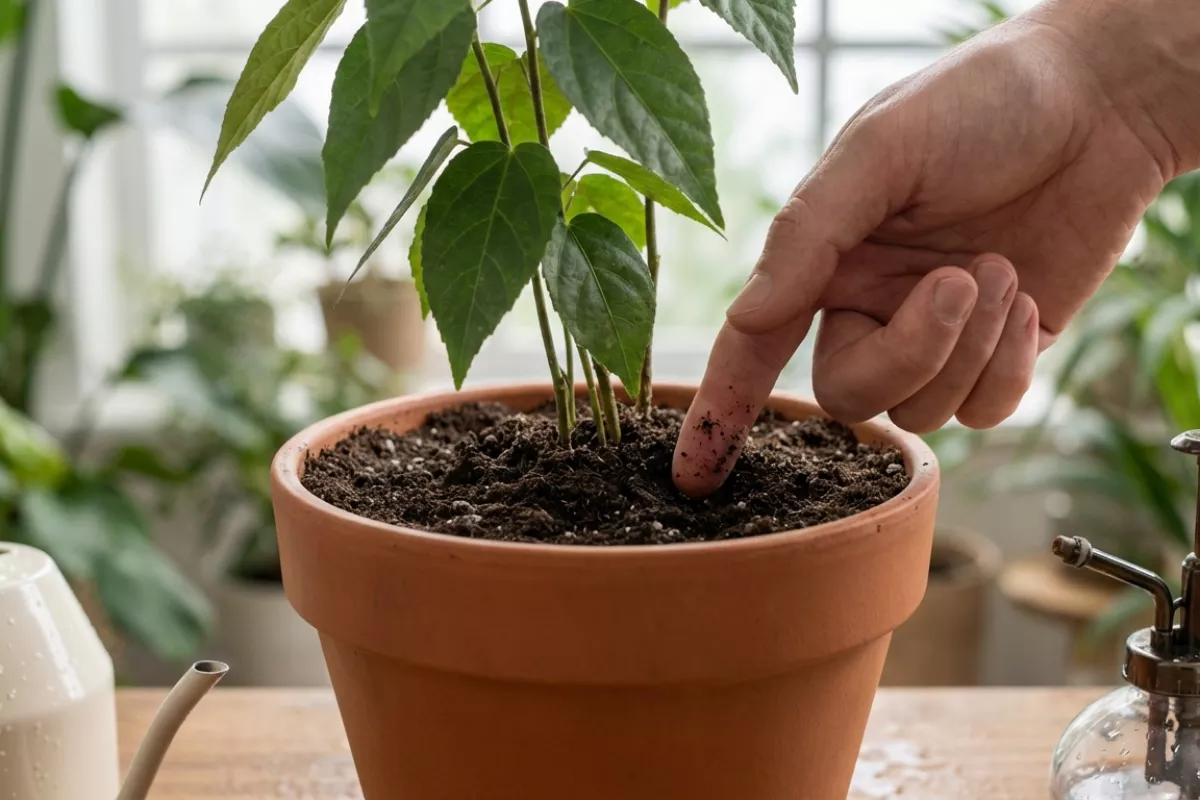
Keep Abroma’s root zone consistently damp, not soggy. In its native humid tropics, the plant rarely experiences long dry spells, so it tends to sulk if the potting mix swings between bone-dry and waterlogged. Your goal is an even, breathable moisture level with good drainage so the roots get both water and oxygen. If you want a simple starting interval based on temperature and conditions, use the watering schedule tool, then adjust by how fast the pot actually dries.
Water when the top layer of mix has started to lose its sheen and feels only slightly dry to the touch, while the lower part is still cool and moist. If you wait until the whole pot dries out, leaves may droop, edges can crisp, and growth often pauses for a while even after you rewater.
- How to check moisture reliably: Use a finger test (2–3 cm down), a wooden skewer (it should come out slightly damp, not muddy), or lift the pot (a noticeably lighter pot usually means it’s time).
- How to water: Water thoroughly until excess drains from the bottom, then empty any saucer. This prevents a perched “swamp” at the base of the pot.
- What “evenly moist” looks like: The mix clumps lightly when squeezed, but no water drips out and it doesn’t feel slimy.
- What to avoid: Frequent tiny sips that only wet the surface; they encourage shallow roots and make the plant more sensitive to missed waterings.
| Situation | What changes | Practical watering adjustment |
|---|---|---|
| Hot, bright weather or active growth | Faster evaporation and higher uptake | Check moisture more often; water as soon as the top layer turns slightly dry. |
| Cooler temps or low light | Slower drying; roots use less water | Let the surface dry a bit deeper before watering; keep drainage extra sharp. |
| High humidity (indoors greenhouse-like) | Leaves lose less water; mix may still stay wet | Don’t assume it needs less water automatically; base timing on the pot’s moisture, not the air. |
| Dense or peat-heavy mix | Holds water longer; risk of stale, airless roots | Water less frequently but thoroughly; consider adding aeration (bark/perlite) at next repot. |
| Very airy mix (barky, coarse) | Dries quickly; salts flush out faster | Water a bit more often; occasional deeper soak helps re-wet the medium evenly. |
Learn the plant’s signals, but confirm them with the soil. Drooping can mean “dry” or “too wet” with stressed roots. If the mix is wet and the plant still looks limp, pause watering, improve airflow, and make sure the container drains freely. If the mix is dry and the leaves are soft, rehydrate with a slow, thorough watering; in very dry pots, a second pass 10 minutes later helps the medium absorb evenly.
Water quality matters more than people expect with Abroma. If your tap water is very hard, mineral buildup can make the mix less wettable over time. An occasional deep flush (letting plenty of water run through the pot) helps prevent salt accumulation, especially if you fertilize.
Climate preferences and warmth requirements
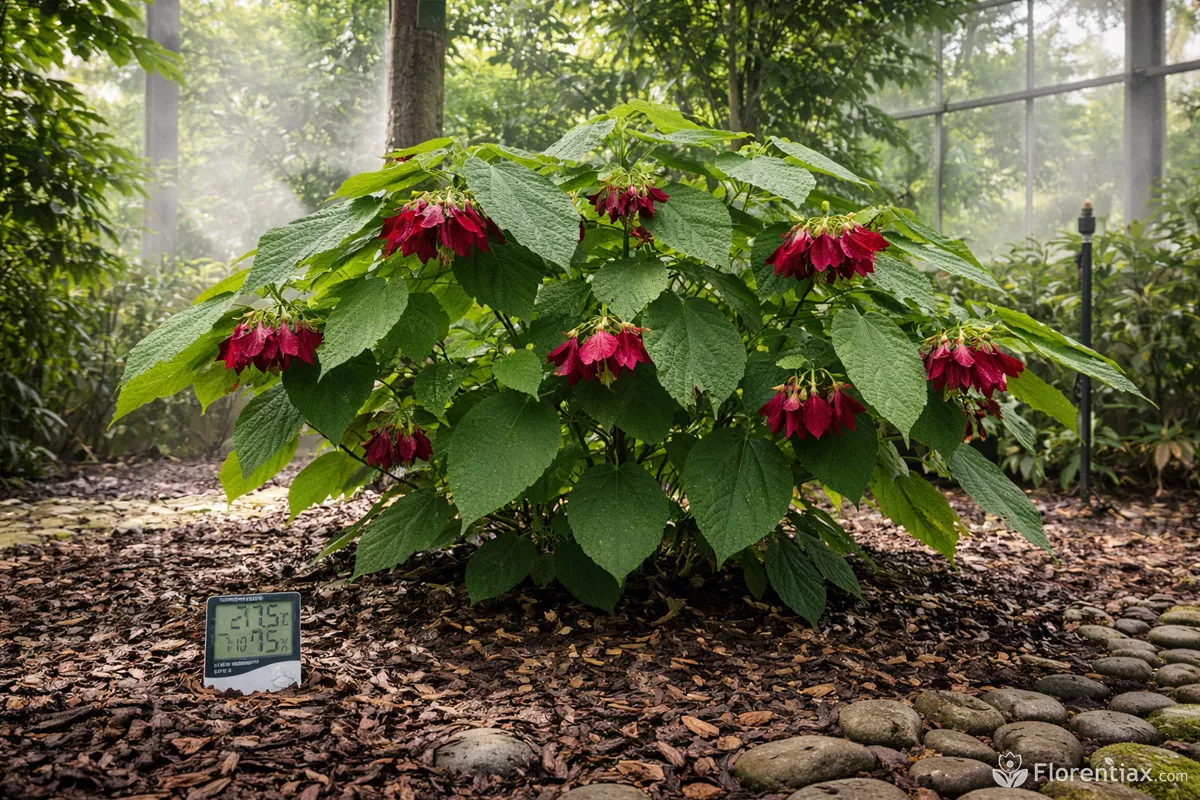
Abroma grows best where days stay reliably warm, nights don’t dip too far, and the air holds some humidity. Think “tropical understory” rather than open, windy ground: steady heat, bright filtered light, and protection from sudden cold snaps.
- Temperature range: Aim for 22–32°C during active growth. It will usually tolerate brief peaks above this if the root zone stays evenly moist and the plant isn’t in harsh midday sun.
- Minimum warmth: Try to keep it above 15°C. Below that, growth slows sharply and leaves may yellow or drop; prolonged chill can lead to root stress and rot.
- Night temperatures: Warm nights matter. If nights are consistently cool (even if days are warm), expect slower growth and fewer new shoots.
- Humidity: Moderate to high humidity is ideal. In dry indoor air, leaf edges can crisp and new growth may look smaller; grouping plants together or using a humidity tray can help.
- Wind and exposure: Shelter from drying winds. Gusty conditions pull moisture from leaves and can cause wilting even when the soil is damp.
- Seasonal rhythm: In regions with a cool season, treat that period as a semi-rest: reduce watering slightly, keep it warmer, and avoid heavy feeding until temperatures rise again.
| Condition | What you’ll notice | Adjustment that usually helps |
|---|---|---|
| Too cool (especially nights) | Stalled growth, leaf drop, slow recovery after watering | Move to a warmer room/greenhouse; keep away from cold windows and drafts |
| Air too dry | Brown tips, curled edges, dull-looking foliage | Raise humidity; avoid placing near heaters or strong AC airflow |
| Heat + strong sun | Scorched patches, midday wilting despite moist soil | Provide bright shade; water earlier in the day and mulch the surface |
| Warmth is good but airflow is poor | Soft growth, higher risk of fungal spots | Increase gentle ventilation; avoid wetting foliage late in the day |
If you’re growing Abroma in a non-tropical climate, the simplest approach is to treat it like a warmth-loving container shrub: keep it outdoors only when nights are reliably mild, and bring it in before temperatures start hovering near its lower limit. Consistency is the goal; rapid swings between warm days and chilly nights are what it dislikes most.
Daily care routine for stable growth
Keep Abroma steady by watching moisture, light, and humidity day to day rather than making big corrections. This tropical plant responds best to small, consistent adjustments, especially when it’s actively growing.
- Morning check: light and leaf posture. Make sure it’s getting bright, filtered light (not harsh midday sun). If leaves look limp or slightly cupped by noon, it’s often a sign of either heat stress or dry air rather than “not enough water.”
- Touch-test the potting mix. Press a finger 2–3 cm into the soil. Water only when the top layer feels dry but the mix below still feels slightly cool. If it’s wet at the top, hold off; Abroma dislikes staying waterlogged.
- Watering technique when needed. Water slowly until you see a little runoff, then empty the saucer. This prevents salt buildup and avoids the “wet feet” problem that can lead to root issues.
- Humidity and airflow balance. Aim for comfortably humid air with gentle ventilation. If the room is dry, use a humidifier or a pebble tray; if it’s very humid, prioritize airflow to reduce leaf spotting and fungal problems.
- Quick pest scan. Check the undersides of leaves and along stems for mites, aphids, or sticky residue. Catching pests early is easier than treating a full outbreak, especially in warm indoor conditions.
- Remove stress triggers. Keep it away from cold drafts, blasting AC, and hot radiators. Sudden temperature swings are a common reason for stalled growth and leaf drop.
| What you notice | Most likely cause | What to do today |
|---|---|---|
| Leaves droop but soil is still moist | Low oxygen at roots, overwatering, or a pot that stays cold/wet | Let the mix dry a bit more; improve drainage and airflow; avoid watering again until the top layer dries |
| Leaf edges crisp or curl inward | Dry air, heat, or sun scorch | Move to filtered light; raise humidity; keep temperature more even |
| Yellowing lower leaves with slow growth | Natural aging, low light, or nutrient shortage during active growth | Increase brightness (indirect); if in growing season, feed lightly with a balanced fertilizer |
| Spots or fuzzy patches on leaves | Fungal/bacterial issues encouraged by stagnant, damp conditions | Improve airflow; avoid wetting foliage; remove affected leaves and reassess watering frequency |
| Fine webbing or speckled leaves | Spider mites (often in warm, dry air) | Rinse leaves; raise humidity; isolate the plant and treat promptly |
During the growing season, a light feeding every few weeks works better than heavy doses. In cooler or darker months, reduce watering and skip fertilizer unless the plant is clearly pushing new growth.
Propagation techniques for tropical specimens
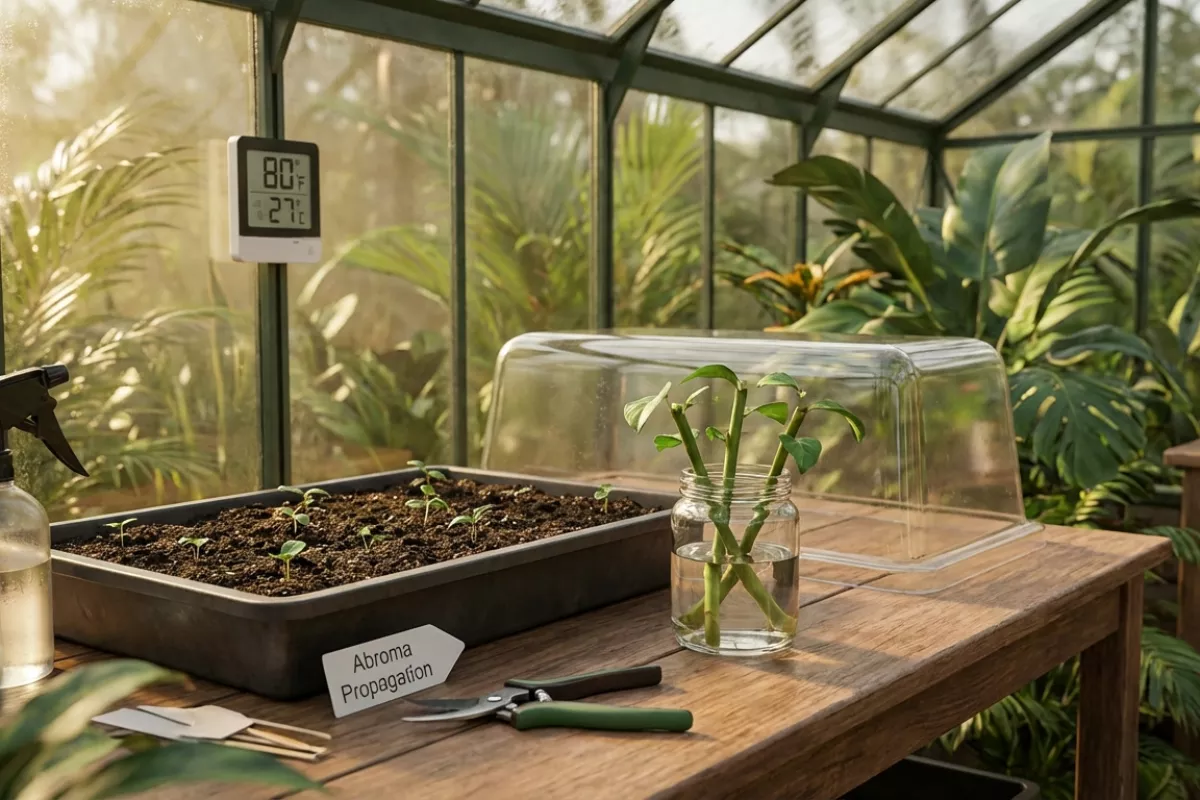
Abroma is usually multiplied either from seed or from stem cuttings, and both routes work best when you can keep conditions consistently warm and humid. The plant’s soft, fast growth can rot if it stays cold or waterlogged, so the main trick is balancing moisture with airflow.
- Seed sowing (best for genetic diversity):
- When: Start in the warm season or any time indoors if you can hold steady heat.
- Prep: Use fresh seed if possible. If the coat seems hard, soak in lukewarm water for several hours to overnight to speed uptake.
- Medium: A fine, airy mix (for example, coco coir or peat alternative with perlite) that stays lightly moist but never soggy.
- Sowing depth: Cover only lightly; many tropical seeds germinate better near the surface.
- Environment: Warmth and humidity help, but ventilate daily if using a dome to prevent damping-off.
- Aftercare: Once seedlings have a couple of true leaves, pot up gently and begin brighter light in stages to avoid shock.
- Stem cuttings (best for cloning a good plant):
- What to take: Semi-soft, non-flowering tips with 2–4 nodes. Avoid very tender growth that collapses easily.
- How to prepare: Remove lower leaves, keep 1–2 leaves at the top, and trim large leaves by half if they transpire heavily.
- Rooting method: Insert into a sterile, free-draining mix. Rooting hormone is optional but can improve consistency.
- Humidity management: Bag or dome the cutting, but add small vents and open briefly each day. Stagnant air is the usual reason cuttings fail.
- Watering: Mist lightly or water around the edge; don’t saturate the stem base.
- Potting on: Move to a richer mix only after you see new growth and feel resistance when you tug gently.
- Air layering (useful if cuttings keep rotting):
- Why it helps: Roots form while the stem is still supported by the mother plant, which reduces dehydration stress.
- Basic approach: Wound a healthy stem section, wrap with damp sphagnum or similar, and seal loosely so it stays moist but not dripping.
- Timing: Separate and pot up once you can see a solid root mass; then shade for a week while it adjusts.
| Method | Difficulty | Typical time to establish | Main risk | Best use case |
|---|---|---|---|---|
| Seed | Moderate | Weeks to germinate; months to a sturdy plant | Damping-off in stale, wet conditions | Raising multiple plants; exploring variation |
| Stem cuttings | Moderate | Several weeks to root in warm conditions | Base rot from excess moisture and low airflow | Cloning a vigorous specimen |
| Air layering | Moderate to higher | Several weeks to form roots | Wrap drying out or staying too wet | When cuttings fail; saving leggy plants |
| Division (only if naturally multi-stemmed) | Higher | Immediate, but recovery takes weeks | Root damage and setback | Splitting a mature clump during repotting |
Whichever approach you choose, keep the same baseline: warm roots, bright filtered light, and a medium that drains freely. If you’re seeing repeated failures, it’s usually one of three things: the mix is too dense, humidity is high without ventilation, or temperatures dip at night enough to slow rooting and invite rot.
Seasonal growth rhythm in warm climates
In the tropics and subtropics, Abroma doesn’t follow a true winter dormancy. Instead, it shifts between faster growth during warm, bright, humid periods and a slower phase when days are shorter, nights are cooler, or rainfall drops. Matching your care to these natural swings is often the difference between steady leaf production and a plant that stalls or sheds foliage.
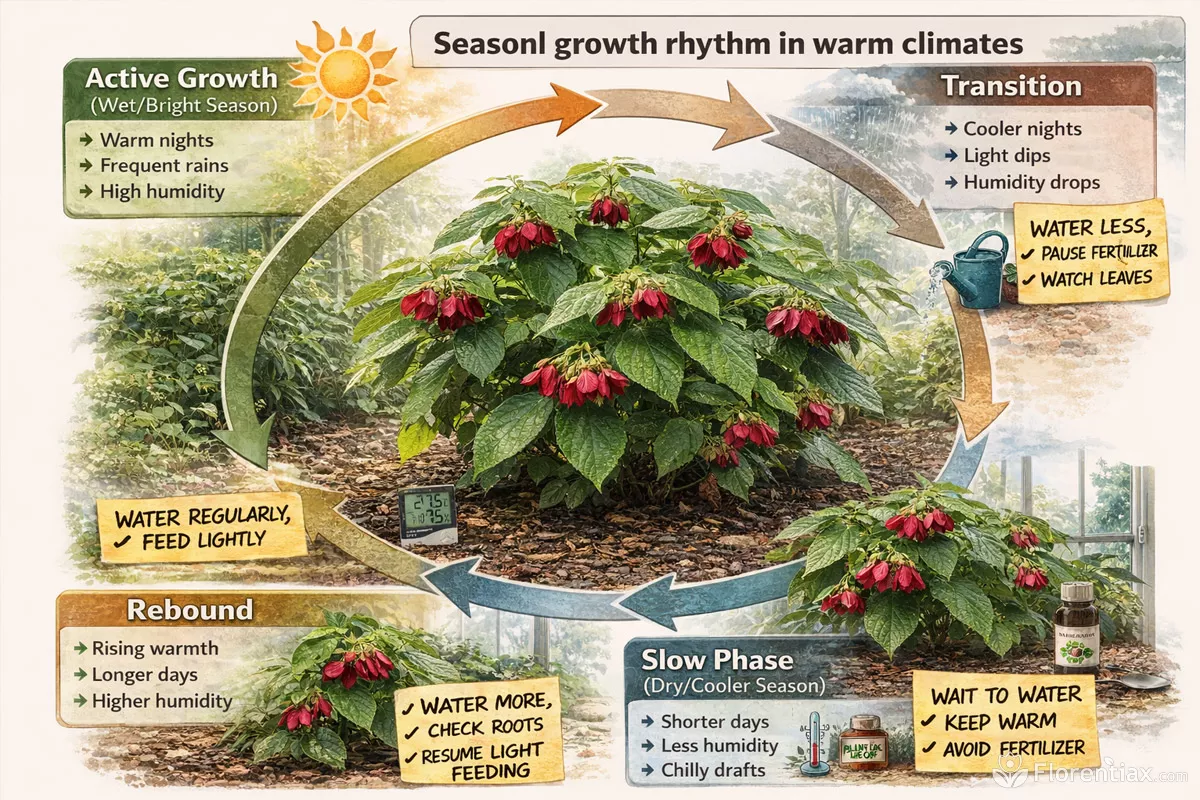
Think of its year as two practical modes: an “active” phase when it wants resources, and a “resting” phase when it mainly needs stability. Indoors, these phases are driven less by calendar months and more by light intensity, day length, and temperature swings near windows or air-conditioning.
| Growth phase | Typical cues in warm climates | What the plant does | How to adjust care |
|---|---|---|---|
| Active growth (wet/bright season) | Longer days, strong light, warm nights, higher humidity, frequent rains | Pushes new leaves and shoots; may flower if mature and well-lit | Water more consistently (keep evenly moist, not soggy); feed lightly but regularly; increase humidity and airflow; repot or prune only if it is growing strongly |
| Transition (weather shifts) | Light becomes less intense; humidity dips; occasional cool nights | Growth slows; internodes shorten; older leaves may yellow if roots stay wet | Stretch the time between waterings slightly; pause heavy feeding; watch for edema and fungal spotting; keep temperatures steady |
| Slow phase (dry/cooler season) | Shorter days, cooler nights, drier air, less rainfall | Minimal new growth; may drop some leaves to reduce water loss | Water only when the top layer dries; avoid cold drafts; stop fertilizing or use a very dilute dose; prioritize light exposure without overheating |
| Rebound (return of warmth and humidity) | Rising temperatures, increasing day length, more moisture in the air | New buds break; root activity increases | Gradually increase watering; resume feeding after you see new growth; check roots and refresh the topsoil if compacted |
- Watering should track growth, not the calendar. If Abroma is not producing new leaves, constant wet soil tends to cause yellowing and root stress. When it is actively pushing shoots, letting it dry too far can trigger leaf drop.
- Light is the main “season switch” indoors. A plant kept in consistently bright conditions may grow for more months of the year, while one in medium light will show a clearer slow period even in a warm apartment.
- Temperature stability matters more than peak warmth. Repeated cool nights (or cold air from AC) can stall growth and make the plant more sensitive to overwatering.
- Fertilizer is easiest to time by new growth. Begin feeding when you see fresh leaves expanding; reduce or stop when growth pauses to avoid salt buildup.
If your Abroma drops leaves during a dry spell, don’t assume it’s failing. Check the basics: keep it warm, give it the brightest safe light you have, and adjust moisture so the root zone is neither bone-dry nor constantly wet. Once humidity and light improve, it typically restarts from the tips or dormant buds along the stems.
Common issues affecting Abroma health
Most setbacks with Abroma come from small mismatches between its tropical preferences and indoor or seasonal conditions. When the plant is stressed, it tends to show it quickly through leaf texture changes, color shifts, and stalled growth, so early adjustments usually work better than “rescue” treatments.
- Yellowing leaves with soft stems
Most often linked to overwatering or poor drainage. Let the surface of the mix dry slightly between waterings, and confirm that excess water can drain freely from the pot. A sour smell or soil that stays wet for days usually signals stressed roots and the need for a lighter, airier mix. When the cause isn’t obvious, this troubleshooting guide explains why plant leaves turn yellow and how to narrow it down quickly. - Crispy edges, leaf curl, or sudden leaf drop
Common in dry air, heat blasts, or inconsistent watering. Increase humidity (group plants, use a tray with water nearby, or a humidifier) and keep moisture more even. Avoid placing Abroma near heaters or strong AC drafts. - Leggy growth and sparse foliage
This is typically low light. Move it to brighter filtered light and rotate the pot weekly for balanced growth. If it’s stretching toward a window, it’s asking for more brightness rather than more fertilizer. - Brown patches or “bleached” areas on leaves
Often sun scorch from harsh direct sun, especially after moving it outdoors or closer to glass. Shift to dappled light and acclimate gradually when changing locations. - Slow growth despite “good care”
Cool temperatures, a pot that’s too small, or depleted soil are frequent causes. Keep it warm, refresh the top layer of mix, and repot if roots are circling tightly. Feed lightly during active growth, and pause or reduce feeding in cooler, low-light periods. - Bud drop or poor flowering
Can happen with sudden temperature swings, low light, or irregular watering. Stabilize conditions and avoid moving the plant repeatedly once buds form.
| Symptom you notice | Likely cause | What to do next |
|---|---|---|
| Sticky residue on leaves; ants nearby | Sap-sucking pests (aphids, scale, mealybugs) | Isolate the plant, wipe leaves, then treat with insecticidal soap or neem; repeat weekly until clear. If pests keep returning, this guide shows how to control aphid infestations effectively and prevent reinfestation. |
| Fine webbing; speckled, dull leaves | Spider mites (often in dry air) | Raise humidity, rinse foliage thoroughly, and apply a miticide or soap treatment in cycles. |
| Black spots that spread; leaf yellowing | Fungal/bacterial leaf spot encouraged by wet foliage and low airflow | Remove affected leaves, improve airflow, water at the soil level, and avoid frequent misting. |
| White powdery coating on leaves | Powdery mildew (humidity plus stagnant air) | Increase ventilation, keep leaves dry, and treat with an appropriate fungicide if it persists. |
| Sudden wilting even when soil is damp | Root stress (rot or severe compaction) | Check roots; trim mushy sections, repot into a chunky mix, and water sparingly until recovery. |
If you’re unsure which issue you’re seeing, start by checking the basics in order: soil moisture, drainage, light level, and temperature stability. Abroma often rebounds once those are corrected, and pest or disease treatments work better when the plant isn’t already stressed.