Best Watering Practices for Indoor Plant Care

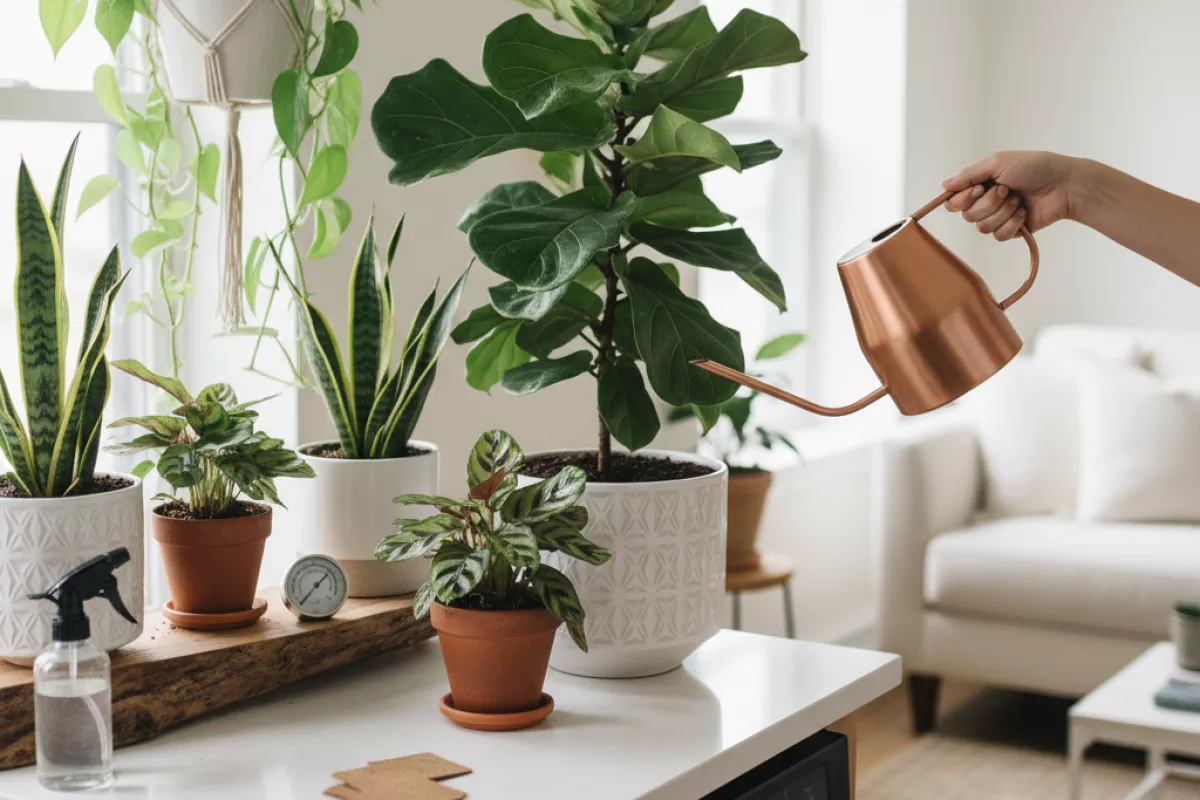 Covers what drives indoor plant water needs, how to tell when watering is actually needed, and techniques to water well without flooding. Explains how pot size and soil type change moisture, how to adjust by season, signs it’s working, and common mistakes that lead to decline.
- What determines indoor plant water needs
- How to judge when a plant really needs watering
- Best techniques for watering without flooding soil
- How pot size and soil type affect moisture
- Adjusting watering through the seasons
- Signs your watering routine is working
- Typical mistakes that cause indoor plant decline
Proper watering is the key to thriving indoor plants, and a few small tweaks can prevent most common issues. Learn to check soil moisture accurately, adjust watering to match light levels and seasonal changes, and avoid routines that cause root rot or drought stress. With a consistent approach, you can support steady, healthy growth with less guesswork and fewer setbacks.
What determines indoor plant water needs
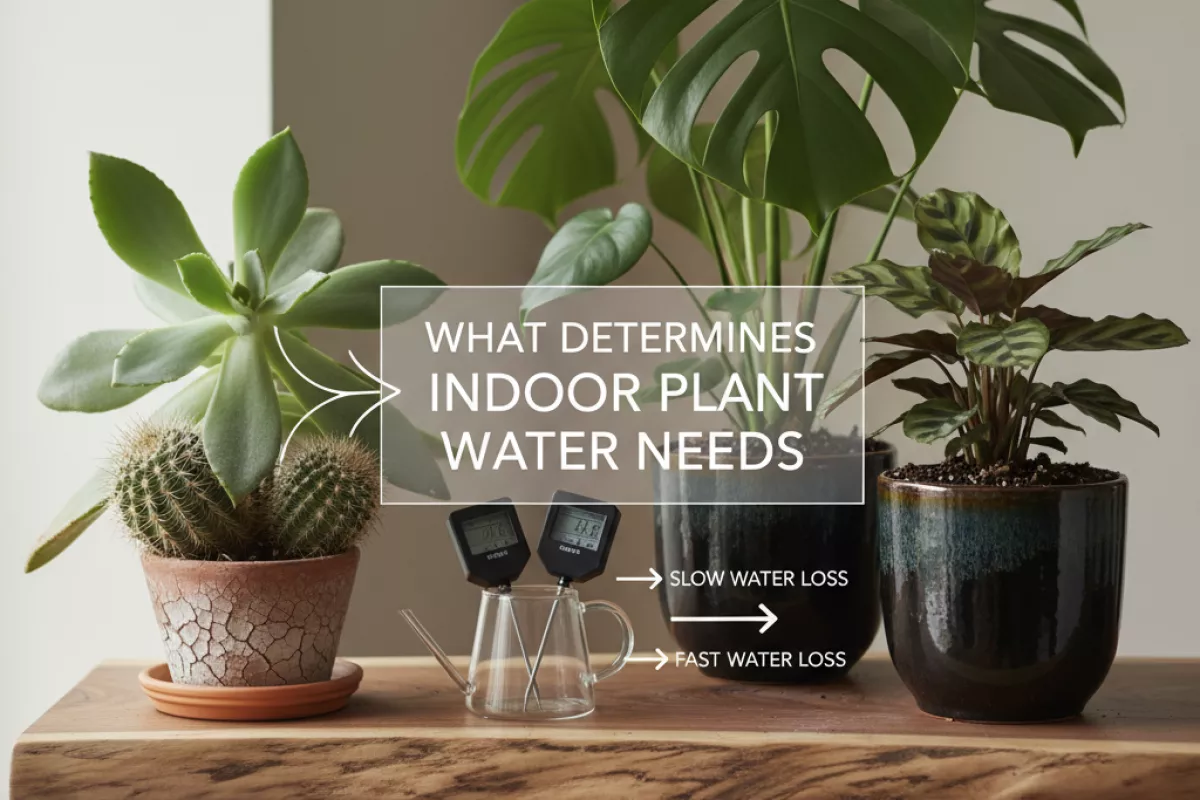
How often a houseplant needs a drink comes down to how fast water leaves the pot versus how much the roots can take up. Understanding how roots absorb water and oxygen together helps explain why the same watering routine works in one setup but fails in another. That balance is shaped by the plant itself, the potting mix and container, and the conditions in your home.
- Plant type and natural habitat: Succulents and cacti store moisture and prefer the mix to dry more between waterings, while many tropical foliage plants do better with lightly, evenly moist soil. Thick, waxy leaves usually mean slower water loss; thin, soft leaves often mean faster drying and higher demand.
- Growth stage and size: Actively growing plants (new leaves, longer days) typically use more water than plants resting in winter. A larger plant with more leaf area generally transpires more than a small cutting, but a tiny plant in a big pot can stay wet longer because the soil holds more water than the roots can use.
- Light intensity and day length: Brighter light speeds photosynthesis and transpiration, so pots dry faster near a sunny window. In lower light, the same plant may need watering far less often because it’s using less water.
- Temperature and humidity: Warm, dry air pulls moisture from leaves and soil. A room at 24℃ (75℉) with low humidity will dry pots faster than a cooler, more humid space at 18℃ (64℉). Heating vents and radiators can create “hot spots” that increase water loss.
- Airflow: Fans, open windows, and HVAC circulation increase evaporation from the soil surface and transpiration from leaves. Still air slows drying, which can be helpful for moisture-loving plants but risky for those prone to rot.
- Pot size, material, and drainage: Small pots dry quickly; larger pots stay wet longer. Unglazed terracotta breathes and wicks moisture out, while plastic and glazed ceramic retain it. Drainage holes matter because they let excess water escape and bring in oxygen; without them, the mix can stay saturated even if the top looks dry.
- Potting mix composition: Mixes high in bark, perlite, or pumice drain and dry faster; mixes heavy in peat or fine compost hold water longer. If the soil compacts over time, it can either repel water (dry peat) or stay soggy (poor aeration), changing your watering rhythm.
- Root health and crowding: Healthy roots absorb water efficiently. Root rot reduces uptake, so the pot stays wet longer even though the plant looks thirsty. A rootbound plant can dry fast because there’s less soil holding moisture around a dense root mass.
- Seasonal shifts indoors: Even inside, seasons change conditions. Short winter days and cooler nights often reduce demand, while summer sun and higher indoor temperatures can increase it. Adjust based on the plant’s response rather than the calendar.
- Recent care and “hidden” moisture sources: A plant that was recently repotted into fresh mix may hold water longer than before. Self-watering pots, cachepots that trap runoff, and humidifiers can all reduce how often you need to water.
A practical takeaway: instead of watering on a fixed schedule, match your routine to the drying speed of the pot. Following proven best watering practices makes it easier to adjust when conditions stack up (bright light, warm room, small terracotta pot) or slow drying (low light, cool air, large plastic pot), without keeping roots wet for too long.
How to judge when a plant really needs watering
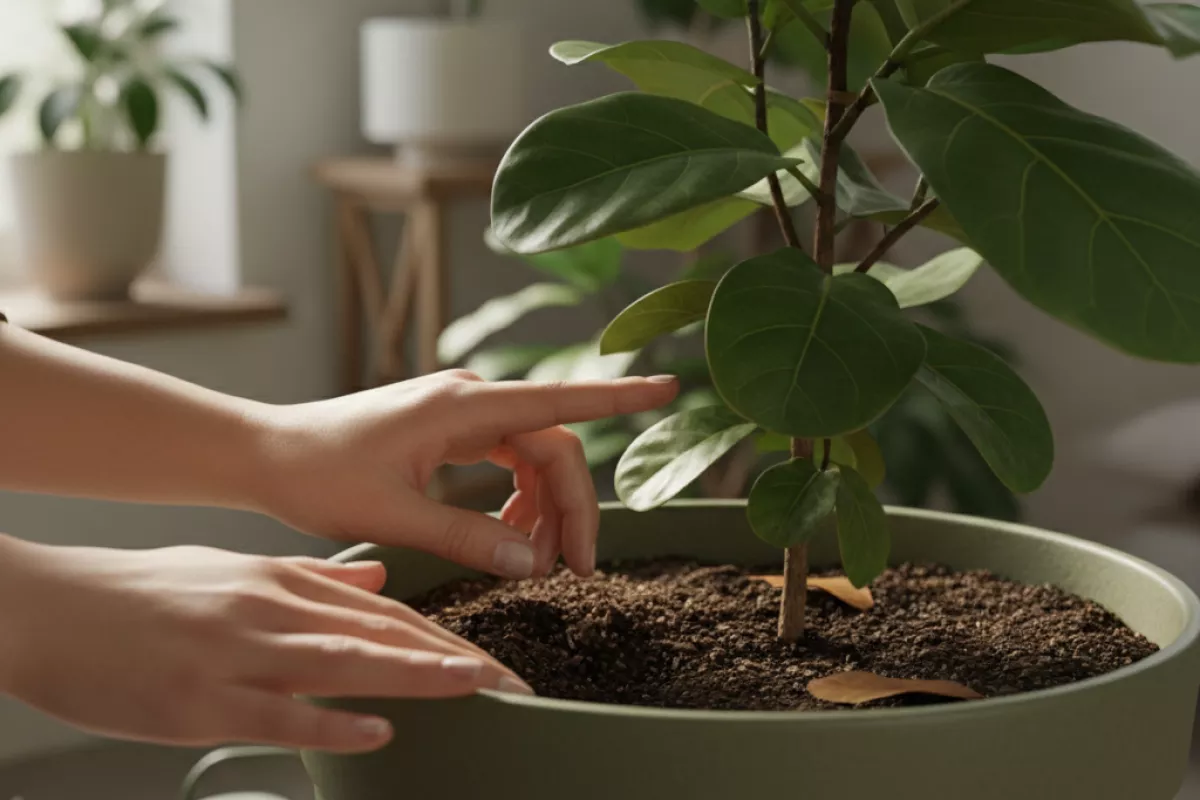
Rely on a quick check of the potting mix and the plant’s behavior instead of a calendar. Many early watering mistakes show up as stress reactions plants show first, long before roots are seriously damaged. Indoor conditions shift week to week (heat, sun, humidity), so a fixed schedule often leads to either soggy roots or a plant that’s always slightly thirsty.
- Do the finger test first. Insert a finger about 2–5 cm (1–2 in) into the soil. If it feels cool and damp, wait. If it feels dry at that depth, it’s usually time to water. For large pots, check two spots: near the edge and closer to the stem.
- Lift the pot to judge weight. A freshly watered container feels noticeably heavier than a dry one. After a couple of cycles, you’ll recognize the “needs water” weight without guessing. This works especially well for plastic nursery pots inside decorative cachepots.
- Look at leaf texture, not just droop. Slight wilting can mean thirst, but it can also happen from overwatering (roots can’t take up water). Thirsty plants often have leaves that feel thinner or less springy; overwatered plants tend to look limp while the soil still feels wet.
- Check the soil surface, then confirm below. A dry crust on top doesn’t always mean the root zone is dry, especially in deep containers. Use the top as a clue, then verify with the finger test or a wooden skewer.
- Use a wooden skewer for deeper pots. Push a skewer 8–10 cm (3–4 in) down, leave it for 10 seconds, then pull it out. If it comes out with dark, moist soil stuck to it, hold off; if it’s mostly clean and dry, water.
- Pay attention to growth and light changes. Plants drink more during active growth and bright windows, and far less in winter or low light. If new leaves are forming, the mix will usually dry faster; if growth has paused, extend the time between waterings.
| What you observe | What it usually means | What to do next |
|---|---|---|
| Soil is dry 2–5 cm (1–2 in) down | Root zone is drying; many houseplants are ready | Water thoroughly until excess drains, then empty the saucer |
| Soil is wet below the surface, but leaves are limp | Possible overwatering or poor aeration; roots may be stressed | Pause watering, improve drainage/airflow, and reassess after the mix dries |
| Pot feels very light compared with after watering | Mix has dried significantly | Confirm with a finger/skewer check, then water |
| Leaves curl, feel papery, or edges crisp while soil is dry | Underwatering or very low humidity | Water, then monitor; consider a humidity boost if it repeats |
| Yellowing leaves plus consistently damp soil | Too much moisture or slow drying conditions; yellow leaves as a root rot sign often appear when roots stay deprived of oxygen | Let the mix dry more between waterings; check pot size and drainage holes |
If you use a moisture meter, treat it as a second opinion. They can be helpful in big pots, but readings vary with soil type and salts. Calibrate it by testing right after watering and again when the mix is dry 2–5 cm (1–2 in) down, so you know what “dry enough” looks like for your plant.
Best techniques for watering without flooding soil
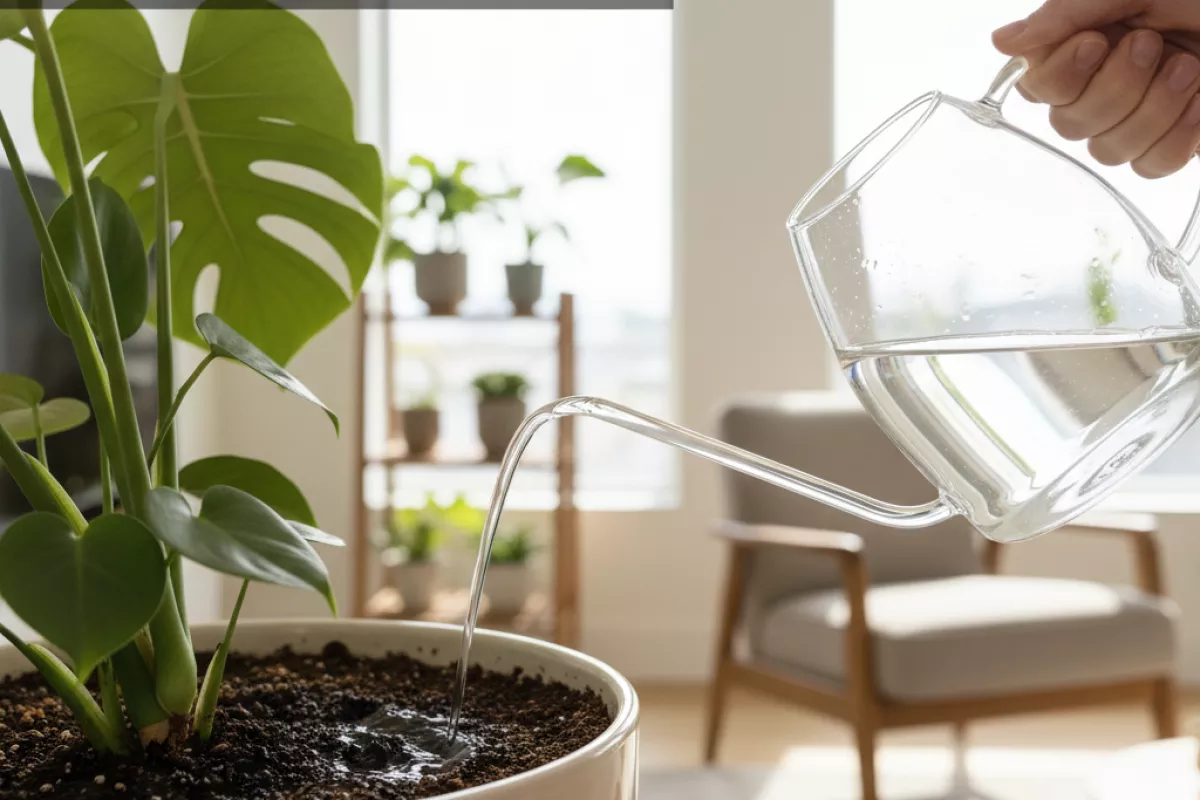
Preventing soggy potting mix comes down to control: add water slowly, confirm it’s actually being absorbed, and stop before the root zone turns into a swamp. The goal is evenly moist soil with enough air pockets left for roots to breathe, not a pot that stays heavy and wet for days.
- Use the “slow pour” method. Water in small passes, pausing 10–20 seconds between pours so the mix can take it in. This reduces runoff down the pot’s inner wall and helps avoid water pooling on top.
- Water around the edge, not just the center. A ring around the pot encourages roots to spread and prevents a dry core with a soaked perimeter. For very compacted mix, alternate edge and center pours to re-wet evenly.
- Bottom-water for control (when appropriate). Set the pot in a tray with 2–3 cm (0.8–1.2 in) of water and let it wick up for 10–20 minutes. Remove it and let it drain thoroughly. This approach is especially helpful for plants that hate wet leaves or when the soil surface repels water.
- Measure once, then adjust. If you tend to overdo it, start with a known amount (for example, 250 ml (8.5 fl oz) for a small pot) and observe how long the pot stays heavy. Increase or decrease next time based on drying speed rather than habit.
- Check moisture below the surface. A dry-looking top can hide a wet root zone. Feel 2–5 cm (0.8–2 in) down with a finger, chopstick, or moisture meter probe; water only when that zone is approaching dry for that plant’s preference.
- Break up hydrophobic soil. If water beads and runs off, gently scratch the top 0.5–1 cm (0.2–0.4 in) and water slowly. In stubborn cases, bottom-watering once can help rehydrate the mix evenly.
- Always let excess drain. Water until you see a little runoff, then empty the saucer after 5–10 minutes. Leaving standing water keeps the lower mix saturated and invites root rot and fungus gnats.
- Match the tool to the pot. A narrow-spout watering can, squeeze bottle, or syringe-style bottle helps you target small amounts precisely—useful for tiny pots, dense foliage, or plants in cachepots.
- Adjust for season and light. In lower light or cooler rooms (around 18°C (64°F) and below), plants use less water. Reduce volume or frequency to avoid a constantly damp mix, even if your routine “worked” in summer.
| Situation | What usually goes wrong | Technique that prevents flooding | Quick check you can do |
|---|---|---|---|
| Water runs straight through and out the drainage holes | Soil is dry and pulling away from the pot; water channels instead of soaking | Slow pour in 2–3 passes or bottom-water for 10–20 minutes | After 5 minutes, the pot should feel heavier and the surface should look evenly damp, not patchy |
| Top looks wet but plant stays limp | Root zone is either still dry (water didn’t penetrate) or already waterlogged | Probe 2–5 cm (0.8–2 in) down before adding more; water in a ring | Chopstick comes out cool/damp? Wait. Comes out dry/dusty? Water slowly |
| Saucer keeps filling and staying full | Excess water reabsorbs, keeping lower soil saturated | Drain fully and empty the saucer after 5–10 minutes | Lift test: if it stays heavy for 3–4 days, reduce water next time |
| Gnat activity or musty smell | Mix stays consistently wet with low airflow | Water less often, use bottom-water only briefly, and ensure full drainage | Let the top 2–3 cm (0.8–1.2 in) dry between waterings for most plants (unless they prefer constant moisture) |
If you’re unsure when to stop, rely on repeatable cues: the pot’s weight, moisture 2–5 cm (0.8–2 in) down, and whether the plant is actively growing. Consistency beats soaking—most indoor plants do better with thorough watering followed by real drying time than with frequent “just a little more” top-ups.
How pot size and soil type affect moisture
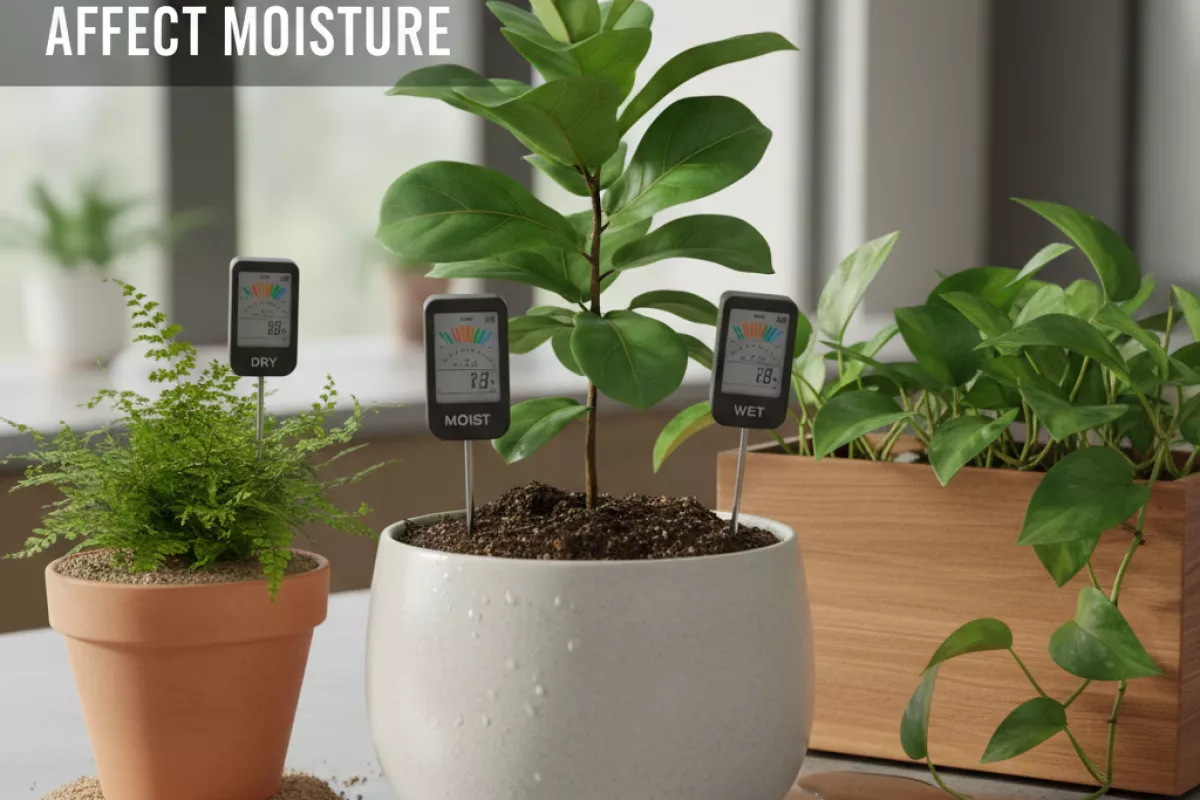
Container volume and the potting mix decide how long water sticks around and how quickly roots can access oxygen again. A small pot can swing from wet to dry in a day or two, while a larger one often stays damp longer because there’s more mix holding water and less surface area relative to volume for evaporation.
Pot shape and material matter too. Tall, narrow pots tend to drain and dry differently than wide, shallow ones because gravity pulls water down and roots may concentrate in certain layers. Porous terracotta “breathes,” so it dries faster than plastic or glazed ceramic, which hold moisture longer and can hide overwatering until leaves start to react.
- Small pots: Faster dry-down, but less buffer if you miss a watering. Check more often, especially in warm rooms around 22–24°C (72–75°F).
- Large pots: Slower dry-down and a bigger risk of staying wet in the center. Water more thoroughly but less frequently, and make sure the plant’s root mass can actually use the moisture.
- Root-to-pot fit: If a plant is in a pot that’s much larger than its root ball, the unused mix stays wet longer, which can encourage root rot.
- Drainage holes: No drainage means water collects at the bottom; even a “light” watering can create a soggy layer that never fully dries.
| Soil type / ingredient | What it does to water behavior | What to watch for |
|---|---|---|
| Peat- or coco-based potting mix | Holds water well; can re-wet unevenly if it dries out too much | Top may look dry while the middle stays damp; water slowly to rehydrate evenly |
| Perlite/pumice added (chunky, airy mix) | Increases drainage and air pockets; speeds drying | May need more frequent watering; don’t let it dry to dust for moisture-loving plants |
| Fine, dense “all-purpose” mix (lots of small particles) | Slows drainage; stays wet longer, especially in big pots | Compaction over time reduces oxygen; consider refreshing or amending |
| Bark/wood chips (orchid-style or aroid mixes) | Creates large pores; water runs through quickly but leaves humidity around roots | Uneven drying is common; soak thoroughly, then let excess drain completely |
| Sand-heavy or mineral-heavy mixes | Can drain fast if coarse, or hold water if very fine | Fine sand can make a “cementy” mix; coarse grit is safer for airflow |
A practical way to adjust watering is to match technique to the setup: in a large plastic pot with a dense mix, water less often and confirm the center is drying by checking 5–7 cm (2–3 in) down. In a small terracotta pot with an airy mix, expect quicker dry-down and plan smaller, more frequent checks so the plant doesn’t bounce between drought and saturation.
Adjusting watering through the seasons
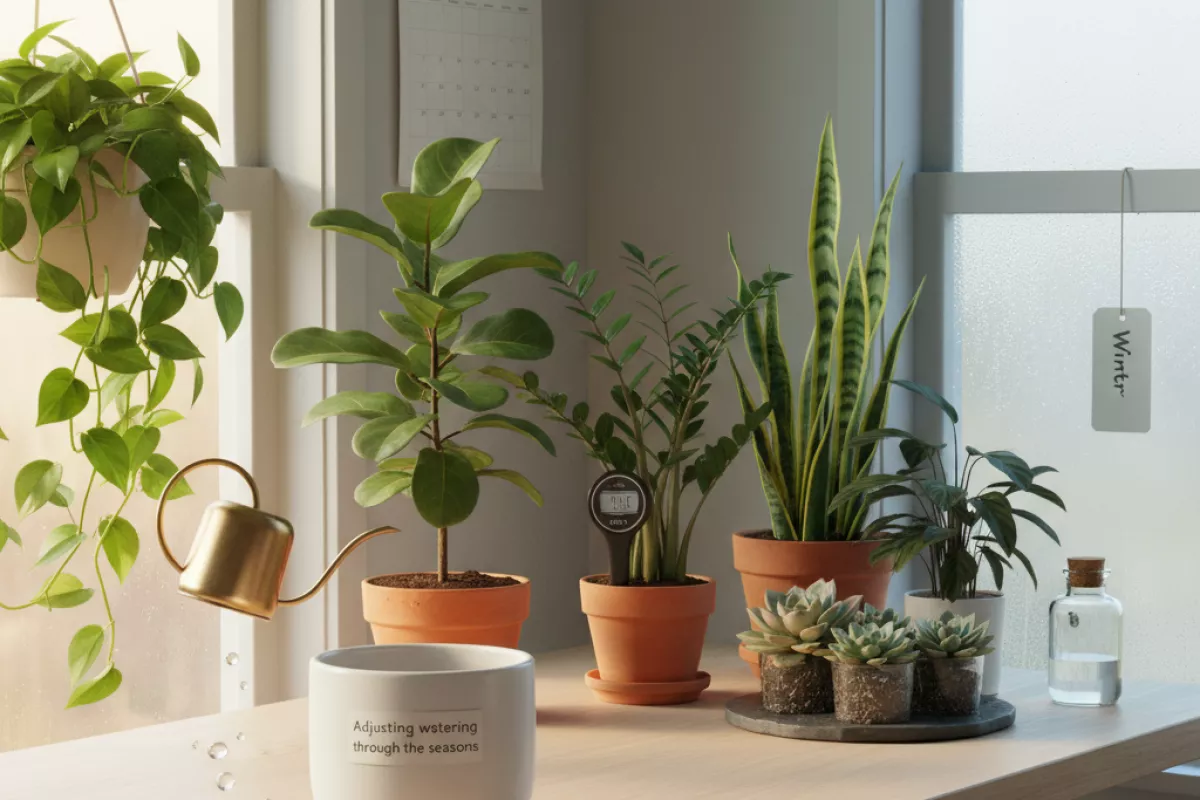
Water needs shift as light, temperature, and indoor humidity change across the year. Most houseplants don’t follow the calendar as much as they follow growth: when they’re actively pushing new leaves, they use water faster; when growth slows, the pot stays wet longer and roots need more air.
| Season (typical indoor conditions) | What changes | How to adjust watering | Common mistakes to avoid |
|---|---|---|---|
| Spring | Longer days and new growth increase water use. | Check soil more often and water when the top 2–5 cm (1–2 in) dries for most foliage plants. Resume regular feeding only once watering becomes consistent. | Jumping straight to “summer” watering while nights are still cool, leaving soil damp for too long. |
| Summer | Higher light and heat speed up evaporation; some homes also run AC, which can dry air. | Water thoroughly, then let excess drain. Expect faster dry-down in small pots or near bright windows. Consider morning watering to reduce stress during hot afternoons. | Frequent small sips that only wet the surface, causing shallow roots and salt buildup. |
| Fall | Light drops and growth slows; pots stay moist longer. | Stretch the interval between waterings. Keep using a dryness check (finger, skewer, or pot weight) rather than a fixed schedule. | Keeping the same frequency as midsummer, which can lead to yellowing leaves and soft stems from overly wet soil. |
| Winter | Lowest light; many plants rest. Heaters can lower humidity while soil dries more slowly. | Water less often, but don’t let plants desiccate near vents. For many common houseplants, wait until the top 5–7.5 cm (2–3 in) is dry; for succulents, allow the mix to dry out fully before rewatering. | Overwatering “because the air feels dry,” or letting cold water chill roots—use room-temperature water around 20–22°C (68–72°F). |
- Use the plant’s growth as your cue. New leaves and faster drying usually mean you can water a bit more often; stalled growth usually means you should slow down.
- Account for microclimates. A pot 30 cm (12 in) from a sunny window may dry far faster than one 1 m (3.3 ft) back, even in the same room.
- Adjust for pot and mix changes. Terracotta and chunky mixes dry quicker; plastic pots and peat-heavy mixes hold moisture longer. Seasonal watering tweaks should match those materials.
- Re-check after any big shift. If you turn on heating, start AC, or move a plant, monitor for a week and recalibrate—environment changes can mimic a “season” overnight.
If you’re unsure, err on the side of letting the root zone breathe. It’s usually easier to recover a slightly dry plant with a deep watering than to fix roots that stayed wet for too long in low-light months.
Signs your watering routine is working
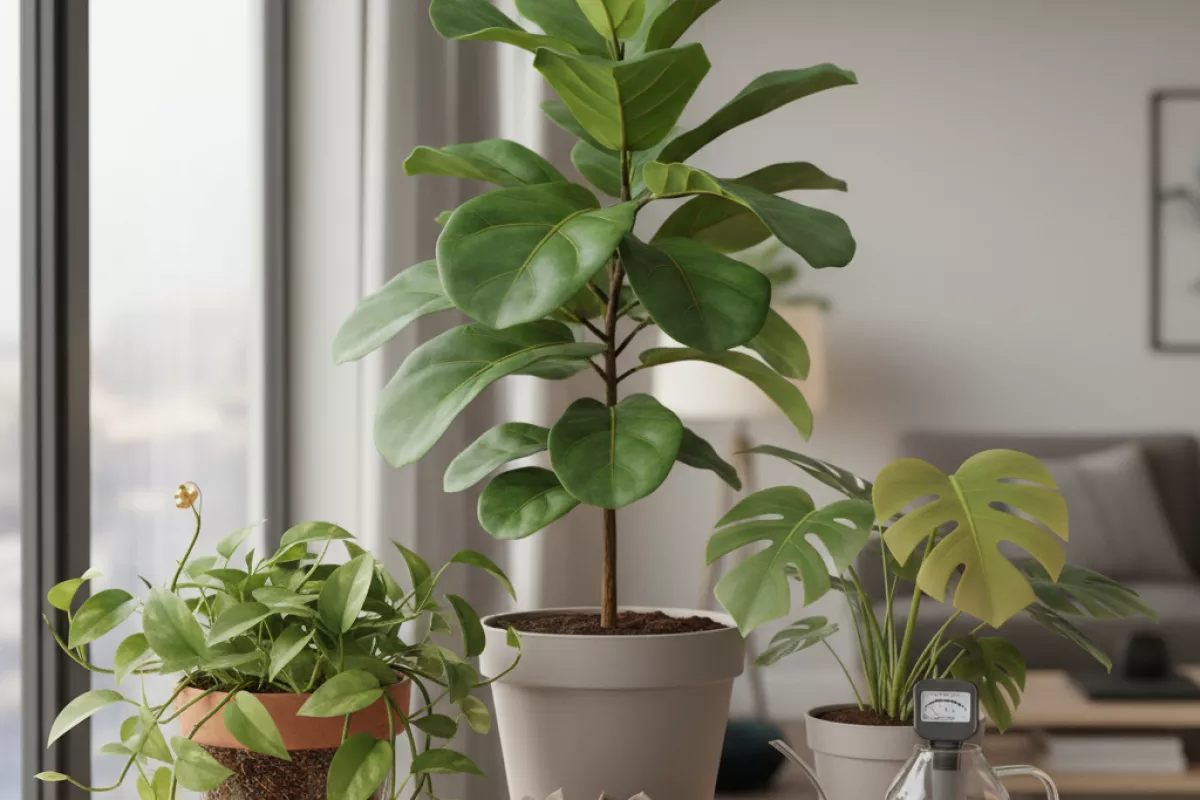
You can usually tell you’ve found the right balance when the plant looks steady and predictable from week to week. New growth appears at a normal pace for that species, leaves hold their shape, and the potting mix cycles from moist to lightly dry without staying soggy or turning bone-dry.
- Leaves look firm and evenly colored. They’re not limp from thirst, and they’re not yellowing in clusters from staying too wet. A few older leaves dropping occasionally can be normal, but a sudden wave of yellow leaves is a red flag.
- New growth is consistent. You see fresh leaves, longer stems, or new fronds without the plant stretching excessively toward light or producing tiny, weak leaves.
- The soil dries at a reasonable pace. After you water, the top layer dries first while the root zone stays slightly moist for a bit. As a rough check, many common houseplants do well when the top 2–5 cm (1–2 in) dries between waterings, but always match this to the plant type.
- No lingering “wet” smell from the pot. Healthy mix smells earthy. A sour or swampy odor often points to waterlogged soil and low oxygen around roots.
- Roots stay healthy. If you ever peek during repotting, roots are mostly white/tan and firm, not brown, mushy, or slimy. Healthy roots are one of the clearest indicators your schedule and drainage are working together.
- Minimal fungus gnats. A few can happen, but frequent gnats often mean the surface stays damp too long. Letting the top layer dry a bit more between waterings usually reduces them.
- The pot feels lighter before the next watering. Lifting the container becomes a reliable cue: heavy right after watering, noticeably lighter when it’s time again. This is a simple way to confirm you’re not watering on autopilot.
- Runoff behaves normally. Water moves through the mix and drains out within a minute or two, rather than pooling on top or racing straight through as if the soil is hydrophobic. If the mix repels water, a slower soak or bottom-watering can help rehydrate evenly.
- Less leaf damage at the edges. Brown, crispy tips can come from low humidity or salts, but chronic underwatering often makes edges brittle and curled. When moisture is consistent, tip burn tends to slow down.
If most of these are true, your routine is likely in the sweet spot. When only one sign is “off,” adjust in small steps—like changing volume by about 10–20% or shifting timing by 1–2 days—so you can see what actually improves the plant’s response.
Typical mistakes that cause indoor plant decline
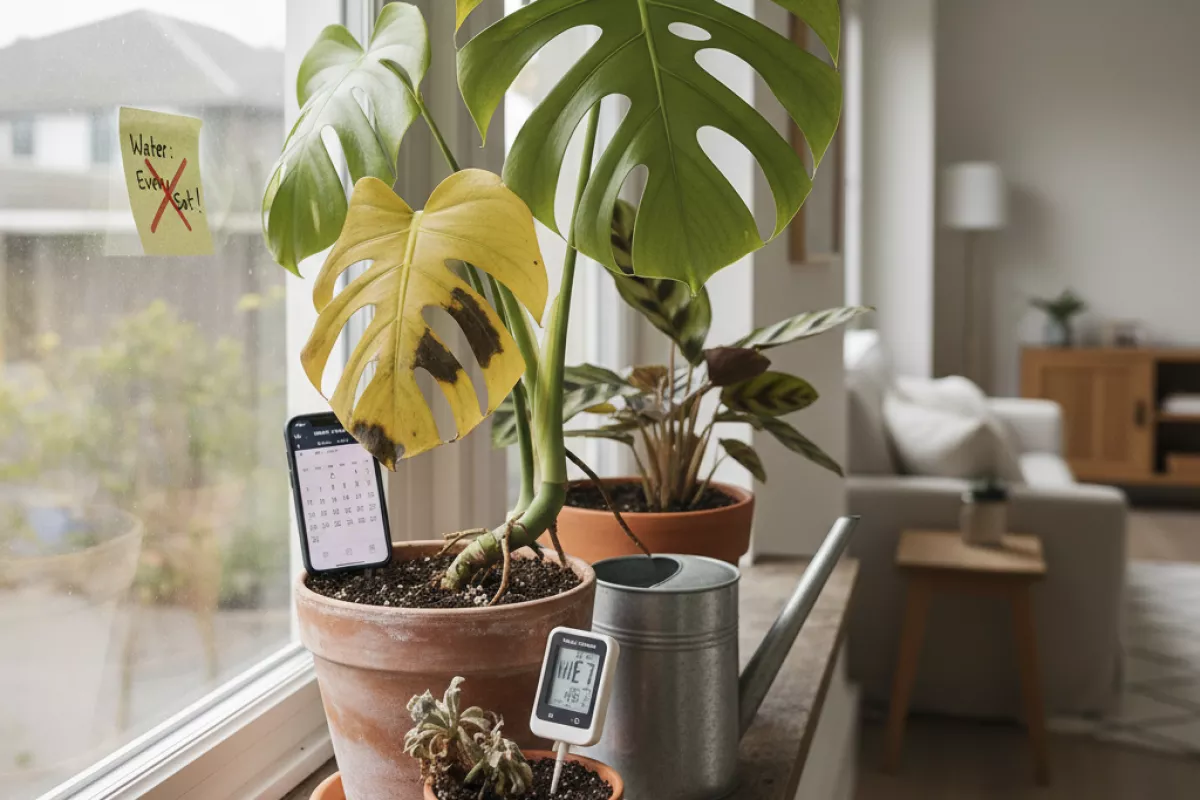
Most indoor plants don’t fail because they’re “picky”—they decline when watering habits don’t match the pot, the soil, and the light. Many issues blamed on disease, including the causes of brown leaf spots, actually trace back to inconsistent moisture and poor root aeration.
- Watering on a schedule instead of checking the soil: A “once a week” routine ignores seasonal shifts, heater use, and day length. Check moisture 2–5 cm (1–2 in) down; water only when that zone matches your plant’s preference.
- Overwatering that looks like underwatering: Wilting, yellowing, and limp leaves can happen when roots are waterlogged and can’t breathe. If the mix stays damp for days, pause watering and improve drainage rather than adding more.
- Letting pots sit in runoff: A saucer full of water keeps the bottom of the root ball saturated. Empty the tray 10–15 minutes after watering, or use a cachepot setup where the nursery pot can fully drain.
- Using the wrong pot or no drainage holes: Decorative containers without drainage make it easy to trap water. If you must use one, keep the plant in a plastic pot with holes and lift it out to water and drain completely.
- Soil that’s too dense or broken down: Old mix compacts, holds water unevenly, and reduces airflow. If water pools on top or takes longer than a minute to soak in, it may be time to refresh the medium or repot.
- Partial watering: A small splash only wets the top layer, leaving the core dry and encouraging shallow roots. Water thoroughly until you see steady drainage, then stop.
- Watering at the wrong time for the environment: In low light or cool rooms, plants use less water. Near a heater or sunny window, they may dry faster. Adjust based on conditions, not the calendar.
- Cold or highly treated water shocks: Very cold water can stress roots, and softened water may add salts. Aim for room-temperature water around 20–22°C (68–72°F) when possible.
- Ignoring humidity while “fixing” with more water: Crispy edges can be dry air, not dry soil. If the mix is still moist but leaf tips brown, consider humidity support instead of increasing watering volume.
- Fertilizing a stressed, thirsty, or soggy plant: Feeding when roots are compromised can worsen burn and decline. Re-stabilize moisture first, then fertilize lightly during active growth.
| Mistake | What you’ll notice | Better approach |
|---|---|---|
| Watering too often | Yellow leaves, soft stems, soil stays wet 3+ days | Let the mix dry to the appropriate depth; ensure free drainage and airflow |
| Watering too little (chronic) | Dry, shrinking soil; repeated droop; crispy edges | Water thoroughly until runoff; confirm the root ball is fully rehydrated |
| Pot sitting in water | Mushy lower roots, fungus gnats, sour smell | Empty saucers after 10–15 minutes; elevate pot to drain completely |
| Dense/old potting mix | Water beads on top, uneven wet/dry pockets | Repot into a fresh, airier mix suited to the plant and container |
| Low light but same watering | Slow growth, lingering moisture, leaf drop | Reduce frequency; move to brighter light or use a grow light |
| High heat/AC drafts | Rapid drying, curled leaves, frequent wilt | Check soil more often; shield from vents; consider a slightly more moisture-retentive mix |
If you’re unsure which mistake is happening, start with two checks: how wet the soil is below the surface and whether the pot can drain freely. Those two clues usually explain most indoor watering problems.