Scale Insects vs Mealybugs: Key Differences

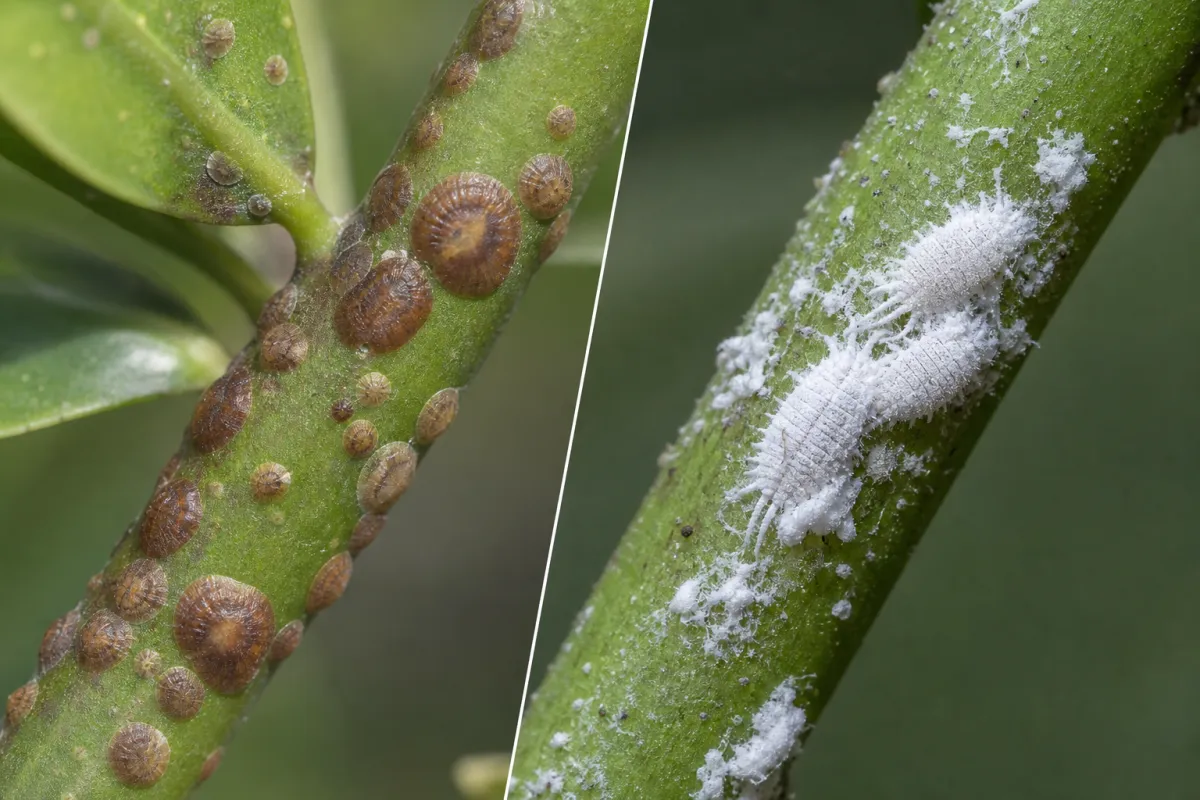 This article shows how to tell scale insects from mealybugs by comparing body shape, texture, protective covering, color, size, movement, and where each pest hides on a plant. It also covers honeydew, ants, sooty mold, leaf, stem, and root damage, how to confirm the pest, and why treatment methods differ.
Telling apart scale insects and mealybugs matters because the best treatment depends on which pest is on your plant. Both feed on sap and can weaken growth, but they differ in appearance, how they spread, and how well they respond to control methods. Spotting the signs early helps you act quickly, avoid unnecessary treatments, and protect houseplants and garden plants more effectively from lasting damage.
Scale Insects vs Mealybugs: Quick Comparison
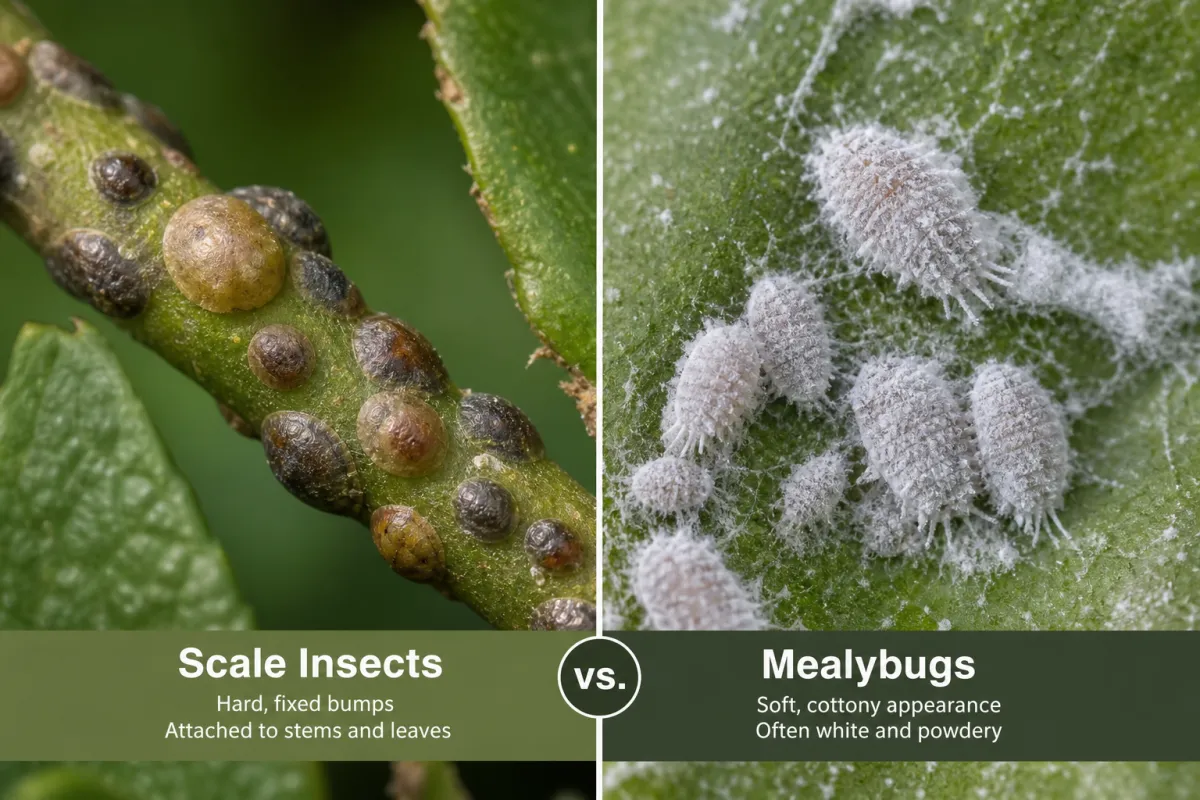
Scale and mealybugs are both sap-feeding pests, and they often get confused because they can appear on the same kinds of houseplants, shrubs, citrus, and tropical foliage. Both weaken plants by piercing tissue and drawing out plant juices, and both may leave behind honeydew that leads to secondary problems. Even so, they do not look or behave the same once you know what to watch for.
The fastest way to separate them is to look at the pest itself rather than only at the damage. Mealybugs usually look soft, cottony, and obviously insect-like. Scale insects often look more like bumps, shells, or scabs attached to stems and leaves. That difference matters because the protective coating of scale makes them harder to kill with contact treatments.
| Feature | Scale insects | Mealybugs |
|---|---|---|
| General look | Raised bumps or discs attached to plant tissue | Soft-bodied insects with white, waxy, cotton-like coating |
| Movement | Adults usually appear immobile | Can often be seen crawling slowly |
| Texture | Hard, waxy, or shell-like in many species | Fluffy, powdery, or thread-like wax |
| Common hiding spots | Stems, leaf veins, twigs, undersides of leaves | Leaf nodes, new growth, undersides, root zone, tight crevices |
| Typical clue | Bumps that do not brush off easily | White cottony masses, often in clusters |
If you need a broader reference for identifying scale insects, compare photos of mature pests and their early crawler stage. Many gardeners misidentify older scale because they expect to see legs and obvious body segments, but mature females often resemble part of the plant more than a moving insect.
Body Shape, Texture and Protective Covering
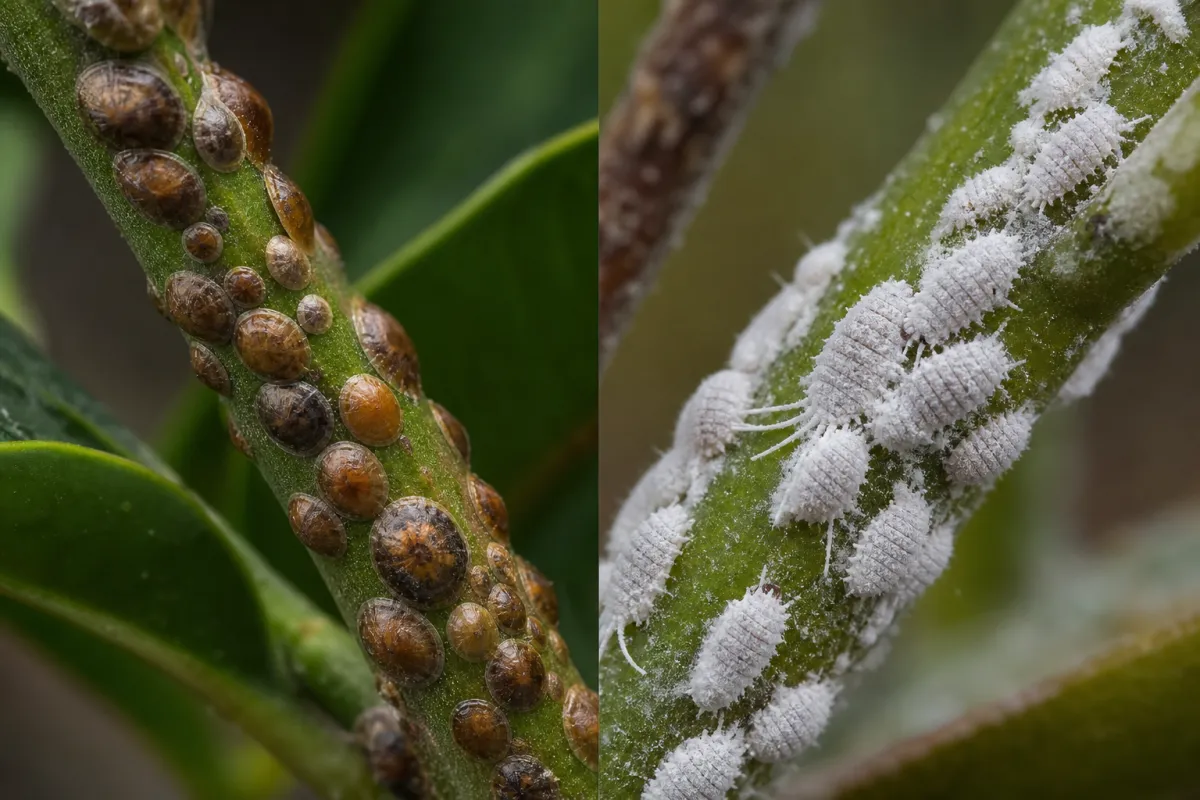
Body structure is the clearest physical difference between these two pests. If you touch them gently with a fingernail, toothpick, or cotton swab, the way they respond tells you a lot. Mealybugs crush or smear because they are soft-bodied. Scale usually resists pressure more than expected, especially armored species, because the insect is protected by a waxy or shell-like covering.
How scale insects are built
Scale comes in two broad forms commonly noticed by gardeners: armored scale and soft scale. Armored kinds have a firmer cover that is separate from the body beneath, while soft scale has a waxy coating that is more integrated with the insect. In both cases, mature females can look like tiny limpet shells, oval discs, brown blisters, or tan bumps fixed in place.
The shape may be round, elongated, or slightly domed, often from 1 mm to 5 mm (0.04 in to 0.2 in) depending on species. On woody plants, they can blend so well with bark that an infestation is discovered only after leaf yellowing or reduced vigor appears.
How mealybugs are built
Mealybugs are softer, flatter, and more obviously insect-like when viewed closely. Their white wax coating can appear dusty, cottony, or stringy, and some species produce short filaments around the body edge. Others gather into fuzzy clusters in sheltered corners of the plant.
Because the wax is not a true hard shield, they are easier to squash and more likely to distort if touched. Adults are often around 2 mm to 5 mm (0.08 in to 0.2 in), though the fluffy wax can make them look larger than they are.
Editor’s note: A simple “smear test” can help. If the pest wipes into a moist, pinkish, orange, or brown streak on a cotton swab dipped in isopropyl alcohol, it is often a mealybug or soft-bodied stage. If it lifts off like a tiny cap or crust, scale is more likely.
- Scale: attached bump, waxy shield, less visibly segmented body
- Mealybugs: soft body, cottony wax, visible clustering in sheltered spots
- Practical result: the harder the covering, the more important physical removal and repeat treatment become
Color, Size and Visible Movement
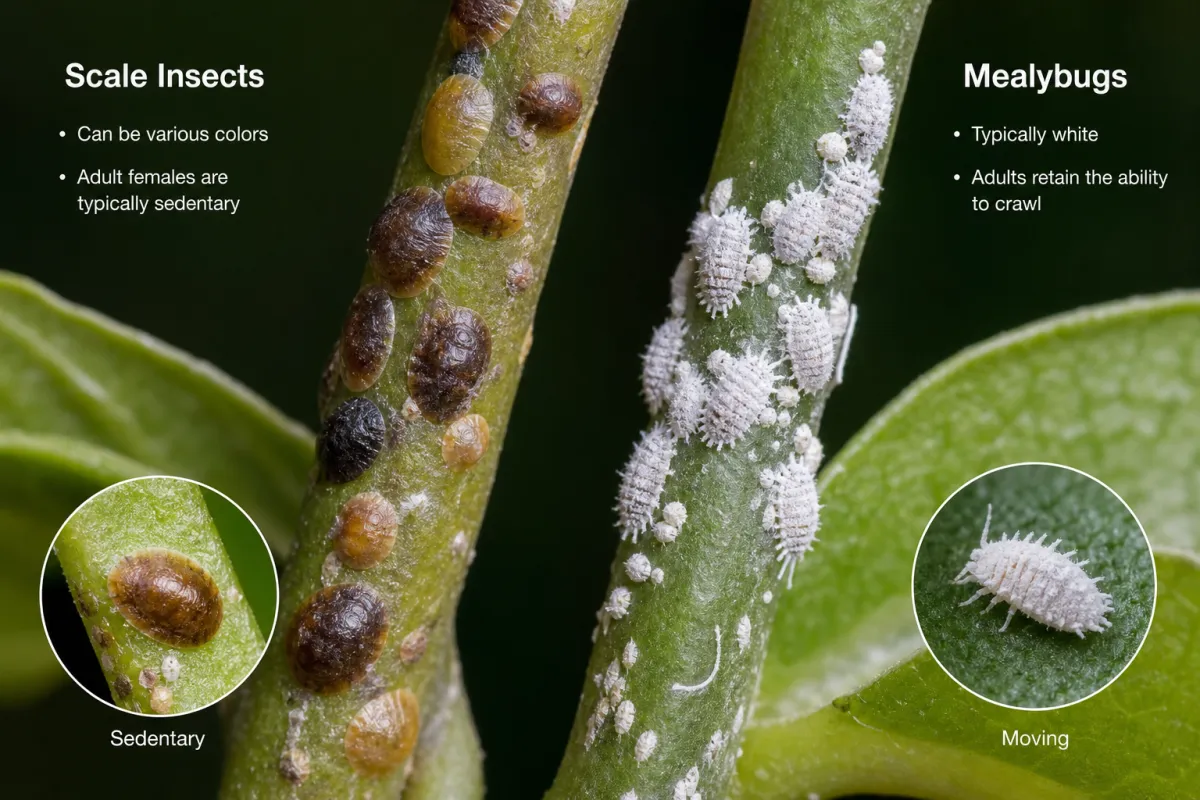
Color and movement provide strong clues, especially when you inspect a plant in daylight or with a small hand lens. Gardeners often expect both pests to be white, but that is only reliably true for many mealybugs. Scale may be tan, brown, gray, amber, black, or cream, depending on species and age. The plant part they occupy can also alter how visible they seem.
Color differences you can spot quickly
Mealybugs usually stand out because the wax is pale white or off-white against green foliage. On dark stems or glossy leaves, they look like bits of lint, cotton, or mildew caught in the leaf joints. Scale, by contrast, often matches bark or stems. Brown scale on ficus, for example, can be mistaken for natural stem texture until the infestation becomes heavy.
Young scale crawlers may be yellowish or pale orange and are much easier to overlook than adults. This is one reason a plant may keep worsening even after a gardener removes the obvious mature insects.
What movement tells you
Movement is one of the most useful field marks. Adult mealybugs usually crawl slowly if disturbed, though they may remain still at first. Adult scale generally does not move once settled. The mobile phase in scale is usually the crawler stage, and these tiny juveniles can spread across leaves, stems, pots, or nearby plants before settling down to feed.
That difference affects inspection timing. If you only glance at a plant, mealybugs may reveal themselves by motion. Scale requires a closer look for fixed bumps, especially on older stems and the underside of leaves near the midrib.
- If the pest looks like white fluff and can crawl, suspect mealybugs.
- If it looks like a tan or brown bump that stays attached, suspect scale.
- If you see almost no movement but the plant has sticky residue, check carefully for settled scale along stems.
For houseplants, this distinction is especially important because indoor scale often goes unnoticed for weeks. Indoor plants usually have fewer natural predators and steadier temperatures, so pests can build up in hidden places long before damage looks dramatic.
Where Each Pest Hides on the Plant
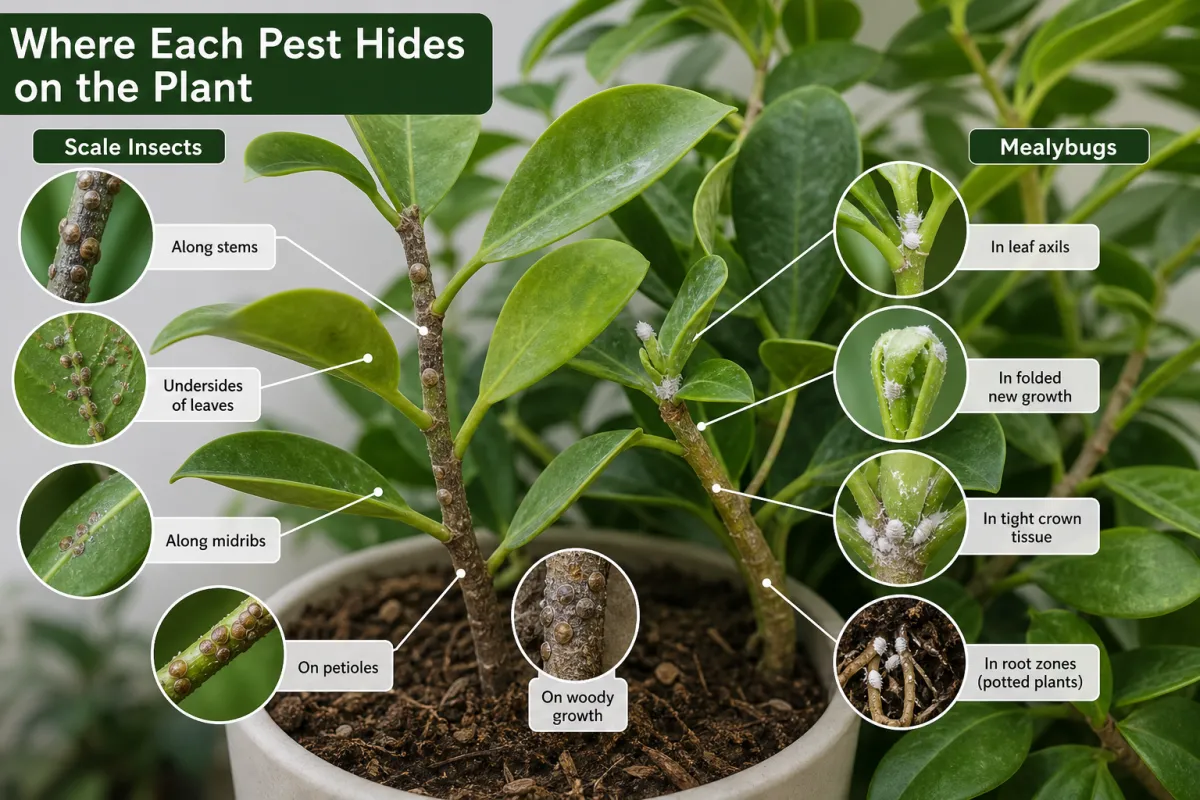
Both pests favor protected feeding sites, but their preferred hiding places differ enough to make inspection more efficient. If you know where to look first, you can diagnose the problem before the plant declines severely. This matters for routine care because gardeners often focus on leaf tops and miss the actual infestation entirely.
Typical hiding places for scale
Scale often settles along stems, petioles, twigs, branch crotches, and the undersides of leaves, especially near the central vein. On woody ornamentals and fruit trees, they may line up on older growth where bark texture conceals them. Some species also cluster on fruit, which can lead to cosmetic damage and reduced vigor.
Outdoors, heavy infestations are common on sheltered branches with limited air movement. Drought stress, irregular watering, or excessive nitrogen feeding can make some plants more vulnerable because lush, tender growth is easier for sap-feeding insects to exploit.
Typical hiding places for mealybugs
Mealybugs prefer tight, protected crevices. Check leaf axils, where leaf meets stem, inside unfurling foliage, under bracts, around flower stalks, and near the crown of dense rosette plants. Orchids, hoyas, succulents, pothos, and many soft-stemmed tropicals commonly host them in folded growth where sprays barely reach.
Another major difference is that some mealybug species infest roots. Root mealybugs hide in the potting mix and around the inner wall of containers, leaving above-ground symptoms that mimic underwatering, nutrient deficiency, or root stress.
How-to tip: When checking a suspect plant, tilt the pot and inspect the drainage holes first. White cottony residue around roots or the rim of the root ball is a strong sign of root mealybugs, not surface scale.
If you are dealing with shrubs, fruit trees, camellias, citrus, or other landscape plants, outdoor scale often concentrates on the undersides of twigs and on inner branches where sprays and rain do not hit well. Pruning crowded growth can improve visibility and help treatment reach the insects more effectively.
- Inspect the newest growth and sheltered joints for mealybugs.
- Inspect older stems, leaf veins, and woody surfaces for scale.
- Check nearby plants, because both pests spread by contact, shared tools, or crawler movement.
- For potted plants, inspect saucers, pot rims, and drainage holes in addition to foliage.
Honeydew, Ants and Sooty Mold
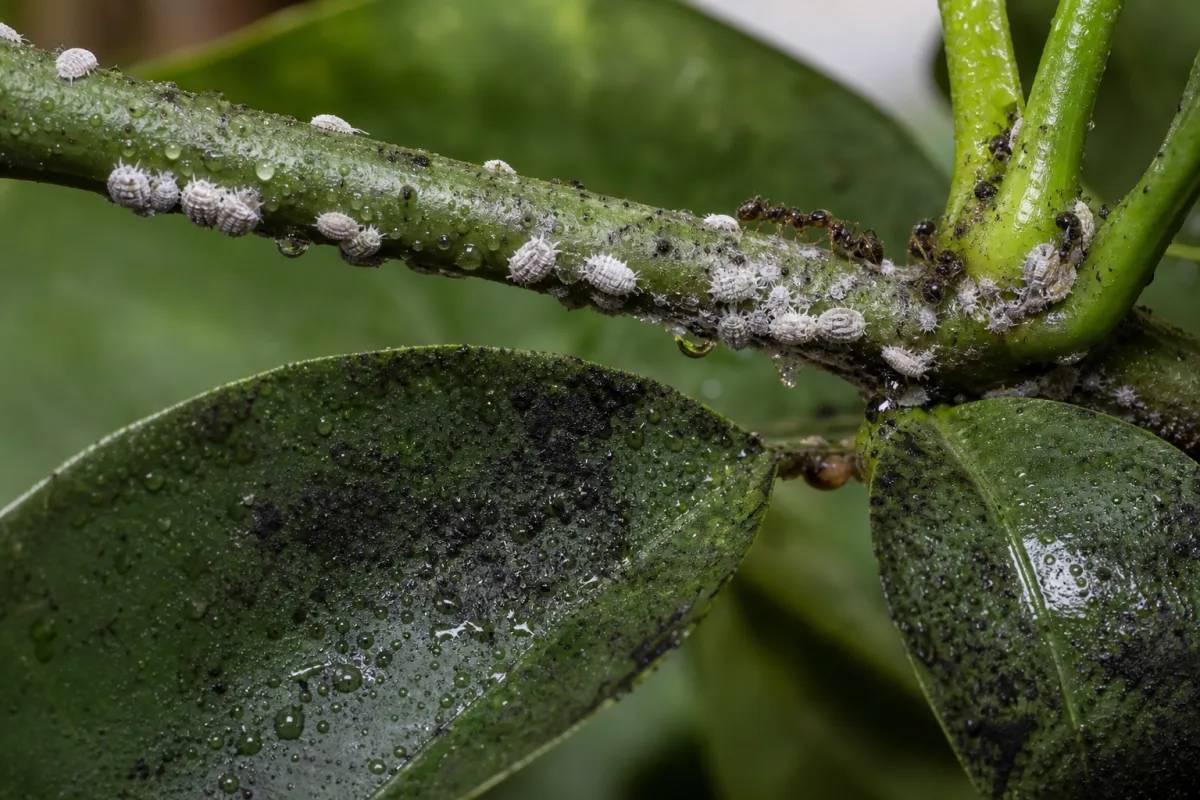
One reason these pests are so frustrating is that the visible mess around them can be easier to notice than the insects themselves. Both mealybugs and many soft scale species excrete honeydew, a sugary liquid that coats leaves, stems, pots, shelves, patios, and anything below the plant. That residue creates a chain of symptoms that can point you toward the culprit.
What honeydew looks and feels like
Honeydew shows up as shiny, tacky, or syrupy residue on leaves. A plant may seem dirty all the time, or dust may cling to the sticky surface. If leaves beneath an upper branch feel tacky, the source pest is often feeding above that area rather than on the affected leaf itself.
Gardeners often notice sticky leaves before they ever see scale or mealybugs. That clue does not identify the pest by itself, since aphids and whiteflies can do the same, but it tells you to inspect stems, leaf undersides, and leaf joints carefully.
Why ants are a clue
Ants are attracted to honeydew and may actively protect sap-feeding pests from predators. Outdoors, a line of ants moving up and down stems is often one of the earliest warning signs of soft scale or mealybugs. Ant control does not solve the infestation, but without reducing ant traffic, beneficial insects may struggle to suppress the pests naturally.
When black coating appears
Sooty mold is a fungus that grows on honeydew, not inside the plant tissue itself. It appears as a black, dusty, or soot-like film on leaves and stems. While it is usually secondary, a heavy coating blocks light and reduces photosynthesis, which adds stress to an already weakened plant.
If black film is present, compare your symptoms with a guide to sooty mold so you can separate the fungus from the actual insect problem. Cleaning the mold helps the plant recover, but the sticky source must be stopped first or the coating will return.
- Mealybugs commonly produce visible honeydew in active infestations.
- Soft scale usually produces more honeydew than armored scale.
- Ant activity outdoors often points to honeydew-producing pests on stems or branch unions.
- Black coating on foliage is a consequence, not the primary pest.
Leaf, Stem and Root Damage
The plant’s symptoms overlap because both insects remove sap, but the pattern of decline can still help you narrow the diagnosis. Damage tends to build gradually rather than appearing overnight. A healthy plant with good light, even watering, and suitable feeding can tolerate a small population for a while, which is why infestations are often more advanced than they first appear.
Leaf symptoms
On leaves, both pests can cause yellowing, pale speckling, drooping, curling, and premature drop. New growth may emerge distorted if feeding is concentrated near developing tissue. Mealybugs often gather around shoot tips and folded leaves, so fresh growth can look stunted or malformed early in the infestation.
Scale on leaf undersides and along veins may lead to broad yellow patches that are easy to mistake for watering stress or nutrient problems. If only changing irrigation does not improve the plant after 2 to 3 weeks (14 to 21 days), inspect closely for attached pests.
Stem and branch effects
Scale commonly weakens stems and woody growth over time. On shrubs and fruiting plants, you may see reduced flowering, poor fruit set, dieback at the tips, or a general lack of vigor. Heavy stem coverage can interfere with normal growth and leave the plant looking thin even when the soil, light, and feeding routine are otherwise adequate.
Mealybugs can also weaken stems, but their clustering in leaf axils and around nodes often creates local hot spots of damage rather than a bark-like coating over large stem sections.
Root-zone damage
Root involvement strongly favors mealybugs. Root mealybugs feed below the soil line and may cause wilting, yellowing, poor response to watering, and slowed growth even when top growth appears relatively clean. A plant may dry out too fast because the root system is failing, or it may remain weak despite fresh potting mix and regular fertilizer.
Editor’s note: If a potted plant looks chronically thirsty but the mix is not bone dry, do not assume it needs more water. Root pests and damaged roots can mimic drought stress, and overwatering in response often makes recovery harder.
Overfeeding with high-nitrogen fertilizer can encourage lush, soft tissue that is attractive to sap-feeders. Likewise, very low light indoors can reduce growth strength and make recovery slower after treatment. Correct care does not eliminate pests, but it improves the plant’s ability to rebound once the infestation is controlled.
How to Confirm Which Pest You Have
A confident diagnosis comes from combining plant symptoms with a hands-on inspection. This is worth doing before you spray anything because treatment timing and product choice differ. A quick look from standing height is rarely enough, especially on dense houseplants or woody shrubs with hidden branch structure.
Simple inspection method
Start by isolating the plant if possible. Use bright natural light or a flashlight, and inspect the undersides of leaves, stems, petioles, leaf axils, and new growth. A 10x hand lens is helpful but not essential. Run a fingernail, wooden toothpick, or cotton swab across several suspect spots rather than only one.
- Look for white cottony clusters in joints and protected folds.
- Look for tan, brown, gray, or amber bumps attached to stems and veins.
- Test whether the pest smears, crushes, or lifts off like a shell.
- Check for honeydew, black fungal film, or ant activity.
- Inspect roots and drainage holes if top growth symptoms seem worse than visible pests suggest.
Signs that point more strongly to mealybugs
Mealybugs are more likely if you see soft white wax, obvious clustering, movement when disturbed, or root infestation in containers. They often concentrate in fresh growth, hidden folds, and around the crown of compact plants.
Signs that point more strongly to scale
Scale is more likely if you find attached bumps that resist wiping, especially on stems, twigs, and major veins. If the plant looks sticky but the insects are hard to notice, soft scale is a common explanation. If the bumps are dry and shell-like with little honeydew, armored scale may be involved.
How-to tip: Test more than one spot. Plants sometimes host both pests at once, especially in indoor collections or on stressed tropical plants brought in for winter.
If you still cannot tell, place a white paper towel beneath the plant and tap the branch gently. Crawlers or mobile mealybugs may drop or move onto the white surface, making them easier to see. This will not identify every species, but it often confirms whether the infestation includes a mobile soft-bodied stage.
Why Treatment Methods Differ
The reason these pests require different approaches comes down to their bodies, life cycles, and hiding behavior. Mealybugs are more exposed and soft-bodied, so contact treatments can work well when coverage is thorough. Scale, especially armored scale, is more difficult because the protective covering blocks many sprays from reaching the insect underneath.
Why mealybugs are usually easier to knock back
Mealybugs often respond to repeated physical removal and direct-contact treatment. On houseplants, dabbing individuals with isopropyl alcohol on a cotton swab can reduce small outbreaks quickly. In larger infestations, insecticidal soap or horticultural oil can work well if the spray reaches leaf axils, undersides, and hidden folds. Repeat applications every 7 to 10 days are usually needed to catch newly hatched insects.
For root mealybugs, top spraying is not enough. The plant often needs to be unpotted, roots washed, infested mix discarded, and the container cleaned before repotting into fresh medium. During recovery, avoid overwatering; damaged roots need oxygen and can rot easily in constantly wet soil.
Why scale often needs a more persistent strategy
With scale, manual removal is especially valuable because settled adults may survive products that would kill exposed soft-bodied pests. On sturdy leaves and stems, gently scraping or wiping off visible insects reduces the population immediately. Horticultural oil is often useful because it can smother exposed stages, but timing matters most when crawler stages are active and unprotected.
Heavy infestations on shrubs or trees may require pruning of the worst-covered branches, especially where inner growth is shaded and congested. After pruning, improve plant vigor with even watering, mulch outdoors if appropriate, and balanced feeding rather than quick heavy fertilizer. A stressed plant recovers more slowly and remains easier for residual crawlers to re-establish.
Care factors that influence treatment success
Neither pest is solved by spraying alone if the plant remains in poor conditions. Weak light, erratic watering, salt buildup from excess fertilizer, and overcrowded canopies all make follow-up harder. Indoors, space plants apart for a few weeks, clean shelves and pot exteriors, and monitor weekly. Outdoors, reduce ant activity, prune for access, and treat neighboring host plants if they are infested.
- Use physical removal first when pest numbers are visible.
- Repeat contact treatments because eggs and hidden insects are rarely eliminated in one pass.
- Match the method to the pest’s body: softer pests are easier to reach; shielded pests need persistence and timing.
- Support recovery with stable watering, correct light, and restrained feeding until healthy growth resumes.
The key takeaway is simple: mealybugs are usually treated like exposed, soft-bodied insects in hiding, while scale is treated like attached pests protected by a waxy shield. Once you identify which one is present, your chances of clearing the infestation improve dramatically.