Aphids and Honeydew – Sticky Leaves Problem

 This article explains what honeydew is, why aphids leave it on plants, and why it makes leaves sticky and dirty. It covers the risks of buildup, safe cleaning methods, prevention during infestations, and the long-term impact on leaf health and protection.
Sticky, dull leaves often point to aphids, tiny sap-sucking insects that leave behind honeydew, a sugary residue on stems and foliage. This coating can attract ants, promote sooty mold, and make plants look unhealthy. Catching the problem early helps you confirm aphids are the cause, clean the leaves safely, and take steps to prevent the infestation from spreading or causing more damage.
What honeydew is and why aphids produce it

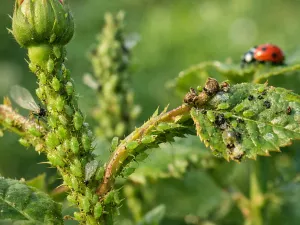
Honeydew is the clear, sugary liquid often found on leaves, stems, pots, and the surface below a plant when aphids are feeding. It is not sap leaking out of the plant on its own. Instead, it is a waste product made by sap-sucking insects after they take in more sugar than they can use.
Aphids feed by piercing soft plant tissue and drawing out phloem sap, which is rich in sugars but relatively low in some nutrients they need, especially protein. To get enough amino acids, they have to process a large volume of sap. The excess sugar and water then pass through the insect and are excreted as sticky droplets.
Why aphids make so much of it
This sticky residue is a direct result of how aphids eat. Because plant sap is dilute in key nutrients, aphids must feed constantly. That means a steady output of honeydew, especially when colonies are large or when plants are putting on soft, lush growth.
- Fast feeding: Aphids can remain attached and feed for long periods without moving much.
- High sugar intake: Sap contains more sugar than the insects can metabolize.
- Soft new growth: Tender shoots, buds, and leaf undersides are easier for aphids to pierce.
- Warm conditions: Mild indoor temperatures or warm outdoor weather can speed reproduction and increase feeding pressure.
Where you are most likely to notice it
Honeydew usually appears first on leaves beneath an infestation rather than on the exact feeding site. On houseplants, people often notice the problem because a windowsill, shelf, or floor becomes tacky. Outdoors, cars, patio furniture, and nearby paving can also end up coated if a heavily infested shrub or tree is overhead.
Plants with dense canopies, curled leaves, or lots of fresh growth often hide aphids well, so the sticky coating may be the first visible clue. Check the undersides of leaves, the tips of stems, flower buds, and any distorted new growth.
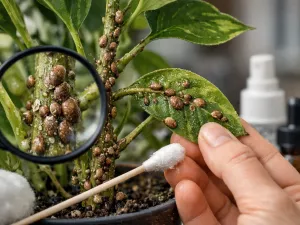
If a plant feels sticky but you cannot immediately see insects, inspect with a torch or phone light from below. Aphids blend into stems and leaf veins surprisingly well, especially green species on green growth.
Why leaves become sticky and attract dirt

Leaves become sticky because honeydew dries into a thin sugar film. Fresh droplets may look glossy or wet, but over time they spread and leave a tacky residue that traps anything light enough to settle on the surface. Dust, compost particles, airborne debris, and even fine pet hair can cling to it.
This is why affected foliage often looks dull and dirty rather than simply wet. On glossy-leaved houseplants, the change is especially obvious because the natural shine becomes uneven and smeared. On outdoor plants, windblown dust and pollution make the coating look gray or blackened.
Why the residue builds up quickly
Sticky leaves are usually a sign that feeding has been going on for more than a day or two. A small colony can produce enough honeydew to coat several leaves below it, and repeated deposits create layers. In still indoor air, the film remains on the plant until it is physically washed off. Rain can dilute it outdoors, but sheltered plants under eaves, in greenhouses, or in dense borders may stay sticky for much longer.
What else the sticky coating attracts
The residue does more than collect ordinary dirt. It also attracts ants, which feed on honeydew and may protect aphids from natural predators. That relationship can allow infestations to expand faster because ladybirds, lacewings, and hoverfly larvae are disturbed or driven off.
- Dust and soot: Fine particles settle and stick, making leaves look grimy.
- Ants: They harvest the sugary coating and often travel repeatedly over the plant.
- Mold spores: Sticky surfaces are a good landing place for sooty mold to develop later.
- Debris: Dead petals, tiny bark pieces, and dry leaf fragments cling more easily.
The result is not just a cosmetic issue. A dirty, sticky leaf has a harder time functioning normally, and the plant becomes less pleasant to handle, inspect, and maintain.
Risks of leaving honeydew on plants

Leaving honeydew in place for too long can turn a manageable pest problem into a broader plant health issue. The residue itself does not directly burn leaves, but it creates conditions that interfere with normal growth and make the plant harder to monitor. The biggest risk is often what follows: sooty mold.
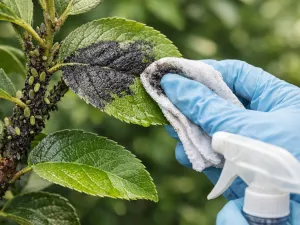
Sooty mold is a dark fungal growth that feeds on the sugary coating rather than the plant tissue. Even though it is usually superficial, it can cover large areas of foliage and block light. Once that happens, photosynthesis is reduced and the plant may weaken over time.
Short-term and longer-term concerns
A light coating on a few leaves is usually reversible if the aphids are controlled quickly. Heavy buildup over weeks is more serious, especially on indoor plants that do not get rain or regular washing. Young plants, herbs, seedlings, and soft-leaved ornamentals can decline faster than woody shrubs with established root systems.
| Problem | What happens on the plant | Likely result if ignored |
|---|---|---|
| Sticky film | Leaves collect dust and become harder to clean | Reduced leaf efficiency and poor appearance |
| Sooty mold | Black coating forms over the honeydew | Less light reaches the leaf surface |
| Ant activity | Ants move across stems and protect aphids | Natural control becomes less effective |
| Hidden infestation | Dirty foliage masks insects and damage | Colonies spread before they are noticed |
Why cleanliness matters for diagnosis
When leaves stay coated, it becomes harder to tell whether a plant is also dealing with spider mites, scale, nutrient stress, or fungal spotting. Sticky grime can hide yellowing, stippling, and distortion. Cleaning the plant is therefore not just about appearance; it is part of accurate troubleshooting.
Do not assume blackened leaves mean a disease is attacking the leaf itself. On many aphid-affected plants, the dark layer wipes away because it is sooty mold growing on honeydew, not rot inside the tissue.
How to safely clean sticky plant surfaces

The safest way to clean sticky plant surfaces is to remove the aphids first or at least reduce their numbers before washing. Otherwise, fresh honeydew will quickly replace what you remove. Cleaning should be gentle enough to avoid tearing soft leaves or bruising stems, especially on tender houseplants and new spring growth.
Plain lukewarm water is often enough for light residue. For heavier buildup, wiping or rinsing may need to be repeated several times over a week. The goal is to clear the sugar film without coating leaves in unnecessary products.
Basic cleaning method for most plants
This approach works well for many foliage plants, shrubs in containers, and lightly infested garden plants. Always test any cleaning solution on a small area first and wait 24 hours before treating the whole plant if the species is delicate.
- Move the plant out of strong direct sun so wet leaves do not scorch while drying.
- Support stems with one hand and rinse foliage with lukewarm water, around 20°C to 25°C (68°F to 77°F).
- Use a soft cloth, sponge, or cotton pad to wipe the upper leaf surface and, where practical, the underside.
- For stubborn residue, add a few drops of mild soap to 1 L (34 fl oz) of water, then wipe gently and rinse again with plain water.
- Let the plant dry in bright, indirect light with good airflow.
When to be extra careful
Some plants dislike leaf wetting or rough handling. African violets, fuzzy-leaved plants, succulents with powdery coatings, and species with delicate blooms should not be scrubbed. In those cases, spot-clean only the affected smooth surfaces, or use a gentle shower aimed at stems and larger leaves while keeping crowns and flowers drier.
- Thin leaves: Wipe with minimal pressure to avoid creasing.
- Hairy foliage: Avoid rubbing, which can damage the surface and leave marks.
- Flowering plants: Keep soap and heavy rinsing off open flowers where possible.
- Large indoor specimens: Protect floors first, because honeydew can wash down in sticky streaks.
Cleaning nearby surfaces
Do not forget the area around the plant. Pots, saucers, shelves, and windowsills often hold honeydew and wandering aphids. Wash these surfaces with warm water and mild soap, then dry them well. If the plant sits near curtains or blinds, inspect them too.
Preventing buildup during infestations

Preventing sticky buildup is easier than removing a thick coating later. During an active infestation, the focus should be on reducing aphid numbers quickly while making the plant less inviting to repeated outbreaks. That means combining regular inspection with practical care adjustments rather than relying on one treatment alone.
Aphids multiply fastest on soft, nitrogen-rich growth and on stressed plants that are not being checked often. Houseplants pushed with heavy feeding, or outdoor plants producing lush spring shoots, can become magnets for colonies.
Routine checks that stop the mess from spreading
Frequent inspection matters more than occasional dramatic treatment. A quick look every few days during the growing season can catch colonies before leaves become tacky and blackened.
- Check shoot tips: Aphids cluster on the newest, softest growth first.
- Look under leaves: Colonies often hide where the honeydew drips downward.
- Watch for ants: Their presence can signal sap-feeding insects before you see them.
- Remove badly infested tips: Prune and discard them if the plant can spare the growth.
Care adjustments that reduce repeat outbreaks
Plant care affects how attractive growth is to aphids. Overfeeding with high-nitrogen fertilizer can create soft tissue that is easy to pierce. Irregular watering can also stress plants and lead to uneven growth that pests exploit.
To reduce buildup during an infestation, keep the plant in steady conditions. Water when the top layer of soil is appropriately dry for the species, rather than alternating between bone dry and saturated. Avoid extra fertilizer until the pest pressure is under control. If a houseplant is in very still air, improve ventilation without exposing it to cold drafts.
A weekly rinse can be a useful support measure on sturdy plants, but it is not a substitute for controlling the insects themselves. If sticky residue keeps returning within a day or two, the colony is still active somewhere on the plant.
Integrated control options
The best prevention during an outbreak is a mix of physical removal and sensible follow-up. Outdoors, beneficial insects often help once ant activity is reduced. Indoors, repeated washing and targeted insecticidal soap are usually more practical than waiting for natural predators.
- Water spray: A firm rinse can dislodge many aphids from sturdy plants.
- Insecticidal soap: Useful when applied thoroughly to contact the insects.
- Pruning: Removes dense colonies on expendable tips and buds.
- Ant control: Prevents aphids from being defended and moved around.
Long-term effects on plant health
A short episode of sticky leaves usually does not cause permanent damage if the plant is otherwise healthy and the aphids are dealt with promptly. The long-term effects appear when feeding continues over many weeks or returns repeatedly. In that situation, the issue is no longer just the honeydew on the surface but the ongoing loss of sap and the stress placed on new growth.
Plants under chronic aphid pressure may produce smaller leaves, distorted shoots, fewer flowers, and weaker stems. Seedlings and young plants can stall noticeably. Fruiting and flowering plants may abort buds or fail to develop well because energy is diverted into replacing damaged tissue.
How repeated infestations change growth
Repeated honeydew episodes often point to a recurring management problem: too much soft growth, poor inspection, overcrowding, or indoor conditions that favor pests year-round. Over time, the plant may become less vigorous and more vulnerable to other issues such as mildew, leaf drop, or nutrient imbalance.
- Reduced photosynthesis: Dirty or mold-covered leaves capture less light.
- Weakened new growth: Aphids target the parts the plant needs most for future development.
- Lower flowering: Buds can be distorted or fail to open properly.
- Greater stress sensitivity: Heat, drought, and repotting become harder for the plant to handle.
Recovery after the problem is solved
Once the sticky residue is removed and the aphids are gone, recovery depends on basic aftercare. Give the plant stable light, appropriate watering, and time. Avoid the temptation to overfeed in order to “boost” regrowth. A moderate, balanced feeding schedule is better than forcing lush replacement growth that attracts a new wave of pests.
If many leaves were heavily coated or blackened, some may never look perfect again even after cleaning. Judge recovery by fresh growth, not by whether every old leaf regains its original finish. On shrubs and vigorous houseplants, healthy new shoots are the best sign that the plant has moved past the infestation.
Keeping leaves clean and protected
Keeping leaves clean is part of regular plant care, not just a response to pests. Clean foliage photosynthesizes better, is easier to inspect, and gives earlier warning when aphids or other sap-feeding insects return. The aim is not to polish every leaf constantly, but to keep surfaces free of sticky residue, dust, and hidden colonies.
A simple maintenance routine works better than occasional deep cleaning. For indoor plants, that may mean checking leaves while watering and wiping larger foliage every couple of weeks. Outdoors, it means noticing where aphids tend to gather each season and acting before honeydew spreads through the canopy.
Practical habits that help
Good prevention combines hygiene with balanced growing conditions. Plants that are well sited, properly watered, and not overfed are easier to keep clean because they are less likely to produce the kind of weak, sappy growth aphids prefer.
- Space plants well: Better airflow makes inspection easier and slows pest spread.
- Water consistently: Avoid stress that leads to uneven, vulnerable growth.
- Feed moderately: Use fertilizer at the recommended rate rather than pushing lush growth.
- Remove debris: Dead leaves and spent flowers can shelter pests and trap residue.
- Inspect after bringing in new plants: Quarantine newcomers for 1 to 2 weeks (7 to 14 days).
Knowing when to intervene early
The best protection is early action. If a leaf feels tacky, if ants suddenly appear on a houseplant, or if new growth looks curled, inspect immediately. A small colony can often be washed off or pinched out before the plant needs repeated treatment. Waiting until leaves are visibly blackened or furniture beneath the plant is sticky makes the job much larger.
Clean leaves also help you read the plant correctly. You can spot watering issues, nutrient deficiencies, sun scorch, and disease symptoms more accurately when the surface is not coated in sugar and dust. In that sense, leaf cleanliness is part of overall plant protection, not just a cosmetic extra.
For large-leaved houseplants, keep one soft cloth just for foliage care and wash it after each use. Reusing a sticky cloth from one plant to another can spread aphids, eggs, and residue around the growing area.