Aesculus — Large Tree With Seasonal Growth and Care Needs

 Covers Aesculus trees: key features, native habitats, distribution, canopy structure, and growth habit. Explains light needs, soil and watering, temperature tolerance, and care for large trees. Also includes propagation by seed or grafting, seasonal leaf cycles, and common pests and diseases.
- Aesculus tree overview and key features
- Native habitats and geographic distribution
- Canopy structure and growth habit
- Light exposure for strong Aesculus development
- Soil conditions and Aesculus watering requirements
- Temperature tolerance and Aesculus climate adaptability
- Maintenance practices for large trees
- Propagation from seed or grafting
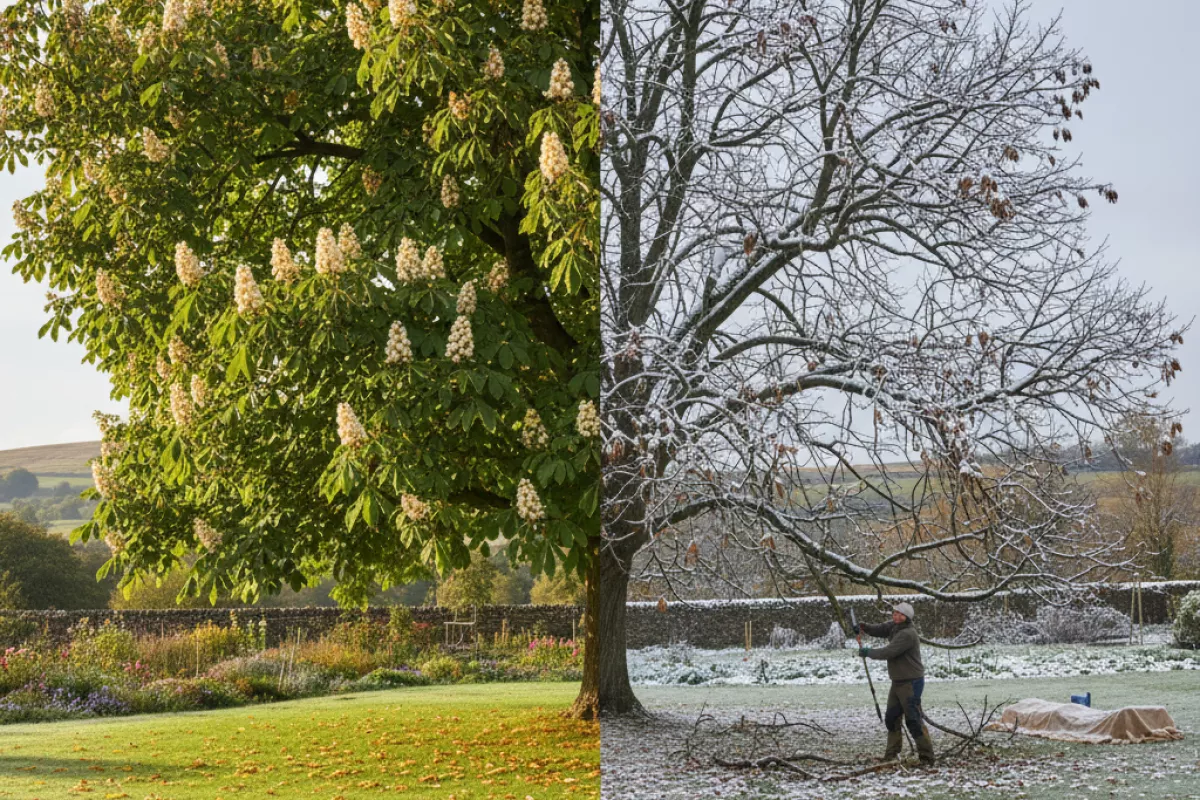
- Seasonal growth stages and leaf cycles
- Common diseases and pests affecting Aesculus
To grow Aesculus into a large, seasonally active tree, plan for its spring leaf-out, dense summer shade, and autumn leaf and fruit drop. Choose a spacious site with deep, well-drained soil, provide consistent moisture during dry spells, and mulch to protect roots. Watch for pests, cankers, and leaf scorch, and prune lightly to maintain structure and airflow.
Aesculus tree overview and key features
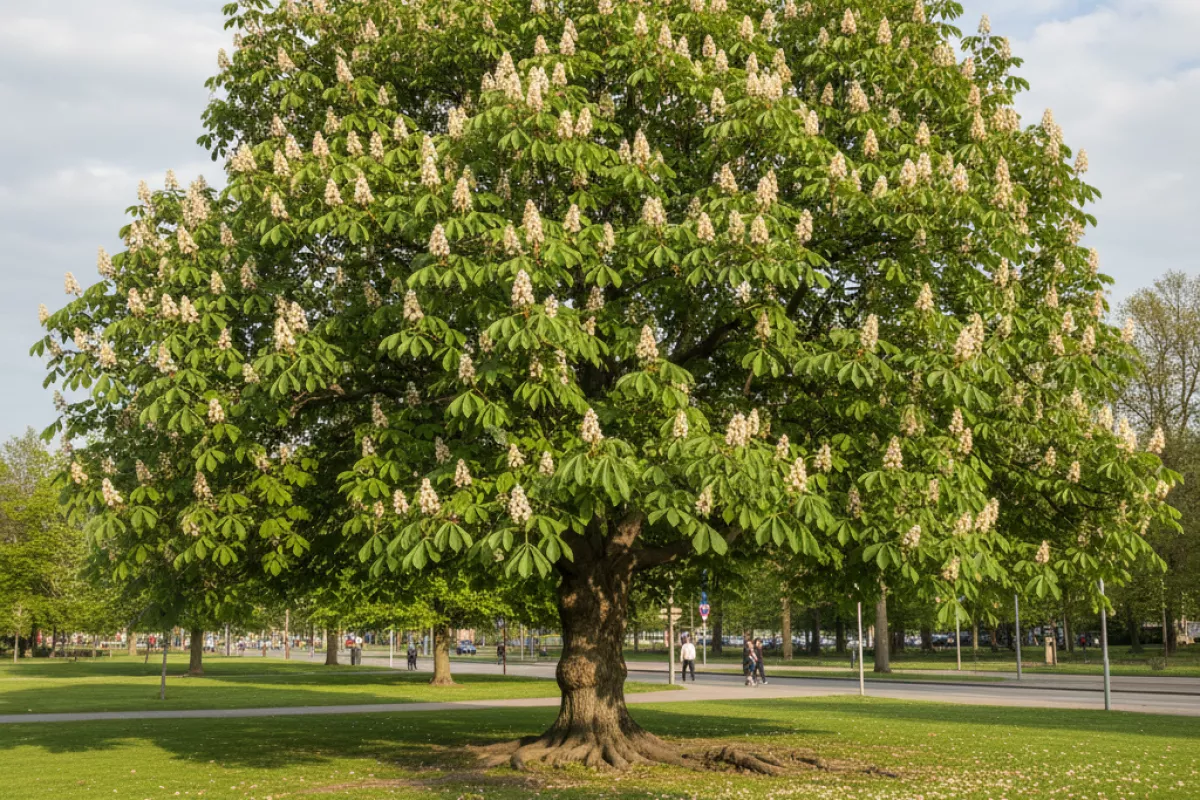
These are broad-canopied deciduous trees best known for bold spring flowers, large palmate leaves, and a growth cycle that shifts noticeably with the seasons. Most types form a sturdy trunk and an upright-to-rounded crown, making them stand out as shade trees, but they also demand some planning because of their size, surface roots, and the litter they drop.
In gardens and streetscapes, Aesculus is often recognized by its “hand-shaped” foliage (typically 5–7 leaflets), showy flower panicles that appear in mid-to-late spring, and round to pear-shaped capsules that may be spiny. The seeds (“conkers” in some species) are attractive but not edible for people and can be problematic around pets and small children if ingested.
- Typical size and form: Many species mature in the 12–25 m range (40–82 ft), with a spread that can match or exceed the height. Dwarf or shrub-like forms exist, but most landscape selections become large over time.
- Leaves: Opposite arrangement with large leaflets; the canopy can look lush in early summer, then thin earlier than other trees in late summer if stressed by heat or drought.
- Flowers: Upright clusters in white, pink, or red tones depending on species and cultivar; they’re a major pollinator resource during bloom.
- Fruit and litter: Capsules and large leaves drop seasonally; expect cleanup in autumn and occasional summer leaf drop in dry years. Fallen fruits can be slippery on hard surfaces.
- Bark and winter look: Gray-brown bark with noticeable buds; winter buds are often large and sticky, which is a useful ID clue when the tree is leafless.
- Roots and siting: Roots can be shallow and wide-spreading, so give it room away from paving, septic fields, and narrow planting strips.
| Feature | What to expect in the landscape |
|---|---|
| Seasonal growth pattern | Fast spring flush, steady early-summer canopy, then earlier leaf decline in hot/dry periods compared with many deciduous trees. |
| Light preference | Best flowering in full sun; tolerates light shade but may bloom less and hold moisture longer on leaves. |
| Soil and moisture | Prefers evenly moist, well-drained soil; struggles in compacted, waterlogged sites and can scorch in prolonged drought. |
| Common pain points | Leaf scorch, blotches, and premature leaf drop; fruit and leaf litter; size can overwhelm small yards if not planned for. |
| Best uses | Large shade tree for parks and big gardens; also used as a focal tree where spring flowers can be appreciated up close. |
One practical takeaway: plan for mature dimensions rather than the nursery size. If you plant one 3 m (10 ft) from a walkway, it may feel fine at first, but a canopy that eventually spreads 12 m (39 ft) can change light levels, understory planting options, and maintenance needs.
Native habitats and geographic distribution
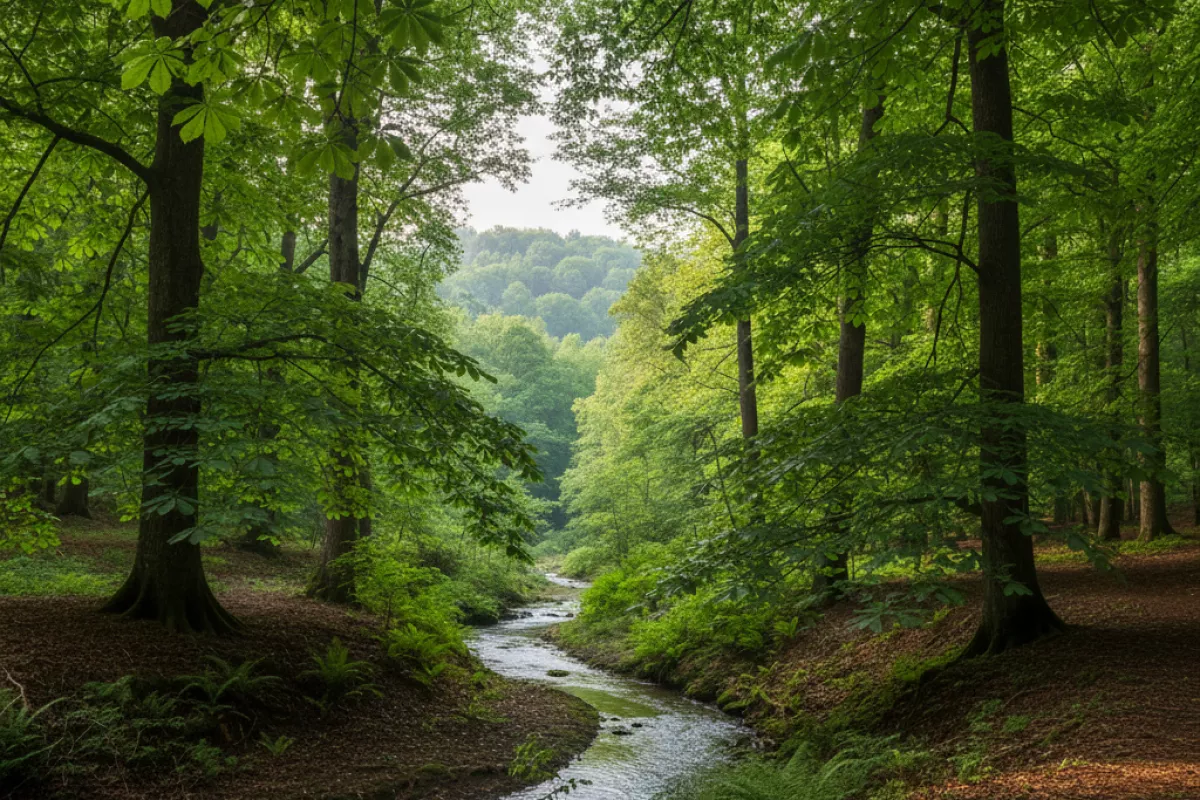
Aesculus species (horse chestnuts and buckeyes) come from temperate regions where seasons are distinct and soils stay reliably moist through spring and early summer. In the wild, they’re most often found as medium to large canopy trees along woodland edges, stream corridors, and rich valley bottoms—places that offer deep soil, steady water, and some shelter from harsh drying winds.
The genus has a split “home range”: several species are native to North America, while others originate in parts of Europe and Asia. This mixed origin is why you’ll see different Aesculus types tolerating different levels of summer heat, winter cold, and soil moisture, even though they share the same general look and seasonal growth rhythm.
- Eastern and central North America: Multiple buckeyes are native here, commonly associated with deciduous forests and riparian zones. They tend to handle humid summers well, but many still prefer soils that don’t bake dry for long stretches.
- Western North America: California buckeye is native to parts of the Pacific coast and foothills, often on slopes and open woodland. Compared with many relatives, it’s more comfortable with a pronounced dry season once established, though it still benefits from deeper soils and winter moisture.
- Southeastern Europe and western Asia: Horse chestnut’s origins lie in the Balkans region, where it naturally grows in mountain forests and moist ravines. In cultivation it adapts widely, but it performs best where summers aren’t relentlessly hot and dry.
- East Asia: Several Aesculus species are native to China and nearby regions, typically in mixed forests with dependable rainfall and fertile, well-structured soils.
Across these regions, the recurring habitat pattern is consistent: moist but well-drained ground, good organic matter, and access to groundwater or seasonal runoff. When planted outside their native range, Aesculus trees usually cope best in climates that mimic those conditions—cool to warm temperate zones with moderate summer stress and winter chilling—while struggling in exposed, arid sites or compacted urban soils that swing between waterlogging and drought.
| Region of origin | Typical wild setting | What that suggests for garden siting |
|---|---|---|
| Eastern/Central North America | Deciduous woods, streambanks, rich bottoms | Give consistent moisture and some wind protection; avoid long, hot dry spells without irrigation. |
| Western North America | Open woodland, foothills, seasonally dry slopes | Better tolerance of summer dryness once established; still prefers deep soil and winter-spring moisture. |
| Southeastern Europe/Western Asia | Moist mountain forests, ravines | Choose cooler exposures in hot climates; prioritize deep, evenly moist soil and mulch. |
| East Asia | Mixed forests with reliable rainfall | Works well where rainfall is steady; protect from droughty, compacted sites. |
Because many Aesculus have been planted far beyond their original ranges, local performance often depends less on latitude and more on microclimate: afternoon shade in hot areas, access to moisture in summer, and enough root space to support a large tree’s water demand. Matching the species to the site—rather than assuming all horse chestnuts and buckeyes behave the same—usually makes the difference between a tree that merely survives and one that grows steadily year after year.
Canopy structure and growth habit
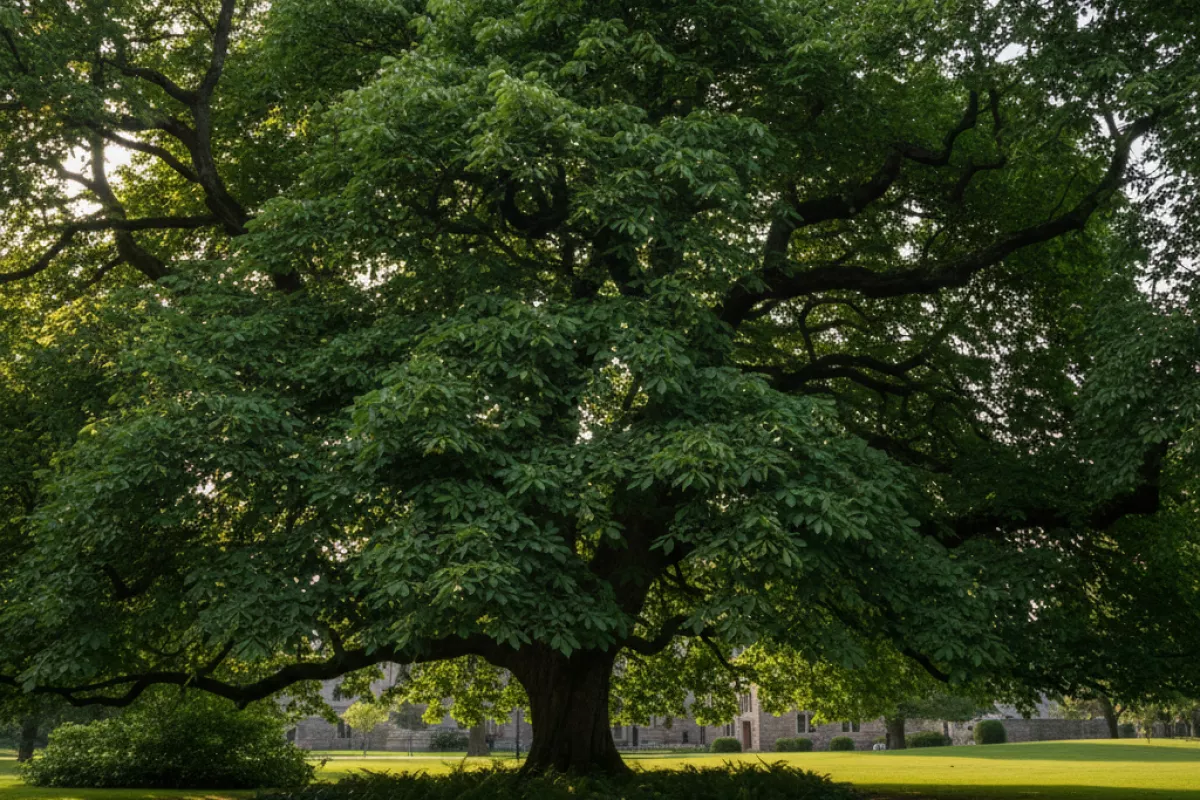
Aesculus trees tend to build a bold, architectural crown with thick, upright limbs that later broaden into a rounded or domed outline. The branching is usually sturdy and coarse-textured, and the large, palmately compound leaves create a dense summer shade that can feel noticeably cooler underneath.
Most species and common landscape hybrids grow with a strong central leader when young, then shift toward a more spreading framework as the trunk thickens. Expect the silhouette to look “layered” over time: older scaffold branches hold the canopy, while newer growth fills in the outer shell. In good conditions, annual extension growth can be obvious in spring, then slows as the tree sets buds for the next season.
- Overall form: Typically rounded to broadly oval; some selections stay more upright, but many mature into a wide crown that can rival the tree’s height.
- Branching character: Stout limbs with fairly wide angles; new shoots can be vigorous after pruning or following a wet spring.
- Shade and density: Large leaves create heavy shade in summer, then open up quickly after leaf drop, letting winter light through.
- Seasonal rhythm: A flush of spring growth is followed by consolidation; late-season growth is usually limited as buds form for the next year.
- Surface roots and flare: With age, the trunk flare becomes prominent and roots may rise near the surface, especially in compacted or shallow soils.
Space planning matters because the crown can expand faster than people expect. As a practical guide, allow at least 6–9 m (20–30 ft) of horizontal room from buildings or overhead structures for larger types, and more if you want the lower limbs to remain unpruned. If the tree is squeezed into a narrow strip, it often responds by lifting its canopy, which reduces shade where you want it and increases the need for corrective pruning.
For structure, early training is more effective than heavy cutting later. Removing or shortening competing leaders while branches are still under about 5 cm (2 in) in diameter helps maintain a stable framework and reduces the chance of large wounds. Because Aesculus can bleed sap when cut during active spring flow, many gardeners schedule major pruning in mid- to late summer or during dormancy, keeping cuts clean and limited to what the tree can seal over steadily.
Light exposure for strong Aesculus development
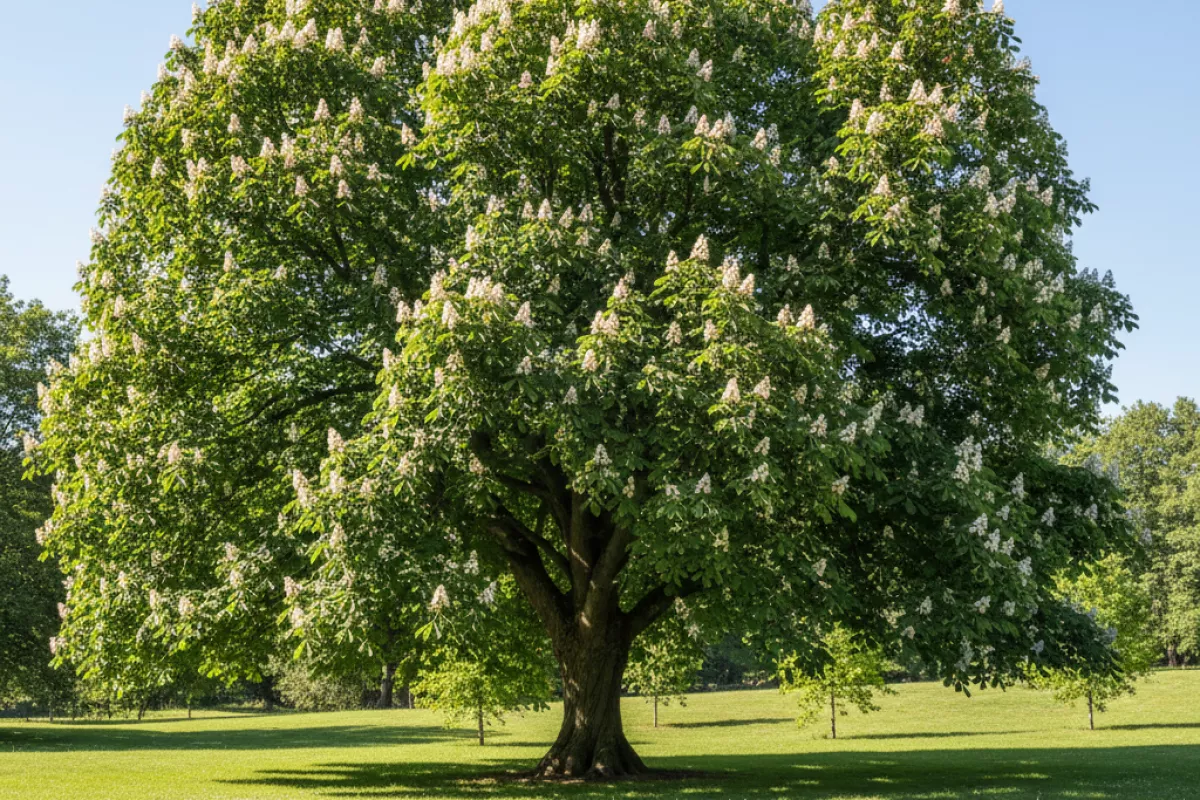
Give Aesculus (horse chestnut and buckeye) plenty of sun if you want a dense canopy, sturdy annual growth, and reliable flowering. Most types perform best in full sun, but young trees and some species appreciate a little afternoon shade in hotter climates to reduce leaf scorch and stress.
- Full sun (best overall): Aim for 6–8+ hours of direct light daily. This supports thicker shoots, better bud set, and a fuller crown.
- Partial shade (acceptable in warm regions): About 4–6 hours of sun can work, especially with morning sun and light shade after midday. Expect slightly looser branching and fewer flower spikes compared with brighter sites.
- Deep shade (avoid): Less than 4 hours of direct sun often leads to thin, reaching growth, sparse foliage, and reduced bloom. It can also slow drying after rain, which may increase leaf disease pressure.
Match the exposure to your local heat and reflected glare. Aesculus leaves are broad and can burn when heat combines with intense sun off pavement or south-facing walls. If your summers regularly exceed 32°C (90°F), a position with morning sun and filtered afternoon light can keep foliage looking better without sacrificing too much vigor.
| Site situation | What you’ll likely see | Practical adjustment |
|---|---|---|
| Open lawn, all-day sun | Strong growth, best flowering; soil may dry faster | Mulch 5–8 cm (2–3 in) and water deeply during dry spells |
| Morning sun, afternoon shade | Good growth with less scorch risk in hot areas | Choose this in climates with frequent 32°C (90°F)+ days |
| Near pavement or masonry (heat-reflecting) | Higher chance of browned leaf edges and early leaf drop | Increase root-zone moisture and provide light shade if possible |
| Under tall trees or north side of buildings | Leggy habit, fewer blooms, slower recovery from stress | Relocate to brighter exposure or thin overhead canopy |
During the first 2–3 years, prioritize steady establishment over pushing maximum sun. If a newly planted Aesculus wilts in late afternoon despite moist soil, it’s often a sign the crown is getting more heat than the roots can support yet. Temporary shade cloth or a nurse shrub on the west side can help until the root system expands.
When pruning nearby plants, remember that light patterns change seasonally. A spot that seems sunny in early spring can become shaded once surrounding trees leaf out. If you’re aiming for consistent bloom and sturdy branching, check the site again in midsummer before deciding the exposure is “good enough.”
Soil conditions and Aesculus watering requirements
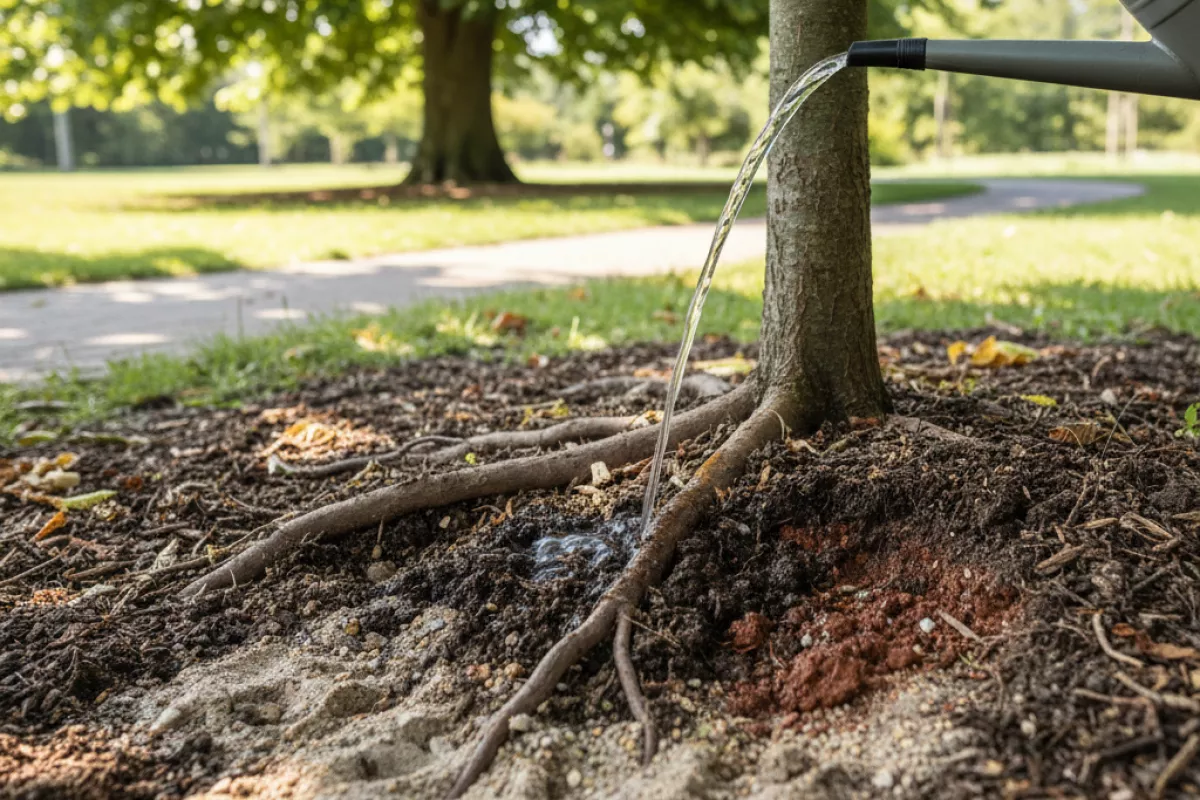
Healthy horse chestnut and buckeye growth starts with the ground: these trees prefer a deep, moisture-retentive soil that still drains well. They cope with a range of textures, but they struggle when roots sit in waterlogged clay for long periods or when the site dries hard in summer. If you’re planting near paving or compacted areas, loosening the planting zone matters as much as adding organic matter.
- Texture and drainage: Loam is ideal, but sandy soils can work if you build water-holding capacity with compost; heavy clay is workable only if excess water can move away. A simple check is a test hole about 30 cm (12 in) deep—if it stays full of water the next day, drainage is too slow for reliable establishment.
- Soil depth and compaction: Aesculus develops a broad root system that benefits from an uncompacted rooting area. Break up the soil to roughly 30–45 cm (12–18 in) deep where practical, and avoid repeatedly walking or driving over the root zone.
- pH and fertility: Slightly acidic to neutral conditions are generally easiest. Instead of heavy feeding, focus on steady organic inputs (leaf mold or compost) to support soil life and even moisture.
- Mulch for stability: A 5–8 cm (2–3 in) layer of mulch helps moderate temperature swings and reduces evaporation. Keep mulch a few centimeters (about 1–2 in) back from the trunk to prevent bark staying damp.
Watering needs change with age. Newly planted trees require consistent moisture while roots expand; established specimens are more resilient but can still suffer leaf scorch and early leaf drop during prolonged drought. The goal is deep, infrequent soaking that encourages roots to grow down rather than staying near the surface.
| Situation | What to do | What to watch for |
|---|---|---|
| First 0–12 weeks after planting | Water deeply 1–2 times per week if there’s no meaningful rain; aim to moisten the top 20–30 cm (8–12 in) of soil. | Wilting on warm afternoons, dry soil 5 cm (2 in) down, or leaves browning at the edges. |
| First 1–2 growing seasons | Soak during dry spells every 7–10 days; increase frequency on sandy sites and reduce on heavier soils that hold moisture. | Slow new growth, early leaf drop, or cracking soil around the root zone. |
| Established trees (after 2–3 years) | Water only during extended droughts; apply a slow, deep soak over the drip line rather than near the trunk. | Repeated summer scorch, smaller leaves, or sparse flowering/seed set in dry years. |
| Hot, windy weather or heatwaves | Prioritize moisture conservation: refresh mulch and water early morning; avoid frequent light sprinkling. | Leaf margins turning crisp quickly even when the surface looks damp. |
| Poor drainage sites | Water less often, and only when the soil is dry below the surface; consider improving drainage rather than “watering through” problems. | Yellowing leaves, soft growth, or a sour smell from the soil indicating low oxygen. |
When in doubt, check moisture where the fine roots are: under the mulch and a little way out from the trunk. If the soil at 10 cm (4 in) depth feels dry and crumbly, it’s time to irrigate; if it feels cool and holds together, wait. Avoid keeping the base constantly wet—Aesculus does best with steady moisture, not soggy conditions.
Temperature tolerance and Aesculus climate adaptability
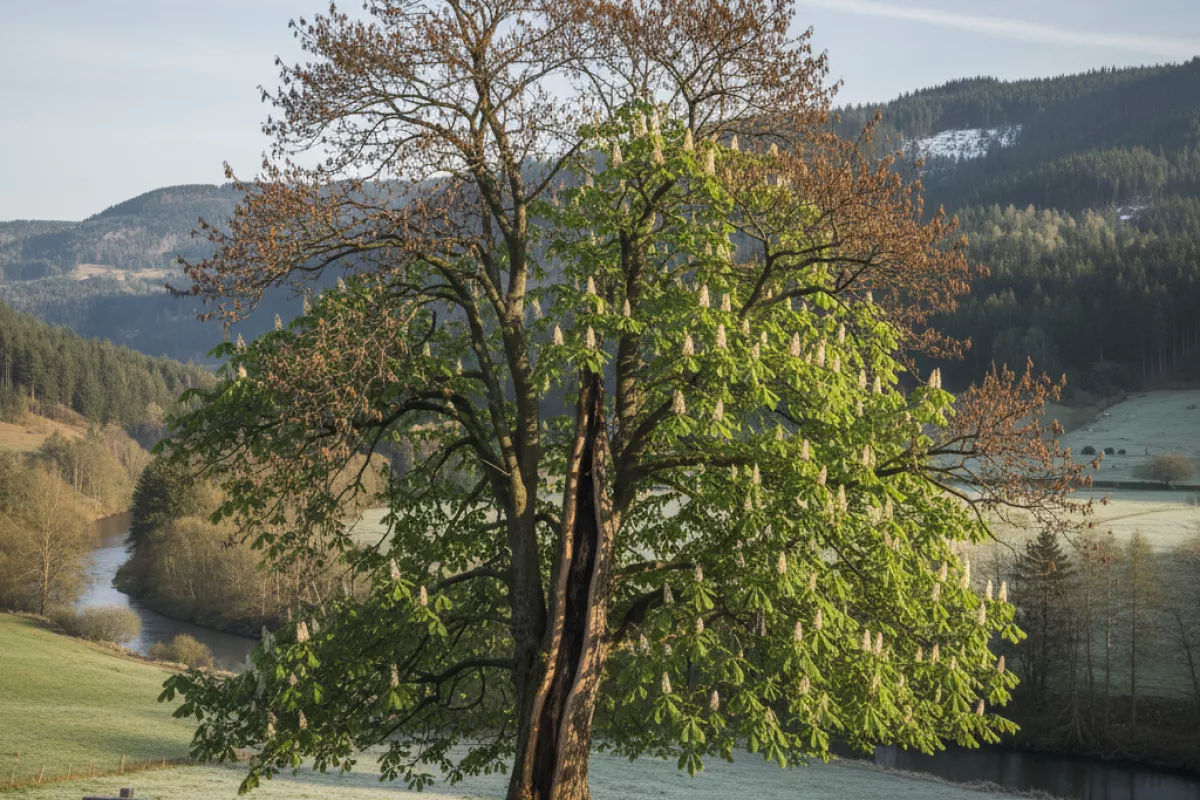
Aesculus trees cope best when their seasonal rhythm matches the local pattern of winter chill, spring warm-up, and summer moisture. Most types are broadly cold-hardy once established, but they can struggle in places with hot nights, prolonged drought, or late spring freezes that hit just as buds are opening.
| Climate factor | What you may see | Practical response |
|---|---|---|
| Winter cold snaps below about -23°C (-10°F) | Tip dieback on young shoots; bark splitting on exposed stems | Use a sheltered site out of wind; mulch 5–8 cm (2–3 in) over the root zone; avoid late-season nitrogen that delays dormancy |
| Late frost after budbreak around -2°C (28°F) to 0°C (32°F) | Blackened new leaves; reduced flowering that year | Plant where morning sun is filtered (slower thaw); don’t prune in late winter if it encourages early bud push; accept cosmetic damage and focus on steady watering |
| Hot summers above 32°C (90°F), especially with warm nights | Leaf scorch, early browning, and premature leaf drop by mid to late summer | Provide deep irrigation during heat waves; prioritize afternoon shade in inland climates; keep a wide mulch ring to cool roots |
| Drought or drying winds during active growth | Small leaves, marginal burn, weak new shoots, increased pest pressure | Water slowly to moisten soil 20–30 cm (8–12 in) deep; reduce turf competition; consider windbreak planting or a more protected exposure |
| Humid periods with poor airflow and warm temperatures around 18–27°C (65–81°F) | Blotchy leaves and early defoliation from foliar diseases | Space for airflow; water at the base rather than overhead; rake fallen leaves to reduce reinfection |
Microclimate often matters more than regional averages. A spot that stays a few degrees warmer in winter, avoids reflected heat from pavement, and holds even soil moisture can make the difference between a full canopy and chronic summer browning.
- Cold-region planting: Favor south or east exposures with wind protection, but avoid tight corners where ice and snow pile up against the trunk.
- Hot-region planting: Give the tree morning sun and afternoon shade; keep roots cool with mulch and consistent watering during stretches above 30°C (86°F).
- Coastal or humid sites: Prioritize airflow and avoid crowding; wet leaves overnight can amplify leaf-spot problems.
- Urban heat islands: Expect earlier budbreak and higher scorch risk; irrigate during the first 2–3 summers and keep a mulch-free gap of 10–15 cm (4–6 in) around the trunk to prevent rot.
In general, once an Aesculus is established, it handles short temperature swings better than prolonged stress. The goal is to reduce extremes: keep roots evenly moist, limit heat load on the canopy, and avoid practices that push tender growth right before cold weather returns.
Maintenance practices for large trees
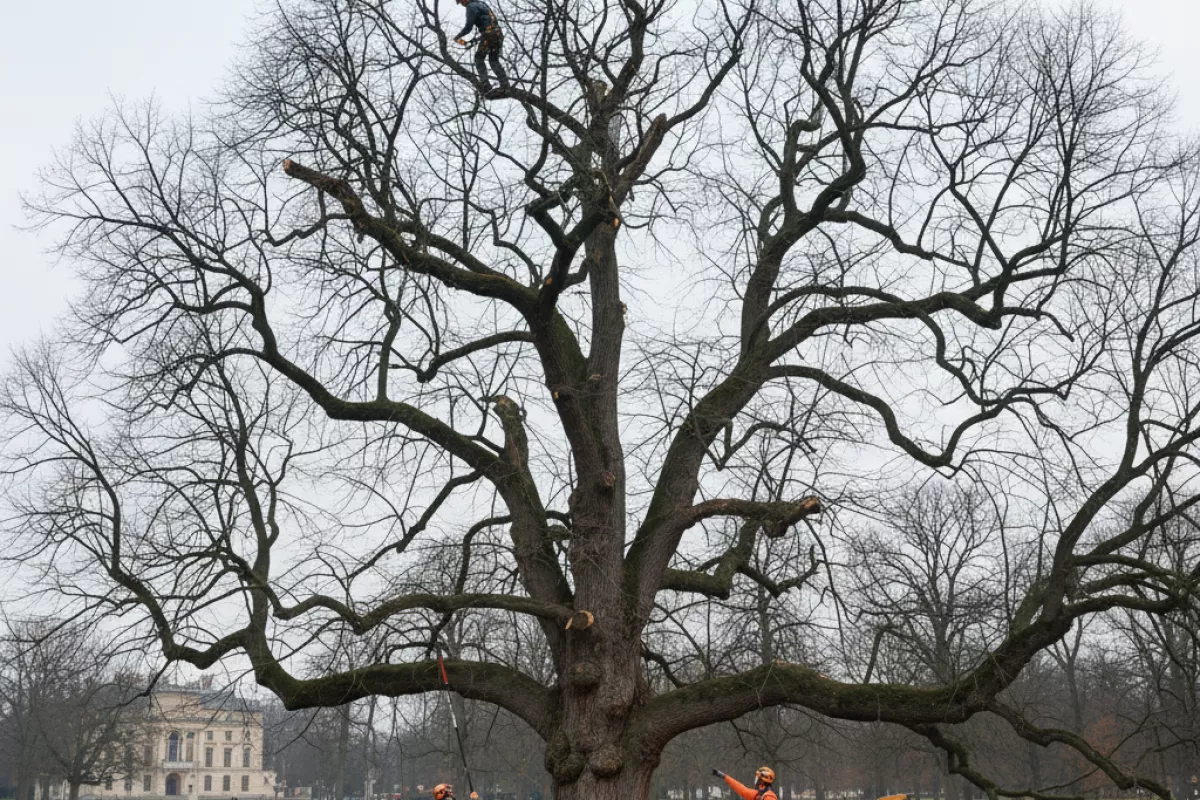
Keep Aesculus healthy by focusing on structure, root-zone care, and seasonal timing rather than frequent “touch-ups.” Because these trees put on strong spring growth and carry heavy foliage, small issues (crowded branches, compacted soil, drought stress) can become big problems over a few seasons.
- Pruning for structure (late winter to early spring): Remove dead, damaged, or rubbing limbs first, then thin only what’s needed to improve airflow and reduce end-weight. Avoid heavy crown reduction; it can trigger weak regrowth. For young trees, aim for a single dominant leader and well-spaced scaffold branches.
- Mulch correctly to protect roots: Apply a ring of mulch 5–8 cm (2–3 in) deep out to the dripline if possible, keeping it 10–15 cm (4–6 in) away from the trunk to prevent rot and rodent damage. Refresh annually rather than piling it higher.
- Watering that matches seasonal demand: During establishment or dry spells, water deeply so moisture reaches 20–30 cm (8–12 in) into the soil. A practical target is 25–40 mm (1–1.6 in) of water per week from rain plus irrigation, adjusted for heat, wind, and soil type.
- Soil and compaction management: Limit foot traffic and parking under the canopy. If the ground is hard and water runs off, consider gentle aeration or top-dressing with compost 1–2 cm (0.4–0.8 in) thick in spring or autumn to improve infiltration without disturbing major roots.
- Fertilizing only when there’s a reason: If growth is weak or leaves are pale, confirm with a soil test before adding nutrients. Over-fertilizing can lead to soft growth that’s more prone to pests and breakage.
- Monitoring for common issues: Watch for leaf blotch, powdery mildew, and chewing insects. Remove heavily infected fallen leaves in autumn to reduce carryover. Treating minor cosmetic leaf problems is often unnecessary if the tree is otherwise vigorous.
- Managing heavy fruit and litter: Conkers and leaf drop can be messy and slippery on paths. Rake promptly in high-traffic areas, and consider relocating seating or play spaces outside the main drop zone rather than trying to “fix” the tree.
- Protecting the trunk and root flare: Keep string trimmers and mowers away from the bark, and ensure the root flare stays visible. Soil or mulch piled against the trunk can cause long-term decline.
- Storm readiness and risk checks: After high winds, inspect for fresh cracks, hanging limbs, and sudden lean. Large limb work near buildings or power lines is a job for a qualified arborist, especially when cuts exceed 5–8 cm (2–3 in) in diameter.
| Season | What to do | Why it helps Aesculus |
|---|---|---|
| Late winter–early spring | Structural pruning; remove deadwood; check branch unions | Supports strong architecture before the spring flush and reduces breakage risk as foliage loads increase |
| Spring | Mulch refresh 5–8 cm (2–3 in); monitor new leaves for blotch/mildew | Stabilizes soil moisture and temperature; early detection prevents repeated seasonal stress |
| Summer | Deep watering during drought; avoid soil compaction under the canopy | Protects shallow feeder roots and reduces premature leaf scorch and early leaf drop |
| Autumn | Collect fallen leaves in problem areas; light compost top-dress 1–2 cm (0.4–0.8 in) | Reduces disease carryover and improves soil structure without major root disturbance |
| After storms (any time) | Inspect for cracks, hanging limbs, and sudden lean; call an arborist if needed | Large trees can fail unpredictably; quick assessment lowers safety risks |
If you’re unsure whether a cut is appropriate, use a simple rule: prioritize safety and long-term structure over appearance. Aesculus responds best to modest, well-timed interventions rather than frequent, aggressive pruning.
Propagation from seed or grafting
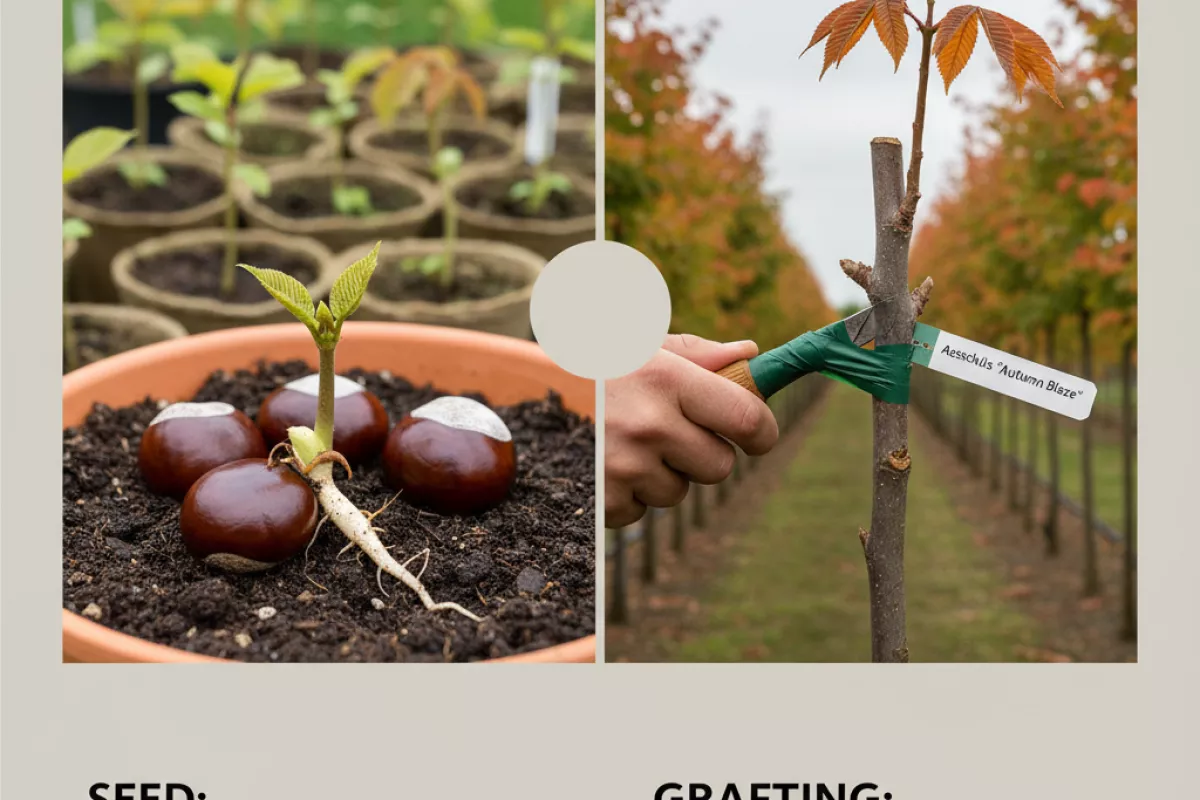
New Aesculus trees can be raised either by growing seedlings (good for learning and for wildlife plantings) or by joining a named cultivar onto a compatible rootstock (best when you want predictable flowers, habit, or disease resistance). Your choice mostly comes down to whether you value genetic variety or uniform results.
| Method | Best for | What to expect | Common pitfalls |
|---|---|---|---|
| Seed (conkers/buckeyes) | Species trees, restoration, experimenting | Variable offspring; may take longer to flower; strong taproot early on | Seeds drying out, rodents, damping-off, transplant shock if the root is disturbed |
| Grafting (cultivar onto rootstock) | Named cultivars, consistent bloom color/form, controlled size | True-to-type top growth; earlier, more predictable performance once established | Graft failure, suckers from rootstock, poor aftercare, incompatibility in some combinations |
| Layering (occasionally used) | Small-scale propagation when you have a flexible low branch | Clonal plant; slower but simple if conditions are right | Branch breakage, rot in wet soils, slow rooting |
| Cuttings (generally difficult) | Not usually recommended for home growers | Low success rates compared with other approaches | Failure to root, fungal issues, weak root systems |
Growing from seed (step-by-step)
- Collect fresh seed in autumn. Use conkers/buckeyes that are glossy and firm, not shriveled or moldy. Freshness matters because viability drops fast if they dry out.
- Keep them slightly moist and cool. Store in a breathable bag with barely damp medium (for example, moist sand) and refrigerate around 1–5°C (34–41°F). Don’t seal them in a wet, airtight container; that encourages rot.
- Provide cold stratification. Many Aesculus need roughly 8–16 weeks of chilling at 1–5°C (34–41°F) to trigger germination. If you sow outdoors in autumn, winter often does this naturally.
- Sow at the right depth. Plant about 2–5 cm (0.8–2 in) deep in a deep pot or a prepared bed so the developing taproot has room.
- Protect from animals. Rodents will dig up seed. Use mesh guards or start in containers with screening.
- Transplant while young, and handle roots gently. Move seedlings when they are small, ideally before the taproot becomes long and brittle. Keep the root ball intact and water in thoroughly.
Grafting for cultivars (what matters most)
- Timing: Many growers graft in late winter to early spring, when rootstock is still dormant but about to wake up. This helps callus formation without forcing soft growth too early.
- Technique: Whip-and-tongue, cleft, or side-veneer methods are commonly used, depending on stem diameter. The key is tight cambium contact and stable alignment.
- Aftercare: Keep the union protected from drying winds and strong sun; maintain even moisture (not waterlogged). Remove wrapping once the union is secure to avoid girdling.
- Manage suckers: Rub off shoots that emerge below the union so the rootstock doesn’t outcompete the scion.
- Staking and support: Young grafts can snap in wind; a stake for the first 1–2 years is often worthwhile, especially where gusts are common.
If you’re aiming for a specific ornamental trait, grafted plants save years of uncertainty. If you’re happy to let nature surprise you, seedlings are straightforward as long as you keep the seed from drying out and give the developing root enough depth from the start.
Seasonal growth stages and leaf cycles
Aesculus trees (horse chestnut and buckeyes) run on a predictable annual rhythm: a quick spring push, a broad summer canopy, then a steady wind-down into dormancy. Knowing what “normal” looks like helps you tell the difference between seasonal behavior and a care issue such as drought stress, compacted soil, or leaf diseases.
| Season | What the tree is doing | What you’ll see | Care focus |
|---|---|---|---|
| Late winter to early spring | Bud swell and root activity restart as soils warm | Sticky, swelling buds; twigs look “plumper” before leaves appear | Finish structural pruning while dormant; keep mulch 5–8 cm (2–3 in) deep and pulled back from the trunk |
| Mid to late spring | Fast shoot growth, leaf expansion, and flowering (on mature trees) | Large palmate leaves unfurl; upright flower panicles; heavy shade forms quickly | Water during dry spells so the root zone stays evenly moist; avoid high-nitrogen fertilizer that can push weak, lush growth |
| Early to mid-summer | Canopy maintenance and energy storage; fruit begins developing | Dense crown; developing husks (spiny on many species) | Deep, infrequent irrigation if rainfall is low; reduce lawn competition under the drip line |
| Late summer | Growth slows; leaves become more sensitive to heat, drought, and leaf blotch | Browning or scorched margins; blotchy patches; some premature leaf drop can occur | Prioritize moisture during hot periods; rake and remove heavily spotted leaves to reduce overwintering disease pressure |
| Autumn | Nutrient resorption and dormancy preparation; seed drop | Yellowing foliage; conkers/buckeyes fall; leaf drop accelerates after first frosts | Collect fallen fruits where they’re a slip hazard; keep leaf litter managed if disease has been an issue |
| Winter | Dormant phase; buds set for next year | Bare branches; prominent buds; no active growth | Protect trunks from mechanical damage; avoid piling de-icing salts near roots and keep soil from staying waterlogged |
Leaf timing varies by species and site, but the pattern is similar: leaves emerge early, reach full size quickly, and can look tired by late summer even when the tree is otherwise healthy. In hot, dry weather, Aesculus may shed some foliage early to conserve water; this is more common in compacted urban soils or shallow planting sites.
- Early browning isn’t always a crisis. Marginal scorch often points to heat plus inconsistent moisture, while irregular dark patches can suggest leaf blotch; both tend to show up from mid- to late summer.
- Watch the newest growth. If spring shoots are short and leaves are small from the start, think root stress (poor drainage, compaction) rather than a late-season issue.
- Fruit drop is part of the cycle. Mature trees may produce heavy crops; plan for cleanup and keep fallen seeds away from pets and small children.
- Don’t chase late-season leaf problems with fertilizer. Feeding in late summer or autumn can interfere with hardening off; focus on water management and sanitation instead.
If you’re unsure whether a mid-season leaf decline is normal, compare canopy density and bud formation: a tree that sets firm buds and maintains decent twig growth is usually just following its annual leaf cycle, even if the foliage looks rough by August.
Common diseases and pests affecting Aesculus
Horse chestnut and buckeye trees are generally tough, but their broad leaves and dense canopy make them prone to a few recurring problems. Most issues show up first as leaf blotching, early leaf drop, sticky residue, or dieback in the outer crown. Catching symptoms early matters because a stressed Aesculus is more likely to suffer repeat attacks the following season.
| Problem | Typical symptoms | When it shows up | Practical management |
|---|---|---|---|
| Leaf blotch (fungal) | Irregular brown patches that can merge; leaves may yellow and drop early | Late spring to summer, especially after wet weather | Rake and dispose of fallen leaves; improve airflow with light thinning; avoid wetting foliage; keep mulch 5–8 cm (2–3 in) deep but off the trunk |
| Bacterial bleeding canker | Dark, sticky ooze from trunk or major limbs; sunken or cracked bark; progressive dieback | Often noticed year-round; decline becomes clearer in summer | Reduce stress (deep watering during drought, avoid root damage); prune out dead wood in dry weather; disinfect tools; don’t “seal” wounds; consult an arborist if cankers are extensive |
| Powdery mildew | White, powdery coating on leaves; mild distortion; usually cosmetic | Mid to late summer in warm, humid spells | Increase sun and airflow; avoid excess nitrogen; remove heavily affected leaves if practical; keep irrigation at soil level |
| Root and crown rots (waterlogged soils) | Slow growth, sparse canopy, leaf scorch, dieback; sometimes mushrooms near the base | After prolonged wet periods or chronic poor drainage | Correct drainage; avoid planting in low, saturated spots; keep root flare exposed; water deeply but infrequently once established |
| Horse chestnut leaf miner | Tan “mines” between leaf layers; leaves brown and crisp early, often by midsummer | Late spring through summer in multiple generations | Collect and dispose of fallen leaves (pupae overwinter there); encourage natural predators; focus on tree vigor since damage is often seasonal rather than fatal |
| Aphids and scale insects | Sticky honeydew, sooty mold, curled leaves; ants may be present | Spring to early summer; can persist in warm seasons | Wash off with a strong stream of water; prune heavily infested shoots; support beneficial insects; manage ants; avoid over-fertilizing |
| Japanese beetles and other leaf chewers | Skeletonized leaves and ragged edges; visible beetles feeding in groups | Early to late summer | Hand-pick into soapy water in the morning; reduce plant stress with consistent watering; tolerate light feeding on large trees where practical |
| Spider mites (hot, dry stress) | Fine stippling, bronzing, and webbing; leaves look dull and dry | Hot, dry periods | Rinse foliage to knock mites down; water the root zone during drought; avoid broad-spectrum insecticides that remove predators |
If you’re unsure what you’re seeing, check the pattern: leaf miner damage tends to look like internal “windows” that start small and expand, while fungal blotch usually forms larger, irregular patches that follow wet spells. Sticky residue points more toward aphids or scale than a leaf disease.
- Sanitation pays off. Removing fallen leaves in autumn breaks the cycle for several Aesculus leaf problems, especially miners and blotches.
- Watering strategy matters. During drought, soak the root zone rather than frequent light watering; aim for moisture to reach 15–20 cm (6–8 in) deep.
- Prune with restraint. Take out dead or crossing branches to improve airflow, but avoid heavy pruning that triggers stress and weak regrowth.
- Watch for trunk symptoms. Oozing, cracking, or sunken bark on the main stem is more serious than leaf spotting and may warrant an arborist assessment.