Acer — Deciduous Tree Grown for Colorful Leaves and Form

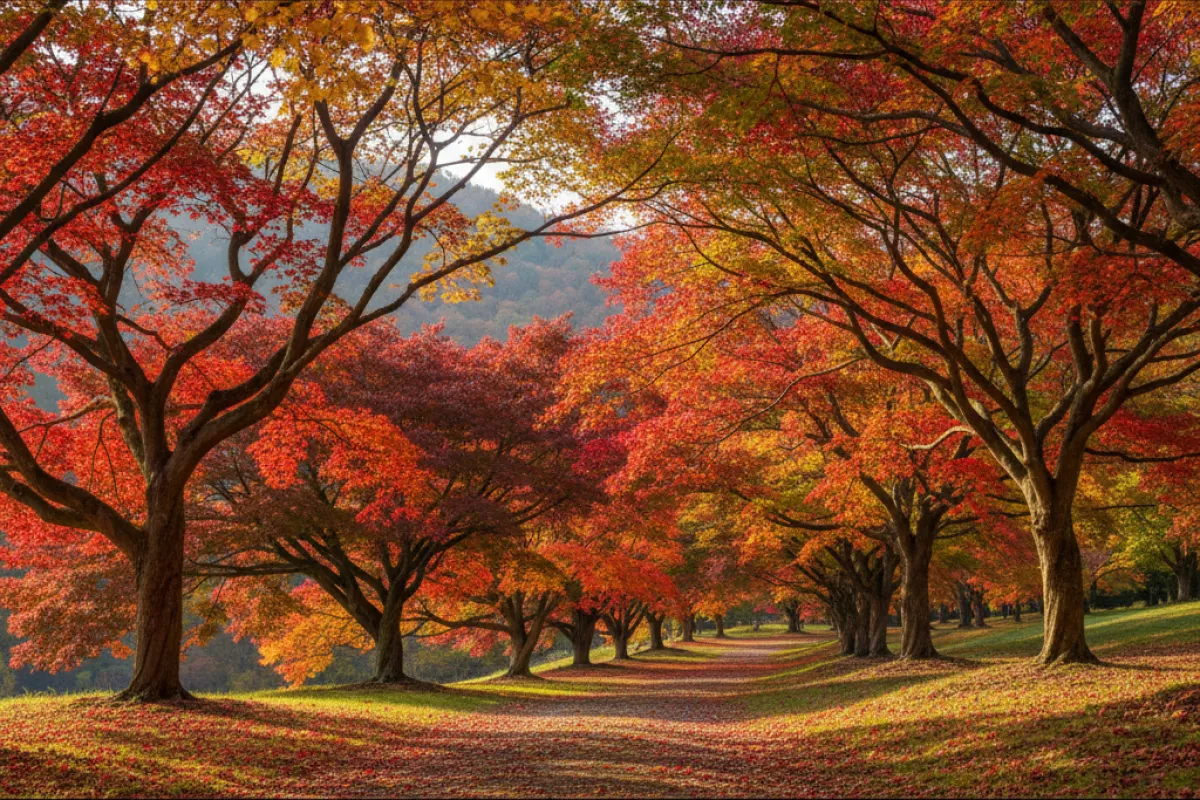 Covers Acer tree species diversity, native regions and ecology, and how leaf shape, canopy form, and growth habit differ. Explains light for vivid foliage, soil and watering balance, temperature and seasonal tolerance, care and pruning, propagation by seed or grafting, dormancy, plus common pests and diseases.
- Acer tree overview and species diversity
- Native regions and ecological distribution
- Leaf shape, canopy form, and growth habit
- Light exposure for vibrant Acer foliage color
- Soil composition and watering balance for Acer
- Temperature range and seasonal tolerance for Acer
- Care practices for healthy tree structure
- Propagation from seed or grafting
- Seasonal leaf changes and dormancy
- Common diseases and pests affecting Acer trees
Acer maples are deciduous trees valued for vivid seasonal foliage and graceful branching, adding reliable color and structure to many gardens. This guide explains how to choose the best variety for your space, the light and soil conditions they prefer, and straightforward care steps such as watering, mulching, and pruning to keep leaves bright and growth balanced year after year.
Acer tree overview and species diversity
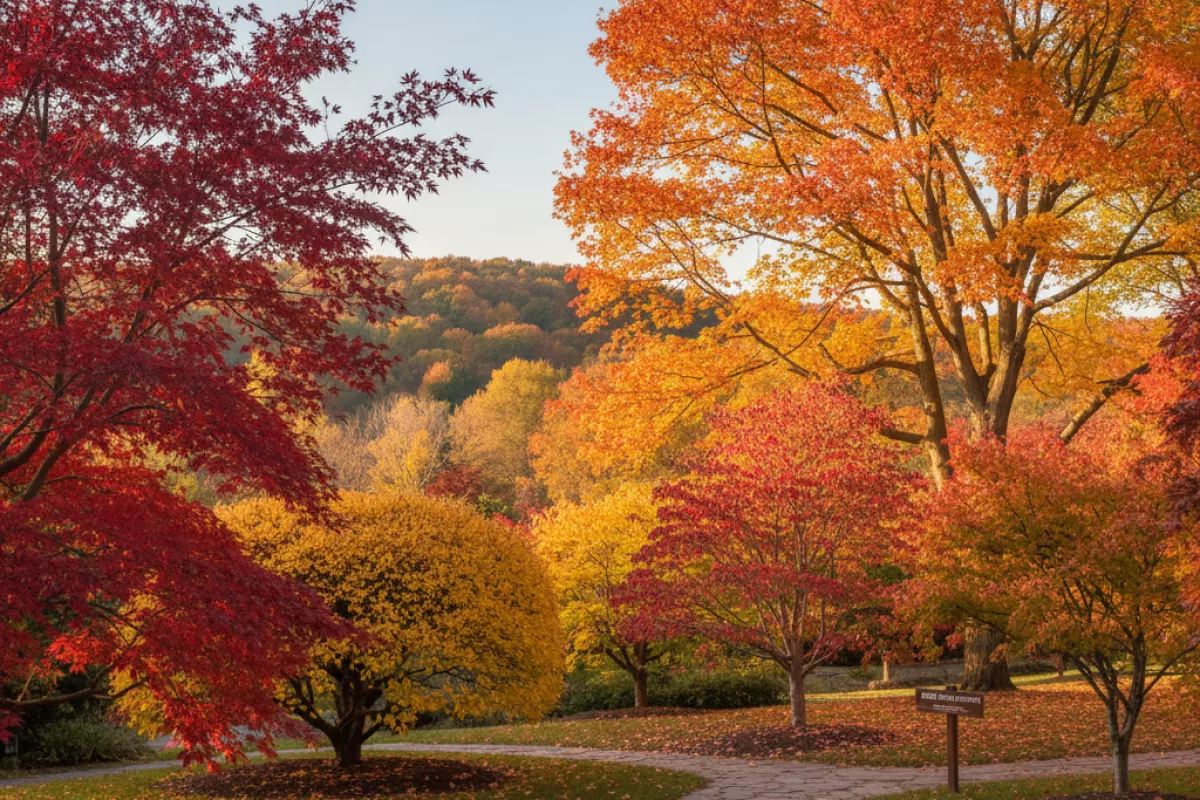
Maples (genus Acer) are deciduous trees and shrubs known for their palm-shaped leaves, tidy branching, and seasonal color shifts. Most species flower in spring and set paired winged seeds called samaras, which spin as they fall. Growth habit varies widely: some stay compact and multi-stemmed, while others mature into broad-canopied shade trees with strong structure.
What makes this group especially interesting is how many different “personalities” it contains. Depending on species and cultivar, you can get everything from finely cut foliage and layered form to bold, five-lobed leaves and a classic upright silhouette. Bark can be smooth, plated, or even striped, and fall color ranges from clear yellow to orange, scarlet, and deep maroon.
- Leaves: Usually opposite on the twig; lobing and texture range from delicate laceleaf types to large, broad blades.
- Flowers and seeds: Small flowers (often overlooked) followed by distinctive twin samaras; timing differs by species.
- Form: Rounded crowns, vase shapes, and weeping forms are all common in cultivation.
- Color interest: Many selections are grown for spring flush, summer foliage tone, and autumn display rather than flowers.
| Species (common name) | Typical mature size | Notable traits | Best-fit uses |
|---|---|---|---|
| Acer palmatum (Japanese maple) | 3–8 m (10–26 ft) | Fine texture; many leaf shapes and colors; graceful branching | Specimen planting, courtyards, containers, filtered shade gardens |
| Acer rubrum (red maple) | 12–18 m (40–60 ft) | Reliable fall color; adaptable; fast to moderate growth | Street and lawn shade, larger landscapes |
| Acer saccharum (sugar maple) | 18–25 m (60–82 ft) | Strong structure; long-lived; classic orange-gold autumn tones | Parks, big yards, legacy shade tree planting |
| Acer platanoides (Norway maple) | 15–20 m (49–66 ft) | Dense canopy; tough urban tolerance; can self-seed heavily in some regions | Urban shade where permitted; choose non-invasive cultivars when needed |
| Acer ginnala (Amur maple) | 3–6 m (10–20 ft) | Compact; fragrant spring bloom; vivid red fall color in good conditions | Screens, small yards, multi-stem accents |
| Acer griseum (paperbark maple) | 6–9 m (20–30 ft) | Peeling cinnamon bark; steady, refined form; good winter interest | Four-season focal point, near patios and paths |
When choosing an Acer tree, it helps to start with mature size and site conditions, then narrow down by the kind of leaf effect you want: bold shade canopy, airy layered form, or a smaller ornamental with standout bark. Cultivars can shift the look dramatically, so two maples of the same species may behave quite differently in color, density, and branching.
Native regions and ecological distribution
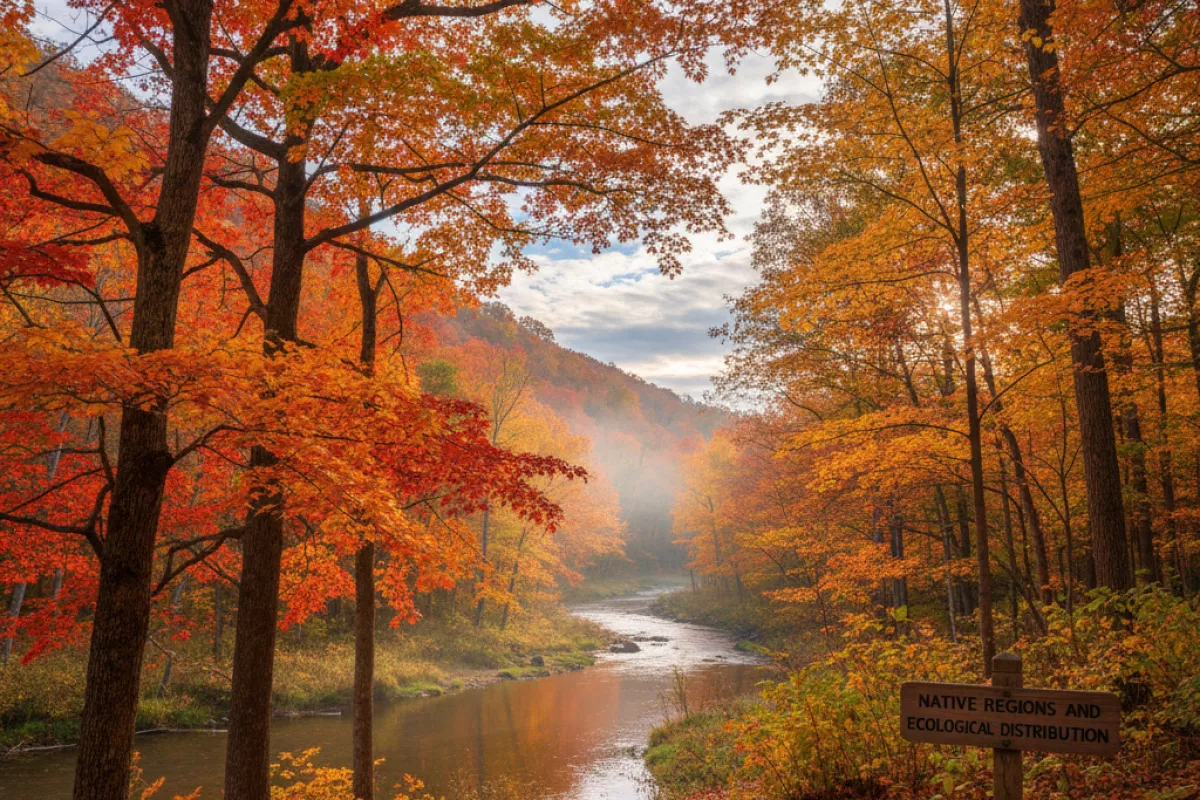
Acer (maples) spans a broad temperate belt, with its greatest diversity in Asia and strong representation across Europe, North Africa, and North America. Different species occupy everything from cool mountain forests to lowland riverbanks, which is why “maple” can mean a small understory tree in one region and a large canopy tree in another.
Most maples are native to the Northern Hemisphere, especially areas with distinct seasons. They tend to be most common in mixed deciduous forests, forest edges, and moist valleys, but many species also tolerate drier slopes or higher elevations where summers are mild and soils drain well.
- East Asia (China, Japan, Korea, Taiwan, Himalayas): The main center of species richness. Many ornamental maples—particularly Japanese maple types—originate from woodland margins and montane forests where humidity is moderate and summer heat is buffered by elevation.
- Europe and western Asia: Species such as field maple and sycamore maple are characteristic of hedgerows, broadleaf woodlands, and rocky hillsides, often coping with alkaline or variable soils better than many Asian counterparts.
- North America: Sugar maple and red maple dominate large portions of eastern forests, while bigleaf maple is a signature tree of the Pacific Northwest. Several species track waterways and floodplains, taking advantage of periodic moisture and nutrient-rich alluvium.
- North Africa (localized): A smaller set of maples occurs in cooler mountain habitats where moisture persists longer into the dry season.
Ecologically, Acer species often function as mid- to late-successional trees in stable forests, but some behave as fast colonizers after disturbance. Winged seeds (samaras) can travel on wind currents, allowing maples to reappear quickly along forest edges, in canopy gaps, or on recently disturbed soils.
Within their native ranges, distribution is strongly shaped by moisture and temperature patterns: riparian maples favor consistent soil water, while upland species lean toward well-aerated soils and cooler nights. Cold tolerance is common across the genus, but sensitivity to drought, salt, or prolonged heat varies widely by species and provenance.
| Habitat type | Typical Acer role and traits | Common limiting factors |
|---|---|---|
| Montane mixed forests | Often grows as understory to mid-canopy; benefits from cool summers and filtered light | Late spring frosts; shallow, rocky soils |
| Lowland deciduous forests | Can form major canopy components; strong fall color where nights cool in autumn | Heat stress in warmer interiors; soil compaction |
| Riparian corridors and floodplains | Rapid growth with steady moisture; frequent seedling recruitment on fresh deposits | Prolonged flooding; erosion and scouring |
| Forest edges and disturbed sites | Quick to establish from wind-dispersed samaras; flexible light tolerance in youth | Drought exposure; browsing pressure |
Because maples occupy so many niches, local ecology matters: the same species may be abundant on north-facing slopes yet scarce on nearby south-facing exposures. When choosing an Acer for a landscape, matching the plant to the moisture regime and summer heat typical of its native habitat is often more predictive than relying on a single “hardiness” label.
Leaf shape, canopy form, and growth habit
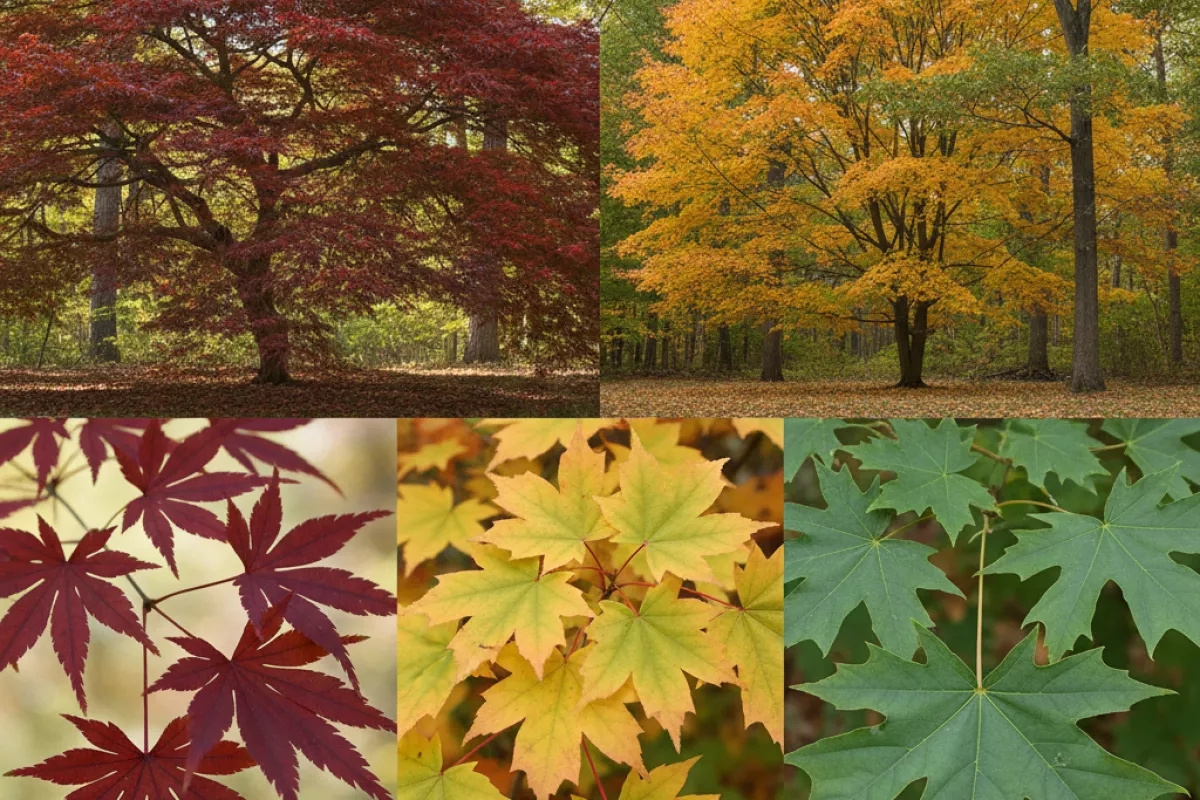
Maples are easy to recognize once you know what to look for: the leaves are usually lobed and held opposite each other on the twig, and the branching often creates a balanced silhouette. Still, the genus is diverse, so the overall outline can range from airy and layered to dense and rounded depending on the species and how it’s trained.
- Leaf outline and lobing: Many Acer species have palmately lobed leaves (often 3–9 lobes), with sinuses that can be shallow and rounded or deep and sharply cut. Japanese maples (Acer palmatum) are famous for finely dissected forms, while Norway maple (Acer platanoides) tends toward broader, thicker lobes.
- Leaf size and texture: Leaf blades can be small and delicate or broad and substantial. Some types feel papery; others are more leathery. These differences affect how the canopy reads from a distance and how the tree handles wind and summer heat.
- Opposite branching: Opposite buds and twigs (paired at the same node) are a classic maple trait. This pattern often produces a tidy framework, but crowded interior growth can develop if the tree isn’t selectively thinned.
- Canopy architecture: Forms range from upright-oval to rounded, vase-shaped, or strongly weeping. Layered, horizontal branching is common in ornamental selections, creating a “tiered” look that shows off fall color and winter structure.
- Growth rate and habit: Some maples put on length quickly when young, then slow as they mature; others stay compact and build density. Expect faster extension growth in open sun with consistent moisture, and a looser, more open crown in shade.
- Multi-stem vs. single trunk: Many ornamental maples are grown as multi-stem specimens for a sculptural profile. A single leader gives a more traditional street-tree shape and can improve clearance beneath the crown.
- Seasonal “see-through” quality: Fine-textured leaves and twiggy branching create a light, lacy canopy in summer and an intricate silhouette in winter. Broader leaves and denser branching read as a heavier mass, which can be useful for shade but may hide branch structure.
| Acer type (common example) | Typical leaf look | Typical canopy form | Notes on growth habit |
|---|---|---|---|
| Japanese maple (A. palmatum) | 5–7 lobes; often finely cut in laceleaf forms | Mounded to layered; some strongly weeping | Usually slow to moderate; responds well to selective thinning for “windows” through the crown |
| Red maple (A. rubrum) | 3–5 lobes; moderate texture | Oval to rounded | Moderate to fast when young; can develop a full crown that benefits from early structural pruning |
| Sugar maple (A. saccharum) | 5 lobes; relatively broad and firm | Rounded, substantial shade canopy | Moderate; tends to form a strong central framework with age |
| Norway maple (A. platanoides) | 5–7 lobes; thick, broad leaves | Dense, rounded crown | Moderate; can cast deep shade, and interior thinning may be needed to reduce congestion |
| Amur maple (A. ginnala) | 3 lobes; smaller leaves, fine texture | Large shrub to small tree; rounded | Often multi-stem; useful where a smaller mature size is needed |
When choosing a maple for a specific spot, match the mature outline to the space first, then pick leaf texture for the effect you want. A finely cut leaf reads lighter and more detailed up close, while broader blades create bolder blocks of color and deeper shade.
Light exposure for vibrant Acer foliage color
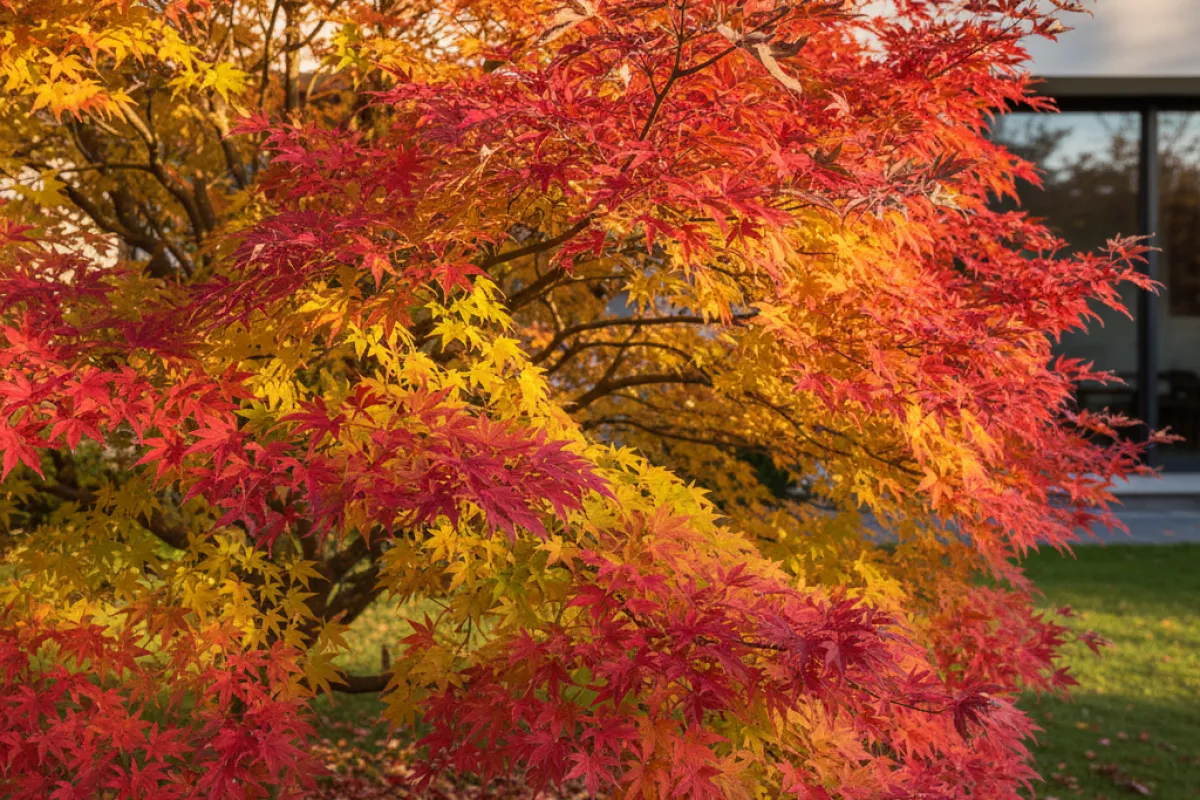
Leaf color in Acer is strongly shaped by how much sun the canopy receives and when it receives it. In general, more light increases intensity in reds and oranges, while too much harsh sun can wash colors out or scorch thin, finely cut leaves. The goal is to match the cultivar’s tolerance to your site so the tree colors well without stress.
| Site light pattern | What you’ll typically see | Best suited Acer types | Practical placement tips |
|---|---|---|---|
| Full sun (6–8+ hours/day) | Strong fall color on hardy types; higher risk of leaf scorch in hot, dry spells | Many Japanese maple cultivars in cool-summer climates; tougher maples (e.g., sugar, red maple selections) | Give afternoon shade in warm regions; keep roots evenly moist with 5–8 cm (2–3 in) mulch |
| Morning sun + afternoon shade | Good color with fewer burnt edges; foliage stays cleaner through summer | Most Acer palmatum cultivars, especially laceleaf and variegated forms | East-facing exposures work well; avoid reflected heat from walls or paving |
| Bright, dappled light (under high canopy) | Healthy leaves and good texture; fall tones can be softer than in sunnier spots | Shade-tolerant Japanese maples and woodland-style plantings | Keep competition low: water deeply during dry weeks and limit dense groundcovers at the base |
| Mostly shade (less than 3 hours/day) | Greener foliage, longer internodes, and less dramatic autumn display | Few cultivars look their best here; choose for form rather than color | Prune surrounding plants to open “sky windows” and increase ambient brightness |
Heat matters as much as brightness. In climates with hot afternoons, direct sun can push leaf temperatures high enough to cause crisping even when soil moisture seems adequate. If summer highs regularly reach 30°C (86°F) or more, prioritize morning sun and filtered afternoon light, especially for dissected or variegated leaves.
- Red and purple-leaved cultivars usually hold pigment better with more sun, but they still benefit from protection from late-day heat in warm regions.
- Variegated and finely cut foliage tends to scorch first; aim for gentle sun early in the day and light shade later.
- Windy, exposed sites act like “extra sun” by drying leaves; a sheltered position often improves color and reduces browning.
- Reflected light from south- or west-facing walls can intensify stress; allow at least 1–2 m (3–6 ft) clearance from heat-radiating surfaces when possible.
If you’re unsure, start with a spot that gets sun until late morning, then shade. You can always increase light by selectively thinning nearby branches, but it’s harder to fix chronic scorch once an Acer is planted in an overly hot, exposed location.
Soil composition and watering balance for Acer
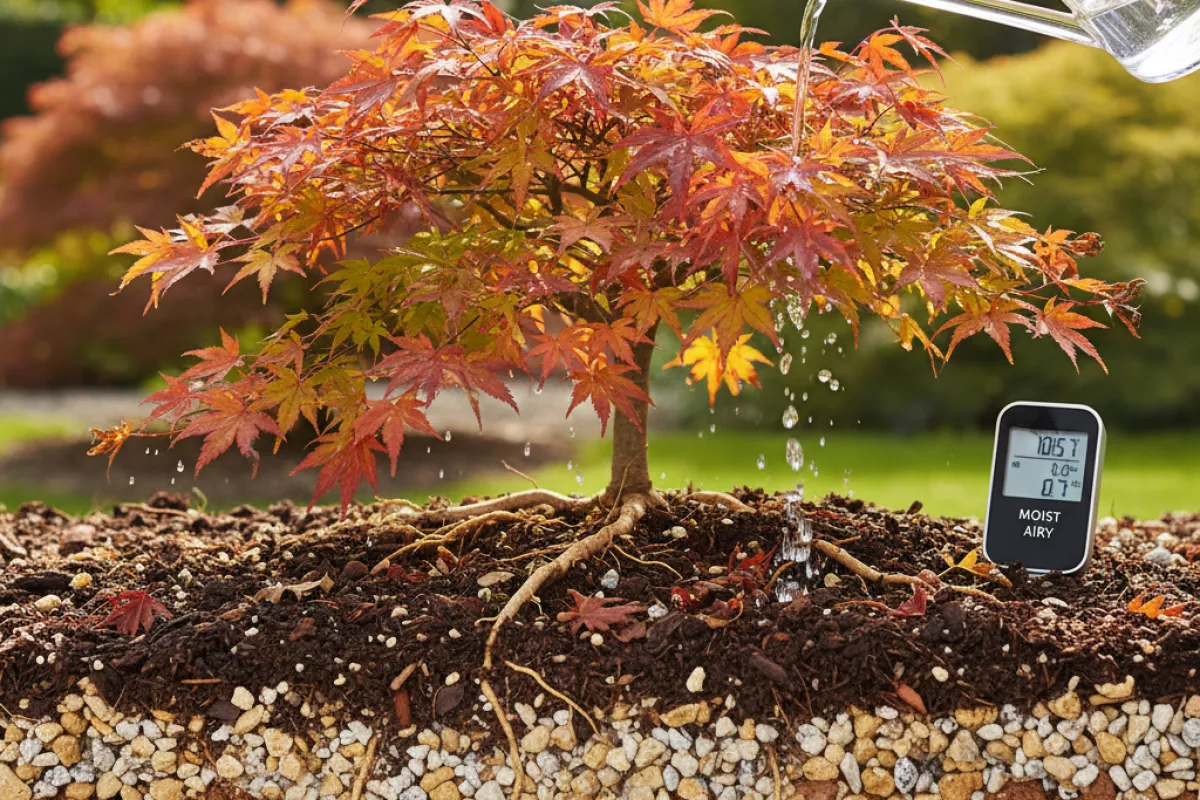
Maples do best when the root zone stays evenly moist yet airy. The goal is a soil that holds water long enough for fine feeder roots to drink, but drains fast enough to prevent suffocation and rot. If you’re seeing scorched leaf edges in summer or weak spring growth, the issue is often less about fertilizer and more about how water moves through the soil.
Start with structure, not a recipe. Most Acer species tolerate a range of textures, but they struggle in two extremes: compacted clay that stays wet and oxygen-poor, and very sandy soil that dries out hours after watering. A slightly acidic to neutral pH is usually comfortable, roughly 5.5–7.0.
- For heavy clay: Improve drainage and oxygen by working in coarse organic matter (composted bark, leaf mold) and keeping the surface mulched. Avoid burying the trunk flare; plant a little high so water doesn’t pool at the base.
- For sandy or fast-draining ground: Increase water-holding capacity with compost and a thicker mulch layer. You may need slower, deeper watering to keep moisture available between irrigations.
- For container-grown Acer: Use a free-draining mix that still retains moisture. Pots dry quickly, especially in wind and sun, so consistency matters more than volume.
Watering should follow the season and the tree’s establishment stage. New plantings need frequent, thorough soakings to settle roots into surrounding soil; mature trees prefer deeper, less frequent irrigation that encourages roots to explore rather than sit near the surface.
| Situation | What to aim for | Practical watering approach | Common mistake to avoid |
|---|---|---|---|
| Newly planted (first 8–12 weeks) | Consistently moist root ball while roots expand outward | Slow soak 2–3 times weekly in mild weather; increase during heat. Apply water over the entire planting area, not just at the trunk. | Light daily sprinkling that wets only the surface |
| Established in-ground tree | Deep moisture with dry-down between waterings | Water deeply every 7–14 days in dry periods, adjusting for rainfall and soil type. Moisture should reach 20–30 cm (8–12 in) deep. | Keeping soil constantly wet, especially in clay |
| Summer heat or drying winds | Prevent stress without waterlogging | Check soil before watering; if the top 5 cm (2 in) is dry and the soil below is only slightly damp, irrigate. Mulch 5–8 cm (2–3 in) helps stabilize moisture. | Watering at midday, which increases evaporation and can shock hot roots |
| Container-grown maple | Even moisture in a limited volume of mix | Water until it drains freely from the bottom; in warm spells this may be daily. In cooler weather, let the top 2–3 cm (1 in) dry slightly before re-watering. | Letting pots sit in standing water (saucer overflow) |
Use mulch as your “buffer.” A 5–8 cm (2–3 in) layer of leaf mold or bark reduces evaporation, moderates soil temperature, and protects shallow roots. Keep mulch a few centimeters away from the trunk, about 5 cm (2 in), to reduce rot and pest issues.
When in doubt, check moisture below the surface rather than judging by appearance. If soil at 10 cm (4 in) feels cool and slightly damp, wait; if it’s dry and crumbly, it’s time to water. This simple habit prevents the two most common Acer problems: drought stress that dulls leaf color and chronic wetness that invites root disease.
Temperature range and seasonal tolerance for Acer
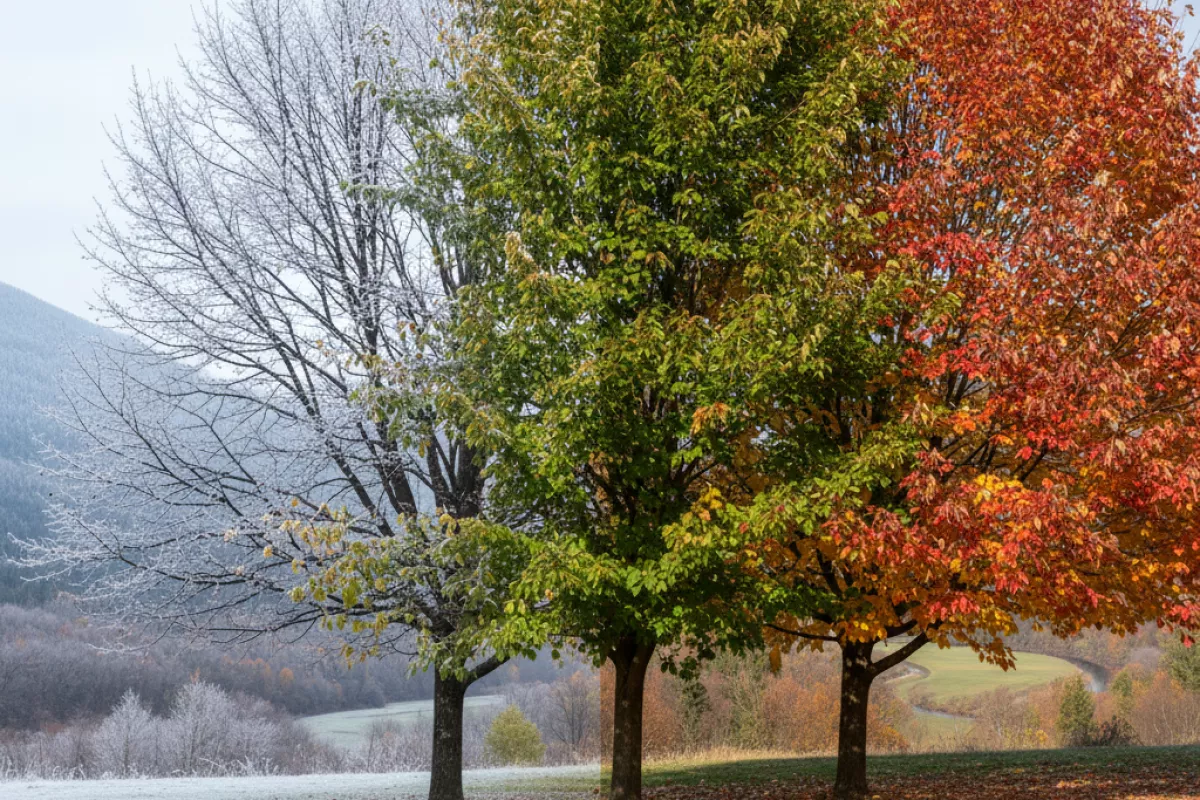
Most maples handle a wide swing of weather once established, but they perform best when the year includes a clear winter chill and a moderate growing season. As a group, Acer is primarily temperate: many types cope well with hard freezes, while prolonged heat and warm nights can be the bigger limiting factor for leaf quality and fall color.
| Season or condition | What Acer typically tolerates | What to watch for | Practical adjustments |
|---|---|---|---|
| Winter cold and dormancy | Many species are hardy well below -18°C (0°F) once dormant; roots in the ground are more protected than roots in containers. | Freeze–thaw cycles can crack bark and heave shallow roots; container-grown trees can suffer root kill below about -7°C (20°F). | Mulch 5–8 cm (2–3 in) over the root zone; wrap young trunks where sunscald is common; move pots to an unheated shelter or insulate the container. |
| Spring warm-ups and late frosts | New growth is tender; a brief dip to -2°C (28°F) can scorch emerging leaves on many ornamental cultivars. | Leaf burn, blackened tips, and slowed growth after a late freeze; early-budding selections are most exposed. | Delay pruning until buds swell; cover small trees on frost nights; avoid high-nitrogen feeding right before typical frost windows. |
| Summer heat and hot nights | Many maples are comfortable around 18–27°C (65–81°F); some tolerate short spikes above 32°C (90°F) if soil moisture is steady. | Leaf scorch, curled edges, and dull fall color after repeated 32–38°C (90–100°F) days, especially with dry winds or reflected heat. | Provide afternoon shade for laceleaf and thin-leaved types; water deeply during heat waves; keep mulch off the trunk to prevent rot. |
| Autumn cooling and color development | Cool nights around 4–10°C (39–50°F) with mild days often intensify reds and oranges. | Warm falls can mute color; early hard freezes can end the show abruptly and drop leaves fast. | Keep irrigation consistent into early fall; avoid late-season heavy fertilizing that pushes soft growth. |
| Wind, exposure, and microclimates | Sheltered sites reduce stress; urban heat islands can effectively raise nighttime temperatures by several degrees. | Desiccation in winter winds; sunscald on south- or west-facing bark; more scorch near pavement. | Plant on the east or north side of structures for gentler light; use windbreaks; choose tougher species for open, exposed yards. |
Species and cultivar choice matters more than people expect. Japanese maple (Acer palmatum) often prefers cooler summers and protection from harsh afternoon sun, while sugar maple (Acer saccharum) is notably cold-hardy but can struggle where summers stay hot and humid. If your site regularly sees extended periods above 35°C (95°F), prioritize heat-tolerant selections and plan for shade and irrigation rather than assuming any maple will adapt.
Care practices for healthy tree structure
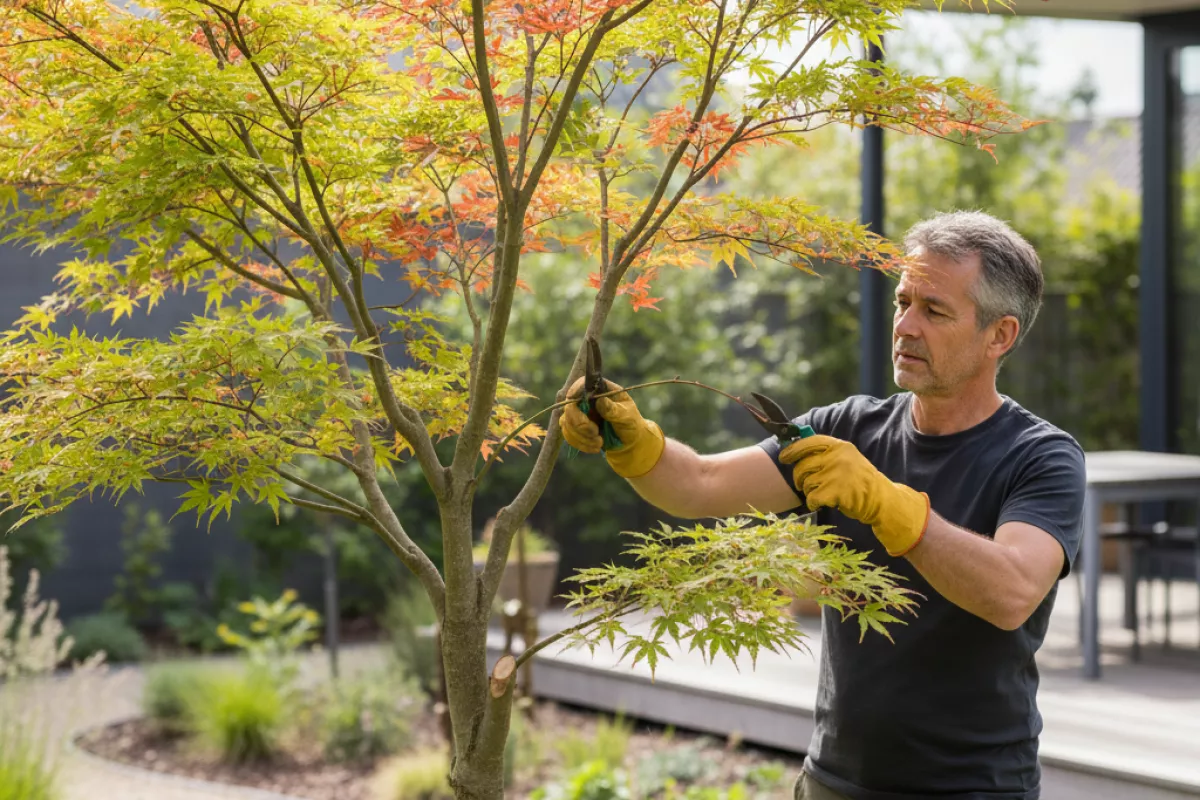
Build a strong framework early and you’ll prevent most long-term problems in Acer. The goal is a stable trunk, well-spaced scaffold branches, and a canopy that lets light and air move through without stripping the tree of its natural shape.
- Choose and protect a single leader (when appropriate). Many maples do best with one main trunk; remove or shorten competing leaders while they’re small to avoid weak, tight forks later. Some Japanese maples are grown multi-stem on purpose—if that’s your plan, keep 3–5 main stems and remove the rest gradually.
- Prune young trees lightly but consistently. Make small corrections every year or two instead of big cuts later. Aim for branches that are spaced vertically and radiate around the trunk, rather than stacked on one side.
- Time pruning to reduce sap bleeding and stress. For most Acer, do structural pruning in mid- to late summer after the main flush of growth, or in midwinter during dormancy. Avoid heavy cuts in late winter/early spring when sap flow is strongest.
- Remove defects early: crossing branches, rubbing stems, deadwood, and narrow V-shaped crotches. These are common failure points in wind, ice, or heavy snow.
- Keep branch unions strong. Favor branches with wide attachment angles. If a limb is too upright and competing with the leader, reduce it with a thinning cut or subordinate it by shortening back to a side branch.
- Use correct cut placement. Cut just outside the branch collar; don’t leave long stubs and don’t flush-cut into the trunk. Clean cuts seal faster and reduce decay entry.
- Limit canopy lifting. If you need clearance, raise the crown gradually over several seasons. As a rule of thumb, avoid removing more than about 20–25% of the live canopy in a single year.
- Manage mulch and irrigation to support wood strength. Keep mulch 5–8 cm (2–3 in) deep and pulled back 5–10 cm (2–4 in) from the trunk to prevent rot. Water deeply during dry spells so growth is steady rather than forced and brittle.
- Skip wound paints. Maples generally compartmentalize better when cuts are left open to dry; sealants can trap moisture and slow natural closure.
- Watch for girdling roots and staking issues. If the trunk doesn’t move at all, staking is too tight and can weaken taper. Remove stakes after the first growing season in most sites, and check that ties aren’t biting into bark.
| Common structural issue | Why it matters | Better approach |
|---|---|---|
| Co-dominant leaders (two main trunks) | Creates a tight union that can split as the tree gains weight | Select one leader early; subordinate or remove the other over 1–3 seasons |
| Branch whorls or “stacked” limbs | Weakens the trunk at one level and concentrates wind load | Keep the best-placed branch and thin out extras for vertical spacing |
| Crossing/rubbing branches | Wounds invite decay and can deform the canopy | Remove the poorer branch; keep the one with better angle and placement |
| Excessive thinning or lion-tailing | Shifts weight to branch tips, increasing breakage and sunscald risk | Maintain interior foliage; use selective thinning cuts near the branch origin |
If you’re unsure how much to remove, err on the conservative side and spread changes over multiple seasons. A maple that keeps a balanced canopy and sound branch attachments will show off its form and fall color with fewer storm failures and less dieback.
Propagation from seed or grafting
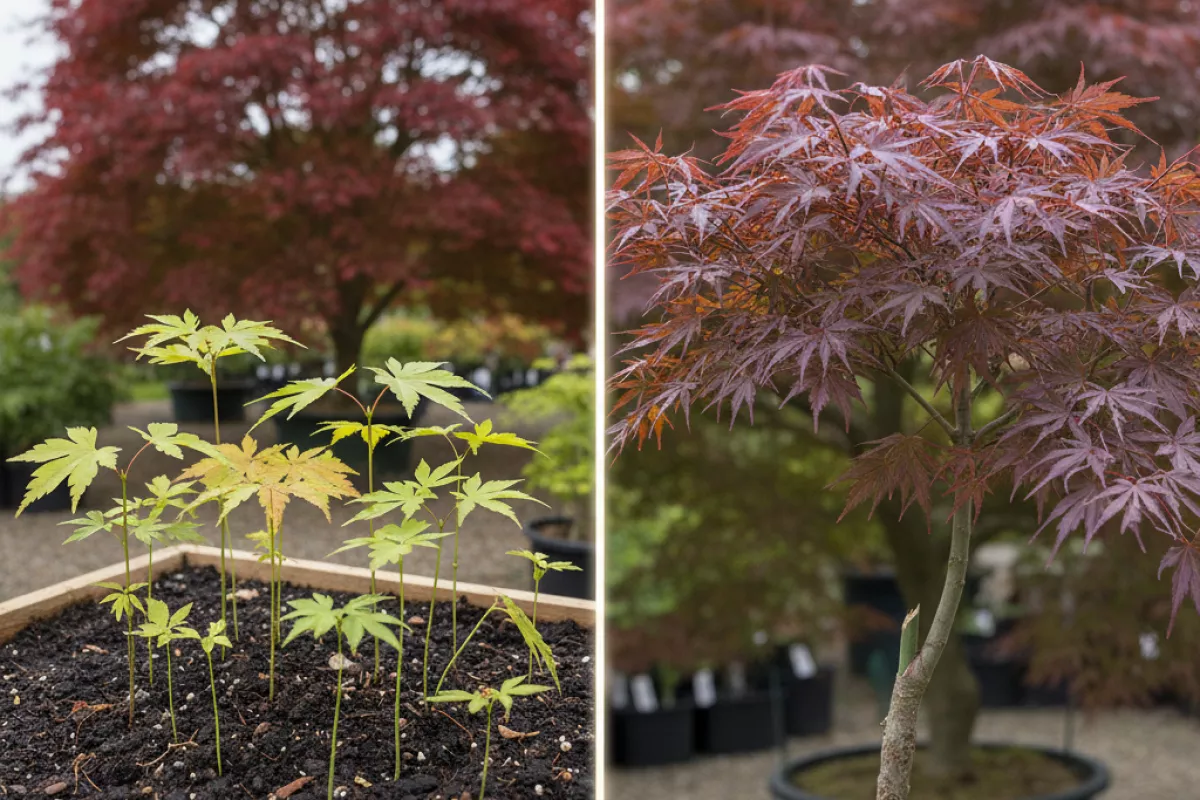
Start by deciding what you want from the new plant: seedlings are great for experimentation and biodiversity, while a grafted maple is the reliable way to keep a named cultivar’s leaf color, laceleaf shape, or compact habit. Many ornamental Acer selections don’t come true from seed, so the method you choose affects how predictable the result will be.
Growing Acer from seed
- Expect variation. Seed-grown maples often differ from the parent in fall color, leaf shape, and vigor. This is normal, especially with Japanese maple cultivars.
- Collect and clean at the right time. Harvest samaras when they turn tan and begin to dry. Remove wings if they get in the way, and let the seed air-dry briefly so it isn’t surface-wet.
- Use cold stratification for most species. Many maples need a moist chill to break dormancy. A common approach is 8–16 weeks at about 1–5°C (34–41°F) in barely moist medium (for example, damp vermiculite). Check weekly for mold and for early sprouting.
- Sow shallow and keep evenly moist. Plant about 6 mm (1/4 in) deep in a free-draining mix. Keep the medium moist but not soggy; waterlogged conditions invite damping-off.
- Provide bright light and cool temperatures. After germination, strong light reduces stretching. Protect seedlings from hot afternoon sun and drying wind until stems firm up.
- Potting-on and hardening off. Move seedlings to individual pots once they have several true leaves and roots hold the mix together. Harden off over 7–14 days before outdoor planting.
Grafting for cultivars and special forms
Grafting is used when you want the new tree to match a particular cultivar exactly, or when the cultivar roots poorly from cuttings. The scion (top) determines leaf traits and habit; the rootstock influences adaptability and vigor.
- Timing. Many maples are grafted in late winter to early spring as buds begin to swell, when temperatures are cool and sap flow is starting. Some types can also be done in mid-summer with active growth.
- Rootstock choice. Use compatible, healthy stock of similar stem diameter. Matching vigor helps the union heal evenly and reduces long-term weakness.
- Common techniques. Whip-and-tongue and side-veneer are widely used for Acer because they align cambium well on small stems and heal cleanly when wrapped properly.
- Aftercare. Keep the union stable and slightly humid, out of direct sun and drying drafts. Once growth is strong, gradually increase light and remove wraps before they girdle.
- Remove shoots from below the union. Any growth from the rootstock can outcompete the scion. Rub off or prune these promptly.
| Method | Best when you want… | Pros | Trade-offs |
|---|---|---|---|
| Seed | New variations, species trees, or a low-cost start | Many plants from one parent; strong taproot in some species; interesting diversity | Unpredictable traits; may take longer to show mature form and color |
| Grafting | A true-to-type cultivar with known leaf color and habit | Reliable results; often faster to reach ornamental quality | Requires skill and compatible stock; unions can fail if stressed |
| Cuttings (limited for many Acer) | A clone when the cultivar roots well | No graft union; can be simpler than grafting for suitable types | Many maples root poorly; success depends on timing and humidity control |
| Layering (air or ground) | A clone from a plant you can access and bend or wrap | High success on some forms; produces a larger start than seedlings | Slow; ties up the parent plant until roots form |
If you’re unsure, try both: sow a small batch of seed for curiosity, and use grafting (or buy a grafted plant) for any cultivar where you care about keeping the exact leaf shape and seasonal color you fell in love with.
Seasonal leaf changes and dormancy
Maples shift gears with the calendar: spring growth is followed by a summer “maintenance mode,” then pigments build as days shorten, and finally the tree shuts down for winter. Those color changes aren’t just decoration; they’re part of how Acer reclaims nutrients from leaves before dropping them.
As nights cool and daylight decreases, chlorophyll breaks down and other pigments become more visible. Carotenoids tend to show as yellow to orange, while anthocyanins can add red to purple tones. Weather matters: bright days with cool (not freezing) nights often intensify reds, while early hard frosts can shorten the display.
- Spring: Buds swell and open; new leaves are tender and can scorch if late frosts hit after a warm spell.
- Summer: Leaves thicken and harden; heat and dry wind can cause edge browning, especially on laceleaf Japanese maples.
- Autumn: Sugars and pigments concentrate; leaf drop begins once the tree has pulled back mobile nutrients into stems and roots.
- Winter: The canopy is bare; energy is stored in wood and roots until temperatures rise again.
| Seasonal cue | What the tree does | What you may notice |
|---|---|---|
| Shorter days | Forms an abscission layer at the leaf base and starts nutrient resorption | Color shift begins; leaves detach more easily |
| Cool nights around 5–15°C (41–59°F) | Slows chlorophyll production; anthocyanins can accumulate in some cultivars | Brighter reds and purples in many ornamental types |
| Dry soil or drought stress | Closes stomata to conserve water; may shed leaves early to reduce demand | Premature leaf drop or crisped margins |
| Hard frost below about -2°C (28°F) | Stops leaf metabolism abruptly | Colors can dull quickly; leaves may brown and fall sooner |
During winter rest, the tree isn’t “inactive” so much as protected. Buds are sealed, sap movement slows, and tissues become more cold-tolerant. Avoid heavy pruning right before deep cold; cuts can dry out, and late-season growth stimulated by pruning is more likely to be damaged.
To support a clean leaf cycle, keep moisture steady through late summer and early fall, then back off once the ground cools and leaf drop starts. A 5–8 cm (2–3 in) mulch layer helps buffer soil temperature and moisture, but keep it a few centimeters (a couple inches) away from the trunk to prevent bark issues.
Common diseases and pests affecting Acer trees
Most problems on maples show up first as leaf changes: spotting, curling, early drop, or a thin canopy. Before reaching for a spray, check the basics—soil drainage, root damage from digging, drought stress, and trunk wounds—because stressed trees are far more likely to get hit by fungi and insects. A quick look at where symptoms start (new growth vs. older leaves, upper canopy vs. lower, one side vs. whole tree) usually narrows the cause.
| Issue | Typical signs | What favors it | Practical management |
|---|---|---|---|
| Verticillium wilt | Sudden wilting on one branch or one side, scorched-looking leaves, dieback; olive-brown streaking under bark on affected limbs | Soil-borne fungus entering through roots; stress from drought, compaction, or root injury | Prune dead wood back to healthy tissue and disinfect tools between cuts; keep the root zone evenly moist and mulched 5–8 cm (2–3 in) without piling against the trunk; avoid heavy nitrogen; severely affected trees may decline over time |
| Tar spot | Round black “tar” patches on leaves, usually late season; mostly cosmetic | Humid weather and infected leaf litter overwintering on the ground | Rake and remove fallen leaves; improve airflow with light thinning; fungicides are rarely needed for established trees |
| Anthracnose | Irregular brown blotches along veins, leaf distortion, early drop; can affect twigs in cool, wet springs | Extended leaf wetness and crowded canopies | Clean up leaf debris; prune to improve air movement; water at the soil line rather than overhead; protect high-value young trees if repeated severe defoliation occurs |
| Powdery mildew | White, dusty coating on leaves; may cause curling or dull color | Warm days, cool nights, and shade with poor airflow | Reduce shade and crowding; avoid excess nitrogen; wash off with a strong water spray early; treat only if recurring and severe |
| Canker diseases (various fungi) | Sunken or cracked bark, oozing, branch dieback; dead areas may girdle twigs | Entry through wounds, sunscald, or pruning cuts; stress increases susceptibility | Prune out infected branches during dry weather; make clean cuts just outside the branch collar; prevent trunk injury and protect from winter sunscald where common |
| Aphids | Sticky honeydew, sooty mold, curled leaves; ants may “farm” them | Soft, nitrogen-rich growth; warm weather | Blast colonies off with water; encourage beneficial insects; manage ants if they’re protecting aphids; avoid over-fertilizing |
| Scale insects | Bumps on twigs/branches, yellowing, honeydew (soft scales), branch dieback when heavy | Stressed trees and mild winters; crawlers spread in late spring/summer | Target the crawler stage with horticultural oil; prune heavily infested twigs; keep trees vigorous with proper watering and mulch |
| Spider mites | Fine stippling, bronzing, webbing in severe cases; worse in hot, dry periods | Drought stress and dusty conditions | Rinse foliage periodically; water deeply during dry spells; avoid broad-spectrum insecticides that kill predators |
| Japanese beetles (where present) | Skeletonized leaves, feeding in groups | Mid-to-late summer adult flights | Hand-pick into soapy water early in the day; protect small trees with temporary netting; focus on reducing stress so defoliation is less damaging |
| Borers (various species) | Exit holes, sawdust-like frass, thinning canopy, limb dieback | Sunscald, drought, and recent transplant shock | Prevention matters most: consistent watering, trunk protection, and avoiding wounds; remove badly infested limbs; consult a local arborist if the trunk is attacked |
- When to worry: Repeated defoliation, dieback that progresses year to year, or symptoms confined to one side of the crown can signal a more serious root or vascular issue.
- Watering that helps, not hurts: Deep, slow watering is better than frequent light sprinkling. Keep mulch 5–8 cm (2–3 in) deep, but leave a gap around the trunk to prevent rot.
- Pruning hygiene: Prune out dead or diseased wood back to healthy tissue, and disinfect tools between cuts, especially if wilt or canker is suspected.
- Check the site: Poor drainage, compacted soil, and reflected heat from pavement often set up Acer trees for leaf scorch and secondary pests.