Air-Purifying Plants for Low-Light Areas

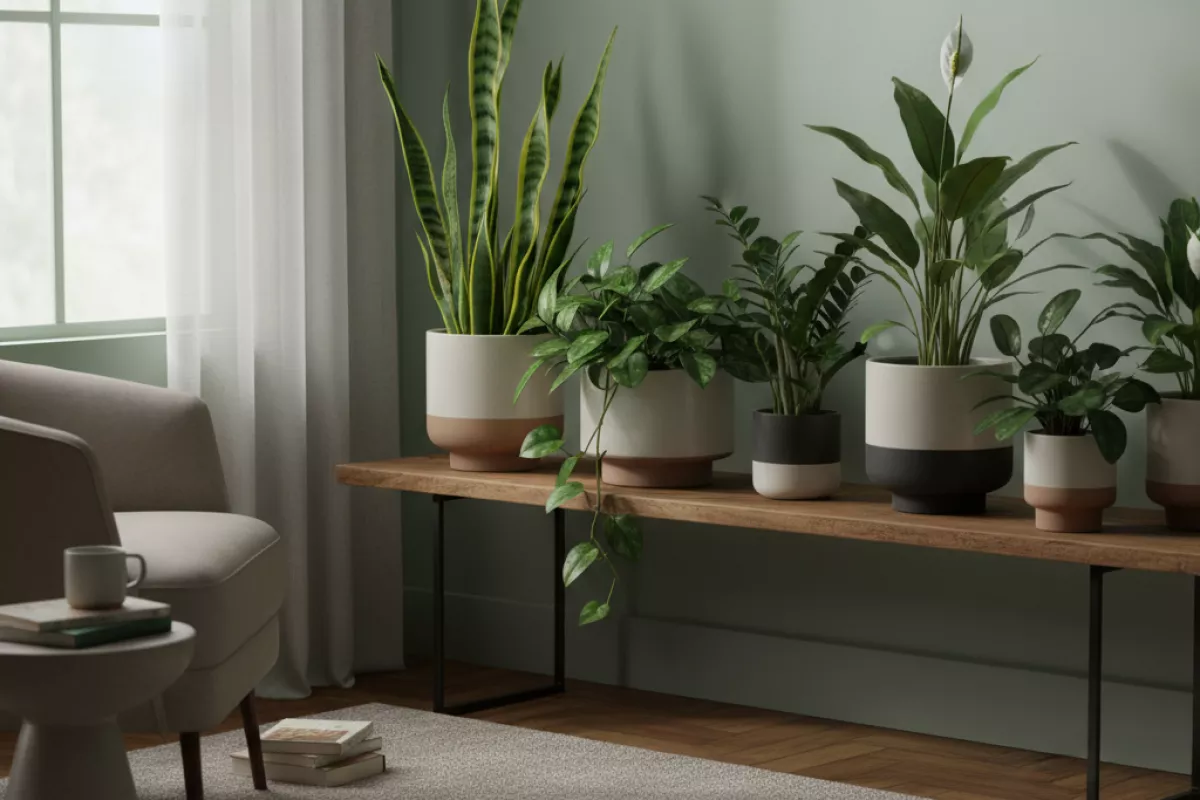 The article explains how plants can improve indoor air, what makes them good at purification, and which low-light species work best. It also covers where to place them, how to care for them, how to keep them healthy, and the limits of air-cleaning claims.
Low-light rooms can still benefit from houseplants that tolerate shade while helping improve indoor air quality. Choose species that stay healthy in indirect light, then match them to your space, watering routine, and airflow. With the right placement and steady care, these plants can remain vigorous, add greenery, and support a fresher-feeling home even without much sun.
How plants help improve indoor air
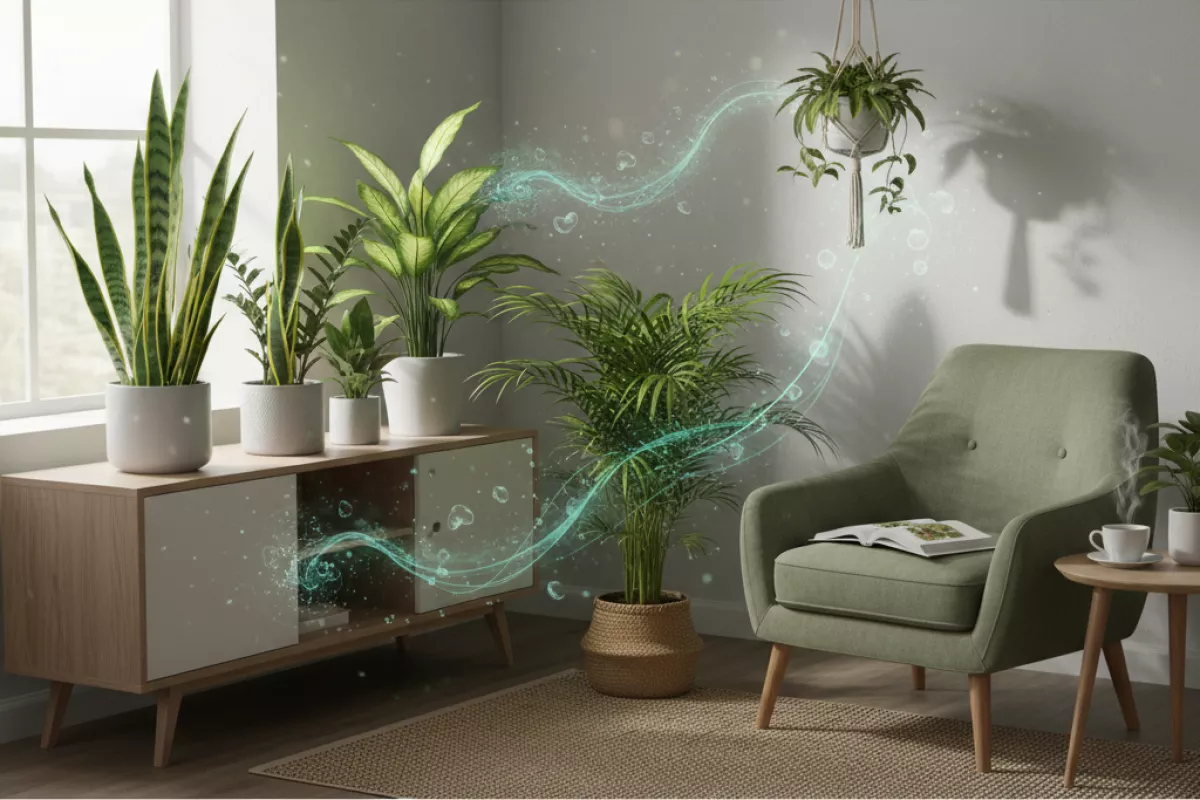
Indoor air quality is shaped by what builds up in a room and how quickly it gets diluted. Houseplants can play a small supporting role by interacting with certain airborne compounds, adding moisture, and influencing how dust moves around a space. They’re not a replacement for ventilation or filtration, but they can be a helpful layer—especially in low-light rooms where you spend a lot of time.
If you’re mainly choosing plants for dim rooms, it helps to start with species that tolerate shade without constant stress. A focused list of easy-care low-light plants can narrow your options to varieties that stay healthy with slower growth, less frequent watering, and lower light intensity.
- They can reduce trace VOCs over time. Some common indoor pollutants (like formaldehyde, benzene, and toluene) come from paints, pressed-wood furniture, cleaning products, and fragrances. Leaves can absorb tiny amounts through stomata, and the potting mix plus root-zone microbes can help break down some compounds. The effect is gradual and depends on plant size, health, and how much air moves across the foliage.
- They raise humidity slightly through transpiration. As plants release water vapor, the air can feel less dry—useful in heated or air-conditioned rooms. In very dry homes, even a modest bump in relative humidity can reduce throat and eye irritation. If you’re already above about 50% relative humidity, be cautious: excess moisture can encourage mold growth.
- They can trap some particulate matter on leaf surfaces. Dust and fine particles can settle on leaves, especially on broad, textured, or slightly waxy foliage. This doesn’t “clean” the air the way a HEPA filter does, but it can reduce what gets resuspended when you walk by. Wiping leaves with a damp cloth (use about 250 ml (8 fl oz) of water in a bowl) also keeps the plant healthier and improves light absorption.
- They influence airflow and comfort in a room. A cluster of plants can subtly change micro-air currents near windows, radiators, or vents. In low-light areas, placing plants where air naturally circulates (not sealed into a corner) helps whatever air-contact benefits they provide.
- They support a “cleaner-feeling” routine. Caring for plants often leads to habits that matter more than the plants themselves—opening windows for 5–10 minutes, vacuuming more regularly, and avoiding harsh sprays. Those changes typically have a bigger impact on indoor air than any single plant.
If you’re using air-purifying plants for low-light areas, think of them as part of a simple setup: keep leaves clean, avoid overwatering (to prevent moldy soil), and pair plants with practical steps like a bathroom fan, a kitchen hood, or a standalone air purifier when needed. The combination is what makes the room feel fresher day to day.
What makes a plant effective for purification
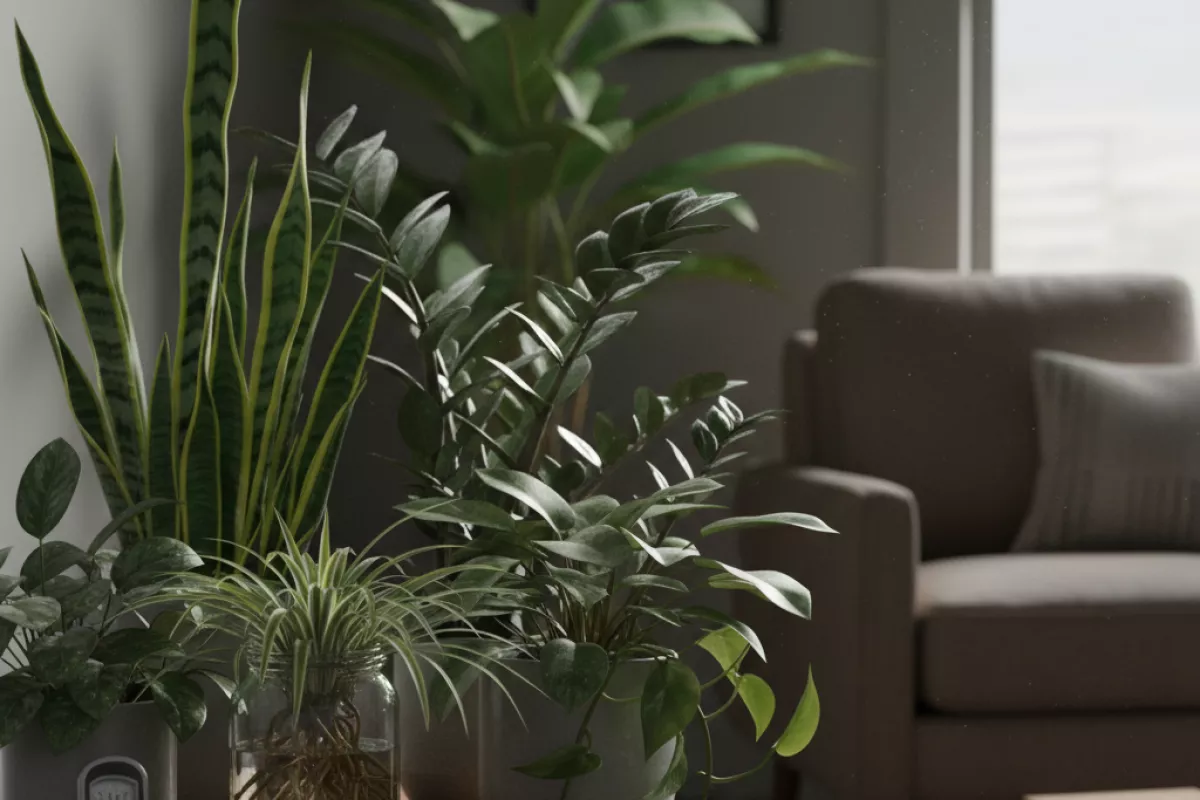
Cleaner indoor air from houseplants comes down to a few practical traits: how much air the plant can “process,” what it can trap or break down, and whether it can keep doing that in dim rooms without declining. In low-light corners, the best performers aren’t necessarily the ones with the most dramatic foliage—they’re the ones that stay healthy, keep growing (even slowly), and maintain active leaf and root systems.
- Leaf surface area and texture: Broad leaves and dense canopies expose more surface to the room. Waxy or slightly textured leaves can hold onto dust and fine particles until you wipe them off, which is a simple but real form of indoor particulate reduction.
- Stomata activity (gas exchange): Plants take in gases through tiny pores called stomata. When a plant is actively exchanging gases, it’s better positioned to absorb some volatile compounds. In very low light, many species partially “idle,” so choosing shade-tolerant types matters.
- Root-zone microbes: A lot of chemical breakdown happens in the potting mix, where microbes can metabolize certain pollutants. A healthy root system plus biologically active soil often does more than leaves alone.
- Growth and resilience in low light: A stressed plant sheds leaves, slows metabolism, and becomes less effective overall. Species that tolerate low light without constant yellowing or leaf drop tend to provide steadier air-cleaning benefits over time.
- Watering tolerance and soil moisture balance: Overwatered soil can turn stagnant, while bone-dry soil reduces microbial activity. Plants that handle occasional watering mistakes help keep the root environment stable, which supports ongoing filtration.
- Ease of leaf cleaning: If you can wipe leaves every 1–2 weeks, you remove the dust the plant has trapped and keep stomata clearer. That maintenance step often matters more than chasing “perfect” species lists.
- Plant size relative to the room: A single small pot won’t do much in a large space. As a rough practical guide, one medium plant with a 15–20 cm (6–8 in) pot per 9–14 m² (100–150 ft²) is a reasonable starting point for noticeable dust capture, assuming you keep the foliage clean and the plant healthy.
One more reality check: plants can support indoor air quality, but they’re not a substitute for ventilation or source control. The most effective setup is usually a combination—limit strong indoor pollutant sources, ventilate when you can, and use low-light-tolerant plants as a steady, low-effort supplement.
Best low-light species for air quality
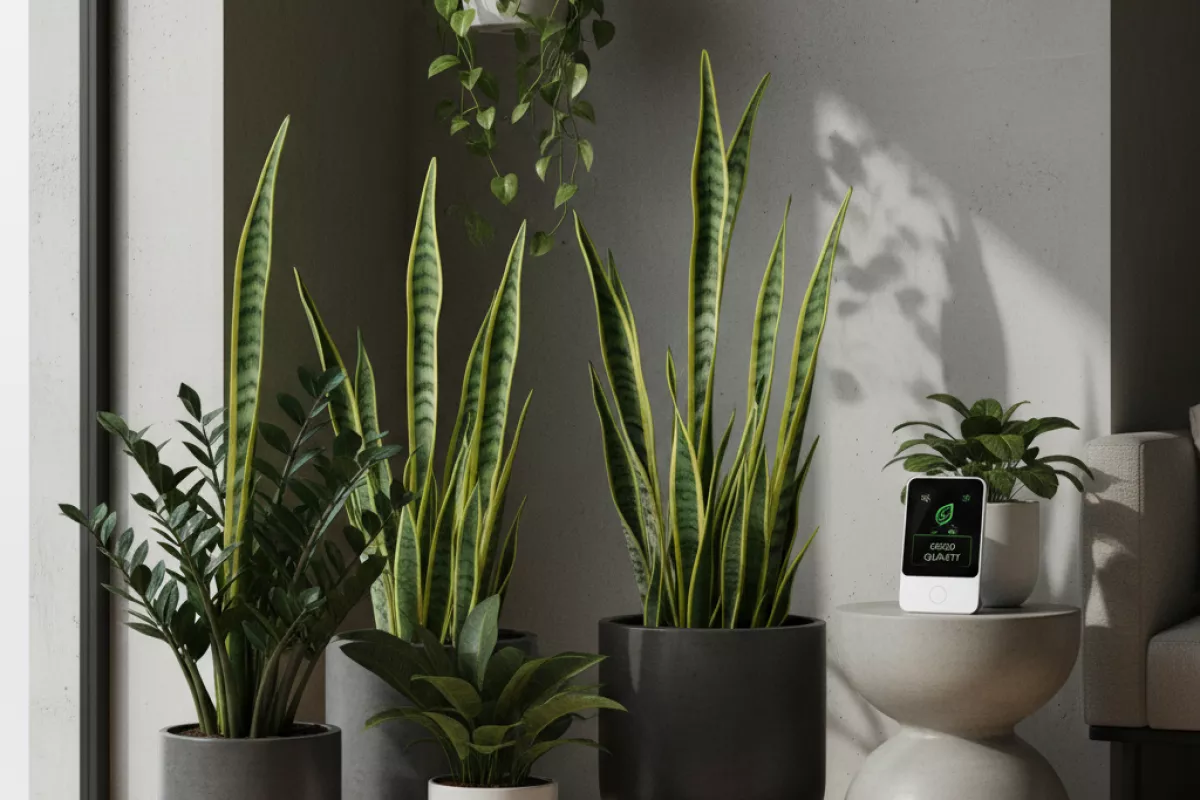
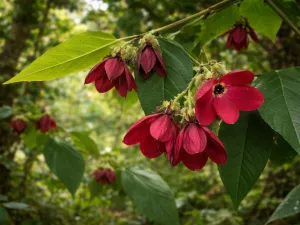
For dim rooms, the most reliable air-cleaning houseplants are the ones that keep a steady leaf mass even when growth is slow. Shade-tolerant foliage plants generally perform better here than flowering species, although some plants like Abutilon can still be grown indoors if light is sufficient for basic health, even when flowering is reduced.
| Plant (common name) | Low-light tolerance | What it’s good at (practical take) | Care notes for darker spots |
|---|---|---|---|
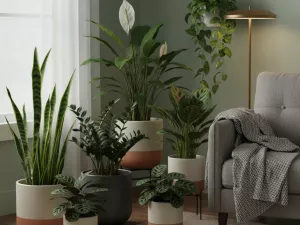
| Snake plant (Sansevieria / Dracaena trifasciata) | High | Stays leafy with minimal light; dependable “set-and-forget” option | Let soil dry most of the way; overwatering is the usual failure point |
| ZZ plant (Zamioculcas zamiifolia) | High | Handles very low light without looking ragged; good for offices and hallways | Water sparingly; thick rhizomes store moisture, soggy soil causes rot |
| Cast iron plant (Aspidistra elatior) | High | Extremely tolerant of neglect and shade; slow but reliable foliage | Err on the dry side; wipe dust off leaves occasionally |
| Pothos (Epipremnum aureum) | Medium–High | Fast visual impact with trailing growth; fills space quickly | Allow top 2.5–5 cm (1–2 in) of soil to dry; prune to prevent legginess |
| Heartleaf philodendron (Philodendron hederaceum) | Medium–High | Maintains leaf shape and color better than pothos in shade | Water after top layer dries; slower growth is normal |
| Chinese evergreen (Aglaonema) | Medium–High | Dense foliage even in medium-low light; good for bedrooms and living rooms | Let upper soil dry; avoid temperatures below 13 °C (55 °F) |
| Peace lily (Spathiphyllum) | Medium | Performs well in indirect light and clearly signals thirst | Keep evenly moist but not wet; reduce watering frequency in dim rooms |
| Parlor palm (Chamaedorea elegans) | Medium | Soft foliage that tolerates shade better than most palms | Water when top soil dries; avoid direct sun and cold drafts |
| Dracaena (Dracaena marginata) | Medium | Architectural shape; survives low light with slower growth | Allow soil to dry between waterings; sensitive to fluoride buildup |
| Spider plant (Chlorophytum comosum) | Medium | Adapts to varied light; good option for shelves and hanging pots | Water when top layer dries; growth slows noticeably in deep shade |
- If your space is truly dim (no direct sun, lights off often): prioritize snake plant, ZZ plant, and cast iron plant. They’re less likely to thin out, which matters because fewer leaves means less day-to-day filtration.
- If you can give bright indirect light part of the day: pothos, heartleaf philodendron, and Chinese evergreen tend to add more leaf area over time, which can make them feel more “active” in improving indoor air.
- If humidity is moderate and you’ll water consistently: peace lily can work well, but it’s less forgiving in low light if the soil stays wet for too long.
To get the most benefit, aim for healthy, clean foliage rather than sheer plant count. Overwatering remains the most common reason low-light plants decline, especially in darker rooms where soil dries slowly. This matters even more for succulents — see Adenium care — because excess moisture can damage roots fast and wipe out any long-term “air-quality” benefit. Wipe leaves every few weeks with a damp cloth, and rotate pots occasionally so one side isn’t always facing the room. In darker areas, it’s also smart to size up slowly: a plant that fits its pot and dries in a reasonable time is usually a better companion than an oversized pot that stays wet for days.
Placement for maximum effect
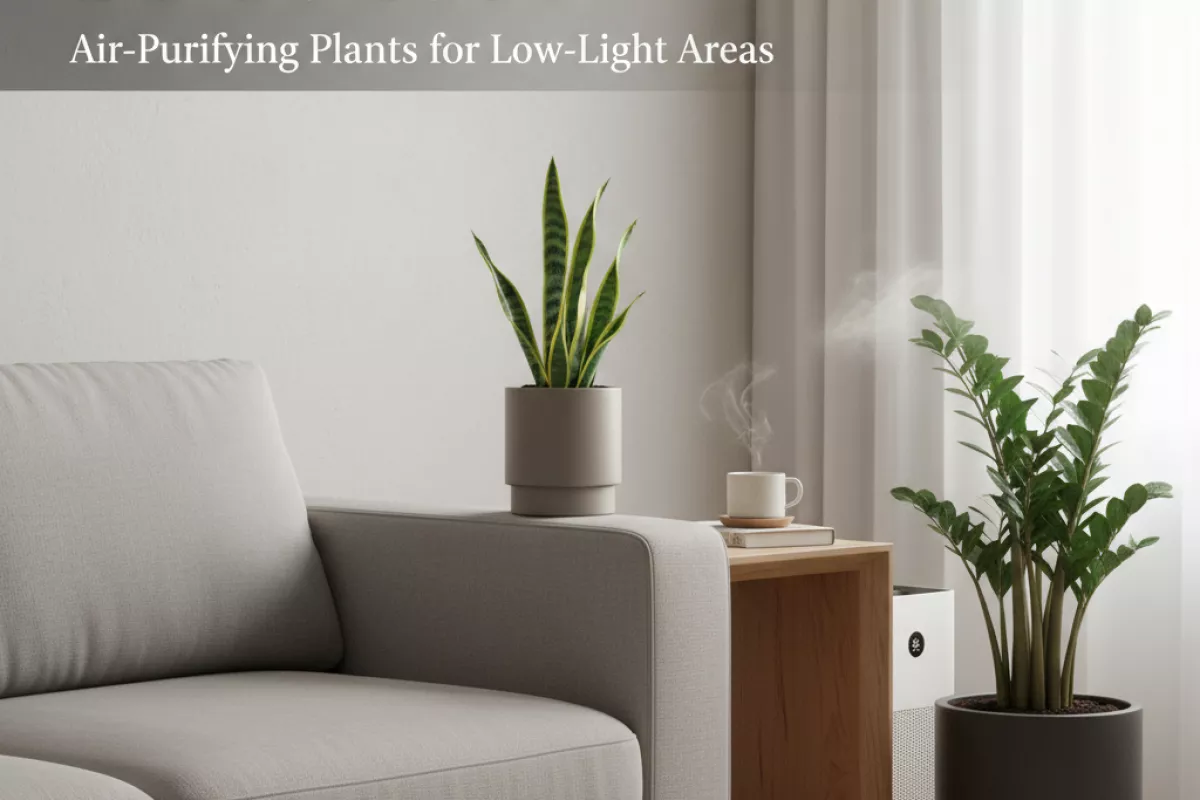
Get the best results by treating your plant like a small air filter with needs: steady, indirect light; gentle airflow; and a spot where it can “process” the air you actually breathe. Placement matters even more for taller or structured plants, a concept that also applies to outdoor species such as Aconitum plant, where airflow and spacing directly affect long-term health.
- Prioritize where people spend time. Put plants near your desk, sofa, or bedside area so the leaf surface is in the same air you’re inhaling. A plant tucked behind a door or hidden on a high shelf won’t interact with room air as effectively.
- Stay close to a window, but not in harsh sun. In dim spaces, aim for a spot about 0.5–1.5 m (1.6–5 ft) from a window with bright, indirect light. If the sun hits the leaves directly for long stretches, move it back or use a sheer curtain.
- Use height to your advantage. Elevate trailing or compact plants on a stand so leaves sit around breathing level—roughly 0.8–1.2 m (2.6–3.9 ft) from the floor. For floor plants, keep the canopy open to the room rather than wedged into a corner.
- Give leaves some airflow, not a draft. Light circulation helps distribute air around the foliage. Keep plants a little away from constant blasts from vents, heaters, or AC units—about 0.3–0.6 m (1–2 ft) is a good buffer—so they don’t dry out or get chilled.
- Avoid “dead zones” that trap moisture. Bathrooms and laundry areas can work for humidity-loving species, but don’t cram pots into tight shelves where damp air lingers. Leave a few cm (1–2 in) of space around the pot and foliage so it can dry between waterings.
- Group strategically, not tightly. Clustering two or three plants can make care easier and slightly raise local humidity, but keep enough spacing that leaves don’t overlap heavily. Overcrowding reduces light to inner leaves and can invite pests.
- Rotate for even exposure. In low light, turning the pot about a quarter turn every 1–2 weeks helps prevent lopsided growth and keeps the plant fuller, which increases total leaf area over time.
| Location in the home | Best placement approach in low light |
|---|---|
| Bedroom | Place on a dresser or nightstand 0.5–1.5 m (1.6–5 ft) from a window; keep away from heating vents by 0.3–0.6 m (1–2 ft) to reduce leaf drying. |
| Home office | Set near your workstation at eye/desk height 0.8–1.2 m (2.6–3.9 ft) so foliage sits in your breathing zone; rotate every 1–2 weeks for balanced growth. |
| Living room | Use a plant stand near seating, not behind furniture; keep 0.5–1.5 m (1.6–5 ft) from the brightest window and avoid direct afternoon sun. |
| Bathroom | If there’s a window, place on a shelf with a few cm (1–2 in) clearance around leaves; avoid constant fan drafts and ensure the pot can drain well to prevent soggy soil. |
| Hallway/entry | Only works if there’s borrowed light; position near the brightest end and consider a reflective wall or light-colored backdrop to bounce light onto foliage. |
If you’re unsure whether a spot is “bright enough,” watch the plant rather than guessing. Slow new growth is normal in shade, but repeated yellowing, leggy stems reaching toward light, or soil staying wet for more than 7–10 days usually means it needs either more light, more airflow, or less frequent watering.
Care needs for purification plants
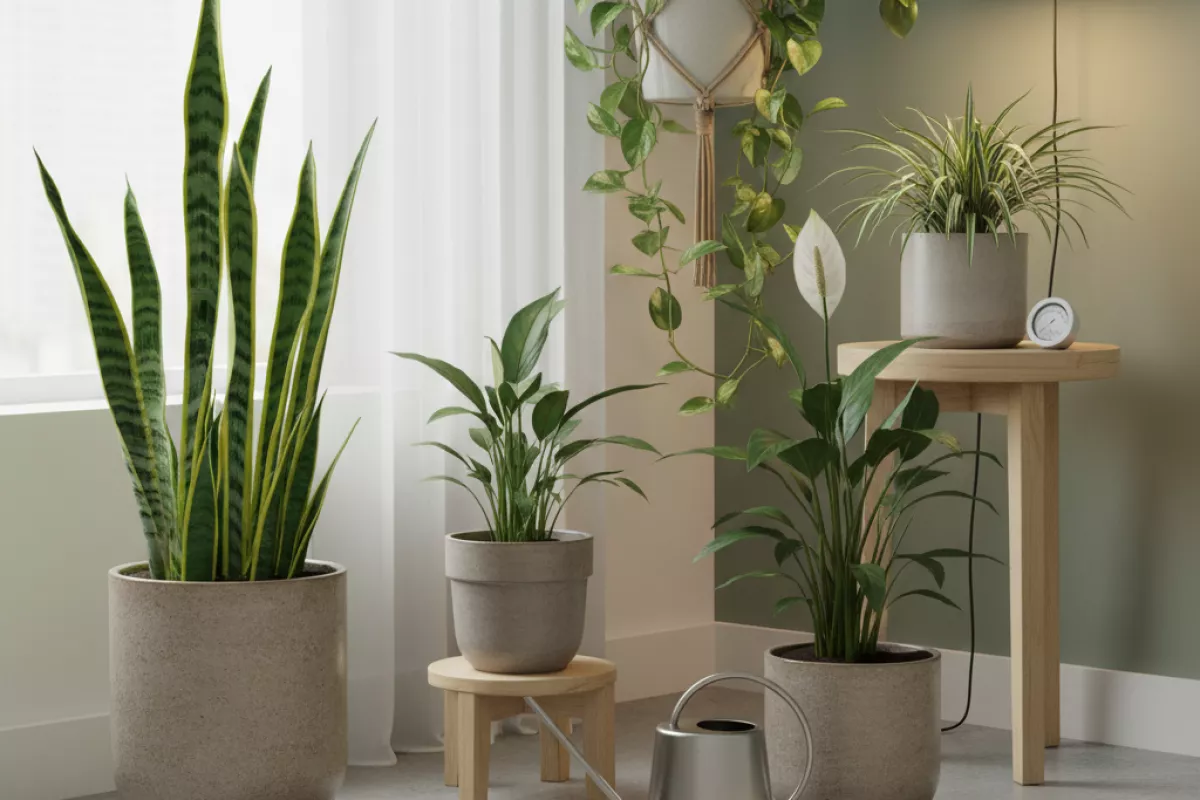
Keep low-light air-cleaning houseplants healthy by focusing on consistency rather than intensity. Most problems come from overwatering, stale air, or placing a “low-light” plant in what is effectively no-light conditions.
- Light placement: Low light still means usable light. Set plants within about 0.5–2 m (1.5–6.5 ft) of a bright window with indirect exposure, or use a small grow light for 8–12 hours per day. Rotate the pot a quarter turn weekly so growth stays even.
- Watering rhythm: Water less often than you think. For many indoor foliage plants, let the top 2–5 cm (1–2 in) of soil dry before watering again. If this is a recurring challenge, a dedicated guide on how to avoid overwatering can help establish safer habits.
- Soil and drainage: Choose a pot with a drainage hole and a chunky mix that breathes (potting soil plus bark/perlite). If the soil stays wet for more than 7–10 days, it’s usually too dense or the pot is too large.
- Humidity without fuss: Typical homes at 30–50% humidity work for many species, but ferns and some tropicals prefer 50–60% (use a humidifier or a pebble tray). Aim to avoid constant leaf wetness, which can encourage spotting.
- Temperature and drafts: Most do best around 18–27°C (65–81°F). Keep them away from cold windows in winter and from heating/AC vents that dry foliage quickly.
- Leaf cleaning: Dust blocks light and reduces gas exchange. Wipe leaves with a damp cloth every 2–4 weeks, or rinse in the shower with lukewarm water around 20–25°C (68–77°F) and let them drain thoroughly.
- Feeding lightly: In low light, growth is slower, so fertilizer should be modest. Use a balanced liquid feed at 1/4–1/2 strength every 4–6 weeks in spring and summer; pause or reduce in winter if growth stalls.
- Pruning and grooming: Remove yellowing leaves at the base and trim leggy stems to encourage fuller growth. If a plant keeps stretching, it’s asking for more light, not more water.
- Pest checks: Inspect the undersides of leaves weekly for spider mites, mealybugs, and scale. If you spot pests, isolate the plant and wipe leaves with soapy water; repeat every 7 days for 2–3 rounds.
- Repotting timing: Repot when roots circle the pot or water runs straight through. Moving up one pot size (about 2–5 cm / 1–2 in wider) is usually enough; oversized pots hold excess moisture.
If you’re using plants specifically to support indoor air quality, remember that healthy leaves do more than stressed ones. A simple routine—steady light, careful watering, and periodic leaf cleaning—keeps them functioning well in dimmer rooms.
Limitations of air-cleaning claims
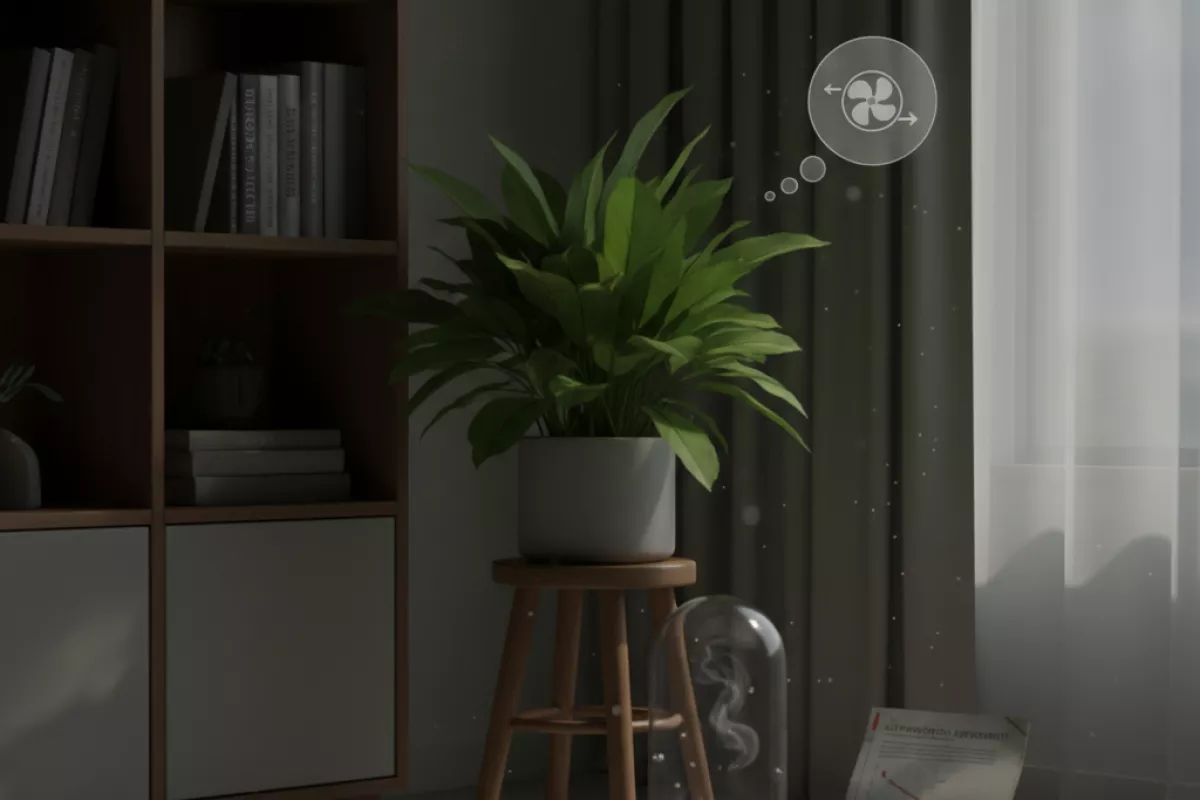
Houseplants can contribute to a nicer-feeling room, but their real-world impact on indoor pollutants is often overstated. Many “air-cleaning” results come from sealed-chamber lab tests that don’t match how homes and offices actually behave, especially in low-light corners where plants grow more slowly.
- Lab setups aren’t living rooms. Classic studies typically used small, enclosed chambers with controlled airflow. In a typical room with drafts, open doors, and HVAC cycling, pollutants are constantly mixed and replaced, which dilutes any single plant’s effect.
- Air exchange usually dominates. Ventilation and filtration move far more air than leaves can process. Even a modest air change rate can outpace what a few pots can meaningfully remove.
- Low light reduces the plant’s “processing power.” In dim areas, plants photosynthesize less and tend to transpire less, which can reduce the uptake of some compounds. If a plant is barely maintaining itself, it’s not likely to be a strong contributor to cleaner air.
- Soil microbes matter, and conditions vary. Some pollutant breakdown is attributed to microorganisms in the potting mix, not just the foliage. Differences in soil type, moisture, and microbial activity can change results a lot from one home to another.
- Not all pollutants behave the same. A plant that shows some uptake of certain VOCs in a test doesn’t automatically help with smoke particles, cooking aerosols, or outdoor pollution that leaks indoors.
- Too many plants can create new issues. Overwatering can encourage mold growth in soil, and damp trays can become a source of musty odors. If you’re using plants in a low-light area, err on the dry side and prioritize drainage.
- People often notice comfort changes, not pollutant changes. Plants can improve perceived freshness, reduce glare, and make a space feel calmer. Those benefits are real, even if measurable air-quality improvements are modest.
If your goal is healthier indoor air, treat plants as a supporting detail rather than the main tool. A practical approach is to combine reasonable ventilation, source control (like storing solvents tightly), and a well-sized filter, while keeping low-light plants for aesthetics and small comfort gains.
Maintaining plant health for best results
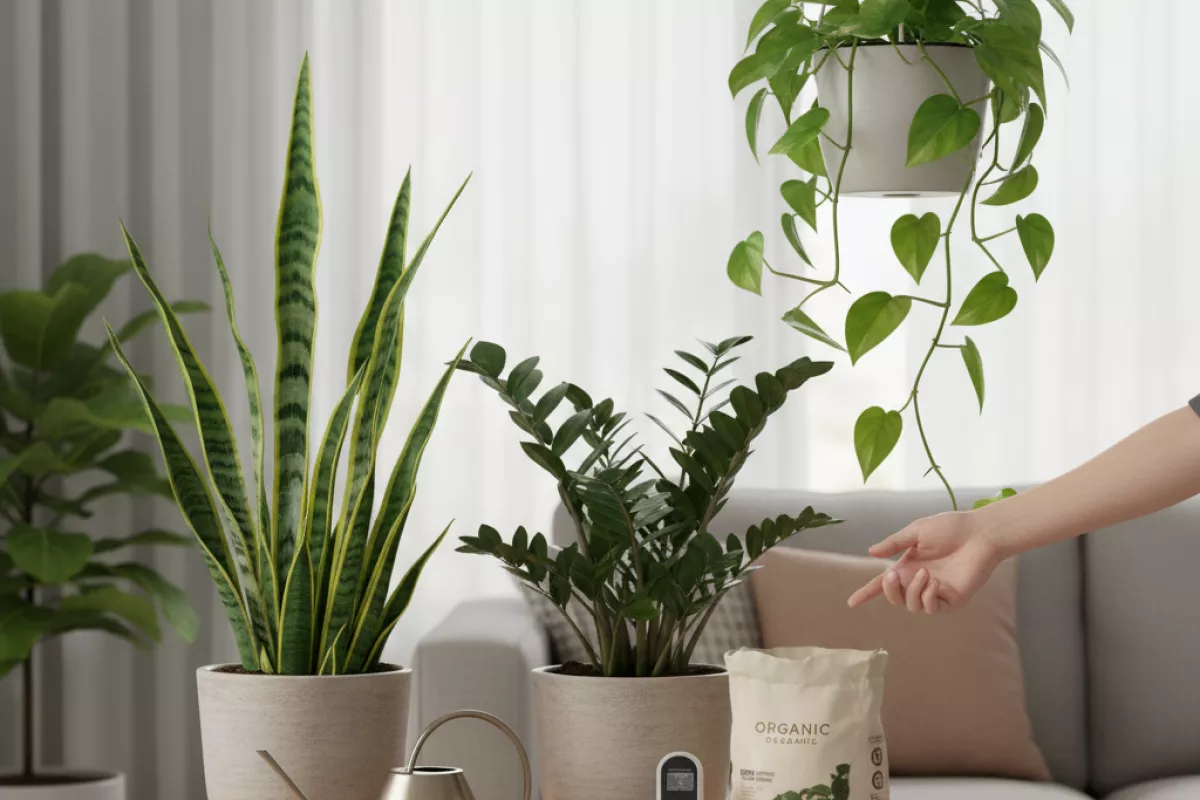
In low-light rooms, the goal is steady, stress-free growth rather than speed. Most issues come from “too much care” (extra water, extra fertilizer) combined with slower drying soil. A few consistent habits will keep foliage cleaner, roots healthier, and air-cleaning plants looking good year-round.
If you’re unsure whether your watering habits are helping or hurting, a quick way to sanity-check your routine is to check overwatering risk based on pot size, drainage, soil mix, and environment. This can prevent slow root damage that often goes unnoticed in low-light conditions.
- Water based on soil dryness, not the calendar. Let the top 2–5 cm (1–2 in) of potting mix dry before watering again for most low-light houseplants. Water thoroughly until a little drains out, then empty the saucer so roots don’t sit in water.
- Use the right pot and mix. Choose a pot with a drainage hole and a chunky, well-aerated mix (add bark or perlite). In dimmer spots, faster-draining soil prevents the most common problem: root rot.
- Keep leaves dust-free. Dust blocks light and reduces photosynthesis. Wipe broad leaves with a damp cloth or rinse in the shower every 2–4 weeks; use lukewarm water around 20–25°C (68–77°F).
- Rotate for even growth. Turn the pot a quarter turn every 1–2 weeks so the plant doesn’t lean toward the nearest window or lamp.
- Fertilize lightly and seasonally. In low light, plants use fewer nutrients. Feed at 1/4–1/2 strength during active growth (often spring through early fall) and pause in winter or whenever growth slows.
- Mind temperature and drafts. Many common indoor species prefer 18–27°C (65–80°F). Keep them away from cold windows, heating vents, and exterior doors where sudden swings can cause leaf drop.
- Boost humidity only when it’s actually dry. If indoor air drops below roughly 40% relative humidity, group plants together or use a humidifier. Aim for 40–60% for many tropical foliage plants; avoid constantly wet leaves in cool rooms.
- Prune and tidy for airflow. Remove yellowing leaves and spent stems close to the base with clean scissors. Better airflow helps prevent fungus gnats and mildew in slower-drying conditions.
- Watch for pests early. Check undersides of leaves weekly for sticky residue, webbing, or speckling. Isolate new plants for 7–14 days, and treat outbreaks promptly with insecticidal soap according to label directions.
| What you notice | Likely cause in low light | What to do next |
|---|---|---|
| Yellow leaves + consistently damp soil | Overwatering / poor drainage | Let mix dry more between waterings; confirm drainage hole; consider repotting into a chunkier mix. |
| Long, leggy stems reaching toward light | Not enough light | Move 0.5–1 m (1.5–3 ft) closer to a window or add a grow light for 8–12 hours/day. |
| Brown, crispy tips | Dry air, salt buildup, or inconsistent watering | Use filtered/settled water; flush the pot monthly; keep watering more consistent; raise humidity if below ~40%. |
| Slow growth with pale new leaves | Low light plus low nutrients | Increase light slightly first; then feed lightly (1/4–1/2 strength) during active growth. |
| Small flies near soil | Fungus gnats from wet mix | Allow top 5 cm (2 in) to dry; use yellow sticky traps; top-dress with coarse sand; avoid overwatering. |
If you’re unsure which adjustment to make, change one variable at a time (light, then water, then feeding). In dim areas, small tweaks—like improving drainage or extending light by a few hours—usually make a bigger difference than adding more fertilizer.