Best Low-Light Plants for Indoor Spaces

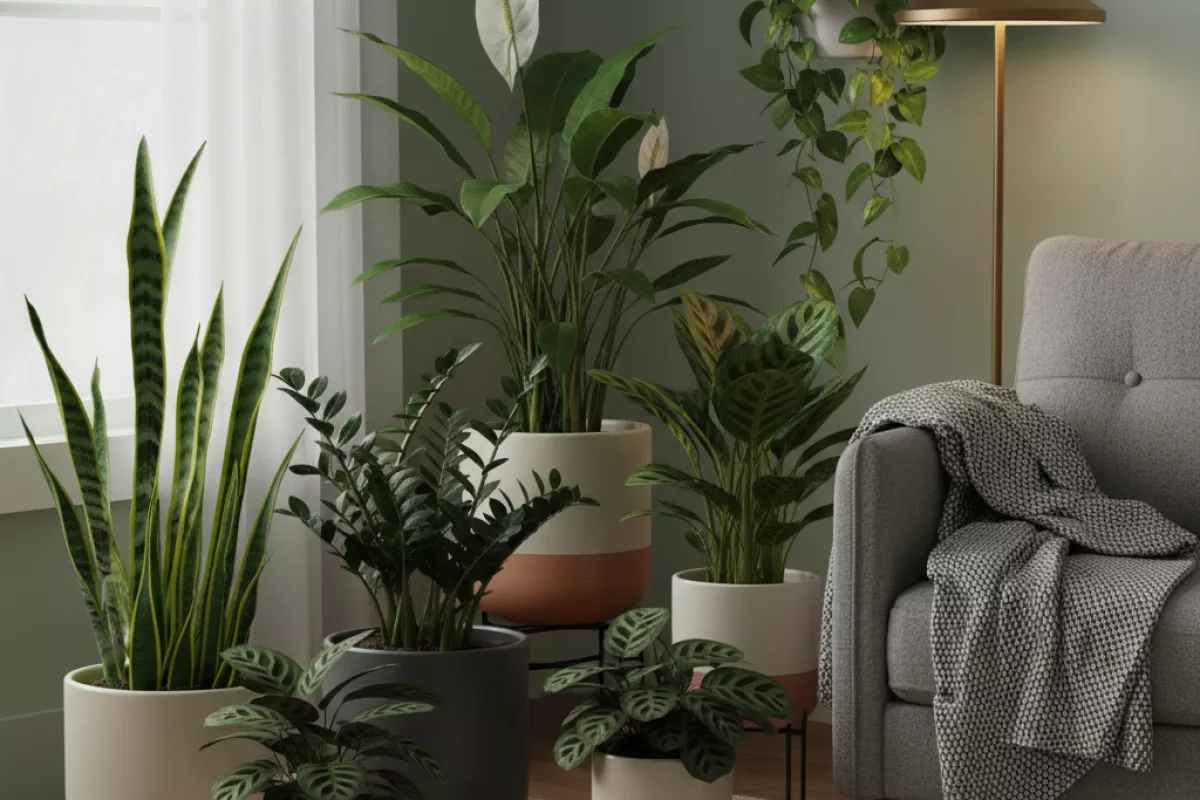 Covers what counts as indoor low light, traits that help plants handle shade, and the best types for dim rooms. Explains where to place them, how watering shifts with less light, common mistakes, simple care for healthy leaves, and signs they need more light.
- What qualifies as low-light conditions indoors
- Key traits of plants that tolerate shade
- Best plant types for dim interiors
- How to position plants for optimal growth
- Watering needs in low-light environments
- Common mistakes when growing shade plants
- Maintenance tips for healthy foliage
- How to tell if a plant needs more light
Low-light indoor plants can transform a dim room into a calmer, greener space with minimal effort. This guide highlights reliable choices for shady spots, explains what light levels they actually tolerate, and shares simple care habits that keep them thriving. For a broader plant list by room type and placement, see plants that handle low indoor light, then use the tips below to keep them healthy and attractive over time.
What qualifies as low-light conditions indoors
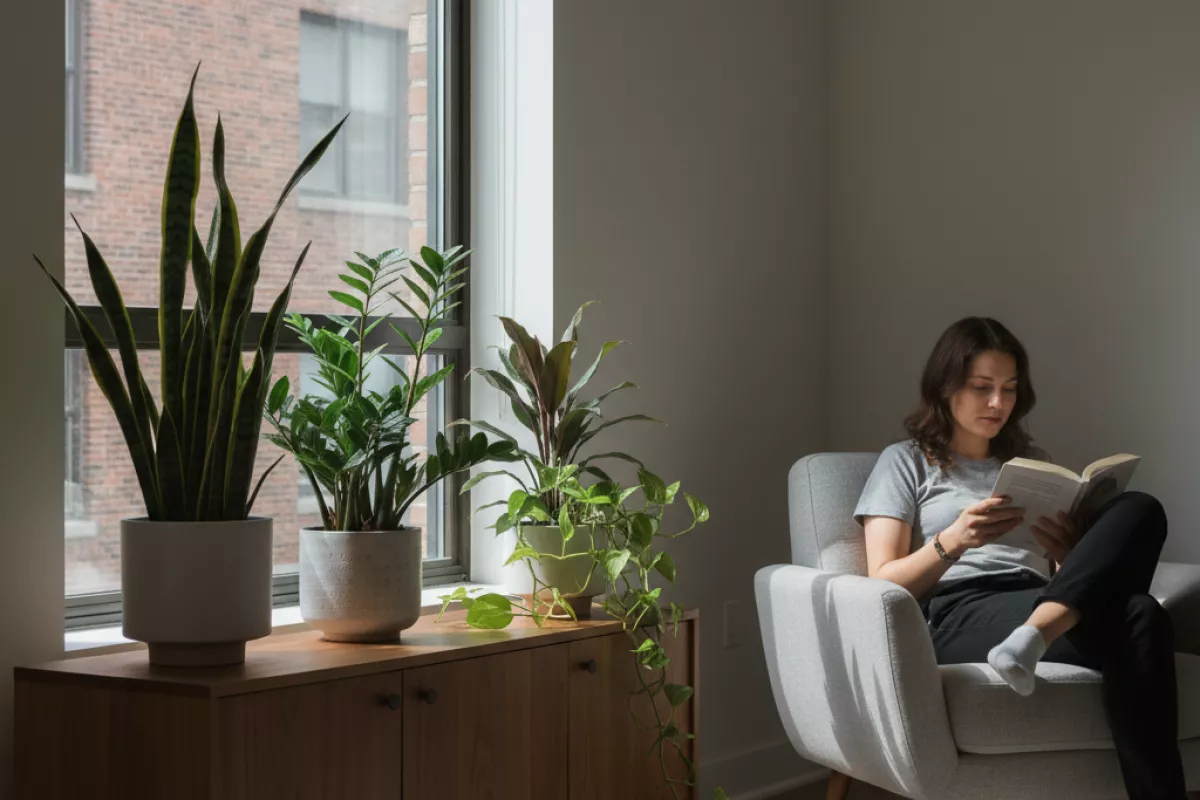
Indoors, “low light” usually means your plant can’t see much of the sky and the room feels bright to you, but the light at leaf level is fairly weak. It’s common in homes where windows face north (in the Northern Hemisphere), buildings block the view, or the plant sits several feet back from the glass.
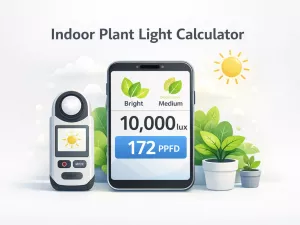
A practical way to think about it: if you can comfortably read a book in the spot during the day without turning on a lamp, it’s probably medium light; if you can navigate the room but reading feels dim, you’re closer to the low end. For a clearer reference, this explanation of how lux compares to PPFD for plants helps translate what you see into usable light levels.
- Distance from the window: Many “low-light” indoor placements are about 1.5–3 m (5–10 ft) from a window, depending on window size and direction.
- Soft or absent shadows: If objects cast fuzzy, barely-there shadows for most of the day, light levels are typically low. Sharp, defined shadows usually mean brighter conditions.
- Window direction and obstructions: North-facing windows (Northern Hemisphere) or south-facing windows (Southern Hemisphere) tend to be dimmer; trees, balconies, overhangs, and neighboring buildings can drop light dramatically even right next to the glass.
- Short “sun patches” don’t change the overall category: A brief beam of sun for 15–30 minutes (15–30 min) may not move a spot out of the low range if the rest of the day is dim.
- Artificial light matters, but only if it’s close and consistent: A ceiling fixture rarely counts as strong plant light at floor level. A grow light placed about 20–45 cm (8–18 in) above foliage for 10–14 hours (10–14 h) can effectively raise the light category.
| Indoor light level (at plant height) | What it looks like in a home | Typical range | Common placement examples |
|---|---|---|---|
| Very low | Room is usable, but details look muted; shadows are hard to spot. | 50–150 lux (5–14 foot-candles) | Hallways, interior corners, 3 m (10 ft) from a small window |
| Low | Soft ambient daylight; you can see well, but reading feels dim without a lamp. | 150–500 lux (14–46 foot-candles) | 1.5–3 m (5–10 ft) from a window; shaded north-facing sill |
| Medium indirect | Bright room with clear daylight; shadows are present but not harsh. | 500–2,000 lux (46–186 foot-candles) | 0.5–1.5 m (1.5–5 ft) from an unobstructed window |
| Bright indirect / some sun | Very bright; you may get sun patches; shadows are more defined. | 2,000–10,000 lux (186–929 foot-candles) | Near east/west windows; just out of direct midday sun |
One more nuance: “low light” doesn’t mean “no light.” Most houseplants still need a consistent day-night cycle, and truly dark spots (like a windowless bathroom with the door closed) won’t support growth long-term without a dedicated lamp.
If you’re unsure, watch the plant’s pace. Slow growth is normal in dim rooms, but leggy stems, smaller new leaves, and leaning toward the window are signs the spot is darker than the plant can comfortably handle.
Key traits of plants that tolerate shade
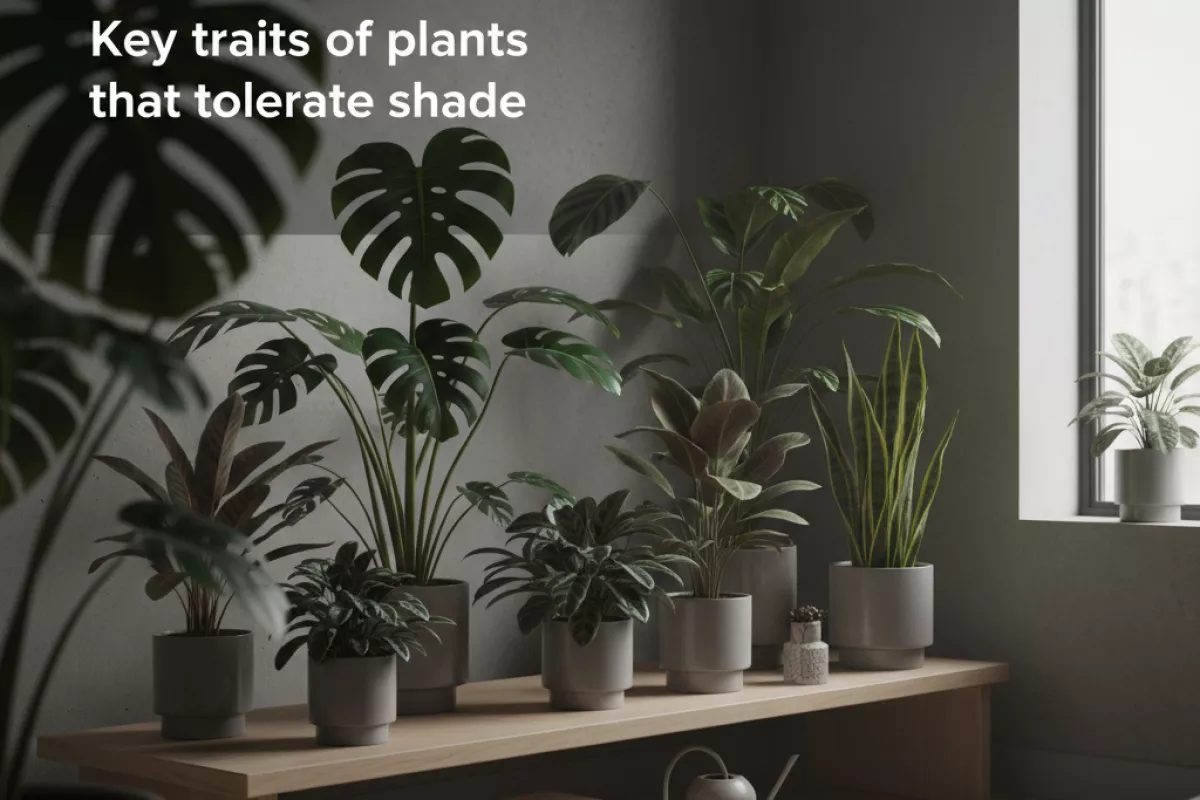
Plants that handle dim corners well tend to share a few practical features: they can photosynthesize efficiently with less sun, grow at a slower pace, and stay stable even when light levels change from week to week. Knowing what to look for helps you pick indoor greenery that won’t sulk when it’s placed a few feet away from a window.
- Efficient light capture: Shade-adapted leaves are often broader, thinner, or darker green, which helps them absorb more available light. You’ll see this in many foliage plants that keep their color even under low illumination.
- Slower, steadier growth: Many low-light houseplants don’t race upward; they add leaves gradually and hold their shape. That slower pace also means they usually need less frequent feeding and can be easier to manage indoors.
- Lower water demand: With less light, plants use water more slowly. Shade-tolerant varieties often cope better if the potting mix dries at a moderate rate, but they can still rot if kept constantly wet.
- Resilience to inconsistent conditions: Indoor light can swing with seasons, curtains, and room layout. Good shade performers tolerate these shifts without dropping lots of leaves or stalling for months.
- Leaf and stem structure that limits moisture loss: Waxy surfaces, thicker cuticles, or sturdy stems help reduce transpiration, which is useful in rooms where HVAC dries the air.
- Ability to prioritize foliage over flowers: In low light, many plants focus energy on leaves rather than blooms. If a plant is mainly grown for flowers, it typically needs brighter exposure to perform reliably.
- Clear “stress signals” you can read early: The best indoor shade plants show manageable warnings, like slightly paler new growth or longer spacing between leaves, before serious decline. That gives you time to move it closer to light or adjust watering.
| Trait you can observe | What it often means in low light | What to do if it shows up |
|---|---|---|
| Leaves stay deep green and fairly flat | Good chlorophyll density and efficient light use | Maintain placement; rotate the pot 90° weekly to monthly |
| Longer gaps between leaves (leggy growth) | Plant is stretching to find more light | Move it 30 cm (12 in) closer to a window or add a grow light |
| Soil stays wet for more than 7–10 days | Water use is slow; roots may be oxygen-starved | Water less, improve drainage, and check the pot has holes |
| New leaves emerge smaller than older ones | Energy is limited by light or nutrients | Increase brightness gradually; feed lightly during active growth |
One useful rule: if a plant is advertised as “low light,” it usually means it can survive in shade, not necessarily grow quickly. Look for varieties that keep compact form and consistent leaf quality in the spot you actually have, then adjust watering to match the slower pace that comes with reduced sun.
Best plant types for dim interiors
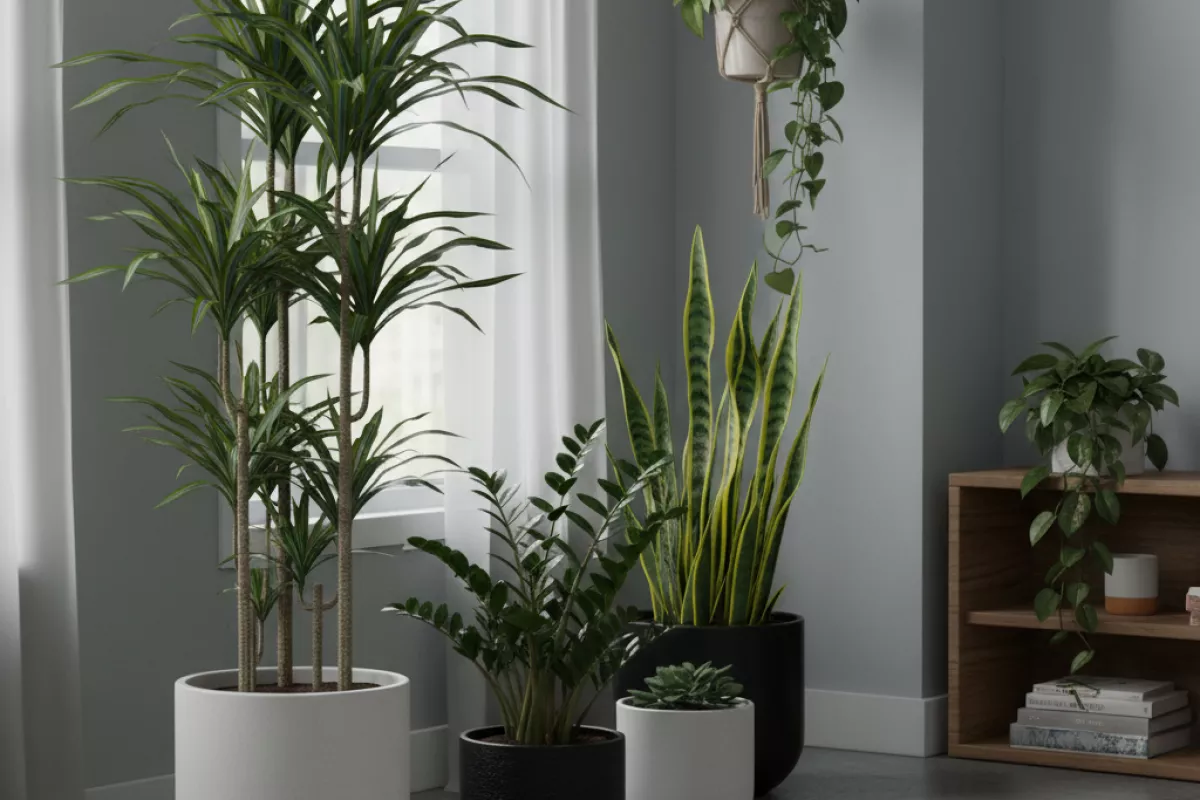
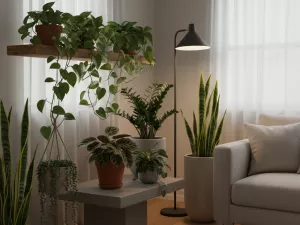
In rooms where daylight is weak or indirect, the easiest wins come from plants that naturally tolerate shade and slower growth. These tend to have thicker leaves, efficient light use, and a calmer watering schedule—ideal for corners, hallways, and north-facing windows.
If you’re choosing plants specifically for rooms with limited daylight, this practical roundup of low-light houseplants that actually thrive can help narrow options that stay compact and healthy even in dimmer interiors.
| Plant type | Why it works in low light | Typical care pattern | Good placement ideas |
|---|---|---|---|
| Upright cane plants (e.g., Dracaena types) | Handle dim conditions without dropping leaves quickly; slow, steady growth | Let the top 5–8 cm (2–3 in) dry before watering; rotate monthly for even form | Floor plant near a wall, 1–2 m (3–6 ft) from a window with ambient light |
| Thick-leaved rosettes (e.g., snake plant/Sansevieria) | Stores moisture and tolerates shade; forgiving if you miss a watering | Water sparingly once soil is fully dry; avoid constantly damp pots | Entryways, bedrooms, or shelves away from direct sun |
| Vining foliage plants (e.g., pothos/philodendron types) | Adaptable leaves; keeps growing with indirect light, though slower | Water when the top 2–5 cm (1–2 in) is dry; pinch tips to encourage fullness | Bookcases, hanging planters, or trained along a wall |
| Compact, leathery-leaf plants (e.g., ZZ plant) | Efficient in low illumination; resists stress in darker rooms | Water only after most of the pot dries; dust leaves so they can “catch” light | Office corners, media rooms, or spots lit mainly by reflected daylight |
| Shade-tolerant ferns (e.g., bird’s nest fern) | Prefer filtered light and can look lush in softer conditions | Keep evenly moist but not soggy; aim for moderate humidity | Bathrooms with a window, or kitchens with gentle morning light |
| Low-light flowering options (e.g., peace lily) | One of the few that can bloom with indirect light; leaves stay attractive even when not flowering | Water when leaves slightly droop or top 2–3 cm (1 in) dries; avoid harsh sun | Living rooms and offices where you want greenery plus occasional blooms |
When choosing among these categories, prioritize leaf health over speed of growth. In dimmer interiors, most plants will grow more slowly, so the goal is a stable, good-looking plant that doesn’t constantly shed leaves or demand frequent watering.
- Match plant size to available light. A large plant placed far from a window often struggles more than a smaller one closer in. If you’re more than 2 m (6 ft) from natural light, expect slower growth.
- Use the “shadow check” as a quick guide. If your hand casts a soft, blurry shadow at midday, that’s usually workable for many low-light houseplants; a barely visible shadow means you’ll want the toughest types (snake plant, ZZ, some Dracaena).
- Adjust watering to the light level. Less light usually means less water use. In darker rooms, extend the time between waterings rather than keeping the same schedule year-round.
How to position plants for optimal growth
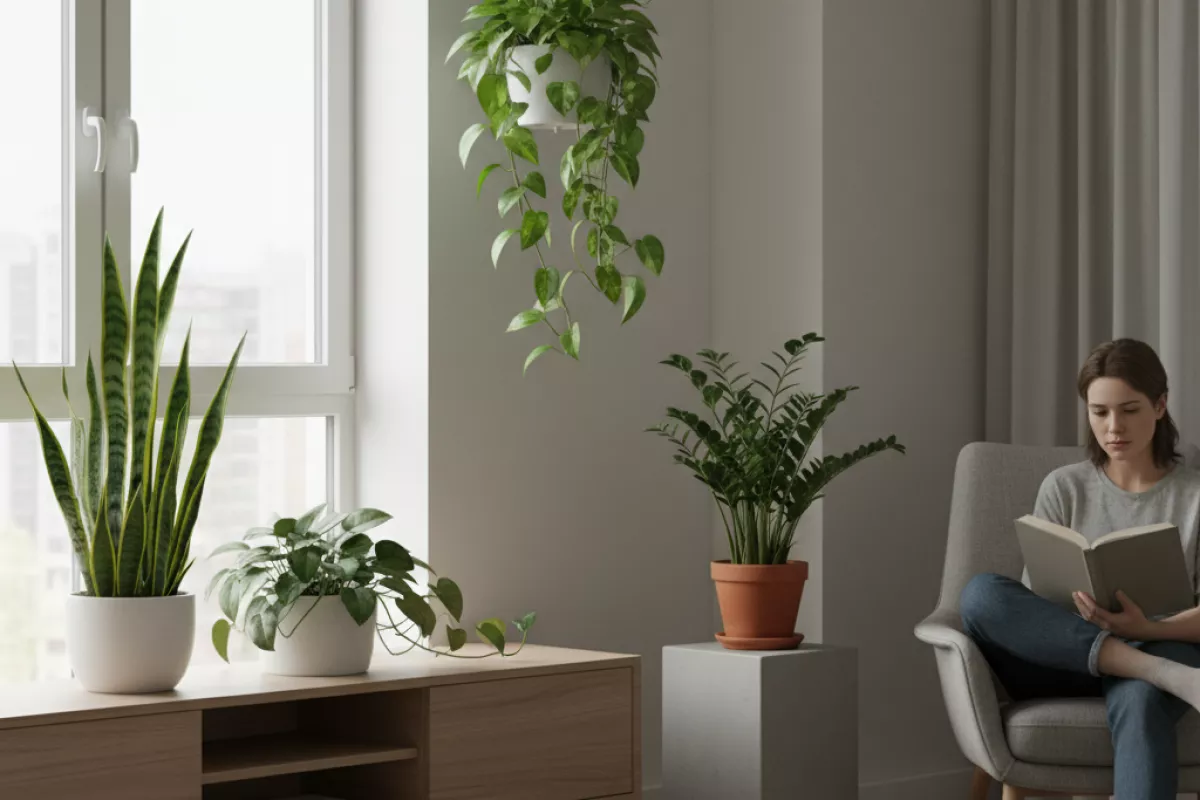
Placement matters more than people expect in dim rooms. The goal is to give your plant the steadiest, brightest light available without pushing it into harsh sun or drafty corners. Start by noticing where you can comfortably read during the day; that spot is usually a better candidate than the areas that stay gloomy until lights are switched on.
- Use windows as a reference point, not a requirement. In low-light homes, moving a pot even 30 cm (12 in) closer to a window can make a visible difference. North-facing windows (south-facing in the Southern Hemisphere) tend to be gentler; east windows give soft morning light; west and south can be brighter and may need a sheer curtain for sensitive foliage.
- Match distance to the plant’s tolerance. “Low-light” doesn’t mean “no-light.” As a starting range, place tougher options (like snake plant or ZZ plant) about 1–3 m (3–10 ft) from a bright window, and keep plants that prefer medium light closer—around 0.5–1.5 m (1.5–5 ft). Adjust based on growth, not labels.
- Rotate for even growth. Turn the pot a quarter turn every 1–2 weeks (7–14 days) so stems don’t lean and leaves develop more evenly. This is especially helpful on shelves where light comes from one direction.
- Keep leaves out of contact with cold glass and heat sources. In winter, foliage pressed against a window can chill quickly; in summer, it can overheat. Aim for a small buffer—about 5–10 cm (2–4 in) between leaves and the pane—and avoid placing plants directly above radiators or next to vents.
- Think in “light lanes.” Hallways and interior corners often have a narrow path where daylight travels. Put plants on the edge of that brighter lane (not deep in the corner), or elevate them on a stool so they catch more ambient light.
- Use reflective surfaces to your advantage. Light-colored walls, mirrors, and pale tabletops bounce light back onto foliage. A plant set 30–60 cm (12–24 in) from a light wall often performs better than the same plant against dark paint or heavy curtains.
- Choose the right height. A plant on the floor may sit below the brightest part of the room, especially if the window is high. Raising it 30–90 cm (12–36 in) on a stand can increase exposure without changing the room layout.
- Supplement thoughtfully if needed. If natural light is consistently weak, a small grow light can help. Position the lamp about 20–40 cm (8–16 in) above the canopy and run it for 8–12 hours per day; increase or decrease based on new growth and leaf color.
Watch the plant’s feedback and tweak placement gradually. Slow growth, long gaps between leaves, or leaning toward the window usually means it needs brighter conditions; pale patches or crispy edges can mean too much direct sun or heat. Small moves—like shifting a pot 30 cm (12 in) or raising it onto a stand—are often enough to get steadier, healthier growth in low-light indoor spaces.
Watering needs in low-light environments
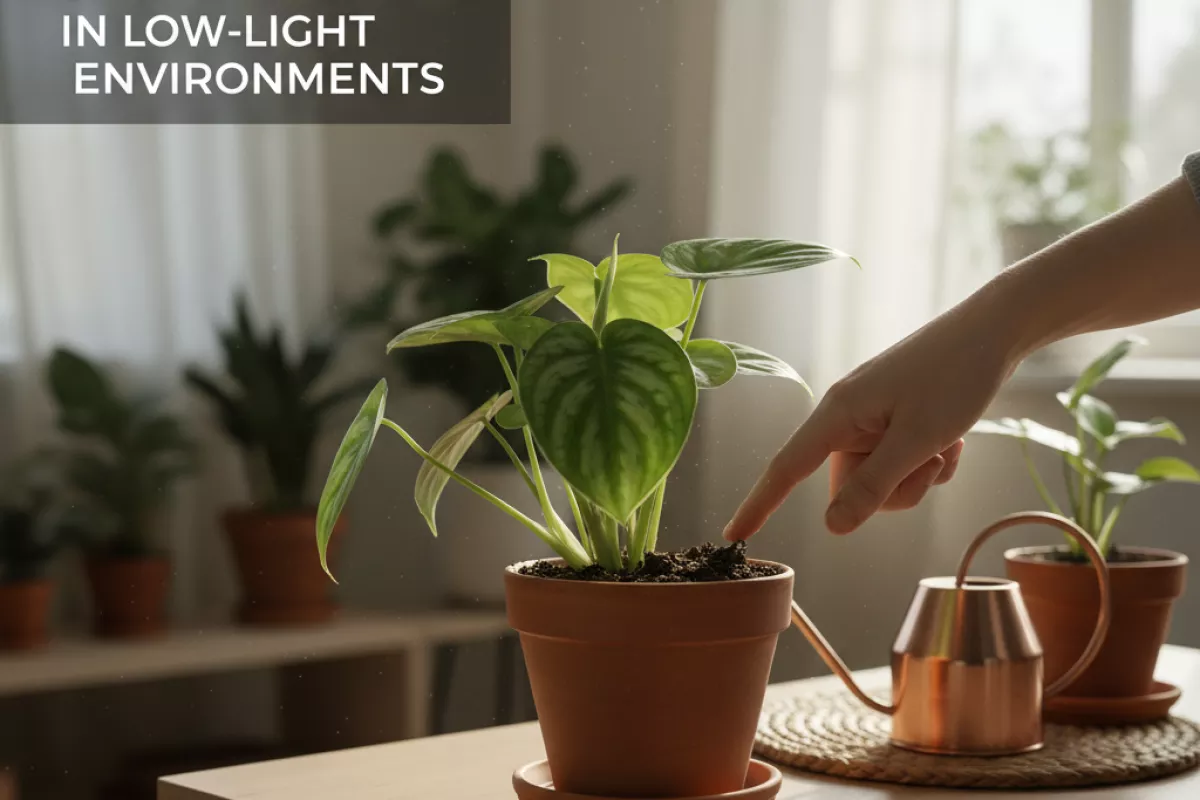
In dimmer rooms, plants usually use water more slowly because growth and evaporation both drop. That means the same weekly routine that works near a bright window can quickly turn into soggy soil in a darker corner. The goal is to let the potting mix dry a bit more between drinks, while still keeping roots evenly hydrated.
- Expect longer dry-down times. Low light often stretches the interval between waterings by several days. Instead of watering on a schedule, check the soil first.
- Use the finger test at the right depth. For most low-light houseplants, wait until the top 2–5 cm (1–2 in) feels dry before watering. For drought-tolerant types (like snake plant or ZZ plant), let 5–8 cm (2–3 in) dry.
- Water thoroughly, then drain. Add water until a little runs out the bottom, then empty the saucer after 10–15 minutes. Leaving standing water is one of the fastest ways to invite root rot in shade.
- Match the pot to the light. In darker spaces, terracotta and smaller pots dry faster; oversized plastic pots stay wet longer. If a plant is struggling, downsizing the pot or switching to a faster-drying container can help.
- Adjust for temperature and airflow. A cool room around 18–20°C (64–68°F) slows drying, while a warmer spot around 22–24°C (72–75°F) speeds it up. Gentle air movement also helps moisture leave the soil more predictably.
| Plant type (common low-light picks) | When to water (simple cue) | Typical interval in low light | Common mistake to avoid |
|---|---|---|---|
| Snake plant (Sansevieria/Dracaena trifasciata) | Soil dry 5–8 cm (2–3 in) down | Every 2–4 weeks | Watering “just a little” too often |
| ZZ plant (Zamioculcas) | Pot feels noticeably lighter; mix mostly dry | Every 3–5 weeks | Keeping the mix constantly damp |
| Pothos/Philodendron | Top 2–5 cm (1–2 in) dry | Every 1–2 weeks | Letting it sit in runoff water |
| Peace lily (Spathiphyllum) | Top 2–3 cm (1 in) dry; leaves slightly less perky | Every 5–10 days | Waiting until it repeatedly collapses from thirst |
| Cast iron plant (Aspidistra) | Top half of pot partly dry | Every 2–3 weeks | Watering on a fixed calendar |
If you’re unsure, err on the slightly drier side for most low-light favorites, then watch how the plant responds over the next 48–72 hours. Yellowing lower leaves, a musty smell, or fungus gnats often point to excess moisture; crispy tips and persistent wilting after watering suggest the mix is drying too far or too fast. Reviewing these common watering mistakes to avoid can help correct issues before roots are damaged.
Common mistakes when growing shade plants
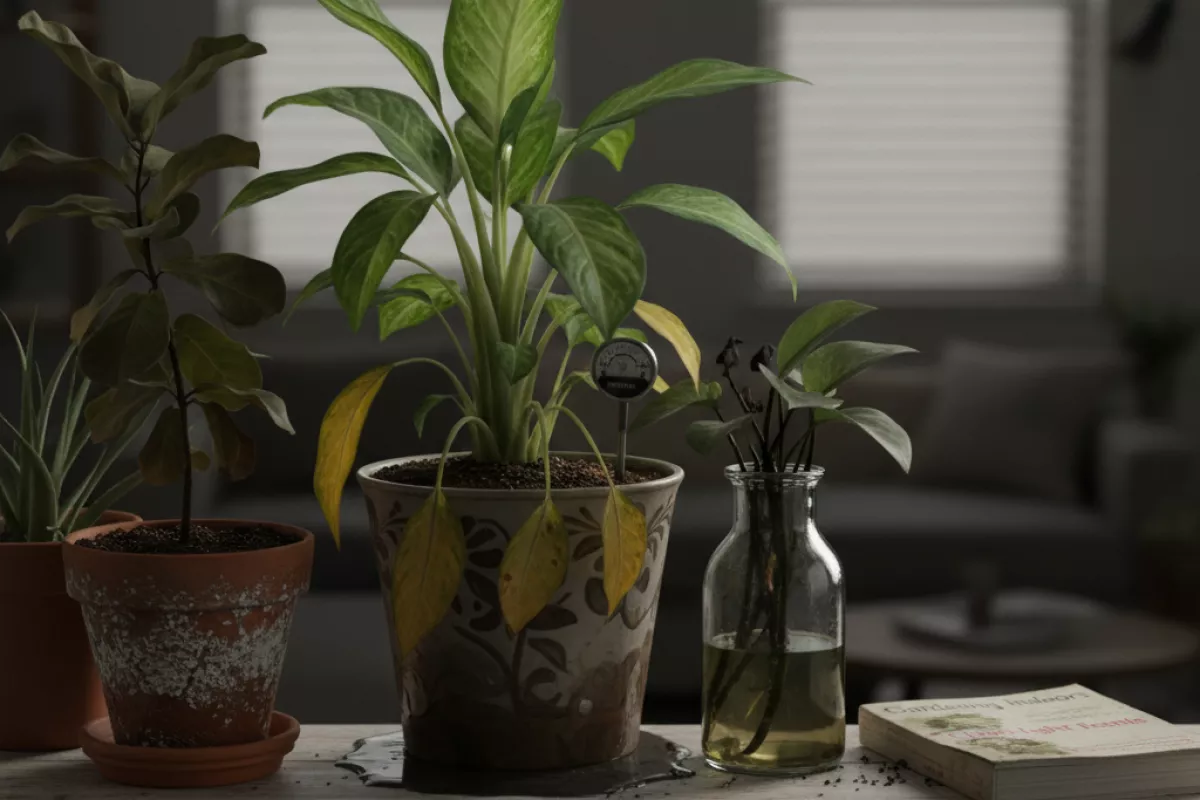
Most “low-light” houseplant problems come from treating shade-tolerant plants like they’re living in a cave. They can cope with dimmer corners, but they still need the basics: consistent moisture habits, breathable soil, and enough usable light to photosynthesize.
- Overwatering because growth is slower
In lower light, plants use water more slowly, so the pot stays wet longer. That’s how roots end up stressed or rotting. Let the top 2–5 cm (1–2 in) of soil dry for many foliage plants before watering again, and always empty saucers after 10–15 minutes. - Assuming “low light” means “no light”
A spot that looks bright to your eyes can still be too dim for a plant. If stems stretch, leaves get smaller, or variegation fades, move it closer to a window or give it a brighter angle. Even 0.5–1 m (1.5–3 ft) closer can make a noticeable difference. - Using heavy soil that stays soggy
Dense mixes hold water and limit oxygen around roots, especially in shade. Choose a chunky, well-aerated potting mix and a container with drainage holes. If you’re repotting, check that the root ball isn’t sitting in a compacted “plug” of old soil. - Skipping pot drainage (or hiding the problem in a cachepot)
Decorative outer pots are fine, but water can pool at the bottom and quietly drown roots. Keep the inner pot elevated or remove it to drain fully before placing it back. - Fertilizing on a bright-season schedule
In dimmer conditions, plants don’t use nutrients as quickly. Overfeeding can lead to leaf tip burn and weak, leggy growth. Use a lower dose and a longer interval, and pause if the plant isn’t actively growing. - Not rotating the plant
Light usually comes from one direction indoors, so shade plants can lean and grow unevenly. Rotate the pot about a quarter turn every 1–2 weeks to keep growth balanced. - Ignoring humidity and airflow
Many low-light favorites (like ferns) dislike dry air, while stagnant air can increase fungal issues. Aim for steady airflow and moderate humidity; if you cluster plants, leave a few cm (1–2 in) between pots so leaves can dry after watering. - Letting dust block what little light there is
Dusty leaves reduce light capture, which matters more in shade. Wipe broad leaves with a damp cloth or rinse gently, then let them dry in a warm room around 18–24°C (65–75°F). - Misreading yellow leaves
Yellowing can mean too much water, too little light, nutrient issues, or normal leaf turnover. Check soil moisture and root health first; if the mix is wet and the pot feels heavy days after watering, adjust your watering rhythm before changing anything else. - Repotting too often “to help it grow”
Shade-tolerant plants often prefer being slightly snug in their pots. Upsizing too quickly leaves extra soil that stays wet. Move up just one size—about 2–5 cm (1–2 in) wider in diameter—when roots are clearly circling or filling the pot.
If you correct only two habits, make it these: match watering to the slower pace of low-light growth, and place the plant where it can “see” the sky (even indirectly) for part of the day. Those fixes solve a surprising share of indoor shade-plant struggles.
Maintenance tips for healthy foliage
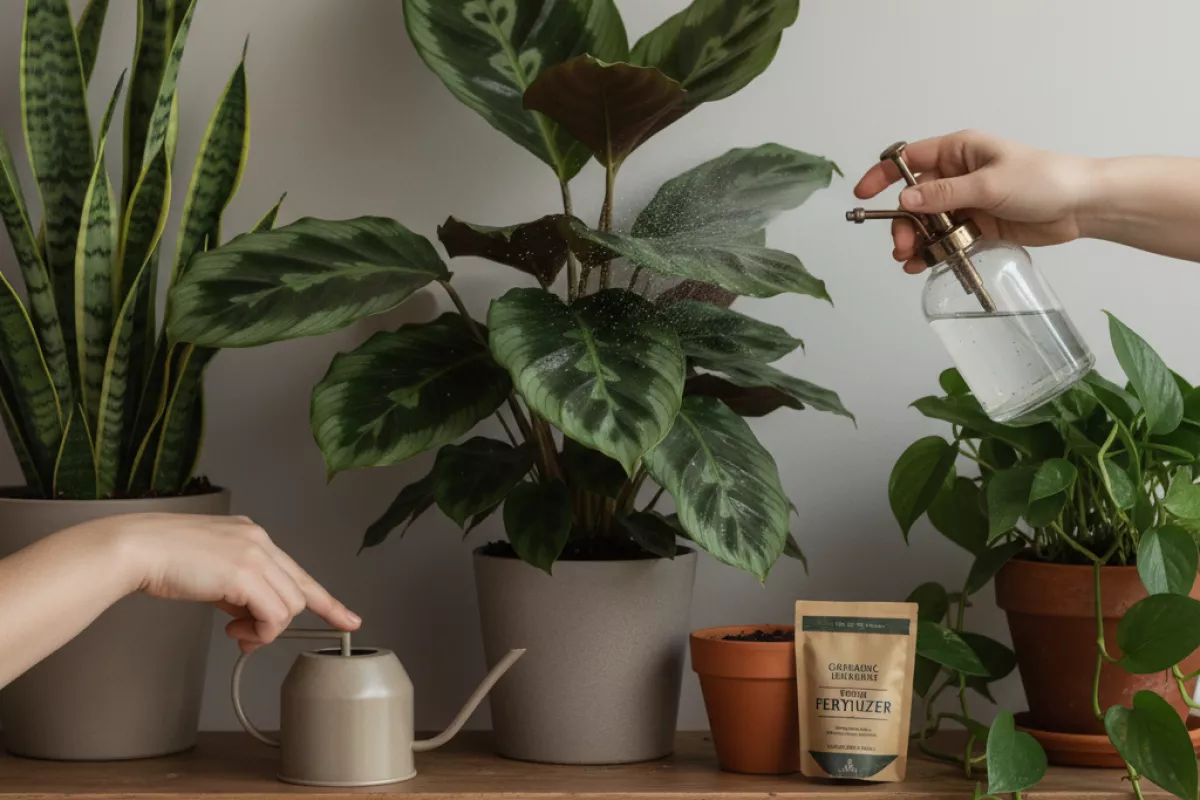
Keep leaves looking good in low-light rooms by focusing on a few basics: steady watering, clean foliage, gentle feeding, and small adjustments when growth slows. Most problems show up on the leaves first, so simple routines go a long way.
- Water on a schedule, but decide by soil feel. In dimmer spots, potting mix dries more slowly. Check the top 2–3 cm (1–1.2 in) of soil; if it’s dry, water thoroughly and let excess drain. If it’s still damp, wait a few days to avoid root stress.
- Use the right water amount, not frequent sips. A deep soak is better than small daily pours. Empty saucers after 10–15 minutes so roots aren’t sitting in water.
- Rotate the pot for even growth. Turn the plant about a quarter turn every 1–2 weeks so stems don’t lean toward the nearest window or lamp.
- Dust and wipe leaves regularly. Dust blocks light and can dull the surface. Wipe with a soft, damp cloth every 2–4 weeks; for many small leaves, a gentle lukewarm rinse works well. Let the plant drip-dry out of direct sun.
- Prune with a purpose. Remove yellowing or damaged leaves at the base to redirect energy to healthy growth. Trim leggy stems just above a node to encourage fuller branching (especially on pothos and philodendrons).
- Feed lightly, and mostly in active growth. Low-light plants typically need less fertilizer. Use a balanced houseplant fertilizer at half strength about every 4–6 weeks in spring and summer; pause or reduce in winter when growth slows.
- Mind humidity without overcomplicating it. If leaf tips brown, indoor air may be dry. Aim for roughly 40–60% relative humidity; a pebble tray or grouping plants can help. Keep leaves from touching cold windows in winter.
- Watch temperature swings and drafts. Many indoor plants prefer about 18–27°C (65–81°F). Avoid placing pots near heating vents, AC blasts, or frequently opened exterior doors.
- Repot only when it’s earned. If roots circle the pot or water runs straight through, move up one size (about 2–5 cm / 1–2 in wider). Fresh mix improves aeration, which matters even more when light is limited.
- Check for pests during routine care. Look under leaves and along stems for sticky residue, webbing, or small bumps. Isolate the plant and wipe leaves with mild soapy water if you spot early signs.
If a plant looks pale or stretched, it usually needs a little more light rather than more water or food. Move it 30–60 cm (12–24 in) closer to a window or add a small grow light for 6–10 hours per day, then reassess after a couple of weeks.
How to tell if a plant needs more light
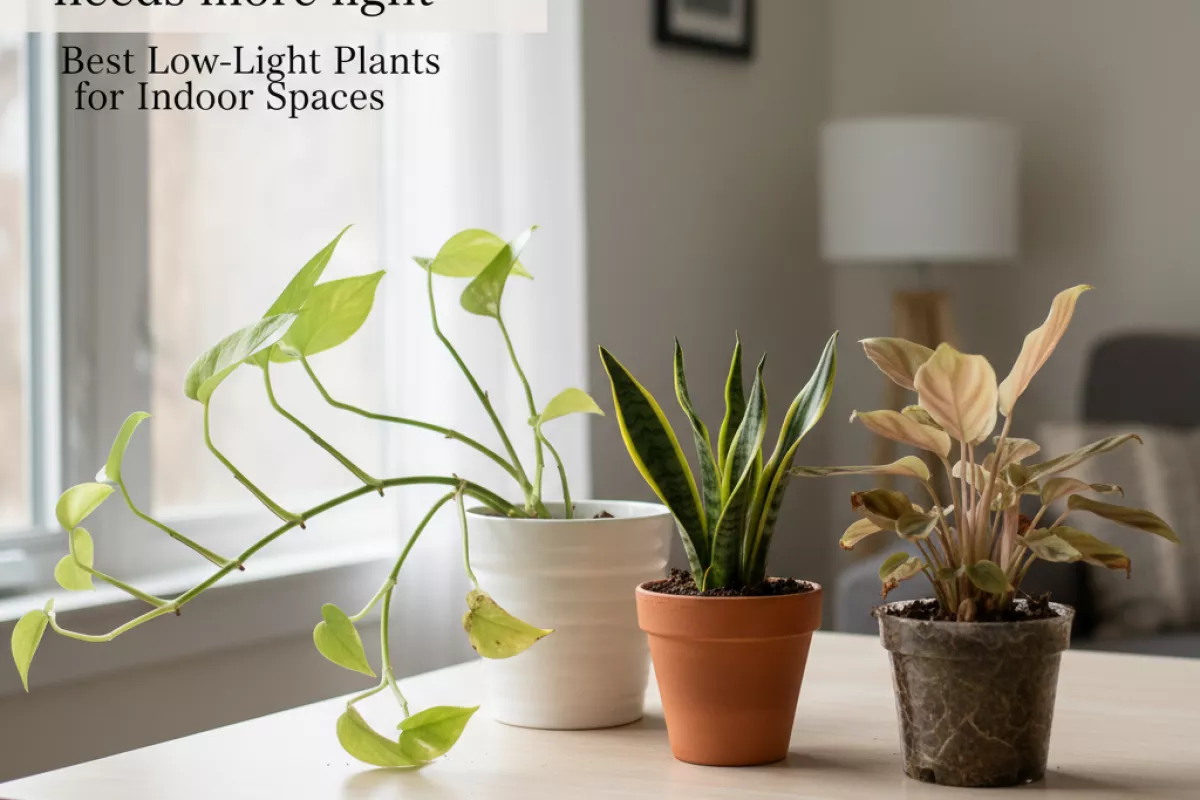
Low-light plants are tolerant, not immune. When the light level is too low for too long, most houseplants start conserving energy, and you’ll see changes in growth, leaf quality, and how the plant uses water.
- Leggy, stretched growth: New stems grow long with bigger gaps between leaves, and the plant leans toward the nearest window. This is a classic sign it’s reaching for brighter conditions.
- Smaller new leaves or fewer leaves: Fresh growth comes in undersized, thin, or spaced out compared with older foliage.
- Loss of variegation or color: Variegated plants may produce greener leaves, and some species look dull or washed out. (A few plants also redden or bronze under stress.)
- Slow or stalled growth during the growing season: If it’s spring or summer and nothing is happening for weeks, light is a common bottleneck. In winter, slower growth can be normal.
- Lower leaves yellowing and dropping: The plant sheds older leaves to save resources, especially if the top is still trying to grow.
- Soil stays wet for a long time: In dimmer spots, plants use less water. If your potting mix is still damp after 10–14 days, light may be too low (and overwatering risk goes up).
- Weak, floppy stems: Growth can’t support itself, so stems bend or collapse instead of staying upright and sturdy.
- No blooms (for flowering houseplants): Many bloomers won’t set buds without enough brightness, even if the leaves look “fine.”
A quick check: rotate the pot a quarter turn every week or two. If the plant keeps leaning hard toward the same direction, it’s likely chasing light. Another practical test is shadow quality at midday: a sharp-edged shadow usually means bright light; a soft, blurry shadow suggests low light.
If you suspect the spot is too dim, adjust gradually. Move the plant 30–60 cm (12–24 in) closer to a window, or add a grow light for 8–12 hours a day. Give it 2–3 weeks to respond before making another change, since new growth is the most reliable indicator.