Top Plants That Thrive in Full Sun

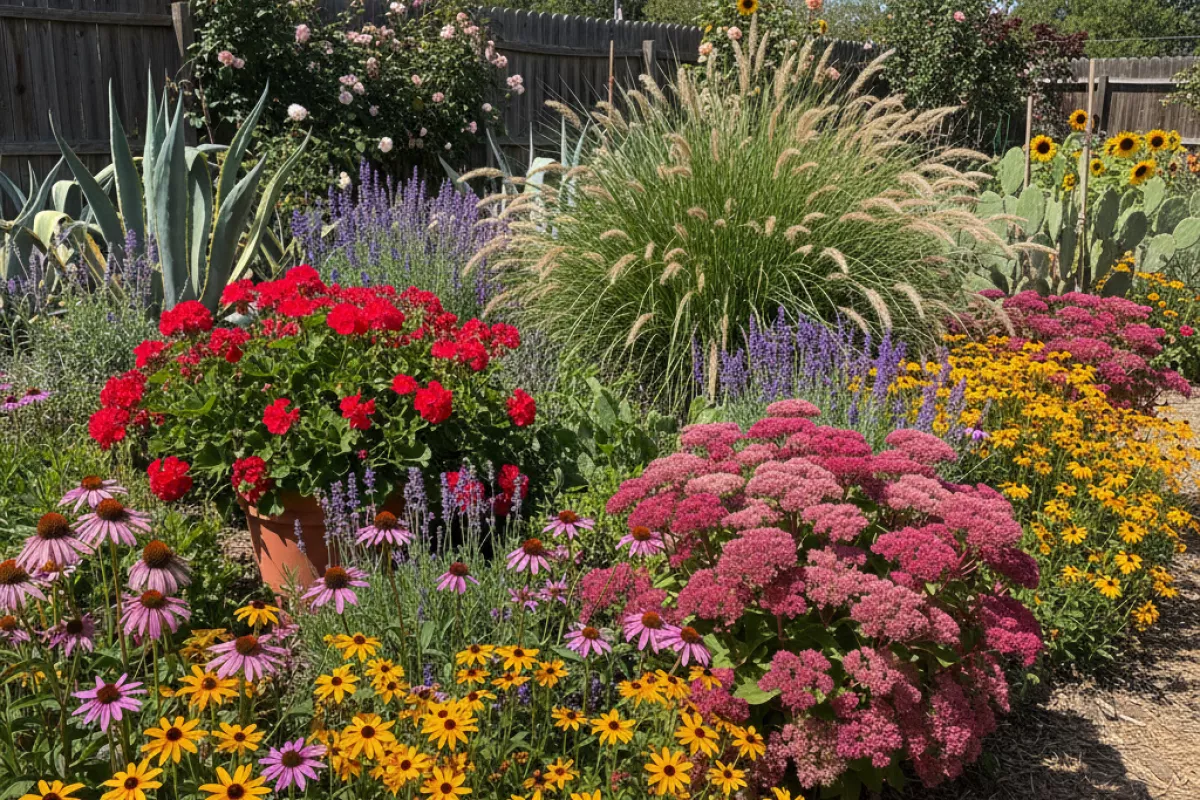 Covers what full sun means, traits of plants that handle intense light, and popular species for bright spots. Also explains ideal soil, watering in full sun, preventing leaf scorch, seasonal care tweaks, and signs plants are thriving.
- What counts as full sun in gardening terms
- Traits of plants that tolerate intense light
- Popular species suited for bright exposure
- Soil conditions for sun-loving plants
- Watering needs in full sun locations
- How to prevent leaf scorch
- Seasonal care adjustments
- Signs plants are thriving in strong light
Choosing plants that thrive in all-day direct sun can save time, water, and frustration in the hottest parts of your yard. This guide highlights dependable sun-loving choices that hold their color and growth through long, bright days. If you want a broader shortlist by climate and garden style, see top full-sun plants. It focuses on what performs well in real gardens, with simple care notes to help you pick the right plants for your soil, space, and climate.
What counts as full sun in gardening terms
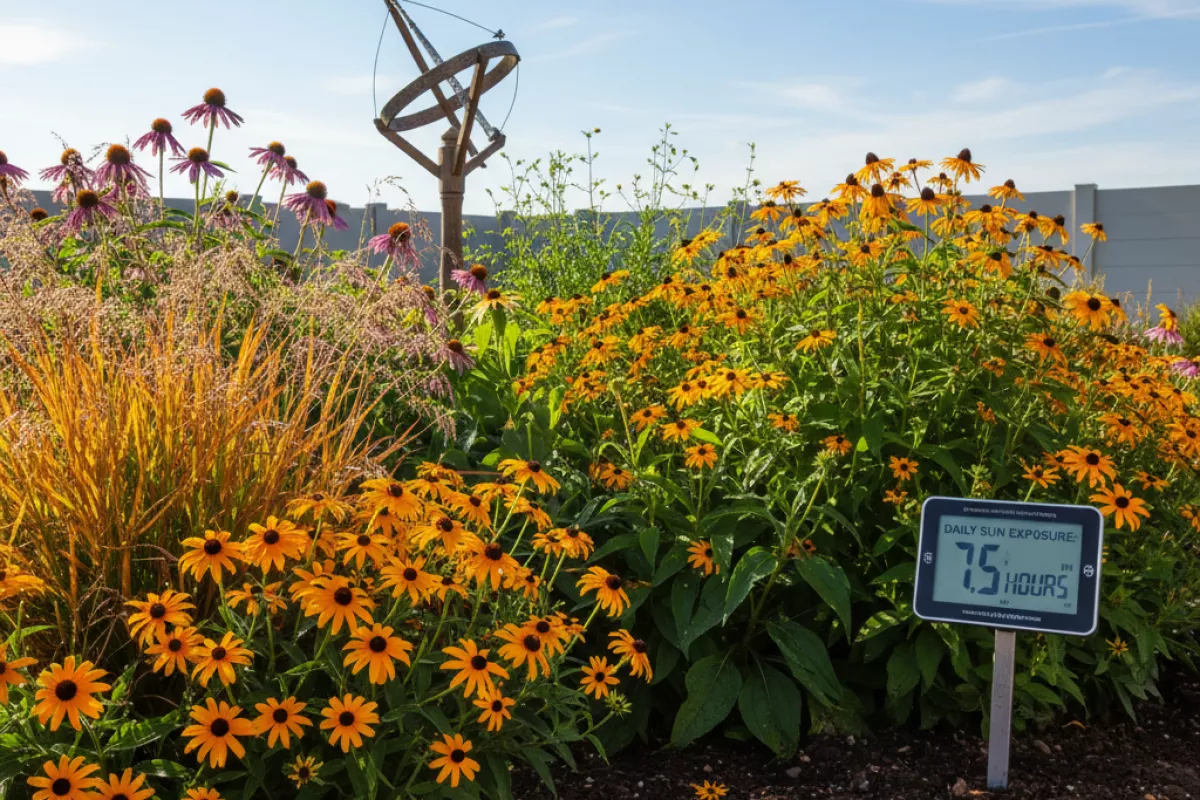
In garden planning, “full sun” usually means a spot that gets at least 6 hours of direct, unobstructed sunlight per day. Many sun-loving plants perform even better with 8–10 hours, but the key is that the light is direct (not filtered through trees or a porch roof) for a good chunk of the day.
Hours alone don’t tell the whole story. The quality of light changes with season, latitude, and what’s nearby. Six hours of intense afternoon sun can be harsher than six hours of gentle morning sun, and a bed that’s sunny in spring can turn into part shade once trees leaf out.
- Direct vs. bright shade: If you can read a book outdoors, that doesn’t automatically mean it’s sunny enough. Full exposure creates crisp shadows with clearly defined edges; bright shade creates softer, blurry shadows.
- Morning sun is kinder: East-facing areas that get 6+ hours of morning-to-midday light often suit “sun” plants without stressing them as much as late-day heat.
- Afternoon sun is intense: West- and south-facing spots can push plants harder, especially during heatwaves. Some “full sun” plants may still appreciate a little late-day relief in very hot climates.
- Reflected heat counts: Light bouncing off pale walls, concrete, gravel, or water can increase sun intensity and heat load. A bed 30 cm (12 in) from a south-facing wall may behave like a hotter microclimate than the rest of the yard.
- Seasonal shifts matter: Track light in midsummer as well as spring. A location that gets 7 hours in April may drop to 4–5 hours once foliage fills in.
| Sun category | Typical direct sun per day | What it looks like on the ground |
|---|---|---|
| Full sun | 6+ hours (often 8–10 hours) | Strong light; sharp-edged shadows for much of the day |
| Part sun / part shade | 3–6 hours | Sun breaks up the day; shadows shift as light comes and goes |
| Bright shade | 0–3 hours (mostly indirect light) | Open sky light but little direct beam; soft shadows |
| Full shade | Near 0 hours | Dense cover; very dim, minimal shadow definition |
If you’re unsure, do a quick “sun audit.” Check the spot every 2 hours from morning to evening and note when the sun is directly hitting the soil or leaves. Add up the total. That simple check is often more reliable than guessing based on how bright the area feels.
Traits of plants that tolerate intense light
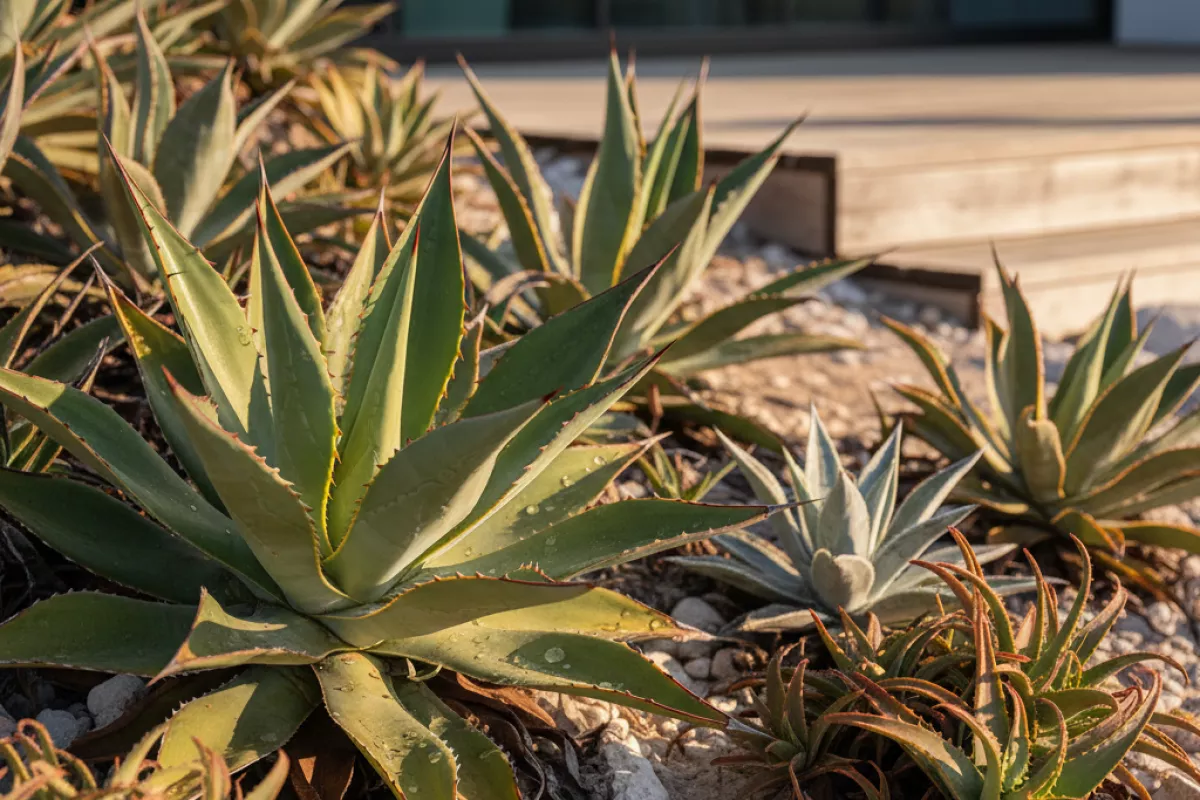
Plants that stay healthy in bright, direct exposure usually share a few practical adaptations: they limit water loss, protect their tissues from sun damage, and keep photosynthesis running without overheating. When you know what to look for, it’s easier to predict which choices will handle a reflective patio, a south-facing bed, or an open, windy slope.
- Thicker, tougher leaves (leathery or waxy): A heavier cuticle acts like a built-in sunscreen and slows evaporation, which helps in hot, exposed spots.
- Silvery, fuzzy, or hairy surfaces: Tiny hairs and pale coloring reflect light and create a cooler boundary layer of air at the leaf surface, reducing stress during midday glare.
- Small or narrow foliage: Fine leaves shed heat faster and present less surface area to the sun, which can be an advantage in dry, high-light beds.
- Succulent or water-storing tissues: Plump leaves or stems store moisture so the plant can ride out short dry spells without wilting.
- Deep, wide, or fibrous root systems: Strong roots anchor plants against wind and reach water from deeper soil layers, improving drought resilience in open sun.
- Leaf orientation that avoids peak sun: Some plants angle leaves more vertically or fold them slightly, reducing direct exposure when the sun is most intense.
- Heat-tolerant growth habits: Mounding forms can shade their own crowns; airy branching improves airflow; and some species naturally slow growth during extreme heat, then rebound when conditions ease.
- Protective pigments (reddish or purple tones): Anthocyanins and related compounds can help buffer tissues from excess radiation, especially on new growth.
- Efficient water-use physiology: Many sun lovers partially close stomata during the hottest hours to conserve moisture, then resume normal gas exchange when temperatures drop.
These traits don’t guarantee a plant will thrive in every sunny location. Soil drainage, reflected heat from stone or concrete, and wind exposure can push conditions from “bright” to “punishing.” If a plant has several of the features above, it’s generally a better bet for full sun than one with thin, soft, broad leaves that dry out quickly.
Popular species suited for bright exposure
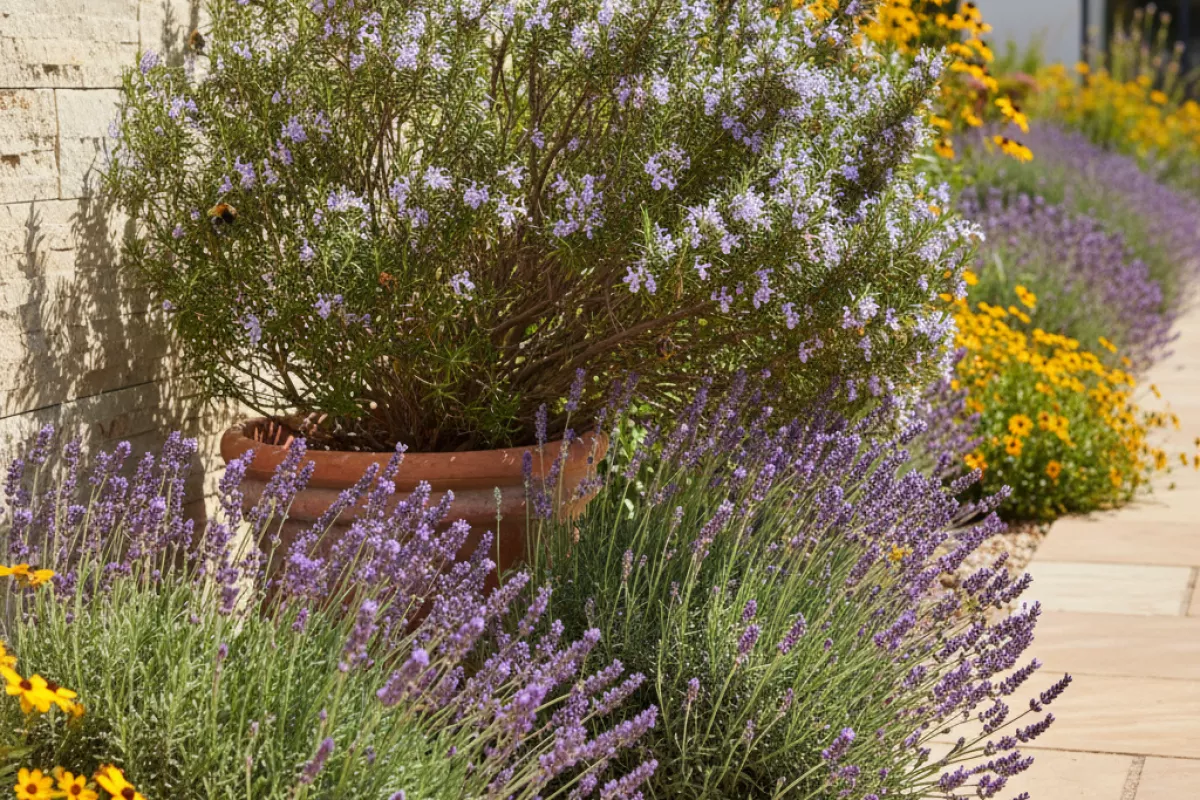
When a spot gets long hours of direct light, plant choice matters as much as watering. The species below are reliable in sunny beds, borders, and containers, and most handle reflected heat from paving or walls once established.
For more options beyond this table, use this curated list of best full-sun plants for bright beds and borders.
| Plant | Best use | Bloom/interest | Color range | Notes for strong sun |
|---|---|---|---|---|
| Lavender (Lavandula) | Borders, pots | Summer flowers, fragrance | Purple, violet | Needs fast-draining soil; avoid soggy roots in heat. |
| Rosemary (Salvia rosmarinus) | Edible landscaping, containers | Evergreen foliage, small blooms | Blue, pale violet | Let soil dry slightly between waterings; great near warm walls. |
| Black-eyed Susan (Rudbeckia) | Perennial beds, cut flowers | Long summer-to-fall bloom | Yellow, gold | Tolerates heat; deadhead for more flowers. |
| Coneflower (Echinacea) | Pollinator gardens | Summer blooms, seed heads | Purple, pink, white, orange (cultivars) | Handles drought once rooted; leave seed heads for birds. |
| Yarrow (Achillea) | Dry borders, slopes | Flat flower clusters | White, yellow, soft pink, red (cultivars) | Too much fertilizer can make it floppy; lean soil is fine. |
| Sedum/stonecrop (Hylotelephium) | Rock gardens, containers | Late-season blooms | Pink, rose, red; bronze foliage | Succulent-like leaves store water; avoid overwatering. |
| Daylily (Hemerocallis) | Mass plantings, tough spots | Repeated summer flowering | Yellow, orange, red, burgundy, near-white | Very adaptable; looks best with occasional deep soaking. |
| Salvia (Salvia nemorosa and relatives) | Borders, pollinator strips | Spikes of blooms | Blue, purple, violet, white, pink | Cut back after the first flush to encourage rebloom. |
| Marigold (Tagetes) | Beds, edging, containers | Summer-to-frost bloom | Yellow, orange, deep gold | Heat-tough; deadhead to keep flowers coming. |
| Zinnia (Zinnia elegans) | Cut flowers, beds | Fast, nonstop bloom | Red, pink, orange, yellow, white, lime, purple | Needs airflow; water at soil level to reduce mildew risk. |
| Petunia (Petunia) | Hanging baskets, pots | Heavy flowering | Purple, pink, red, white, yellow, bi-color | Feeds more than most sun plants; pinch back if leggy. |
| Geranium (Pelargonium) | Pots, window boxes | Long bloom season | Red, pink, salmon, white, bicolor | Let the top layer dry slightly; hates soggy roots. |
| Lantana (Lantana camara) | Hot borders, containers | Heat-proof blooms | Yellow, orange, pink, red, multi-color clusters | Thrives in heat; drought-tough once established. |
| Portulaca / moss rose (Portulaca grandiflora) | Rock gardens, edging | Blooms in intense sun | Neon pink, red, orange, yellow, white | Needs very fast drainage; perfect for hot, dry spots. |
| Gazania (Gazania rigens) | Sunny borders, slopes | Daisy-like flowers | Orange, yellow, red, bronze stripes | Opens in full sun; drought-tough in gritty soil. |
| Gaillardia / blanket flower (Gaillardia) | Prairie beds, pollinators | Long bloom | Red, orange, yellow, bicolor | Likes lean soil; too much fertilizer reduces blooms. |
| Verbena (Verbena) | Groundcover, containers | Continuous clusters | Purple, pink, red, white | Heat-tolerant; shear lightly to refresh blooms. |
| Coreopsis (Coreopsis) | Borders, naturalized beds | Summer bloom | Yellow, gold, red (cultivars) | Drought-tough once established; deadhead for longer bloom. |
| Russian sage (Salvia yangii) | Hot borders, back of beds | Airy summer flowers | Lavender-blue; silvery foliage | Loves heat and wind; needs sharp drainage. |
| Dusty miller (Jacobaea maritima) | Edging, contrast planting | Foliage interest | Silver, gray-white foliage | Great heat reflector; keep on the dry side. |
| Red-hot poker (Kniphofia) | Statement borders | Spikes of blooms | Orange, coral, red, yellow gradients | Handles sun well; prefers decent drainage and deep watering. |
| Canna lily (Canna) | Tropical beds, big containers | Bold foliage and flowers | Red, orange, yellow; burgundy foliage (some) | Likes more moisture than most sun plants; mulch helps. |
| Ice plant (Delosperma) | Rock gardens, dry slopes | Carpet of blooms | Magenta, purple, pink, yellow | Extremely drought-tough; needs gritty, fast-draining soil. |
If you’re choosing for containers, prioritize plants that stay compact and don’t mind warmer root zones, like lavender, rosemary, sedum, or salvia. In-ground plantings can be a bit more forgiving, but even sun-lovers appreciate a mulch layer around 5 cm (2 in) thick to slow evaporation and keep soil temperatures steadier.
- For hot, dry exposures: yarrow, sedum, lavender, and rosemary tend to cope well once established.
- For long bloom and color: rudbeckia and coneflower keep going through much of the bright season.
- For low-fuss coverage: daylilies handle a wide range of soils and still perform in intense light.
One practical rule: water deeply rather than frequently, especially during heat waves. Aim to moisten the root zone, then let the top few centimeters dry—about 2–5 cm (1–2 in) depending on your soil—before watering again.
Soil conditions for sun-loving plants
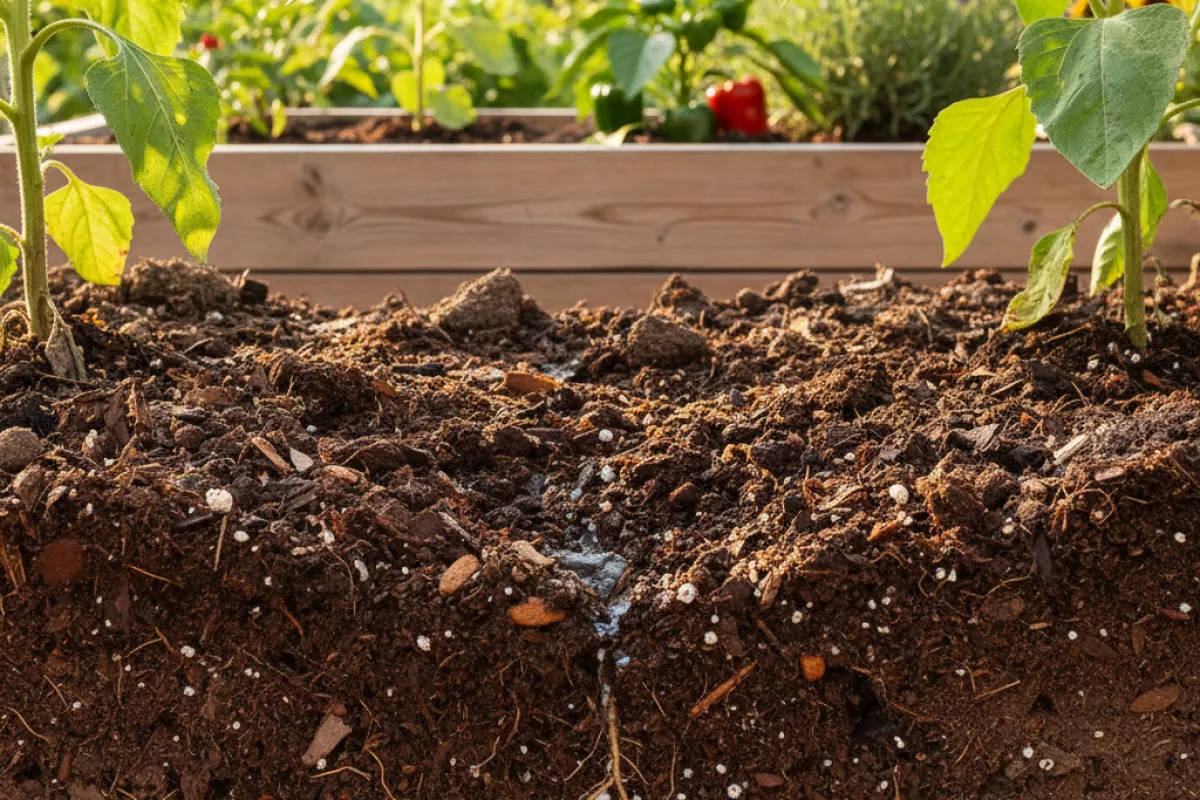
Full-sun beds tend to dry faster and heat up more than shaded areas, so the goal is a root zone that drains well but still holds enough moisture for steady growth. Most sun-tolerant ornamentals and edibles do best in soil that’s loose, crumbly, and rich in organic matter rather than compacted or crusted.
- Drainage first: If water sits on the surface for more than 1 hour after a thorough soak, roots can struggle in hot weather. Improve heavy ground by mixing in compost and creating a slightly raised planting area.
- Texture that matches the plant: Mediterranean herbs and many drought-tough perennials prefer sandy or gritty mixes; moisture-loving bloomers want more humus. As a quick check, soil should form a weak ball when squeezed, then break apart with a tap.
- Organic matter for resilience: Work in 5–8 cm (2–3 in) of finished compost across the top 15–20 cm (6–8 in). This boosts water-holding in sandy soils and improves aeration in clay.
- Mulch to manage heat: A 5–7.5 cm (2–3 in) layer of mulch keeps the surface cooler and slows evaporation. Keep mulch 5 cm (2 in) away from stems to reduce rot.
- pH awareness: Many sun-loving plants are happiest around slightly acidic to neutral soil (roughly pH 6.0–7.0). If you’re unsure, a basic soil test is more reliable than guessing with amendments.
- Fertility without overfeeding: In bright exposure, too much nitrogen can cause lush, floppy growth. Use compost as the baseline and add a balanced, slow-release fertilizer only if plants show pale leaves or weak flowering.
| Sun-plant group | Ideal soil traits | How to adjust the bed |
|---|---|---|
| Drought-tolerant perennials (lavender, sedum) | Fast-draining, airy; moderate fertility | Add grit or coarse sand; keep compost light; avoid heavy mulches |
| Flowering annuals (zinnia, marigold) | Even moisture with good drainage; moderate nutrients | Mix in compost; water deeply when top 2.5–5 cm (1–2 in) dries |
| Heat-loving vegetables (tomato, pepper) | Deep, fertile, well-drained; consistent moisture | Incorporate compost into 20–30 cm (8–12 in); mulch after soil warms |
| Native prairie-style plants (coneflower, rudbeckia) | Well-drained; not overly rich | Limit fertilizer; use compost sparingly; avoid constant wetness |
If you’re planting into tough clay or very sandy ground, focus on gradual improvement rather than a one-time overhaul. A yearly top-dressing of 2.5–5 cm (1–2 in) compost plus consistent mulching usually brings the biggest gains for sun-exposed gardens without creating sudden texture layers that can trap water.
Watering needs in full sun locations
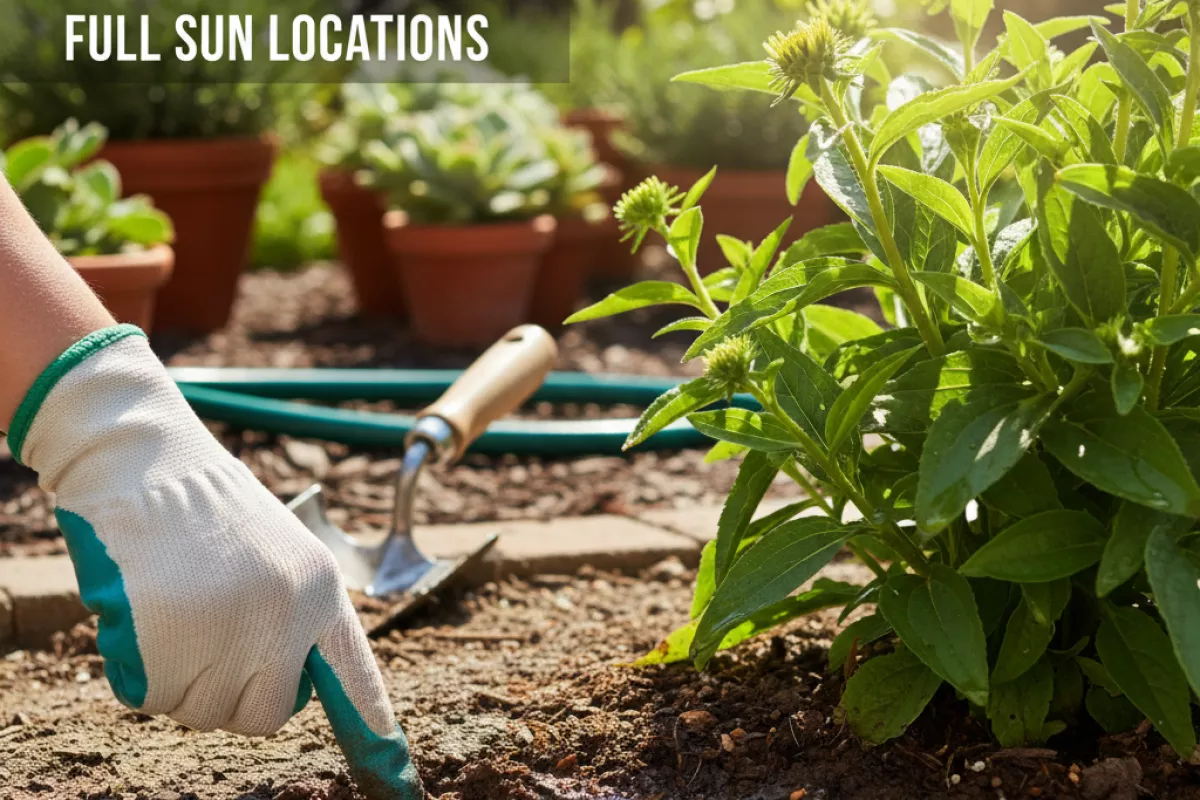
Plants in all-day light lose moisture faster because heat, wind, and reflective surfaces pull water from both soil and leaves. The goal is to keep roots evenly hydrated without keeping the ground soggy, which can be just as stressful as drought.
Start by checking moisture at root depth: push a finger or trowel down about 5–8 cm (2–3 in). If it’s dry at that level, it’s time to water; if it’s still cool and damp, wait. When you do irrigate, water slowly and deeply so it reaches the root zone rather than evaporating off the surface. If you want a simple personalized interval to start from, try the plant watering calculator and then adjust by weather and soil.
- Water early: Morning watering reduces evaporation and helps foliage dry quickly. Late-day watering can leave leaves wet overnight, which can encourage disease in some plants.
- Soak, don’t sprinkle: Aim for a thorough drench that wets the soil down 15–25 cm (6–10 in) for most garden plants, then allow the top layer to dry slightly before the next session.
- Adjust for plant type: Drought-tolerant choices (lavender, sedum, rosemary) prefer deeper, less frequent watering once established, while thirstier bloomers (petunias, zinnias) often need more consistent moisture during peak heat.
- Containers need extra attention: Pots heat up quickly and can dry out in a day. In hot spells, check daily and water until you see steady drainage; empty saucers so roots don’t sit in water.
- Use mulch as a buffer: A 5–8 cm (2–3 in) layer of mulch reduces evaporation and keeps soil temperatures steadier. Keep mulch a few cm (about 1 in) back from stems to prevent rot.
- Watch for “false drought” signs: Midday wilting can happen even when soil is moist. If the plant perks up in the evening, it may not need water; confirm with a soil check before adding more.
| Situation in full sun | What to do | Why it helps |
|---|---|---|
| Newly planted (first 2–3 weeks) | Water more frequently, keeping the root ball evenly moist; gradually extend time between waterings. | New roots haven’t spread into cooler, deeper soil yet. |
| Established in-ground plants | Deep water, then let the top few cm (about 1–2 in) dry before watering again. | Encourages deeper rooting and better heat tolerance. |
| Heatwave above 32°C (90°F) | Check moisture daily; add an extra deep soak if soil is drying quickly at 5–8 cm (2–3 in). | High temperatures accelerate evaporation and plant transpiration. |
| Windy, exposed spots | Water a bit more often and prioritize mulch; consider a windbreak if possible. | Wind strips moisture from leaves and soil surface. |
| Sandy soil | Water more frequently in smaller deep doses; add compost to improve water holding. | Water drains quickly past the root zone. |
| Clay soil | Water less often but longer; ensure drainage and avoid watering if soil is already sticky/wet. | Clay holds water longer and can suffocate roots if overwatered. |
If you’re unsure, let the plant and soil guide you: crispy leaf edges, stunted growth, and dry soil at 5–8 cm (2–3 in) point to underwatering, while yellowing leaves, a sour smell, or constantly wet soil suggest too much water. Small adjustments beat big swings, especially in bright, hot exposures.
How to prevent leaf scorch
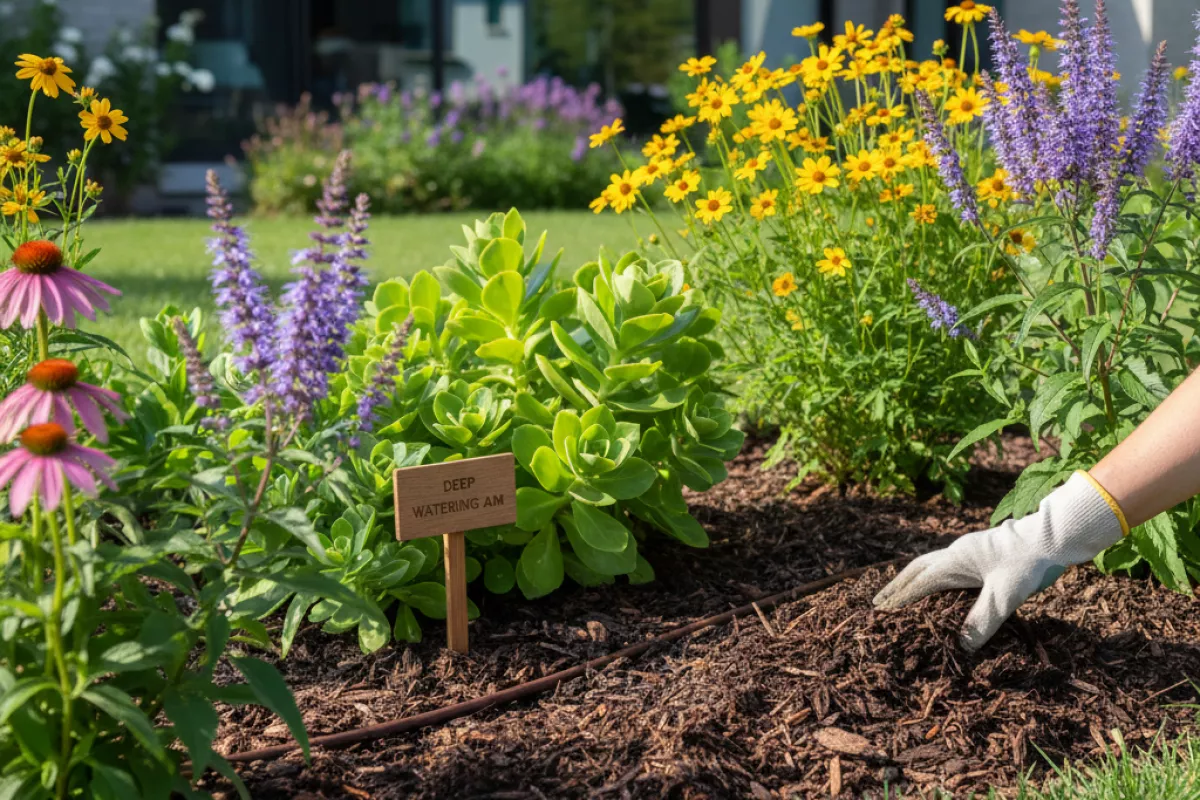
Sun-bleached patches and crispy edges usually come from a mismatch between heat, light, and available moisture. The goal is to keep leaves cool enough and hydrated enough to handle intense afternoon exposure without constantly “rescuing” the plant.
- Water for roots, not for the clock. Give a deep soak when the top 5 cm (2 in) of soil feels dry, aiming to moisten the root zone rather than just the surface. Early morning watering reduces midday stress and limits evaporation.
- Mulch to stabilize soil temperature. Add 5–8 cm (2–3 in) of mulch over the root area, keeping it a few cm (about 1 in) away from stems. This slows moisture loss and prevents the “hot pan” effect on shallow roots.
- Use shade strategically during peak heat. If a plant is still establishing or you’re in a heatwave, temporary shade cloth (around 30–50%) or a light screen on the west side can reduce late-day intensity without turning a full-sun bed into full shade.
- Harden off sun-loving plants before moving them into full exposure. Increase direct light over 7–14 days so leaves can thicken their protective cuticle. Sudden moves from bright shade to all-day sun are a common cause of leaf burn.
- Prioritize soil structure and drainage. Compacted soil can’t deliver water fast enough on hot days, while waterlogged soil can damage roots and mimic drought stress. Work in compost to improve both water-holding and aeration, especially in containers and raised beds.
- Choose containers and placements that stay cooler. Dark pots heat up quickly; consider lighter-colored containers or a pot sleeve. Keep pots off reflective surfaces like concrete or pale stone that bounce extra light and heat onto foliage.
- Watch for salt and fertilizer burn. Overfeeding can make leaf edges brown and brittle, especially in hot weather. If you suspect buildup, flush the soil with water equal to about 3× the container volume (e.g., 12 L (3 gal) of water for a 4 L (1 gal) pot), letting it drain fully.
- Reduce wind stress. Hot, dry wind accelerates transpiration and can trigger scorch even when the soil is damp. A permeable windbreak (lattice, shrubs, or a screen) helps more than a solid wall that creates turbulence.
- Prune with restraint in summer. Avoid heavy pruning right before a hot spell; suddenly exposed inner leaves can sunburn. If you must prune, do it gradually and leave some canopy to shade sensitive growth.
| What you see on leaves | Likely cause | What to do next |
|---|---|---|
| Crispy brown edges, leaf tips dry | Irregular watering, hot wind, salt buildup | Deep-water consistently; add mulch; flush soil if fertilized heavily |
| Pale, bleached patches (often on the sunniest side) | Sudden jump in light intensity; reflective heat | Provide temporary afternoon shade; harden off; move pots away from reflective surfaces |
| Leaves wilt at midday but recover at night | Heat stress; roots can’t keep up temporarily | Water in the morning; improve soil; add light shade during extreme heat |
| Scorch despite moist soil | Root damage (waterlogging/compaction) or too much fertilizer | Check drainage; loosen compacted soil; pause feeding and flush if needed |
Once damage appears, the affected tissue won’t turn green again, but new growth can be healthy if conditions improve. Focus on steady moisture, cooler roots, and a gentler transition into intense sun, especially for newly planted or recently repotted full-sun favorites.
Seasonal care adjustments
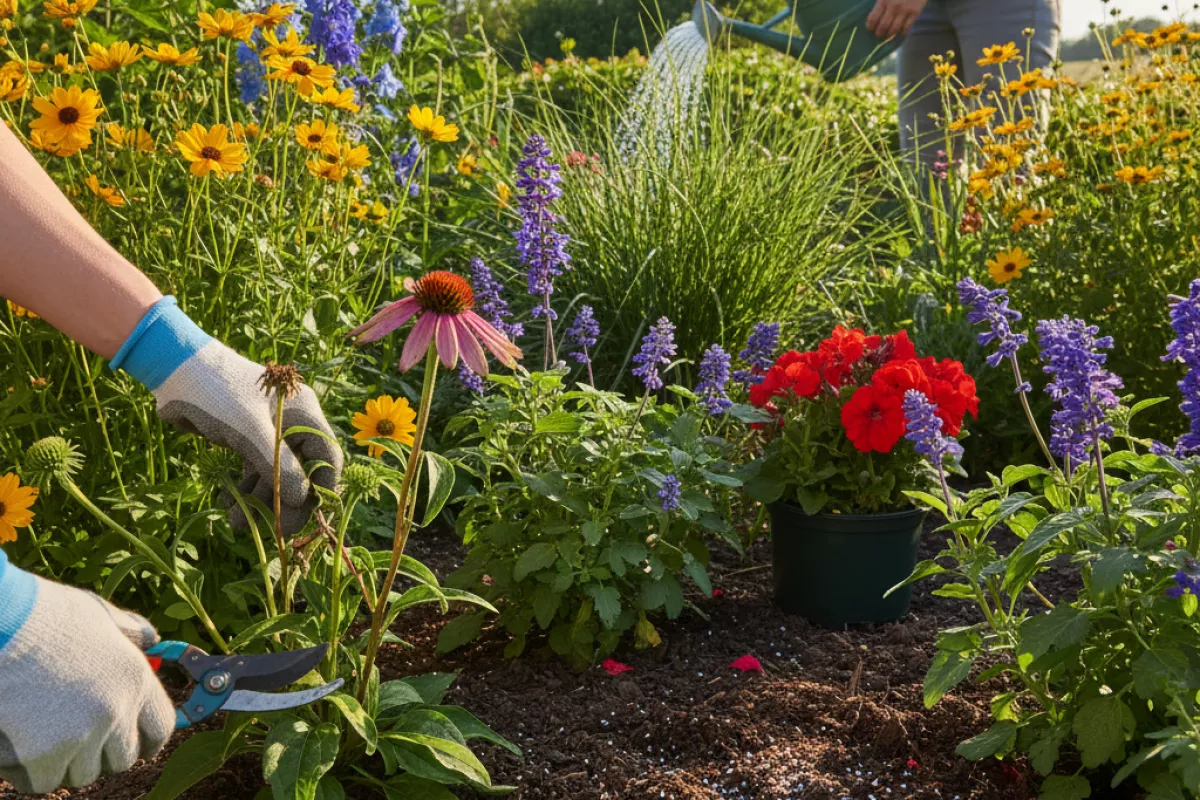
Sun-loving plants change pace as the light, heat, and rainfall shift through the year. If you match watering, feeding, and pruning to the season, you’ll get sturdier growth, better flowering, and fewer stress problems like scorched leaves or root rot.
- Spring: Resume regular watering once the top 2–5 cm (1–2 in) of soil dries. Top-dress beds with 2–5 cm (1–2 in) of compost and start a balanced, slow-release feed when new growth is clearly underway. Cut back winter-damaged stems and divide crowded perennials before they hit their peak growth.
- Early summer: Water deeply rather than often—aim for moisture reaching 15–20 cm (6–8 in) down to encourage deeper roots. Add a 5–8 cm (2–3 in) mulch layer, keeping it a few cm (about 1 in) away from stems to reduce rot and pests. Stake tall bloomers early so supports aren’t fighting hardened stems later.
- High summer heat: Adjust irrigation to mornings, and increase frequency during heat waves, especially for containers. If afternoon sun is intense, give vulnerable plants temporary shade cloth or a taller “nurse” plant for a week or two. Deadhead regularly to keep flowering going, but avoid heavy pruning during extreme heat; it can trigger tender regrowth that burns.
- Late summer into fall: Ease off high-nitrogen fertilizer so plants stop pushing soft growth and can harden before cold. Keep watering until the ground cools; drought-stressed plants go into winter weaker. Leave some seed heads for birds and winter interest, but remove diseased foliage to reduce overwintering problems.
- Winter (where cold occurs): Protect roots more than tops. Add 5–10 cm (2–4 in) of mulch after the soil has cooled, and water once every 3–4 weeks during dry spells if the ground isn’t frozen. For borderline-hardy full-sun plants in pots, move containers to a sheltered spot and insulate the pot sides to prevent freeze-thaw root damage.
| Season | What to do | Why it helps full-sun plants |
|---|---|---|
| Spring | Compost top-dress 2–5 cm (1–2 in); light pruning; begin feeding when growth starts | Rebuilds soil moisture-holding capacity and fuels strong, sun-ready growth |
| Summer | Deep watering to 15–20 cm (6–8 in); mulch 5–8 cm (2–3 in); deadhead | Reduces heat stress, limits evaporation, and keeps blooms coming |
| Fall | Reduce nitrogen; keep watering until cool; tidy diseased leaves | Encourages hardening off and lowers pest/disease carryover |
| Winter | Mulch 5–10 cm (2–4 in); occasional watering if unfrozen; protect pots | Prevents root damage from cold and drying winds, especially in containers |
If you’re unsure how far to push changes, watch the plant: drooping at midday that recovers by evening is common in hot sun, but drooping that lasts into morning usually means it needs a deeper soak. Yellowing lower leaves plus soggy soil points to overwatering—more common in spring and fall than in midsummer.
Signs plants are thriving in strong light
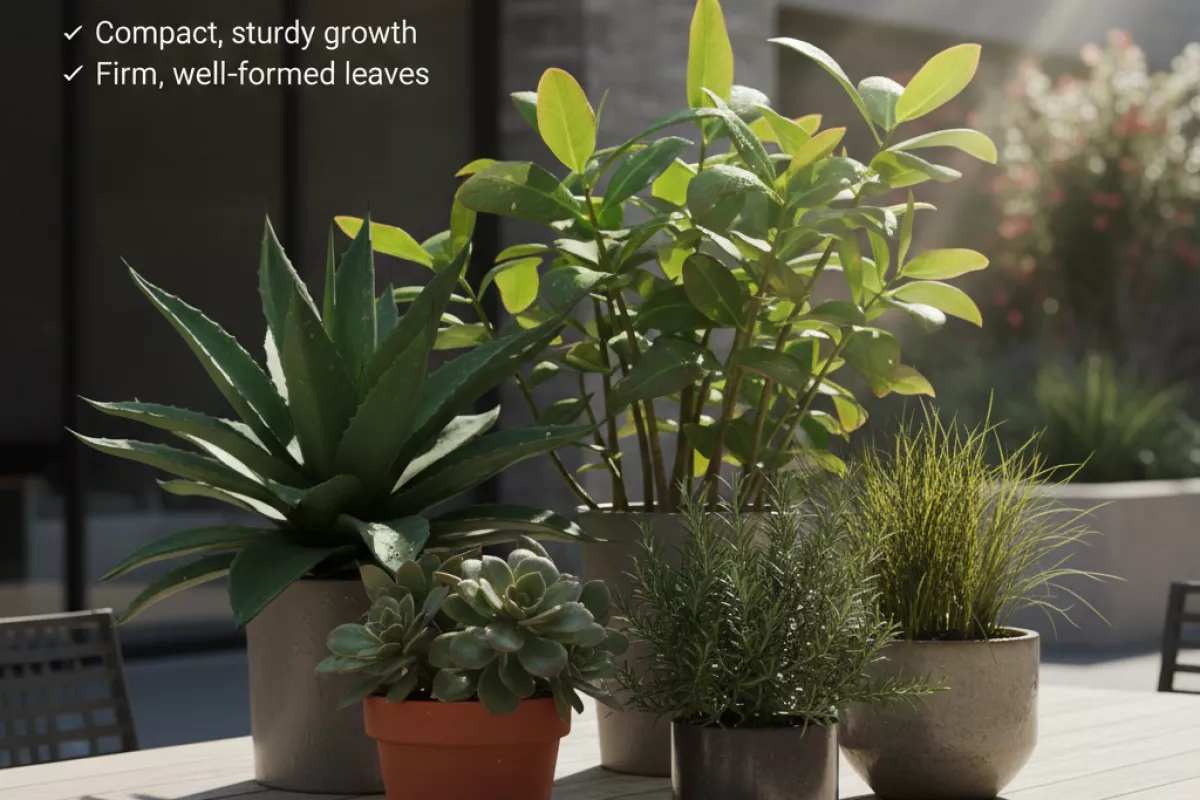
Healthy sun-lovers don’t just “survive” bright exposure—they show a set of clear, consistent growth cues. Use the checks below to confirm your plant is using the light well, rather than merely tolerating it.
- Compact, sturdy growth: New stems are thicker and hold themselves upright without flopping. Internodes (the spaces between leaves) stay short instead of stretching out.
- Leaves look firm and well-formed: Foliage feels slightly thicker or more leathery (common in full-sun plants), with clean edges and no persistent droop during the cooler parts of the day.
- Even, intentional color: Greens are rich (not pale), and any red, purple, or bronze tones appear as a uniform “sun blush,” not as patchy scorch. Variegation stays crisp rather than washing out.
- Steady new growth: You see regular leafing out or fresh tips during the growing season, not a long pause after moving the plant into brighter conditions.
- Reliable flowering or fruiting: Buds form and open on schedule for that species, and blossoms don’t drop immediately. For fruiting plants, set is consistent rather than sporadic.
- Soil dries at a predictable pace: In bright exposure, pots typically dry faster; a thriving plant will “drink” regularly without constant wilting. If you water and the pot still stays soggy for days, the plant may not be growing strongly enough for that container or mix.
- Good midday recovery: Some plants briefly soften in peak heat, then perk back up as temperatures drop. If leaves remain limp into evening, it’s more likely water stress than normal heat response.
- No progressive leaf damage: Occasional older-leaf shed is normal, but you shouldn’t see a steady march of crispy tips, bleached patches, or papery areas spreading week to week.
- No sticky residue or clustered insects: In full sun, tender new growth can still attract pests. If you notice curled tips or sticky leaves, check for sap-suckers and follow this guide on getting rid of aphids early before colonies spread.
| What you observe | What it usually means in bright exposure | Simple next step |
|---|---|---|
| Short internodes, upright stems | Light level is supporting strong structure | Keep conditions steady; rotate pots weekly for even shape |
| Deep green or consistent “sun tint” | Plant is producing protective pigments and chlorophyll efficiently | Maintain current placement; avoid sudden shifts to even harsher afternoon sun |
| Frequent buds and repeat blooms | Energy intake is high enough for reproduction | Deadhead as needed; feed lightly during active growth |
| Leaves wilt at noon but recover by evening | Temporary heat response; roots still keeping up | Water earlier in the day; add mulch 5 cm (2 in) thick to reduce evaporation |
| Pale new leaves or stretched, leggy growth | Light may still be insufficient, or the plant is shaded part of the day | Move to a brighter spot or reduce nearby shading; acclimate over 7–10 days |
| Bleached patches, crispy edges, persistent droop | Sunscald and/or chronic drought stress | Provide afternoon shade, check watering depth, and ensure roots aren’t pot-bound |
If you’re unsure, watch the newest growth first. Fresh leaves and tips reflect current conditions, while older foliage may show damage from a past heatwave, missed watering, or a recent move into brighter sun.