Easy-Care Plants for Rooms With Little Sun

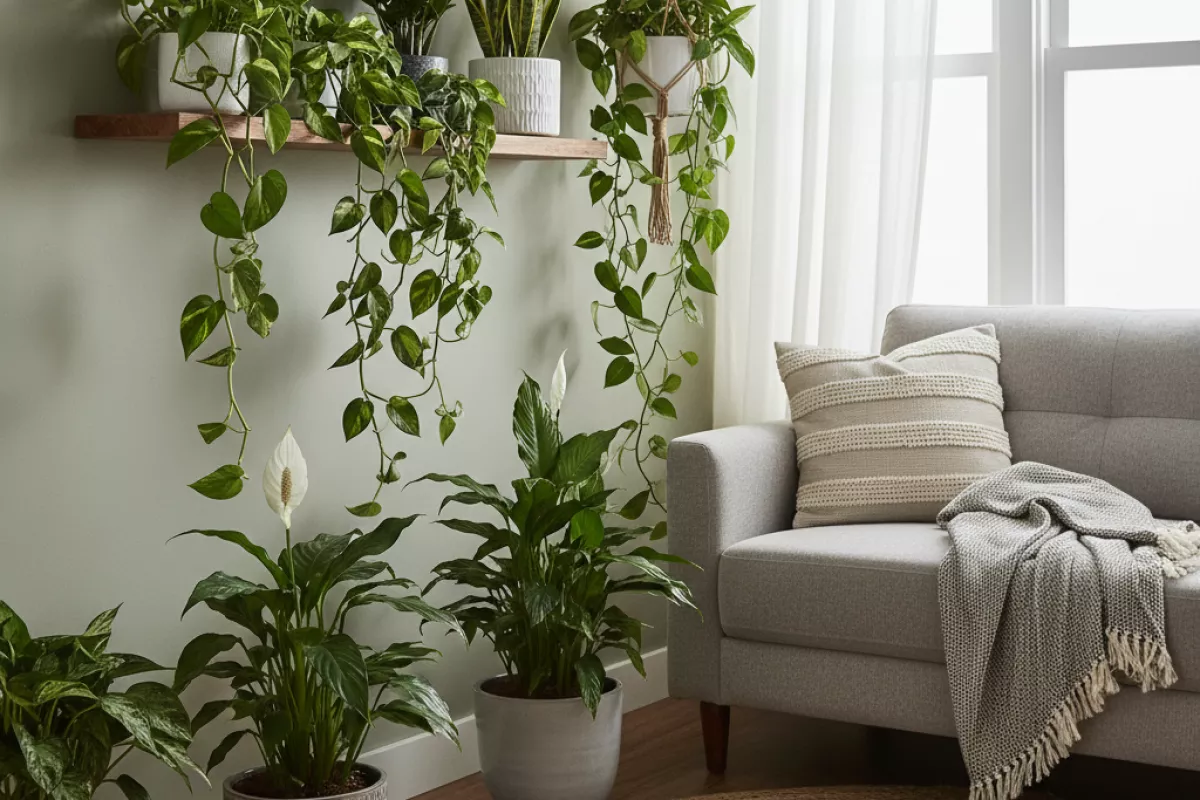 Learn what makes a plant easy to care for, the key traits of low-maintenance shade plants, and the best beginner picks. It covers simple watering and feeding basics, how to avoid overcare, placement tips for low light, and a minimal routine care plan.
Even with dim corners and north-facing rooms, you can grow low-maintenance houseplants that cope with limited sunlight. Choose shade-tolerant species that grow steadily, need little fuss, and can handle the occasional missed watering. If you are worried that slow drying in dim rooms may cause root problems, use this tool to check root rot risk before symptoms appear.
What makes a plant easy to care for
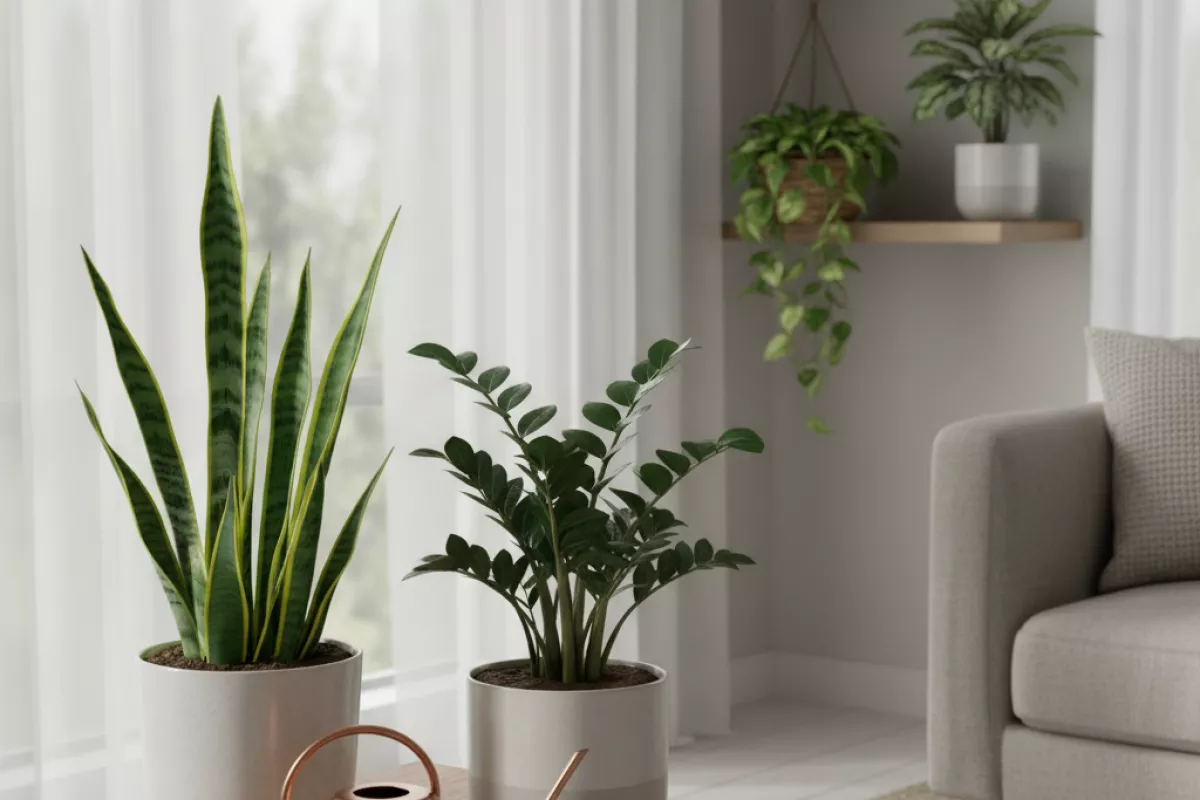
The simplest houseplants are the ones that stay stable when your routine isn’t. In rooms with limited daylight, that usually means a plant that can photosynthesize slowly, doesn’t demand constant watering, and won’t fall apart if humidity or temperature shifts a bit.
- Tolerates low light without “stretching” too much. Some plants cope with shade by getting leggy (long gaps between leaves). Easier options keep a compact shape even a few feet/meters from a window.
- Forgiving watering needs. Low-sun rooms dry out more slowly, so plants that store water (thick leaves, canes, rhizomes) handle missed waterings and are less likely to rot if you’re cautious.
- Clear signals when something’s off. The best low-maintenance picks show readable cues—slight droop, duller leaves, or dry topsoil—before serious damage happens.
- Moderate growth rate. Slow to steady growers need less pruning, repotting, and feeding. Fast growers can be easy too, but they ask for more frequent trimming and turning.
- Handles average indoor conditions. Plants that tolerate typical homes—about 18–24°C (65–75°F) and normal household humidity—are simpler than species that insist on warm, very humid air.
- Low pest magnet potential. Tougher foliage and slower, sturdier growth tends to attract fewer issues. Even then, “easy” plants are the ones that bounce back after a quick wipe-down and a small care adjustment.
- Flexible feeding requirements. In dimmer light, plants use nutrients slowly. Easy-care types don’t need frequent fertilizer and won’t sulk if you skip a month or two.
A practical way to judge effort: if a plant can go 10–14 days (1.5–2 weeks) between water checks in your space and still looks normal, it’s probably a good fit for a low-sun room. Pair that with a pot that drains well, and you’ll avoid most beginner problems.
Traits of low-maintenance shade plants
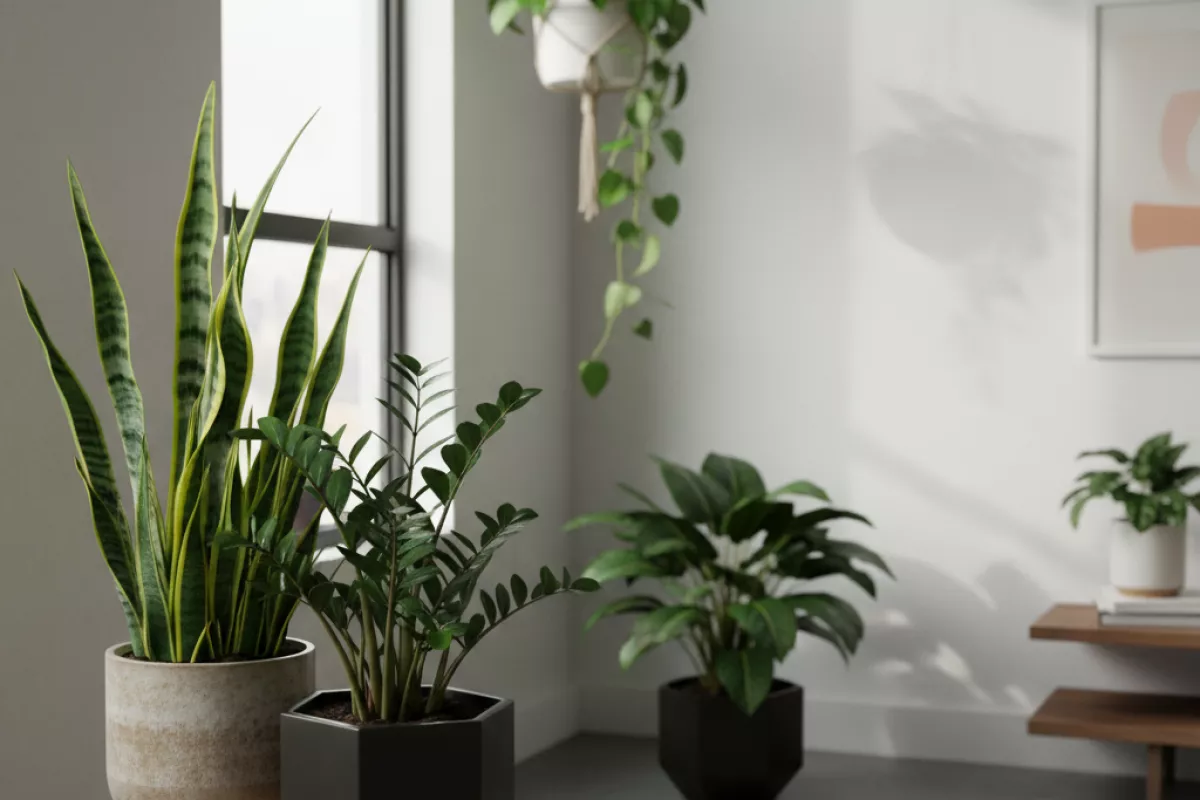
The easiest plants for dim rooms share a few practical qualities: they grow steadily without bright light, they don’t punish you for an occasional missed watering, and they stay presentable even when conditions aren’t perfect. If you want a quick reference checklist, see the characteristics of true low-light survivors before choosing plants for a north-facing window, hallway, or a corner with mostly reflected daylight.
- Slow, steady growth in low light
Plants that naturally live under forest canopies tend to tolerate shade indoors. Slower growth is a bonus: it means fewer repots, less pruning, and less demand for frequent feeding. - Leaves built to cope with indoor air
Thick, waxy, or slightly leathery leaves usually lose water more slowly, which helps in heated or air-conditioned rooms. Many reliable low-light choices also handle average humidity without constant misting. - Clear watering signals
Low-fuss shade-tolerant houseplants often “tell” you when they’re thirsty: leaves soften, curl slightly, or the pot feels noticeably lighter. Avoid plants that collapse suddenly or require narrow timing to stay healthy. - Roots that prefer drying a bit between waterings
In low sun, soil dries more slowly. Plants that can handle a partial dry-down are safer than ones that need consistently moist mix. As a rule of thumb, many easy indoor shade plants do well when the top 2–5 cm (1–2 in) of soil dries before you water again. - Flexible temperature tolerance
Rooms vary—especially near doors or windows. Sturdy options typically stay happy in the common indoor range of about 18–27°C (65–81°F) and don’t react dramatically to small swings. - Low fertilizer needs
If a plant can keep good color and leaf size with light feeding (or none for months), it’s usually a better fit for low-light spaces. Heavy feeders tend to get pale, leggy, or stressed when sun is limited. - Good “forgiveness factor” for imperfect care
The best picks bounce back after minor mistakes—like a late watering, a week of lower temperatures, or being moved to a new spot. They may drop an older leaf or two, but they don’t spiral into chronic decline. - Resistance to common indoor pests
No plant is pest-proof, but tougher foliage and slower, sturdier growth often mean fewer issues with spider mites, fungus gnats, or mealybugs. In low light, pest resistance matters because recovery is slower.
When you’re comparing options, prioritize tolerance over speed: a plant that grows a bit slower but stays stable in shade will feel far more “easy-care” than one that needs frequent adjustments to light, watering, and feeding.
Best choices for beginners
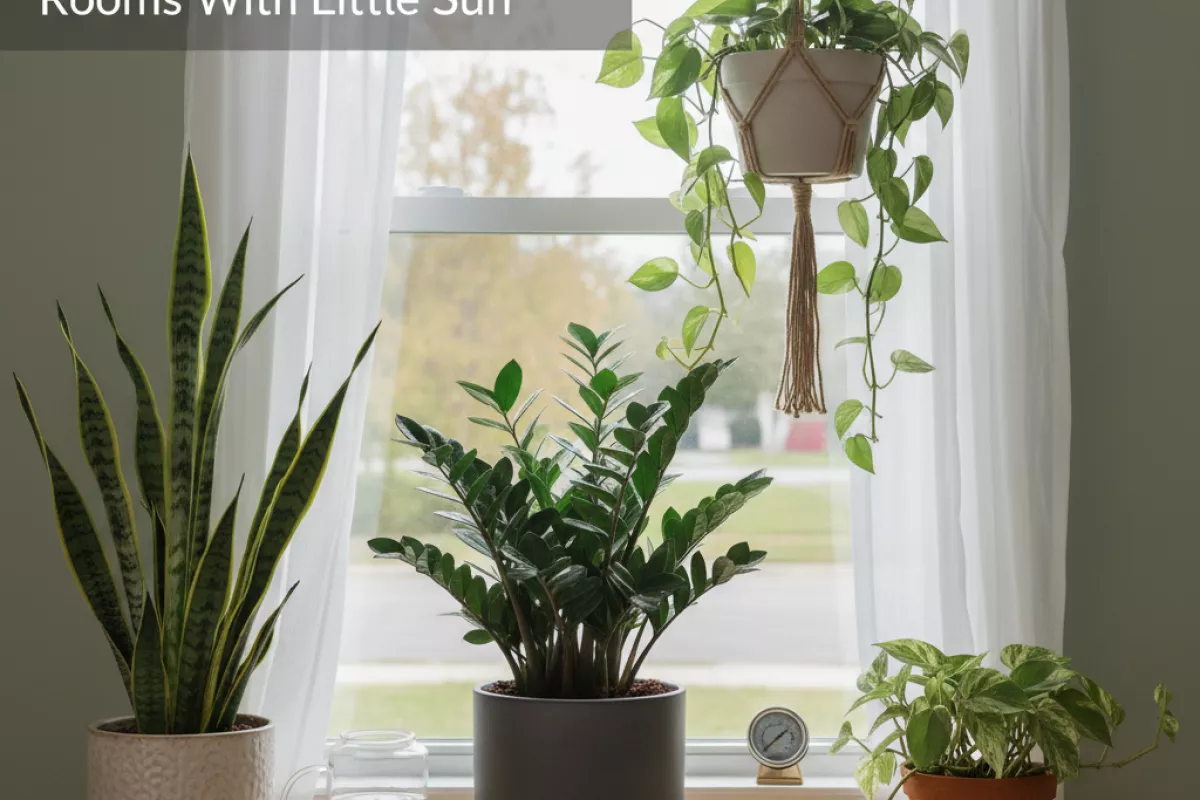
If you’re new to houseplants and your room doesn’t get much daylight, start with varieties that tolerate shade, forgive missed waterings, and don’t demand fussy humidity. The plants below stay steady in low-light corners and usually bounce back from small mistakes.
| Plant | Light it tolerates | Watering rhythm (typical) | Why it’s beginner-friendly |
|---|---|---|---|
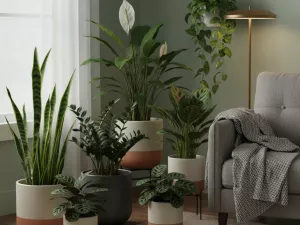
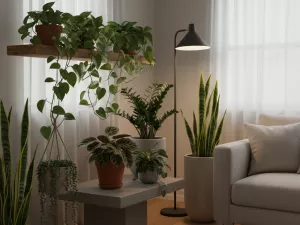
| Snake plant (Sansevieria / Dracaena trifasciata) | Low to medium; avoid harsh direct sun | Let soil dry fully; often every 14–28 days (2–4 weeks), depending on season | Handles low light well and prefers being left alone; overwatering is the main risk |
| ZZ plant (Zamioculcas zamiifolia) | Low to bright indirect; slow growth in deeper shade | Dry out most of the way; commonly every 14–21 days (2–3 weeks) | Thick rhizomes store water, so it’s resilient if you forget a watering |
| Pothos (Epipremnum aureum) | Low to medium indirect; variegation fades in dim spots | When top 2–5 cm (1–2 in) is dry; often every 7–14 days (1–2 weeks) | Clear thirst signals (slight droop), easy to prune, and simple to propagate |
| Heartleaf philodendron (Philodendron hederaceum) | Low to medium indirect | When top 2–5 cm (1–2 in) is dry; often every 7–14 days (1–2 weeks) | Steady growth in modest light and forgiving if watering isn’t perfectly timed |
| Cast iron plant (Aspidistra elatior) | Low light; dislikes strong sun | Let top half of soil dry; often every 14–21 days (2–3 weeks) | Slow-growing and tough; tolerates inconsistent care and dim rooms |
| Peace lily (Spathiphyllum) | Low to medium indirect; no direct sun | When top 2–5 cm (1–2 in) is dry; often every 7–10 days (1–1.5 weeks) | Leaves droop when thirsty, then perk up after watering; good feedback for learners |
| Chinese evergreen (Aglaonema) | Low to medium indirect; tolerates shade well | Allow top 3–5 cm (1–2 in) to dry; often every 7–14 days (1–2 weeks) | Stable in low light, slow growth, and forgiving of minor watering mistakes |
| Parlor palm (Chamaedorea elegans) | Low to medium indirect; no direct sun | When top layer dries; typically every 7–10 days (1–1.5 weeks) | Compact, adaptable, and tolerant of average indoor conditions |
| Dieffenbachia (Dumb cane) | Low to medium indirect; brighter light keeps patterns stronger | When top 2–5 cm (1–2 in) dries; usually every 7–10 days (1–1.5 weeks) | Shows clear watering signals and grows steadily without strict care |
| Monstera adansonii | Low to medium indirect; slower growth in shade | When top 2–5 cm (1–2 in) dries; often every 7–14 days (1–2 weeks) | Flexible, forgiving, and less demanding than large Monstera species |
| Rubber plant (Ficus elastica) | Medium to bright indirect; tolerates lower light with slower growth | Allow top half of soil to dry; often every 10–14 days (1.5–2 weeks) | Thick leaves resist moisture loss and signal stress early |
- Pick the right pot and soil first. Use a pot with a drainage hole and a loose mix (regular potting soil plus extra perlite). In darker rooms, plants use water more slowly, so drainage matters even more.
- Water by dryness, not by the calendar. Check the soil 2–5 cm (1–2 in) down. If it’s still damp, wait. For snake and ZZ plants, err on the dry side.
- Keep expectations realistic in deep shade. Growth will be slower. That’s normal, and it can actually make care easier because watering needs drop.
- Rotate occasionally for even growth. A quarter turn every 7–14 days (1–2 weeks) helps plants lean less toward the nearest window or lamp.
Watering and feeding basics
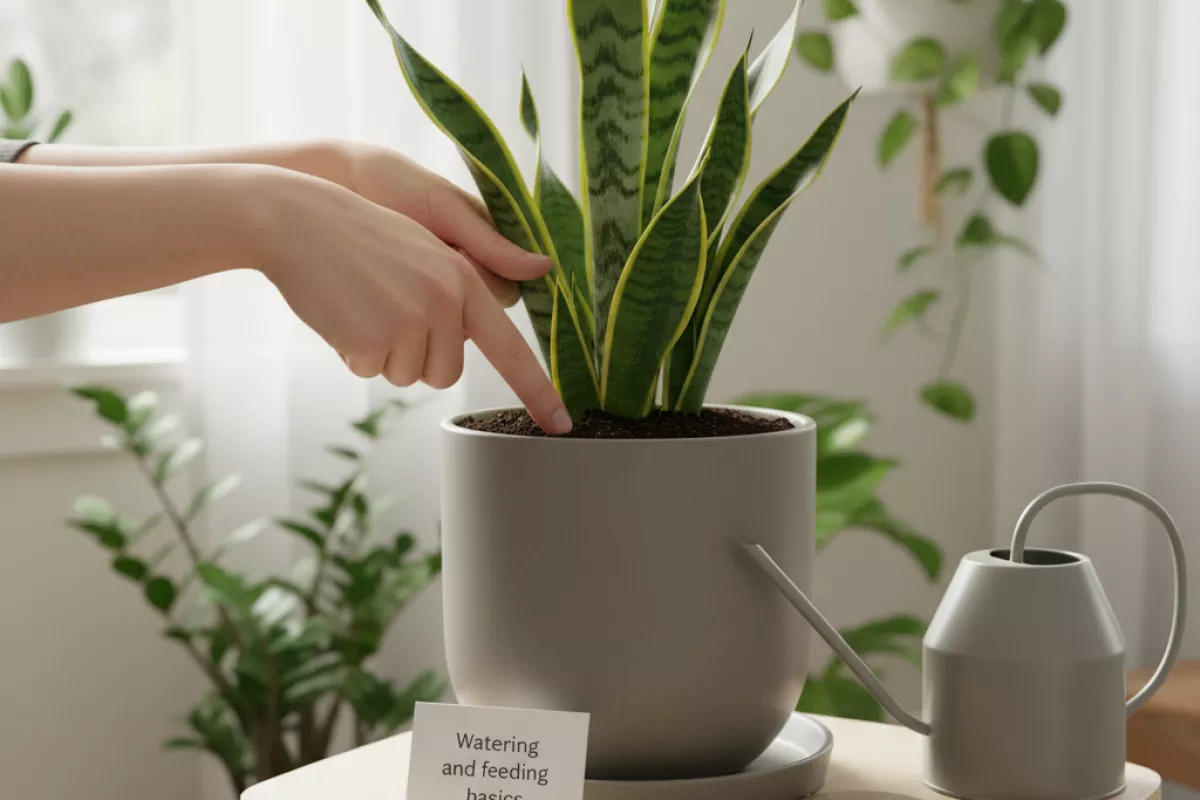
Low-light plants usually fail from too much care, not too little. With less sun, potting mix dries more slowly and roots use water at a gentler pace, so the safest routine is to check first, then water only when the plant actually needs it. Learning the early signs of overwatering helps you avoid watering “just in case.”
- Use the finger test before every watering: push a finger 5 cm (2 in) into the soil. If it feels dry at that depth, it’s time to water; if it’s still cool and damp, wait a few days.
- Water thoroughly, then drain: add water until it runs out of the drainage holes, then empty the saucer after 10 minutes (about 10 min). Sitting water is a common cause of root rot in dim rooms.
- Match the pot to your habits: plastic holds moisture longer; terracotta dries faster. If you tend to overwater, terracotta can be more forgiving.
- Adjust with the season: in winter, many houseplants slow down and may need roughly half the frequency they use in brighter months. Indoors at 20–22°C (68–72°F), that often means stretching the interval by several days.
- Watch the leaves, not the calendar: limp leaves with wet soil can signal overwatering; limp leaves with dry soil usually mean it’s thirsty. Yellowing plus a musty smell often points to soggy roots.
| Plant type (common low-light picks) | When to water | Feeding approach |
|---|---|---|
| Snake plant (Sansevieria/Dracaena trifasciata) | Let mix dry almost completely; water when the pot feels light and the top 5–7 cm (2–3 in) are dry. | Light feeder; use 1/4–1/2 strength fertilizer monthly in spring/summer, pause in winter. |
| ZZ plant (Zamioculcas zamiifolia) | Allow a full dry-down; wait until at least the top half of the pot is dry (about 10–15 cm / 4–6 in in deeper pots). | Feed sparingly; every 6–8 weeks during active growth is plenty. |
| Pothos/philodendron (vining aroids) | Water when the top 2–5 cm (1–2 in) are dry; don’t keep constantly wet. | Moderate feeder; monthly at 1/2 strength in brighter seasons, reduce if growth is slow. |
| Peace lily (Spathiphyllum) | Keep slightly moist but not soggy; water when the top 2–3 cm (1 in) dry or leaves just begin to droop. | Small, regular doses; 1/4–1/2 strength every 4–6 weeks can prevent pale foliage. |
For fertilizer, less is usually better in shade. If a plant isn’t putting out new leaves, it can’t use much nutrition, so feeding heavily just builds up salts in the pot. A simple rule: fertilize only during visible growth, and flush the soil every 2–3 months (8–12 weeks) by watering generously to rinse excess minerals through the drainage holes.
If you’re unsure, choose under-watering over over-watering and correct slowly. You can always add 250 ml (8.5 fl oz) more, but it’s hard to rescue roots that have sat in wet mix for days.
How to avoid overcare problems
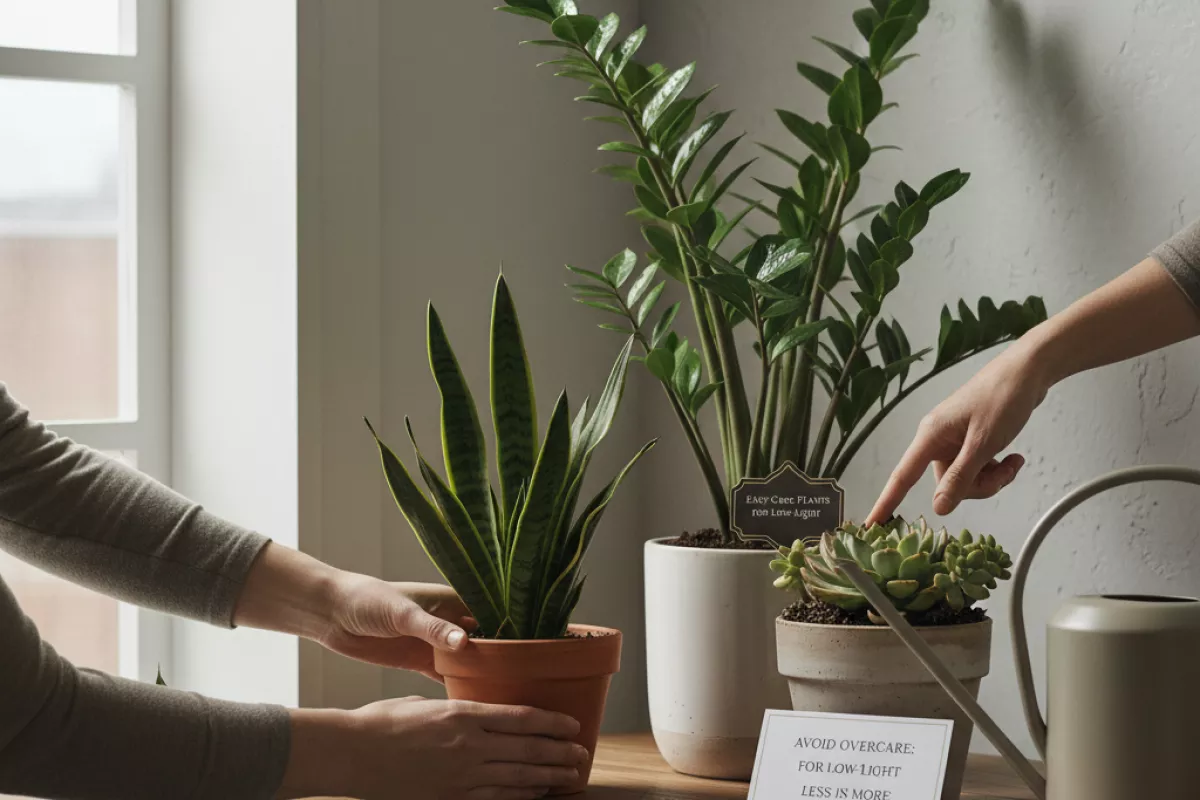
Most “low-light plant” failures come from doing too much: extra watering, frequent repotting, or constant moving around to chase the perfect spot. In dim rooms, growth slows, so the soil stays wet longer and roots need more air than extra moisture.
- Water by soil feel, not by schedule. Let the top 3–5 cm (1–2 in) dry out before watering for many easy-care houseplants. For succulents and snake plants, wait until the pot is dry much deeper—often nearly all the way through.
- Use the “lift test” to avoid guesswork. Pick up the pot right after watering, then again a few days later. A noticeably lighter pot usually means it is time to check the soil; a heavy pot means wait.
- Empty saucers and cachepots. Standing water is a fast track to mushy roots. After watering, let the pot drain fully, then pour out any collected water within 10–15 minutes (10–15 min).
- Choose the right pot and mix. In low sun, breathable setups help: pots with drainage holes and a chunky mix (regular potting soil plus bark/perlite) dry more evenly than dense, peat-heavy soil.
- Go easy on fertilizer. In shade, plants use nutrients slowly. Feed lightly in the active season and skip if the plant is not putting out new growth; overfeeding can cause weak, leggy stems and salt buildup.
- Resist “just in case” repotting. A pot that is slightly snug is often safer than one that is too large, because extra soil stays wet longer. Repot only when roots circle the pot or push the plant up.
- Keep conditions steady. Avoid moving plants every few days. Instead, pick a stable spot away from drafts and heaters; sudden changes can look like thirst and tempt you to overwater.
| Overcare habit | What it causes in low light | What to do instead |
|---|---|---|
| Watering on a fixed calendar | Soil stays wet too long, roots lose oxygen, leaves yellow | Check dryness at 3–5 cm (1–2 in) depth; water only when needed |
| Letting pots sit in runoff | Root rot, fungus gnats, sour-smelling soil | Drain thoroughly and empty saucers within 10–15 minutes (10–15 min) |
| Upsizing to a much bigger pot | Excess soil holds water; slow drying leads to rot | Increase one size at a time; keep the root ball proportionate |
| Frequent fertilizing “to help” | Salt burn, weak growth, brown tips | Feed lightly only during active growth; flush soil occasionally with plain water |
| Misting constantly | Leaf spotting and mildew without meaningfully raising humidity | Improve airflow and use a pebble tray or humidifier if needed |
If you are unsure whether a plant is thirsty or stressed, wait 24 hours (24 h) and reassess. Low-light plants usually recover from being a little dry faster than they recover from staying wet.
Placement tips for little sunlight
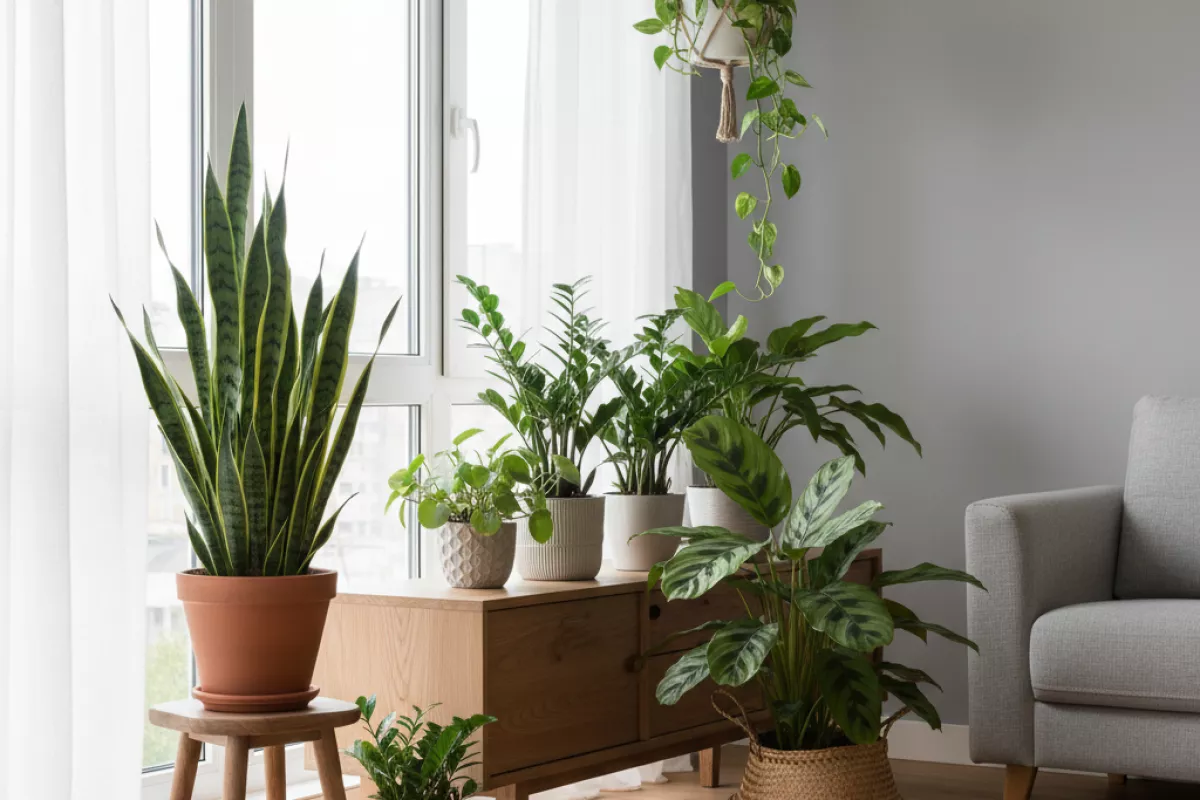
Start by finding the brightest “indirect” spot you have, then work outward. In most homes, that means placing plants near a window but out of the direct beam, or in a room that stays bright for longer even if the sun never hits the leaves. If you want to quantify a dim spot, use an indoor plant light calculator to estimate usable light for foliage.
- Use the window zone strategically. Set low-light plants about 0.5–2 m (1.5–6.5 ft) from the glass for gentle brightness without harsh rays. If the room is very dim, move closer and watch for leaf scorch on sensitive plants.
- Match placement to window direction. North-facing windows (south-facing in the Southern Hemisphere) tend to be steady but weak; east-facing gives soft morning light; west-facing can be intense late-day; south-facing (north-facing in the Southern Hemisphere) is brightest and may need a sheer curtain to keep light indirect.
- Lift plants up to “catch” more light. A pot on a stool, shelf, or plant stand often receives noticeably more brightness than the floor because it’s less shaded by furniture. Even raising a plant 30–60 cm (12–24 in) can help in a dark corner.
- Avoid light blockers. Keep foliage clear of heavy curtains, deep window wells, and bulky furniture that casts shadow. If you have blinds, tilting them upward can bounce more daylight into the room.
- Rotate for even growth. Turn the pot about a quarter turn every 1–2 weeks so stems don’t lean hard toward the window. This is especially useful for pothos, snake plant, and ZZ plant.
- Respect heat and drafts. Don’t press leaves against cold glass in winter, and keep plants away from radiators, heaters, and AC vents. A buffer of 30–60 cm (12–24 in) from vents reduces dry, stressful airflow.
- Use reflective surfaces thoughtfully. A light-colored wall, mirror, or pale tabletop can bounce extra daylight onto leaves. This won’t replace a window, but it can make a dim spot more workable.
- Group plants to stabilize conditions. Clustering a few pots can slightly raise local humidity and reduce rapid drying, which helps when low light already slows water use.
| Situation in the room | What to do | What you’ll notice if it’s working |
|---|---|---|
| Plant is 3+ m (10+ ft) from any window | Move it to within 0.5–2 m (1.5–6.5 ft) of the brightest window, or raise it onto a stand | New leaves form at a normal pace; stems stop stretching |
| Leaves lean strongly toward the light | Rotate the pot every 1–2 weeks and consider a slightly brighter spot | Growth becomes more balanced and upright |
| Soil stays wet for 10+ days | Increase brightness a little, use a pot with drainage, and water less often | Top 2–5 cm (1–2 in) dries between waterings; fewer yellow leaves |
| Leaf color looks dull or growth is very slow | Bring it closer to the window, clear obstructions, or add a grow light for 8–12 hours daily | Color improves and new growth appears without legginess |
| Brown, crispy edges near a heater/vent | Move the plant 30–60 cm (12–24 in) away from airflow and check watering consistency | New leaves emerge without crisping; older damage stops spreading |
If you add a grow light, aim it at the foliage (not just the pot) and keep it at a moderate distance so leaves don’t heat up. A simple timer helps keep the schedule steady, which matters more than chasing perfect intensity.
Minimal routine care plan
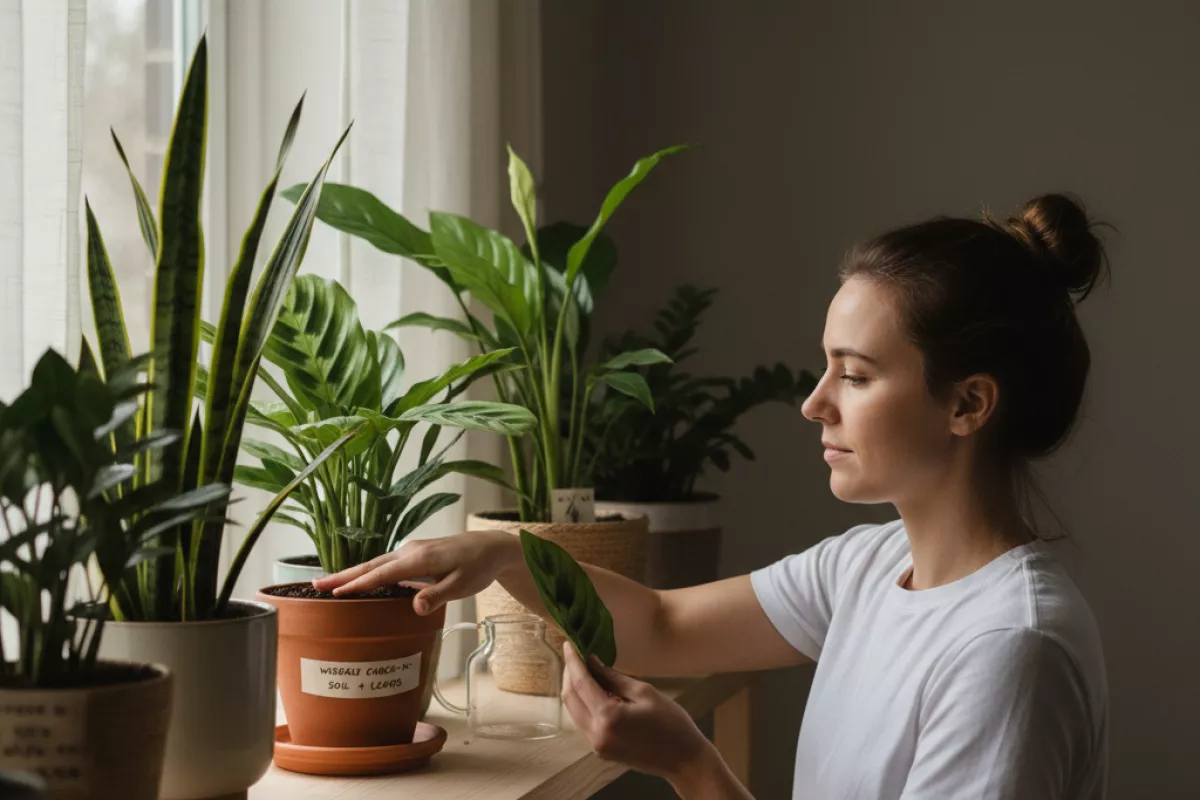
Keep things simple by matching care to what low-light houseplants actually do: they grow slowly, use less water, and forgive missed days. A small, repeatable check-in beats a complicated schedule, especially in rooms that stay dim most of the day. If you want a clear baseline, set a watering schedule for houseplants and then adjust by real soil dryness.
- Once a week: do a quick “soil + leaves” check.
- Touch the top 2–5 cm (1–2 in) of soil. If it’s dry at that depth, water; if it’s still damp, wait.
- Scan leaves for dust and pests (especially under leaves and at stems).
- Water only when needed, and water thoroughly.
- When it’s time, water until a little drains out, then empty the saucer after 10–15 minutes.
- In low sun, overwatering is the most common problem. If you’re unsure, waiting 2–3 days is usually safer than adding more water.
- Every 2–4 weeks: rotate and wipe.
- Turn the pot a quarter turn so growth stays even.
- Wipe broad leaves with a damp cloth; dust blocks the little light the plant is getting.
- Monthly: check drainage and pot fit.
- Make sure the pot has a drainage hole and the soil isn’t compacted into a hard plug.
- If roots are circling tightly or pushing up, plan a repot in the growing season (spring/summer) into a pot 2–5 cm (1–2 in) wider.
- Seasonally: adjust, don’t force growth.
- In winter, many easy-care indoor plants need less water; extend the time between waterings.
- Fertilize lightly only in active growth: about every 4–8 weeks, at half-strength, unless the plant is dormant.
| Quick cue | What it usually means | Low-effort fix |
|---|---|---|
| Soil stays wet for 7+ days | Too much water, low evaporation, or poor drainage | Water less often; switch to a pot with a hole; use a chunkier mix (add bark/perlite) |
| Yellowing lower leaves + soft stems | Overwatering or roots sitting in water | Let soil dry further between waterings; empty saucer; trim mushy roots if severe |
| Brown, crispy tips | Dry air, inconsistent watering, or salt buildup | Water more evenly; flush soil with water every 2–3 months; keep away from vents |
| Leggy, leaning growth | Not enough light from one direction | Rotate weekly; move 30–60 cm (12–24 in) closer to a window or add a small grow light |
| Dusty leaves, dull color | Reduced light capture and slower photosynthesis | Wipe leaves monthly; rinse in the shower if the plant tolerates it |
If you want an even more hands-off rhythm, group plants with similar thirst (for example, snake plant and ZZ plant together; pothos and peace lily together). It reduces guesswork because you’re checking one “zone” instead of remembering a different routine for every pot.