Abutilon — Flowering Plant With Hanging Blooms and Easy Care

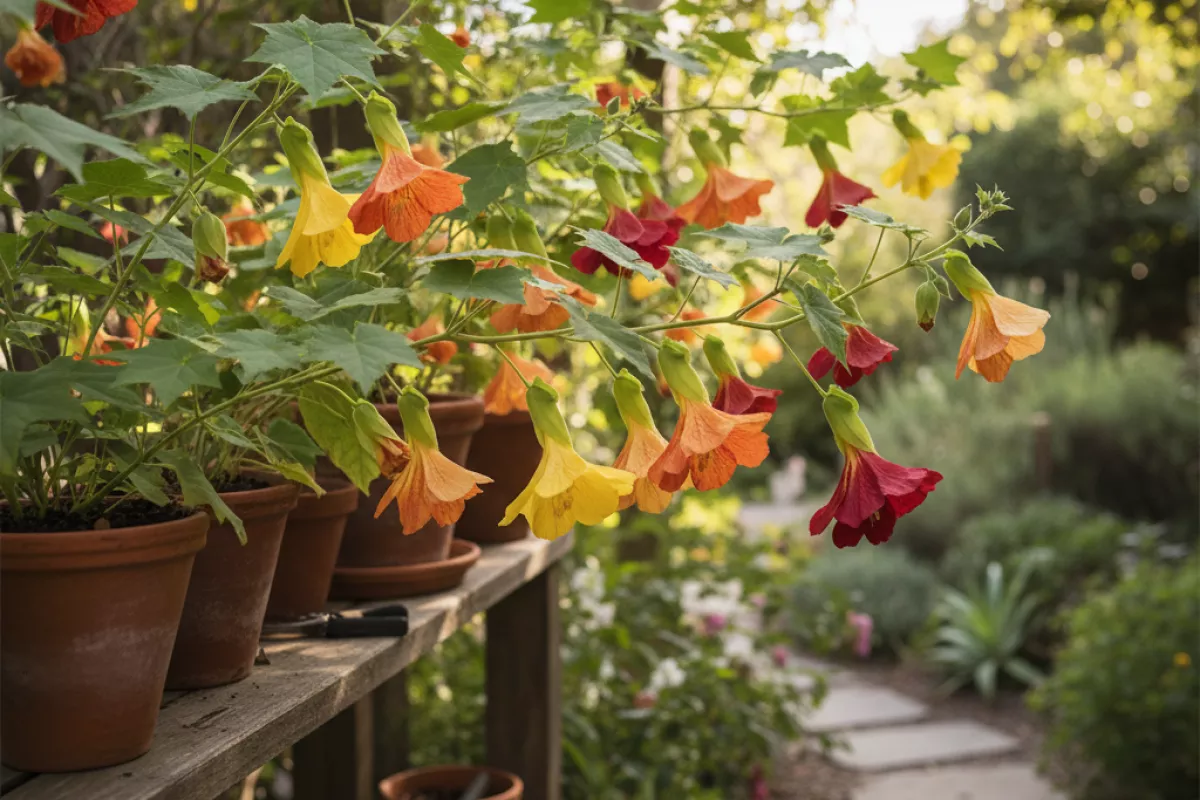 This article explains Abutilon basics and key traits, where it comes from and grows naturally, and its arching stems with lantern flowers. It covers light, soil and watering balance, temperature, maintenance, propagation, seasonal blooming, and common pests and flowering issues.
- Abutilon plant overview and key features
- Origins and natural growing regions
- Arching stems and lantern-shaped flowers
- Light needs for continuous Abutilon blooming
- Soil mix and watering balance for Abutilon
- Temperature range for steady Abutilon growth
- General maintenance for lush flowering
- Propagation from cuttings or seed
- Seasonal blooming patterns indoors and outdoors
- Common pests and Abutilon flowering problems
Abutilon is a reliable choice for containers or bright corners, valued for its nodding, lantern-like flowers and easy daily care. It grows fast, takes pruning well, and can bloom for months with consistent light and regular watering. With simple trimming, feeding, and attention to moisture, you can keep it compact, healthy, and flowering indoors or outdoors.
Abutilon plant overview and key features
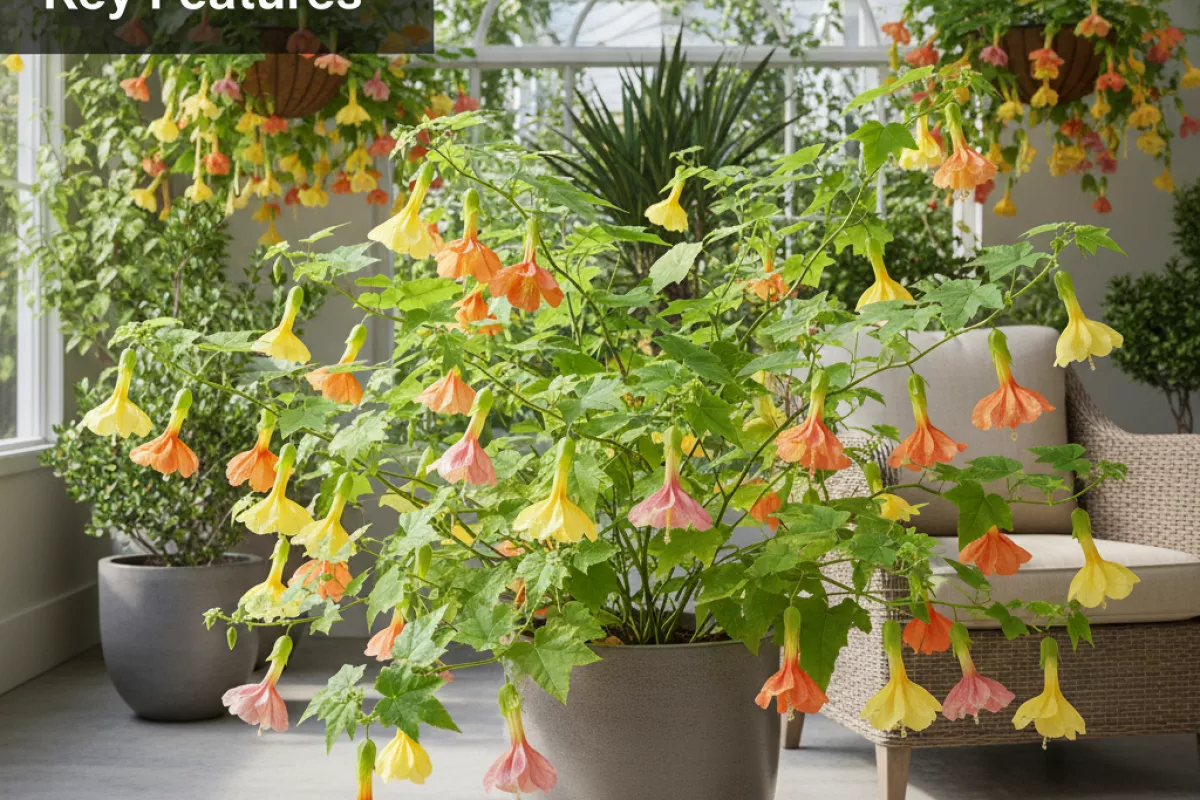
This plant is best known for its lantern-like, nodding flowers that hang from thin stems and sway with the slightest breeze. Often grown as a houseplant or warm-climate shrub, it combines a long blooming season with a forgiving nature, which is why it shows up in patios, bright windows, and conservatories.
Most types form a softly woody, branching shape with maple-like leaves and a naturally “airy” look rather than a dense mound. Depending on variety and how it’s pruned, it can stay compact indoors or stretch into a larger specimen outdoors, typically around 60–180 cm (2–6 ft) tall.
- Signature blooms: Pendant, bell or lantern-shaped flowers in shades of yellow, orange, red, pink, or cream, often with darker veining. Many cultivars flower repeatedly from spring through fall in mild conditions.
- Attractive foliage: Leaves resemble small maple leaves; some varieties have variegation (green with cream or yellow), adding color even when flowering slows.
- Growth habit: Semi-woody stems that respond well to pruning, making it easy to shape into a bush, small standard, or trailing container plant.
- Container-friendly: Performs well in pots and hanging baskets, where the blooms can drape and be seen from below.
- Fast recovery: If it gets leggy or drops leaves after stress, it typically rebounds quickly once light and watering are corrected.
- Pollinator appeal outdoors: The dangling flowers can attract bees and, in suitable regions, hummingbirds.
| Feature | What to expect |
|---|---|
| Common forms | Houseplant, patio container shrub, or warm-climate garden shrub |
| Typical size | About 60–180 cm (2–6 ft) tall, depending on variety and pruning |
| Flower shape | Hanging bells/lanterns, often with visible veins and a prominent central column |
| Blooming pattern | Repeated flushes; can be near-continuous in bright light with regular trimming |
| Leaf look | Maple-like; some cultivars are variegated for extra color |
| Best visual use | Where flowers can hang freely: baskets, raised pots, or near eye level on a stand |
One practical thing to know: the same traits that make it bloom well also make it grow quickly. Regular pinching or trimming keeps the plant fuller and helps direct energy into more flowering stems instead of long, bare shoots.
Origins and natural growing regions
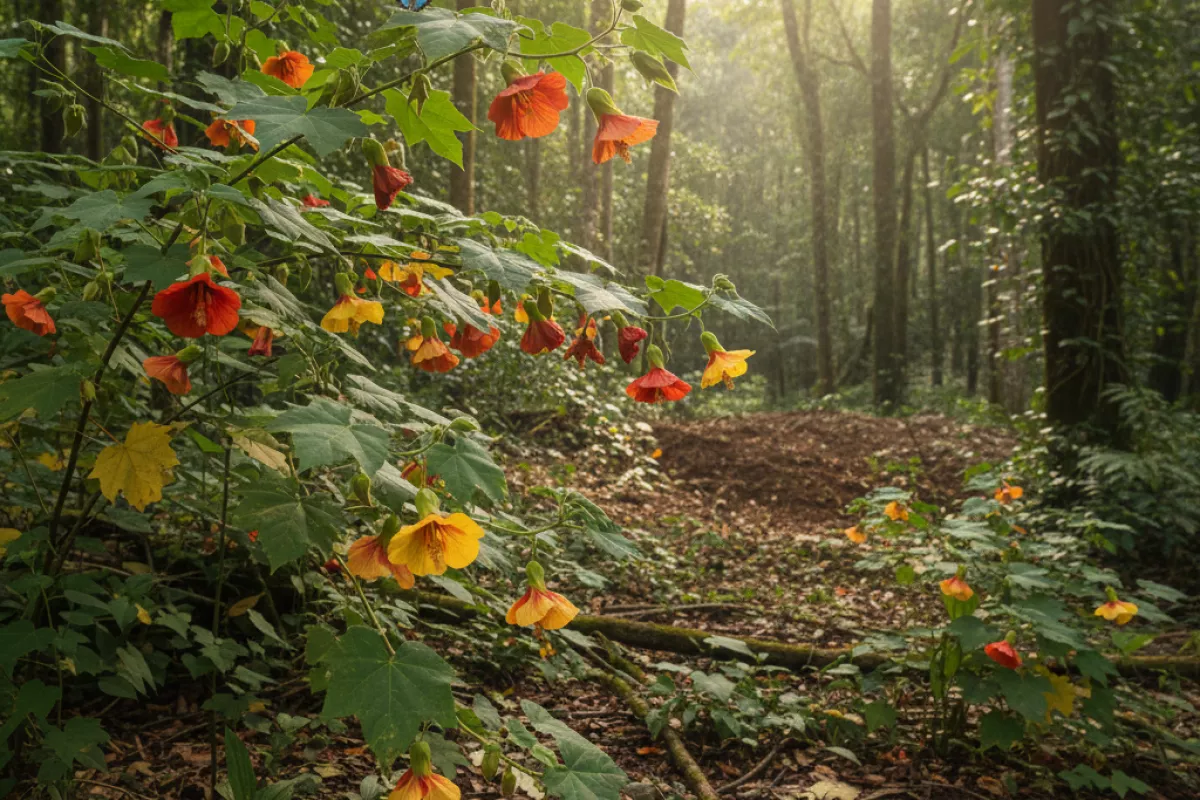
Abutilon is best thought of as a warm-climate shrub from the tropics and subtropics, with many species native to the Americas and others occurring naturally in parts of Africa, Asia, and Australia. In the wild it often grows at the edges of forests and along disturbed ground, where it can take advantage of bright, filtered light and soils that drain well after heavy rains.
Because the genus is widespread and has been cultivated for a long time, what gardeners grow today is a mix of true species and long-established hybrids. That’s why you’ll see “flowering maple” or “Chinese lantern” types sold for containers even though their ancestors may come from different regions with similar climates.
- Americas: A major center of diversity, especially in Mexico, Central America, and parts of South America, where plants grow from lowland warm zones up into milder uplands.
- South Asia and Southeast Asia: Some species occur in monsoon-influenced areas, coping with a wet season followed by a drier period.
- Africa and Australia: Scattered native species are found in warm regions, often in open woodland or scrub with strong sun but seasonal moisture.
In practical terms, its native habitats explain the “easy care” reputation: abutilons are used to steady warmth, regular moisture that doesn’t linger around the roots, and plenty of light without constant scorching midday sun. Many types behave as evergreen shrubs where winters stay mild, but in cooler climates they’re grown as container plants and brought inside before temperatures drop much below about 10°C (50°F).
Arching stems and lantern-shaped flowers
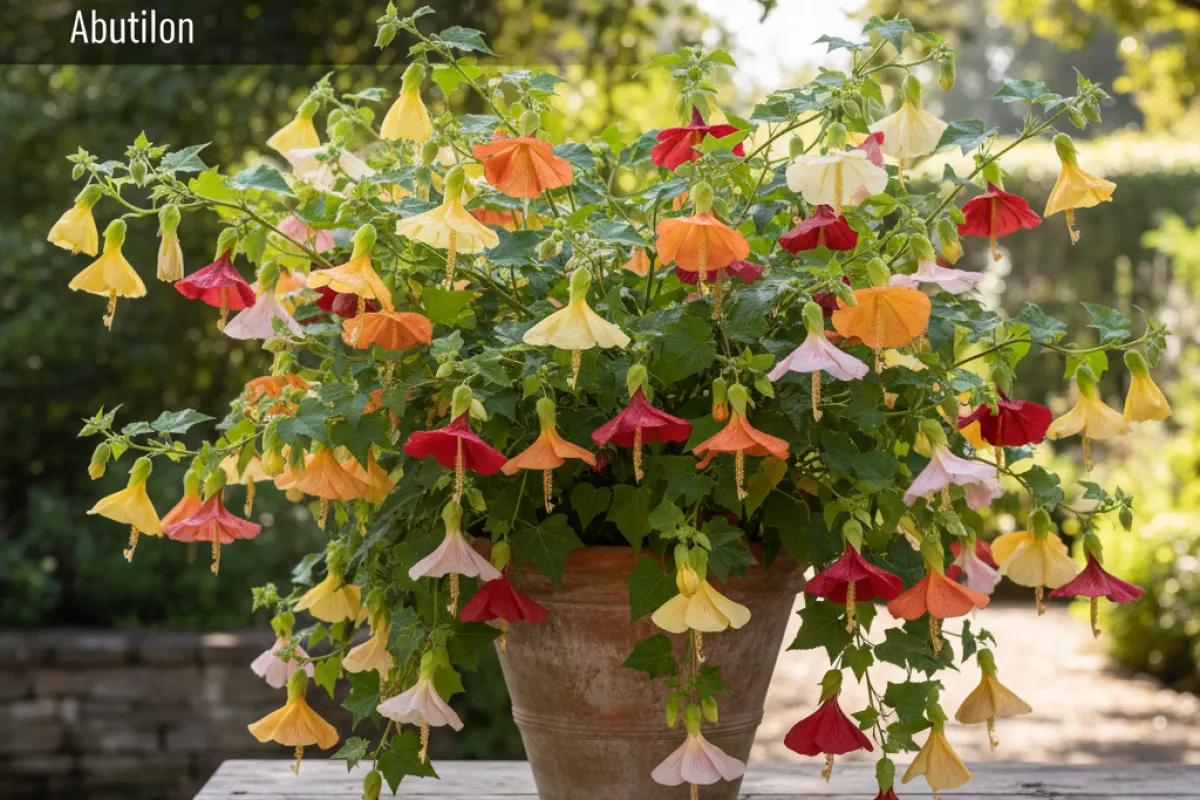
The charm of abutilon is in its relaxed, slightly cascading growth and the way the blooms hang like small paper shades. New shoots tend to bend outward as they lengthen, so the plant naturally forms a soft, fountain-like outline instead of a stiff, upright silhouette.
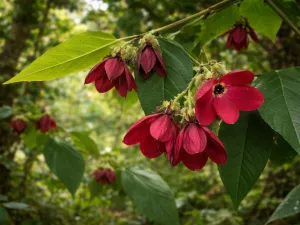
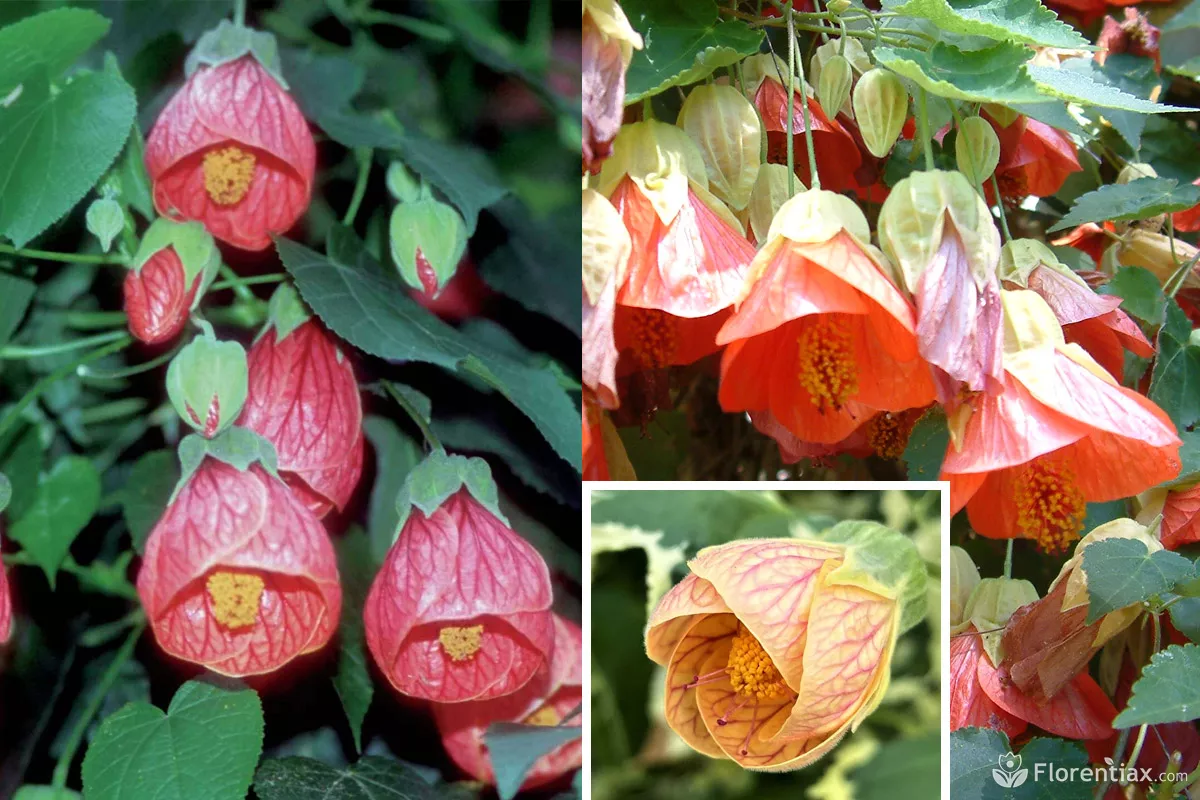
Those pendant blossoms are built for display: a flared, bell or lantern form with petals that often overlap, and a prominent central column of stamens that can extend beyond the “skirt.” Depending on the variety, colors range from buttery yellow to orange, coral, red, pink, and creamy white, sometimes with veining that looks hand-drawn.
- Why the stems arch: fast-growing, flexible wood and long internodes make the branches curve as they gain length and carry buds.
- How the flowers sit: buds form along the stems and open facing downward, which protects pollen from rain and gives the plant its signature hanging look.
- What to look for on leaves: many types have maple-like foliage; some are variegated, which adds contrast even when the plant isn’t in peak bloom.
- How big the display can get: in a pot, many abutilons settle around 60–120 cm (24–47 in) with regular trimming, while unpruned plants can reach 1.5–3 m (5–10 ft) in mild climates.
If you want more blooms along the curves, light pruning helps. Pinching the tips by about 1–2 cm (0.4–0.8 in) encourages branching, which means more flowering points and a fuller, draping shape rather than a few long canes.
For a tidy look, support is optional: a simple stake can keep a young plant upright, while a hanging basket or elevated pot lets the stems spill naturally. Either way, rotating the container a quarter turn every week or two keeps the plant from leaning toward the brightest window.
Light needs for continuous Abutilon blooming
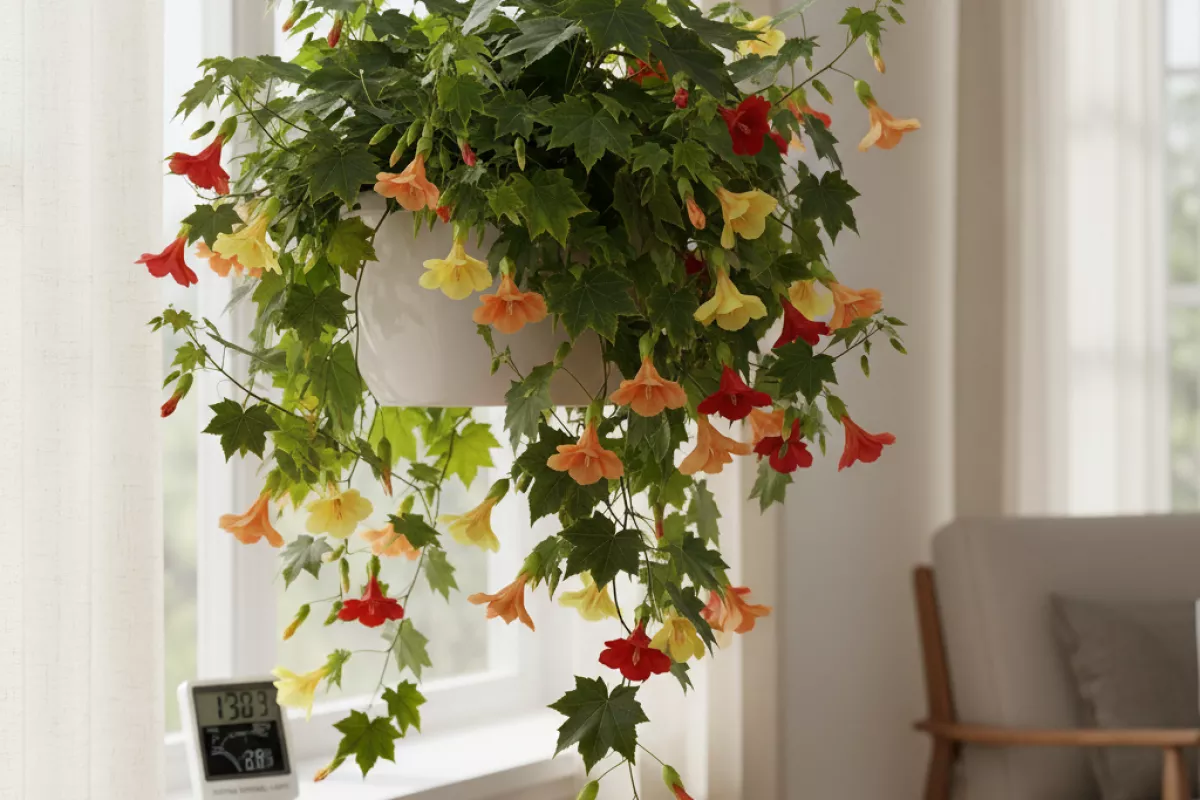
Abutilon flowers best when it gets long, bright days without being cooked by harsh midday sun. Too little light usually shows up as lots of leafy growth, long gaps between blooms, and stems that stretch toward the window.
Indoors, aim for a spot with strong natural light for most of the day. A south- or west-facing window often works, but in hot climates the glass can intensify sun and scorch leaves; sheer curtains can soften that. If you only have an east window, it can still bloom well, just more slowly, especially in winter.
- Best daily exposure: about 4–6 hours of direct sun plus bright ambient light for the rest of the day. Morning sun is usually gentler than afternoon sun.
- Signs it’s getting too little: pale leaves, thin “leggy” stems, fewer buds, and flowers that drop quickly.
- Signs it’s getting too much: bleached patches, crispy leaf edges, or wilting during the brightest hours even when the soil is moist.
- Rotate for even growth: turn the pot 90° every 7–10 days to keep the canopy balanced and prevent one-sided stretching.
Seasonal shifts matter. In winter, shorter days often reduce flowering even with good care. Moving the plant closer to the brightest window (without touching cold glass) can help. If natural light is limited, a grow light can keep buds coming: place it about 20–30 cm (8–12 in) above the top growth and run it 12–14 hours a day to mimic longer days.
When moving Abutilon outdoors, transition gradually over 7–10 days to avoid sunburn: start in bright shade, then introduce a little morning sun, and only then increase direct exposure. This slow “hardening off” tends to produce sturdier stems and steadier blooming.
| Light situation | What you’ll likely see | Adjustment for more flowers |
|---|---|---|
| Bright window with a few hours of sun | Compact growth, regular buds | Keep as-is; rotate weekly for even light |
| Low light / far from window | Leggy stems, sparse blooming | Move closer to light or add a grow lamp 12–14 h/day |
| Intense midday sun through glass | Leaf scorch, fading color, midday wilt | Use a sheer curtain or shift 30–60 cm (12–24 in) back |
| Outdoor summer sun all day | Fast growth, but possible heat stress | Give morning sun + afternoon shade; water before heat peaks |
If you’re chasing continuous blooms, prioritize bright light first, then fine-tune. Once the plant is in the right exposure, it’s much easier to manage watering and feeding without triggering bud drop.
Soil mix and watering balance for Abutilon
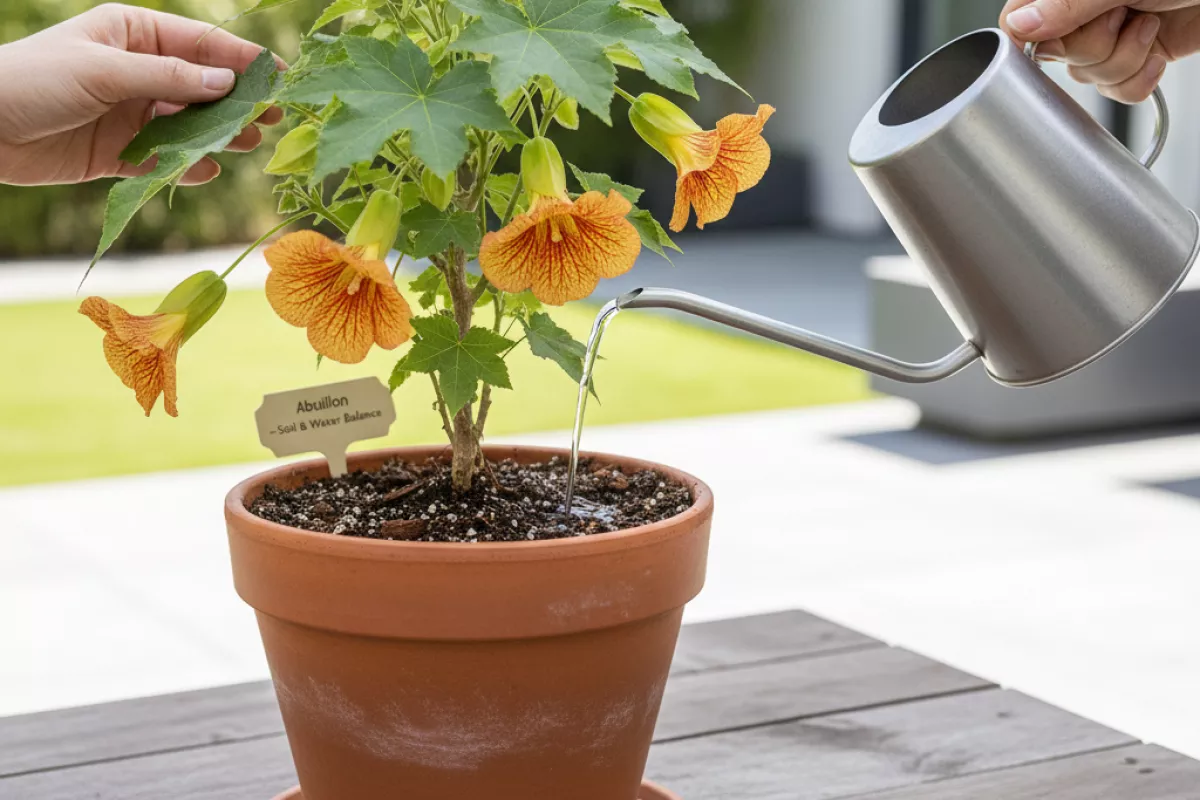
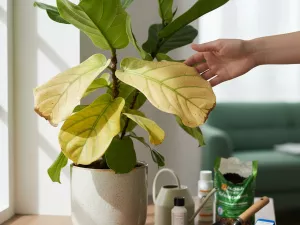
Healthy growth comes from two things working together: a potting medium that drains fast but doesn’t dry out instantly, and a watering routine that keeps roots evenly moist without staying soggy. If you’re troubleshooting leaf color changes, this explains why plant leaves turn yellow and what to correct first. Abutilon dislikes “wet feet,” yet it also drops buds if it swings from bone-dry to drenched.
What the potting mix should do: hold some moisture, leave plenty of air around the roots, and let excess water run out quickly. A heavy, compacted mix is the most common reason for yellowing leaves and slow growth.
- Base mix: use a quality all-purpose potting soil as the foundation, then lighten it for better drainage.
- Drainage boosters: add perlite or pumice to increase airflow and reduce compaction over time.
- Moisture buffer (optional): a small amount of coco coir or fine bark can help keep the root zone evenly damp without turning muddy.
- Pot choice matters: any container must have drainage holes; a pot that’s too large holds extra wet soil and slows drying.
| Situation | Mix tweak | Watering adjustment |
|---|---|---|
| Hot, bright spot or outdoors in summer | Keep it slightly more moisture-retentive (a bit less perlite/pumice) | Check more often; water when the top 2–3 cm (0.8–1.2 in) dries |
| Low light or cool indoor room | Increase drainage (more perlite/pumice) | Let the top 3–5 cm (1.2–2 in) dry before watering |
| Terracotta pot (dries fast) | Add a small moisture buffer (coir or fine bark) | Smaller, more frequent drinks as needed |
| Plastic or glazed pot (dries slow) | Lean into aeration (extra perlite/pumice) | Water less often; never “top up” if the mix is still damp |
| Plant wilts quickly between waterings | Mix may be too airy or rootbound; add a bit more moisture-holding material or repot | Water thoroughly until it drains, then recheck in 1–2 days |
| Leaves yellow, growth stalls, soil stays wet | Mix is too dense; repot into a lighter blend | Pause until the top dries; empty saucers after 10–15 min |
How to water correctly: water deeply, then let the excess drain away. If you want a simple step-by-step routine, use this guide on how to water indoor plants without overwatering. Aim to wet the entire root ball until water runs from the bottom, then discard any runoff after 10–15 minutes. This prevents salt buildup and keeps roots oxygenated.
- Finger test: if the top 2–5 cm (0.8–2 in) feels dry (depth depends on light and temperature), it’s usually time to water.
- Weight test: lift the pot; a noticeably lighter container often signals the mix has dried enough.
- Seasonal rhythm: in active growth, it may need water more often; in winter, slow down and keep it just lightly moist.
If you’re unsure, err on the side of slightly drier rather than constantly wet. If you keep second-guessing your timing, check overwatering risk for houseplants to sanity-check your conditions and habits. Abutilon rebounds from a mild dry spell faster than it recovers from root stress caused by waterlogged soil.
Temperature range for steady Abutilon growth
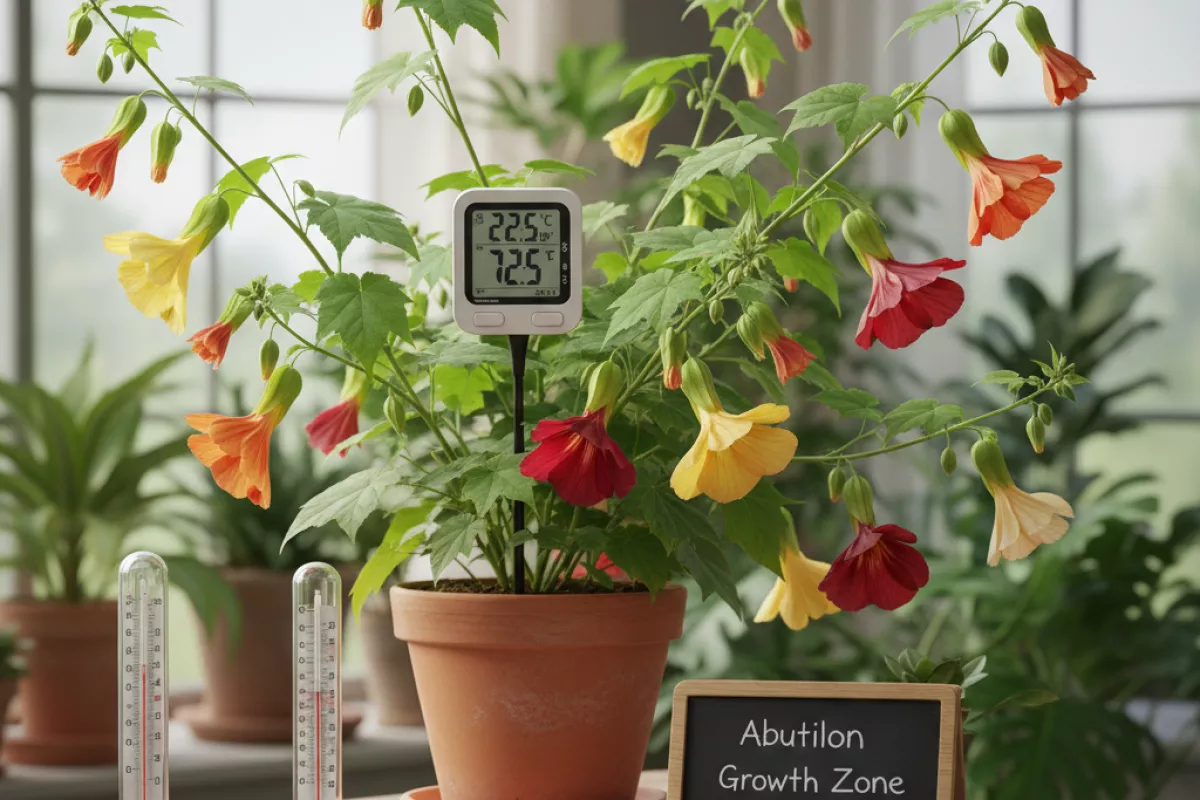
Abutilon grows most reliably when it stays in mild, spring-like conditions without big day-to-night swings. Aim for 18–24°C (65–75°F) in the daytime for consistent leaf and bud production, with slightly cooler nights around 15–18°C (59–65°F). In this band, stems stay sturdy, flowering is steady, and the plant recovers quickly after pruning.
It will tolerate a wider span, but growth and blooming change noticeably as you move away from the “comfortable” zone. Use the guide below to predict what your plant will do and how to adjust care.
| Air temperature | What you’ll typically see | What to do |
|---|---|---|
| 10–14°C (50–57°F) | Slow growth; fewer new buds; soil stays wet longer. | Water less often; keep in brighter light; avoid heavy feeding until it warms up. |
| 15–18°C (59–65°F) | Good “rest-and-rebuild” range; steady foliage, moderate flowering. | Great for overwintering indoors; keep evenly moist, not soggy. |
| 18–24°C (65–75°F) | Best balance of growth and hanging blooms; strong stems and regular bud set. | Water when the top 2–3 cm (1 in) dries; feed lightly during active growth. |
| 25–30°C (77–86°F) | Faster drying; possible bud drop if air is dry; leaves may look slightly tired midday. | Increase humidity and airflow; water earlier in the day; provide light shade from hot afternoon sun. |
| Above 30°C (86°F) | Heat stress: wilting, scorched edges, flower drop, stalled growth. | Move to a cooler spot; protect from direct sun; keep soil evenly moist and raise humidity. |
- Cold limits: Many abutilons struggle below about 7–10°C (45–50°F), especially in damp soil. If you’re unsure of the variety, treat 10°C (50°F) as a cautious minimum.
- Heat plus dry air: Warm rooms are fine, but hot, dry air (often near heaters) can trigger leaf drop. Keep it away from vents and consider a humidity tray.
- Sudden changes: A quick shift of 5–8°C (9–14°F) can cause temporary bud drop. When moving plants outdoors in spring, harden them off over 7–10 days rather than changing conditions overnight.
General maintenance for lush flowering
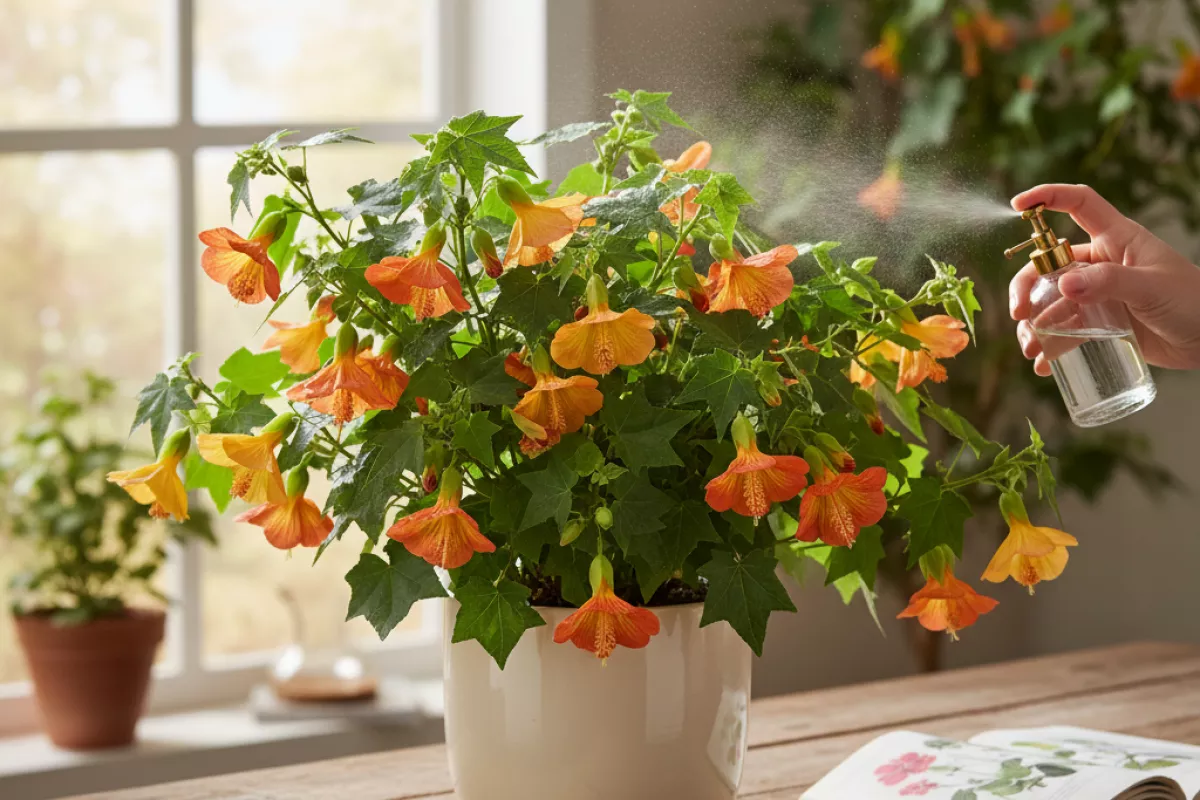
To keep abutilon producing buds over a long season, focus on three levers: steady light, even moisture, and timely pruning. The goal is to avoid “stop-start” growth, because sudden drought, cold drafts, or long stretches of low light often lead to leaf drop and fewer flowers.
- Light balance: Give bright light with some gentle sun. Indoors, a south or west window often works; outdoors, morning sun and afternoon shade is usually safer in hot climates. If stems stretch and blooms thin out, increase light gradually over 7–10 days.
- Watering rhythm: Water thoroughly, then let the top 2–3 cm (0.8–1.2 in) of soil dry before watering again. In active growth, that may be every few days; in winter, much less. Never leave the pot standing in water for more than 10–15 minutes.
- Feeding without overdoing it: Use a balanced fertilizer at half strength every 2 weeks during spring and summer, or a low-dose feed weekly. Too much nitrogen can make lots of leaves and fewer flowers; if that happens, switch to a bloom-leaning formula and reduce the dose.
- Deadheading and cleanup: Remove spent blooms and any yellowing leaves promptly. This keeps the plant tidy and reduces the chance of pests settling in.
- Pruning for branching: Pinch soft tips during the growing season to encourage side shoots (more tips usually means more buds). For a bigger reset, cut back by about 1/3 in early spring; make cuts just above a leaf node.
- Pot size and refresh: Slightly snug roots often bloom better than an oversized pot. If you’re repotting and want consistent volumes and ratios, use a soil mix calculator for pots. Repot only when roots circle the pot heavily, stepping up by 2–4 cm (0.8–1.6 in) in diameter. Refresh the top 2–3 cm (0.8–1.2 in) of mix mid-season if growth slows.
- Temperature and air: Aim for 18–24°C (64–75°F) for active growth. Protect from cold drafts below about 10°C (50°F), which can trigger bud drop. Provide gentle airflow, but avoid blasting fans or vents.
| What you see | Likely cause | What to adjust |
|---|---|---|
| Lots of leaves, few flowers | Too much nitrogen or not enough light | Increase light gradually; reduce fertilizer strength; use a bloom-leaning feed |
| Buds form, then drop | Irregular watering, temperature swings, or a sudden move | Keep moisture even; avoid drafts; don’t relocate the plant repeatedly |
| Leggy stems, wide gaps between leaves | Low light | Move to brighter conditions; pinch tips to encourage branching |
| Yellow leaves with soggy soil | Overwatering or poor drainage | Let the mix dry slightly; ensure drainage holes; empty saucers after watering |
| Sticky leaves or distorted new growth | Aphids, whiteflies, or mealybugs | Rinse foliage; treat with insecticidal soap; repeat every 7 days for 2–3 rounds |
If you’re growing it indoors, rotating the pot a quarter turn every 7–10 days can keep growth even and reduce leaning. Outdoors, check after heavy rain: containers can stay wet longer than expected, and that’s when roots and blooms suffer first.
Propagation from cuttings or seed
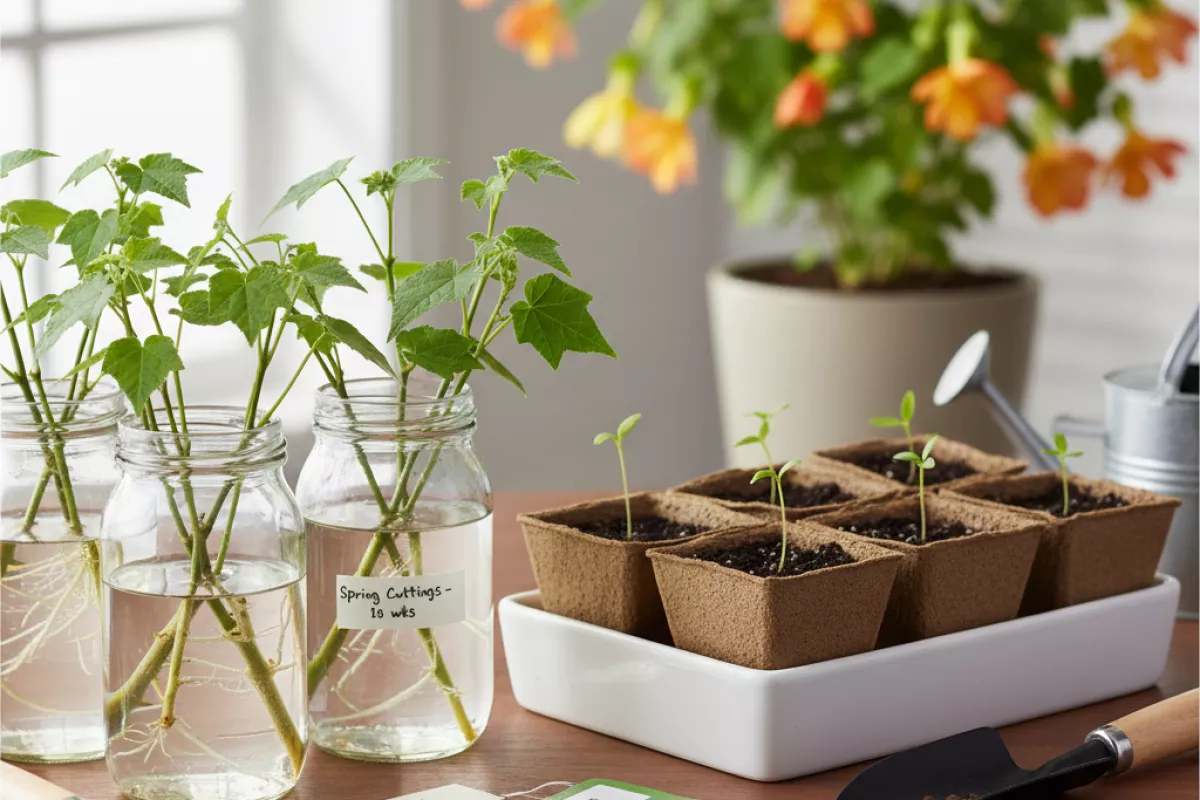
The easiest way to make more abutilon plants is to root soft, healthy stems, but you can also start new plants from seed if you’re patient. Cuttings give you a clone of the parent (same flower color and growth habit), while seedlings can vary a bit.
| Method | Best time | What you’ll get | Typical timeline |
|---|---|---|---|
| Softwood cuttings | Spring to early summer | Identical to the parent plant | Roots in ~2–4 weeks; ready to pot up soon after |
| Semi-hardwood cuttings | Late summer to early fall | Identical to the parent plant | Roots in ~4–8 weeks; slower but sturdy |
| Seed | Late winter to spring (indoors) | Possible variation in flowers and vigor | Germination ~1–3 weeks; flowering often in several months |
| Layering (optional backup) | Spring through summer | Clone of the parent plant | Roots form in ~4–8 weeks; then you can separate |
How to take and root cuttings
- Choose the right stem. Pick a non-flowering shoot that’s firm but still flexible. Aim for 10–15 cm (4–6 in) long with 2–4 leaf nodes.
- Make a clean cut. Snip just below a node using clean, sharp scissors or pruners. Remove any buds and the lower leaves, leaving 2–3 leaves at the top.
- Reduce moisture loss. If the remaining leaves are large, trim them by about half so the cutting doesn’t wilt while it’s forming roots.
- Use a light rooting mix. A blend like peat/coir with perlite works well. Moisten it so it’s damp, not soggy.
- Plant and cover. Insert the stem 2–3 cm (1–1.2 in) deep. Cover with a clear bag or place in a propagator to keep humidity up, but leave a small vent for airflow.
- Keep it warm and bright. Bright, indirect light and about 20–24°C (68–75°F) speeds rooting. Avoid hot sun on the cover, which can overheat the cutting.
- Check progress. Tug very gently after 2–3 weeks; resistance usually means roots. Pot up once you see new growth, using a small pot so the mix doesn’t stay wet for too long.
- Watering tip: Keep the medium evenly moist. Constantly wet mix is a common cause of rot, especially in cooler rooms below 18°C (64°F).
- Rooting hormone: Optional, but helpful for semi-hardwood pieces. Use a light dusting rather than a thick coat.
Starting abutilon from seed
Seed growing is straightforward, but it’s less predictable than cuttings. If you’re hoping to reproduce a specific cultivar exactly, stems are the safer route.
- Prep the seed. If the seed coat is hard, soak in room-temperature water for 12–24 hours to encourage even sprouting.
- Sow shallowly. Place seeds on the surface and cover with about 3–5 mm (0.1–0.2 in) of seed-starting mix.
- Provide steady warmth. Aim for 21–24°C (70–75°F). Keep the mix lightly moist; a clear cover helps, but ventilate daily to prevent mold.
- Pot up early. Transplant when seedlings have 2–3 true leaves, moving them into individual containers.
Whichever approach you use, keep young plants on the slightly drier side rather than constantly wet, and pinch the growing tips once they reach 15–20 cm (6–8 in) to encourage branching and more hanging blooms later on.
Seasonal blooming patterns indoors and outdoors
Abutilon’s flowering rhythm is mostly driven by light levels and temperature. In mild climates it can bloom on and off for much of the year, while in cooler regions it tends to concentrate flowering from late spring into autumn. Indoors, the schedule is more flexible, but short winter days often slow bud production unless you compensate with brighter light.
| Season | Outdoors (garden/patio) | Indoors (bright window/room) | What to do to keep blooms coming |
|---|---|---|---|
| Spring | New growth starts; first buds form once nights stay mild. | Growth speeds up as days lengthen; flowering restarts if it slowed in winter. | Increase feeding gradually; pinch soft tips to branch, but stop heavy pinching once buds appear. |
| Summer | Peak flowering in bright light; heat waves can cause bud drop. | Can bloom steadily if light is strong; hot, dry indoor air may reduce flower size. | Keep soil evenly moist (not soggy); provide airflow and shade from harsh midday sun. |
| Autumn | Often a second strong flush as temperatures ease; bloom slows after cool nights. | Still productive near a sunny window; flowering declines as daylight shortens. | Reduce fertilizer slightly; deadhead and lightly trim to encourage new buds before winter. |
| Winter | Growth pauses in cold; flowering is limited or stops where frost occurs. | May keep a few blooms in very bright conditions; otherwise it rests and stretches toward light. | Hold back on feeding; water less often; aim for cooler nights around 10–15°C (50–59°F) with bright days to prevent weak growth. |
Expect some variation by variety and conditions: plants with more sun generally flower longer, while those kept too warm and dim in winter often produce lots of leaves but few hanging blooms. If your abutilon drops buds, the usual triggers are sudden temperature swings, drying out between waterings, or a rapid change in light (for example, moving it from indoors to full sun outdoors without a gradual transition).
Common pests and Abutilon flowering problems
When an abutilon looks tired—sticky leaves, pale growth, buds that drop before opening—the cause is usually either sap-sucking insects or a care mismatch (most often light, watering rhythm, or temperature swings). Check the undersides of leaves and the soft tips first; that’s where problems show up earliest.
| Symptom you see | Likely cause | What to do |
|---|---|---|
| Sticky leaves, shiny residue, black sooty film | Aphids, whiteflies, or scale producing honeydew | Rinse foliage, then treat with insecticidal soap or horticultural oil; repeat every 7–10 days. Isolate the plant and remove heavily infested tips. |
| Fine webbing, speckled or bronzed leaves | Spider mites (often in dry indoor air) | Shower the plant thoroughly, increase humidity, and use soap/oil treatments on leaf undersides. Keep it away from heat vents. |
| White cottony clusters in leaf joints, distorted new growth | Mealybugs | Wipe with cotton swabs dipped in 70% isopropyl alcohol, then follow with soap/oil sprays weekly until gone. Check pots and stems for hidden colonies. |
| Buds form but drop, few flowers | Not enough light; sudden changes in temperature; irregular watering | Move to brighter light (bright indirect or gentle sun), keep temperatures steady around 18–24°C (65–75°F), and water when the top 2–3 cm (1 in) is dry. |
| Lush leaves, very little bloom | Too much nitrogen; pot too large; low light | Switch to a bloom-leaning fertilizer (lower N, higher P/K) at half strength, avoid upsizing the pot unnecessarily, and give more light. |
| Yellowing leaves + wilting, soil stays wet | Overwatering or poor drainage; early root stress | Let the mix dry slightly, confirm drainage holes, and consider repotting into an airier medium. If you suspect the roots are already struggling, check root rot risk. Trim any black/mushy roots if repotting. |
| Leaf edges crisp, buds shrivel | Underwatering; hot, dry air; salt buildup | Water deeply until excess drains, then keep a steadier schedule. Flush the pot with clean water occasionally and avoid fertilizer on dry soil. |
| Leaves curl, growth stalls after moving locations | Stress from drafts, cold nights, or abrupt light change | Acclimate gradually to brighter conditions and keep away from cold windows/doors. Aim for nights above 12–15°C (54–59°F). |
- Do a quick weekly inspection: look under leaves and along stems; catching pests early prevents bud drop later.
- Prune and clean first: removing the worst-infested tips and rinsing foliage often reduces the problem enough that treatments work faster.
- Be consistent during bloom: abutilon dislikes “feast or famine” watering. Let the top layer dry slightly, then water thoroughly.
- Watch the fertilizer label: frequent high-nitrogen feeding can push soft growth that attracts aphids and delays flowering.
If you’re treating insects and still not getting blooms, reassess light before anything else. A plant can look healthy in medium light yet flower sparsely; moving it closer to a bright window (with gradual adjustment) often makes the biggest difference within a few weeks.