Proper Moisture Control for Flowering Plant Care

 Here we why flowering plants need stable moisture and how moisture swings can damage buds. It also explains how to match watering to plant type and stage, choose soil mixes that hold moisture evenly, spot imbalance, and keep watering routines steady.
Managing water levels during bloom is one of the easiest ways to keep flowering plants healthy, productive, and long-lasting. Excess moisture can cause root problems, while soil that stays too dry often leads to weak buds and flowers that fade quickly. By learning when to water, how much to apply, and how to check soil moisture accurately, gardeners can avoid common mistakes and encourage steady growth, stronger blooms, and a longer flowering period.
Why flowering plants need stable moisture

Flowering plants perform best when the root zone stays evenly moist rather than swinging between very dry and very wet. Bloom production is one of the most energy-demanding stages in a plant’s life. Water is not only a carrier for nutrients moving through stems and leaves, but also a key part of cell pressure, leaf cooling, and the expansion of petals and buds. When moisture is steady, the plant can direct resources into flowering instead of constantly recovering from stress.
Stable hydration matters because roots function best in a narrow range. If the soil dries too far, fine feeder roots stop working efficiently and may die back. If the mix stays soggy, oxygen levels around the roots drop, and the plant struggles to absorb water even though plenty is present. In both cases, flowers often suffer before foliage shows severe damage. Understanding soil moisture balance helps maintain this stability.
What even moisture supports
A consistent watering pattern helps several processes stay balanced through the blooming cycle. This is especially important for container-grown plants, where the root zone can change quickly in a single warm afternoon.
- Nutrient uptake: Calcium, potassium, and other nutrients move more reliably when moisture levels are steady.
- Bud development: Forming buds need uninterrupted access to water to expand properly.
- Temperature control: Leaves cool themselves through transpiration, which depends on available moisture.
- Stem strength: Good cell pressure helps flower stems stay upright and supports larger blooms.
Why blooming plants are less forgiving
Many foliage plants can recover from occasional dryness with little more than a temporary wilt. Blooming plants are usually less tolerant because reproductive growth is sensitive to stress. Geraniums, petunias, hibiscus, peace lilies, begonias, and flowering houseplants such as African violets may all react quickly when watering becomes irregular.
Plants in active bloom also tend to use more water than they did earlier in vegetative growth. More leaves, more sunlight, warmer weather, and the effort of producing flowers all increase demand. A pot that needed water every five days in spring may need checking every two days during a summer flowering flush.
Editor’s note: If a plant is “suddenly thirsty,” do not assume it needs fertilizer first. Rapid drying often means the root system has filled the pot, the weather has changed, or the plant has entered heavier bloom.
How moisture fluctuations affect buds

Buds are often the first part of a flowering plant to reveal inconsistent care. A plant may keep its leaves for a while, yet still abort buds, open flowers poorly, or produce smaller blooms. Sharp changes in moisture interrupt the steady flow of water and nutrients needed for bud initiation, swelling, and opening.
When the soil dries too much, the plant shifts into survival mode. It may redirect energy away from blooming, causing buds to stall or drop. On the other hand, prolonged saturation can weaken roots and reduce oxygen, which leads to a similar result from the opposite direction: buds fail because the roots are not functioning well enough to support them.
Common bud problems linked to watering swings
Some symptoms appear subtle at first, especially in mixed patio containers or dense indoor displays. Looking closely at the stage of bud development can help identify whether moisture inconsistency is involved.
- Bud drop: Unopened buds yellow, dry, or fall before opening, often after a dry spell or a sudden soaking.
- Deformed flowers: Petals may stick, tear, or open unevenly when moisture supply has been erratic.
- Short bloom life: Flowers fade faster when the plant repeatedly wilts and recovers.
- Brown bud edges: This can happen when roots alternate between drought stress and waterlogging.
Stress timing matters
Moisture problems do not affect all stages equally. A plant stressed while setting buds may produce fewer flowers overall. Stress during bud swelling often causes bud blast or undersized blooms. Stress during open flowering can shorten display time and reduce color intensity.
The effect is often stronger in thin-rooted or shallow-rooted species. Plants such as impatiens and fuchsias may react quickly to drying, while orchids and succulents follow a different rhythm and should not be treated the same way. The key is not maximum moisture, but the right range for the plant at the right stage.
| Moisture pattern | Likely effect on buds and flowers | Typical plant response |
|---|---|---|
| Repeated drying to the point of wilt | Bud drop, smaller flowers, shorter bloom period | Plant conserves energy and slows reproductive growth |
| Constantly soggy soil | Soft buds, yellowing, failure to open | Roots lose oxygen and absorb water less efficiently |
| Dry one day, flooded the next | Cracking petals, uneven opening, stress-related bud loss | Water movement becomes erratic and tissues expand unevenly |
| Even, moderate moisture | Fuller buds, better opening, longer display | Steady root function supports bloom development |
Ways to maintain consistent soil hydration

Keeping soil evenly moist is easier when several small practices work together, especially when using proper container watering methods. Good moisture control is rarely about watering more often alone. Pot size, airflow, light, soil texture, and drainage all influence how quickly water leaves the root zone. When these factors are balanced, the plant stays in a healthier range with less effort.
Start by checking moisture before watering instead of following a rigid calendar. Insert a finger about 2.5 cm to 5 cm (1 in to 2 in) into the soil for larger pots, or use the weight of the container as a guide. Water thoroughly when the upper layer has dried to the degree that suits the plant, then allow excess water to drain away fully.
Practical methods that improve consistency
These adjustments help reduce the sharp wet-dry swings that commonly stress flowering plants in containers and beds.
- Choose the right pot size: A very small pot dries too fast, while an oversized pot can stay wet too long. Move up gradually, often by 2.5 cm to 5 cm (1 in to 2 in) in diameter at a time.
- Water deeply, not lightly: A full soak encourages roots to use the whole pot. Small surface splashes often leave dry pockets below.
- Use saucers carefully: Empty standing water after about 10 to 15 minutes unless the species specifically prefers constant moisture.
- Add mulch outdoors: A layer around 2.5 cm to 5 cm (1 in to 2 in) deep slows evaporation and softens temperature swings.
- Group plants wisely: Plants with similar water needs should share the same container or bed area.
Environmental adjustments
Watering frequency rises in bright sun, moving air, and low humidity. Indoors, flowering plants near heating vents or strong afternoon windows may dry much faster than expected. Outdoors, dark containers and hanging baskets can heat up dramatically, especially above 29°C (84°F).
If a plant dries too quickly, increasing humidity slightly, moving it out of harsh midday sun, or using a less porous container can help. If it stays wet too long, improve airflow, increase light appropriately, or switch to a better-draining mix rather than simply withholding water for long periods.
Practical tip: Hanging baskets often need a slower soak than standard pots. Water in two passes, waiting a minute between them, so the root ball absorbs moisture instead of shedding it down the sides.
Matching watering to plant type and stage

No single watering rule fits every flowering plant. A peace lily in a shaded room, a potted rose on a sunny patio, and a moth orchid in bark all use water differently. Moisture control improves when watering is matched to both the plant’s natural habits and its current growth stage.
During active leaf growth and bud formation, many bloomers need more regular moisture than they do during rest periods. Once flowering is underway, demand may remain high, but overwatering becomes more risky if temperatures drop or light levels fall. Seasonal shifts matter as much as species differences.
By plant type
Understanding root structure and native habitat gives useful clues. Plants from humid woodland conditions usually prefer more even moisture than those from dry, open regions.
- Tropical bloomers: Hibiscus, anthurium, and peace lily prefer consistently moist but airy soil. Letting them swing from wet to bone dry often reduces flowering.
- Bedding annuals: Petunias, calibrachoa, and impatiens bloom heavily and can use water fast, especially in containers and baskets.
- Mediterranean types: Geraniums and lavender-like bloomers prefer drying slightly between waterings and resent constant wetness.
- Epiphytic orchids: These need a distinct wet-dry cycle in coarse media, not standard potting soil moisture.
By growth stage
The same plant may need different handling from one month to the next. Paying attention to stage prevents both underwatering and unnecessary saturation.
- Early growth: Keep moisture moderate and steady while roots and foliage are developing.
- Bud set: Avoid drought stress, because this is when many plants decide how many buds they can support.
- Peak bloom: Monitor more often, especially in warm weather, because flowers and larger leaf mass increase water use.
- Post-bloom or rest: Reduce frequency slightly if growth slows, but do not let roots sit dry for extended periods unless the species requires dormancy.
Feeding and watering should also work together. A plant in active bloom that is fertilized lightly but regularly needs enough moisture to move nutrients through the root zone. Pruning spent flowers can reduce strain and help the plant use water more efficiently by redirecting energy into fresh growth and new buds.
Soil blends that regulate moisture well

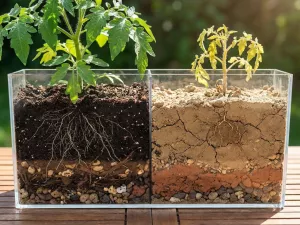
Good moisture control begins with the growing medium. A well-designed soil blend holds enough water for steady uptake while still leaving air spaces around the roots. This balance is what keeps blooming plants from experiencing the damaging cycle of drought stress followed by suffocation. This is closely related to how soil layers in pots manage water distribution.
Many watering problems are actually soil problems. Dense mixes containing too much fine peat, compost, or garden soil can stay wet for too long in containers. At the other extreme, a very coarse mix may drain so quickly that roots never remain hydrated long enough to support flowering. The best blend depends on the plant, pot, and growing environment.
Useful components and what they do
Different ingredients affect water retention and air flow in different ways. Combining them thoughtfully creates a more forgiving root environment.
- Peat or coco coir: Holds moisture well; coir often rewets more easily after drying.
- Perlite: Increases drainage and air space, helping prevent compaction.
- Fine bark: Adds structure and improves moisture balance for many flowering houseplants.
- Compost: Contributes water-holding capacity and nutrients, but too much can make mixes heavy.
- Pumice or coarse sand: Useful where stronger drainage is needed, especially in hot climates or for species that dislike wet roots.
Choosing a blend for the setting
Indoor flowering plants often need a mix that stays evenly moist for longer because evaporation is slower. Outdoor containers in summer usually benefit from a blend that retains water but does not collapse after repeated watering. Hanging baskets need a particularly resilient mix because they dry faster from all sides.
| Growing situation | Blend characteristics to look for | Why it helps flowering plants |
|---|---|---|
| Indoor tropical bloomer | Moisture-retentive base with added perlite and bark | Keeps roots evenly moist without becoming stagnant |
| Sunny patio container | Water-holding mix with strong structure and moderate drainage | Buffers fast daytime drying while preventing root stress |
| Hanging basket | Light mix with coir or peat plus perlite | Reduces extreme dry-down and keeps the basket manageable in weight |
| Mediterranean-type flowering plant | Faster-draining blend with extra mineral content | Prevents prolonged wetness around roots that prefer more air |
Repotting can also improve moisture regulation. If roots circle densely around the pot edge, water may rush through without soaking the root ball. Refreshing the mix and moving to a slightly larger container often restores more even hydration.
Editor’s note: If potting mix has become hard and shrunk from the sides, it may be repelling water. Bottom-watering once or soaking the pot briefly can rehydrate the root ball, but replacing old mix is often the longer-term fix.
Signs of moisture imbalance in bloomers

Flowering plants rarely say “too dry” or “too wet” in a simple way. Instead, they show patterns. Reading those patterns early helps prevent lost buds, root damage, and weak repeat blooming. The challenge is that some symptoms overlap, so it helps to look at the whole plant rather than a single leaf or flower.
For example, wilting can mean the soil is dry, but it can also happen when roots are waterlogged and unable to function. Yellow leaves may point to overwatering, nutrient issues, or natural aging. The best diagnosis combines visible symptoms with a direct check of the soil and roots. In some cases, these symptoms resemble early leaf spot problems.
Above-soil clues
The top growth often reveals moisture stress before a plant declines severely. Buds, flowers, and new growth are usually the most sensitive indicators.
- Crisp leaf edges and dry buds: Often linked to repeated drying or hot, windy conditions.
- Soft yellow leaves with slow growth: More often associated with excess moisture and poor root aeration.
- Flowers fading quickly: Can result from irregular watering during warm weather.
- Brown lower leaves plus sour-smelling soil: A warning sign that the mix may be staying wet too long.
- Sudden wilt in moist soil: Suggests root stress rather than simple thirst.
Root-zone checks that confirm the problem
Looking below the surface gives a more reliable answer than guessing from foliage alone. Check the soil 2.5 cm to 5 cm (1 in to 2 in) down, inspect drainage holes, and notice how long the pot stays heavy after watering.
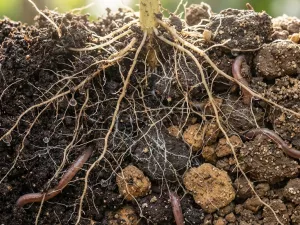
Healthy roots are usually pale and firm. Damaged roots from excess moisture may look brown, mushy, or sparse. A root ball that has become extremely dry may feel hard, pull away from the pot sides, and resist rewetting. If the plant is in the ground, observe whether water pools on the surface or disappears too quickly.
Light and feeding can complicate the picture. A heavily fed plant in strong light uses water faster, while a plant in low light may stay wet longer and show symptoms that resemble nutrient deficiency. Pruning dead blooms and weak stems can reduce demand and make recovery easier while you correct the watering issue.
How to stabilize watering routines
A stable routine is built on observation, not habit alone. The goal is to water according to plant need while keeping the process simple enough to follow consistently. Once a flowering plant enters a reliable rhythm, bud retention and bloom quality usually improve noticeably.
If you are unsure whether watering levels are correct, you can estimate risks using a root rot risk calculator.
Begin by checking plants at the same time each day or every other day, especially during active bloom. Morning is best because it allows foliage to dry quickly if splashed and gives the plant access to water before midday heat. Rather than watering everything the same way, sort plants into groups based on how fast they dry.
A workable routine for home growers
This approach helps reduce guesswork without becoming overly complicated.
- Assess moisture first: Use touch, pot weight, or a moisture meter as a secondary tool.
- Water thoroughly when needed: Apply enough so the full root zone is moistened and a little drains out.
- Drain excess: Do not leave most flowering plants sitting in water for hours.
- Record patterns: Note how many days each plant usually takes to dry under current weather and light.
- Adjust with conditions: Increase checks during heat waves above 30°C (86°F), windy periods, or when plants are setting many buds.
Tools and habits that make consistency easier
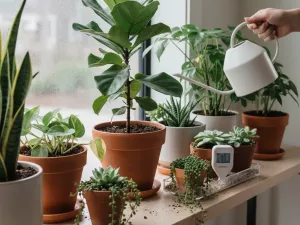
Simple supports can prevent missed waterings and overcorrections. Self-watering containers can help with thirsty annuals, though they still need monitoring. Mulch, drip irrigation, and grouping pots by exposure all reduce uneven moisture loss. Indoors, rotating plants away from heaters and using trays carefully can make a bigger difference than adding more water.
If a plant has already experienced stress, return it to balance gradually. Do not keep flooding a wilted plant if the soil is still damp, and do not drench a root-rotted plant with fertilizer. Correct the root-zone problem first, then resume feeding lightly once new growth appears. Consistent deadheading, sensible pruning, and proper light levels will help the plant use water more efficiently and support another flush of flowers.
Practical recommendation: Keep one small notebook or phone note for bloomers that are hard to read. Tracking when they were watered, fed, and pruned for just two weeks often reveals why moisture keeps drifting out of balance.