How Plant Roots Interact With Soil

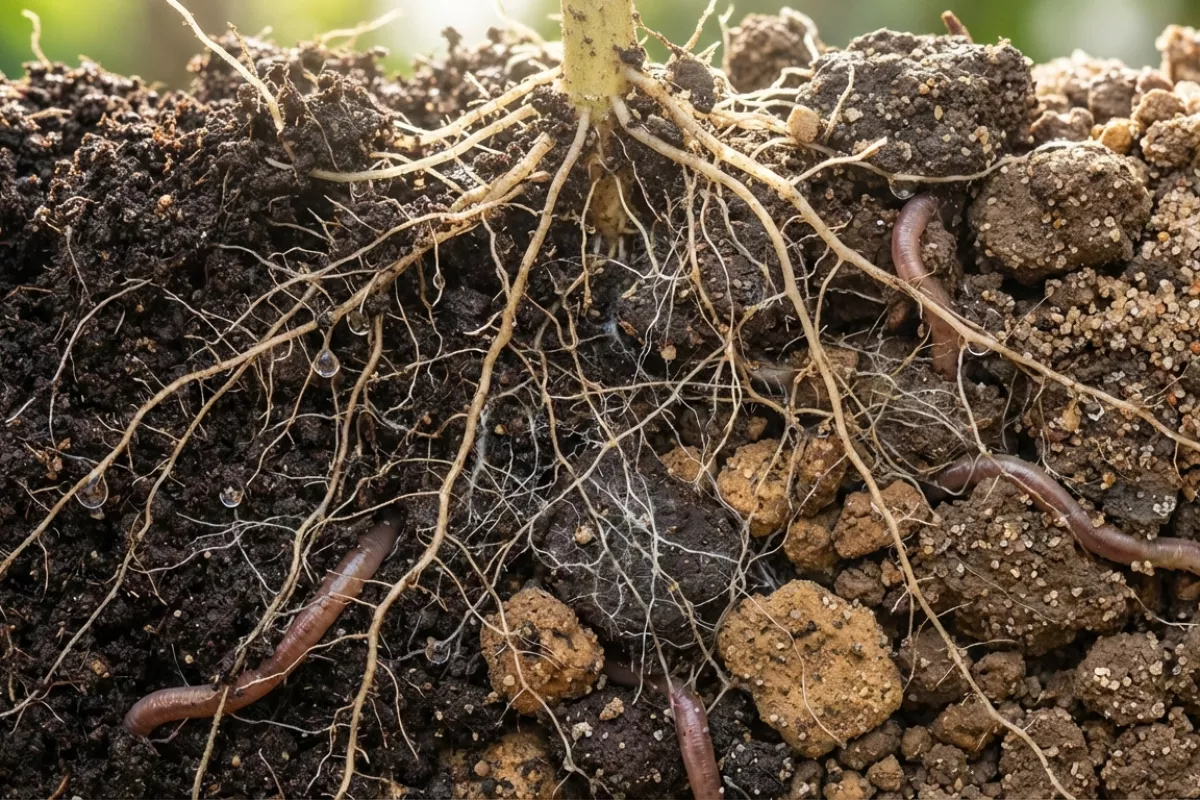 Covers how roots anchor plants, absorb nutrients, and take up water, plus why soil air spaces matter. It also explains how roots interact with soil microbes, how they adapt to different conditions, and what factors can limit root growth.
Healthy plants begin below the surface, where roots and soil trade water, air, nutrients, and helpful microbes. Learning how this system works lets you pick the right potting mix, water with better timing, and prevent issues like compaction, poor drainage, or root rot. Watch for slow growth, yellowing leaves, or soggy soil, and check roots for firmness and color to understand what your plant needs.
How roots anchor plants
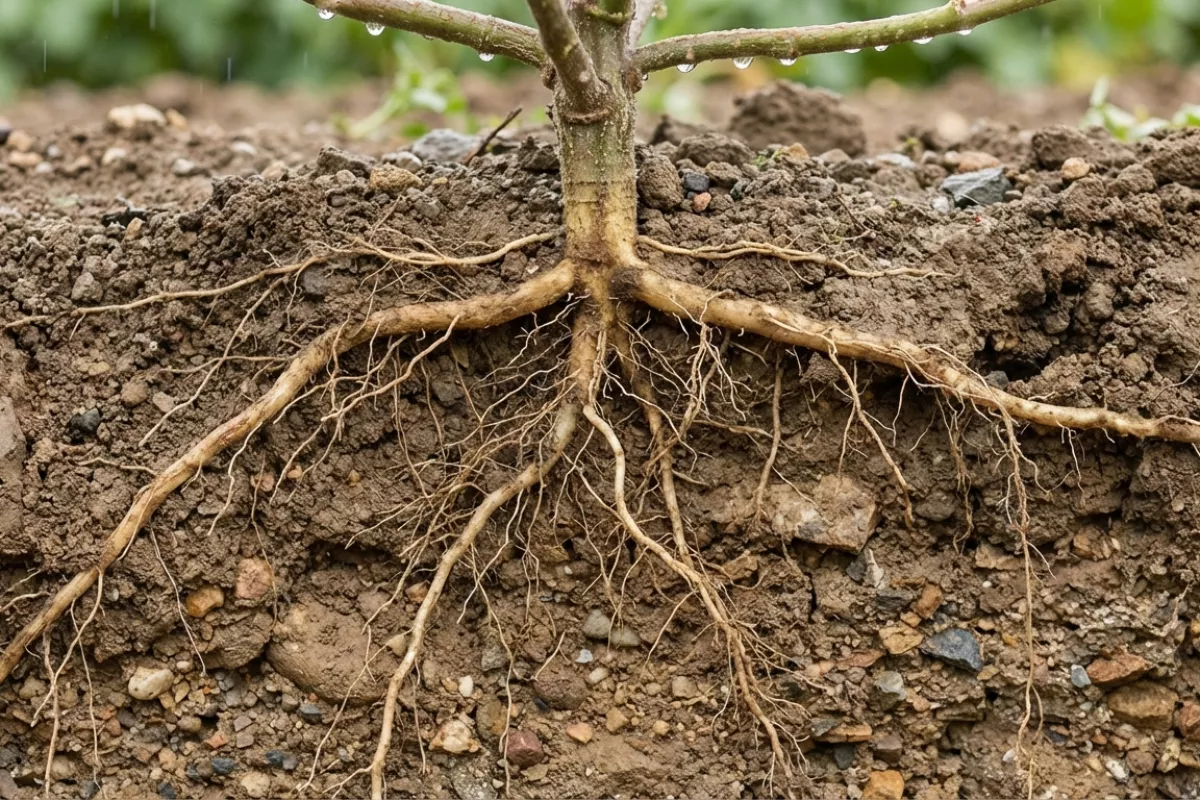
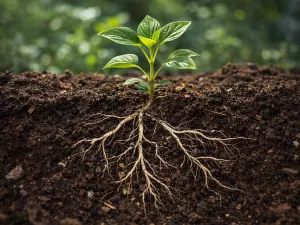
Staying upright is partly a physics problem: wind, rain, and the plant’s own weight create forces that would topple stems if the underground parts didn’t resist them. Roots solve this by spreading through soil, gripping particles, and forming a living “reinforcement” network that transfers pulling and pushing forces into the ground.
Anchorage isn’t just about having more root mass. It depends on where roots grow, how they branch, and the way soil behaves when stressed. A loose, dry sand can let roots slip, while a well-aggregated loam can lock them in place. For a deeper breakdown of these root–soil mechanics, see how soil works for roots. Water matters too: saturated soil can lose strength, so even a well-rooted plant may lean after heavy rain.
- Mechanical interlocking: Fine roots and root hairs wedge between soil particles and aggregates, increasing friction and reducing the chance of the root system sliding under load.
- Soil binding: Roots release sticky compounds and support microbes and fungi that help form stable aggregates, which makes the surrounding soil more resistant to shear.
- Architecture and depth: Deeper axes act like anchors against uprooting, while wide lateral roots counter tipping by spreading the load over a larger area.
- Dynamic growth response: When a plant experiences repeated wind or shifting soil, it often thickens key roots and increases branching on the “pull” side, improving stability over time.
- Partnerships that add grip: Mycorrhizal fungi extend threadlike hyphae beyond the root surface, helping roots explore pores and improving the cohesion of the root–soil zone.
| Rooting pattern | How it stabilizes the plant | Where it tends to work best |
|---|---|---|
| Taproot-dominant | Acts as a deep anchor that resists uprooting and helps the plant stay planted during strong pulls. | Deeper, well-drained soils where roots can penetrate without hitting hardpan. |
| Fibrous, dense mat | Creates high friction near the surface and spreads forces sideways, reducing tipping. | Shallow soils and areas with frequent surface disturbance. |
| Strong lateral “buttress” roots | Provides leverage against bending by widening the base and distributing load across a broad soil volume. | Wind-exposed sites and soils that allow lateral expansion. |
| Adventitious/brace roots | Adds extra support points above the original root crown, improving stability when the stem is tall or the soil is loose. | Plants in wet seasons, soft soils, or crops with tall canopies. |
When you’re troubleshooting stability in containers or raised beds, root performance often comes down to how much usable soil the plant actually has. If you need a quick estimate for pot or bed setups, you can calculate soil volume and avoid undersizing the root zone.
If you’re trying to diagnose poor stability, look at the root–soil contact zone rather than the plant alone. Compaction can force roots to grow sideways in a shallow layer, creating a “plate” that lifts more easily. On the other hand, a crumbly structure with pores of different sizes lets roots penetrate and branch, which usually improves resistance to both tipping and pull-out.
Nutrient absorption process
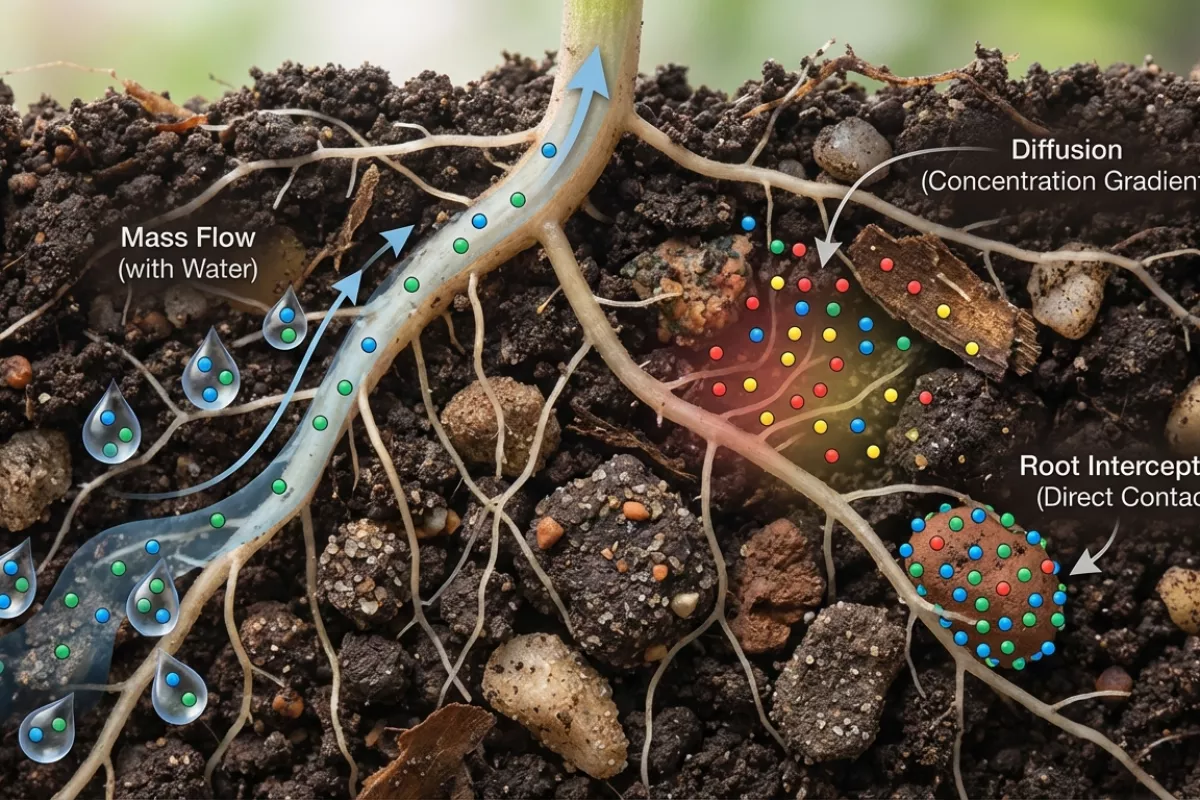
Plants don’t “drink” nutrients the way they take up water; most mineral elements enter roots as dissolved ions that move toward the root surface and then cross several cell layers before reaching the xylem. The route depends on soil moisture, oxygen levels, and how tightly nutrients are held on clay and organic matter surfaces.
From the soil side, ions reach the root mainly through three physical pathways:
- Mass flow: nutrients ride along with water pulled toward the root during transpiration. This is especially important for nitrate (NO3−), calcium (Ca2+), and magnesium (Mg2+).
- Diffusion: ions move from areas of higher concentration in the soil solution to lower concentration near the root as uptake depletes the local supply. Phosphate (H2PO4−/HPO42−) often relies heavily on this because it is less mobile.
- Root interception: growing roots and root hairs physically contact new soil surfaces, exposing fresh nutrient exchange sites.
Once ions reach the root surface, entry is controlled by membranes rather than simple soaking. Root epidermal cells and root hairs use transport proteins to bring in specific ions, often powered by proton (H+) pumps that create an electrochemical gradient. This is why soil pH matters: the balance of H+ affects both nutrient form (availability) and the energy cost of uptake.
Inside the root, solutes can move in two main ways until they hit the endodermis:
- Apoplastic pathway: through cell walls and spaces between cells, which is fast but less selective.
- Symplastic/transmembrane pathway: through the cytoplasm of cells connected by plasmodesmata, requiring membrane crossings that allow tighter control.
The endodermis acts like a checkpoint. Its Casparian strip blocks the apoplastic route, forcing water and dissolved minerals to cross a cell membrane before entering the stele. This step helps the plant exclude harmful ions (like excess sodium, Na+) and regulate what ultimately loads into the xylem for transport to stems and leaves.
| Stage | What’s happening | Big factors that change it |
|---|---|---|
| Movement through soil to the root | Ions arrive by mass flow, diffusion, or contact as roots grow | Soil moisture, texture (sand vs. clay), transpiration rate, nutrient mobility |
| Entry at the root surface | Transporters and channels move specific ions into epidermal/root hair cells | Soil pH, competition between ions (e.g., K+ vs. Na+), root health |
| Radial transport across the cortex | Solutes travel via cell walls (apoplast) or through cells (symplast) | Oxygen availability, temperature, membrane integrity, mycorrhizal assistance |
| Selective barrier at the endodermis | Casparian strip forces membrane crossing for screening and regulation | Salt stress, drought, developmental stage of the root |
| Loading into xylem and upward transport | Nutrients are released into xylem sap and carried to shoots | Transpiration demand, humidity, stomatal opening, plant nutrient status |
Root hairs and symbiotic fungi can shift the balance of these steps. Fine root hairs increase surface area, while mycorrhizal hyphae extend the effective reach of the root into pores too small for roots to enter, improving access to less-mobile nutrients like phosphorus and some micronutrients.
Environmental stress changes uptake patterns in predictable ways. In dry soil, diffusion slows because water films thin, so phosphate shortages often show up first; in waterlogged soil, low oxygen can reduce active transport and alter nitrogen forms, making ammonium (NH4+) more common than nitrate. The plant’s response is usually a mix of altered root growth, transporter activity, and selective allocation of nutrients to the tissues that need them most.
Water uptake mechanics
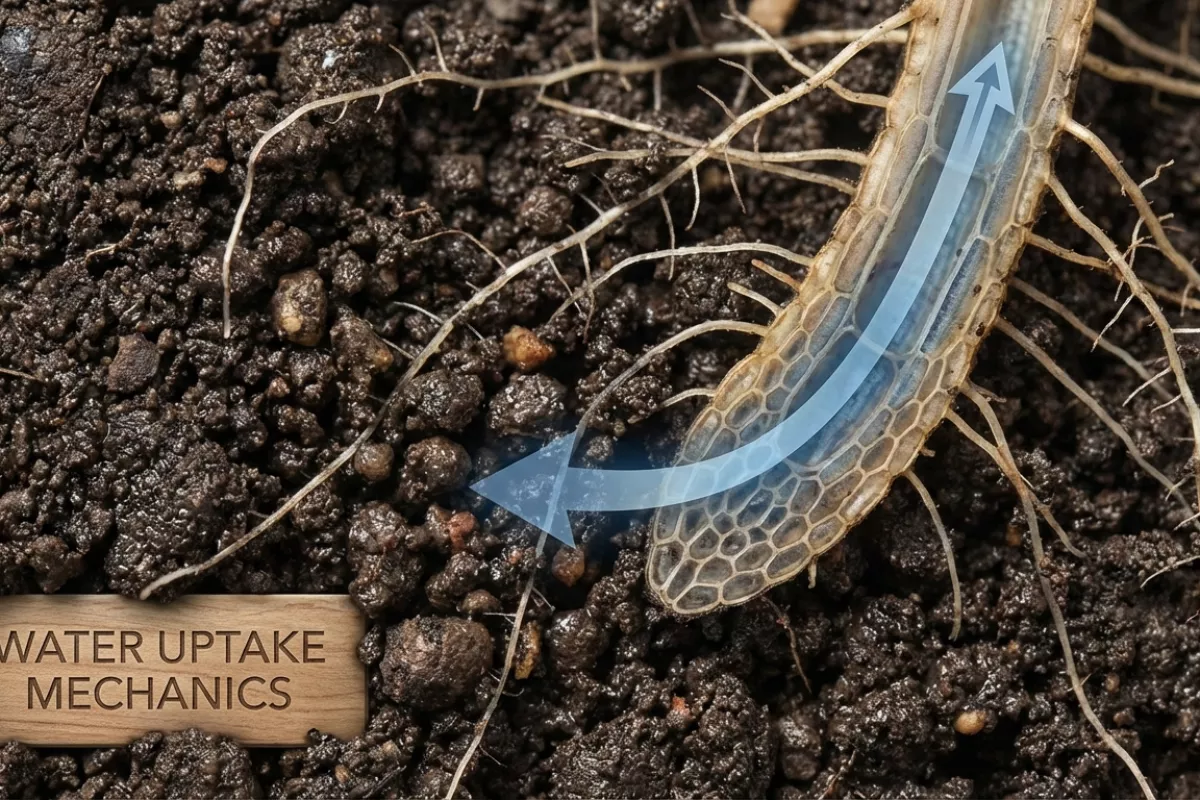
Roots don’t “drink” the way a straw does; they pull water in because of gradients in energy and solute concentration. Most entry happens through young root tips and fine roots where the surface area is high and barriers are still developing. Because leaf evaporation drives much of this pull, actual light levels matter — if you want to quantify indoor intensity, use the lux to PPFD calculator. From there, water moves through root tissues and into the xylem, then up the plant as evaporation from leaves creates tension that keeps the flow going.
At the soil–root interface, the key is how tightly water is held by soil particles. In a moist, well-structured soil, water films connect pores to the root surface, so the plant can replace what it loses to transpiration. As soil dries, those films thin and break, and the remaining water is held at lower water potential, making it harder for roots to extract.
- Mass flow: Water moving toward roots as the plant transpires. This is a major pathway for bringing dissolved nutrients (like nitrate) along for the ride.
- Diffusion: Short-range movement driven by concentration differences, important when water flow is slow and for less mobile nutrients.
- Root interception: Direct contact as roots grow into new soil volumes, exposing fresh surfaces and water-filled pores.
Once water reaches the root surface, it can take more than one route inward. The apoplastic path runs through cell walls and spaces between cells, which is fast but gets blocked at the endodermis by the Casparian strip. The symplastic path moves cell-to-cell through plasmodesmata, while the transmembrane route repeatedly crosses cell membranes, often aided by aquaporin channels that can open or close depending on stress, hormones, and time of day.
| Where the “bottleneck” occurs | What changes water entry | What it looks like in the field |
|---|---|---|
| Rhizosphere (soil right next to the root) | Drying breaks water continuity; salts can lower water potential | Plants wilt even when deeper soil still feels slightly damp |
| Root hairs and epidermis | More surface area increases contact; damage reduces absorption | Seedlings struggle after rough transplanting or root pruning |
| Cortex (outer root tissues) | Porosity and living cell activity affect symplastic flow | Compaction and low oxygen slow uptake after heavy rain |
| Endodermis (Casparian strip) | Forces selective membrane crossing; regulates ion entry with water | Some salts accumulate in leaves less when roots can exclude ions |
| Xylem loading and transport | Transpiration pull drives flow; embolisms interrupt columns | Hot, windy days increase demand; drought can cause dieback at tips |
Soil structure and oxygen matter as much as moisture. In waterlogged pores, oxygen drops and roots shift metabolism, reducing the energy available for ion pumping and membrane regulation that supports water movement. In compacted layers, fewer large pores mean slower replenishment of water near the root, so the plant can be stressed even with moderate overall soil moisture.
Plants also adjust their internal “plumbing.” They can grow more fine roots and root hairs into wetter patches, alter aquaporin activity to change hydraulic conductivity, and accumulate compatible solutes to maintain turgor. These responses help, but they have limits: when the gradient between soil water potential and root water potential becomes too small, the flow slows no matter how much surface area the root system has.
Role of soil air spaces
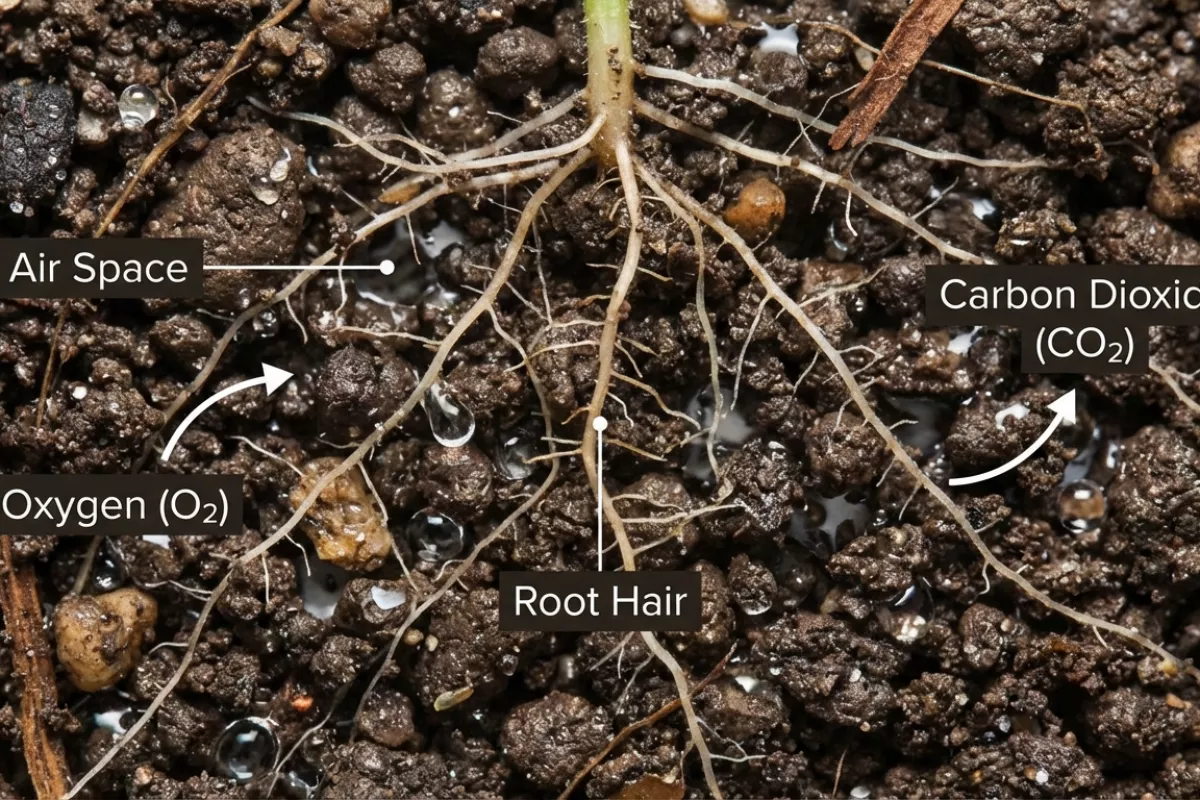
Gaps between soil particles act like tiny ventilation channels. They let oxygen move down to roots and allow carbon dioxide produced by root respiration and microbes to move back out. When those pores are open and connected, roots can keep generating energy for nutrient uptake and growth; when they’re waterlogged or squeezed shut, roots quickly shift into stress mode.
Roots don’t “breathe” like leaves, but they still need oxygen for aerobic respiration. That oxygen supports active transport at the root surface, which is how plants pull in many nutrients against a concentration gradient. With poor aeration, uptake of nitrogen and other mobile nutrients often slows, and fine roots may die back, reducing the plant’s ability to explore soil.
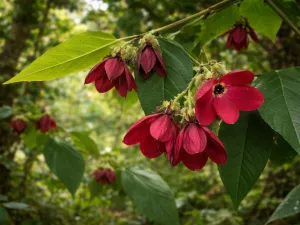
This oxygen dependence is especially relevant for tropical species that dislike stagnant, waterlogged media. If you grow Abroma augusta, keep the root zone airy and avoid mixes that stay wet for long periods, because low oxygen can quickly reduce fine-root function.
- Gas exchange: Air-filled pores speed diffusion of O2 into the root zone and CO2 out. Water-filled pores slow diffusion dramatically, so saturated soil can become oxygen-poor even if it looks “wet and healthy.”
- Root architecture: In well-aerated soil, plants invest in many fine roots and root hairs for absorption. In compacted or flooded conditions, roots often become thicker, shallower, and less branched, concentrating growth near the surface where oxygen is more available.
- Microbial partners: Many beneficial microbes (including nitrifiers) prefer oxygenated conditions. When pores lose air, microbial communities shift toward anaerobic processes, which can change nutrient forms and sometimes create compounds that are hard on roots.
- Water balance tradeoff: The best root zone has both water and air. After irrigation or rain, drainage should restore air-filled porosity; if water stays in the pore network too long, roots can’t access oxygen even though moisture is abundant.
Soil texture sets the baseline: sandy soils tend to have larger pores that re-aerate quickly, while clay-rich soils have many tiny pores that hold water longer. Structure is the wildcard. Stable aggregates create a mix of pore sizes, giving roots both moisture storage and air pathways. That’s why two soils with the same texture can behave very differently for root health.
Compaction is the common way air spaces disappear. Foot traffic, heavy equipment, and working soil when it’s wet press particles together, collapsing pore networks. A simple clue is water puddling for long periods after a storm or irrigation; that often signals reduced infiltration and limited oxygen supply below the surface.
| Soil condition | What happens to pore air | Typical root response |
|---|---|---|
| Well-aggregated, crumbly soil | Continuous air channels; rapid re-aeration after watering | Dense network of fine roots and root hairs; steady nutrient uptake |
| Compacted layer (e.g., from traffic) | Pores collapse; slow gas diffusion | Roots deflect sideways, become shallow, and explore less volume |
| Waterlogged soil after heavy rain | Air spaces filled with water; oxygen drops quickly | Reduced growth, possible root dieback; higher disease risk |
| Very dry soil | Plenty of air, but limited water films for nutrient movement | Roots may extend deeper; nutrient uptake can still slow due to low moisture |
In practice, the goal is not maximizing air at the expense of water, but keeping a resilient pore network that cycles between wet and aerated states. Organic matter, living roots, and soil organisms help maintain that structure by forming aggregates and biopores, giving new roots ready-made pathways and a more reliable oxygen supply.
Interaction with soil microbes
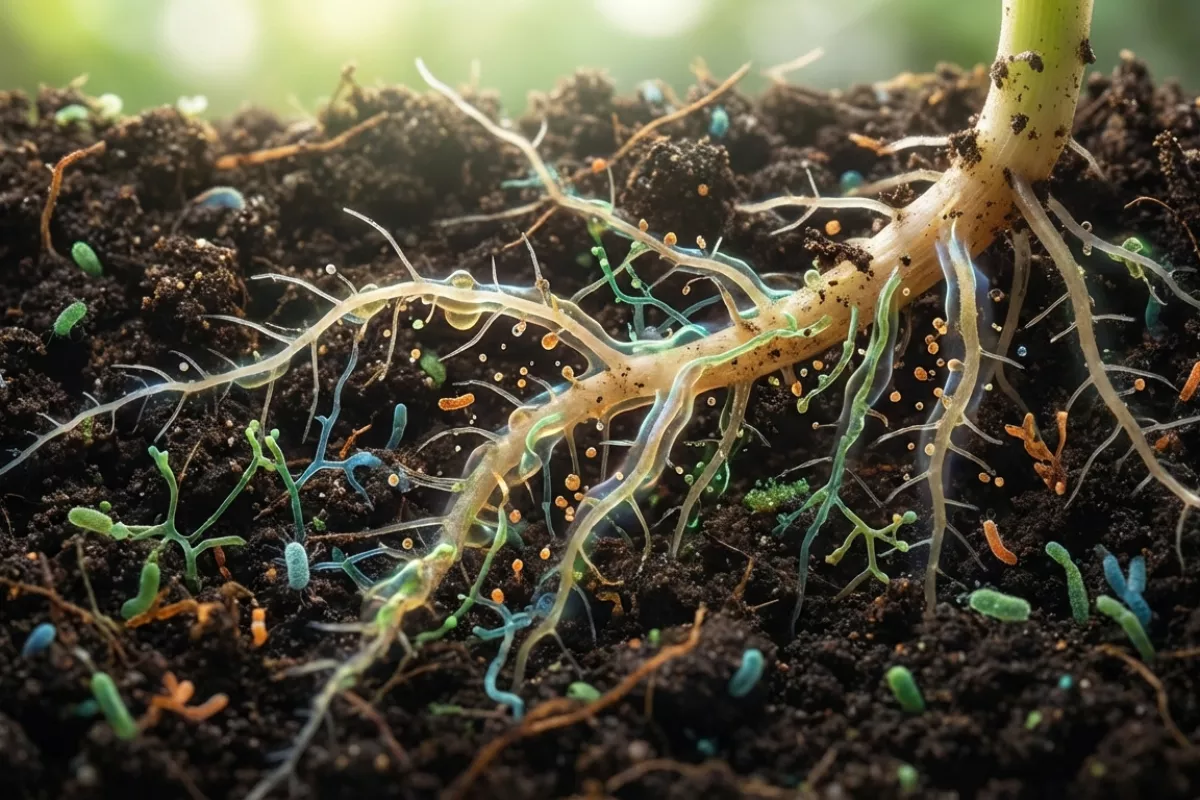
Roots don’t work alone: they constantly exchange signals and nutrients with bacteria, fungi, and other tiny organisms living around them. The “conversation” happens mostly in the rhizosphere, a narrow zone of soil influenced by root exudates (sugars, amino acids, organic acids, and secondary compounds). These exudates act like both food and messaging molecules, shaping which microbial communities thrive close to the root surface.
Plants use this chemical output to recruit helpful partners and to discourage troublemakers. In return, microbes can improve nutrient availability, help plants tolerate drought or salinity, and reduce disease pressure. The balance isn’t fixed; it shifts with plant species, growth stage, soil type, moisture, and management practices like tillage or fertilizer use.
- Mycorrhizal fungi extend threadlike hyphae beyond the root’s reach, increasing access to water and nutrients, especially phosphorus. In exchange, the plant supplies carbohydrates produced by photosynthesis.
- Nitrogen-fixing bacteria (notably in legumes) can convert atmospheric nitrogen into plant-usable forms inside root nodules. This partnership is tightly regulated because building and maintaining nodules costs the plant energy.
- Plant growth–promoting rhizobacteria (PGPR) can release hormones or hormone-like compounds, solubilize phosphorus, and produce siderophores that bind iron, making it easier for roots to acquire.
- Decomposers break down organic matter into simpler compounds, gradually releasing nutrients that roots can absorb. Root exudates often “prime” this decomposition by feeding the decomposer community.
- Pathogens and opportunists may invade through root tips or wounds, or exploit stressed plants. Beneficial microbes can suppress them by competition, antibiosis, or by triggering plant immune responses.
| Microbial group | What it does near roots | Typical plant benefit | Common trade-off or limit |
|---|---|---|---|
| Arbuscular mycorrhizal fungi | Forms intimate associations inside root cells; hyphae explore soil pores | Better phosphorus uptake, improved water access, stress buffering | Requires plant carbon; benefits can drop in high-phosphorus soils |
| Ectomycorrhizal fungi | Wraps root tips (common in many trees) and extends hyphal networks | Enhanced nitrogen and phosphorus acquisition; pathogen protection | Association is host-specific; sensitive to disturbance in some systems |
| Rhizobia (symbiotic nitrogen fixers) | Induces nodules and fixes atmospheric nitrogen | Direct nitrogen supply for growth | High energy cost; reduced fixation when soil nitrogen is abundant |
| PGPR (beneficial bacteria) | Colonizes root surfaces; produces growth regulators and nutrient-mobilizing compounds | Improved root architecture and nutrient availability | Effects depend on soil conditions and competition with native microbes |
| Soil-borne pathogens | Infects roots or blocks water-conducting tissues | None; causes disease | Often kept in check by diverse microbial communities and plant defenses |
Plants also “steer” these relationships through immune signaling. Low-level microbial cues can prime defenses so the plant responds faster to real attacks, while still allowing trusted partners to colonize. This selective tolerance is one reason diverse, biologically active soils often show fewer severe root diseases than simplified soils.
If you’re trying to support healthier root–microbe relationships, the practical levers are usually indirect: keep living roots in the ground as much as possible, add organic matter, avoid overapplying readily available nutrients (especially nitrogen and phosphorus), and minimize harsh disturbance. These choices tend to favor stable microbial networks that feed back into better root function.
How roots adapt to conditions
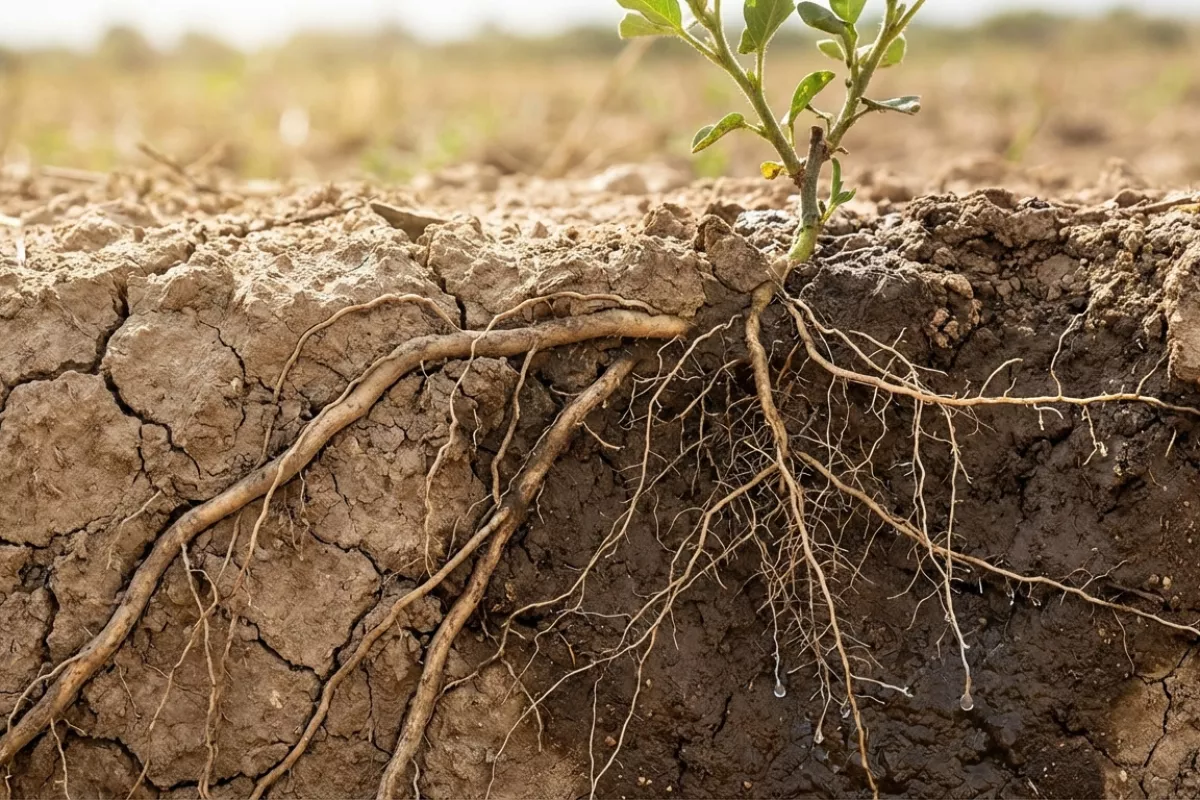
Roots respond to what the soil is offering (and what it’s withholding) by changing their shape, growth rate, and chemistry. Some of these shifts happen within hours, like tweaking water uptake, while others take days or weeks, like building a denser network of fine roots or partnering more heavily with fungi.
| Soil condition | What roots typically do | Why it helps |
|---|---|---|
| Drought or low moisture | Grow deeper or spread laterally toward wetter zones; reduce water loss by tightening control at the root surface; increase root-to-shoot investment. | Reaches more reliable water and keeps internal water balance steadier when the topsoil dries out. |
| Waterlogging and low oxygen | Form air spaces (aerenchyma) in some species; shift growth toward the surface; produce new roots near oxygenated layers; slow respiration. | Improves oxygen delivery to living tissues and reduces damage from anaerobic conditions. |
| Compaction or hardpan | Thicken roots and increase pushing force; follow cracks, worm channels, and old root paths; concentrate growth where resistance is lower. | Maintains exploration even when mechanical resistance limits penetration and gas exchange. |
| Low nitrogen (N) | Increase branching and fine-root production; boost uptake proteins; release exudates that stimulate helpful microbes; strengthen mycorrhizal partnerships. | Expands the absorbing surface and improves access to mobile N forms before they leach away. |
| Low phosphorus (P) | Make more root hairs and finer roots; exude organic acids and enzymes; rely more on mycorrhizal fungi that forage beyond the depletion zone. | P moves slowly in soil, so extra surface area and chemical “unlocking” increase availability near the root. |
| Salinity (high dissolved salts) | Exclude or compartmentalize sodium; adjust internal solutes to keep water moving inward; limit uptake when salt spikes; favor newer roots if older ones are stressed. | Protects cells from ion toxicity and prevents water from being pulled out of the plant by salty soil water. |
| Acidic or alkaline pH | Alter exudates to change local chemistry; shift which nutrients are prioritized; recruit different microbes; reduce uptake of toxic ions where possible. | Buffers the immediate root zone and improves nutrient access when pH locks elements up or releases harmful metals. |
| Temperature extremes | Slow growth in cold soil; adjust membrane composition; time new root flushes to warmer periods; in heat, prioritize water uptake and reduce delicate new growth. | Keeps metabolism aligned with conditions so roots don’t spend energy when nutrient and water movement are limited. |
These changes are guided by signals moving between roots and shoots, plus local cues like moisture gradients, nutrient “hotspots,” and oxygen levels. A small patch of fertile soil can trigger dense branching there, while poorer zones may be explored more quickly and then abandoned.
- Root hairs are often the first adjustment: they can lengthen and become more numerous to increase contact with soil particles and thin water films.
- Exudates (sugars, acids, and other compounds) help loosen nutrients from minerals, shape the microbial community, and improve aggregation around the root.
- Symbioses shift with stress: mycorrhizal fungi commonly become more valuable when phosphorus is scarce or when soil structure limits exploration.
In practice, you’ll often see trade-offs. A plant investing in deeper rooting for water may temporarily reduce fine-root density near the surface, and a root system coping with low oxygen may sacrifice depth for survival. The overall goal stays the same: keep acquiring water and nutrients while avoiding damage in a changing soil environment.
Factors that limit root growth
Roots explore soil to find water, oxygen, and nutrients, but they only grow well when the physical, chemical, and biological conditions stay within a workable range. When one basic need becomes scarce, plants often respond by slowing root extension, thickening roots, or shifting growth to a different depth where conditions are less stressful.
| Limiting condition | What happens in the soil | Typical root response | What helps (practical fixes) |
|---|---|---|---|
| Compaction and high bulk density | Pores collapse, soil strength rises, and air/water movement slows; dense layers can form a “pan.” | Shorter, thicker roots; fewer fine roots; roots follow cracks and old channels instead of penetrating evenly. | Reduce traffic when wet; add organic matter; keep living roots in the ground; deep-rooted cover crops; mechanical loosening only when conditions allow and compaction cause is addressed. |
| Waterlogging (poor drainage) | Water fills pore spaces and oxygen diffusion drops; reduced compounds (like Fe and Mn) can build up. | Root tips die back; shallow rooting; increased risk of root rots; plants may form aerenchyma in some species. | Improve drainage and surface grading; avoid over-irrigation; increase aggregation with compost and residue; consider raised beds in heavy soils. |
| Drought and low soil moisture | Water films thin and become harder to extract; salts can concentrate as soil dries. | Slower elongation; deeper foraging if subsoil moisture exists; fine roots may shed to reduce demand. | Mulch to cut evaporation; irrigate deeply but less often; build soil organic matter; reduce competition from weeds; select drought-tolerant rootstocks/cultivars. |
| Temperature extremes | Cold slows microbial activity and nutrient release; heat accelerates drying and can damage root membranes. | In cool soil, roots stall even if shoots are ready; in hot soil, root tips burn and branching declines. | Mulch to buffer swings; plant when soil is warm enough; shade or cover soil in heat waves; avoid black plastic where overheating is likely. |
| Low oxygen from crusting or sealed surfaces | Raindrop impact or fine particles create a dense surface layer; gas exchange drops. | Roots struggle to cross the surface zone; seedlings show poor establishment and shallow systems. | Maintain residue cover; add organic amendments; minimize bare soil; gentle surface cultivation if crusts form after storms. |
| pH too low or too high | Nutrient availability shifts; at low pH, aluminum can become more soluble; at high pH, iron, zinc, and phosphorus become less available. | Stunted roots, poor branching, and nutrient deficiency symptoms despite fertilizer present. | Adjust pH with lime or sulfur-based amendments as appropriate; use targeted micronutrients; rely on soil tests rather than guesswork. |
| Salinity and sodicity | High salts reduce water uptake (osmotic stress); sodium disperses clays and destroys structure. | Root dehydration signs even in moist soil; reduced fine roots; patchy growth where salts accumulate. | Leach salts with good-quality water where drainage allows; add calcium sources (e.g., gypsum) for sodic soils; avoid salty fertilizers; improve infiltration with organic matter. |
| Nutrient imbalances (not just “low fertility”) | Excess of one nutrient can suppress uptake of another (for example, too much potassium can limit magnesium). | Roots may proliferate in nutrient-rich zones but overall performance stays poor if one element is limiting. | Base applications on soil and tissue tests; split nitrogen to reduce losses; place phosphorus where roots can reach it early. |
| Toxicities and contaminants | Heavy metals, herbicide carryover, or industrial residues interfere with enzymes and membranes. | Root tip browning, distorted growth, weak branching, and poor mycorrhizal colonization. | Identify source with testing; avoid contaminated amendments; use clean topsoil for beds; consider phytoremediation only with expert guidance. |
| Biological pressure (pathogens and pests) | Fungi, oomycetes, nematodes, and insects damage roots; stress is worse in saturated or compacted soil. | Lesions, pruning of fine roots, reduced water uptake, and uneven rooting depth. | Rotate crops; improve drainage and aeration; use resistant varieties; encourage diverse soil biology with organic inputs; avoid moving infested soil. |
In practice, these limits stack. For example, compaction often leads to waterlogging after rain and drought stress a week later because infiltration and storage are both compromised. Watching where roots actually stop in a soil profile (for instance, at a dense layer 25 cm (10 in) down) usually tells you more than looking at the plant top growth alone.
If you’re troubleshooting, start with the physical basics: is there enough pore space for air and water movement, and can roots push through the soil? Once structure and moisture are reasonable, chemical constraints like pH, salinity, or specific nutrient tie-ups become much easier to diagnose and correct. For indoor setups where light is the limiting factor that indirectly reshapes watering and root growth, a shortlist of plants that thrive in low light can help you pick species that tolerate the slower root-zone drying and reduced transpiration.