Why Plant Leaves Turn Yellow and How to Fix It

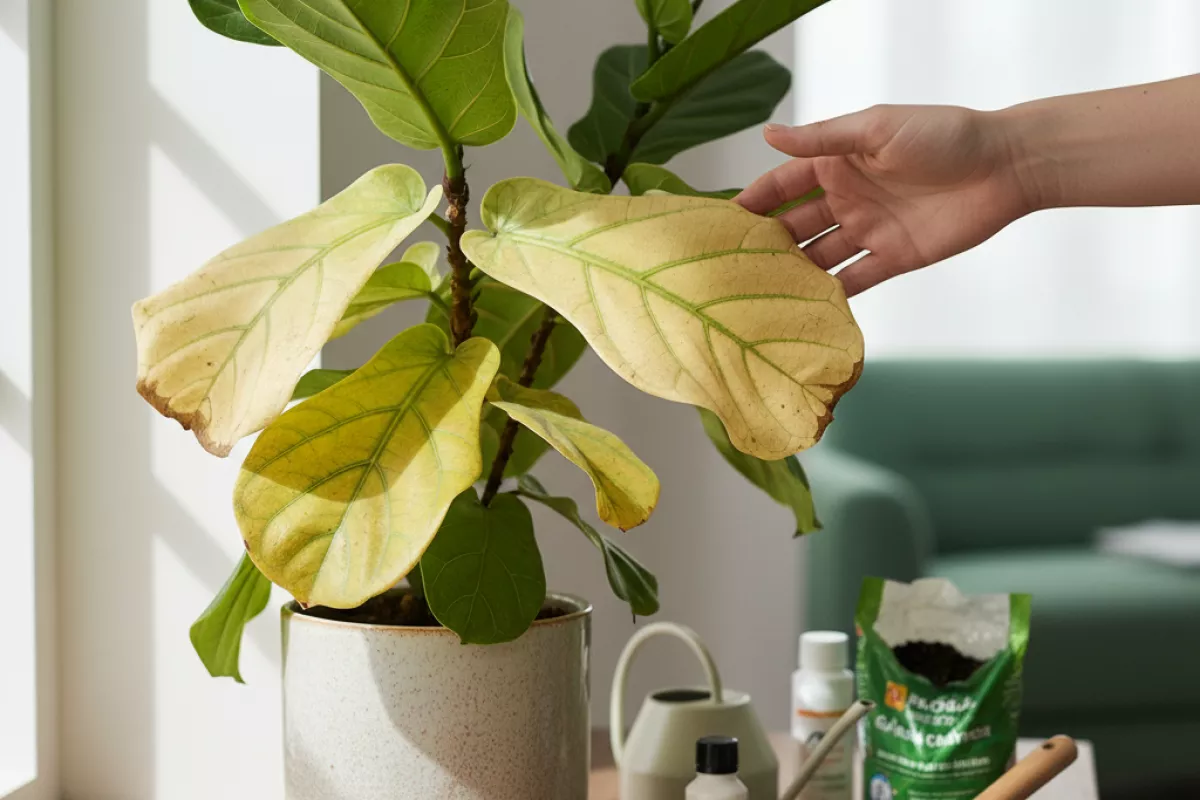 Covers what yellow leaves mean for plant health, how to tell natural aging from abnormal discoloration, common environmental causes, watering impacts, and nutrient deficiencies. Includes a step-by-step diagnosis checklist, when yellowing is reversible, and practical treatments.
- What yellow leaves indicate in plant health
- Natural aging vs abnormal discoloration
- Most common environmental causes
- How watering habits affect leaf color
- Nutrient deficiencies that trigger yellowing
- Step-by-step diagnosis checklist
- When yellow leaves can be reversed
- Practical treatment methods for recovery
Yellowing leaves are often a sign that a plant’s care or environment needs adjustment. Look at where the yellowing starts and how fast it spreads, since common causes include overwatering or underwatering, too much or too little light, nutrient deficiencies, pests, or root stress. This guide helps you identify the most likely issue and apply simple fixes so new growth emerges healthy and green.
What yellow leaves indicate in plant health
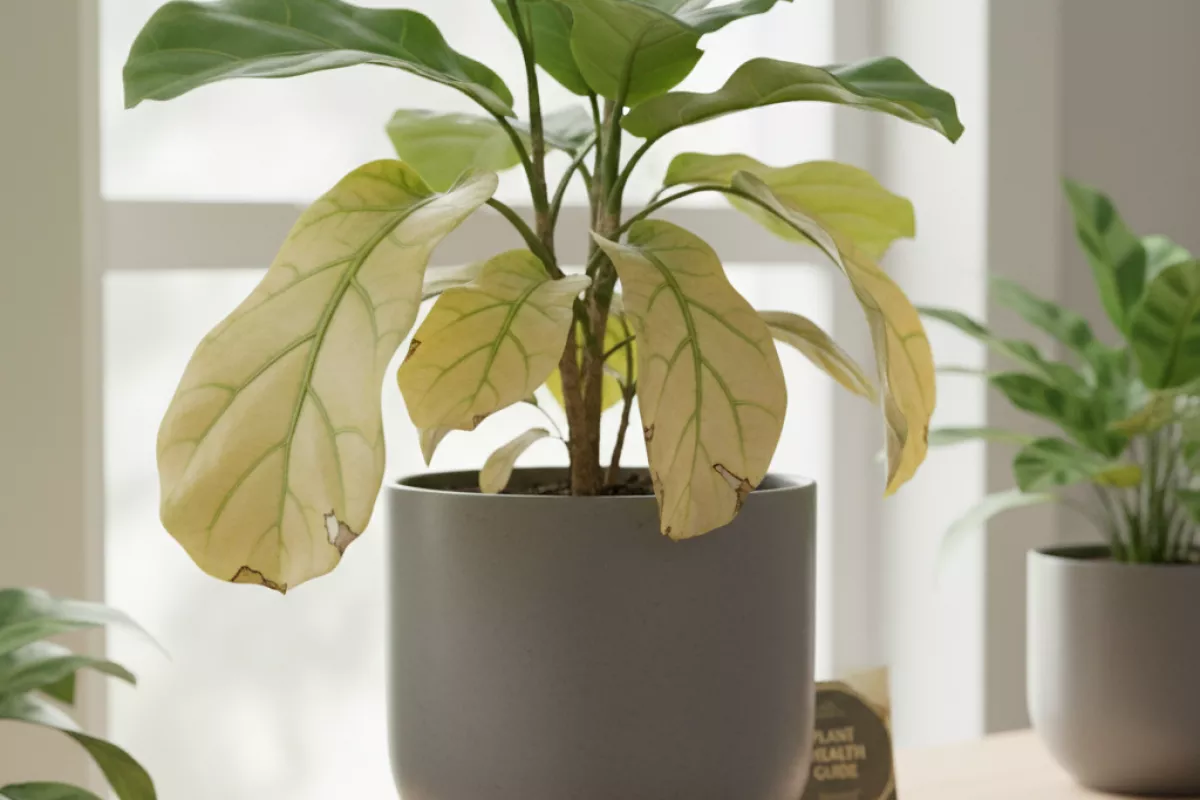
Yellowing foliage is usually a sign that the plant is struggling to make or keep enough chlorophyll. Sometimes it’s a normal, targeted process (older leaves being retired), but more often it’s a stress response tied to water, nutrients, light, temperature, pests, or root health. The key is noticing where the yellowing starts, how fast it spreads, and whether you also see wilting, spotting, or stunted growth. If soggy soil is part of the picture, start with avoid overwatering.
- Lower, older leaves turning yellow first: often normal aging, but can also point to mobile nutrient shortages (especially nitrogen) or chronic under-watering. If new growth looks fine and only a few bottom leaves fade, it’s usually not urgent.
- New growth yellowing first: suggests an issue the plant can’t “move” from older tissue, such as iron deficiency, high soil pH locking up nutrients, or root damage that prevents uptake.
- Yellow leaves with green veins (interveinal chlorosis): commonly linked to iron or magnesium problems. Iron tends to show up on the newest leaves; magnesium more often affects older leaves.
- Yellowing plus brown, crispy edges: indicates stress from inconsistent watering, salt buildup from fertilizer, dry air, or heat. It can also happen when roots are damaged and can’t keep up with transpiration.
- Yellowing with soft, limp leaves: frequently points to overwatering and low oxygen around roots. If the soil stays wet and the plant droops, the roots may be suffocating or beginning to rot.
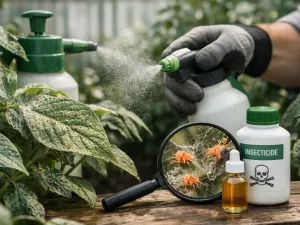
- Yellow spots, mottling, or patchy patterns: can signal pests (like spider mites) or disease. Look closely under leaves and along stems for fine webbing, speckling, or sticky residue. If you confirm mites, start with spider mite treatment.
- Sudden yellowing after moving the plant: often environmental shock from a big change in light, drafts, or temperature swings. A shift from 20°C to 10°C (68°F to 50°F) or a jump into harsh sun can trigger quick chlorosis.
- Yellowing soon after repotting: can be transplant stress, root disturbance, or a potting mix that holds too much water. If the pot is much larger than the root ball, the mix may stay wet longer than the plant can use it.
| Yellowing pattern you see | What it often indicates | What to check next |
|---|---|---|
| Only a few bottom leaves fade slowly | Normal leaf turnover or mild nitrogen shortage | Is new growth healthy? Review feeding schedule and overall vigor |
| Lower leaves yellow + plant wilts between waterings | Under-watering or roots not taking up water | Soil dryness 5 cm (2 in) down; rootbound pot; compacted mix |
| Leaves yellow + soil stays wet + limp stems | Overwatering, poor drainage, early root rot | Smell of soil, drainage holes, root color (cream vs. brown/mushy) |
| Newest leaves pale or yellow first | Iron deficiency, high pH, or root damage | Water quality, recent repotting, soil pH, root health |
| Yellow between veins, veins stay green | Iron (new leaves) or magnesium (older leaves) imbalance | Which leaves are affected; fertilizer type; salt buildup |
| Yellowing with crispy edges or tips | Salt stress, low humidity, heat, inconsistent watering | Fertilizer strength, runoff, room humidity, proximity to vents |
| Yellow patches with speckling/webbing | Pest feeding (often mites or thrips) | Undersides of leaves, sticky residue, tiny moving dots |
| Yellowing after a location change | Light/temperature shock | Sun exposure duration, drafts, night temps (e.g., 18°C vs 65°F) |
In practice, yellow leaves are less a single diagnosis and more a clue about what the plant is prioritizing. When resources are limited or conditions are off, many plants pull nutrients from older leaves to protect new growth, which is why the pattern matters as much as the color.
Natural aging vs abnormal discoloration
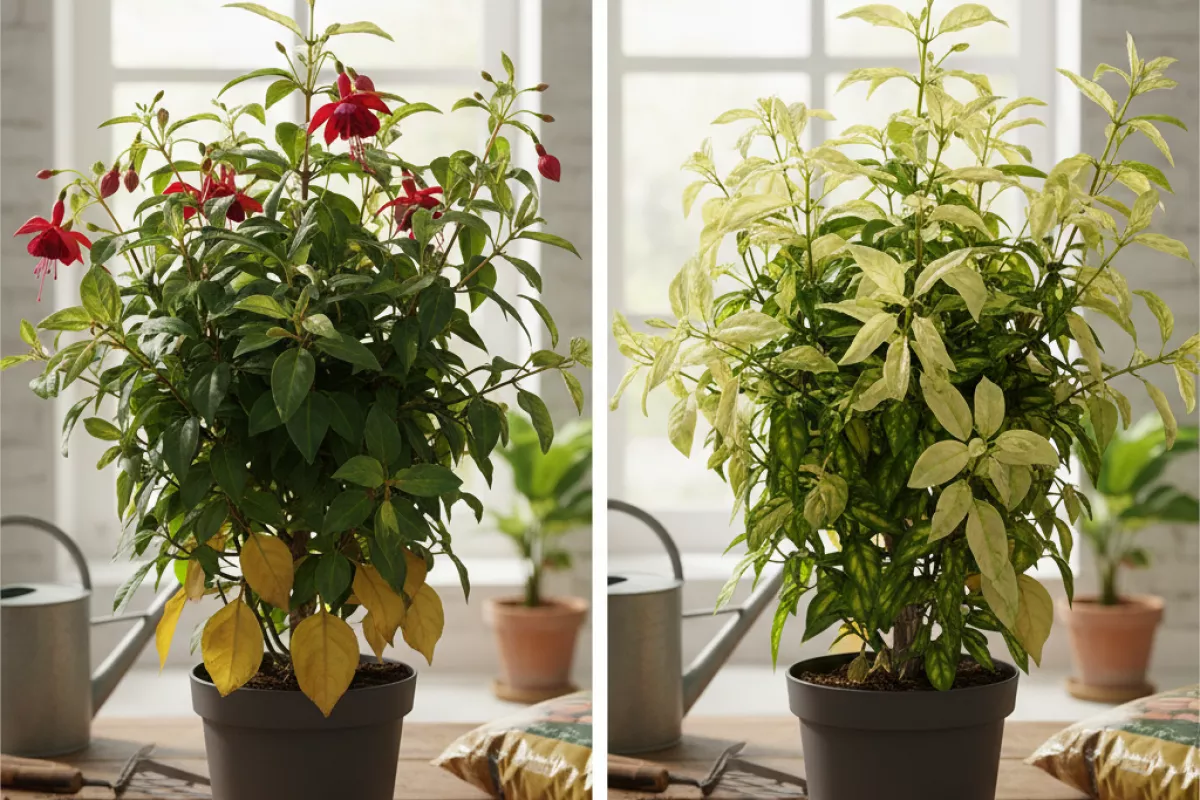
Some yellowing is simply a leaf reaching the end of its useful life. Plants routinely pull nutrients out of older leaves and redirect them to new growth, flowers, or fruit. The key is whether the pattern matches normal turnover for that species and season, or whether the plant is signaling stress.
| What you observe | More likely normal aging | More likely a problem | What to do next |
|---|---|---|---|
| Which leaves turn yellow first | Oldest, lowest, or most shaded leaves | Newest leaves, growing tips, or random leaves throughout the plant | Check where symptoms start; inspect new growth closely for distortion or pale veins. |
| Speed of change | Gradual over days to weeks | Fast (overnight to a few days) or spreading quickly | Review recent changes: watering schedule, repotting, fertilizer, heat/cold exposure. |
| Overall plant growth | New leaves still appear and look normal | Stunted growth, small leaves, weak stems, or bud drop | Assess light and nutrition; confirm the plant is in an appropriate spot for its needs. |
| Leaf pattern | Even yellowing, then browning and drop | Interveinal yellowing, mottling, spots, scorched edges, or patchy chlorosis | Match the pattern to likely causes: nutrient deficiency, pests, disease, sunscald, or salt buildup. |
| Timing/season | Deciduous plants in fall; older indoor leaves during low-light winter | Out of season, or right after a care change | Consider dormancy vs. shock; stabilize care for 1–2 weeks before making more changes. |
| Soil and roots | Soil dries at a normal pace; roots look firm and pale | Soil stays wet too long, smells sour; roots are brown, mushy, or brittle | Check drainage and watering; if rot is present, trim damaged roots and repot into fresh mix. |
If it looks like routine leaf turnover, you can usually just remove the yellowing leaf once it pulls away easily, and focus on steady care. If the symptoms point to stress, treat the yellowing as a clue: confirm watering habits, light levels, and root health first, then move on to nutrients and pests. That order prevents “fixing” the wrong thing and making the discoloration worse.
Most common environmental causes
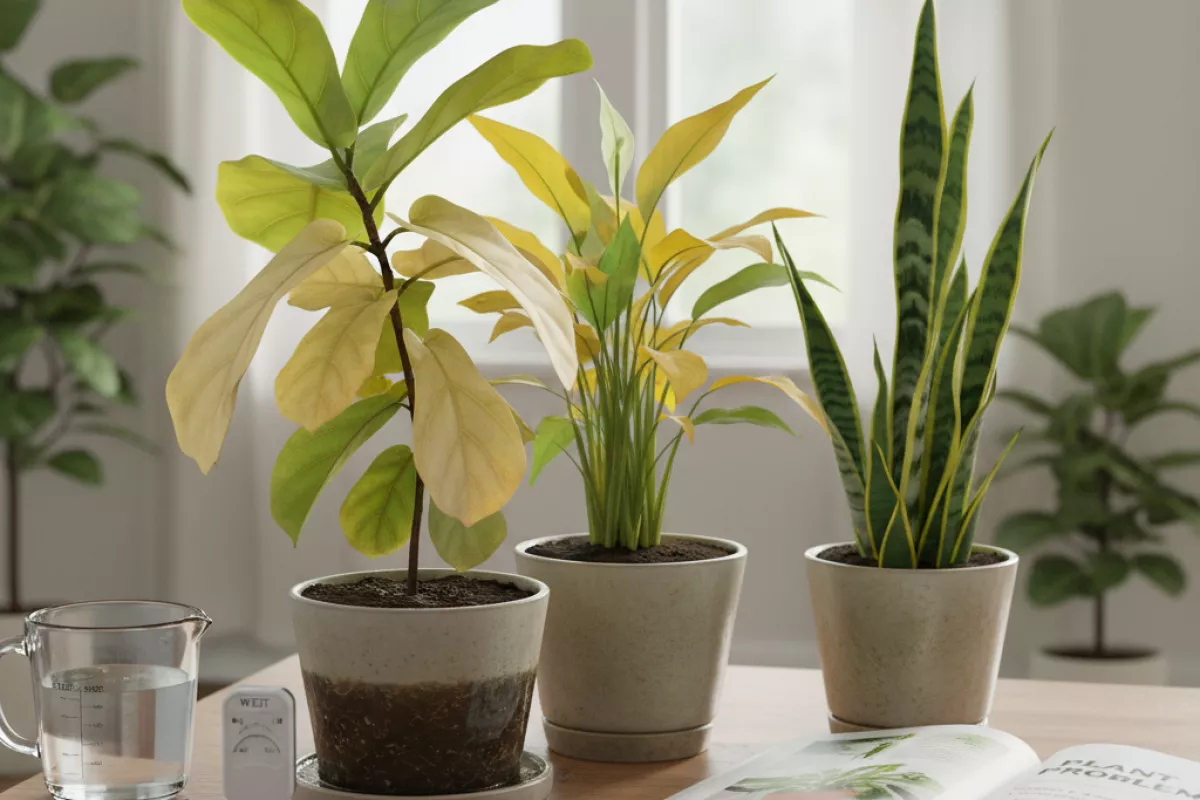
Yellowing leaves often come from a mismatch between what the plant is getting and what it needs day to day. Light, water, temperature, and air conditions can all disrupt chlorophyll production or damage roots, and the plant responds by paling or turning yellow. Understanding how roots work helps you prioritize root-zone checks first.
| Environmental issue | What you’ll notice | Why it happens | What to do |
|---|---|---|---|
| Overwatering / poor drainage | Older leaves yellow first; soil stays wet; may smell sour; stems can feel soft | Roots lose oxygen in waterlogged mix, so they can’t take up nutrients well | Let the top 2–5 cm (1–2 in) dry before watering again; empty saucers; repot into a pot with drainage holes and a chunkier mix if soil stays wet for 3–5 days |
| Underwatering | Yellowing with crisp edges; drooping; soil pulls away from the pot | Cells dehydrate and the plant sheds older foliage to conserve moisture | Water thoroughly until it drains, then wait until the top 2–5 cm (1–2 in) dries; if the mix is hydrophobic, soak the pot 10–20 min (10–20 min) and drain well |
| Too little light | Pale new growth; long, stretched stems; slow growth; lower leaves fade | Not enough energy to maintain chlorophyll and support all leaves | Move closer to a bright window; rotate weekly; consider a grow light for 10–14 hours/day (10–14 hours/day) if natural light is limited |
| Too much direct sun | Bleached yellow patches, then brown, papery spots (sunscald), often on the window-facing side | Leaf tissue overheats and chlorophyll breaks down faster than it can be replaced | Shift to bright, indirect light; use a sheer curtain; acclimate gradually over 7–14 days (7–14 days) when increasing sun exposure |
| Temperature stress (heat or cold) | Sudden yellowing after a cold night, heat wave, or draft; leaves may drop | Metabolism and water movement get disrupted; cold can injure cells | Keep most houseplants around 18–27°C (65–80°F); avoid vents and drafty windows; don’t let leaves touch cold glass in winter |
| Low humidity / very dry air | Yellowing plus brown tips/edges, especially on thin-leaved tropical plants | Transpiration outpaces water uptake; salts can concentrate at leaf margins | Group plants, run a humidifier, or use a pebble tray; aim for roughly 40–60% RH (40–60% RH) for many tropicals |
| Water quality (hard water, chlorine/chloramine, excess salts) | General paling or yellowing; leaf-tip burn; white crust on soil | Mineral buildup interferes with nutrient absorption and can irritate roots | Flush the pot with 3× the container volume monthly (e.g., 1 L (34 fl oz) for a 0.33 L (11 fl oz) pot); switch to filtered/rain water; let tap water sit 24 hours (24 hours) if chlorine is the main issue |
| Recent repotting or root disturbance | Temporary yellowing and droop for 1–3 weeks (1–3 weeks) | Fine roots get damaged and uptake lags while the plant re-establishes | Keep light steady, avoid fertilizing for 3–4 weeks (3–4 weeks), and water a bit more cautiously until new growth resumes |
If you’re unsure which factor is at play, start with the basics: check soil moisture at root depth, confirm the pot drains freely, and note any recent changes (a new window, a heater turning on, a missed watering). Correct one variable at a time so you can tell what actually helped.
How watering habits affect leaf color
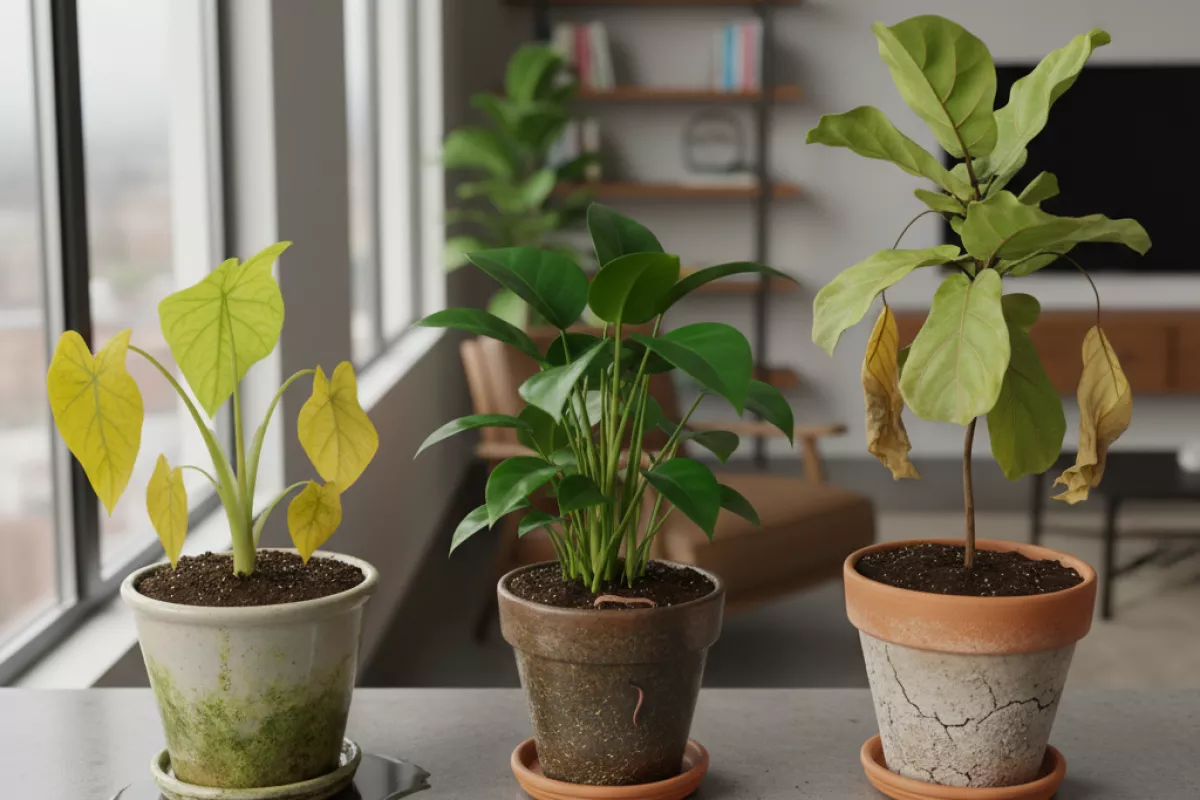
When the root zone stays too wet or too dry, leaves often lose their healthy green because the plant can’t move water, oxygen, and nutrients the way it should. Yellowing is basically the plant signaling that something about moisture and airflow around the roots isn’t working. A simple watering rhythm helps prevent both extremes.
Overwatering is the most common culprit indoors. Saturated soil pushes out oxygen, roots slow down or rot, and the plant can’t take up nutrients like nitrogen and iron even if they’re present. Underwatering causes a different kind of stress: the plant closes stomata to conserve water, photosynthesis drops, and older leaves may yellow and shed to reduce demand.
| Watering pattern | What you’ll see on leaves | What’s happening at the roots | How to correct it |
|---|---|---|---|
| Too frequent watering (soil stays wet) | General yellowing, soft or limp leaves; sometimes lower leaves yellow first | Low oxygen; roots can’t “breathe,” nutrient uptake stalls, rot risk rises | Let the top 2–5 cm (1–2 in) dry before watering again; ensure the pot has drainage holes; empty saucers after 10–15 min |
| Watering too little (soil dries hard) | Crispy edges, dull color, yellowing with leaf drop; wilting that improves after watering | Fine roots die back; water transport becomes inconsistent | Water thoroughly until excess drains; then water again only when the top 2–5 cm (1–2 in) is dry (or when the pot feels noticeably lighter) |
| Inconsistent “feast or famine” watering | Random yellow leaves, especially older ones; growth pauses | Repeated stress cycles damage feeder roots and disrupt nutrient flow | Switch to a simple check routine (finger test or moisture meter); aim for even moisture rather than extremes |
| Poor drainage or compacted mix | Yellowing that doesn’t improve even when you water less | Water lingers around roots; air pockets collapse | Repot into a fresh, airy mix; choose a pot 2–5 cm (1–2 in) wider than the root ball, not oversized |
| Water quality issues (salts, very hard water) | Yellowing plus brown tips; white crust on soil/pot | Salt buildup interferes with water uptake and can burn roots | Flush the pot with 3–4× the container volume of water (e.g., 1 L pot → 3–4 L (0.26 gal → 0.79–1.06 gal)); use filtered or rainwater if possible |
- Check before you pour. Stick a finger 5 cm (2 in) into the mix; if it’s damp and cool, wait. If it’s dry at that depth, it’s usually time.
- Water deeply, not repeatedly. A full soak followed by a dry-down is healthier than small daily sips that keep the surface wet and roots starved of air.
- Match the schedule to conditions. Bright light, warmer rooms, and active growth use water faster; low light and cooler rooms slow drying and make yellowing from excess moisture more likely.
If you adjust irrigation and new growth comes in greener, you’re on the right track. Older yellow leaves rarely turn fully green again, so judge success by the newest leaves and overall vigor.
Nutrient deficiencies that trigger yellowing
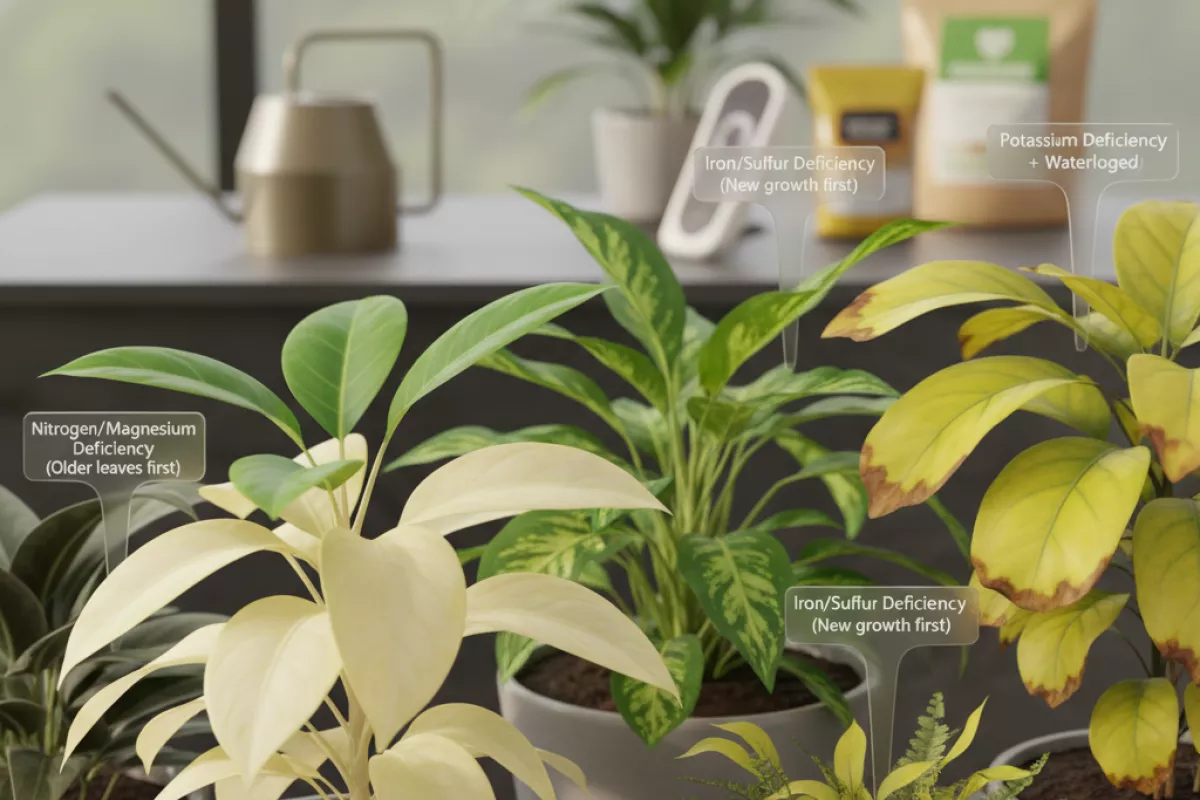
When a plant can’t access certain minerals, chlorophyll production and leaf function slow down, and the foliage often fades from green to pale yellow. The tricky part is that the problem may be in the soil, but it can also be caused by pH, cold roots, or waterlogged conditions that block uptake even when nutrients are present.
Use the pattern of yellowing to narrow it down. Older leaves first usually points to mobile nutrients the plant can move upward (like nitrogen or magnesium). New growth first often suggests immobile nutrients that can’t be relocated (like iron). If the whole plant is light green, think “not enough food.” If veins stay green while tissue turns yellow, think “chlorosis” from iron or magnesium issues.
| Likely deficiency | Where yellowing shows up first | Typical look | Practical fix |
|---|---|---|---|
| Nitrogen (N) | Older, lower leaves | Overall paling; leaves may drop early | Feed with a balanced fertilizer or a nitrogen-forward option; apply lightly and water in. If using compost, top-dress 2–3 cm (0.8–1.2 in). |
| Iron (Fe) | Newest leaves | Interveinal chlorosis (yellow between green veins) | Check pH first; iron locks out in alkaline mixes. Use chelated iron and adjust pH toward slightly acidic if appropriate. |
| Magnesium (Mg) | Older leaves | Yellowing between veins; edges may curl | Apply magnesium sulfate (Epsom salt) only if you’re confident it’s Mg; avoid repeated dosing. Consider a complete fertilizer if multiple nutrients are low. |
| Potassium (K) | Older leaves | Yellowing and browning at edges (“scorch”) | Use a fertilizer that includes potassium; keep watering consistent because drought stress can mimic K problems. |
| Sulfur (S) | Newer leaves (often) or whole plant | Uniform pale yellow, slower growth | Use a complete fertilizer that includes sulfur; avoid over-liming, which can worsen availability. |
| Manganese (Mn) | New growth | Interveinal chlorosis with small speckles in severe cases | Often tied to high pH; correct pH and use a micronutrient mix if needed. |
- Don’t guess based on color alone. Overwatering, compacted soil, and cold root zones can cause yellow leaves that look like a feeding issue. Fix those basics first so any fertilizer you add can actually be absorbed.
- Check pH before adding more product. Many “mystery chlorosis” cases are nutrient lockout, especially iron and manganese in mixes that are too alkaline.
- Correct gradually. If you fertilize, start at a modest dose and reassess after 7–14 days. Rapid, repeated applications can burn roots and make yellowing worse.
- Watch which leaves recover. Damaged leaves may not turn fully green again, but new growth should emerge healthier once the deficiency is corrected.
If you’re seeing a mix of symptoms (for example, pale older leaves plus yellow new leaves), it can be a general depletion problem in the potting mix. In that case, a complete fertilizer with micronutrients is often more reliable than trying to “chase” one element at a time.
Step-by-step diagnosis checklist
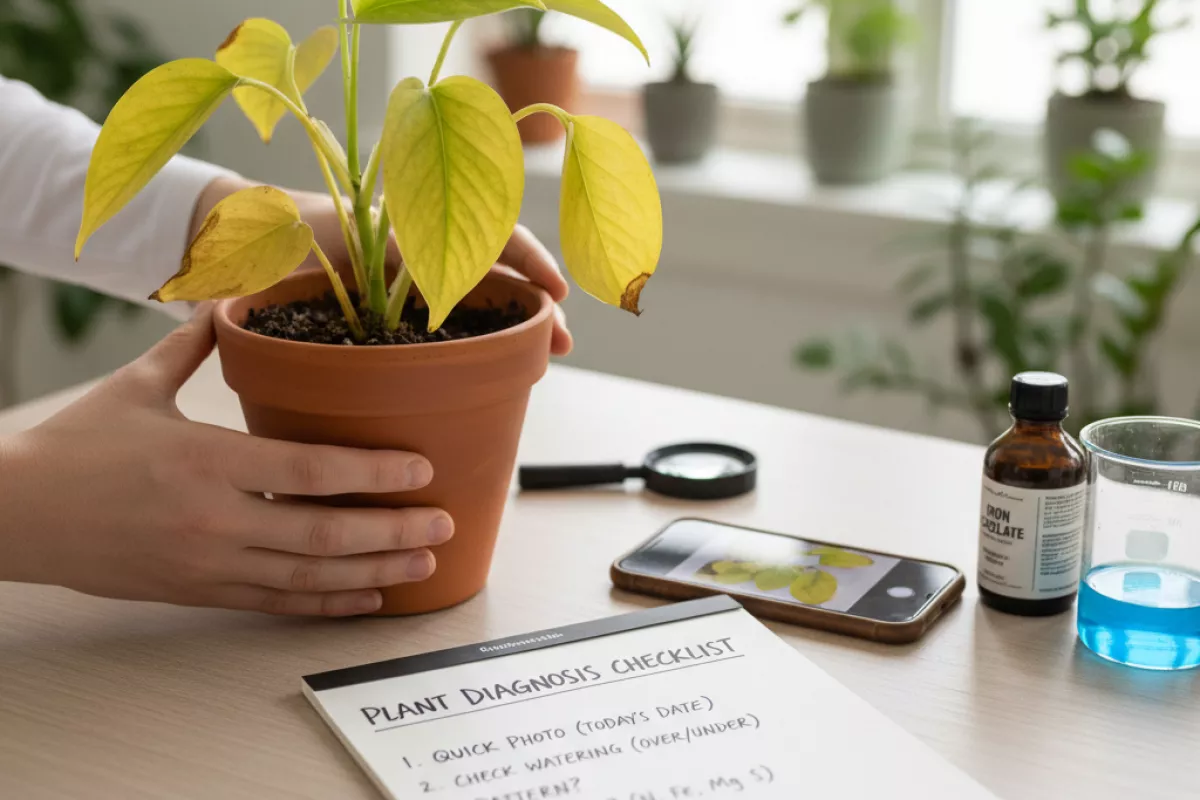
Work from the simplest, most likely causes to the more specific ones. Take a quick photo first so you can compare changes over the next 7 days (1 week).
- Confirm the pattern of yellowing.
- Oldest leaves yellow first: often normal aging, underwatering, or a mobile nutrient shortage (especially nitrogen).
- Newest leaves yellow first: often iron or sulfur issues, high pH, or root damage.
- Yellow between veins (veins stay green): commonly iron/magnesium-related, or pH blocking uptake.
- Yellow with brown crispy edges: salt buildup, low humidity, or inconsistent watering.
- Yellow with soft, mushy tissue: overwatering and low oxygen at the roots.
- Rule out “it’s just old leaves.”
If only 1–2 bottom leaves fade slowly while new growth looks healthy, it may be normal. If multiple leaves yellow quickly or the plant looks stalled, keep going.
- Check moisture the right way (not by the surface).
- Insert a finger 5 cm (2 in) into the mix, or use a chopstick to see if it comes out damp and cool.
- If the top is dry but 5–8 cm (2–3 in) down is wet, you’re likely watering too often.
- If it’s dry throughout and the pot feels very light, underwatering is more likely.
- Inspect the pot and drainage.
- Make sure there’s a drainage hole and water can exit freely.
- Empty any saucer after 10–15 minutes so roots aren’t sitting in water.
- If water runs straight through without wetting the mix, the soil may be hydrophobic; soak the pot 20–30 minutes (or 20–30 min) and then drain well.
- Look at the roots (only if symptoms persist).
- Healthy roots: firm, pale/white to tan, earthy smell.
- Root rot: brown/black, mushy, sour smell.
- Root-bound: dense circling roots with little soil left; can cause yellow leaves from poor uptake.
- Check light exposure and recent changes.
- Yellowing plus stretched, weak growth suggests too little light.
- Bleached patches or papery areas suggest sun scorch (often after moving closer to a window).
- If you recently relocated the plant, give it 10–14 days to settle while keeping watering steady.
- Scan for pests (undersides and stems).
- Look for webbing (spider mites), sticky residue (aphids/scale), cottony clumps (mealybugs), or silvery speckling (thrips). If you spot aphids, follow aphid control.
- Wipe a leaf with a white tissue; tiny moving dots can confirm mites or thrips.
- Consider temperature, drafts, and humidity.
- Cold windows, heater blasts, or AC drafts can trigger leaf yellowing and drop.
- Many houseplants struggle below 15°C (59°F) or with very dry air; aim for stable conditions.
- Review feeding and water quality.
- If you haven’t fertilized in 2–3 months (or 8–12 weeks) during active growth, a nutrient shortage is possible.
- If you fertilize often and see crusty white buildup, salts may be accumulating; flush the pot with 3–4× the pot’s volume of water (e.g., 1 L water for a 250 ml pot volume; 34 fl oz for an 8.5 fl oz pot volume), then drain.
- Hard water can push pH up and lock out iron; symptoms often show on new leaves first.
- Match what you found to the most likely fix.
| What you observe | Most likely cause | What to do next (first move) |
|---|---|---|
| Lower leaves yellowing; soil dry deep down; pot feels light | Underwatering or uneven watering | Water thoroughly until it drains; repeat only when the top 2–5 cm (1–2 in) dries |
| Yellow leaves + soft stems; soil stays wet; musty smell | Overwatering / low root oxygen | Let mix dry more between waterings; improve drainage; check roots if it doesn’t improve in 7 days (1 week) |
| New leaves pale/yellow; veins greener than tissue | Iron chlorosis (often pH-related) | Test/adjust pH if possible; switch to balanced fertilizer with micronutrients; avoid overwatering |
| Older leaves yellow first; overall slow growth | Nitrogen deficiency | Feed lightly during active growth; don’t exceed label rates; reassess after 14 days (2 weeks) |
| Yellowing with crispy edges; white crust on soil/pot | Salt buildup from fertilizer or hard water | Flush the pot, then reduce fertilizer frequency; consider filtered/rain water where practical |
| Bleached, pale patches on side facing window | Sun scorch | Move back 30–60 cm (12–24 in) or add a sheer curtain; acclimate gradually |
| Sticky leaves, speckling, webbing, or visible insects | Pests | Isolate plant; rinse foliage; treat with insecticidal soap or horticultural oil; repeat every 7 days (1 week) for 3 rounds |
| Yellowing after repotting or moving; no pests; roots look okay | Stress from change | Stabilize light and watering; avoid fertilizing for 2–4 weeks (14–28 days) |
If two causes seem plausible, prioritize root and watering issues first. Fixing light or feeding won’t help much if roots can’t breathe or the mix is staying soggy.
When yellow leaves can be reversed
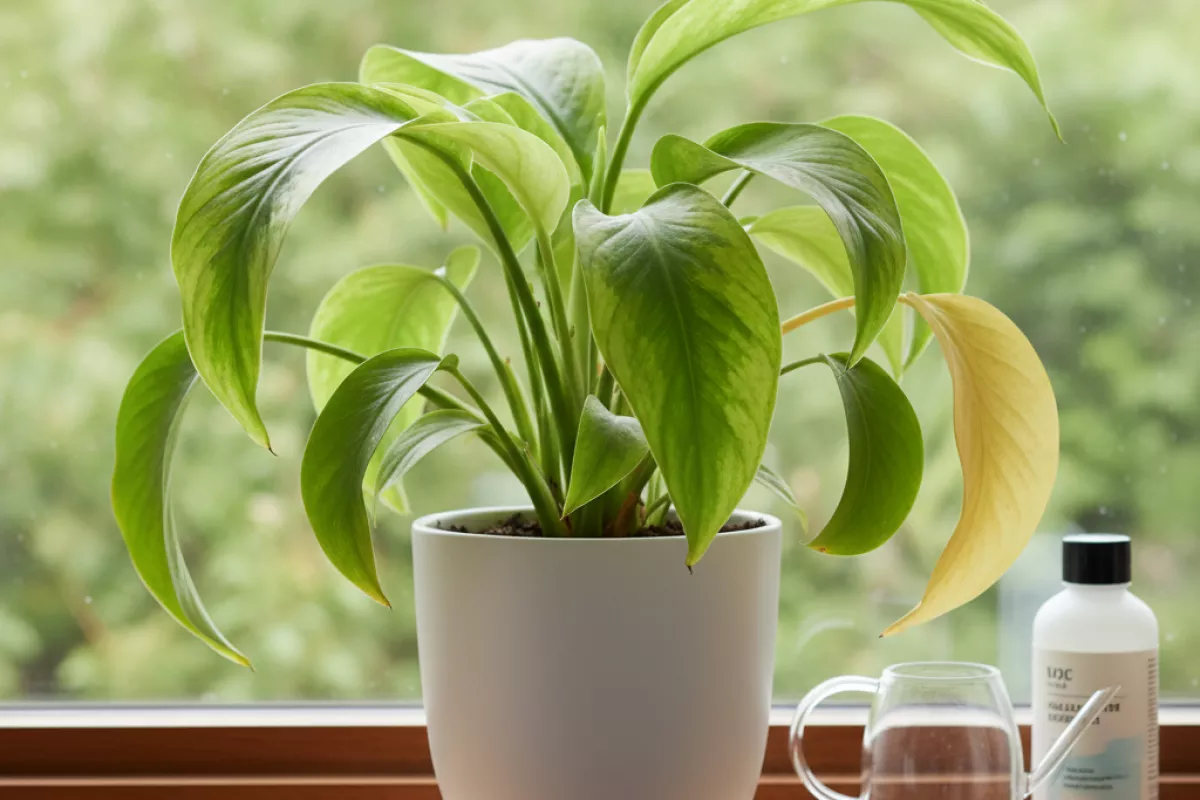
Yellowing can sometimes be stopped and even improved if the leaf tissue is still alive and the underlying stress is corrected quickly. A good rule of thumb: if the leaf is pale or mottled but still flexible and not crispy, it has a chance to regain some color or at least stop getting worse. If it’s fully brown, papery, or collapsing, that leaf won’t turn green again, but you can still fix the cause to protect new growth.
- It’s an early-stage issue, not advanced damage. Light yellowing that appeared within the last few days is more likely to stabilize than older leaves that have been fading for weeks.
- The plant is still producing healthy new growth. When new leaves look normal, you’re usually dealing with a correctable problem affecting older foliage (like watering or a mild nutrient shortfall).
- The veins and leaf structure are intact. Leaves that are yellow but not mushy, brittle, or riddled with dead spots can often recover partially once conditions improve.
- The cause is something you can change fast. Watering habits, light exposure, temperature swings, and nutrient balance can be adjusted right away; long-term root damage takes longer to bounce back from.
| Situation | What you’ll notice | Can the leaf recover? | What to do now |
|---|---|---|---|
| Overwatering caught early | Uniform yellowing, soil stays wet, leaves feel soft | Sometimes | Let the pot dry further between waterings; ensure drainage holes are clear; consider repotting if soil is waterlogged and sour-smelling |
| Underwatering | Yellowing with droop; soil pulls from pot edge; tips may brown | Often (if not crispy) | Water thoroughly until excess drains; then water again only when the top 2–5 cm (1–2 in) is dry (adjust by plant type) |
| Nutrient deficiency (mild) | Slow fade, often starting on older leaves; overall pale look | Partially | Feed with a balanced fertilizer at half strength; avoid “catch-up” dosing; reassess in 10–14 days |
| Iron/manganese issue from high pH | Newer leaves yellow between veins while veins stay greener | New growth improves; old leaves may not fully green up | Check potting mix and water source; use a micronutrient supplement if appropriate; avoid over-liming and excessive hard-water buildup |
| Light shock (moved suddenly) | Yellow patches or bleaching after a location change | Sometimes | Shift to brighter or shadier conditions gradually over 7–14 days; rotate the pot weekly for even exposure |
| Temperature stress | Yellowing after cold draft or heat spike; growth stalls | Sometimes | Keep most houseplants around 18–24°C (65–75°F); avoid vents, radiators, and cold windows at night |
Even with a perfect fix, don’t judge progress by the oldest yellow leaves alone. Plants often “triage” stressed foliage, so the clearest sign you’re back on track is healthier new leaves and no further spread of discoloration. If only a few leaves are affected, it’s fine to prune them once you see steady new growth—just avoid removing too much at once, since the plant still needs leaf area for energy.
Practical treatment methods for recovery
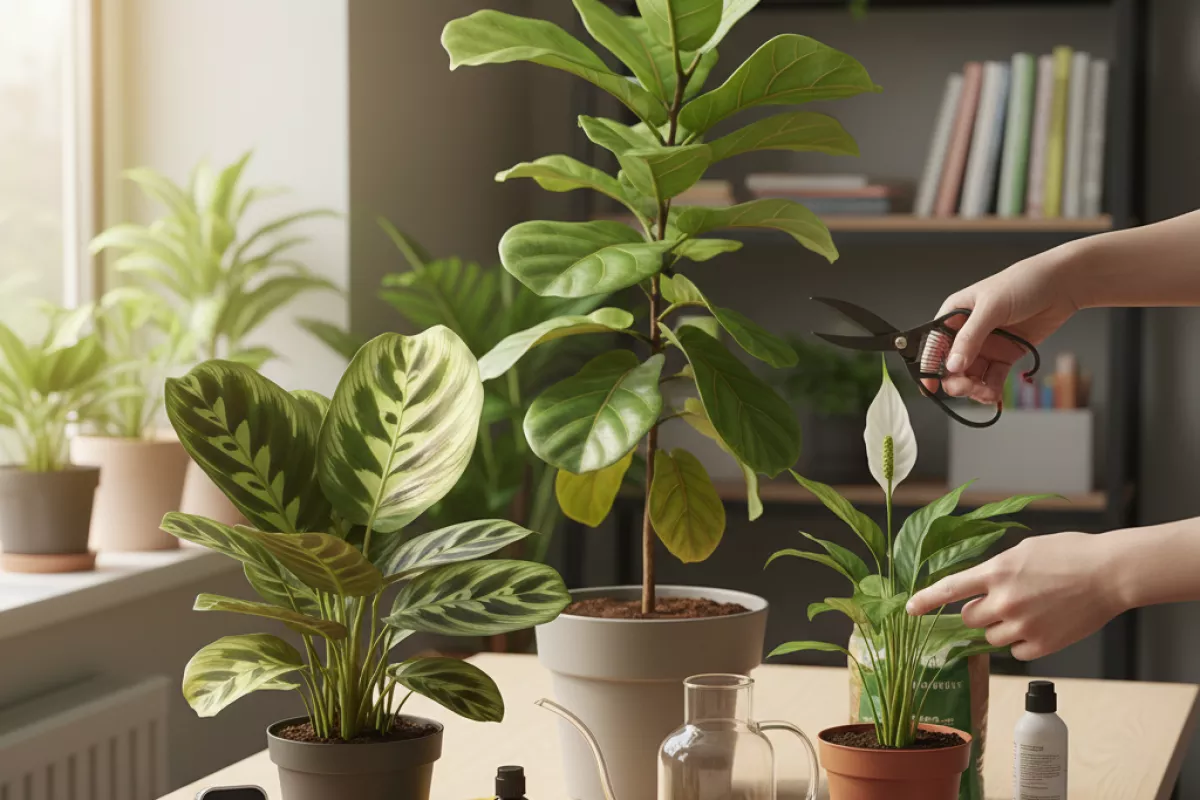
Start by matching the fix to the pattern of yellowing. A quick check of soil moisture, light exposure, and the newest versus oldest leaves usually points to the right lever to pull. Make one change at a time and give the plant 7–14 days to respond; stacking fixes can make the original problem harder to spot.
- Reset watering (most common win): If the pot feels heavy and the soil stays wet for days, let it dry until the top 2–5 cm (1–2 in) is dry before watering again. If it’s bone-dry and pulling from the pot edge, water slowly until you see runoff, then empty the saucer after 10–15 minutes.
- Improve drainage and root oxygen: Make sure the container has a drainage hole. If water sits on top or the mix compacts, repot into a fresh, airy mix and a pot only 2–5 cm (1–2 in) wider than the root ball. Trim any black, mushy roots with clean scissors and keep only firm, pale roots.
- Adjust light without shocking the plant: Yellow leaves with weak, leggy growth often mean too little light; move the plant closer to a bright window over 3–7 days. If leaves look bleached or crisped, reduce direct sun or add a sheer curtain, especially during hot afternoons above 27°C (81°F).
- Correct nutrient issues carefully: Older leaves turning yellow first can signal nitrogen shortage; feed with a balanced fertilizer at 1/2 strength during active growth. If you suspect salt buildup (white crust, leaf-edge burn), flush the pot with 3–4 times the pot volume of water (e.g., 2 L pot → 6–8 L / 0.5 gal → 1.6–2.1 gal), then pause fertilizing for 2–4 weeks.
- Check pH and micronutrients when yellowing is “between the veins”: Interveinal chlorosis on newer leaves can be iron-related, often from high pH or cold, wet roots. Warm the root zone to 18–24°C (65–75°F), avoid overwatering, and consider a chelated iron supplement if the pattern persists.
- Stabilize temperature and drafts: Sudden chills can trigger yellowing and drop. Keep most houseplants away from vents and aim for steady indoor conditions around 18–26°C (65–79°F). Avoid placing foliage against cold glass in winter.
- Raise humidity for tropical plants (without soaking the soil): If tips brown and leaves yellow gradually, run a humidifier or group plants. Target roughly 40–60% humidity; use a pebble tray only if the pot sits above the waterline.
- Deal with pests before they drain the plant: If you see stippling, sticky residue, fine webbing, or tiny moving dots, isolate the plant. Rinse leaves, then treat with insecticidal soap or horticultural oil, covering undersides. Repeat every 7 days for 3 rounds to catch new hatchlings.
- Prune strategically: Fully yellow leaves won’t turn green again. Remove them once they’re mostly yellow to reduce stress and improve airflow, but keep any leaves that are still largely green because they’re still feeding the plant.
| What you see | Likely cause | What to do now | When you should see improvement |
|---|---|---|---|
| Lower/older leaves yellow, soil stays wet | Overwatering or poor drainage | Let soil dry 2–5 cm (1–2 in) down; ensure drainage; repot if mix is dense | 7–14 days for new growth to look healthier |
| Whole plant looks pale, growth slow | Low light or underfeeding | Increase light gradually; feed at 1/2 strength during growth | 2–4 weeks |
| New leaves yellow between veins, veins stay green | Iron/micronutrient lockout (often pH-related) | Warm roots to 18–24°C (65–75°F); avoid soggy soil; consider chelated iron | 1–3 weeks (new leaves improve first) |
| Yellowing with crispy patches on sun-facing side | Sun scorch/heat stress | Move back from harsh sun; protect above 27°C (81°F) | Immediate stop in damage; new growth normal in 2–3 weeks |
| Yellowing plus sticky leaves, speckles, webbing | Pests (aphids, mites, whiteflies) | Isolate; rinse; treat weekly for 3 cycles | 7–21 days |
If you’re unsure, default to the least risky corrections first: improve drainage, adjust watering rhythm, and tweak light gradually. Once the plant is stable, resume feeding lightly and only during active growth. The goal is steady new leaves; the old yellow ones are mainly a record of what happened, not a part you can reverse.