Watering Plants the Right Way in Indoor Conditions

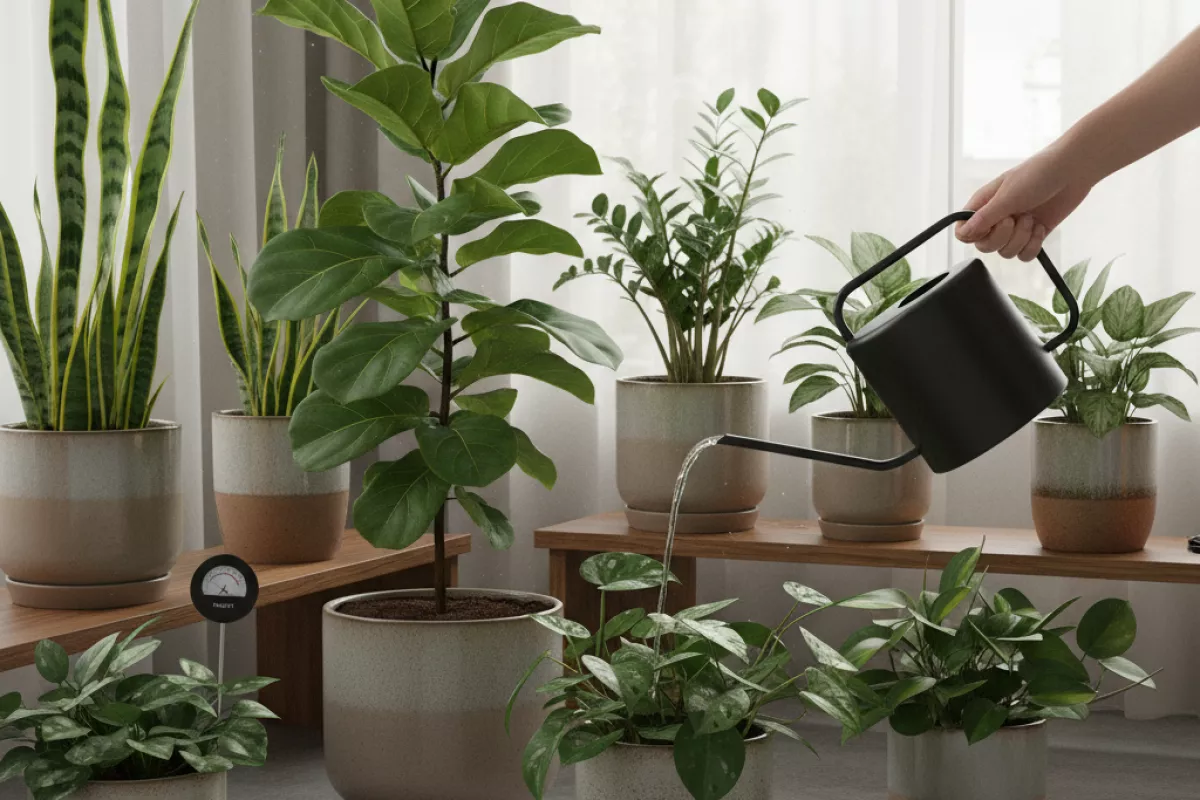 Covers how indoor conditions change watering needs, how to water evenly, and how airflow and heating affect moisture. Explains picking the right container-watering method, when to water morning vs evening, signs plants are watered right, and common indoor mistakes.
Successful indoor plant watering means matching moisture to your home’s light, temperature, humidity, and pot setup rather than following a strict schedule. Overwatering is the most common mistake, but underwatering and poor drainage can be just as harmful. Check the top inch of soil, lift the pot for weight, and ensure excess water can drain so roots stay healthy year-round.
How indoor environments change watering needs
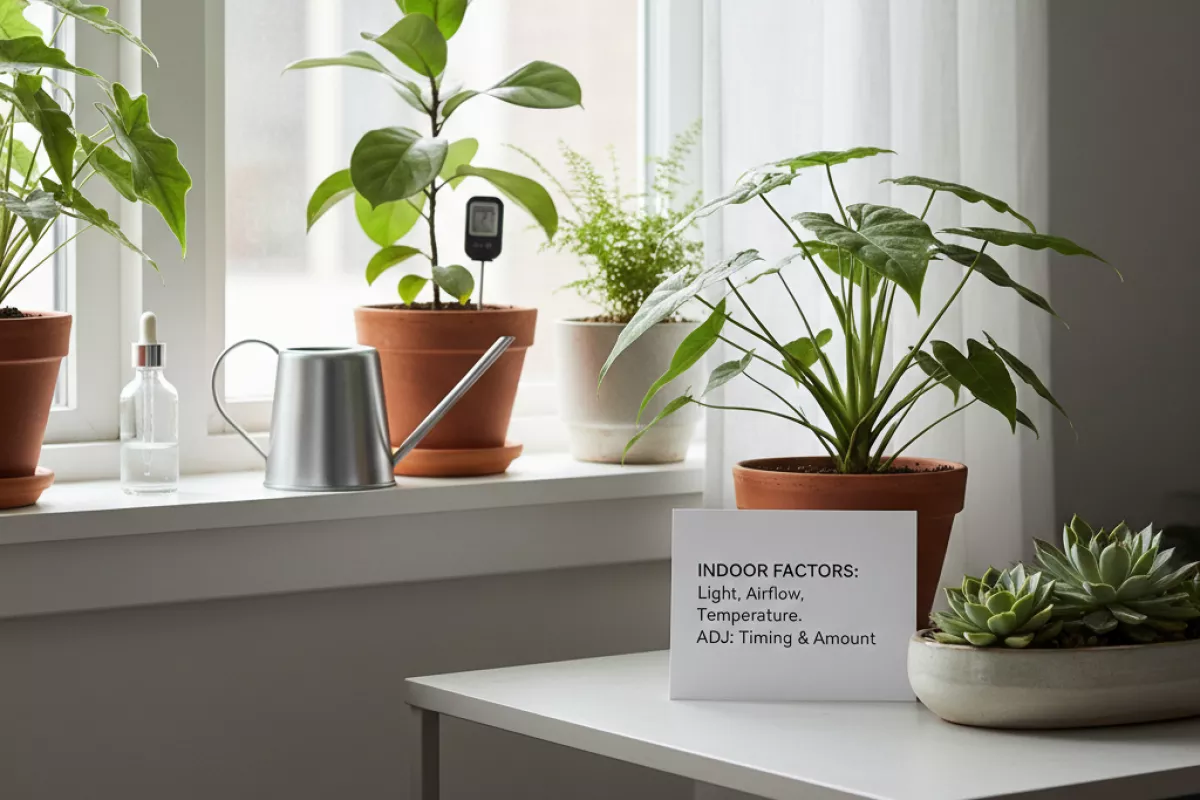
Inside, plants live in a steadier but often less forgiving setup than outdoors: lower light, slower air movement, and more stable temperatures. That usually means water leaves the pot more slowly, so the same schedule you’d use on a balcony can quickly turn into overwatering on a windowsill. If you want a fast check, use this indoor overwatering risk tool to see how your setup changes the odds of staying too wet. The trick is to read what your room is doing to evaporation and plant growth, then adjust timing and amount.
| Indoor factor | What it does to the pot | How to adjust watering |
|---|---|---|
| Light level (distance from window, day length) | Lower light slows growth, so the plant uses less moisture; soil stays wet longer. | Stretch the interval between waterings; prioritize checking soil depth before adding more. |
| Temperature swings (heaters, sunny glass, cold nights) | Warm air speeds drying; cold slows root activity and evaporation. | Water a bit more often in warm spots and less in cool corners; avoid soaking a cold pot. |
| Humidity (dry winter air vs. humid rooms) | Dry air increases leaf water loss; high humidity reduces transpiration. | In dry rooms, expect faster drying and watch for wilting; in humid rooms, let the mix dry more between drinks. |
| Air movement (fans, HVAC vents, drafts) | Moving air pulls moisture from soil and leaves; still air slows drying. | Near vents or fans, check moisture more frequently; in still rooms, be conservative with volume. |
| Pot material and size (terracotta vs. plastic; small vs. large) | Terracotta “breathes” and dries faster; plastic holds moisture. Small pots dry quickly; large pots stay wet longer. | Terracotta and small pots may need smaller, more frequent watering; large/plastic pots need deeper drying before rewatering. |
| Soil mix and drainage (dense peat vs. airy mix; drainage holes) | Dense mixes stay saturated; airy mixes drain and dry more evenly. No drainage traps excess water. | Use less water per session in dense mixes; water thoroughly only when the mix has partially dried; avoid “top-ups” in pots without drainage. |
| Seasonal indoor changes (winter heating, summer AC) | Heating often dries air but can keep soil cool; AC can cool and dry the room at the same time. | Re-check your routine when seasons change; don’t assume winter always means “less water” if the pot is drying faster. |
- Use depth, not the surface, as your guide. The top 2 cm (0.8 in) can dry while the root zone stays wet, especially in low light.
- Match the dose to the environment. In slow-drying conditions, smaller amounts can be safer than flooding the pot “just in case.” In faster-drying spots, water enough that the whole root ball is moistened.
- Expect microclimates. A plant 30 cm (12 in) from a radiator can need a different rhythm than one 2 m (6.6 ft) away, even in the same room.
- After repotting, reset expectations. Fresh mix often holds water differently; monitor closely for the first 1–2 weeks (7–14 days).
Best ways to apply water evenly
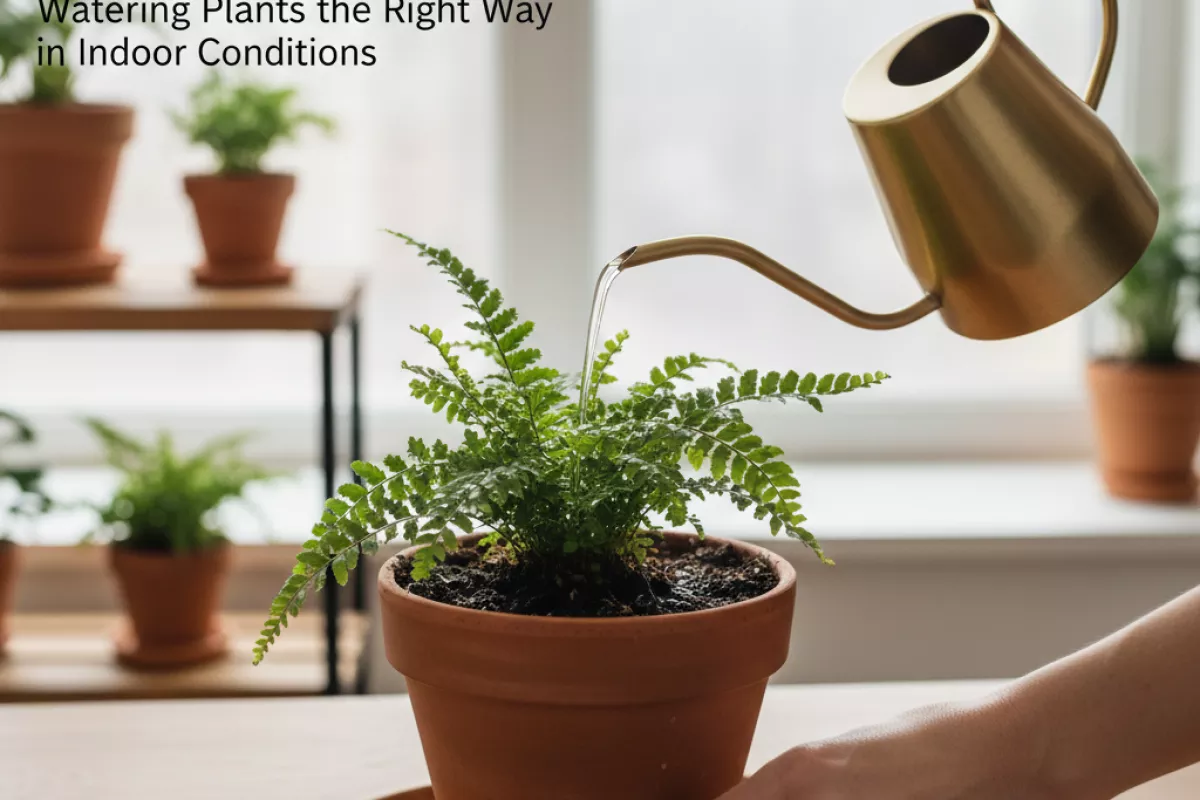
Consistent moisture starts with how you deliver water, not just how much you pour. Indoors, dry pockets form easily because potting mixes can repel water, roots can get dense, and saucers can trap runoff. The most reliable guide is soil moisture levels in the root zone, not a fixed schedule. The goal is to wet the entire root zone without flooding it or leaving the center dry.
- Water slowly in two passes. Add a small amount first to “prime” the mix, wait 2–5 minutes, then water again until you see a little runoff. This reduces channeling where water rushes down the pot edge and misses the middle.
- Use a narrow-spout watering can or squeeze bottle. Aim the stream around the surface in a spiral, then cross the pattern. A controlled flow is more even than a fast pour from a cup.
- Bottom-water when the top keeps drying too fast. Set the pot in a tray with 2–3 cm (0.8–1.2 in) of water and let it wick up for 10–20 minutes, then drain thoroughly. This helps rehydrate mixes that have become hydrophobic, but don’t leave pots soaking for hours.
- Break surface tension on peat-heavy or very dry mixes. If water beads and runs off, gently scratch the top 0.5–1 cm (0.2–0.4 in) with a fork, then water slowly. For stubborn cases, a brief bottom-water session can reset the moisture uptake.
- Rotate the pot as you water. Turning the container a quarter turn while you pour helps distribute moisture and prevents one-sided saturation, especially under directional light where plants lean.
- Use a “moisture check” before adding more. Insert a finger 2–5 cm (0.8–2 in) down (or use a chopstick) in a few spots, not just one. If the center is still damp but the edges are dry, water lightly around the perimeter rather than drenching the whole pot again.
- Empty the saucer after drainage. Let the pot drip for 5–10 minutes, then discard standing water so the bottom doesn’t stay waterlogged while the top dries out.
| Method | When it works best indoors | How to do it evenly | Common mistake |
|---|---|---|---|
| Slow top-watering | Most houseplants in standard potting mix | Two-pass pour; circle the rim then cross the center; stop at first steady runoff | Pouring fast so water tunnels down the sides |
| Bottom-watering | Plants that hate wet leaves; mixes that dry into hard, water-repellent clumps | Tray depth 2–3 cm (0.8–1.2 in) for 10–20 minutes; drain completely | Leaving the pot soaking too long, leading to soggy roots |
| Wicking (self-watering setup) | Busy schedules; plants that prefer steady, moderate moisture | Keep the reservoir clean; ensure wick contact; top-flush monthly with 500 ml (17 fl oz) to reduce salt buildup | Never flushing, which concentrates minerals in the root zone |
| Soak-and-drain (sink or tub) | Small pots that dry unevenly; very dry plants that need a reset | Water from the top until runoff, wait 5 minutes, repeat; let drain 10–15 minutes | Returning the pot to a decorative cachepot while it’s still dripping |
If you’re still getting dry spots, it’s often a potting mix issue rather than a technique issue. A mix that has compacted can shed water; gently loosening the top layer and repotting into a fresher, airier blend usually makes even watering much easier.
How airflow and heating systems affect moisture
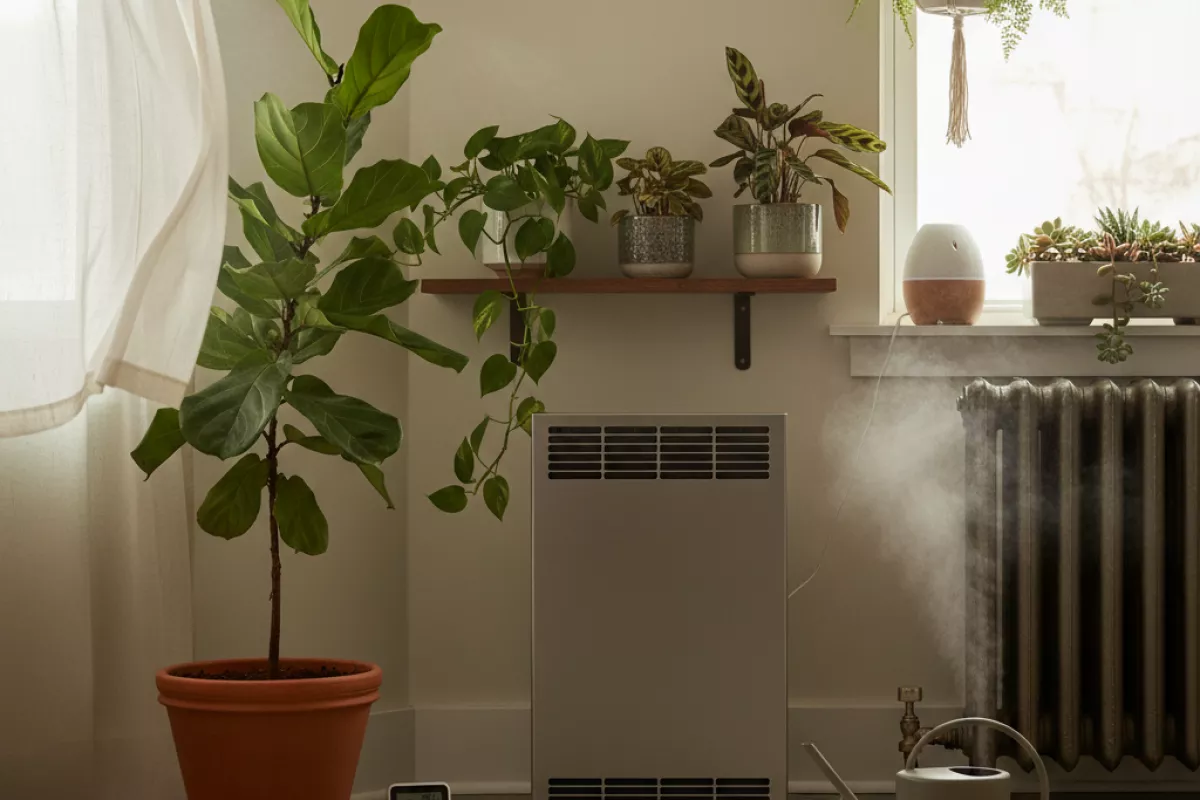
Moving air and indoor heat change how fast water leaves both the potting mix and the leaves. That means two plants in the same room can need different watering schedules simply because one sits in a draft, near a vent, or above a radiator.
- Forced-air heating dries plants faster. Warm air holds more moisture, so when a furnace or heat pump warms the room, it often lowers relative humidity. The soil surface evaporates quicker, and many plants transpire more, so pots can go from “evenly moist” to “dry at the top” in a short time.
- AC and dehumidifiers pull moisture from the air. Cooler, drier air can reduce fungus risk, but it also increases the gap between leaf moisture and room air, which can speed up moisture loss—especially for thin-leaved plants.
- Fans and drafts increase evaporation. A gentle fan can help prevent stagnant, overly damp conditions, but strong airflow across the pot and foliage accelerates drying. If a plant is within about 30 cm (12 in) of a vent or fan stream, expect the mix to dry unevenly (often one side faster).
- Radiators and baseboard heaters warm the pot. Heat rising from below can warm the container and drive faster evaporation. Small pots are most affected because they have less water reserve and heat up quickly.
- Stagnant air can keep soil wet longer. Corners with little circulation may stay humid and slow evaporation, which can tempt overwatering. In these spots, roots may sit wet longer even if the top looks dry.
| Indoor setup | What it does to moisture | How to adjust watering |
|---|---|---|
| Near a supply vent (hot or cold) | Speeds evaporation; can dry one side of the pot faster | Check moisture in 2–3 spots; rotate the pot weekly; water when the root zone is dry, not just the surface |
| Above/next to a radiator or baseboard heater | Warms the container and lowers nearby humidity | Move the plant 30–60 cm (12–24 in) away if possible; expect shorter intervals between waterings |
| Ceiling fan or oscillating fan on high | Increases leaf and soil-surface drying | Use a lower setting or indirect airflow; water a bit more thoroughly so the whole root ball is hydrated |
| Still corner with little circulation | Slower drying; higher chance of staying soggy | Water less often; let more of the pot dry between waterings; consider a small fan on low aimed away from the plant |
| Humidifier running nearby | Slows transpiration and surface evaporation | Extend the time between waterings; confirm with a finger test or moisture meter before adding more |
A practical habit is to “map” microclimates in your home: vents, sunny windows, and heaters create dry zones, while bathrooms and quiet corners tend to hold moisture longer. If you change seasons or turn on heating, reassess for a week or two—your plant may need the same amount of water per session, just at a different interval.
Choosing the right watering method for containers
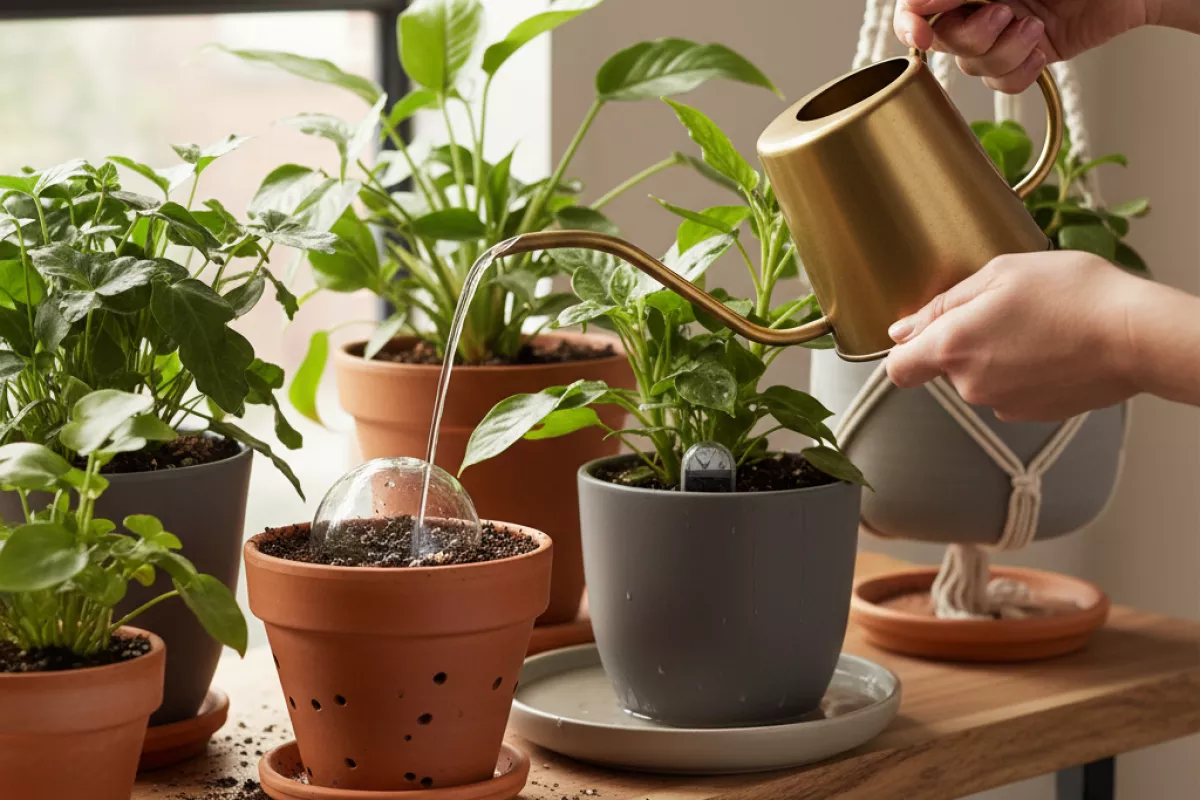
Indoor pots don’t behave like garden soil: the root zone is smaller, air flow is lower, and evaporation is slower. Choosing between top watering, bottom watering, and reservoir systems is easier when you stick to proper watering methods that keep oxygen in the mix while still hydrating the whole root ball. The best approach depends on your container (drainage holes or not), the potting mix (chunky or fine), and how evenly you need moisture delivered to the roots.
| Method | Best for | How to do it indoors | Watch-outs |
|---|---|---|---|
| Top watering (slow soak) | Most houseplants in pots with drainage | Pour slowly until water runs out; wait 2–3 minutes, then water again to fully wet dry pockets | Fast pours can channel down the sides and miss the root ball; empty the saucer after 10–15 minutes |
| Bottom watering (tray soak) | Plants that hate wet crowns (e.g., African violets) and mixes that repel water | Set the pot in 2–3 cm (0.8–1.2 in) of water for 15–30 minutes, then drain | Salts can build up; top-water once every 4–6 weeks to flush |
| Wick watering (reservoir + wick) | Steady moisture lovers and people who travel | Run a wick from soil into a water reservoir; keep the reservoir topped up | Can keep mixes too damp in cool rooms; use an airy mix and monitor for fungus gnats |
| Self-watering pot (built-in reservoir) | Herbs, foliage plants, and consistent watering routines | Fill reservoir; let the plant draw what it needs; check the level every few days | Not ideal for drought-tolerant plants; avoid letting water sit for more than 7–10 days without refreshing |
| Measured watering (cup or bottle) | Small containers and plants sensitive to overwatering | Start with 50–100 ml (1.7–3.4 fl oz) for a 10–12 cm (4–5 in) pot, then adjust based on dryness | Easy to under-water if you never get a little runoff; periodically do a full soak to re-wet the whole root ball |
| Misting (as a watering method) | Almost never for root hydration | Use only to rinse dust or briefly raise surface humidity, not to “water” the plant | Doesn’t reach roots; frequent misting can encourage leaf spotting and mildew in still air |
- If the pot has no drainage holes: treat watering like dosing. Add small amounts (for example, 30–60 ml (1–2 fl oz) at a time for a 10 cm (4 in) pot), then wait and reassess. These containers are the easiest to overwater, so err on the dry side and consider switching to a pot-within-a-pot setup.
- If the mix dries out and shrinks from the sides: bottom watering or a slow top soak works better than quick splashes. You’re trying to rehydrate the whole root ball, not just the center.
- If you see fungus gnats or algae: avoid keeping the surface constantly moist. Let the top 2–3 cm (0.8–1.2 in) dry between waterings, use top watering less often, and don’t leave standing water in saucers.
- If you’re caring for succulents and cacti: stick to thorough top watering followed by a full dry-down. Reservoir-style systems often keep them too wet indoors, especially below 20°C (68°F).
Whichever technique you choose, make the goal consistent: wet the root zone evenly, then allow the plant’s preferred amount of drying. When you change containers, pot size, or potting mix, reassess your method for the first 1–2 weeks—indoor conditions can shift the timing more than you’d expect.
When to water morning vs evening
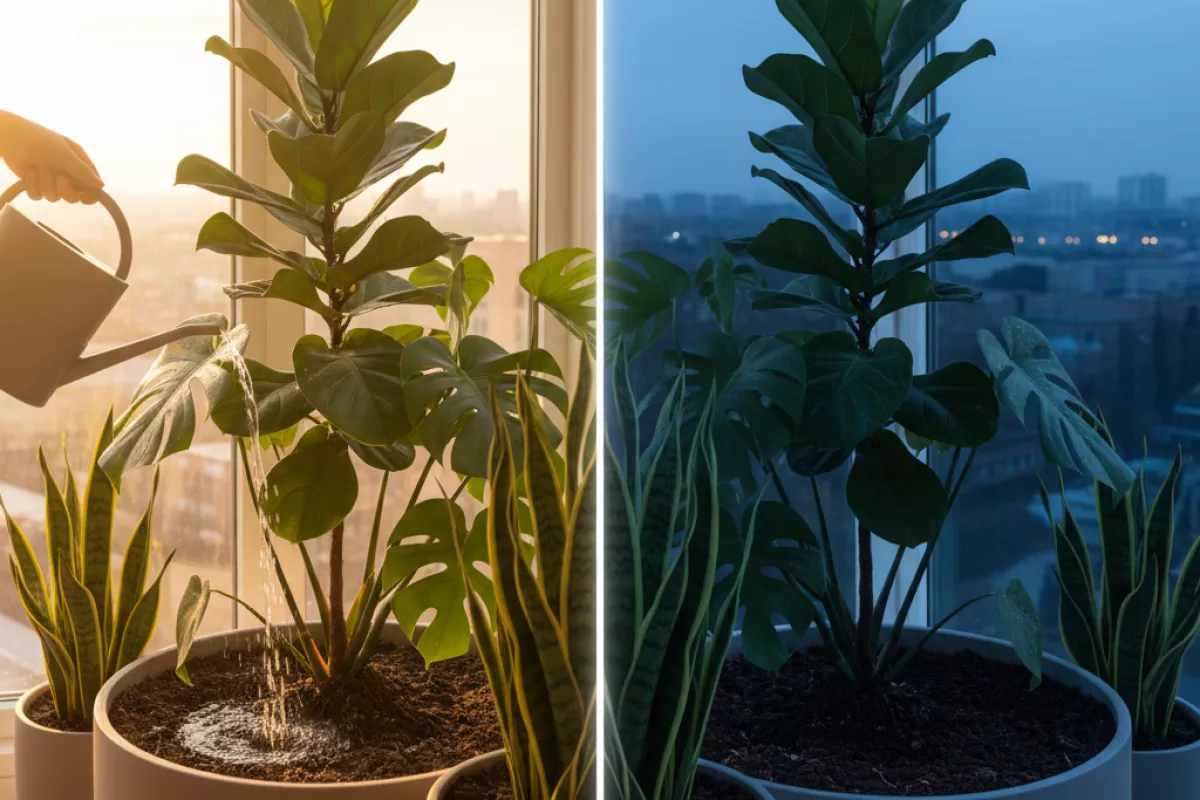
Indoors, the best watering time depends less on the clock and more on how fast your potting mix dries and how much light and airflow your plant gets. In most homes, watering earlier in the day is safer because any moisture on the surface has time to evaporate, and the roots can use water while the plant is actively growing under light.
| Timing | Best for | Why it helps indoors | Watch-outs |
|---|---|---|---|
| Morning (or early day) | Most houseplants; bright windows; homes with cooler nights | Leaves and soil surface dry sooner, reducing fungus and gnat-friendly dampness; roots can take up water during the day’s light-driven activity | If you water and then immediately place the pot in harsh sun, avoid splashing foliage; keep water off leaves when possible |
| Midday | Plants under strong grow lights; fast-drying mixes (chunky aroid blends, cactus mixes) | Lets you check moisture again after morning warmth; useful when the top layer dries quickly but the root zone still needs a thorough soak | Don’t “top up” repeatedly; instead water deeply until a little drains out, then empty the saucer |
| Evening | Homes with very dry air; plants that wilt by late afternoon; emergency watering | Can prevent overnight stress if a plant is drooping and the mix is genuinely dry | Higher risk of staying wet for long hours, especially in cool rooms; avoid wetting foliage and don’t leave standing water in cachepots |
| Night (late) | Only if you must | Better than letting a severely dry plant sit until morning | Slow evaporation plus cooler temperatures can encourage root problems; be extra careful with plants that prefer drying out between waterings |
A practical rule: water when the plant needs it, then choose the earliest convenient time. If you’re unsure, check the potting mix first rather than guessing by schedule. For many common houseplants, waiting until the top 2–5 cm (1–2 in) is dry works as a starting point, while succulents often want the mix to dry much deeper before the next soak.
- Choose morning if your room cools down at night, you have limited airflow, or you’ve had issues with fungus gnats or moldy soil.
- Choose evening if the plant is clearly wilting and the mix is dry, your indoor humidity is very low, or you can’t water earlier—just keep leaves dry and empty excess water from the saucer.
- Adjust by season: in winter, late-day watering is more likely to stay cold and wet; in summer, earlier watering helps plants handle brighter light and faster drying.
Signs plants are getting water correctly
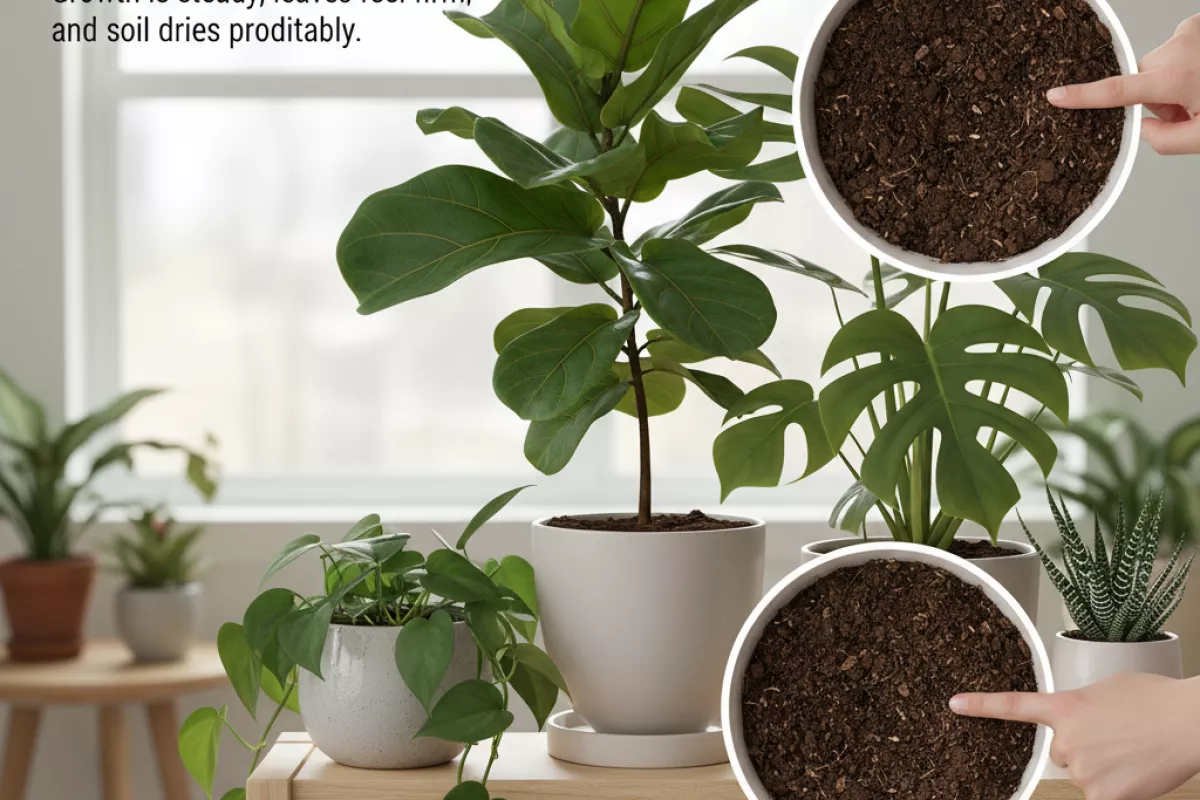
When your routine is dialed in, most houseplants show it quickly: growth is steady, leaves feel firm, and the potting mix dries at a predictable pace instead of staying soggy or turning dust-dry overnight. Use the plant’s overall “posture” and the soil’s behavior as your main feedback, not just the calendar.
- Leaves look and feel resilient. Foliage stays upright, springy, and evenly colored. It’s normal for older leaves to age out, but you shouldn’t see widespread limpness or crisping between waterings.
- New growth is consistent. You get fresh leaves or longer stems in season, and they unfurl without deforming. Slow growers won’t explode with growth, but they should still look “alive” rather than stalled for weeks.
- The top layer dries, but the root zone stays lightly moist. For many common indoor plants, the surface can dry first while the mix below remains slightly damp. A quick finger check down about 2–5 cm (1–2 in) should match what your plant prefers.
- Water drains through, and the pot doesn’t stay heavy for days. After a thorough watering, excess should exit the drainage holes within a minute or two, and the container should gradually feel lighter over the next several days (timing depends on light, temperature, and pot size).
- No “stress signals” after watering. Leaves don’t yellow rapidly, turn translucent, or drop suddenly right after you water. Likewise, they don’t perk up for only a few hours and then collapse again.
- Soil smells neutral. Potting mix should smell earthy. A sour or swampy odor can mean the root area is staying too wet between waterings.
- Minimal fungus gnats and surface mold. A few gnats can happen, but persistent clouds often point to a mix that stays wet too long. A light, occasional white fuzz on the surface can occur in humid rooms, but it shouldn’t be chronic.
- Roots look healthy when you check. If you slide the root ball out occasionally (or during repotting), roots are mostly white/tan and firm, not brown/black and mushy. You don’t need to inspect often—just use it as an occasional confirmation.
- Leaf tips stay mostly clean. Some species get minor browning from low humidity or mineral buildup, but widespread crispy tips paired with fast-drying mix can suggest the plant isn’t getting enough water at the right times.
If you want a quick reality check, compare what you see to common “too much” versus “too little” patterns. Plants can show mixed symptoms, so look for clusters of clues rather than a single leaf.
| What you observe | Usually means | What “correct” tends to look like |
|---|---|---|
| Pot feels heavy and cool for many days; soil stays dark | Mix is holding too much water or drying too slowly | Pot lightens gradually; top dries first while deeper mix stays lightly moist |
| Leaves yellow and drop, especially lower ones, soon after watering | Roots may be stressed from staying wet | Leaves hold color; older leaves fade slowly over time, not suddenly |
| Leaves droop and feel thin; soil pulls away from pot edges | Plant is drying too far between waterings | Leaves stay firm; soil remains in contact with the pot and re-wets evenly |
| Water runs straight through and the plant wilts again quickly | Hydrophobic (water-repellent) mix or root-bound pot | Water absorbs, then drains; plant stays stable for days, not hours |
| Sour smell, algae, or frequent fungus gnats | Surface and root zone are staying wet too long | Neutral smell; surface dries on schedule; pests are minimal |
Frequent indoor watering mistakes
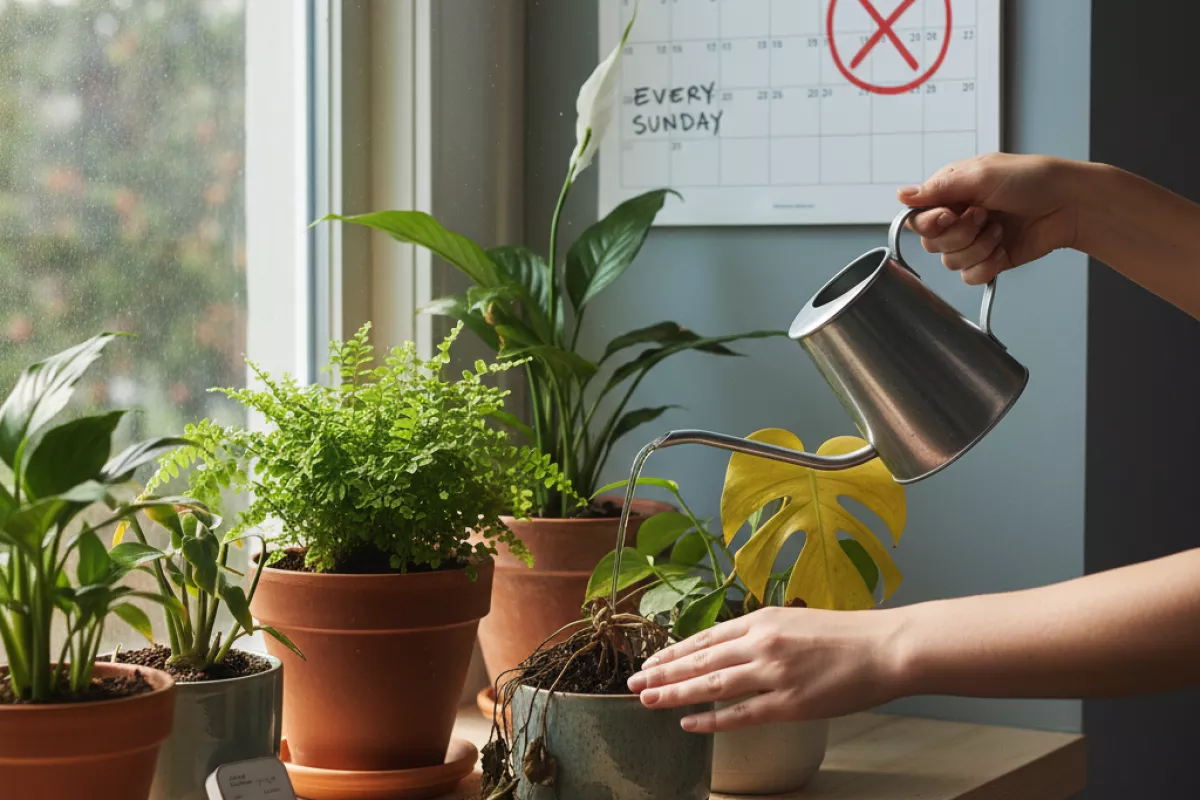
Most problems come from treating indoor plants like they live outdoors: the light is weaker, air movement is lower, and pots dry unevenly. That combination makes it easy to water too often, too little, or at the wrong time.
- Watering on a fixed schedule instead of checking the pot. A “every Sunday” routine ignores changes in light, temperature, and growth. Check moisture first: for many houseplants, watering when the top 2–3 cm (1–1.2 in) is dry works better than a calendar.
- Using the surface as the only clue. The top can look dry while the root zone is still wet. Use a finger, a chopstick, or lift the pot to judge weight; a light pot usually means the mix has actually dried.
- Small sips that never reach the roots. Brief watering can moisten only the top layer and leave deeper roots thirsty. Water thoroughly until a little drains out, then empty the saucer after 10–15 minutes.
- Letting the pot sit in runoff. Standing water in a tray re-soaks the mix and reduces oxygen around roots, which can lead to rot and fungus gnats.
- Assuming “yellow leaves” always mean more water. Yellowing can signal overwatering, underwatering, low light, nutrient issues, or cold stress. Pair leaf symptoms with soil feel and pot weight before adjusting your routine.
- Cold water shocks. Very cold tap water can stress roots, especially in winter. Room-temperature water around 20–22°C (68–72°F) is a safer default for most tropical houseplants.
- Ignoring pot size and material. A plant in a 10 cm (4 in) pot dries far faster than one in a 20 cm (8 in) pot. Terracotta breathes and dries quicker than plastic or glazed ceramic, so the same plant may need different timing after repotting.
- Poor drainage or blocked holes. Decorative cachepots, compacted mix, or roots clogging holes can trap water. Make sure excess can escape, and don’t let a nursery pot sit in a sealed outer pot with hidden puddles.
- Watering in low light as if it’s summer. In winter or in dim rooms, growth slows and evaporation drops. Many plants need less frequent watering even if indoor temperatures feel comfortable.
- Misting as a substitute for watering. Misting may slightly raise leaf moisture for minutes, but it doesn’t hydrate the root zone. If humidity is the goal, a humidifier or grouping plants is more reliable than frequent spraying.
| Mistake | Common sign | What to do instead |
|---|---|---|
| Watering too often | Soil stays damp; musty smell; drooping with wet mix | Let the top 2–3 cm (1–1.2 in) dry; increase light/airflow; confirm drainage |
| Watering too little | Pot feels very light; leaves crisp; mix pulls from pot edges | Water deeply until runoff; re-wet evenly by soaking 10–20 minutes, then drain |
| Uneven watering | Wet center but dry edges, or vice versa | Water slowly around the whole surface; consider a finer, more even potting mix |
| Leaving water in the saucer | Constantly wet base; fungus gnats; soft stems | Empty saucers after 10–15 minutes; use a spacer or pebbles to keep the pot above water |
If you’re unsure which direction to adjust, change only one variable at a time (frequency, amount, or placement) and observe for 7–14 days. If leaf damage is already showing, use a symptom-first check like fix brown leaf spots to separate watering stress from disease or air issues. Indoor watering is less about rules and more about matching the plant’s uptake to the room’s light and the pot’s drying speed.