Proper Watering Methods for Healthy Plant Roots

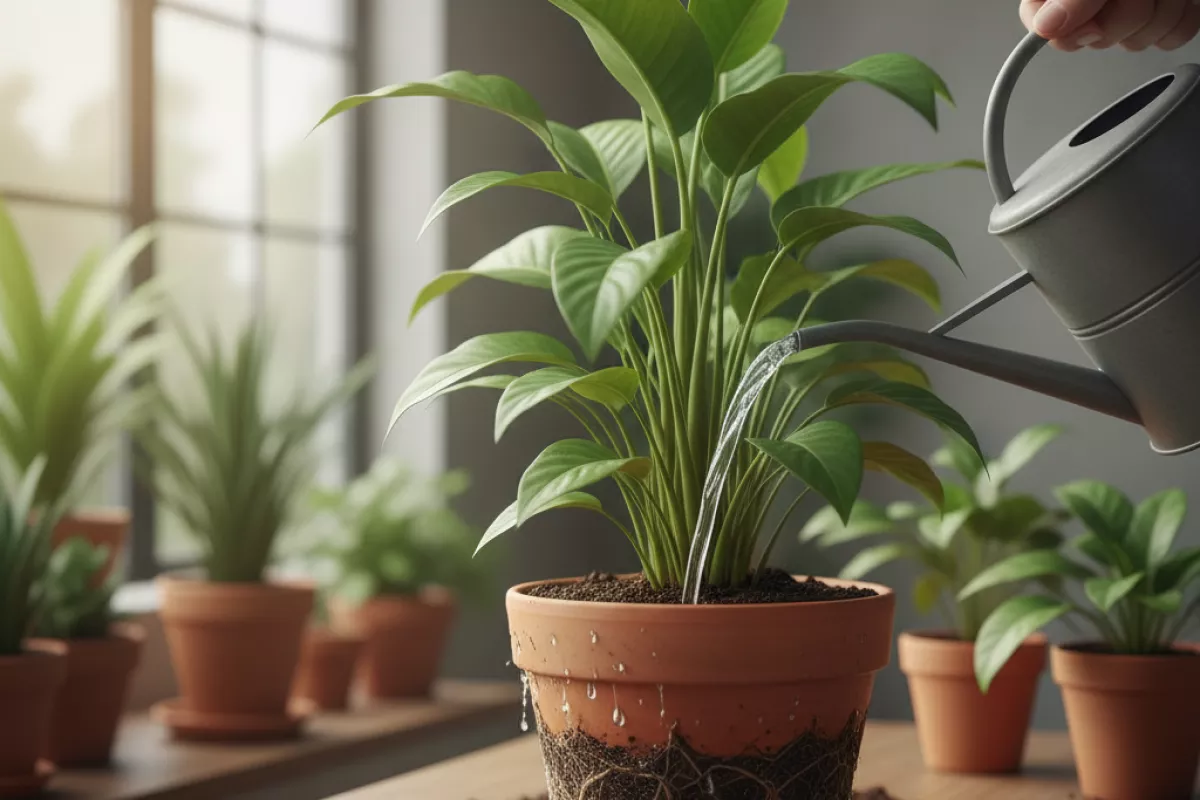 This article explains why watering technique matters for root health, how roots take up water and oxygen, and which methods build deeper roots. It covers soil structure and drainage, how often to water, signs of root stress, and common mistakes that harm roots.
- Why root health depends on watering technique
- How roots absorb water and oxygen together
- Watering methods that encourage deep root growth
- Soil structure and drainage effects on roots
- How often plants actually need water
- Signs roots are stressed from poor watering
- Common watering mistakes that damage root systems
Proper watering is the quickest way to grow strong, healthy roots, since roots need both moisture and oxygen to work well. This guide explains how to tell when to water, how deeply to soak, and how pot size, soil mix, and season affect your routine, helping plants stay stable and vigorous rather than stressed or struggling.
Why root health depends on watering technique
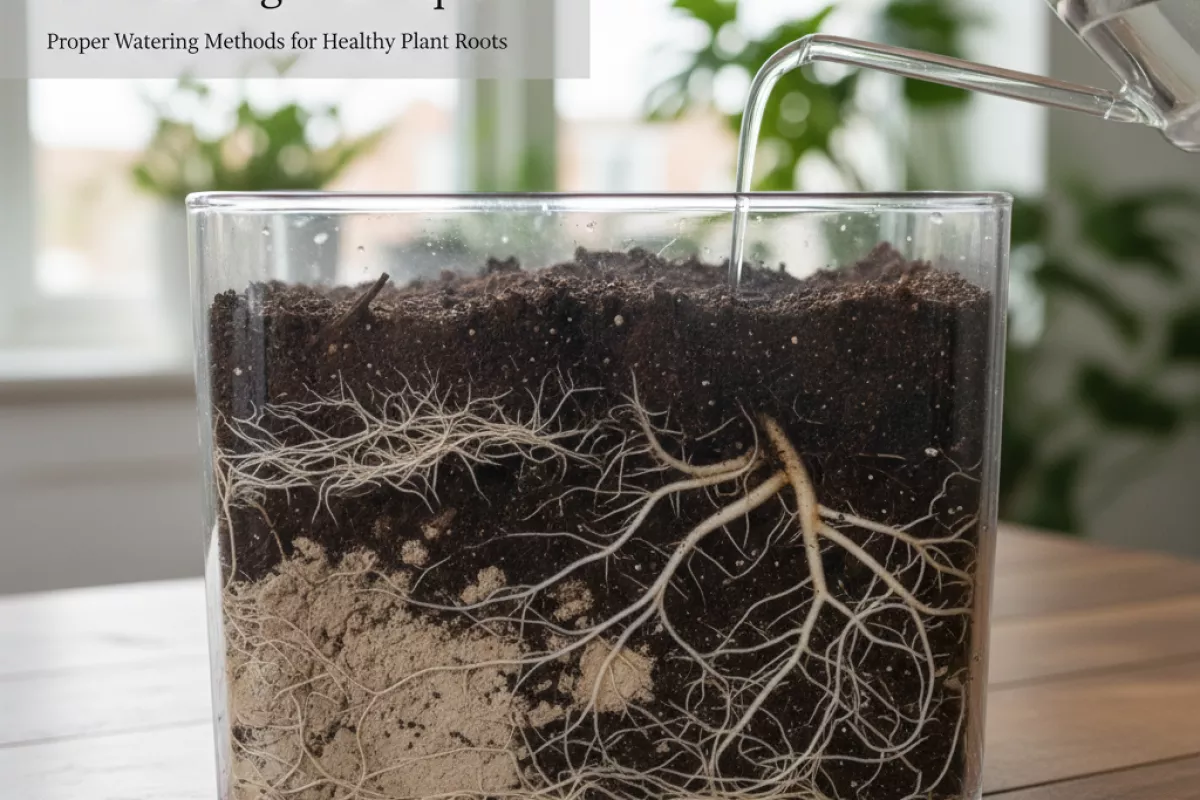
Roots don’t just “drink” water—they need a steady balanced soil moisture level that keeps both water and oxygen available. The way you irrigate decides whether air pockets stay open in the soil, whether nutrients move toward the root surface, and whether fine feeder roots keep growing or start dying back. In other words, technique shapes the underground environment more than the total amount of water alone.
When watering is too frequent or too shallow, the top layer stays damp while deeper soil stays dry. That encourages roots to hover near the surface, where temperatures swing and moisture disappears quickly. On the other hand, long gaps followed by heavy soaking can stress plants by repeatedly drying and rewetting the root zone, which can crack soil structure and reduce consistent nutrient uptake.
- Oxygen availability: Saturated soil pushes out air. If water sits in the root zone, roots can’t respire properly, and growth slows even if the plant looks “well watered.”
- Root depth and stability: Deep, thorough watering promotes deeper rooting, which improves drought tolerance and anchorage. Light surface sprinkling tends to produce shallow roots that dry out faster.
- Nutrient movement: Many nutrients travel to roots dissolved in water. Uneven wetting can leave parts of the root zone nutrient-poor, while overwatering can leach mobile nutrients beyond reach.
- Disease pressure: Constantly wet conditions, especially in containers or heavy soils, favor root rot organisms. Good timing and allowing some air exchange between waterings helps keep pathogens in check.
- Soil structure: A gentle, slower application lets water infiltrate instead of running off. Fast flooding can compact fine soils or create channels where water bypasses the roots.
| Watering pattern | What happens in the root zone | Likely plant response |
|---|---|---|
| Frequent, shallow watering | Topsoil stays damp; deeper layers remain dry; limited aeration near the surface | Shallow root system, quick wilting between waterings, uneven growth |
| Deep, slower watering with drying time between | Moisture reaches lower soil; air returns as excess drains; stable moisture gradient | Deeper roots, better drought tolerance, steadier nutrient uptake |
| Overwatering in poorly draining soil | Waterlogged pores; low oxygen; slow microbial balance shifts toward rot-causing organisms | Yellowing, stunting, root dieback, higher risk of root rot |
| Long drought followed by heavy soaking | Hydrophobic dry pockets may resist wetting; sudden saturation stresses fine roots | Leaf drop or scorch, split growth spurts, inconsistent vigor |
A practical takeaway is to water in a way that wets the whole root zone evenly, then let it drain and partially dry so oxygen can return. If you’re checking moisture by hand, aim to feel for cool, slightly damp soil several centimeters down—about 5 cm (2 in)—rather than judging by the surface alone. When conditions vary and intuition isn’t enough, tools that help you find the right watering schedule can reduce guesswork and prevent chronic root stress.
How roots absorb water and oxygen together
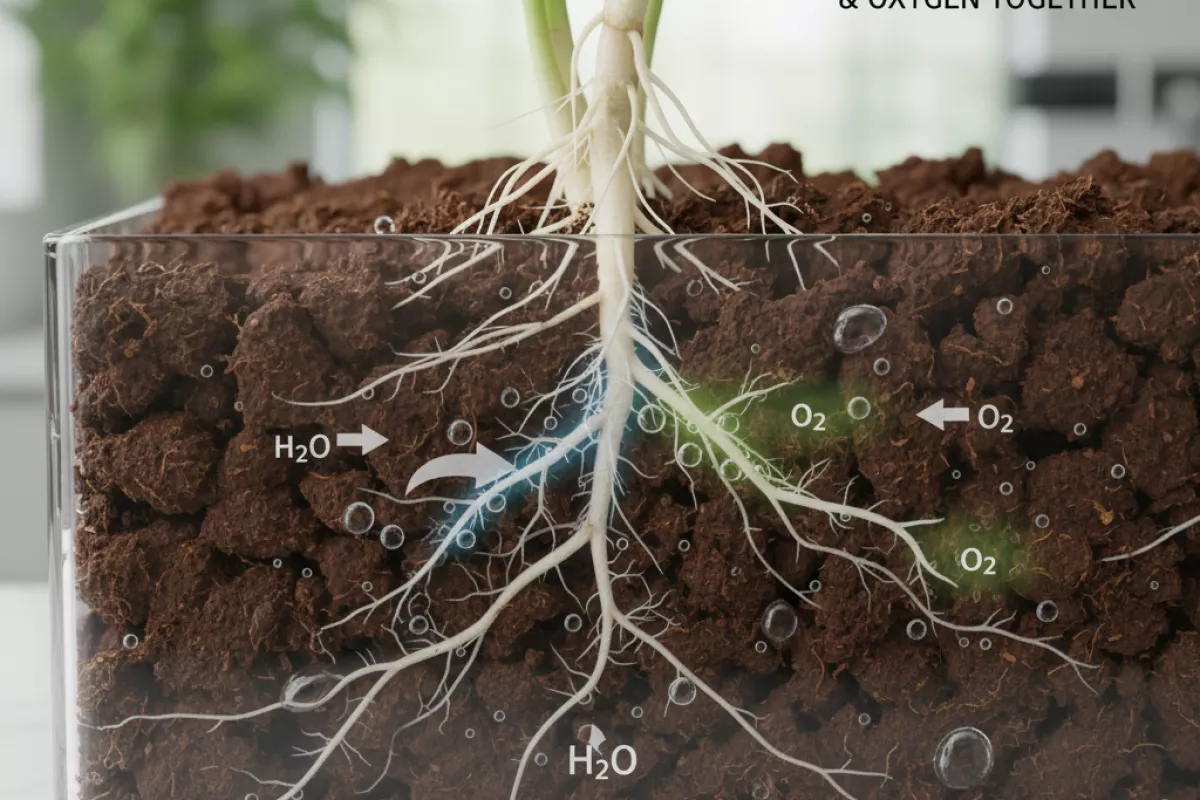
Roots take up moisture and “breathe” at the same time, but they can only do both when the potting mix or soil has a balance of water-filled spaces and air-filled pores. Water moves into root hairs and across root tissues by osmosis and pressure differences, while oxygen diffuses from air pockets into the root surface so cells can make energy for nutrient uptake and growth.
When soil stays saturated, the air spaces collapse and oxygen diffusion slows dramatically. The plant may still be surrounded by water, yet the roots can’t use it well because low oxygen reduces root function and can lead to decay. On the other hand, if the mix dries too far, water films around particles become too thin to flow toward the root, so uptake stalls even though oxygen is plentiful.
- Root hairs do most of the drinking: These tiny extensions increase surface area, letting water and dissolved minerals enter efficiently when the surrounding soil is evenly moist.
- Oxygen powers active transport: Roots need oxygen to fuel respiration, which provides the energy to pull in nutrients (like nitrate and potassium) against concentration gradients.
- Soil structure controls the trade-off: Large pores drain after watering and hold air; small pores hold water. Good structure keeps both available near the root zone.
- Drainage after watering is part of the process: After a thorough soak, excess water should move out, restoring air to pores. If water can’t drain, oxygen levels drop and fine feeder roots suffer first.
| Soil condition | What happens to air and water | How roots respond | What to adjust in watering |
|---|---|---|---|
| Evenly moist, well-aerated | Water films connect through small pores; larger pores still contain air | Steady uptake, active nutrient absorption, healthy white feeder roots | Water thoroughly, then wait until the top 2–5 cm (1–2 in) begins to dry before watering again |
| Waterlogged/saturated | Most pores fill with water; oxygen diffusion becomes very slow | Sluggish growth, wilting despite wet soil, higher risk of root rot | Reduce frequency, improve drainage, and avoid leaving containers sitting in runoff |
| Too dry/hydrophobic pockets | Water films break; some areas repel water while air is abundant | Dehydration stress, poor nutrient flow, brittle or browned fine roots | Re-wet gradually with a slow soak; water until the whole root zone is evenly damp |
| Compacted soil | Fewer large pores; both drainage and aeration decline | Shallow rooting, reduced oxygen access, uneven moisture use | Water more slowly, loosen or amend the medium, and avoid pressing soil down when potting |
A practical takeaway is that “more water” isn’t the same as “more hydration.” The goal is a wet-dry rhythm that lets fresh air re-enter the root zone between waterings. If you’re unsure, check moisture a few centimeters down rather than judging only the surface, and prioritize a mix that drains well so oxygen can return quickly after each soak.
Watering methods that encourage deep root growth
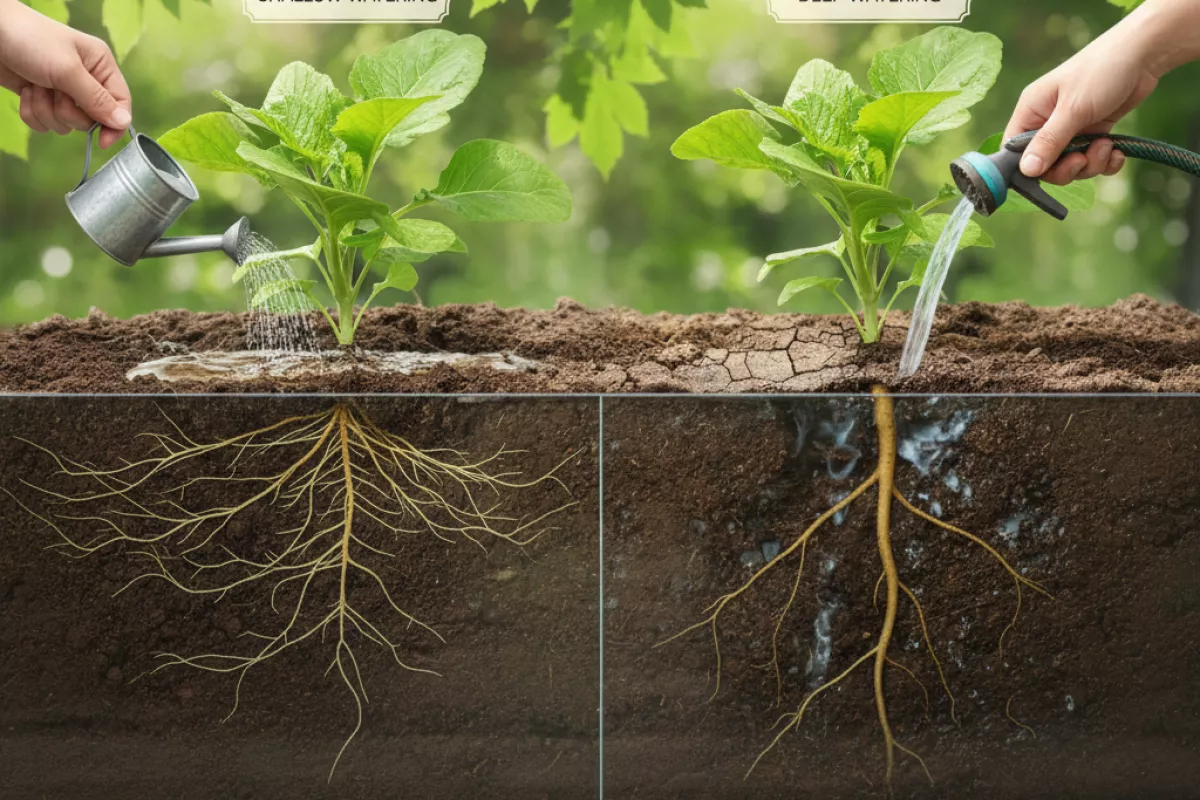
To get roots to travel downward instead of clustering near the surface, water less often but more thoroughly. The goal is to moisten the full root zone, then let the upper layer dry slightly so plants “search” deeper for the next drink. Frequent light sprinkling keeps moisture at the top 2–5 cm (1–2 in), which trains shallow roots and makes plants more vulnerable to heat and wind.
- Soak-and-dry cycle: Apply water slowly until the soil is wet to the depth of the roots, then wait to water again until the top 2–5 cm (1–2 in) feels dry. In many garden beds this means watering every 3–7 days (depending on weather and soil), rather than daily.
- Deep, slow delivery (drip or soaker hoses): Low flow gives water time to infiltrate instead of running off. Place lines near the plant’s drip line (the outer edge of the canopy) so new roots expand outward and downward.
- Pulse watering on compacted or clay soils: Run water for 10–15 minutes, pause for 20–30 minutes, then repeat. This reduces puddling and helps moisture move deeper than the surface crust. (Example: 2–3 pulses instead of one long flood.)
- Widen the watering ring as plants grow: For shrubs and trees, water in a broad donut around the trunk rather than right at the base. Keeping the trunk area relatively dry also discourages rot while encouraging roots to occupy a larger, deeper volume of soil.
- Use mulch to support deeper rooting: A 5–8 cm (2–3 in) layer of organic mulch slows evaporation and moderates soil temperature, so you can water deeply and less often without the top layer baking dry immediately. Keep mulch a few centimeters (about 1–2 in) away from stems.
- Check depth, not the surface: After watering, probe with a trowel or soil probe to see how far moisture reached. For many vegetables, aim to wet roughly 15–30 cm (6–12 in); for established shrubs, 30–45 cm (12–18 in) is a common target, adjusted for your plant and soil.
| Method | How to do it | Best for | Common mistake to avoid |
|---|---|---|---|
| Deep soak (single session) | Water slowly until moisture reaches the root depth (e.g., 20–30 cm / 8–12 in for many annuals) | Most beds with decent infiltration | Stopping as soon as the surface looks wet |
| Pulse soak | Alternate short watering periods with rest periods to let water sink in | Clay soils, slopes, compacted areas | Continuous watering that causes runoff or puddles |
| Drip/soaker irrigation | Low, steady flow near the drip line; run long enough to wet deeply | Shrubs, vegetables, water-wise gardens | Placing emitters too close to stems or running too briefly |
| Expanding watering zone | Move water outward as the canopy grows; water a wider ring over time | Trees and larger shrubs | Always watering at the trunk, which encourages circling/shallow roots |
If you’re unsure whether you’re watering deeply enough, do a simple “dig check” 30–60 minutes after irrigating: the soil should be damp (not soupy) well below the surface. Adjust run time based on what you find, because sandy soil may need longer or more frequent deep sessions, while heavier soil benefits from slower application and longer pauses.
Soil structure and drainage effects on roots
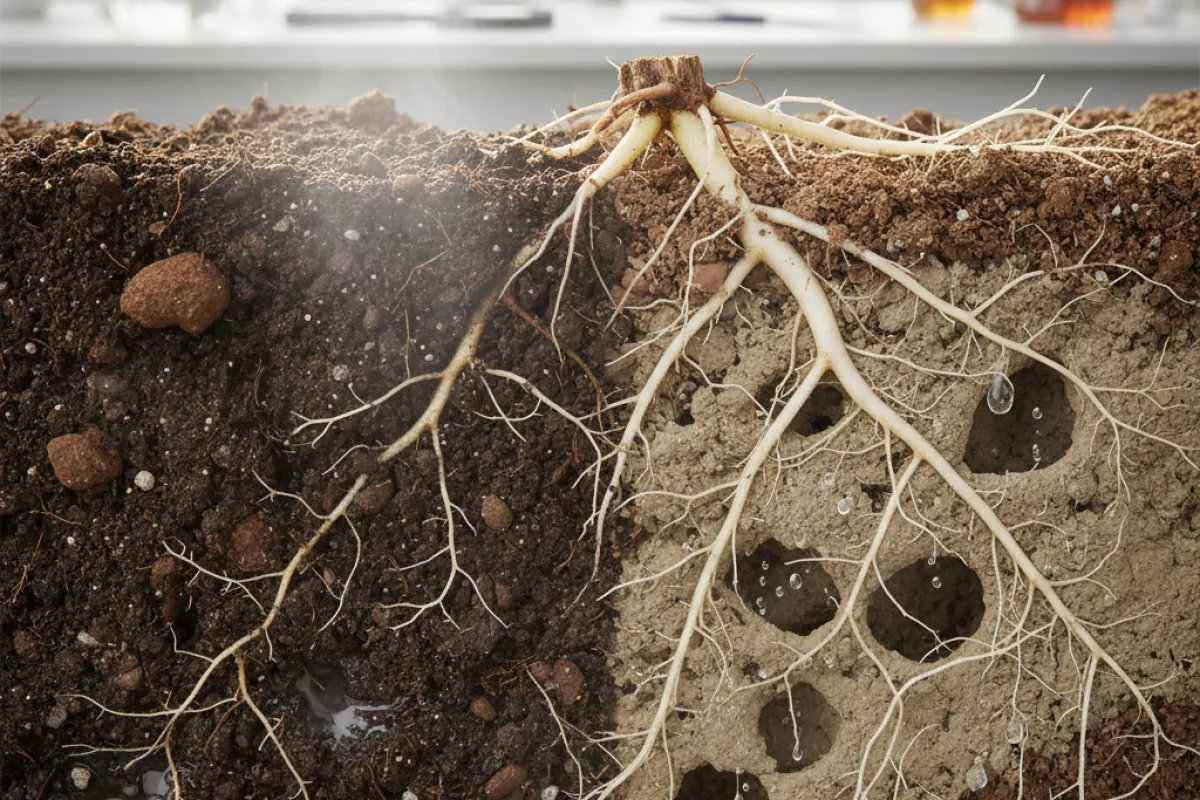
Roots stay healthiest when soil holds enough moisture for steady uptake while still leaving air spaces for oxygen. When the pore spaces are too small or filled with water for long periods, roots struggle to breathe, beneficial microbes shift, and rot organisms gain an advantage. When the mix is too coarse or repels water, roots dry out between waterings and can’t access nutrients consistently.
Think of soil as a balance of particles and pores. Large pores drain quickly and pull in fresh air; small pores store water. A good structure has both, so water moves through but doesn’t vanish immediately. Understanding how soil structure affects root growth makes it easier to see why compaction, poor texture, and missing organic matter push roots into stress.
| Soil/drainage condition | What’s happening underground | Root symptoms you’ll notice | Practical fix (watering + soil) |
|---|---|---|---|
| Compacted soil (often heavy foot traffic or worked when wet) | Air pockets collapse; water infiltrates slowly and can perch above dense layers | Stunted growth, wilting even after watering, shallow rooting | Loosen gently without shredding roots; top-dress 2.5–5 cm (1–2 in) compost; water more slowly so it soaks in rather than runs off |
| Clay-heavy beds with slow drainage | Small pores hold water a long time; oxygen levels drop after irrigation or rain | Yellowing, leaf drop, soft/dark roots, fungus gnat activity in containers | Water only when the top 2.5–5 cm (1–2 in) is dry; add organic matter to improve aggregation; avoid frequent light watering |
| Sandy or very coarse soil | Large pores drain fast; nutrients leach below the root zone | Rapid wilting, pale leaves, frequent “thirst” despite deep watering | Water deeply but less often; add compost to increase water-holding; mulch 5–8 cm (2–3 in) to slow evaporation |
| Container mix that stays soggy (poor aeration, no drainage hole, saucer left full) | Roots sit in low-oxygen conditions; salts can build up as evaporation concentrates them | Drooping with wet soil, musty smell, root tips turning brown/black | Ensure drainage holes; empty saucers after 10–15 min; repot into a chunkier mix; water until it drains, then wait for partial dry-down |
| Hydrophobic (water-repellent) potting mix | Dry peat/coir resists wetting; water channels down the sides and misses the root ball | Water runs through quickly but the center stays dry; crispy edges | Bottom-water 15–30 min; re-wet gradually with smaller doses; consider adding a wetting step when repotting |
- Check drainage before changing your schedule. After watering, soil should feel evenly moist, not swampy. If water stands on the surface longer than 1–2 minutes (about 60–120 seconds), infiltration is likely poor.
- Avoid “little sips” in dense soils. Frequent small waterings keep the top layer wet and oxygen-poor, encouraging shallow roots. Fewer, deeper soakings usually promote stronger rooting.
- Use mulch as a regulator. A 5 cm (2 in) layer buffers temperature swings and slows evaporation, which smooths out moisture peaks and crashes that stress fine feeder roots.
- Match amendments to the problem. Compost improves structure in many garden soils, but in containers it’s often better to repot into a mix designed for airflow rather than adding heavy materials that reduce pore space.
If you’re unsure which issue you have, dig a small test hole 15–20 cm (6–8 in) deep and water it. If it drains quickly but the plant still wilts, the soil may be too coarse or the root ball may be hydrophobic. If it stays glossy-wet or smells sour hours later, you’re dealing with low aeration and should adjust both the watering interval and the soil structure.
How often plants actually need water
There isn’t a single schedule that fits every pot or garden bed. Water demand changes with light, temperature, plant size, pot material, and—most importantly—how quickly the root zone dries. A “once a week” routine often leads to shallow roots (too frequent) or stress (too sparse). Learning how to water indoor plants without overwatering starts with responding to drying patterns rather than fixed dates on a calendar.
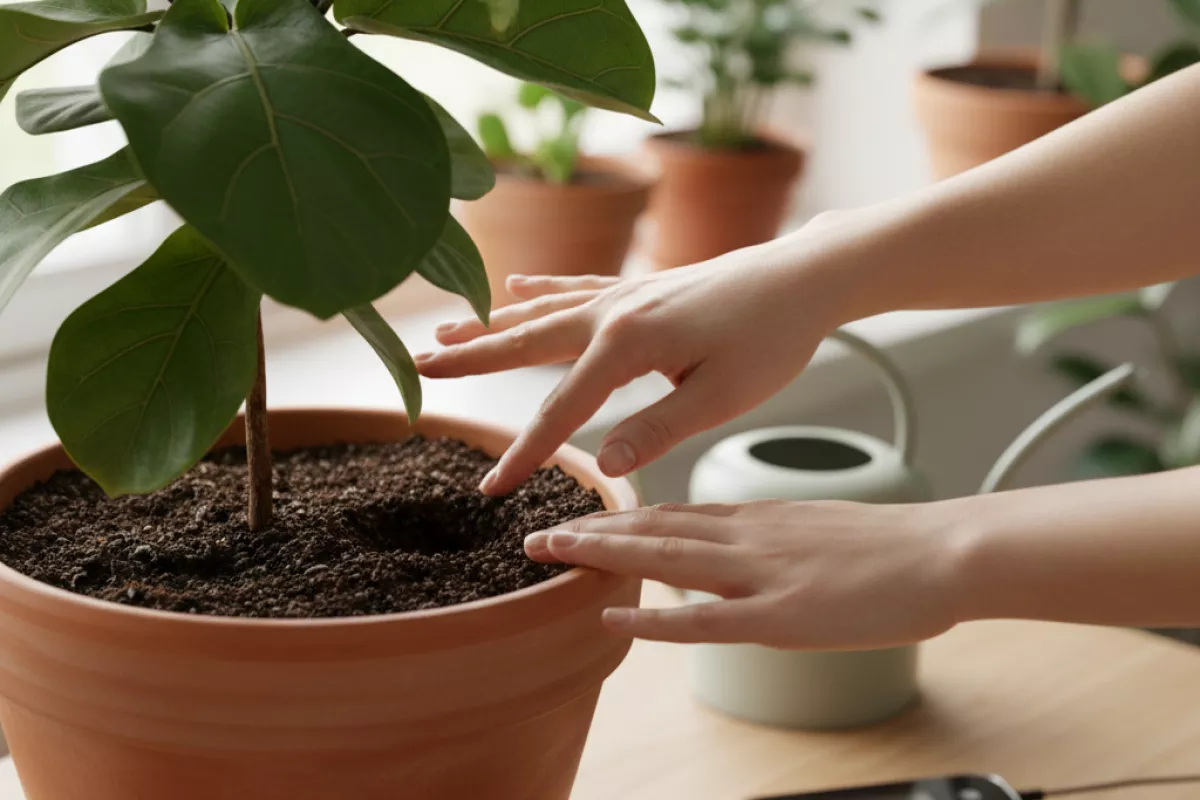
The most reliable approach is to check moisture where roots actually live, not just the surface. Slide a finger 5 cm (2 in) into the soil; if it feels dry at that depth, it’s usually time to water. For deeper containers, use a wooden skewer or chopstick pushed 10–15 cm (4–6 in) down; if it comes out mostly clean and dry, the plant is ready. Always water thoroughly so moisture reaches the full root mass, then let excess drain—this encourages roots to grow downward rather than staying near the top.
- Pot size and material: Small pots dry faster than large ones. Terracotta breathes and can dry 1–3 days sooner than plastic or glazed ceramic.
- Light and heat: Bright windows, grow lights, and warm rooms increase evaporation. A jump from 20°C to 27°C (68°F to 81°F) can noticeably shorten the time between waterings.
- Soil mix: Chunky, airy mixes (bark/perlite) drain quickly; dense mixes hold water longer and can suffocate roots if watered too often.
- Plant type and growth stage: Fast-growing plants and those in bloom typically use more water than dormant or slow-growing plants.
- Humidity and airflow: Low humidity and strong airflow pull moisture from leaves and soil; higher humidity slows drying.
| Situation | What to check | Typical cue to water |
|---|---|---|
| Small indoor pots (10–15 cm / 4–6 in) | Finger test at 3–5 cm (1–2 in) | Dry at that depth; pot feels noticeably lighter |
| Medium pots (15–25 cm / 6–10 in) | Skewer test at 8–10 cm (3–4 in) | Skewer comes out mostly dry with a few crumbs |
| Large containers (25+ cm / 10+ in) | Skewer test at 10–15 cm (4–6 in) plus pot weight | Top is dry and the mid-zone is just starting to dry |
| Outdoor beds | Soil feel at 10 cm (4 in) | Soil is cool but no longer moist; crumbles instead of forming a ball |
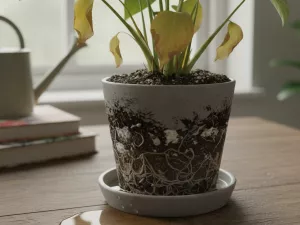
Watch for mixed signals: drooping doesn’t always mean “thirst.” Overwatered plants can wilt because roots can’t access oxygen. If leaves are soft and the soil is wet, hold off and improve drainage; if leaves are slightly limp and the soil is dry a few centimeters down, water deeply. Over time, you’ll learn the rhythm of each plant by combining a quick moisture check with pot weight and leaf firmness.
Signs roots are stressed from poor watering
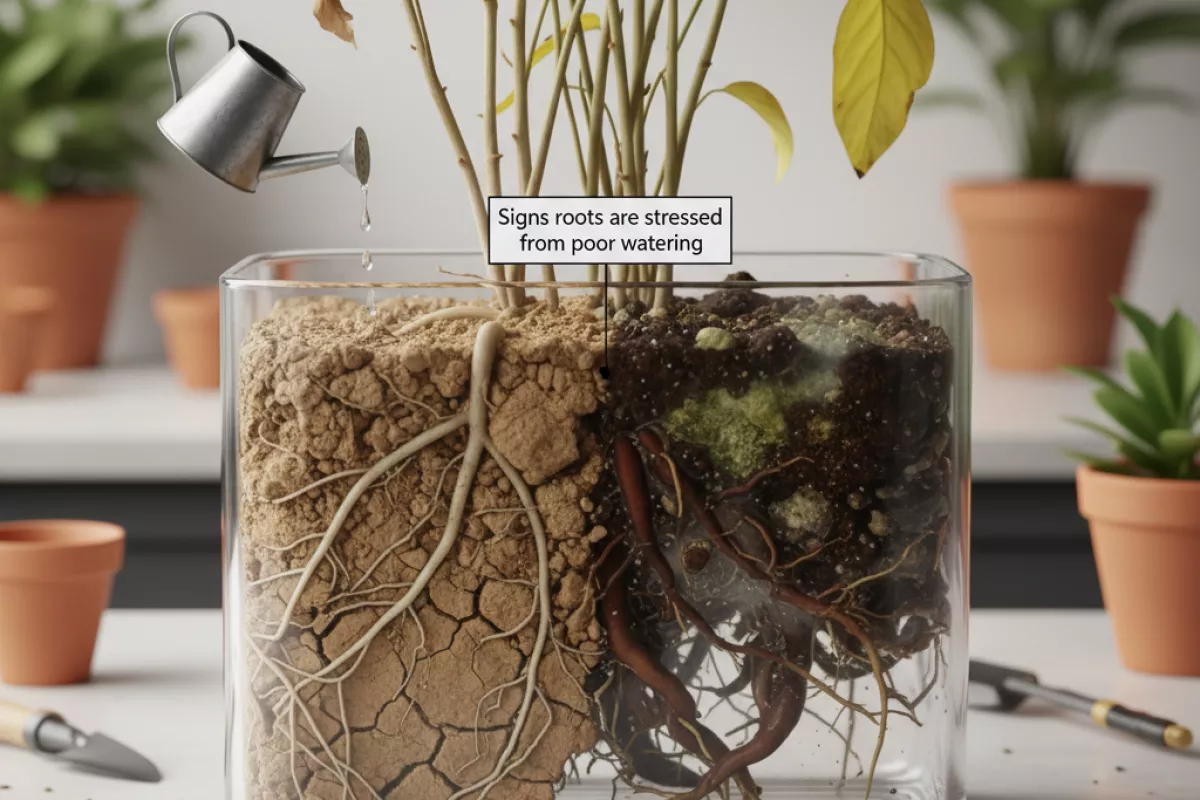
When watering habits are off, roots often show trouble before the rest of the plant looks “sick.” The tricky part is that overwatering and underwatering can create similar top growth symptoms, so it helps to look for patterns in the leaves, stems, soil, and smell together rather than relying on one clue.
| What you notice | More likely from too little water | More likely from too much water | Quick check you can do |
|---|---|---|---|
| Leaves wilt, then perk up after watering | Common; cells lose pressure and recover after a thorough soak | Less common; may perk up briefly but declines again | Water once, then observe for 2–6 hours; recovery suggests dryness was the trigger |
| Leaves wilt but soil stays wet | Unlikely unless the root ball is hydrophobic and water is bypassing it | Common; roots can’t breathe, so the plant droops despite moisture | Press a finger 5 cm (2 in) into the mix; if it’s damp and wilting persists, suspect waterlogging |
| Yellowing leaves (often lower leaves first) | Can happen with chronic drought stress, usually with crispy edges | Very common; nutrient uptake slows and older leaves yellow and drop | Check if yellow leaves feel soft and limp (often excess water) versus dry and papery (often too little) |
| Brown, crispy tips and margins | Common; uneven moisture causes leaf edges to dry out | Possible, but usually paired with mushy stems or persistent dampness | Look for a cycle: dry pot, then heavy watering, then dry again—this swing stresses fine roots |
| Slow growth and small new leaves | Common; the plant conserves water and limits new tissue | Common; damaged roots can’t supply water and nutrients efficiently | Compare new leaves to older ones over 2–3 weeks; stunting plus other symptoms points to root stress |
| Soil pulls away from the pot or becomes hard | Common; peat-based mixes can become water-repellent when very dry | Unlikely | Water slowly in two passes, 5–10 minutes apart, so the root zone rehydrates evenly |
| Fungus gnats, algae on soil, or a sour smell | Unlikely | Common; consistently wet surfaces invite pests and anaerobic conditions | Smell the drainage holes; a swampy odor suggests low oxygen around roots |
| Roots look dark, mushy, or slough when touched | Usually not; drought-stressed roots tend to look wiry and brittle | Strong indicator of rot from prolonged saturation | Slide the plant out and inspect; healthy roots are typically firm and pale (species-dependent) |
- Repeated “almost dry to soaked” swings: Even if you’re watering the right amount overall, big fluctuations can kill fine feeder roots. Aim for more consistent moisture rather than long dry spells followed by heavy watering.
- Water runs straight through without wetting the root ball: This often happens after the mix dries out too far. If the pot feels light but the surface won’t absorb water, re-wet gradually so the center of the root mass actually gets moisture.
- Stem base issues: A soft or darkened crown (where stem meets soil) often points to staying too wet. Catching this early matters because crown damage can progress quickly.
If you’re unsure which side of the problem you’re on, prioritize observation over guesswork: check moisture at root depth (not just the surface), note how long the pot stays wet, and watch whether wilting improves or worsens after watering. Those details usually reveal whether the roots are struggling from drought, suffocation, or a mix of both.
Common watering mistakes that damage root systems
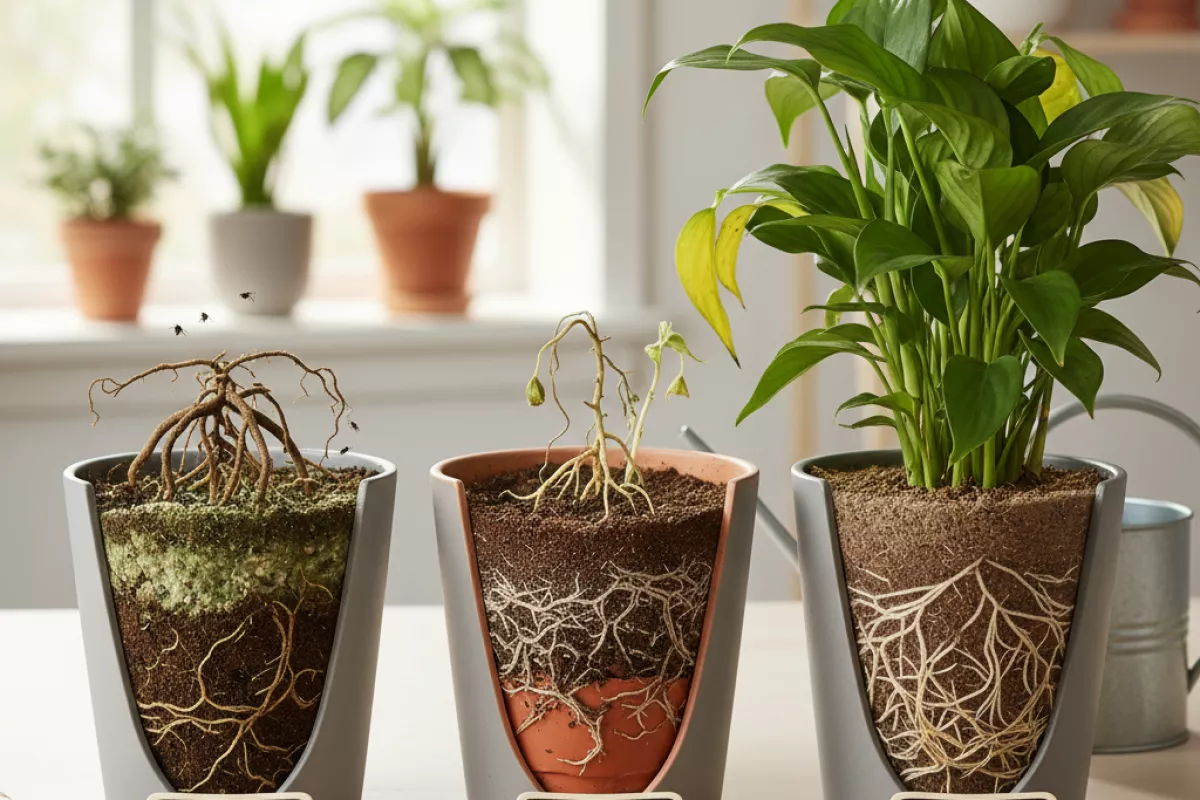
Root problems often start with good intentions: watering on a schedule, giving “a little extra,” or assuming the surface tells the whole story. Using the wrong amount of substrate can also trap moisture or dry out too fast, which is why a soil volume calculator helps match pot size, mix depth, and drainage to healthier root conditions.
- Watering too often (constant damp soil)
Frequent small drinks keep the root zone wet without letting air back in. This encourages rot, fungus gnats, and roots that stop exploring. Let the top 2–5 cm (1–2 in) dry for many houseplants before watering again, unless the species prefers consistently moist soil. - Watering too little, too lightly
A quick splash that only wets the surface trains roots to stay near the top, where temperatures swing and drying happens fast. Water thoroughly so moisture reaches the full depth of the pot or the main root zone in the ground, then wait until the plant actually needs it again. - Soaking the crown or stem base repeatedly
Pouring water directly onto the plant’s crown (where stems meet soil) can lead to crown rot, especially in succulents, orchids, and plants with tight rosettes. Aim water at the soil, not the stem, and keep the base from staying wet for hours. - Ignoring drainage (or using a saucer as a reservoir)
Pots without drainage holes, compacted soil, or saucers left full of runoff keep roots submerged. If you use a saucer, empty it after 10–15 minutes so the pot isn’t sitting in water. - Watering by the calendar instead of by conditions
Light, temperature, pot size, and season change how fast soil dries. A plant near a bright window at 24°C (75°F) may need water sooner than the same plant at 18°C (64°F). Check moisture at root depth rather than relying on a weekly routine. - Using very cold or very hot water
Temperature extremes can shock fine feeder roots. Room-temperature water around 20–22°C (68–72°F) is a safe default for most plants. - Hard, hydrophobic potting mix that repels water
Peat-heavy mixes can dry out and shrink, causing water to run down the sides and out the bottom while the center stays dry. If water rushes through, bottom-water for 15–30 minutes, or slowly water in pulses to re-wet the mix evenly. - Watering at the wrong time for the environment
Outdoors, evening watering in cool, humid weather can keep soil and foliage wet overnight, raising disease risk. Morning watering is usually better so excess moisture can evaporate as temperatures rise.
| Mistake | What happens below the surface | What you’ll notice | Better approach |
|---|---|---|---|
| Frequent small waterings | Low oxygen; roots stay near the top | Slow growth, algae on soil, fungus gnats | Water deeply, then allow partial dry-down |
| Letting pots sit in runoff | Roots remain saturated; rot risk rises | Yellowing, wilting despite wet soil | Empty saucers after 10–15 min; ensure drainage |
| Watering only the surface | Deep roots dry; feeder roots concentrate at top | Plant droops quickly between waterings | Moisten the full root zone depth each time |
| Watering on a fixed schedule | Mismatch between supply and actual demand | Alternating stress: soggy one week, dry the next | Check moisture 5–8 cm (2–3 in) down (or by pot weight) |
| Using water that’s too cold/hot | Fine roots get stressed; uptake slows | Temporary droop, stalled growth | Use ~20–22°C (68–72°F) water when possible |
If you’re unsure which issue is happening, look at the pattern: plants that wilt in wet soil are often oxygen-starved, while plants that perk up briefly after watering but crash fast usually have shallow or unevenly watered roots. Adjusting one habit at a time makes it easier to see what your plant responds to.