Horticultural Oil for Scale Insects: Application Guide

 It explains how horticultural oil controls scale, compares dormant and summer oils, and shows when treatment works. It covers product choice, dilution, leaf, stem, and branch coating, weather precautions, repeat timing, signs to stop, and what to do if scale remains.
- How horticultural oil controls scale insects
- Dormant oil versus summer horticultural oil
- When horticultural oil treatment works best
- Choosing the right oil product for the plant
- How to prepare the plant before treatment
- How to dilute and apply horticultural oil
- Where to coat leaves, stems and branches
- Weather, temperature and sunlight precautions
- How often to repeat the application
- Signs of plant damage and when to stop
- What to do if scale insects survive treatment
Horticultural oil is a simple, lower-toxicity way to manage scale insects on houseplants, fruit trees, and ornamentals. Success depends on careful timing, proper dilution, and complete coverage of stems, leaf undersides, and cracks where pests hide. Spray when plants are not stressed by heat or drought, test sensitive foliage first, and avoid species that react poorly to oils. Follow the label, monitor for new crawlers, and repeat only as needed to prevent damage without wasting product.
How horticultural oil controls scale insects
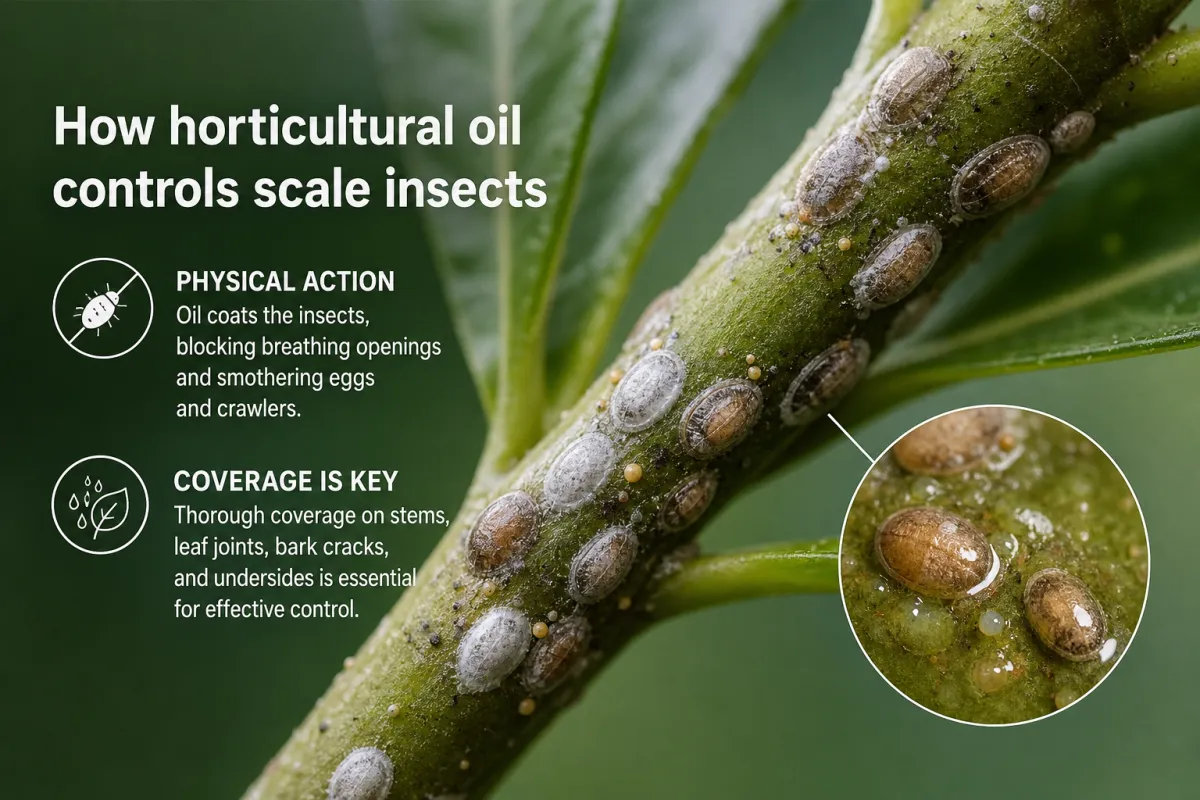
Horticultural oil works mainly by physical action, not by poisoning the plant or leaving a long-lasting toxic residue. When the spray covers the insect thoroughly, the oil film blocks the breathing openings on the body and can also smother exposed eggs and newly hatched crawlers. This is why coverage matters more than simply “spraying the plant.” A light mist on the top of the leaves will not reach many scale colonies hidden along stems, leaf joints, bark cracks and undersides.
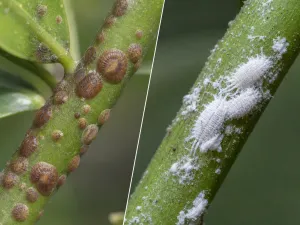
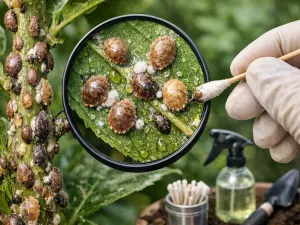
Scale pests are protected by a waxy or shell-like covering, especially once they mature. Armored types often sit beneath a hard cap, while soft scales have a more leathery body and may produce sticky honeydew. If you are unsure which pest you are dealing with, review the signs of scale insects before treating, because mealybugs, aphids and fungal bumps can be mistaken for scale at a glance.
Why young scale is easier to control
The most vulnerable stage is the crawler stage, when young scale insects have recently hatched and are still moving before settling down to feed. At this stage, their protective covering is not fully developed, so oil sprays are more reliable. Mature scale can still be reduced, but it often takes repeated applications and some physical removal.
- Oil must touch the pest directly; dried residue has limited effect on insects that arrive later.
- Egg masses under a female scale may be protected unless the oil penetrates the colony well.
- Dead scale may remain stuck to the plant for weeks, so do not judge success only by whether bumps are still visible.
- Honeydew and sooty mold usually decrease after feeding stops, but the black mold may need gentle washing from leaves.
Editor’s note: After treatment, use a fingernail or cotton swab to test a few scale covers. Living soft scale often feels moist or leaves a smear; dead scale tends to be dry, hollow or easier to flick off. This quick check prevents unnecessary repeat spraying on colonies that are already inactive.
Dormant oil versus summer horticultural oil
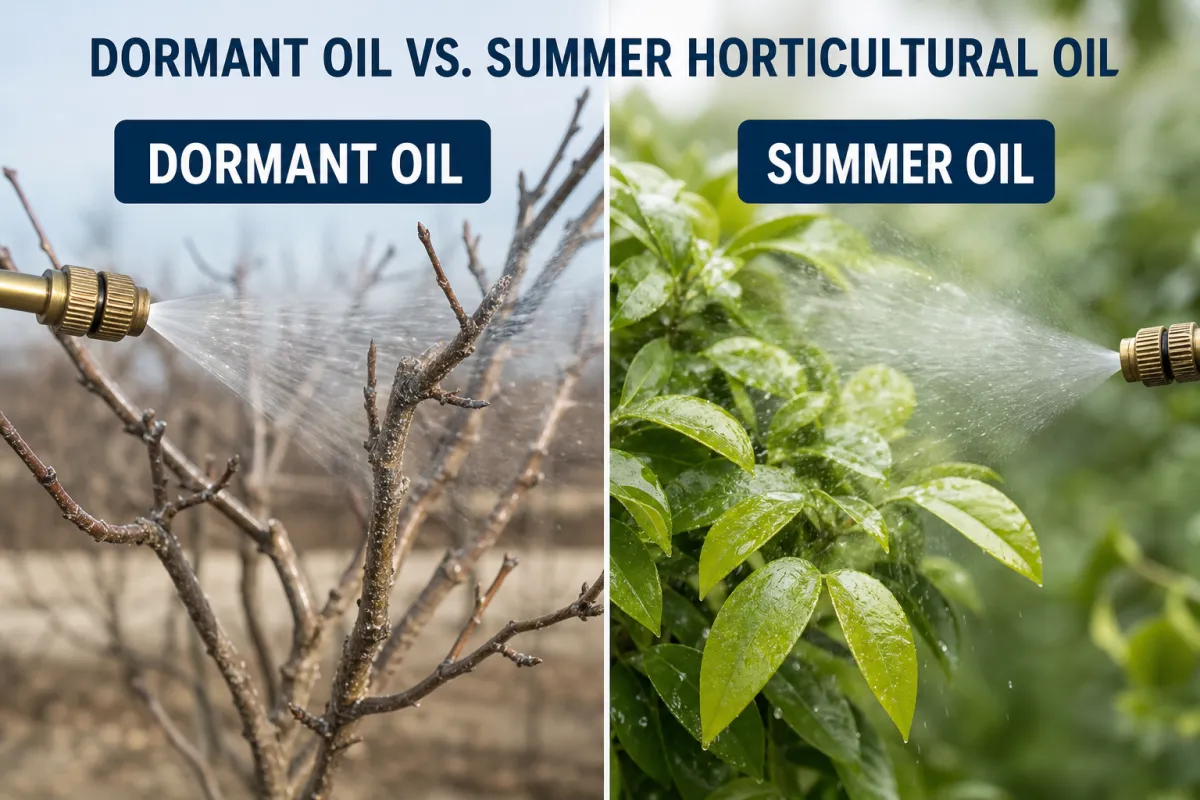
The terms “dormant oil” and “summer oil” describe how and when oil products are used, not just one single ingredient. Modern horticultural oils are usually highly refined petroleum-based mineral oils, although some products are plant-derived. The important differences are concentration, plant growth stage and risk of leaf injury.
Dormant oil use
Dormant oil is applied to woody plants while they are leafless or not actively growing. It is commonly used on fruit trees, roses, deciduous shrubs and some ornamentals to suppress overwintering scale, mites and aphid eggs. Because the plant is dormant, stronger rates may be allowed on the label, but timing is critical. Spraying too late, when buds are swelling or green tissue is exposed, increases the risk of damage.
Summer oil use
Summer horticultural oil, sometimes called superior oil or all-season oil, is refined for use on actively growing plants at lower concentrations. It is the type most often used for houseplants, citrus in leaf, tropical foliage plants and evergreens. Even with a summer-labeled product, sensitive plants can be injured if sprayed in heat, strong sun or drought stress.
In practical terms, choose dormant oil for overwintering problems on suitable outdoor woody plants before growth begins, and choose a lighter summer or all-season oil when leaves are present. Never assume that a dormant-rate mixture is safe on a leafy plant. Product labels often separate dormant, delayed-dormant and growing-season rates for good reason.
- Dormant applications are useful when you can see old scale clusters on bare stems and branches.
- Summer applications are better for active infestations on leaves, petioles and green shoots.
- Evergreens need extra caution because they are never truly leafless and may retain oil longer on needles or waxy foliage.
- Indoor plants almost always require the gentler growing-season rate, even in winter, because they remain physiologically active.
When horticultural oil treatment works best
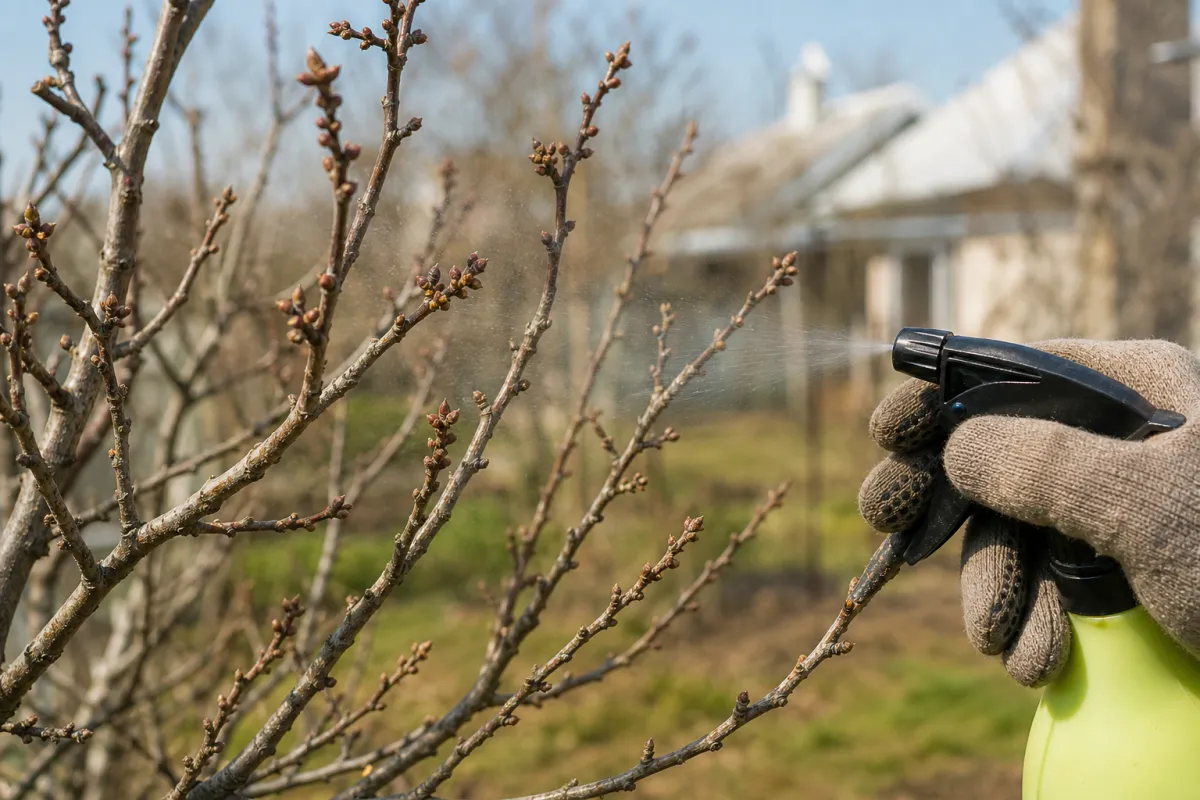
Oil treatment works best when scale insects are exposed, the plant is not under stress and the weather allows the spray to dry slowly without burning foliage. Timing is especially important outdoors because many scale species have a short crawler window. Indoors, generations may overlap, so repeated inspection is often more useful than waiting for a single seasonal moment.
Seasonal timing outdoors
For deciduous trees and shrubs, late winter to early spring is a common window for dormant applications, usually after the worst freezing weather has passed but before buds fully open. During the growing season, watch for crawlers by placing double-sided tape around infested twigs or tapping a branch over white paper. Tiny moving specks are a sign that a well-timed oil spray may be effective.
Timing for houseplants
For indoor plants, treat as soon as you confirm an active infestation rather than waiting for a specific month. Move the plant away from windows, heating vents and grow lights before spraying. If the problem is on a collection of houseplants, isolate the affected plant and inspect neighboring pots. Guidance for indoor scale is especially useful because indoor infestations often spread slowly and hide on stems near the soil line.
The best treatment window is usually when the plant has been watered normally, new growth is not tender and temperatures are moderate. Avoid spraying a plant that is wilting, newly repotted, recently fertilized heavily or recovering from root damage. Oil may be mild compared with many pesticides, but it still coats living plant tissue and can magnify stress.
Practical tip: If a plant is dry, water it the day before treatment rather than immediately before spraying. A hydrated plant tolerates oil better, but wet potting mix plus oily foliage in a dim room can keep humidity high for too long and invite leaf spotting.
Choosing the right oil product for the plant
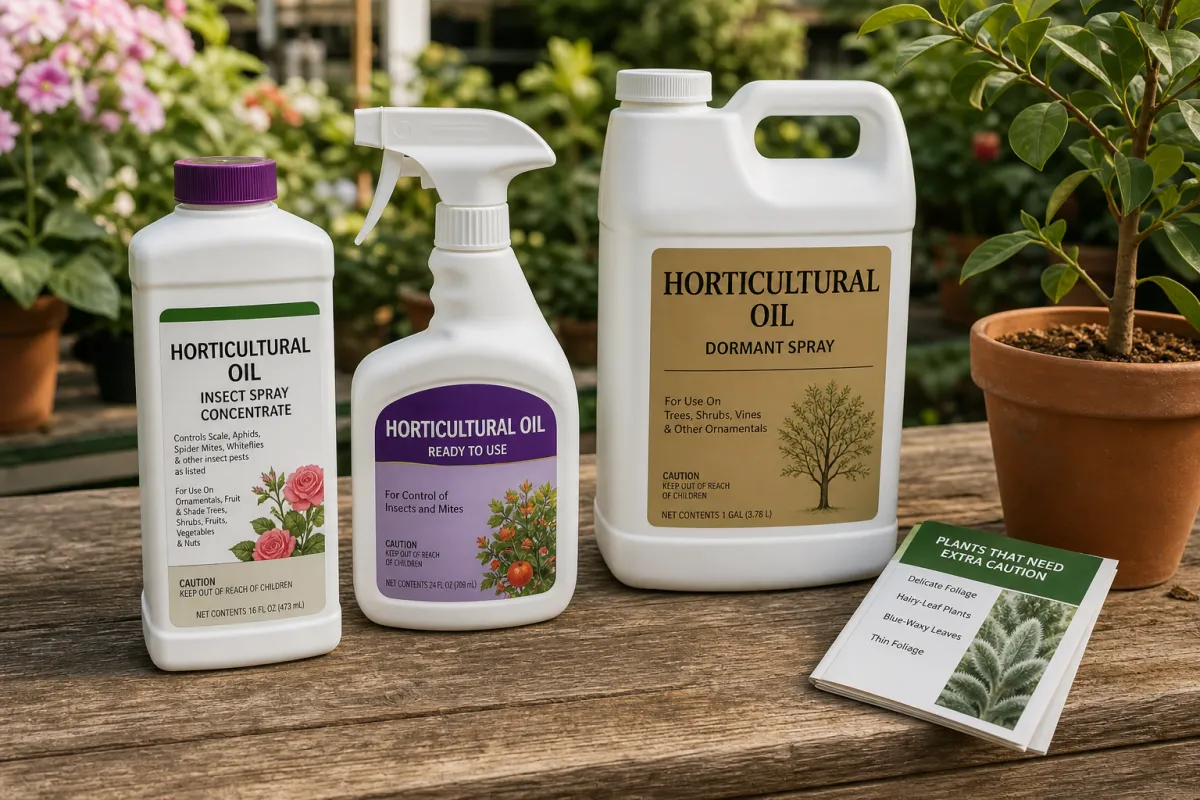
Choose a product labeled for the plant type you intend to treat and for scale control. “Horticultural oil” may appear on several formulations, including ready-to-use sprays, concentrates and dormant products. Ready-to-use bottles are convenient for one or two houseplants, while concentrates are more economical for hedges, fruit trees or repeated treatments.
Plants that need extra caution
Some plants are naturally sensitive to oil sprays, especially those with delicate, hairy, blue-waxy or thin foliage. Blue spruce and some junipers may lose their bluish bloom after oil treatment, even if the plant survives. Ferns, certain palms, maples, begonias, orchids, succulents and newly expanded leaves can also react poorly depending on the product and conditions.
- Read the label for listed sensitive plants before mixing or spraying.
- Use the lowest labeled growing-season rate when treating a plant for the first time.
- Test one small branch or several leaves and wait 24 to 48 hours before treating the whole plant.
- Avoid oil on flowers whenever possible, because petals are more easily stained or browned than leaves.
- Do not use oil on plants already showing drought wilt, root rot, fertilizer burn or severe sun scorch.
Formulation details that matter
A good horticultural oil product should mix evenly with water and state clear rates for dormant and growing-season use. Highly refined oils are generally safer for leaves than older, less refined oils. If the label mentions “all-season,” it still does not mean all plants or all weather conditions are safe. It means the product may be used during the growing season when label directions are followed.
For edible plants, check the pre-harvest interval and crop list. Citrus, apples, pears and some vegetables may be listed on one product but not another. For indoor ornamentals, choose a product that allows houseplant use and has directions suitable for small-volume mixing, such as per 1 L (34 fl oz) of water.
How to prepare the plant before treatment
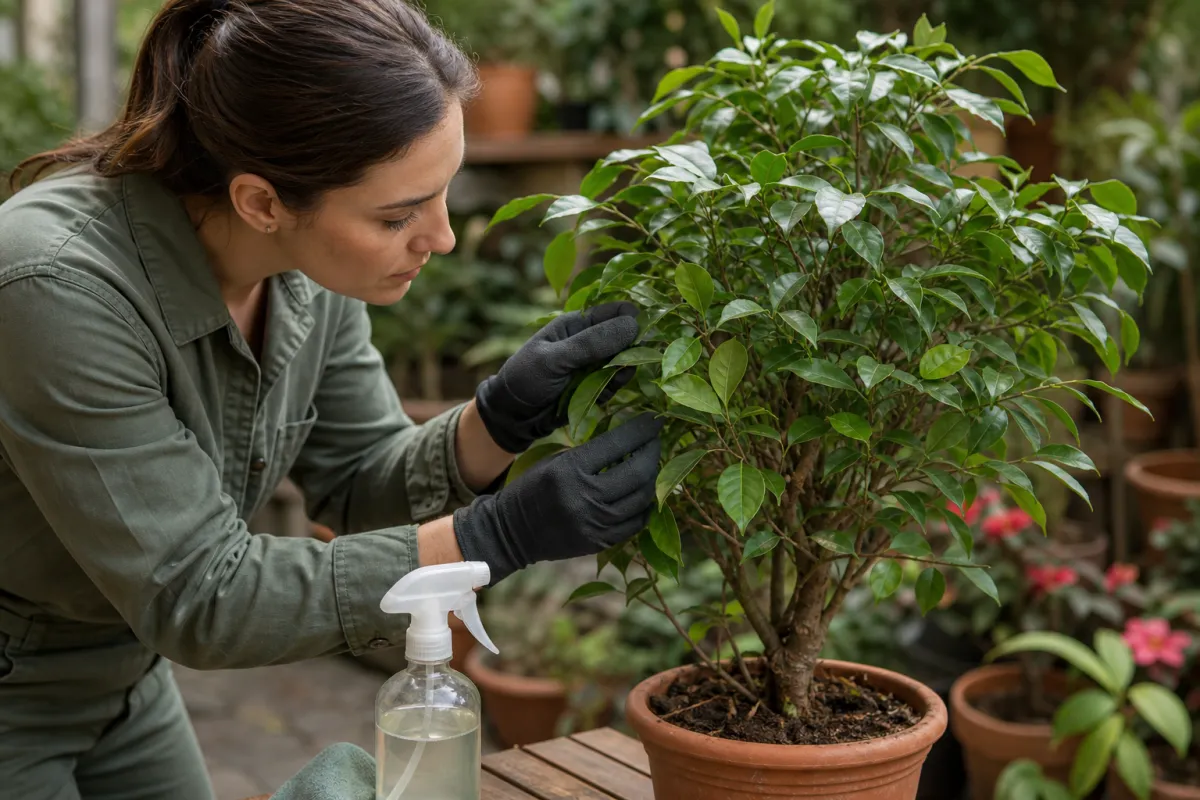
Preparation improves control and lowers the risk of plant damage. Oil works by contact, so anything that blocks spray coverage, such as dust, webbing, dense dead leaves or heavy sooty mold, can reduce results. At the same time, a stressed plant is more likely to show leaf spotting after treatment, so do not rush the process if the plant needs basic care first.
Clean and inspect before spraying
Start by checking the entire plant, including the lower stems, branch crotches, leaf undersides and the point where petioles meet the stem. On houseplants, also inspect the rim of the pot, nearby stakes and the underside of decorative cachepots. Scale can hide in narrow places and reappear after the visible leaves have been treated.
- Prune out heavily infested twigs if removal will not spoil the plant’s shape. Discard the cuttings in a sealed bag.
- Wipe broad leaves with a damp cloth to remove dust and sticky honeydew before spraying.
- Use a cotton swab dipped in plain water or diluted alcohol only for small, sturdy areas; avoid soaking tender tissue.
- Water the plant normally if the root ball is dry, then allow foliage to dry before applying oil.
- Move indoor plants to a washable surface with good ventilation, away from direct sun and pets.
Reduce stress first
If the plant is severely wilted, sitting in soggy soil or recently moved from low light into bright sun, correct those issues before treatment. For container plants, confirm that drainage holes are open and that the potting mix is not staying wet for days. For outdoor plants, avoid spraying immediately after transplanting or hard pruning. Give the plant time to recover, usually several days to a week, unless the scale infestation is spreading rapidly.
Do not fertilize just before oil treatment. Soft, fast new growth is more vulnerable to injury, and fertilizer will not help the oil work better. Resume feeding only after the plant shows normal growth and no spray damage.
How to dilute and apply horticultural oil
Always follow the product label first, because horticultural oil concentrates vary. Many growing-season applications fall around 1% to 2% solution, but the exact amount depends on the formulation and plant. For example, a 1% mix may be roughly 10 ml oil per 1 L water (0.34 fl oz per 34 fl oz), while a 2% mix may be 20 ml per 1 L water (0.68 fl oz per 34 fl oz). Some labels express rates per 1 gal (3.8 L), such as 2.5 to 5 tbsp (37 to 74 ml) per 1 gal (3.8 L).
Mixing steps
Use clean water and a clean sprayer. Residues from herbicides, cleaners or old pesticides can injure leaves even when the oil rate is correct. If your water is very cold, let it warm to room temperature before mixing so the oil emulsifies more evenly.
- Measure the water first, then add the labeled amount of oil concentrate.
- Close the sprayer and shake well until the mixture looks evenly milky.
- Spray soon after mixing; do not store diluted oil for later use.
- Shake the sprayer every few minutes during application because oil and water can separate.
- Apply until plant surfaces are evenly wet but not dripping heavily onto the soil.
Application technique
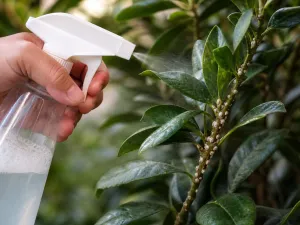
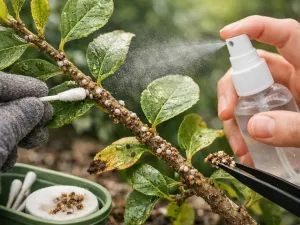
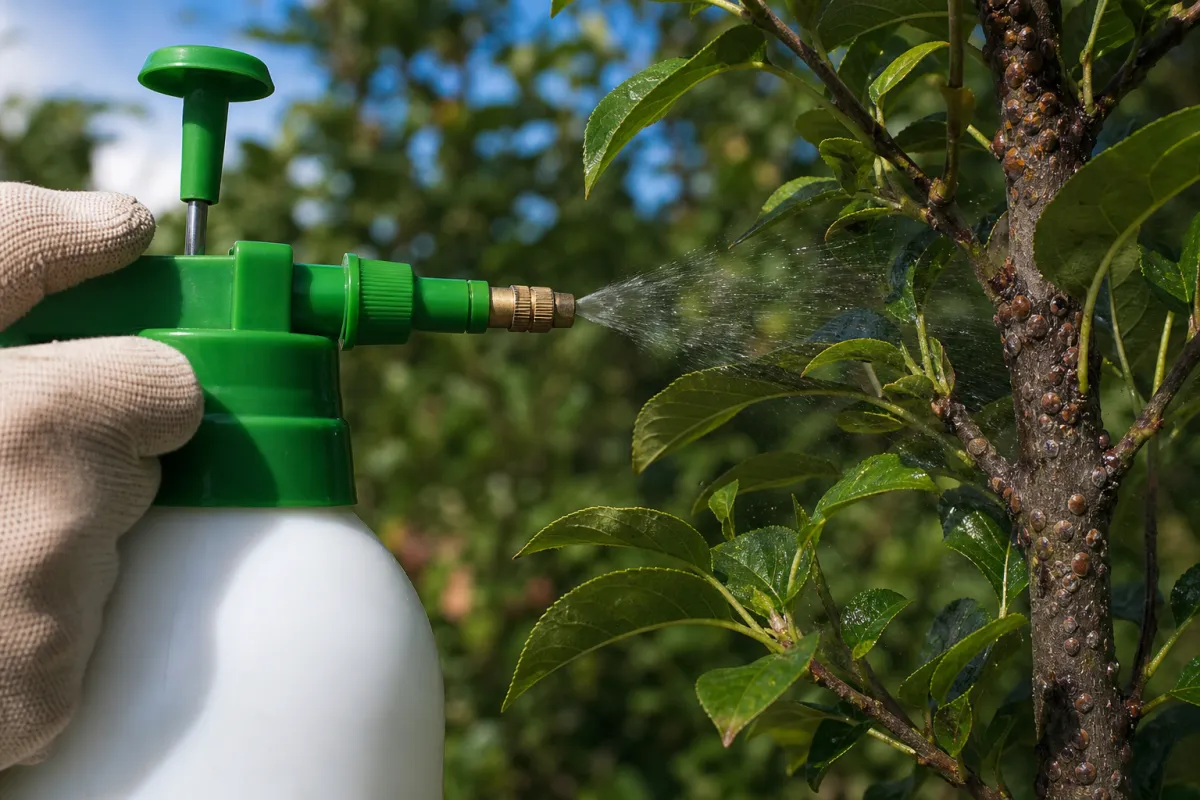
Use a fine but not misty spray pattern. A fog that drifts away will not coat scale colonies, while a harsh jet can damage tender leaves. Hold the nozzle close enough to reach the stems and undersides without blasting the plant. For small houseplants, turning the pot slowly is often more accurate than waving the sprayer from one side.
Wear gloves and protect nearby surfaces, especially indoors. Oil overspray can leave a slippery film on floors, shelves and windowsills. Do not add dish detergent, alcohol or other pesticides unless the label specifically allows it. Mixing products can increase leaf burn and may reduce the stability of the spray.
Where to coat leaves, stems and branches
Good coverage is the difference between suppressing scale and merely wetting the easy-to-reach leaves. Scale insects often settle where plant tissue is sheltered and sap flow is strong: along veins, at leaf bases, beneath bark flakes, around buds and in branch forks. These hiding places must be coated without leaving the plant dripping in oil.
High-priority spray zones
Work from the inside of the plant outward. This approach helps you reach shaded stems and branch crotches before the outer leaves become wet and stick together. On woody plants, focus on bark texture and older stems as much as foliage. For shrubs and trees with persistent problems, compare your situation with advice for outdoor scale, because pruning, ant control and crawler monitoring often matter as much as spraying.
- Undersides of leaves, especially along the midrib and larger veins.
- Leaf axils, where the leaf stalk joins the stem.
- Green stems and woody twigs, including the lower shaded portions.
- Branch crotches, pruning scars and rough bark where scale covers blend in.
- New growth tips if crawlers are present, but use a lighter touch on tender shoots.
- The base of canes or stems near the soil line on houseplants and potted shrubs.
For broad-leaved houseplants, lift leaves gently with one hand and spray the underside with the other. For thorny shrubs or dense evergreens, a pump sprayer with a wand gives better reach than a trigger bottle. If a plant is too dense to coat properly, selective thinning may be needed before another treatment.
Field note: On camellias, citrus and ficus, scale often survives on the shaded interior stems after the outer canopy looks clean. Spend extra time opening the canopy with your hand and spraying from several angles. A missed 5 cm (2 in) section of stem can restart the infestation.
Weather, temperature and sunlight precautions
Oil sprays are safest in mild, calm conditions. Temperature, sunlight, wind and plant water status all affect how quickly the oil dries and how much stress it places on leaf tissue. A correctly mixed spray can still cause damage if applied on the wrong day.
Temperature limits
As a general rule, avoid horticultural oil when temperatures are below 4°C (40°F) or above 32°C (90°F), unless the product label gives a different range. Many gardeners use a more cautious upper limit of 29°C (85°F) for sensitive ornamentals, houseplants moved outdoors and plants in containers. Never spray if freezing temperatures are expected within 24 hours or if a heat spike is forecast the same day.
Sun and drying conditions
Apply in bright shade, early morning or late afternoon, not in direct midday sun. Leaves coated with oil can heat quickly, and sun-exposed tissue may scorch. Wind is also a problem because it causes uneven coverage and drift, while very still, humid air can keep leaves wet too long. Outdoors, choose a calm day when rain is not expected before the spray has dried.
- Do not spray drought-stressed plants; water them first and wait until they recover.
- Avoid treating plants under grow lights unless the lights can be dimmed or kept off until foliage dries.
- Do not apply oil within about 30 days of sulfur sprays, as the combination can cause severe phytotoxicity.
- Keep treated houseplants out of direct window sun for at least the rest of the day.
- Delay spraying after storms, hail or wind damage because injured tissue absorbs sprays unevenly.
Soil moisture matters too. Container plants in black plastic pots can heat quickly on patios, even when the air feels moderate. If roots are hot or dry, move the plant to shade and stabilize watering before applying oil.
How often to repeat the application
One application rarely eliminates an established scale infestation. Oil kills the insects it contacts, but hidden eggs, protected adults and newly emerging crawlers may survive. Repeating treatment at the correct interval catches the next wave without coating the plant so often that leaves suffer.
Typical repeat intervals
For active infestations on leafy plants, many labels recommend repeating every 7 to 14 days. Use the shorter interval during warm conditions when crawlers are hatching quickly, and the longer interval for slower indoor infestations or sensitive plants. For dormant woody plants, one thorough dormant application may be enough for light problems, but severe infestations often need a follow-up during crawler emergence in spring or early summer.
Do not repeat automatically if the plant shows stress. Inspect first. Look for live crawlers, fresh honeydew, new sooty mold or scale that still appears plump and attached. If the old covers are dry and no new sticky residue appears, wait and monitor rather than spraying again.
- Houseplants: inspect weekly and repeat only when live scale or crawlers are found.
- Fruit trees and shrubs: combine dormant treatment with crawler monitoring for better timing.
- Heavy infestations: prune and physically clean first so repeated sprays do not have to overcome thick colonies.
- Sensitive plants: extend the interval and test a small area before each full treatment.
Keep a simple record with the date, product, dilution and plant response. This is especially helpful for collections of citrus, orchids, ficus or patio plants where several species may react differently. If you see no improvement after two or three well-timed, well-covered applications, reassess the pest, the plant condition and the treatment method.
Signs of plant damage and when to stop
Plant injury from oil is called phytotoxicity. It may appear within a few hours, but some symptoms take several days. Damage is more likely when the plant was stressed, the mixture was too strong, sunlight was intense or oil was applied to a sensitive species. Mild spotting may not kill the plant, but it is a clear warning to stop and adjust.
Common injury symptoms
Look closely at the newest leaves, sun-facing leaves and thin foliage first. These tissues usually show problems before older, tougher leaves. On evergreens, oil injury may show as dullness, bronzing or needle drop rather than soft brown patches.
- Translucent or water-soaked spots that later turn tan or brown.
- Leaf edges becoming dry, crisp or scorched.
- Yellowing or sudden leaf drop within several days of treatment.
- Streaks or blotches where spray collected and dried unevenly.
- Loss of waxy blue color on plants such as blue spruce, even without true tissue death.
- Flower browning, petal spotting or bud drop after accidental contact.
What to do after damage appears
Stop oil applications immediately. Move potted plants to bright shade with good airflow, and keep watering steady but not excessive. Do not fertilize damaged plants right away; pushing new growth while roots and leaves are stressed can make recovery uneven. Trim only leaves that are fully dead or diseased-looking, because partially green leaves still help the plant rebuild energy.
For outdoor plants, rinse foliage gently with water if the spray was applied very recently and has not dried, but avoid high-pressure washing. If damage appears days later, rinsing will not reverse it. Wait for the plant to stabilize before considering another control method, and choose a non-oil approach if the species is known to be sensitive.
What to do if scale insects survive treatment
If scale remains active after treatment, do not simply increase the oil concentration. Stronger mixtures often harm the plant before they solve the pest problem. Instead, determine why the treatment failed. The most common reasons are poor coverage, treating outside the crawler stage, hidden colonies, plant stress that limited safe application or confusing dead scale covers with live insects.
Improve the control plan
Start with a close inspection and remove what you can by hand. On sturdy stems, a soft toothbrush can dislodge old covers. On delicate leaves, use a damp cloth and gentle pressure. Prune stems that are badly encrusted, especially if they are weak or shaded. For outdoor plants, also manage ants, because ants protect honeydew-producing soft scale from predators.
- Use sticky tape or white paper tapping to check for crawler activity before the next spray.
- Open dense growth with selective pruning so spray can reach the interior stems.
- Quarantine infested houseplants until no live scale is found for several weeks.
- Inspect nearby plants, shelves, stakes and pots, because crawlers can settle away from the original colony.
- Encourage beneficial insects outdoors by avoiding broad-spectrum insecticides when possible.
When to switch methods
If oil is causing plant spotting or the pest is located on very tender growth, consider a different low-residue contact option such as insecticidal soap, following its own label and plant-safety precautions. Some gardeners also compare oil sprays with neem oil, but neem products vary widely and are not automatically safer for sensitive leaves. Do not layer multiple sprays within a few days unless the labels allow it.
For valuable trees, large shrubs or persistent armored scale, professional diagnosis may be worthwhile. Some infestations require precisely timed crawler treatments or systemic products suitable for the plant and site. On edible crops, pollinator plants and indoor spaces, product choice matters greatly, so avoid improvising with household oils or homemade mixtures. A steady program of inspection, pruning, correct watering, adequate light and well-timed treatment usually gives better results than repeated emergency spraying.