Neem Oil for Spider Mite Control – When to Apply

 Here we how neem oil affects spider mites at different life stages, the best time to apply it, and how to use it safely on plants. It also explains treatment limits, how often to reapply, how to combine neem oil with other methods, and how to avoid resistance or poor results.
Neem oil works best against spider mites when used at the right time, not only after damage becomes obvious. Spraying too late, applying it in strong sunlight, or treating during the wrong stage of an outbreak can reduce its effectiveness and put extra stress on plants. Gardeners get better results when they know when to start treatment, how often to repeat it, and which conditions to avoid.
How neem oil affects spider mites at different stages

Neem oil does not work like a fast knockdown insecticide. Its value against spider mites comes from coating exposed pests, disrupting feeding, and interfering with normal development and reproduction. That means results depend heavily on which life stage is present when you spray and how thoroughly the product reaches the undersides of leaves, stems, and tight growth points where mites gather.
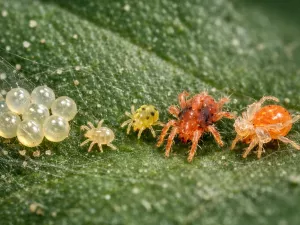
Spider mite infestations usually include eggs, larvae, nymphs, and adults at the same time. Because neem is more effective on active stages than on well-protected eggs, one application rarely solves the problem. Gardeners often think the treatment failed when they still see mites a few days later, but what they are often seeing is a new wave hatching after the first spray.
Eggs, young mites, and adults respond differently
The youngest active stages are often easier to suppress because they have softer bodies and less mobility. Adults can still be affected, but they may survive if spray coverage is uneven or if plant foliage is dense. Eggs are the most difficult stage because the oil may not fully penetrate or affect all of them before they hatch.
- Eggs: usually the least affected stage, so repeat treatments matter.
- Larvae and nymphs: often more vulnerable because they are actively feeding and exposed on leaf surfaces.
- Adults: can be reduced by direct contact, but survivors may continue laying eggs if coverage is incomplete.
Why visible improvement can lag behind treatment
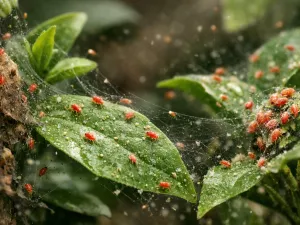
Plants often keep showing stippling, bronzing, or dusty-looking leaves even after mite numbers start dropping. Existing damage does not reverse, so the real sign of progress is reduced webbing, fewer moving mites on the undersides of leaves, and cleaner new growth over the next 7 to 14 days.
When conditions are hot and dry, mites reproduce quickly, sometimes outpacing a weak spray schedule. On indoor plants and greenhouse crops, this is especially common because there is no rain to wash foliage and no outdoor predator activity to help keep populations in check.
Editor’s note: If you are unsure whether neem is helping, wipe a white tissue under a leaf and tap the foliage. Tiny moving specks on the paper mean active mites are still present, even if webbing is light.
Best timing for application to maximize results

Timing matters as much as product choice. Neem oil works best when applied before an infestation becomes severe and when environmental conditions allow the spray to stay on the leaf surface long enough to do its job without stressing the plant. The ideal window is usually early in the outbreak, before heavy webbing covers leaves and before large numbers of eggs have accumulated.
For outdoor plants, the safest and most effective times are usually early morning or evening, when temperatures are lower and direct sun is weaker. Spraying in intense midday heat can increase the risk of leaf burn, especially on tender herbs, vegetables, roses, and houseplants moved outdoors for summer.
Seasonal and daily timing
Spider mites thrive in warm, dry weather, so neem is often most useful during late spring through early autumn, depending on climate. Indoors, infestations can flare up any time of year, especially in winter when heating systems lower humidity and plants are already stressed.
- Early morning: good for outdoor spraying if leaves can dry gradually and temperatures stay below about 29°C (85°F).
- Evening: often the best choice in hot climates because sun exposure is reduced after treatment.
- Avoid midday: strong sun plus oil on foliage can damage leaves.
- Avoid before rain: rainfall within a few hours may wash off the treatment before it has much effect.
Apply when mites are active, not after plants are overwhelmed
Neem performs better on light to moderate infestations than on plants already covered in dense silk. Once webbing is heavy, mites are physically shielded, and sprays may not reach them well. In that case, it helps to prune badly infested shoots, rinse the plant first, or physically remove the worst foliage before applying neem.
Plants under drought stress are also more vulnerable to mite damage and more sensitive to foliar treatments. Water the root zone properly a day before treatment if the soil is dry, rather than spraying a wilted plant and hoping for a quick fix.
| Situation | Best timing choice | Why it helps |
|---|---|---|
| Outdoor plants in summer heat | Evening, after direct sun has eased | Reduces leaf burn risk and slows evaporation |
| Outdoor plants in mild weather | Early morning | Allows good coverage before heat builds |
| Indoor houseplants | Morning or daytime with airflow | Lets foliage dry before cooler night conditions |
| Heavy infestation with webbing | After rinsing or pruning worst areas | Improves contact with hidden mites |
How to apply neem oil safely on plants

Safe use depends on dilution, coverage, and plant sensitivity. Always follow the label on the specific neem product you are using, because ready-to-use sprays and concentrated emulsions are not applied the same way. More is not better. Overmixing can leave foliage greasy, clog leaf surfaces, and cause spotting or scorch.
Before treating an entire plant, test a small section and wait 24 hours. Some plants with thin, fuzzy, waxy, or delicate leaves react poorly to oil-based sprays. Ferns, some succulents, newly transplanted seedlings, and drought-stressed plants deserve extra caution.
Preparation before spraying
A little preparation improves both safety and effectiveness. Dusty leaves, severe webbing, and crowded stems all reduce contact with mites. A gentle rinse with plain water can remove debris and expose more of the infestation before treatment.
- Inspect the plant closely, especially leaf undersides and stem joints.
- Move the plant out of strong direct sun if needed.
- Water the soil if it is dry, but do not leave roots sitting in soggy compost.
- Shake or mix the neem solution thoroughly so the oil stays evenly dispersed.
- Test one small area and wait 24 hours before full application.
Application technique that actually reaches mites
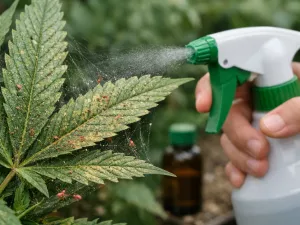
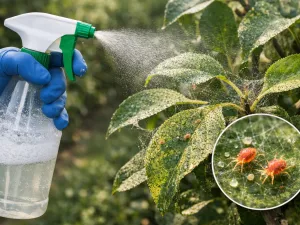
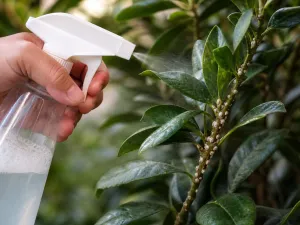
Spider mites usually feed underneath leaves, so spraying only the top surface gives poor results. Aim for a fine, even coating rather than runoff. The goal is to wet the feeding zones without drenching the plant so heavily that solution pools in the crown or potting mix.
- Target undersides first: this is where most mites and eggs are found.
- Work from lower leaves upward: this helps avoid missing hidden colonies.
- Coat stems and leaf joints: mites often shelter there when populations build.
- Keep airflow moving: a fan indoors or natural ventilation outdoors helps leaves dry evenly.
For small houseplants, it often helps to place the pot in a sink, shower, or outside on a mild day and rotate the plant as you spray. For larger shrubs or vegetable crops, spray systematically from one side to the other so you do not skip inner foliage.
Editor’s note: A common mistake is spraying until leaves drip. Heavy runoff wastes product and can increase the chance of leaf spotting without improving mite control.
Limitations of neem oil treatment

Neem oil can be useful, but it is not a complete answer in every situation. It performs best as part of an early, repeated control plan rather than as a rescue treatment for plants already in serious decline. If the infestation is advanced, the plant may need washing, pruning, environmental correction, or a different miticide approach to recover.
Another limitation is coverage. Mites hide in folded leaves, dense canopies, and fine webbing, and neem only works where it reaches. On large shrubs, conifers, or tightly packed indoor collections, getting full contact can be difficult. Even a good spray can leave enough survivors to restart the infestation quickly.
Situations where neem may underperform
Certain growing conditions make control harder. Warm rooms, low humidity, and stressed plants all favor mite reproduction. In those settings, neem may slow the outbreak without fully stopping it unless the underlying conditions change too.
- Heavy webbing: acts like a barrier and reduces spray contact.
- Very hot weather: limits safe spray timing and increases plant stress.
- Sensitive foliage: some plants cannot tolerate repeated oil applications.
- Large infestations across many plants: treatment becomes labor-intensive and easy to apply unevenly.
What neem does not fix
It will not repair stippled or bronzed leaves, and it will not solve the reasons mites became a problem in the first place. Poor watering habits, dry indoor air, overcrowded plants, and weak airflow all make reinfestation more likely. If those issues remain unchanged, control tends to be temporary.
Neem also should not be treated as harmless in every context. Beneficial insects can be affected if they are directly sprayed, and flowering plants should be treated carefully, ideally when pollinators are not active. That is one reason evening application is often preferred outdoors.
How often to use neem oil for control

Frequency should match the mite life cycle and the severity of the outbreak. Because eggs often survive the first treatment, follow-up sprays are usually needed to catch newly hatched mites before they mature and reproduce. For most home gardeners, a repeat interval of every 5 to 7 days is a practical starting point for active infestations, provided the product label allows it and the plant is tolerating treatment well.
Once numbers drop, the schedule can usually be reduced. Continuing too aggressively for too long may stress sensitive plants, especially indoors where leaves dry more slowly and residue can build up.
Suggested rhythm by infestation level
The right schedule depends on what you see on the plant, not just the calendar. Inspect between treatments so you can adjust rather than spraying automatically.
| Infestation level | Typical neem schedule | What to watch for |
|---|---|---|
| Very light, first signs only | One application, then recheck in 5 to 7 days | New stippling, mites on leaf undersides, isolated webbing |
| Light to moderate | Every 5 to 7 days for 2 to 3 rounds | Declining mite activity and cleaner new growth |
| Heavy but salvageable | Use after rinsing or pruning, then repeat every 5 days if label permits | Whether webbing and moving mites are actually decreasing |
| Maintenance after control | Only as needed after careful inspection | Avoid unnecessary spraying on recovered plants |
When to stop or pause
If the plant shows leaf burn, curling, or greasy residue that does not clear, stop and reassess. It may need a gentler approach, better dilution, or a switch to washing and environmental correction instead of more oil. Likewise, if you have completed several well-applied sprays with no real reduction in mites, neem may not be the right primary tool for that case.
For edible crops, always check the product label for harvest intervals and crop-specific guidance. Different formulations vary, and herbs with tender foliage can be more sensitive than woody ornamentals.
Editor’s note: Keep a simple spray log with the date, product used, and what you observed 3 to 5 days later. It quickly shows whether the treatment is working or whether the problem is actually spreading from nearby plants.
Combining neem oil with other treatments
Neem often works best when paired with non-chemical control steps rather than used alone. Spider mites thrive when plants are dry, dusty, and crowded, so improving plant care can make each treatment more effective. The goal is to reduce mite pressure from several angles without overloading the plant with too many products at once.
Good combinations usually involve physical removal, environmental adjustment, and careful monitoring. This integrated approach is especially useful for houseplants, greenhouse crops, cucumbers, beans, peppers, roses, and other plants that can host repeated outbreaks.
Helpful companions to neem treatment
Some methods support neem by lowering the number of mites before or between sprays. They do not replace treatment entirely, but they often improve results.
- Water rinsing: a firm but gentle spray of plain water can knock mites and webbing off leaves before neem is applied.
- Pruning: remove badly infested leaves or shoot tips to reduce population hotspots.
- Isolation: move affected houseplants away from healthy ones to limit spread.
- Humidity support: for suitable indoor plants, slightly higher humidity can make conditions less favorable for mites, though it should not come at the cost of stagnant air.
- Predatory mites: in greenhouse or serious indoor growing setups, biological control can be very effective when compatible products are used carefully.
Mixing and sequencing cautions
Do not combine neem casually with sulfur products, strong soaps, or other oils unless the label specifically says it is safe. Layering treatments too closely can injure foliage. If you are rotating products, leave enough time between applications for the plant to recover and for you to judge what is actually helping.
It is also wise to avoid spraying open flowers when possible. If pollinators visit the plant, treat in the evening and focus on foliage rather than blooms.
Preventing resistance and ineffective use
Spider mites are notorious for adapting to repeated control measures, especially when the same product is used over and over with weak coverage. While neem is not identical to a conventional single-action miticide, overreliance on any one method can still lead to disappointing results. More often than true resistance in the home garden, the real problem is incomplete application, poor timing, or treating only one plant while nearby hosts remain infested.
Prevention starts with observation. Check susceptible plants regularly, especially the undersides of leaves on dry, warm windowsills, greenhouse benches, and sun-exposed patio containers. Catching mites early reduces the need for repeated spraying and lowers the chance that a persistent population becomes difficult to control.
Practices that keep neem useful
Using neem well is less about spraying more and more about spraying smarter. A few disciplined habits make a noticeable difference.
- Inspect plants weekly during warm, dry periods.
- Treat early, before webbing becomes dense.
- Cover the whole plant, not just the visibly damaged leaves.
- Repeat at sensible intervals to catch hatchlings.
- Improve watering, airflow, spacing, and general plant vigor.
- Rotate or combine with non-oil methods when repeated outbreaks occur.
Signs the problem is your method, not the product
If mites keep returning to the same plant, look at the growing conditions and technique first. A plant standing next to a heating vent, allowed to dry hard between waterings, and sprayed only on the top of the leaves is likely to keep struggling no matter which product is chosen.
- Only tops of leaves were sprayed: most mites were missed.
- Applications were too far apart: eggs hatched between treatments.
- Nearby plants were untreated: mites simply moved back.
- Plant stress remained high: weak growth invited reinfestation.
Used thoughtfully, neem oil can be a practical part of spider mite control, especially when applied at the right time and backed by good plant care. The strongest results usually come from early action, careful coverage, and a willingness to adjust the plan if the plant or the infestation calls for something different.