Best Full Sun Plants for Bright Gardens

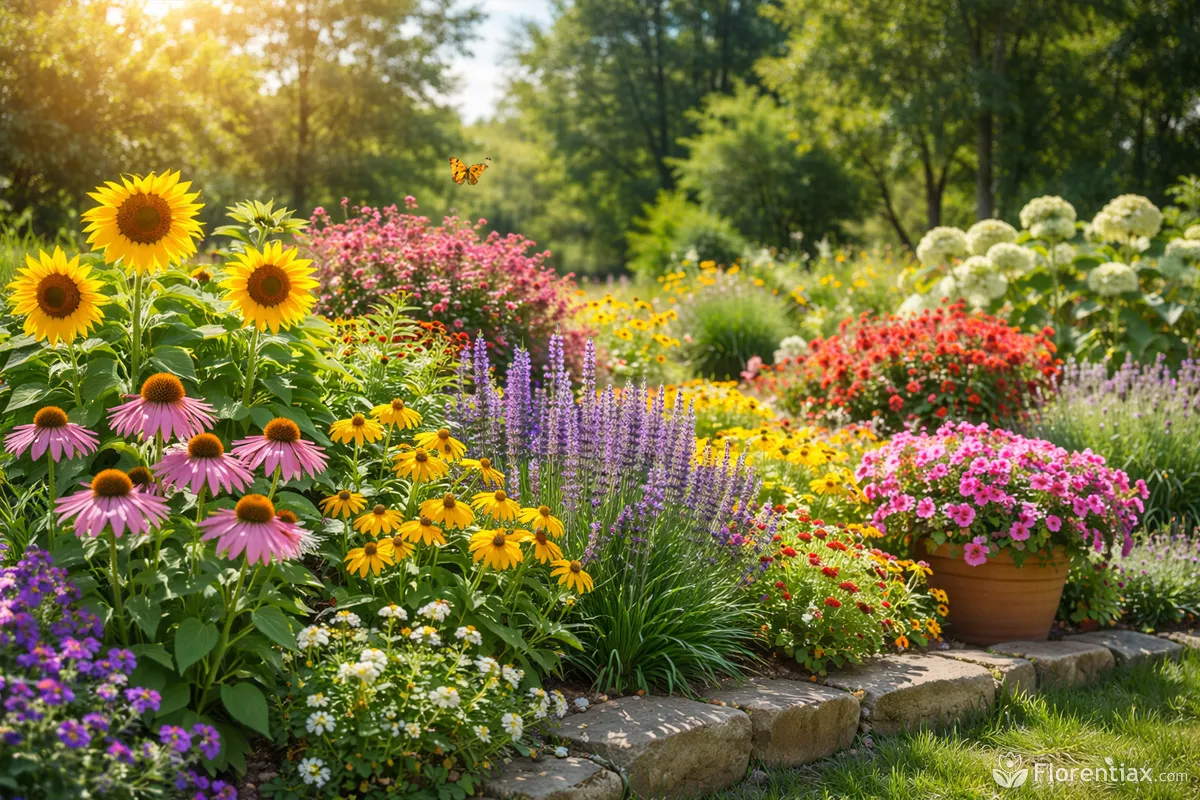 Choosing the right plants for full sun areas is essential for a healthy, vibrant garden. This guide highlights the best full sun plants that thrive in bright, open spaces and tolerate heat, direct sunlight, and dry conditions. You’ll find reliable flowers, shrubs, and perennials that maintain color and structure even in intense summer light.
Choosing the best full sun plants can transform a bright garden into a vibrant, low-maintenance landscape. The right flowers, perennials, and shrubs not only tolerate intense sunlight but also thrive in heat, open spaces, and well-drained soil conditions.
What “Full Sun” Really Means
In gardening terms, “full sun” does not simply mean a bright location. It specifically refers to areas that receive at least 6–8 hours of direct sunlight per day. Direct sunlight means unobstructed rays — not filtered through trees, fences, or buildings.
Plants labeled for full sun are adapted to handle:
- Intense midday light
- Higher soil temperatures
- Faster evaporation
- Increased water demand
South-facing gardens typically receive the most consistent full sun exposure in the Northern Hemisphere. In very hot climates, however, even full sun plants may benefit from slight afternoon protection when temperatures exceed 32°C (90°F).
Full Sun vs Partial Sun
Understanding the difference prevents planting mistakes:
- Full Sun — 6–8+ hours of direct sunlight.
- Partial Sun — 4–6 hours of direct light, often morning sun.
- Partial Shade — bright indirect light or filtered sun.
Many sun-loving plants develop weak stems, poor flowering, and pale leaves if grown in insufficient light. On the other hand, shade plants can burn quickly when exposed to strong direct sun.
Before planting, observe your garden area throughout the day. Track sun exposure in the morning, midday, and late afternoon to confirm it truly qualifies as full sun.
Best Flowering Plants for Full Sun
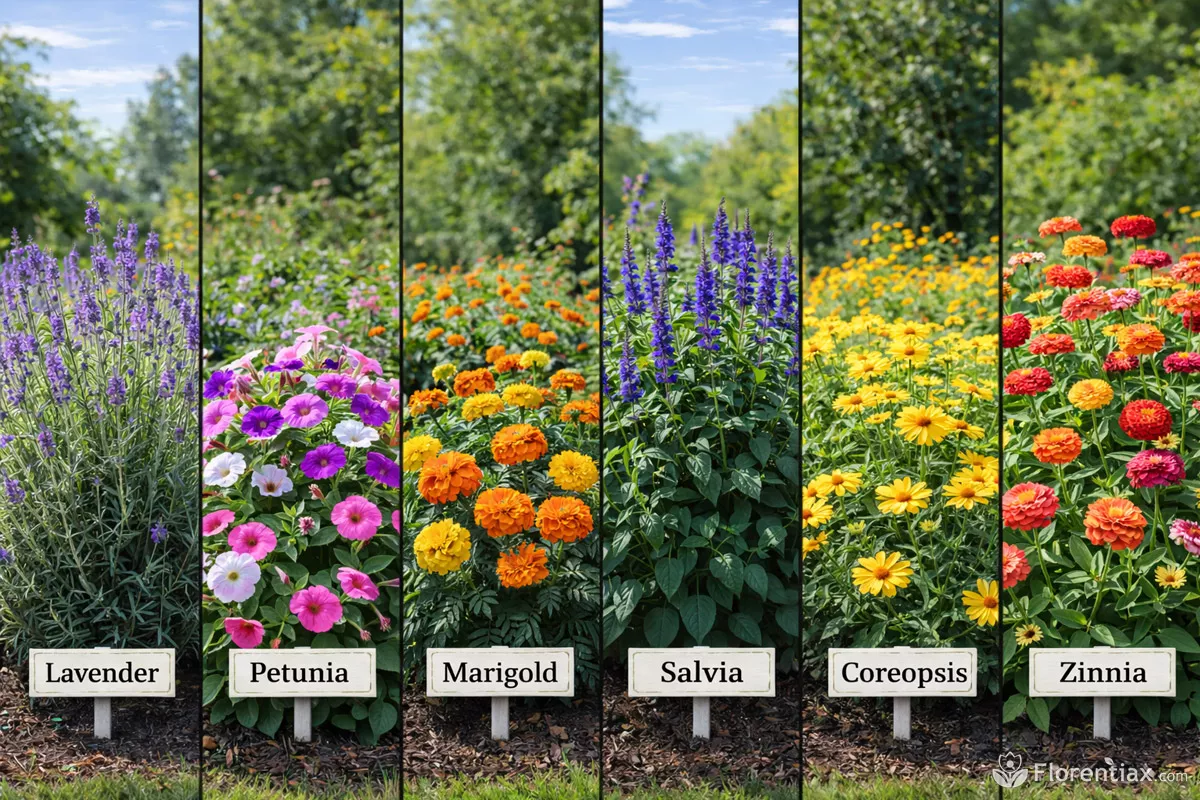
Flowering plants for full sun are often chosen for their vibrant blooms and long flowering season. The best varieties tolerate heat, resist wilting, and continue blooming even during dry summer periods.
Below are reliable flowering plants that consistently perform well in bright, open gardens and tolerate direct sun exposure throughout the day.
| Plant | Bloom Season | Mature Height | Heat Tolerance | Water Needs | Soil Preference | Maintenance Level | Best Climate |
|---|---|---|---|---|---|---|---|
| Lavender | Late Spring–Summer | 30–60 cm (12–24 in) | Very High | Low | Dry, well-drained, sandy | Low | Warm, Mediterranean |
| Petunia | Spring–Fall | 20–40 cm (8–16 in) | Moderate–High | Moderate | Rich, well-drained | Moderate | Temperate–Warm |
| Marigold | Late Spring–Fall | 25–50 cm (10–20 in) | High | Low–Moderate | Average garden soil | Very Low | Hot, dry summers |
| Salvia | Late Spring–Summer | 40–90 cm (16–35 in) | High | Low | Well-drained | Low | Warm–Hot regions |
| Coreopsis | Early Summer–Fall | 30–60 cm (12–24 in) | High | Low | Light, sandy soil | Low | Temperate climates |
| Zinnia | Summer–Fall | 30–100 cm (12–39 in) | High | Moderate | Well-drained | Low–Moderate | Hot summers |
| Gaillardia (Blanket Flower) | Summer–Fall | 30–60 cm (12–24 in) | Very High | Low | Poor to sandy soil | Low | Dry, sunny regions |
| Lantana | Spring–Fall | 30–120 cm (12–47 in) | Very High | Low | Well-drained | Low | Hot, tropical/subtropical |
| Geranium (Zonal) | Spring–Summer | 30–50 cm (12–20 in) | Moderate | Moderate | Well-drained, fertile | Moderate | Mild climates |
| Portulaca (Moss Rose) | Summer–Early Fall | 10–20 cm (4–8 in) | Extremely High | Very Low | Sandy, fast-draining | Very Low | Hot, dry areas |
How to Choose the Right Flower for Full Sun
When selecting flowering plants for bright gardens, consider:
- Bloom duration — continuous vs seasonal flowering.
- Maintenance level — some require regular deadheading.
- Soil type — sandy soil drains faster than clay.
- Climate zone — extreme heat may require drought-tolerant species.
Combining plants with different bloom times ensures color throughout the growing season. Mixing upright varieties with spreading ground cover types also creates visual depth in open garden beds.
Best Perennials for Sunny Gardens
Perennials are ideal for full sun gardens because they return year after year and often become more resilient over time. Many sun-loving perennials develop deep root systems that help them tolerate heat and temporary drought.
The key advantage of perennials in bright locations is structural stability. Unlike annuals, they provide consistent height, form, and seasonal rhythm.
Reliable Perennials for Full Sun
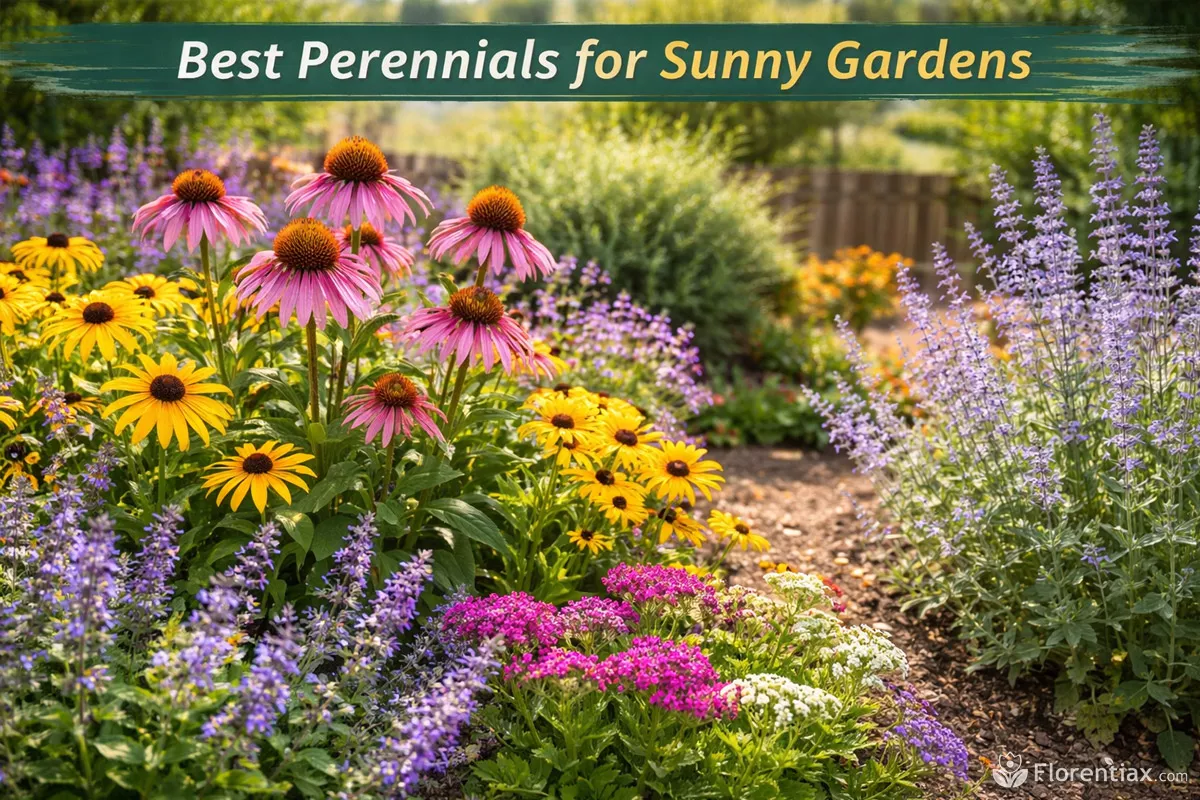
- Echinacea (Coneflower) — blooms mid-summer to fall; tolerates heat and dry soil; attracts pollinators.
- Black-Eyed Susan (Rudbeckia) — long bloom season and excellent heat resistance; bright yellow color for sunny beds.
- Russian Sage — thrives in dry, poor soil; silvery foliage reflects sunlight and reduces heat stress.
- Yarrow (Achillea) — drought tolerant and low maintenance; flat flower heads ideal for borders.
- Gaillardia (Blanket Flower) — intense red-orange color; performs strongly in hot summers.
- Shasta Daisy — classic white blooms; tolerates bright exposure and moderate drought.
- Daylily (Hemerocallis) — adaptable and reliable; handles strong sun once established.
- Catmint (Nepeta) — aromatic foliage; long flowering and strong heat tolerance.
- Blanket Phlox (Phlox subulata) — low-growing ground cover for sunny slopes.
- Agastache (Hyssop) — drought tolerant; attracts bees and butterflies.
- Penstemon — upright spikes; thrives in well-drained soil and open exposure.
- Verbena (Perennial types) — long blooming and tolerant of hot, dry conditions.
- Delosperma (Ice Plant) — succulent ground cover with high drought tolerance.
- Coreopsis — continuous summer color; thrives in poor soil conditions.
Most sun-loving perennials prefer well-draining soil. Overwatering is more harmful than short dry periods in full sun beds.
For best results:
- Water deeply but infrequently.
- Apply mulch 3–5 cm (1.2–2 in) thick to retain moisture.
- Divide mature plants every 2–4 years to maintain vigor.
Best Shrubs for Bright Open Areas
Shrubs provide height, structure, and long-term design stability in full sun gardens. Many flowering shrubs are highly adaptable to strong sunlight, provided they receive adequate drainage.
When selecting shrubs, consider mature size carefully. Overcrowding reduces airflow and increases stress during hot weather.
| Shrub | Mature Size | Sun Exposure | Water Needs | Best Use |
|---|---|---|---|---|
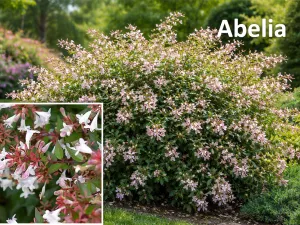
| Abelia | 1–1.8 m (3–6 ft) | Full Sun to Partial Sun | Low–Moderate | Flowering hedge, borders, accents |
| Hydrangea paniculata | 1.5–2.5 m (5–8 ft) | Full Sun to Partial Sun | Moderate | Accent shrub, borders |
| Spirea | 0.6–1.2 m (2–4 ft) | Full Sun | Low–Moderate | Low hedge, mass planting |
| Rose (Shrub Varieties) | 1–1.8 m (3–6 ft) | Full Sun | Moderate | Feature planting, mixed borders |
| Butterfly Bush (Buddleja) | 1.5–3 m (5–10 ft) | Full Sun | Low–Moderate | Pollinator garden, screening |
| Weigela | 1–2 m (3–6.5 ft) | Full Sun | Moderate | Flowering borders, accents |
| Potentilla (Cinquefoil) | 0.6–1 m (2–3.3 ft) | Full Sun | Low | Low hedge, dry sunny spots |
| Crape Myrtle (warm climates) | 2–6 m (6–20 ft) | Full Sun | Low–Moderate | Feature shrub/tree, summer color |
| Lavender (shrubby types) | 0.4–0.8 m (1.3–2.6 ft) | Full Sun | Low | Edging, fragrant borders |
| Juniper (low to medium shrubs) | 0.5–2 m (1.6–6.5 ft) | Full Sun | Very Low | Evergreen structure, slopes |
| Boxwood | 0.8–2 m (2.6–6.5 ft) | Full Sun to Partial Sun | Moderate | Formal hedge, structure planting |
| Hibiscus (Rose of Sharon) | 2–3.5 m (6–11.5 ft) | Full Sun | Moderate | Late-summer blooms, screening |
| Oleander (warm climates) | 2–4 m (6–13 ft) | Full Sun | Low | Large open landscapes, hedges |
How to Choose the Right Shrub for Full Sun
Choosing the right shrub for a bright, open garden depends on purpose, space, and maintenance expectations. Sun exposure alone is not enough — mature size and soil conditions matter just as much.
1. Define the purpose first
- Hedge or privacy screen — choose dense growers like Abelia, Boxwood, or Oleander.
- Accent or focal point — consider Crape Myrtle, Hibiscus, or Hydrangea paniculata.
- Pollinator-friendly garden — Butterfly Bush, Lavender, and Abelia attract bees and butterflies.
- Low-maintenance border — Potentilla, Spirea, or Juniper are reliable choices.
2. Plan for mature size, not nursery size
Many shrubs double or triple in size within 2–4 years. Always space plants according to mature width to avoid overcrowding and airflow issues.
3. Consider soil drainage
Full sun increases evaporation, but poorly drained soil can still cause root stress. Most sun-loving shrubs prefer well-drained soil. If your soil is heavy clay, amend it before planting.
4. Think long-term structure
Evergreen shrubs such as Juniper or Boxwood provide year-round structure, while flowering shrubs like Abelia or Hibiscus deliver seasonal color. Combining both creates visual balance throughout the year.
Practical tip: In very hot climates, apply a 5–7 cm (2–3 in) mulch layer around shrubs to stabilize soil temperature and reduce moisture loss.
Tips for Shrubs in Full Sun
- Plant in well-draining soil to prevent root stress.
- Water deeply during the first growing season to establish roots.
- Prune after flowering to maintain shape and airflow.
- Mulch to reduce soil temperature fluctuations.
Established shrubs are generally more drought tolerant than newly planted ones. Proper site preparation during planting significantly improves long-term performance in bright, open gardens.
Heat-Tolerant and Drought-Resistant Plants
In very bright and open gardens, heat buildup becomes a serious factor. Soil temperatures in direct sun can exceed 40°C (104°F) during peak summer. Plants chosen for these conditions must tolerate both intense sunlight and reduced moisture.
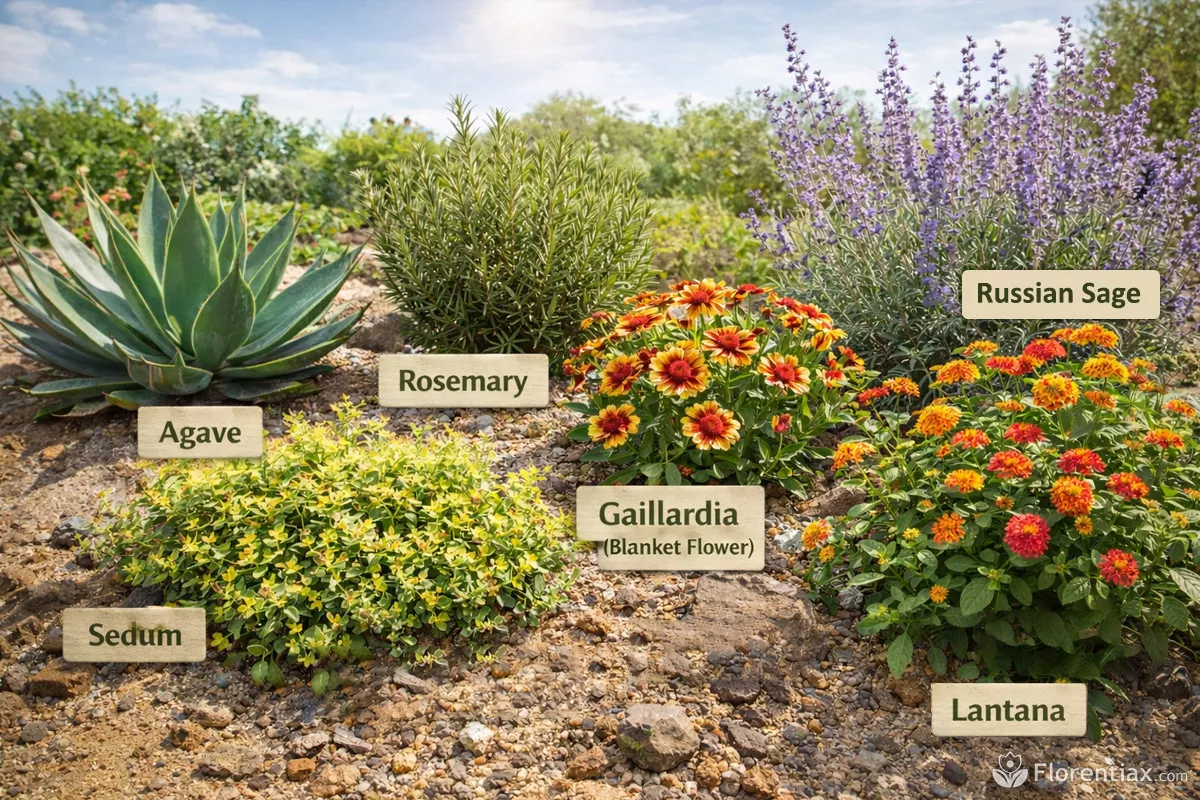
Drought-resistant plants typically have adaptive features such as:
- Deep or extensive root systems
- Silver or gray foliage that reflects sunlight
- Small or narrow leaves that reduce evaporation
- Thick, waxy leaf surfaces
These plants are ideal for low-maintenance landscapes and hot climates where water conservation and heat tolerance are essential.
| Plant | Drought Tolerance | Soil Preference | Maintenance Level | Best Climate |
|---|---|---|---|---|
| Agave | Very High | Sandy, fast-draining | Very Low | Hot, arid regions |
| Sedum (Stonecrop) | High | Rocky, well-drained | Low | Temperate to warm |
| Rosemary | High | Light, well-drained | Low | Mediterranean climates |
| Gaillardia (Blanket Flower) | High | Average to sandy | Low | Warm summers |
| Lantana | Very High | Well-drained | Low | Hot, tropical/subtropical |
| Lavender | High | Dry, sandy | Low | Warm, dry climates |
| Russian Sage | High | Well-drained, poor soil | Low | Hot, dry summers |
| Yarrow (Achillea) | High | Light, sandy | Very Low | Temperate to warm |
| Portulaca (Moss Rose) | Very High | Sandy, fast-draining | Very Low | Hot, dry climates |
| Echinacea (Coneflower) | Moderate–High | Well-drained | Low | Temperate regions |
| Coreopsis | High | Average to sandy | Low | Warm climates |
| Verbena (Perennial) | High | Well-drained | Low | Hot, sunny regions |
| Ice Plant (Delosperma) | Very High | Rocky, sandy | Very Low | Dry, sunny areas |
| Oleander (warm climates) | Very High | Well-drained | Low | Subtropical climates |
Even drought-tolerant plants require regular watering during their first growing season to establish deep roots. After establishment, watering frequency can often be reduced significantly.
Planting and Care Tips for Full Sun Plants
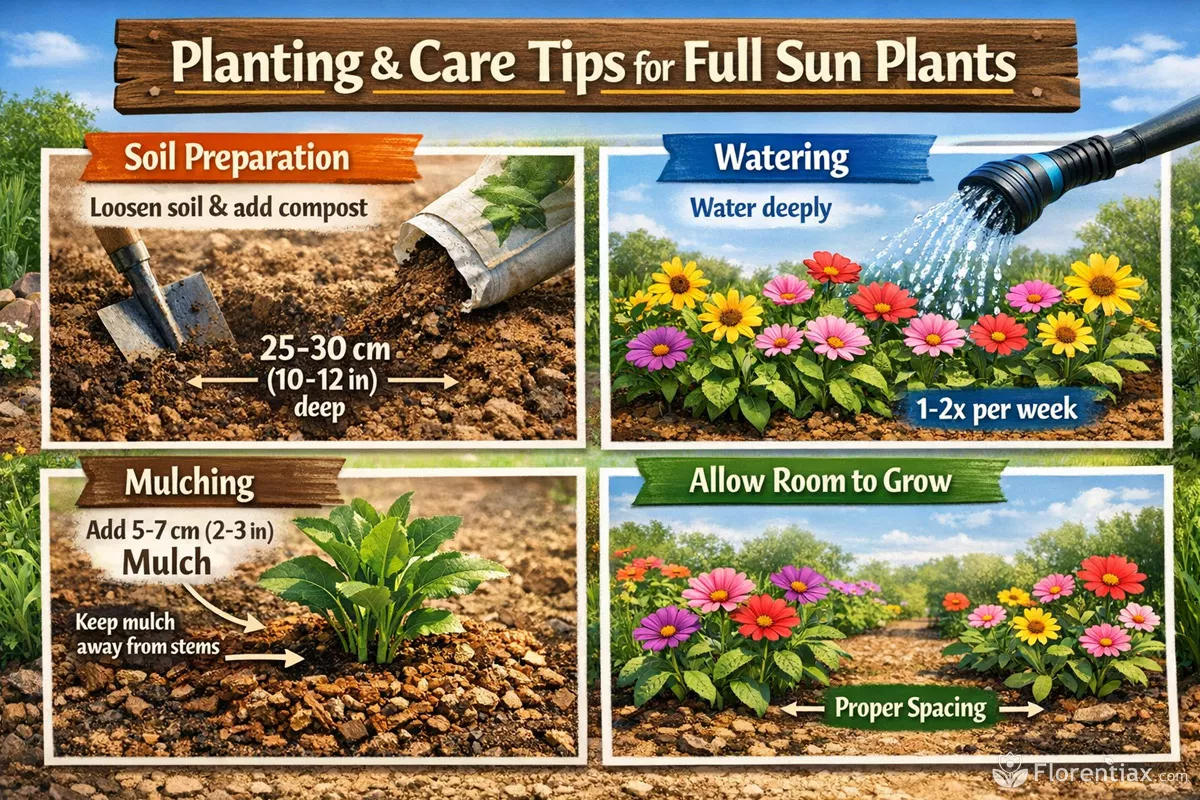
Proper planting technique is essential for long-term success in bright gardens. Full sun increases evaporation, so soil preparation and spacing become especially important.
Soil Preparation
- Loosen soil to at least 25–30 cm (10–12 in) depth before planting.
- Incorporate compost to improve structure.
- Ensure drainage is adequate to prevent root stress.
Watering Strategy
Newly planted specimens should be watered deeply once or twice per week depending on weather conditions. Mature plants may require less frequent but deeper watering.
Mulching
Apply a 5–7 cm (2–3 in) layer of organic mulch around plants, keeping it a few centimeters away from stems. Mulch helps regulate soil temperature and reduces moisture loss.
Spacing and Airflow
Provide adequate spacing based on mature plant size. Crowded plantings increase heat stress and reduce airflow, making plants more vulnerable to disease.
Popular Questions About Full Sun Plants
Full sun plants are often described as “easy,” but growing them successfully still requires proper planning. Below are the most common questions gardeners ask about plants for bright, open areas — with clear and practical answers.
1. What qualifies as full sun in gardening terms?
Full sun means at least 6–8 hours of direct sunlight per day. Bright shade or filtered light does not count. The sun must hit the plant directly without obstruction from trees or buildings.
2. Can full sun plants survive extreme heat?
Many can, but survival depends on soil moisture and drainage. In temperatures above 32°C (90°F), even sun-loving plants may need deeper watering and mulch to protect roots from overheating.
3. Do full sun plants need more water?
Yes, especially during establishment. Direct sunlight increases evaporation. However, watering should be deep and less frequent rather than shallow and daily, which encourages weak roots.
4. Why are my full sun plants wilting in the afternoon?
Temporary afternoon wilting can be normal during intense heat. If plants recover by evening, it is usually heat stress rather than drought. Persistent wilting in the morning indicates insufficient watering.
5. Can I grow full sun plants in containers?
Yes, but containers dry faster than ground soil. Pots may require watering every 1–3 days during peak summer. Use well-draining soil and avoid dark containers that overheat roots.
6. What soil is best for full sun gardens?
Well-draining soil is essential. Heavy clay retains too much water and can overheat. Adding compost improves structure, while sand or perlite improves drainage in dense soils.
7. Are full sun plants always drought tolerant?
No. Some sun-loving plants still require regular moisture. Drought tolerance depends on species. Always check plant-specific water needs rather than assuming sun equals dry tolerance.
8. How do I prevent leaf burn in strong sun?
Leaf scorch often happens when plants are suddenly moved from shade to full sun. Gradually acclimate plants over 7–10 days to prevent shock. Ensure consistent watering during heat waves.
9. Do full sun plants need fertilizer?
Most benefit from balanced feeding during the growing season. However, overfertilizing can cause rapid soft growth that struggles in high heat. Follow label instructions carefully.
10. How far apart should full sun plants be spaced?
Spacing should match mature size, not nursery size. Crowding reduces airflow and increases heat stress. Always allow room for natural growth expansion.
11. Can shade plants adapt to full sun?
Most shade plants will struggle or burn in direct sunlight. Some can tolerate partial sun, but true full sun exposure typically causes leaf scorch and dehydration.
12. What is the biggest mistake when planting in full sun?
The most common mistake is underestimating soil preparation. Poor drainage, compacted soil, and inadequate watering during the first season cause more failures than sunlight itself.
Final tip: Choose plants that match your climate zone and soil type, not just sun exposure. Full sun success depends on the complete growing environment.