Yellow Leaves on Plants – Causes and Practical Solutions

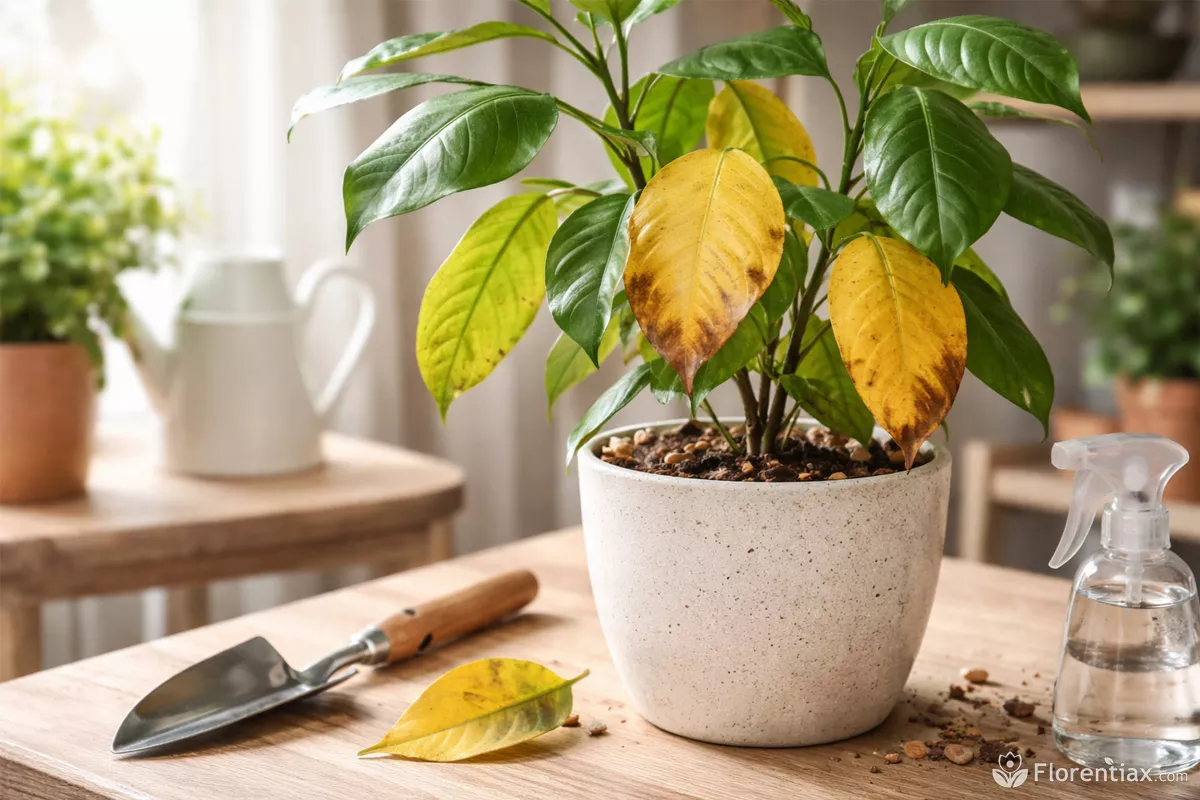 Yellow leaves on plants are often the first sign that something is wrong. This article explains the most common causes — from overwatering and nutrient deficiency to poor lighting and root stress. You’ll learn how to diagnose the problem correctly and apply practical solutions to restore healthy growth without damaging the plant further.
Why Plant Leaves Turn Yellow
Yellow leaves on plants are not a disease by themselves — they are a signal. In most cases, yellowing (chlorosis) happens because the plant cannot produce enough chlorophyll. This can be triggered by watering errors, root stress, nutrient imbalance, lighting problems, or natural aging.
It is important to understand that where and how the leaf turns yellow matters more than the color itself. Lower leaves turning pale slowly is very different from bright yellow new growth or yellowing between veins.
Before taking action, ask three basic questions:
- Which leaves are affected — old or new?
- Is the soil wet, dry, or compacted?
- Has anything recently changed (light, temperature, repotting, fertilizing)?
Correct diagnosis prevents unnecessary treatments. Adding fertilizer to an overwatered plant or watering a plant suffering from root rot will only make the problem worse.
Overwatering and Root Stress
Overwatering is the most common cause of yellow leaves in indoor plants. When soil stays wet for too long, oxygen levels drop in the root zone. Roots begin to suffocate within 48–72 hours of constant saturation.
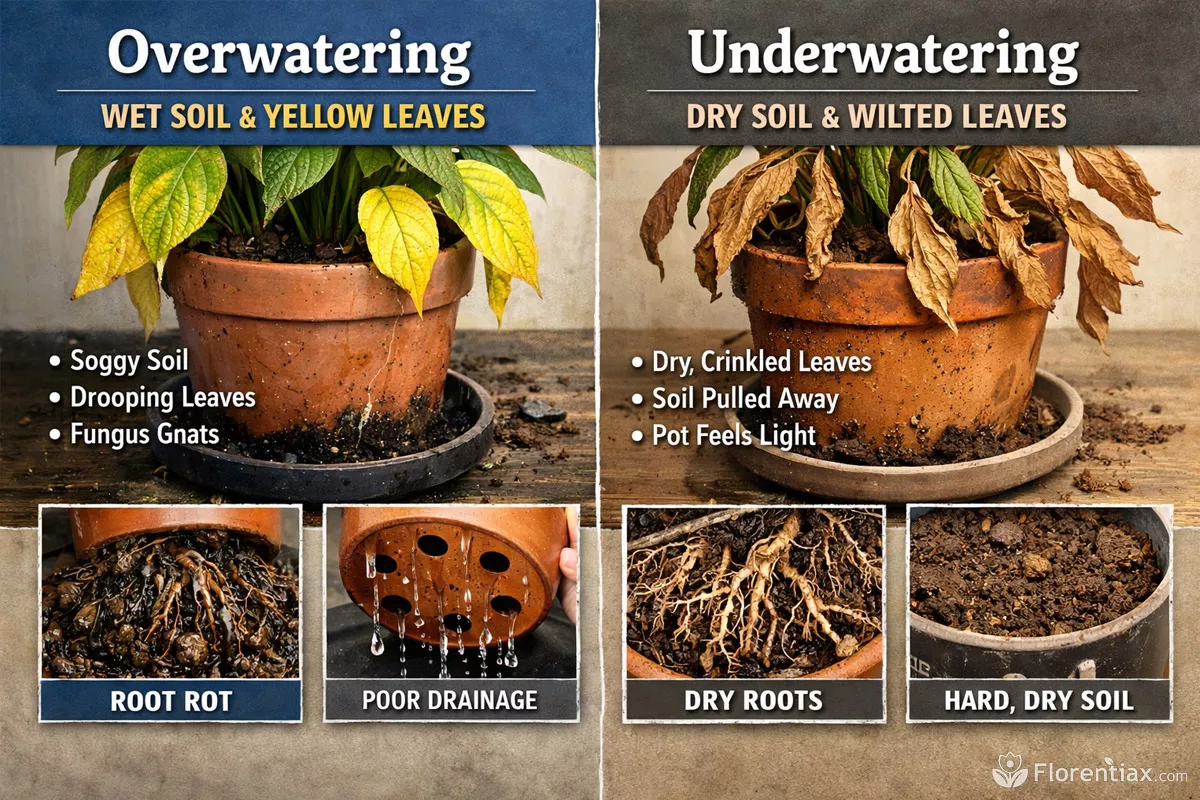
As roots lose function, they cannot absorb nutrients efficiently. The plant responds by turning leaves yellow, often starting from the lower leaves.
One of the most common hidden causes is an oversized container. If you recently repotted and the soil stays wet for days, use our safe next pot size calculator to choose the correct pot diameter and reduce overwatering risk.
How overwatering causes yellow leaves
- Soil remains wet for more than 5–7 days
- Lower leaves turn pale yellow first
- Growth slows noticeably
- Fungus gnats may appear
| Symptom Pattern | Likely Cause | What to Check | Immediate Action |
|---|---|---|---|
| Lower leaves turning soft yellow | Chronic overwatering | Soil moisture below 5 cm (2 in) | Allow soil to dry before next watering |
| Yellow leaves + drooping | Root oxygen deprivation | Drainage holes and compacted soil | Improve drainage, reduce frequency |
| Yellowing with brown edges | Early root rot | Smell soil for sour odor | Repot in well-draining mix |
| Multiple leaves yellowing quickly | Severe root damage | Inspect roots (brown, mushy tissue) | Trim damaged roots and repot |
Critical note: Wilting does not always mean the plant needs water. Overwatered plants often wilt because damaged roots cannot move water upward. If the soil feels wet deeper than 5–7 cm (2–2.8 in) and leaves are yellowing, do not water again. Let the soil dry partially and improve aeration if needed.
If you’re unsure how often to water after checking the soil, use this calculator: how often to water plants.
Underwatering and Dehydration
Underwatering occurs when a plant does not receive enough water to maintain normal cellular function and nutrient transport. The soil becomes dry throughout the root zone, causing roots to shrink and leaves to lose firmness. In contrast, overwatering happens when soil remains saturated for too long, limiting oxygen in the root system. While underwatered plants appear dry and recover quickly after watering, overwatered plants often look wilted despite moist soil because damaged roots cannot absorb water properly.
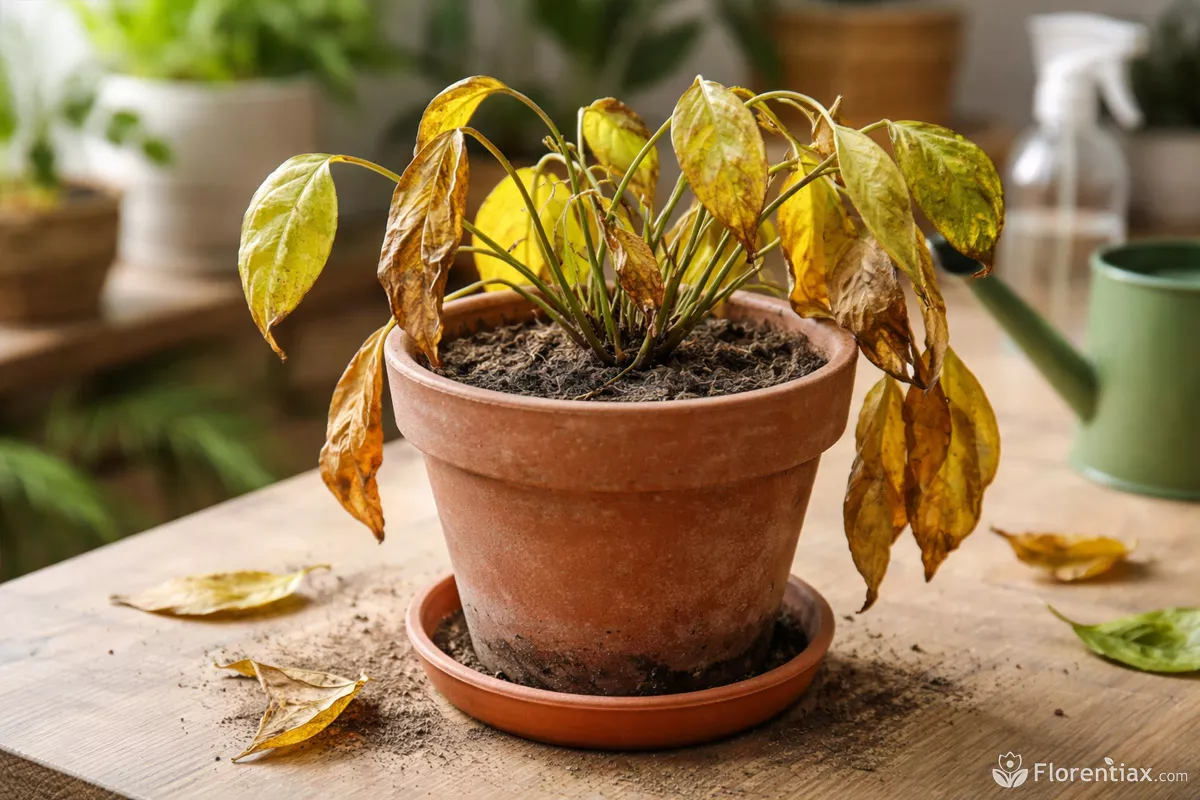
Underwatering can also cause yellow leaves, although the pattern differs from overwatering. When soil stays dry for too long, roots shrink and lose the ability to transport nutrients efficiently. As a result, leaves begin to yellow, dry out, and eventually drop.
Unlike root rot, dehydration usually causes leaves to feel thin, dry, or crispy rather than soft.
Common signs of underwatering
- Soil pulling away from the sides of the pot
- Pot feels unusually light
- Leaves yellow and become dry at the edges
- Wilting improves quickly after watering
In severe cases, the soil can become hydrophobic — water runs straight through without soaking in. This often happens in peat-heavy mixes left dry for extended periods. To avoid this issue and learn how to maintain even soil moisture for your indoor plants, see watering indoor plants for practical guidance on balanced watering techniques.
Nutrient Deficiencies and Soil Imbalance
If watering is correct but yellow leaves continue to appear, nutrient deficiency may be the cause. Chlorosis often develops when the plant lacks essential elements required for chlorophyll production.
The key difference from watering problems is pattern recognition. Nutrient deficiencies often affect either older or newer leaves in a specific way.
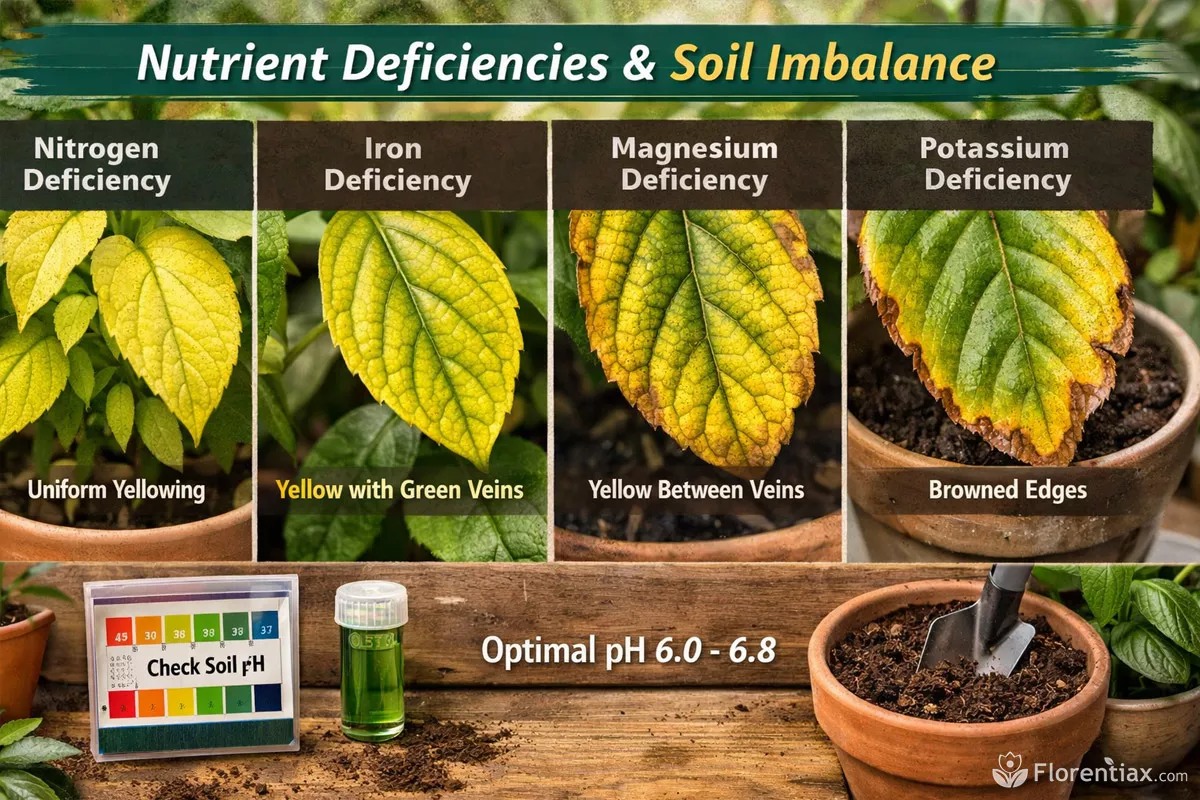
| Nutrient Deficiency | Yellowing Pattern | Where It Appears First | Recommended Fix |
|---|---|---|---|
| Nitrogen (N) | Uniform pale yellow color | Older lower leaves | Balanced fertilizer with higher nitrogen |
| Iron (Fe) | Yellow leaf with green veins | New growth | Apply chelated iron; check soil pH |
| Magnesium (Mg) | Yellowing between veins | Older leaves | Magnesium supplement or Epsom salt solution |
| Potassium (K) | Yellow edges with browning tips | Older leaves | Use potassium-rich fertilizer |
Lighting Problems and Leaf Yellowing
Improper lighting is another major cause of yellow leaves. Plants rely on light to produce energy through photosynthesis. When light levels are too low, the plant cannot sustain all of its leaves and begins shedding older ones.
Low Light Stress
In low-light environments, yellowing usually starts from the lower leaves. Growth becomes weak, stems stretch toward light, and leaf size may decrease.
- Yellowing begins at the base of the plant
- Slow growth or no new growth
- Leggy, stretched stems
Solution: Move the plant closer to a bright window with indirect light. Ideal distance for most tropical plants is within 1–2 meters (3–6 ft) from a bright window.
Excessive Direct Sunlight
Too much direct sun can bleach leaves, causing yellow patches that later turn brown and crispy. This often affects plants placed in direct afternoon sun behind glass.
- Yellow patches on upper leaves
- Leaf burn spots
- Dry, brittle texture
Solution: Provide bright but filtered light. Use sheer curtains or reposition the plant to avoid intense midday sun.
How to Fix Yellow Leaves Safely
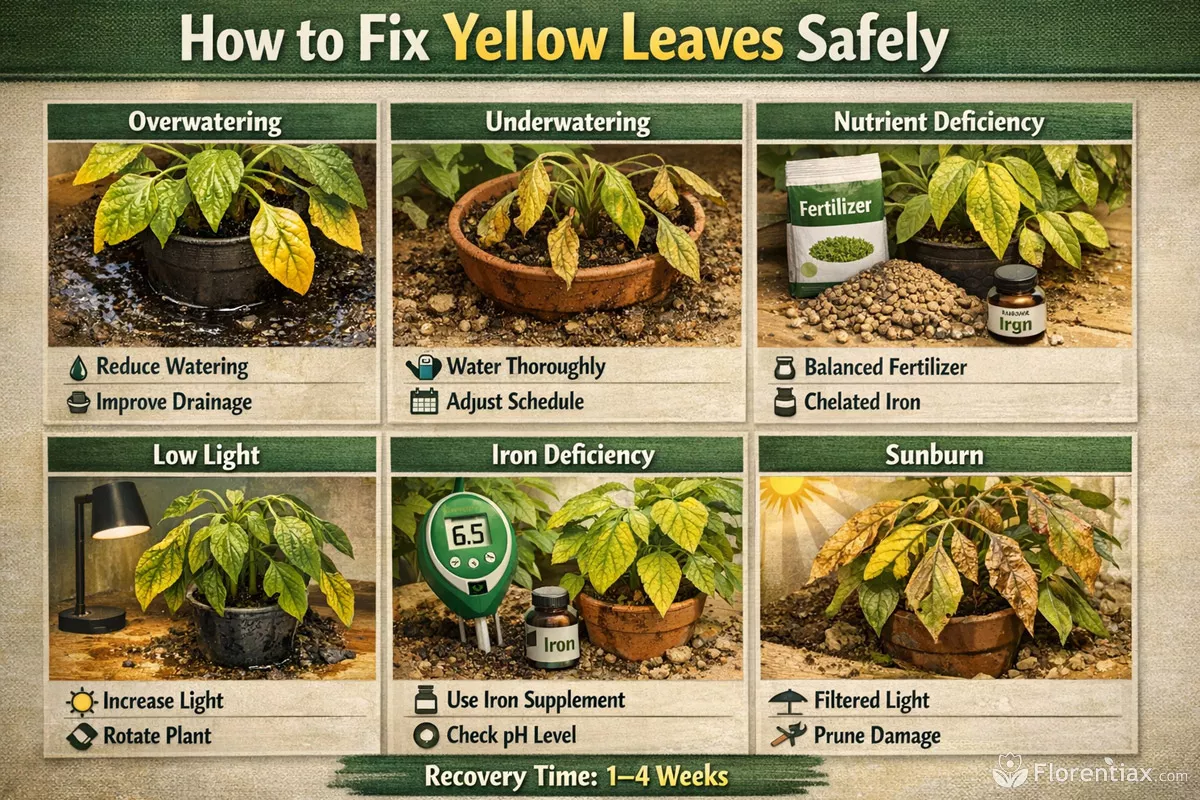
Correcting yellow leaves depends entirely on identifying the real cause. Acting without diagnosis often worsens the problem. The table below summarizes safe corrective actions based on the underlying issue.
| Cause | Primary Action | Additional Step | Expected Recovery Time |
|---|---|---|---|
| Overwatering | Reduce watering frequency | Improve drainage or repot if needed | 2–4 weeks |
| Underwatering | Rehydrate thoroughly | Adjust watering interval | 1–2 weeks |
| Nitrogen Deficiency | Apply balanced fertilizer | Follow label dosage carefully | 2–3 weeks |
| Iron Deficiency | Use chelated iron supplement | Check soil pH (6.0–6.8) | 1–3 weeks |
| Low Light | Increase light exposure | Rotate plant weekly | 2–4 weeks |
| Sunburn | Move to filtered light | Trim severely damaged leaves | 1–3 weeks |
Always change one variable at a time — watering, lighting, or fertilizing — and observe the plant for at least 10–14 days before making further adjustments.