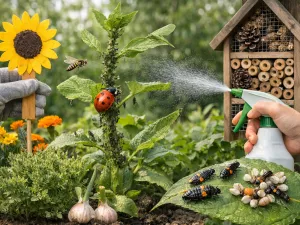
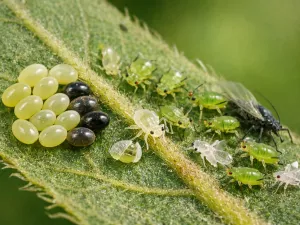
Aphids on Indoor Plants – Fast Control Methods

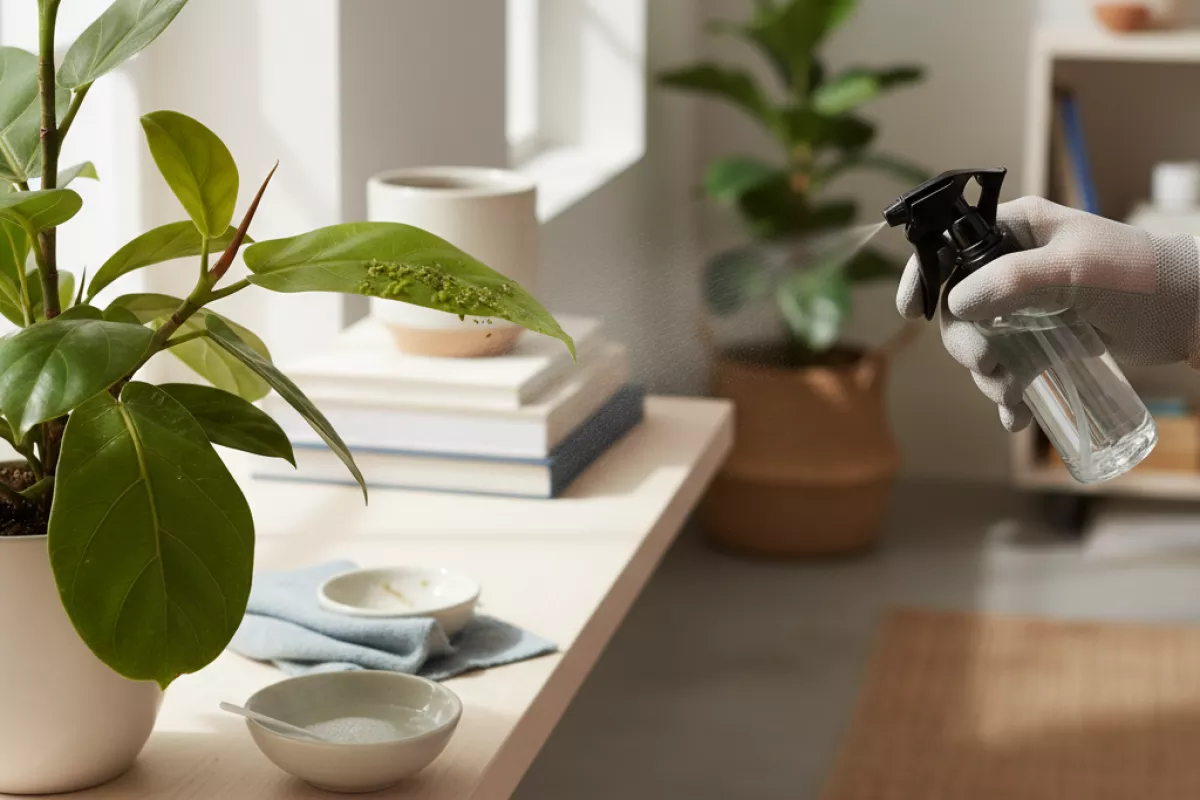 Learn why indoor aphid outbreaks spread so fast, then use a quick checklist to spot them early. It explains how to isolate affected plants immediately, choose rapid treatments and safe home insecticides, schedule follow-ups, and prevent repeat infestations with better indoor plant care.
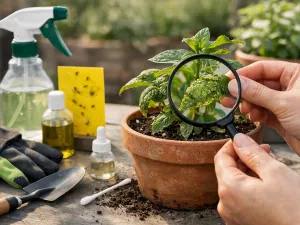
If tiny sap-sucking aphids are taking over your houseplants, act quickly to limit damage before leaves curl and new growth slows. Start by isolating the plant, rinsing stems and leaf undersides, and wiping clusters with a damp cloth. Follow with insecticidal soap or neem spray, repeating weekly as needed. Inspect new plants, check tender tips and buds, and keep monitoring to prevent reinfestation.
Why indoor outbreaks spread quickly
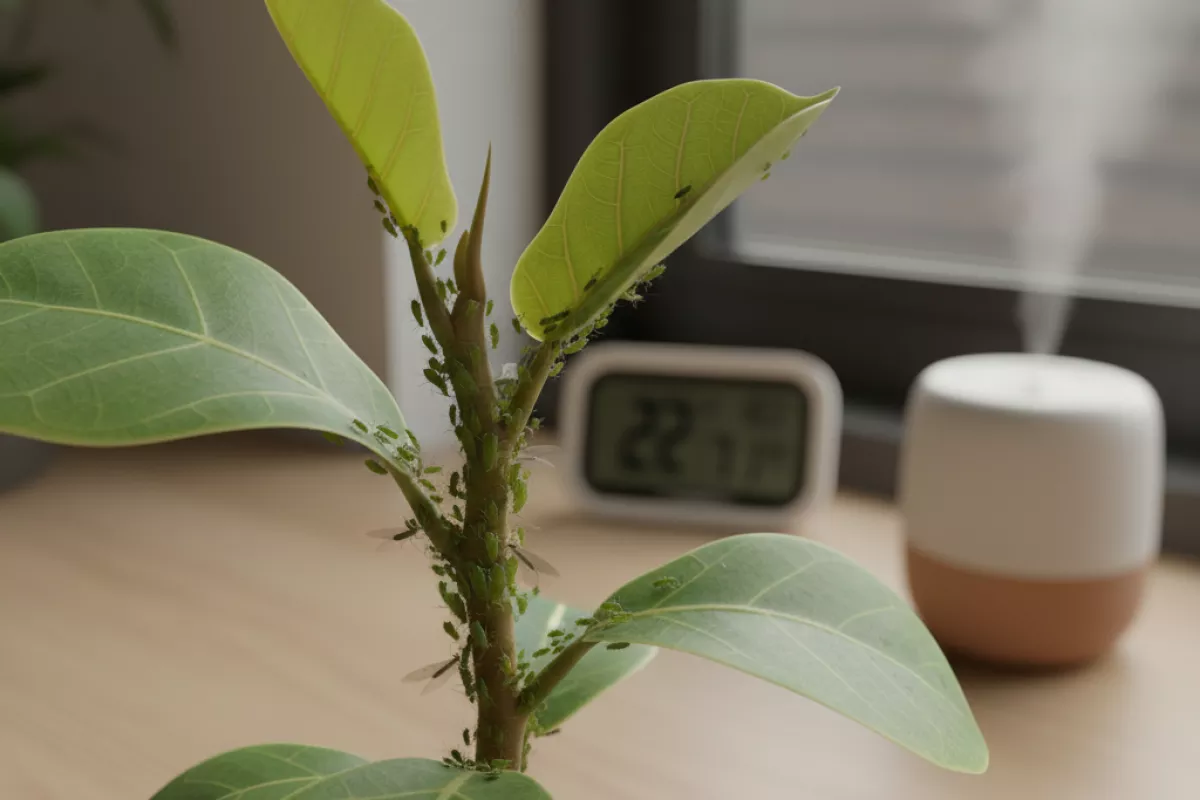
Indoors, aphid problems can snowball because the environment stays steady and the pests don’t face many natural checks. A few insects tucked into new growth can turn into a noticeable colony in days, especially on tender houseplant leaves and stems.
- Stable “greenhouse” conditions: Many homes sit around 18–24°C (64–75°F) for long stretches, and that consistency helps aphids keep reproducing instead of slowing down with cool nights or weather swings.
- No rain to knock them off: Outdoors, heavy rain and wind physically remove insects and honeydew. Inside, colonies stay put on the undersides of leaves and along soft stems unless you wash or wipe them away.
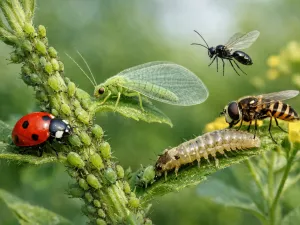
- Fewer natural enemies: Lady beetles, lacewings, hoverflies, and tiny parasitic wasps rarely patrol your living room. Without predators, populations can climb fast.
- New plants and cuttings act as “carriers”: Aphids often hitchhike in on nursery plants, bouquets, or propagated cuttings. Eggs and nymphs can hide in leaf folds, buds, and tight nodes where you don’t notice them at first.
- Soft, nitrogen-rich growth is easy food: Frequent fertilizing pushes lush new shoots that are easier to pierce and feed on. That tender growth is also where infestations usually start, so they expand right at the plant’s most vulnerable points.
- Plants are close together: Crowded windowsills and plant stands let aphids move from pot to pot by crawling, brushing against leaves, or being carried on your hands, tools, or watering can.
- Dry indoor air stresses plants: Low humidity (often 30–40% indoors) can weaken some houseplants, making them less resilient. Stressed plants tend to show damage sooner, and the colony becomes obvious only after it’s already established.
- Hidden hotspots delay detection: They cluster on the newest growth, flower buds, and the underside of leaves. By the time you notice sticky honeydew or curling tips, there may already be multiple generations present.
In practice, the “fast spread” is usually a mix of steady temperatures, close plant spacing, and delayed spotting. That’s why quick isolation of the affected plant and a thorough rinse or wipe-down can make such a big difference early on.
Fast detection checklist
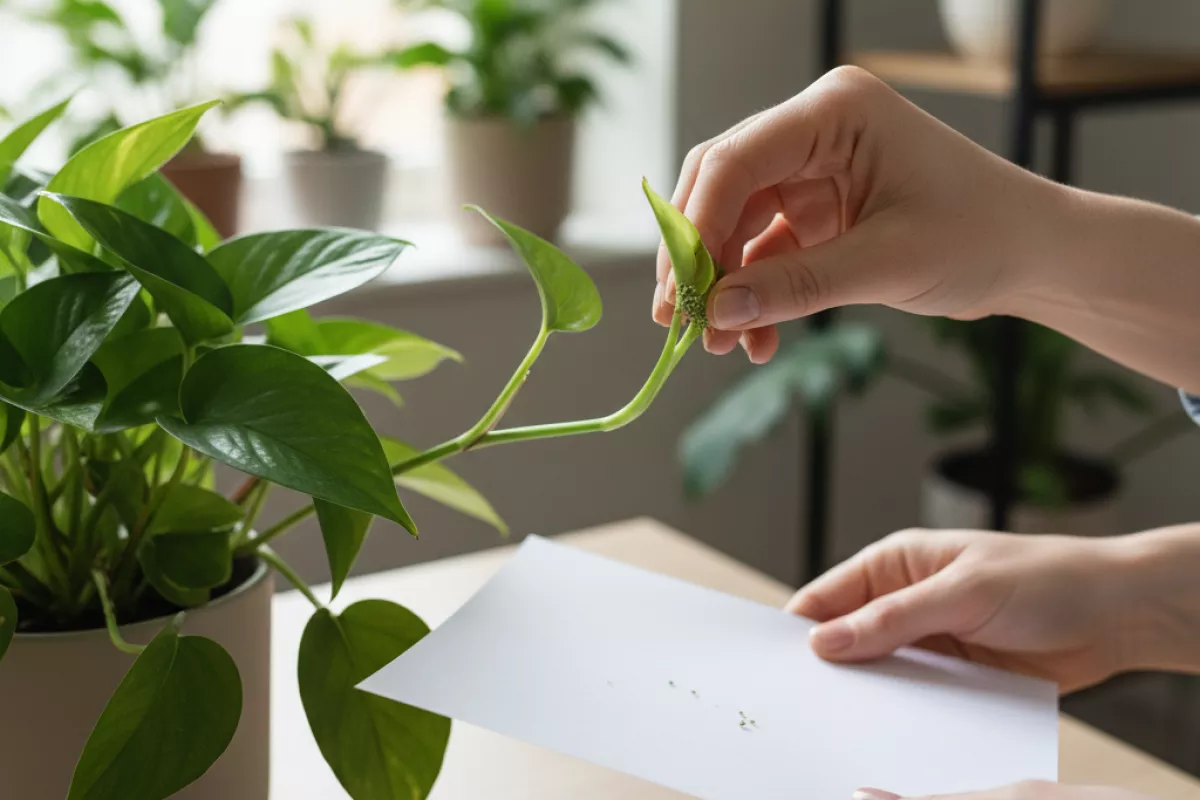
Spotting a small infestation early is mostly about knowing where to look and what “new” damage looks like. A quick scan a few times a week catches most problems before they spread to nearby houseplants.
| What to check | What you’re looking for (fast clues) | How to confirm in under 1 minute |
|---|---|---|
| New growth tips and buds | Clusters of tiny soft-bodied insects; curled or misshapen new leaves; stalled buds | Hold the tip over a white sheet and tap gently; moving specks are a red flag |
| Undersides of leaves | Small pale green, yellow, brown, or black insects; shed “skins” (white flakes) | Flip 3–5 leaves per plant and check along the midrib and veins |
| Leaf stems and nodes (where leaf meets stem) | Hidden groups near joints; sticky residue starting at nodes | Run a fingertip along the node; sticky feel suggests honeydew |
| Sticky surfaces below the plant | Honeydew droplets on pot rim, saucer, shelf, or nearby leaves | Wipe with a damp tissue; if it feels tacky, inspect the plant above immediately |
| Ant activity indoors | Ants “patrolling” stems or soil surface (they may farm sap-suckers for honeydew) | Follow the ant trail to the plant and check the newest growth first |
| Overall leaf look (especially newest leaves) | Yellow stippling, puckering, or curled edges; shiny patches from honeydew | Compare a new leaf to an older one; sudden distortion is more suspicious than slow aging |
- Use bright light: a phone flashlight held at a low angle makes insects and sticky residue easier to see.
- Check the “favorite spots” first: soft new shoots, flower spikes, and tender tips are hit earlier than tough mature leaves.
- Quarantine anything new: keep new plants separate for 7–14 days and inspect twice weekly before placing them with the rest.
- Do a quick rinse test when unsure: spray lukewarm water around 20–25°C (68–77°F) onto the tips and undersides; dislodged pests often become obvious on a white sink or tray.
Immediate isolation of affected plants
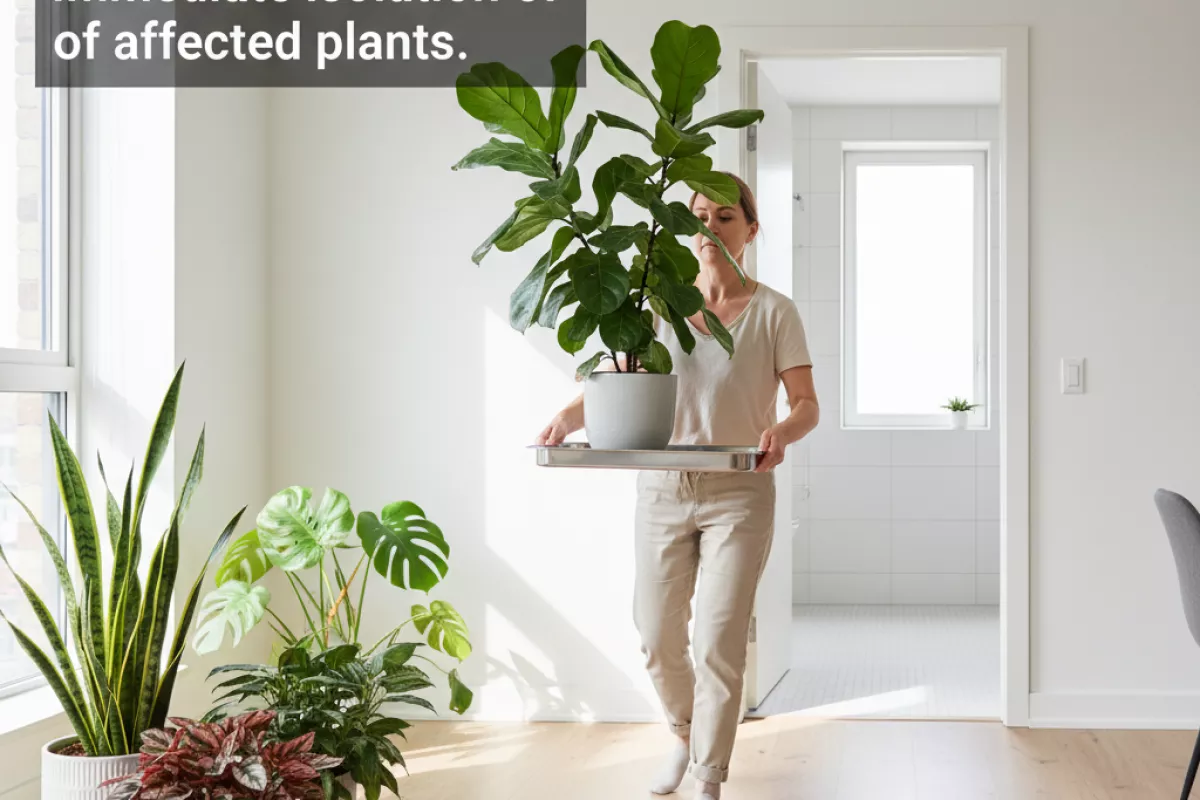
Separate any plant showing aphids from the rest right away so the insects don’t walk, fly, or get carried to nearby pots. A quick move buys you time: it reduces new infestations while you wash, prune, or treat the problem plant.
Pick a “quarantine spot” that’s easy to clean and away from drafts that could spread pests. A bright bathroom, laundry room, or a spare room works well. Aim for at least 1–2 m (3–6 ft) from other plants, and more if you can.
- Move carefully: Carry the pot on a tray or inside a plastic tub so dislodged aphids don’t drop onto floors, rugs, or other foliage.
- Check neighbors immediately: Inspect the plants that were closest first. Look under leaves, along stems, and on new growth where sap is tender.
- Remove obvious clusters: Pinch off heavily infested tips or buds and bag the cuttings before they touch anything else.
- Rinse before returning: If you shower the plant, keep it isolated until it’s dry and you’ve rechecked for survivors.
- Control the “ant factor”: If you see ants, address them too; they can protect aphids and help them spread between pots.
| What to do during quarantine | Why it helps |
|---|---|
| Keep the plant separate for 10–14 days (1.5–2 weeks) | Catches new hatchlings and prevents a second wave from reaching other plants |
| Inspect every 2–3 days | Finds small colonies early, before they multiply |
| Wipe nearby surfaces and the pot exterior | Removes honeydew and any stray insects that fell off during handling |
| Re-check the original “neighbor” plants for 2 weeks | Confirms the outbreak didn’t quietly spread before you separated the plant |
Don’t rush the return. Bring the plant back only after you’ve had several clean inspections in a row and no sticky honeydew, curled new leaves, or fresh clusters on stems. If you’re treating multiple plants, keep each one in its own spot or at least a few feet apart so you can track what’s improving and what isn’t.
Rapid treatment options
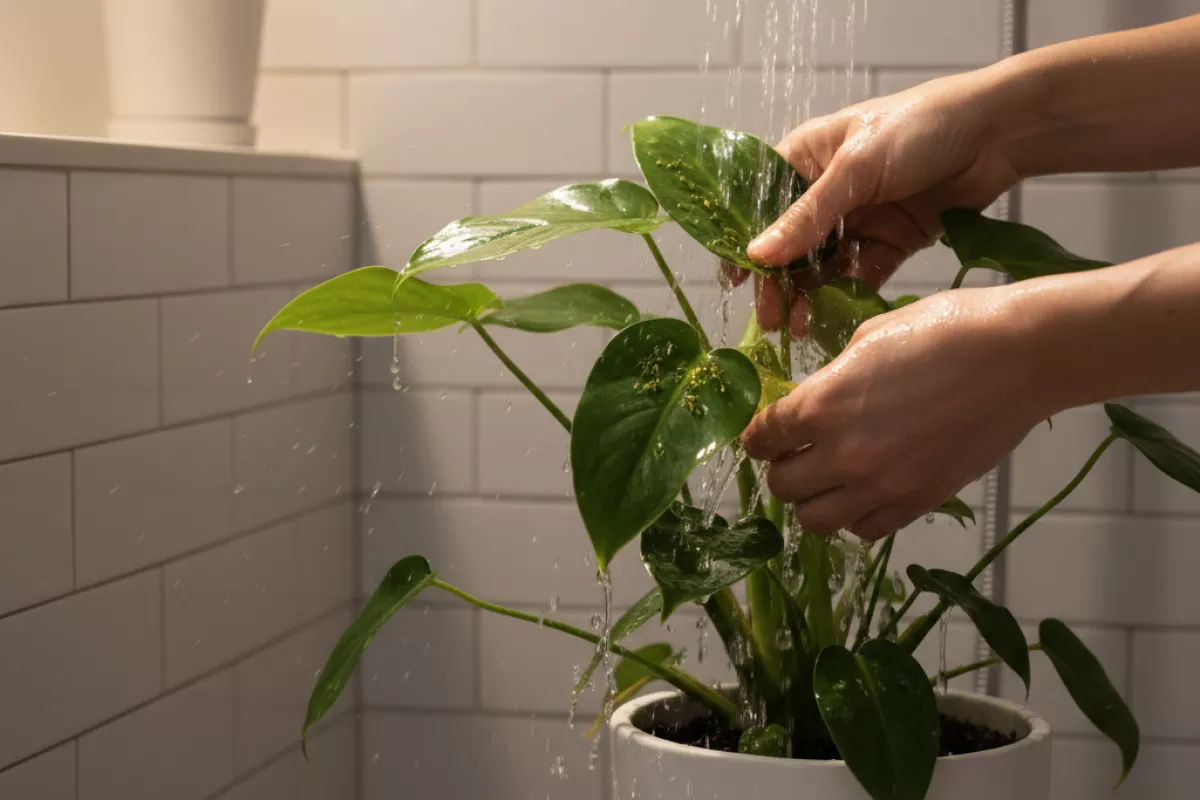
When you need to knock aphids back quickly, focus on methods that remove them on contact and break their feeding cycle. Start with the least disruptive approach, then step up if you still see clusters on new growth after a day or two.
- Isolate the plant immediately. Move it 1–2 m (3–6 ft) away from other houseplants to reduce spread, and check neighboring pots for sticky honeydew or curled tips.
- Rinse them off with a firm shower. Use lukewarm water and aim at stems and the undersides of leaves. A sink sprayer works well; for larger plants, a shower is fine. Repeat every 24–48 hours until you stop seeing live insects.
- Wipe or pinch off heavy clusters. For small infestations, physically removing colonies on tender tips is often faster than spraying. Use a damp cloth or cotton swab and discard what you remove.
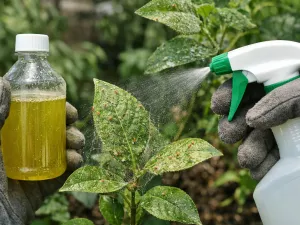
- Use insecticidal soap for contact kill. Spray to wet (not drip) both sides of leaves and all stems. Aphids hide in tight folds, so coverage matters more than the amount used. Reapply after 4–7 days to catch newly hatched nymphs.
- Try neem or horticultural oil if soap isn’t enough. Oils can smother pests but can also stress some indoor plants. Apply in the evening, keep the plant out of direct sun for 24 hours, and test on 1–2 leaves first.
- Use a 70% isopropyl alcohol spot treatment. Dab or lightly mist only the affected areas, then rinse after 10–15 minutes. Avoid saturating delicate foliage, and don’t use near open flames.
- Prune the worst growth. If the tips are packed with aphids, removing 5–10 cm (2–4 in) of infested stems can instantly reduce the population and make follow-up sprays more effective.
| Method | Best for | Speed | Notes / cautions |
|---|---|---|---|
| Water rinse | Light to moderate infestations | Immediate knockdown | Repeat every 24–48 hours; protect soil from washing out. |
| Wipe/pinch + prune | Visible clusters on tips and buds | Immediate | Fastest “reset”; follow with a spray to catch stragglers. |
| Insecticidal soap | Most indoor plants | Hours | Must hit the insects; reapply in 4–7 days. |
| Neem/horticultural oil | Stubborn cases, repeat flare-ups | Hours to 1 day | Test first; avoid hot sun and heat vents for 24 hours. |
| 70% isopropyl alcohol (spot) | Small areas, quick cleanup | Minutes | Rinse after 10–15 minutes; can burn sensitive leaves. |
If you still find live aphids after two treatment cycles, reassess the plant’s tender new growth (their favorite), check for ants (they protect sap-suckers), and switch to a different contact method rather than repeating the same one indefinitely.
Safe insecticides for home use
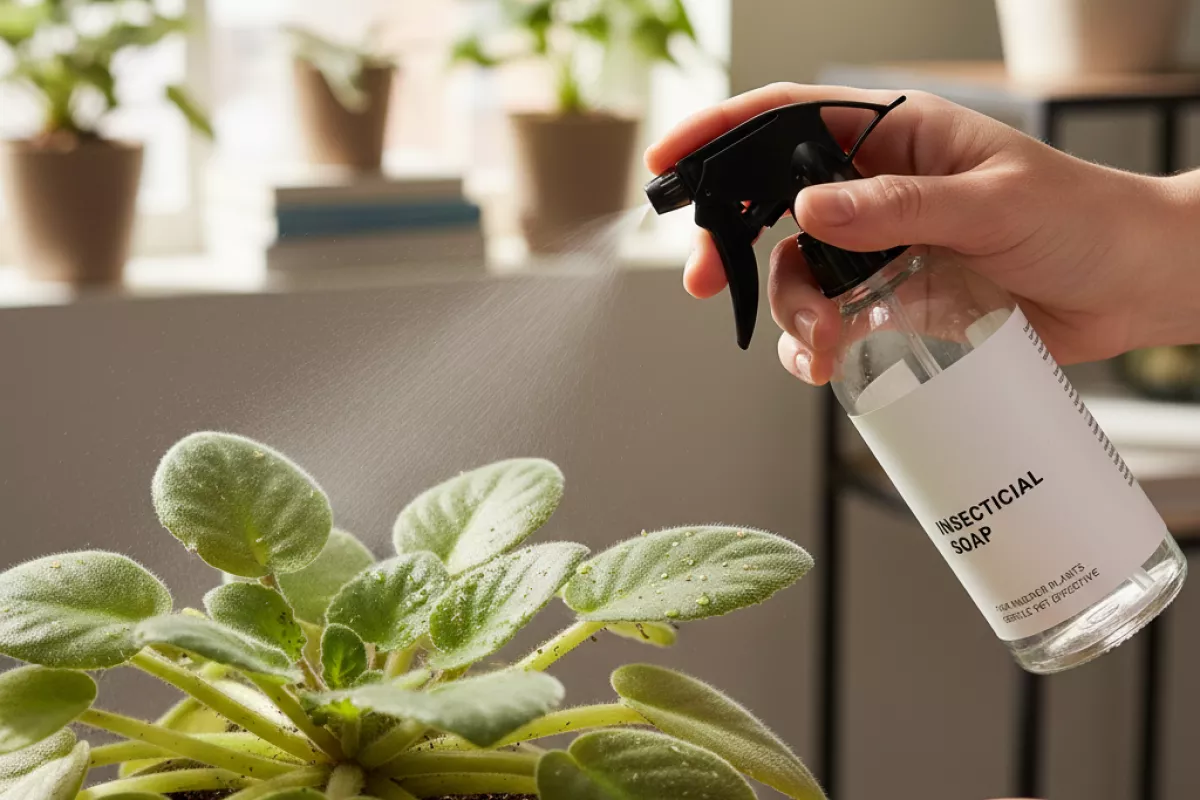
Start with the least toxic option that still works for your situation, and treat thoroughly rather than “strongly.” Most indoor aphid problems can be handled with contact sprays that break down quickly, as long as you hit the insects directly and repeat to catch new hatchlings.
| Option | How it works | How to use (typical) | Notes & cautions |
|---|---|---|---|
| Insecticidal soap (potassium salts of fatty acids) | Disrupts aphids’ outer coating on contact; no residual control | Spray to wet both sides of leaves and stems; repeat every 4–7 days | Works best on soft-bodied pests. Can spot or burn some plants (test 1–2 leaves first). Avoid applying in strong sun or on heat-stressed plants. |
| Neem oil / horticultural oil | Smothers on contact; neem may also reduce feeding and reproduction | Apply as a fine mist until evenly coated; repeat every 7 days | Oil can mark delicate foliage. Don’t use on very young seedlings or on plants sensitive to oils. Keep off fabrics and porous surfaces. |
| Ready-to-use pyrethrin (plant-derived) | Fast knockdown on contact; short-lived residue | Target aphids directly, including leaf undersides; repeat as label allows (often 5–7 days) | More irritating than soaps/oils for some people. Keep pets and children away until dry. Avoid spraying near aquariums; pyrethrins are toxic to fish. |
| Systemic insecticide (houseplant granules or drench) | Moves inside the plant so aphids ingest it while feeding | Apply to soil as directed; effects may take 3–7 days | Use only when repeated contact sprays fail. Don’t use on edible herbs/greens. Avoid on flowering plants visited by pollinators (even indoors, windows can attract them). |
- Apply at the right time: Treat in the evening or when the plant is out of direct sun to reduce leaf scorch and improve coverage.
- Cover the hiding spots: Aphids cluster on new growth, buds, and leaf undersides. If you only spray the top of leaves, you’ll miss most of them.
- Repeat on a schedule: Because eggs and hidden nymphs can escape the first round, plan 2–3 treatments over 10–21 days.
- Test first: On sensitive plants, spray a small area and wait 24 hours before treating the whole plant.
- Ventilation matters: Open a window or run a fan while spraying, and keep the plant isolated until foliage is dry.
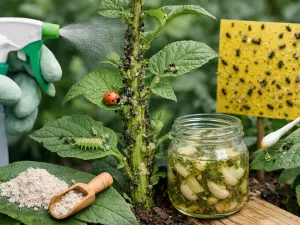
If you’re mixing your own solution, keep it simple and mild. A common approach is soap-and-water, but avoid dish detergents with degreasers, fragrances, or antibacterial additives; they can be harsher on leaves than true insecticidal soap. When in doubt, choose a labeled product and follow the directions exactly.
Follow-up treatments and timing
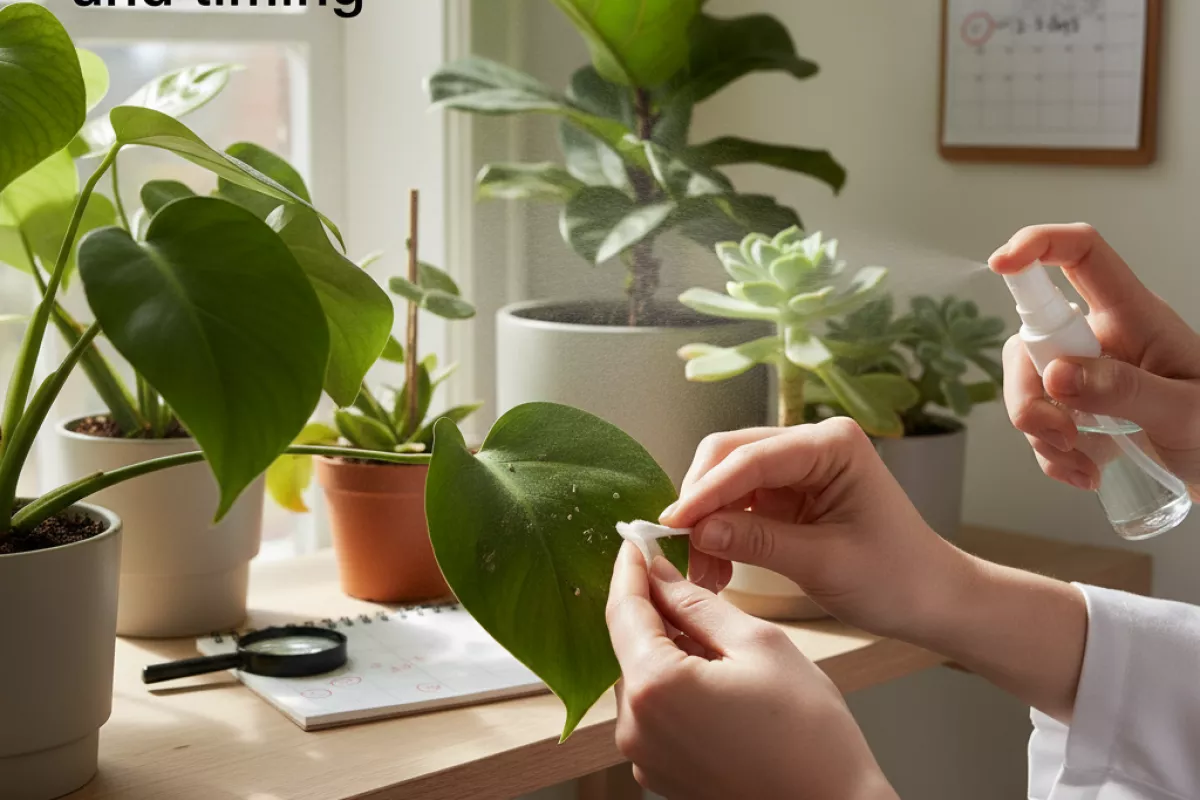
One spray rarely solves an aphid problem indoors, because you’re dealing with overlapping generations and hidden insects on new growth. Plan on repeating your control method on a schedule, and keep checking the plant between rounds so you can adjust before the population rebounds.
| Method | When to repeat | What to do between treatments | When to stop |
|---|---|---|---|
| Rinse + wipe (water, soft cloth/cotton swab) | Every 2–3 days for 1–2 weeks | Inspect new growth and leaf undersides; remove any clusters you see | No live aphids seen for 7–10 days and new leaves stay clean |
| Insecticidal soap | Every 4–7 days, 2–4 rounds | Check for leaf spotting; avoid treating stressed plants (very dry soil, heat, or recent repotting) | Two consecutive inspections (3–4 days apart) show no live insects |
| Neem/horticultural oil (light oil spray) | Every 7 days, 2–3 rounds | Keep plant out of harsh sun for 24 hours; monitor for tender-leaf sensitivity | Sticky residue and honeydew stop appearing; no new colonies on tips |
| Systemic houseplant insecticide (soil-applied) | Apply once; reassess after 10–14 days | Continue spot-removal/rinsing for visible aphids while the systemic takes effect | After 2 weeks, only occasional stragglers (if any) are found; then monitor weekly |
- Time your checks: Do quick inspections every 2–3 days during the first 2 weeks, then weekly for a month. Focus on the newest leaves, buds, and the underside of tender growth.
- Re-treat after watering or heavy rinsing: If you wash the plant thoroughly, you may remove residues from soap or oil. Reapply once foliage is dry, typically after a few hours, and only if the label allows it.
- Rotate gently if needed: If soap isn’t reducing numbers after two properly timed applications, switch to a different approach (for example, soap to oil, or add a systemic) rather than spraying the same product endlessly.
- Quarantine during the cycle: Keep the plant separated for at least 14 days. Aphids move easily on hands, sleeves, and nearby foliage.
- Watch for honeydew and ants: Sticky leaves or ants are a clue you still have active feeders. Clean surfaces with mild soapy water and re-check the plant the next day.
For indoor conditions, aim to treat when temperatures are moderate, around 18–24°C (65–75°F), and avoid spraying in strong direct sun to reduce leaf burn. If you’re using any spray, cover all surfaces until evenly wet but not dripping, and don’t forget stems and leaf joints where aphids like to hide.
Preventive indoor plant care
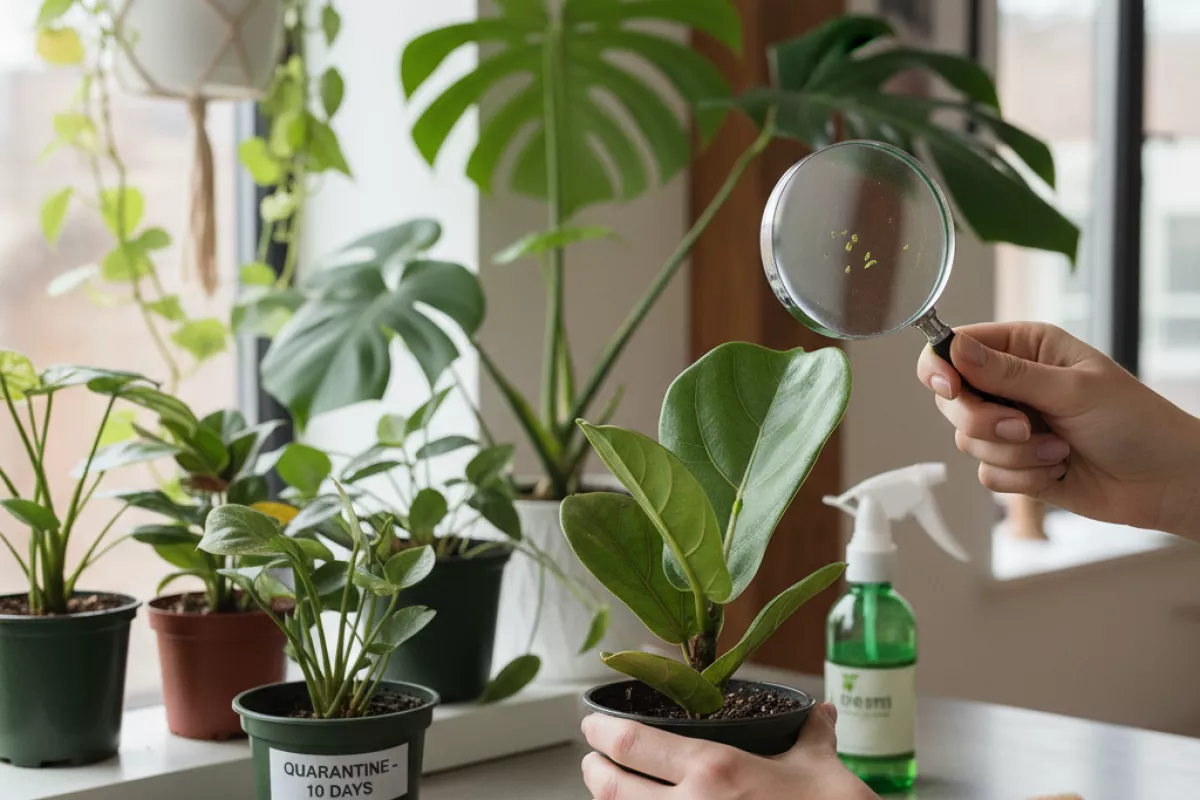
Keep infestations from starting by focusing on plant stress, cleanliness, and early detection. Aphids usually get a foothold when growth is soft and fast, plants are crowded, or new arrivals bring hitchhikers. A few small habits make outbreaks much less likely.
- Quarantine new plants for 10–14 days. Place them a short distance away, then inspect stems, new tips, and the undersides of leaves every 2–3 days.
- Inspect the “soft spots” weekly: fresh shoots, flower buds, and leaf joints. Catching a few individuals early is far easier than dealing with colonies later.
- Rinse foliage periodically with a gentle shower to knock off early pests and sticky residue. Use lukewarm water around 20–25°C (68–77°F) and let the pot drain fully.
- Avoid overfeeding nitrogen. Heavy nitrogen pushes tender growth that aphids prefer. If you fertilize, use a balanced product at a lighter rate during low-light months.
- Water consistently, not excessively. Drought stress followed by heavy watering can trigger flushes of soft growth. Water when the top 2–3 cm (0.8–1.2 in) of mix is dry for many common houseplants, adjusting for species.
- Improve airflow and spacing. Leave a gap of about 5–10 cm (2–4 in) between pots when possible so leaves dry faster and pests are easier to spot.
- Manage ants if you see them indoors. Ants “farm” aphids for honeydew and can move them to new shoots. Remove food sources, seal entry points, and clean trails.
- Clean tools and surfaces. Wipe pruners between plants and wash saucers and shelves to remove honeydew that can attract more insects and encourage sooty mold.
- Prune crowded, weak growth. Removing dense interior shoots reduces hiding places and makes inspections more reliable.
| Routine | What to do | Why it helps |
|---|---|---|
| Weekly check | Look under leaves and at new tips; wipe off any sticky spots with a damp cloth. | Finds early colonies before they spread and reduces honeydew buildup. |
| Every 2–4 weeks | Rinse foliage in the sink or shower; let plants drain 10–15 min (10–15 min). | Physically removes stragglers and dust that can hide insects. |
| Seasonal adjustment | Reduce fertilizer and watering during short days; increase light gradually in spring. | Prevents weak, stretched growth that attracts sap-feeders. |
| With every new plant | Isolate 10–14 days; inspect with a bright light; repot if the nursery mix is soggy. | Stops pests from entering your collection and reduces stress triggers. |
If you do spot a few aphids during a check, act immediately: pinch off the most infested tips, rinse the plant, and monitor closely for the next 7–10 days. That quick response often prevents the need for stronger control methods later.