Aphids on Potted Plants – Prevention Checklist

 Here we why potted plants are more prone to aphids, the common indoor and container care mistakes that attract them, and how to check plants regularly. It also explains prevention, isolating and treating infected pots, keeping healthy growing conditions, and using a simple checklist to stay aphid-free.
A simple aphid prevention routine for container plants can spare you sticky leaves, curled growth, and fast-spreading infestations. Start by checking new plants before placing them near others, since aphids often hitchhike indoors or onto patios. Avoid excess fertilizer that encourages soft, vulnerable growth, improve airflow between pots, and inspect tender shoots regularly. With a few steady habits, potted plants stay healthier and small pest problems are much easier to control.
Why potted plants are vulnerable to aphids

Potted plants often face conditions that make sap-sucking pests easier to establish than they would be in a balanced outdoor setting. A container limits root space, dries out faster, and depends entirely on the grower for water, feeding, airflow, and light. When one part of that routine slips, plants can produce soft, weak growth that aphids quickly exploit.
Indoor and patio containers also create a more predictable environment for pests. There is less rain to wash insects off, fewer natural predators, and often a steady temperature that allows colonies to build without much interruption. Even a small infestation can spread quickly when several pots are grouped closely together on a shelf, windowsill, or balcony.
Restricted roots and stress cycles
A plant in the ground can search for moisture and nutrients over a wide area, but a potted specimen cannot. If the potting mix swings between very dry and very wet, roots become stressed and top growth loses resilience. Aphids are especially attracted to tender shoots, buds, and fresh leaves produced after stress followed by heavy watering or feeding.
- Small pots: Dry out rapidly, especially in warm rooms or on sunny ledges.
- Root-bound plants: Struggle to regulate water and nutrient uptake, which weakens new growth.
- Spent potting mix: Holds less air and drains poorly after repeated watering cycles.
Protected environments favor fast reproduction
Many aphid species reproduce very quickly in sheltered conditions. Indoors, there is no wind, little temperature fluctuation, and usually no heavy rain to disturb colonies. A few insects hidden under a leaf can become dozens in a short time, especially around actively growing houseplants such as herbs, hibiscus, peppers, and soft-stemmed ornamentals.
Container groupings increase the risk further. Leaves from neighboring pots often touch, giving pests an easy bridge from one plant to the next. This is common on crowded plant stands and balcony rails where spacing is tight.
Editor’s note: If one potted plant repeatedly gets aphids while others stay clean, look at its growth pattern. Plants pushed into constant soft growth by rich fertilizer are often the first targets.
New plants are a common entry point
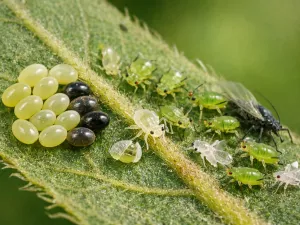
Many infestations begin when a new purchase, cutting, or gift plant is brought indoors without inspection. Aphids hide in curled leaves, flower buds, and the undersides of tender stems. Because they are small and often green, black, yellow, or pale brown depending on the species, they can blend in until sticky honeydew or distorted growth appears.
For container gardeners, prevention starts with understanding that potted plants are not naturally fragile, but they are more dependent on consistent care. The more stable the growing conditions, the less attractive they become to opportunistic pests.
Common mistakes in indoor and container care

Aphid problems are often linked less to bad luck and more to a few care habits that encourage lush, vulnerable growth or reduce plant vigor. Small errors add up in containers because the root zone is confined and every watering or feeding decision has a stronger effect than it would in the ground.
Recognizing these patterns helps you prevent outbreaks before treatment is needed. The goal is not perfection, but steadier conditions that support firm, balanced growth rather than weak, overstimulated shoots.
Overfeeding and soft new growth
One of the most common mistakes is using fertilizer too often, especially high-nitrogen liquid feeds. This can produce fast, pale, sappy growth that aphids prefer. Houseplants and potted annuals do need nutrients, but more feed does not automatically mean healthier plants.
- Too frequent feeding: Weekly applications at full strength can overstimulate growth in moderate light.
- Fertilizing stressed plants: A wilted or root-damaged plant should recover first before being fed.
- Ignoring season: Many indoor plants need less fertilizer in winter when growth slows.
Watering by schedule instead of by need
Plants kept too dry become stressed, while plants kept constantly soggy lose root health and vigor. Both conditions can make them more susceptible to pests. A fixed routine such as “every Sunday” often fails because temperature, pot size, and light levels change through the year.
Instead, check the potting mix before watering. For many common houseplants, the top 2.5 cm (1 in) of mix should dry slightly before the next watering, though thirstier species may need more frequent attention and succulents much less.
Poor light and overcrowding
Low light causes weak, stretched stems and thin leaves, especially in winter. Those plants are not only slower to recover from feeding damage, but also harder to inspect because growth becomes tangled and floppy. Crowding pots together compounds the issue by reducing airflow and making it easier for pests to move between plants.
Common spacing and placement mistakes include:
- Keeping foliage pressed against curtains or cold window glass.
- Placing several pots so close that leaves overlap.
- Leaving dense decorative cachepots or covers that trap humidity around stems.
- Growing sun-loving plants in bright shade and then compensating with extra fertilizer.
Skipping routine grooming
Dead leaves, spent flowers, and tangled stems create hiding places and make inspections less effective. Aphids often gather on flower spikes, the undersides of old leaves, and the soft tips of neglected plants. Light pruning and cleanup improve visibility and reduce the amount of tender, crowded growth where colonies can settle unnoticed.
Good container care is mostly about balance: enough water, enough light, enough food, and enough space. When one of those is consistently off, aphids often become a symptom of the larger problem.
How to inspect potted plants regularly

Regular inspection is the simplest way to stop a minor aphid issue from becoming a plant-wide outbreak. Because these insects cluster on fresh growth, you do not need to examine every square centimeter of a plant to catch them early. A fast, consistent check done once or twice a week is usually more effective than an occasional deep search after visible damage appears.
The best time to inspect is during watering or grooming, when the plant is already in your hands. Good light matters. Natural daylight near a window or a bright task lamp makes it much easier to spot insects, cast skins, and sticky residue.
Where aphids usually hide
They tend to settle where tissue is soft and nutrient-rich. On potted plants, that means the newest growth rather than old, hardened stems. Buds, shoot tips, and leaf undersides deserve the closest attention.
- Growing tips: Look for clusters around folded new leaves.
- Undersides of leaves: Especially on peppers, herbs, roses, and flowering houseplants.
- Flower buds and stems: Aphids often gather before blooms open.
- Leaf joints: Check where stems branch and where petioles meet the main stem.
- Nearby surfaces: Sticky honeydew on shelves, saucers, or leaves below can be an early clue.
Signs that appear before heavy infestation
You may notice plant symptoms before you actually see the insects. Slightly curled leaves, twisted new growth, or a shiny sticky coating can all point to early feeding. Ant activity on balcony pots can also be a warning, since ants may collect honeydew and protect aphids from predators outdoors.
Use a simple inspection pattern so nothing is missed:
- Look at the newest leaves first.
- Turn over two or three larger leaves on each plant.
- Check buds, flower stalks, and stem joints.
- Scan the pot rim, saucer, and nearby surfaces for sticky residue or shed skins.
- Separate any suspicious plant immediately rather than waiting for confirmation.
Practical tip: Keep a soft paintbrush or makeup brush near your watering area. It helps part dense foliage gently without snapping brittle stems or smearing pests deeper into the plant.
How often to check
Frequency depends on season and plant type. Fast-growing plants in spring and summer need more attention because they produce the tender tissue aphids prefer. Newly purchased plants and those that spend part of the year outdoors should be checked more often during transition periods.
| Plant situation | Suggested inspection frequency | What to focus on |
|---|---|---|
| Newly bought or recently propagated plants | Every 2 to 3 days for 2 weeks | Buds, shoot tips, undersides of leaves |
| Fast-growing flowering or edible container plants | Twice weekly | New growth, flower stems, sticky residue |
| Established indoor foliage plants | Weekly | Leaf joints, hidden inner growth, pot grouping contact points |
| Plants returning indoors after summer outside | Every 2 to 3 days for 10 to 14 days | Whole plant, especially sheltered inner stems |
A short, repeated check is easier to maintain than a long monthly inspection. Once it becomes part of watering day, early detection feels routine rather than time-consuming.
Preventive treatments for container plants

Preventive treatment does not mean spraying everything constantly. In most homes and small container gardens, the best approach is a combination of physical cleaning, careful monitoring, and targeted low-impact products used when risk is high. The aim is to make it hard for aphids to settle, not to keep leaves permanently coated with treatments.
For indoor plants, gentler methods are usually enough if they are applied early and consistently. Outdoor containers may need a slightly more active approach during peak growing periods, especially if nearby plants already show infestation.
Physical prevention that works
Simple physical actions are often more effective than people expect. A firm rinse can remove many aphids before they establish a breeding colony. Wiping leaves also helps remove honeydew and makes future inspections easier.
- Rinse vulnerable plants: Use a gentle stream of water to wash shoot tips and leaf undersides, then let foliage dry with good airflow.
- Pinch out heavily infested tips: Removing a few damaged shoots early can stop spread.
- Clean sticky leaves: Honeydew attracts dust and can lead to sooty mold, reducing plant vigor.
- Rotate pots during checks: Turning plants helps you notice hidden colonies on the shaded side.
Low-impact products for early intervention
If a plant is repeatedly at risk, preventive use of insecticidal soap or neem-based products can help, but only when used correctly. These products work best by direct contact and are less useful if sprayed casually without reaching the insects. Always test a small area first, especially on thin-leaved or fuzzy plants that may mark easily.
Apply treatments in the cooler part of the day and avoid strong direct sun immediately afterward. For indoor use, good ventilation matters, and leaves should not stay wet for long in dim rooms.
- Insecticidal soap: Best for direct contact on visible colonies and soft-bodied pests.
- Neem-based spray: Useful as part of a rotation, but avoid overuse on sensitive plants.
- Plain water wash: Often enough for very light infestations on sturdy plants.
When prevention should focus on the potting setup
Sometimes the treatment is not a spray but an adjustment to the growing system. If a plant is in exhausted mix, packed roots, or a pot with poor drainage, it may keep producing stressed growth that attracts pests. Repotting into fresh, airy mix and right-sizing the container can improve resilience more than repeated spraying.
As a guide, move a plant up only one pot size at a time, often about 2.5 to 5 cm (1 to 2 in) wider than the current pot. Oversized containers can stay wet too long and create a different set of stress problems.
Editor’s note: If you use any spray, treat one plant first and wait 24 hours. Some foliage reacts badly not because the product is wrong, but because the plant was already heat-stressed, dry, or sitting in strong sun.
Preventive treatment is most effective when matched to the plant’s actual risk. A healthy, well-spaced plant may only need rinsing and inspection, while a fast-growing balcony pepper in midsummer may benefit from more frequent hands-on checks and occasional targeted soap sprays.
How to isolate and treat infected pots

Once aphids are found, speed matters. A single infected pot can quickly become the source of a wider problem if it remains touching other plants. Isolation reduces spread and gives you a clear space to treat the plant thoroughly without missing hidden stems or contaminating nearby foliage.
The first step is practical rather than chemical: move the affected pot away from the group. Even a separation of 1 to 2 m (3 to 6.5 ft) is helpful indoors if that is the only space available, though a different room is better when possible.
Immediate isolation steps
Handle the plant gently as you move it so insects are not brushed onto neighboring leaves. If the pot sits inside a decorative cover, check both containers because fallen aphids and sticky residue often collect there.
- Move the plant away from all others.
- Inspect the nearest pots that were touching it or standing directly beside it.
- Remove badly distorted tips, spent flowers, or heavily infested buds.
- Rinse the plant if its foliage is sturdy enough.
- Clean the shelf, tray, or windowsill where it was standing.
Treatment options by severity
Not every infestation needs the same response. Light colonies on a few stems can often be managed with pruning and washing, while a heavy outbreak on a dense, soft plant may need repeated treatment over several days because eggs, hidden nymphs, or missed clusters can restart the problem.
| Infestation level | What it looks like | Best response |
|---|---|---|
| Light | A few aphids on one tip or bud | Pinch off affected growth, rinse plant, recheck in 2 to 3 days |
| Moderate | Several clusters on new growth and leaf undersides | Rinse thoroughly, apply insecticidal soap, repeat as directed if needed |
| Heavy | Widespread insects, sticky leaves, distorted growth | Prune worst areas, wash plant, treat repeatedly, keep isolated for at least 2 weeks |
| Chronic recurring | Infestation returns after treatment | Review light, feeding, spacing, and consider repotting or discarding severely weakened plants |
How long to keep a plant apart
Do not return a treated pot to the group the moment it looks cleaner. Keep it isolated until inspections show no new aphids for at least 7 to 14 days. During that time, check fresh growth closely because that is where survivors usually reappear.
If the plant is badly weakened, it may be better to cut it back and let it regrow in cleaner conditions. In severe cases, especially with low-value annuals or very dense plants that are hard to treat thoroughly, discarding the plant can protect the rest of the collection.
Isolation is not a sign of failure. It is one of the most effective container-gardening habits because it stops a localized issue from becoming a room-wide problem.
Maintaining healthy indoor plant conditions
Healthy indoor conditions do not make plants pest-proof, but they do make them less attractive and better able to recover from minor feeding. Most aphid trouble on houseplants is tied to imbalances: too much fertilizer, too little light, stale air, or watering that swings between neglect and excess. Correcting those basics often reduces repeat infestations more than any spray program.
Think of prevention as building plant resilience. A plant with steady growth, clean leaves, and an active root system is much easier to protect than one that is stretched, dusty, and stressed.
Light, airflow, and spacing
Indoor plants usually need brighter conditions than people assume. A species placed too far from the window often develops weak growth that pests favor. Move plants according to their needs, and rotate them regularly so all sides grow evenly. Where possible, leave a little space between pots so leaves are not constantly touching.
- Bright indirect light plants: Keep within roughly 0.5 to 1.5 m (1.5 to 5 ft) of a bright window, depending on orientation and season.
- Air movement: Gentle airflow from an open window or fan helps foliage dry after washing, but avoid cold drafts.
- Spacing: Even a gap of 5 to 10 cm (2 to 4 in) between pots improves inspection and reduces pest bridging.
Water and humidity balance
Many growers respond to dry indoor air by watering more often, but humidity and soil moisture are not the same thing. Overwatering weakens roots and can lead to soft, unstable growth. Water thoroughly, then let the plant use that moisture before watering again according to the species and season.
Empty saucers and outer pots after watering so roots do not sit in stagnant water. If you raise humidity for tropical plants, do it in a way that still allows leaves to dry and air to circulate around them.
Feeding and seasonal adjustment
Houseplants in active growth benefit from regular but measured feeding. During low-light months, reduce fertilizer rather than trying to force growth. A diluted balanced fertilizer applied at half strength can be safer than repeated full-strength feeding for many indoor plants.
Watch the plant rather than the label alone. If growth is pale and stretched, the issue may be insufficient light rather than insufficient nutrients. Feeding harder in that situation can make the plant even more attractive to aphids.
Practical recommendation: Dusty leaves hide pests and reduce photosynthesis. Wiping foliage every few weeks with a damp cloth gives you a built-in inspection routine and improves plant performance at the same time.
Maintaining healthy indoor conditions is less about creating a perfect climate and more about avoiding extremes. Stable care, clean foliage, and sensible spacing make aphid problems easier to prevent and much easier to catch early.
Checklist to keep potted plants aphid-free
A simple checklist helps turn prevention into habit. Rather than waiting for curled leaves or sticky residue, use a repeatable routine that covers new arrivals, weekly care, and seasonal adjustments. The best checklist is one you can actually follow with the number of plants you have and the time you realistically spend on them.
The points below are designed for indoor plants, balcony containers, and patio pots. Use them as a working routine and adapt them to the plants that are most vulnerable in your collection.
Weekly and ongoing checks
These tasks take only a few minutes when done consistently. They are far easier than trying to rescue several infested pots at once.
- Inspect new growth: Check shoot tips, buds, and leaf undersides at least once a week.
- Separate crowded pots: Prevent leaves from overlapping whenever possible.
- Water by feel: Check the potting mix instead of following a rigid calendar.
- Feed moderately: Avoid pushing soft growth with excessive nitrogen.
- Remove clutter: Trim dead leaves and spent flowers that hide pests.
- Clean surfaces: Wipe shelves, saucers, and cachepots where honeydew can collect.
When bringing home or moving plants
Transitions are high-risk moments because pests often arrive from nurseries, outdoor summering spots, or shared plant swaps. A short quarantine period is one of the most effective protections you can use.
- Quarantine new plants: Keep them apart for 10 to 14 days before placing them with the rest.
- Inspect before bringing indoors: Check outdoor plants carefully before autumn move-in.
- Wash or wipe foliage: Remove dust and any hitchhiking insects before grouping plants together.
- Check decorative pots: Pests and sticky residue can hide between nursery pots and outer containers.
Action checklist if aphids appear
Having a response plan prevents hesitation. Early action is usually enough to stop a small outbreak from spreading.
- Isolate the affected pot immediately.
- Inspect neighboring plants the same day.
- Prune the most infested tips or buds.
- Rinse sturdy foliage and clean honeydew from leaves.
- Use insecticidal soap or another suitable product if needed.
- Repeat inspections every 2 to 3 days until no new insects appear.
- Review care conditions so the problem does not return.
If you keep this checklist in mind, aphid prevention becomes part of normal plant care rather than a separate chore. Consistent observation, balanced watering and feeding, and quick isolation of suspect pots are the habits that keep container plants cleaner, stronger, and far less likely to host recurring infestations.