Natural Predators for Aphid Control

 Here we insects that naturally control aphids, especially ladybugs, plus other helpful predators. It explains how to attract them to your garden, when they work best, where biological control has limits, and when to combine predators with other treatments.
Using beneficial insects and other natural enemies to control aphids is a simple, effective way to protect plants without repeated spraying. For gardeners and plant owners, success depends on knowing which predators are helpful, how they reduce aphid numbers, and how to create a garden where they can thrive. With the right habitat, these allies stay active longer and help keep soft-bodied pests under control naturally.
Which insects naturally control aphid populations

Aphids are soft-bodied sap feeders, so they are vulnerable to a surprisingly wide range of garden predators. When conditions are right, these beneficial insects can keep colonies from exploding on roses, beans, brassicas, peppers, fruit trees, and many ornamentals. The key is knowing which species are actually helping before you disturb them during pruning, washing, or spraying.
Most useful aphid hunters belong to a few familiar groups. Some are active as both adults and larvae, while others do most of their work in the immature stage. That matters because gardeners often recognize the adults but accidentally remove the larvae, even though the larvae may be the more effective feeders.
Main predator groups
Several insects repeatedly show up where aphids are abundant. They do not all work in the same way, but together they create steady pressure on pest populations.
- Ladybugs: Both adults and larvae feed on aphids, especially in spring and early summer when colonies are building.
- Lacewings: Green lacewing larvae are voracious predators and can clear clustered aphids from stems, buds, and leaf undersides.
- Hoverflies: The adults visit flowers for nectar and pollen, but the larvae quietly consume aphids among foliage.
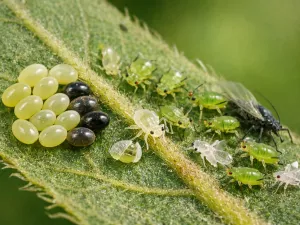
- Parasitic wasps: These tiny wasps lay eggs inside aphids, turning them into swollen, papery “mummies.”
- Soldier beetles: Adults and larvae can help reduce soft-bodied pests, especially in mixed plantings.
- Predatory midges: Their larvae are small but effective in dense aphid colonies, particularly in humid, sheltered growth.
How they differ in the garden
Not every predator appears at the same time or in the same planting. Ladybugs often arrive once aphids are already visible. Hoverflies are common in gardens with open flowers. Lacewings prefer places with some shelter and less pesticide disturbance. Parasitic wasps are easy to miss because they are tiny, but their impact becomes obvious when aphid mummies start appearing on stems.
Plant structure also affects who shows up. Tight, leafy crops like kale and cabbage often support lacewing larvae and wasps, while flowering borders tend to attract hoverflies and adult ladybugs. On fruit trees, predators may concentrate on tender shoot tips where aphids gather around new growth.
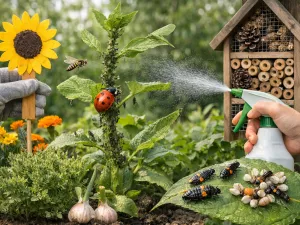
If you see odd, alligator-shaped larvae near aphid clusters, pause before washing the plant down. Many gardeners mistake ladybug and lacewing larvae for pests and remove the very insects doing the cleanup.
A balanced garden usually supports more than one predator at once. That diversity matters because aphid numbers can rise quickly during mild weather around 18 to 27°C (64 to 81°F), especially on lush, nitrogen-rich growth. A mixed predator community is more reliable than depending on a single insect species to solve the problem.
How ladybugs reduce aphid infestations

Ladybugs are the best-known aphid predators for good reason. They are highly mobile, easy to spot, and capable of feeding on large numbers of soft-bodied pests. Their real value, however, comes from the combined feeding of adults and larvae over time rather than from a few beetles landing on a plant for a day.
Adult ladybugs search actively for aphid colonies, especially on tender new growth. Once they find a food source, they feed, mate, and often lay eggs nearby. Those eggs hatch into larvae that remain close to the colony and continue feeding where the adults started.
The life stage that does the most work
Many gardeners focus on the bright red adults, but the larvae are often the more efficient aphid hunters. They do not fly away, and they spend much of their time crawling through colonies and eating continuously. This makes them especially useful on shrubs, vegetables, and perennials with persistent infestations.
- Adults: Good at locating outbreaks and spreading through the garden.
- Larvae: Strong local feeders that stay close to where aphids are concentrated.
- Pupae: Non-feeding stage, often attached to leaves or stems.
- Eggs: Usually laid in clusters near prey, signaling that control is building naturally.
What makes ladybugs stay
Ladybugs remain in a garden when there is a combination of prey, moisture, and shelter. A dry, bare bed with no flowering support plants gives them little reason to stay once aphid numbers drop. Gardens with layered planting, mulch, and some flowering herbs tend to hold them longer.
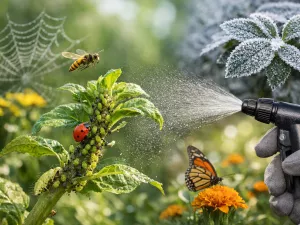
Broad-spectrum insecticides interfere with this process. Even a product aimed at aphids can reduce ladybug survival if it contacts eggs, larvae, or adults. Strong water sprays can also knock them off plants, so timing matters. If you rinse a rose or pepper plant, do it early in the day and target the densest aphid patches rather than blasting every stem.
Practical expectations
Ladybugs can reduce infestations significantly, but they rarely create instant, spotless plants. Aphid control is usually gradual. New leaves may still show some curling or sticky honeydew until predator numbers catch up. On heavily infested plants, pruning the worst tips by 10 to 15 cm (4 to 6 in) can lower the pest load enough for ladybugs to manage the rest.
Store-bought releases are often less effective than gardeners hope, especially if released in hot, dry conditions above 29°C (84°F) or onto plants with little food. Wild, naturally established populations usually perform better because they are already adapted to the site and arrive when conditions suit them.
Other beneficial predators to consider

Ladybugs get most of the attention, but they are only part of the picture. A garden that supports several predator types is usually more stable because each one works under slightly different conditions. Some are better in cool spring weather, some in dense foliage, and others in flowering borders where adults need nectar before laying eggs.
These additional helpers are especially important when aphids appear on many plant types at once. Mixed predator pressure can limit rebound after rain, pruning, or a flush of soft new growth caused by heavy feeding.
Lacewings and hoverflies
Green lacewings are among the most useful general predators in ornamental and edible gardens. Their larvae, sometimes called aphid lions, have curved jaws and feed on aphids, whiteflies, and small caterpillars. Hoverflies are equally valuable, though less recognized. The adults resemble small bees or wasps and hover around flowers, while the larvae are slug-like and feed quietly among leaves.
Both groups benefit from a garden that includes small, nectar-rich flowers. Without those food sources, adults may pass through without establishing a lasting presence.
Parasitic wasps and predatory midges
Parasitic wasps are tiny and easy to overlook, but they can suppress aphids very effectively. After parasitism, aphids become bronze, tan, or blackened mummies attached to the plant. Predatory midges are even less visible, yet their larvae can be excellent in humid, protected growth where aphids cluster tightly.
These natural enemies are especially useful because they can reach aphids in curled leaves or crowded shoot tips where larger predators feed less efficiently.
| Predator | Best feature | Where it helps most | What supports it |
|---|---|---|---|
| Lacewing larvae | Heavy feeding on clustered aphids | Vegetables, shrubs, greenhouse crops | Shelter, reduced spraying, flowering companions |
| Hoverfly larvae | Good control in mixed borders and kitchen gardens | Herbs, salad beds, ornamentals | Open flowers, shallow blooms, steady moisture |
| Parasitic wasps | Reach hidden colonies and create aphid mummies | Fruit trees, brassicas, roses | No broad-spectrum insecticides, diverse planting |
| Predatory midges | Effective in dense infestations | Protected crops, leafy growth, humid sites | Moderate humidity, undisturbed colonies, low chemical use |
When checking leaves, look for aphid mummies before deciding a plant has no natural protection. A colony with many mummies may already be collapsing, even if live aphids are still present.
Spiders, minute pirate bugs, and some beetles also contribute, though they are less specialized. They may not focus only on aphids, but in a healthy garden they add useful background predation that helps prevent sudden outbreaks.
How to attract natural predators to your garden

Predators do not stay in a garden by accident. They need food, water, shelter, and a planting style that is not constantly disturbed. If your beds are very tidy, heavily sprayed, or planted in large blocks of one crop, beneficial insects often visit briefly and then move on.
The easiest way to attract them is to make the garden more hospitable over the whole season, not just when aphids appear. That means combining flowering plants, sensible watering, moderate feeding, and gentle pest management.
Planting for nectar, pollen, and shelter
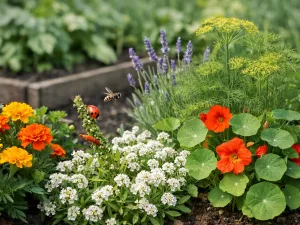
Many aphid predators need nectar or pollen as adults, even if their larvae are predatory. Small, open flowers are especially useful because tiny beneficial insects can access them easily. Interplanting these among vegetables and shrubs works better than isolating them in one corner.
- Good flower choices: Alyssum, dill, fennel, coriander, yarrow, calendula, cosmos, and sweet alyssum.
- Layered planting: Combine low flowers, medium herbs, and taller crops to create shelter from wind and heat.
- Long bloom period: Include plants that flower from spring into autumn so predators have support beyond one short flush.
Watering and feeding practices that matter
Plant care affects aphid pressure more than many gardeners realize. Heavy nitrogen feeding produces very soft, lush growth that aphids love. A steadier feeding program creates firmer tissue and reduces the chance of explosive infestations. Water stress also matters. Plants that swing between dry and saturated conditions often produce weak new growth that attracts pests.
Water deeply and less often rather than sprinkling lightly every day. For most garden beds, aim to moisten the root zone to around 15 to 20 cm (6 to 8 in) deep, then allow the top layer to begin drying before watering again. This supports plant vigor without pushing excessive, aphid-prone growth.
Reduce disturbance
Predators struggle in gardens treated with repeated insecticide sprays, even organic ones such as soaps or oils when overused. These products can still kill soft-bodied beneficial larvae on contact. If treatment is needed, spot-treat the worst areas instead of coating every plant.
- Inspect the newest growth first, because aphids gather there earliest.
- Prune heavily infested tips when practical, removing a concentrated pest source.
- Rinse colonies with a targeted water jet, not a full-bed drench.
- Wait a few days and recheck for predator activity before repeating treatment.
Mulch and nearby habitat also help. A 5 to 7.5 cm (2 to 3 in) mulch layer moderates soil moisture and supports a more stable garden environment. Hedges, perennial borders, and unsprayed corners give beneficial insects places to shelter when prey numbers are low.
Limitations of biological control methods

Natural predators are valuable, but they are not a perfect or instant solution. Biological control works best as part of a broader garden system, not as a guarantee that every leaf will remain pest-free. Aphids reproduce quickly, especially in mild weather and on fast-growing plants, so predators sometimes lag behind the initial outbreak.
This delay is one of the main frustrations for gardeners. By the time predators arrive in useful numbers, some leaves may already be curled, buds distorted, or stems coated with honeydew. Predators can stop the situation from getting worse, but they do not reverse physical damage already done.
Situations where predators struggle
Some conditions make natural control less reliable. Very small gardens with little plant diversity may not support enough beneficial insects. Greenhouse crops can also be tricky if ventilation is poor or if aphids build up before predators are introduced. Weather matters too. Heavy rain can knock predators off plants, while strong heat and dry air can reduce egg and larval survival.
- Rapid outbreaks: Aphids can multiply faster than predators establish.
- Curled foliage: Hidden colonies are harder for larger predators to reach.
- Ant activity: Ants protect aphids in exchange for honeydew and may drive predators away.
- Repeated spraying: Even mild products can interrupt predator buildup.
- Overfed plants: Soft, nitrogen-rich growth keeps producing fresh food for aphids.
What biological control cannot do alone
Predators do not correct poor plant care. If a plant is shaded too heavily, watered erratically, root-bound in a container, or pushed with excess fertilizer, aphids often return even after a temporary reduction. Likewise, predators cannot clean sticky honeydew or sooty mold from leaves; that requires washing and improved airflow.
There is also a timing issue with severe infestations. If a young pepper, broad bean, or rose is covered from tip to base, waiting only for predators may allow the plant to weaken further. In that case, selective intervention is usually more practical than hoping nature catches up before growth stalls.
Ant control is often the missing step. If ants are running up stems, they may be defending aphids from ladybugs and lacewings, so deal with the ants or predator numbers may never gain traction.
Understanding these limits helps set realistic expectations. Biological control is strongest when used early, supported by good cultivation, and combined with monitoring rather than left to work entirely on its own.
When predators are most effective
Timing makes a major difference in how well natural enemies suppress aphids. Predators are most effective when aphid colonies are still small, exposed, and concentrated on fresh growth. Once leaves curl tightly or stems become sticky with honeydew, control becomes slower and less complete.
The best window is usually early in the infestation, often in spring or during the first flush of tender growth after pruning or feeding. At that stage, predators can keep colonies below damaging levels before the plant shows major distortion.
Seasonal timing
In many gardens, aphids surge during mild temperatures around 15 to 25°C (59 to 77°F). These same conditions also favor many predators, but the pests often appear first. That is why regular inspection matters. Check the underside of leaves, shoot tips, and flower buds at least once a week during active growth, and twice weekly when weather is mild and plants are pushing soft new growth.
Predators tend to perform best when nights are not too cold, plants are actively growing, and there is enough surrounding habitat to support adult feeding and reproduction.
Plant condition and crop stage
Young plants and fresh transplants are less able to tolerate aphid feeding than established shrubs or mature perennials. Predators help most when the plant still has enough strength to outgrow minor damage. On stressed plants, even a moderate aphid population can cause leaf curl, bud drop, or stunted growth before predators catch up.
- Most effective: Small colonies on healthy plants with open, accessible growth.
- Moderately effective: Expanding colonies where some pruning or rinsing has reduced numbers.
- Least effective: Severe infestations on stressed plants with curled leaves and strong ant activity.
Signs that predators are gaining control
You do not need to see every predator to know they are working. Look for fewer aphids on the newest leaves, scattered skins from molting aphids, mummified aphids, and active larvae on stems. Honeydew may still be present for a while, but the colony should stop expanding visibly.
If numbers remain high after 5 to 7 days, especially in warm weather above 24°C (75°F), the plant may need extra help. That does not mean predators failed; it usually means the infestation got too far ahead before they built up.
Combining predators with other treatments
The most reliable aphid control usually comes from combining natural enemies with low-impact garden practices. This approach reduces pest pressure without wiping out the beneficial insects already working on your plants. The goal is not to sterilize the garden, but to bring aphid numbers below the level that causes meaningful damage.
Good combination strategies start with the least disruptive methods. Physical removal, careful pruning, better watering, and moderate feeding all make life easier for predators. Chemical intervention, if needed, should be selective and targeted.
Low-impact methods that work well with predators
Physical control is often the best partner to biological control. A sharp water jet can remove many aphids from sturdy plants such as roses, kale, chard, and fruit trees. Pruning out the worst-infested shoot tips also reduces the breeding population quickly. After that, predators can focus on the remaining colonies.
- Cut off heavily infested tips or leaves and dispose of them away from the bed.
- Rinse remaining colonies with water early in the day so foliage dries before evening.
- Check for beneficial larvae before any follow-up treatment.
- Adjust feeding if plants are producing overly soft, lush growth.
- Reinspect after 3 to 5 days rather than treating on a fixed schedule.
Using soaps or oils carefully
Insecticidal soap and horticultural oil can be useful, but they should be used with restraint because they can still harm beneficial insects on contact. Spot-treat only the worst areas, avoid open flowers, and spray in cooler parts of the day, ideally below 27°C (81°F). Thorough coverage matters more than concentration, so follow the product label rather than mixing stronger solutions.
Do not spray drought-stressed plants or foliage in direct hot sun. On tender plants, test a small area first and wait 24 hours before wider use. This is especially important for seedlings, soft herbs, and plants with fine or fuzzy leaves.
An integrated approach by situation
Different plants need slightly different tactics. A strong rose bush can tolerate rinsing and light pruning, while a young lettuce crop may need faster intervention because growth is short-lived. Matching the response to the plant keeps control practical.
- Roses and shrubs: Prune infested tips, rinse colonies, preserve ladybug and lacewing larvae, and improve airflow through light thinning.
- Vegetable beds: Interplant with flowering herbs, avoid excess nitrogen, and remove badly infested leaves before using soap on isolated patches.
- Fruit trees: Watch spring shoot tips closely, manage ants, and use water sprays before leaves curl tightly.
- Containers: Check more often because plants dry faster, avoid overfeeding liquid fertilizer, and isolate badly infested pots if needed.
When these methods are combined thoughtfully, predators become much more effective partners. They may not eliminate every aphid, but they can turn a recurring problem into a manageable one while keeping the garden healthier overall.