Best Treatments for Aphids on Plants

 This article explains effective ways to control aphids, including when a strong water spray is enough and how insecticidal soap works. It also covers neem oil’s pros and limits, when rubbing alcohol makes sense, which homemade sprays actually help, and how to choose the best method for your plant type.
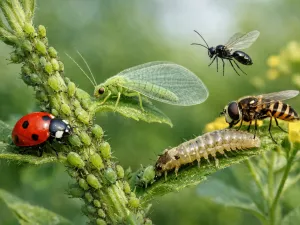
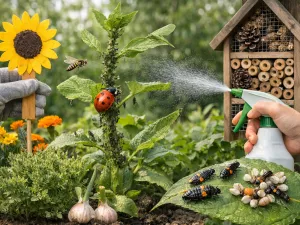
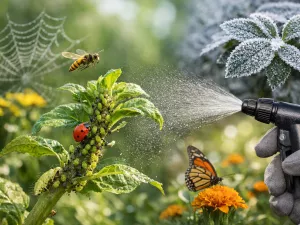
Aphid infestations are easiest to manage when the treatment fits both the severity of the problem and the kind of plant affected. These tiny sap-sucking insects can quickly damage tender new growth, but early action usually keeps them in check. Start by rinsing them off with water, then consider insecticidal soap for heavier outbreaks. You can also support natural predators like ladybugs to reduce numbers without using harsher methods.
Overview of effective aphid control methods

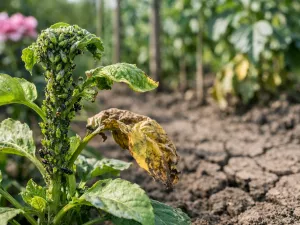
Aphids are soft-bodied sap-sucking insects that gather on tender new growth, flower buds, and the undersides of leaves. Small numbers are often more of a nuisance than a disaster, but populations can multiply quickly in warm, sheltered conditions. The best approach is usually not one dramatic treatment, but a combination of simple actions that reduce numbers, protect beneficial insects, and prevent a fresh outbreak a week later.
Good control starts with understanding why aphids appear. Plants pushed by heavy nitrogen feeding often produce lush, soft growth that aphids love. Dry roots, cramped pots, poor airflow, and weak light can also leave plants more vulnerable. Before reaching for a spray, check whether the plant needs a broader care adjustment such as steadier watering, brighter light, or less fertilizer.
What makes one treatment better than another
The most effective method depends on where the plant is growing, how severe the infestation is, and how delicate the foliage is. A sturdy outdoor rose can handle stronger intervention than a fuzzy-leaved African violet or a tender herb sitting in a sunny kitchen window.
- Water spray: Best for light to moderate infestations on sturdy plants with flexible stems and smooth leaves.
- Insecticidal soap: A reliable contact treatment for many houseplants, vegetables, and ornamentals when used thoroughly.
- Neem oil: Useful when repeated pressure is expected, but less ideal in strong sun or on sensitive foliage.
- Rubbing alcohol: Best as a spot treatment for clusters in tight places rather than a whole-plant routine.
- Homemade sprays: Can help in mild cases, but they need careful mixing and testing to avoid leaf damage.
Signs you need to act quickly
Aphids are easier to control early. If you wait until leaves curl tightly or stems are coated in sticky honeydew, treatment becomes slower and more repetitive. Watch for ants as well; they often protect aphids in exchange for honeydew and can signal a hidden infestation.
- Distorted new leaves or twisted shoot tips
- Sticky residue on leaves, pots, or nearby surfaces
- Sooty black mold growing on honeydew
- Clusters of green, black, yellow, brown, or gray insects on soft growth
- Slow plant growth despite adequate water and light
Editor’s note: If a plant is badly infested and already weak, prune off the worst tips before spraying. Removing the heaviest colonies often works better than trying to soak every insect on a crowded plant.
Whatever method you choose, contact matters. Most aphid treatments work only when they actually hit the insects, especially those hiding under leaves or deep in buds. Rechecking after 3 to 7 days is part of the process, not a sign that the treatment failed.
How water spray removes aphids safely

A strong spray of plain water is one of the simplest and safest ways to knock aphids off a plant. Because aphids are weak climbers and soft-bodied, many do not make it back onto the plant once dislodged. This method is especially useful for outdoor plants, sturdy houseplants taken to a sink or shower, and edible crops where gardeners want to avoid residues.
Water works best when infestations are still moderate and the plant has leaves and stems that can tolerate movement. It is less useful on very compact plants, heavily curled growth, or species with delicate blooms that bruise easily.
How to do it without damaging the plant
The goal is a firm stream, not a punishing blast. Support stems with one hand if needed and target the undersides of leaves, growing tips, and buds where colonies hide. Early morning is a good time outdoors because foliage can dry during the day.
- Move potted plants to a sink, shower, or sheltered outdoor spot.
- Use lukewarm water rather than very cold water, especially for tropical houseplants.
- Angle the spray upward to reach leaf undersides.
- Work from top to bottom so dislodged insects are washed away.
- Let the plant drain well and return it only after excess water has stopped dripping.
When water spray is most effective
This method is strongest as a repeat treatment. One rinse may remove many aphids, but eggs and hidden insects can remain. Repeating every 2 to 3 days for about a week often gives far better results than a single wash.
- Best candidates: Roses, peppers, hibiscus, herbs with sturdy stems, pothos, and many leafy outdoor annuals.
- Use caution with: Succulents that trap moisture in rosettes, fuzzy leaves, very young seedlings, and plants in bloom with fragile petals.
- Extra benefit: Water also removes some honeydew, dust, and a few spider mites, improving leaf function.
After spraying, avoid overwatering the root zone just because the leaves are wet. If the potting mix is already moist, let it stay that way. Aphid control should not create a second problem such as soggy soil or root stress.
Practical tip: For indoor plants, place a towel over the potting mix before showering if the soil is loose. This helps keep mix in the pot while still allowing excess water to drain.
Using insecticidal soap for reliable control

Insecticidal soap is one of the most dependable aphid treatments because it damages the insect’s outer layer on contact. It does not need to be eaten, and it is effective against soft-bodied pests when coverage is thorough. For many gardeners, it is the best middle ground between plain water and stronger products.
What makes soap reliable is consistency. It can be used on many ornamentals, vegetables, and indoor plants, but it must directly wet the aphids. Once dry, it has little residual effect, so follow-up applications are often necessary.
How to apply it properly
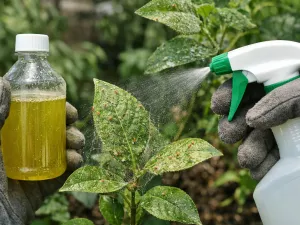
Always use a product labeled as insecticidal soap rather than dishwashing liquid. Household detergents can strip leaf surfaces and cause burn. Spray in the cooler part of the day, and never on drought-stressed plants or in direct hot sun.
- Coat upper and lower leaf surfaces, stems, and shoot tips.
- Spray until the plant is evenly wet but not constantly dripping.
- Repeat after 4 to 7 days if live aphids remain.
- Test one small area first and wait 24 hours before treating the whole plant.
Common mistakes that reduce results
Most soap failures come from missed hiding spots or poor timing. Aphids tucked inside curled leaves, flower clusters, or dense new growth may escape the first round. Plants with waxy or hairy leaves can also hold droplets unevenly, reducing contact.
- Spraying only the top of leaves: Colonies often sit underneath.
- Using soap in heat: Leaf scorch is more likely above about 29°C (85°F).
- Treating a thirsty plant: Stressed foliage is more sensitive.
- Assuming one spray is enough: Rechecks matter because new aphids may hatch or move in.
Where insecticidal soap fits best
Soap is often the best choice for edible plants close to harvest, indoor ornamentals, and mixed gardens where you want a targeted treatment with relatively low persistence. It is less ideal if rain is expected soon outdoors, since wash-off reduces effectiveness.
| Situation | How well insecticidal soap fits | Why |
|---|---|---|
| Indoor houseplants | Very good | Easy to control coverage and repeat treatment without wind or rain |
| Vegetable beds | Good | Useful for soft-bodied pests with careful timing and label-safe use |
| Plants in hot afternoon sun | Poor | Higher chance of leaf burn and rapid drying before good contact |
| Heavily curled new growth | Moderate | Works only if hidden aphids are reached, sometimes after pruning |
After treatment, keep the plant in stable conditions: even moisture, good airflow, and no sudden fertilizer push. Fresh, overly soft growth can attract a new wave of pests just when the old one is under control.
Neem oil effectiveness and limitations

Neem oil is popular because it can help with aphids while also being used against some other common pests. Depending on the product, it may act by smothering insects on contact and by disrupting feeding or development. That broader role makes it attractive, but it is not automatically the best first choice for every plant.
Its main strength is as part of a repeated management plan, especially outdoors or in a greenhouse where pests return regularly. Its main weakness is that it can injure foliage if used in strong light, on heat-stressed plants, or on species that dislike oily coatings.
What neem does well
Neem can reduce active aphid populations and may slow future buildup when used correctly. It is often chosen for roses, fruiting plants, and ornamentals with recurring pest pressure. Because it can also leave a thin coating, it may help in spots where insects cluster on stems and buds.
- Useful when aphids are part of a broader pest problem
- Helpful for repeated outdoor management in mild weather
- Often chosen by gardeners who want one product for several soft-bodied pests
Its practical limitations
Neem is not a magic cure. It can burn leaves if applied before intense sun, and it may leave residue or spotting on some foliage. It is also less pleasant to use indoors because of its smell and oily finish. On fuzzy, thin, or very tender leaves, it may do more harm than good.
- Avoid midday spraying: Apply in early morning or evening when temperatures are moderate.
- Do not use on stressed plants: Wilting, recently repotted, or drought-dry plants are more sensitive.
- Be careful with delicate species: Ferns, some herbs, and thin-leaved tropicals may react poorly.
- Expect repeat work: One application rarely solves a heavy infestation.
Editor’s note: Neem is often overused because it sounds gentle. In practice, it is still a treatment that needs testing, timing, and restraint, especially on indoor plants sitting near bright glass.
If you choose neem, shake the bottle well and follow the label exactly. More concentrate does not mean better control. A light, even coating is safer and usually more effective than drenching the plant until oil runs into the soil.
Rubbing alcohol method and when to use it

Rubbing alcohol can be very effective against aphids when used as a targeted contact treatment. It works quickly, making it useful for clusters packed into leaf joints, stem crevices, or flower stalks where water and soap are hard to direct. The trade-off is that alcohol can also damage plant tissue if it is too strong or used too broadly.
For that reason, this method is best reserved for spot treatment rather than routine whole-plant spraying. It is especially helpful for houseplants with isolated colonies, such as aphids hiding around new growth on hoya, citrus, or compact ornamentals.
How to use it safely
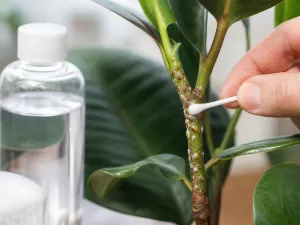
Use standard 70% isopropyl alcohol only if diluted appropriately for the plant and situation, and always test first. Many growers dab aphids directly with a cotton swab rather than misting the entire plant. This reduces the chance of leaf burn and keeps treatment focused where it is needed.
- Test one hidden leaf area and wait 24 hours.
- Dip a cotton swab in diluted alcohol and touch the insects directly.
- For larger patches, lightly wipe infested stems and leaf undersides.
- Keep the plant out of direct sun until the treated area is fully dry.
- Reinspect after 3 to 5 days and repeat only where needed.
Best situations for alcohol treatment
Alcohol is most useful when the infestation is small but stubborn. If aphids are spread across every stem and leaf, insecticidal soap or water spray is usually more practical. Spot treatment shines when precision matters more than speed.
- Good use case: A few dense colonies on indoor plants with thick leaves or firm stems.
- Less suitable: Soft new seedlings, thin leaves, open blooms, or plants already showing scorch.
- Helpful follow-up: Use after pruning badly infested tips to catch survivors in hidden creases.
Do not combine alcohol with other sprays on the same day unless the product label clearly allows it. Stacking treatments can stress foliage, especially in warm rooms above 24°C (75°F) or under strong grow lights placed close to the leaves.
Homemade sprays that actually work
Homemade sprays can help with aphids, but only a few are genuinely useful and reasonably safe. The most dependable home option is a very mild soap-based spray made with a simple, fragrance-free liquid soap, used carefully and tested first. Many internet recipes fail because they are too strong, too greasy, or include ingredients that irritate leaves more than they affect pests.
The safest mindset is to treat homemade solutions as a backup for light infestations, not as a stronger version of commercial products. If a plant is valuable, stressed, or already damaged, a labeled insecticidal soap is usually the better choice.
Home mixes worth considering
When gardeners say a homemade spray worked, it is usually because the mixture was mild and the application was thorough. Stronger is not better. Start with the least aggressive option and increase only if the plant tolerates it.
- Mild soap spray: About 5 ml (1 tsp) of gentle liquid soap in 1 L (34 fl oz) of water. Use as a light contact spray and test first.
- Soap plus a little alcohol: For tougher clusters, some growers add 5 to 10 ml (1 to 2 tsp) of isopropyl alcohol to 500 ml (17 fl oz) of water with a few drops of soap, but this should be used cautiously and only after testing.
- Plain water with manual wiping: Not glamorous, but often one of the safest home methods for indoor plants.
What to avoid in DIY recipes
Some common suggestions sound natural but create more problems than they solve. Oils that are not formulated for plant use can block leaf pores, and acidic or spicy ingredients may burn tissue without giving reliable control.
- Vinegar-heavy sprays
- Garlic or chili mixtures on tender foliage
- Undiluted dish detergent
- Cooking oils used as a substitute for horticultural oils
- Essential oils in strong concentrations
If you use a homemade spray, rinse or wipe the foliage after several hours if the plant seems sensitive. Also remember that sticky honeydew may remain even after aphids are gone, so cleaning leaves with plain water can improve appearance and reduce sooty mold.
Practical recommendation: Keep a small spray bottle mixed fresh rather than storing homemade solutions for weeks. Old mixtures can separate, become too concentrated as water evaporates, or simply lose consistency from one use to the next.
Choosing the best method for your plant type
The best aphid treatment depends as much on the plant as on the pest. Leaf texture, stem strength, flower sensitivity, and growing location all matter. A method that works beautifully on an outdoor shrub may scar an indoor fern or wash soil out of a small nursery pot. Matching the treatment to the plant usually gives faster results with less stress.
It also helps to consider the plant’s current care. A specimen growing in poor light, with uneven watering or excess feeding, is more likely to attract repeat infestations. Correcting those conditions makes any treatment more successful and reduces the need for repeated spraying.
By plant category
Different plant groups respond differently to handling and sprays. Use the least disruptive method that still gives good coverage.
| Plant type | Best starting method | Main caution |
|---|---|---|
| Sturdy outdoor shrubs and roses | Water spray, then insecticidal soap if needed | Check buds and crowded shoot tips where aphids hide |
| Leafy houseplants with smooth leaves | Shower rinse or insecticidal soap | Avoid leaving water pooled in the crown or pot saucer |
| Herbs and edible greens | Water spray or labeled insecticidal soap | Rinse foliage well and avoid strong residues near harvest |
| Delicate, fuzzy, or thin-leaved plants | Spot treatment or manual removal | Test everything first because foliage can mark easily |
Care adjustments that reduce future outbreaks
Once the visible aphids are under control, prevention becomes mostly a plant-care issue. Healthy growth does not make a plant immune, but it does make it less attractive and easier to recover.
- Water evenly: Avoid the cycle of bone-dry soil followed by heavy soaking.
- Feed moderately: Do not push soft growth with repeated high-nitrogen fertilizer.
- Improve light: Weak indoor light often leads to soft, stretched growth that pests exploit.
- Prune smartly: Remove badly infested tips and crowded shoots to improve airflow.
- Inspect new plants: Quarantine recent purchases for at least 7 to 14 days before placing them near the rest of your collection.
If you are unsure where to begin, start with water for sturdy plants, insecticidal soap for most general cases, and alcohol only for spot work. Neem is better as a planned tool than a reflex treatment. The best result usually comes from choosing one appropriate method, applying it thoroughly, then checking the plant again within a few days rather than switching products too quickly.