Rubbing Alcohol for Scale Insects: Safe Use

 Here we how rubbing alcohol helps control scale insects, when it’s a good option, and which concentration to use. It also explains how to test sensitive plants first, remove scale from leaves, stems, and crevices, repeat treatment safely, and avoid common mistakes and plant damage.
- How rubbing alcohol affects scale insects
- When alcohol treatment is suitable
- Which alcohol concentration to use
- Plants that may be sensitive to alcohol
- How to test a small area first
- How to remove scale with a cotton swab
- Treating leaves, stems and hidden crevices
- How often to repeat the treatment
- Common mistakes and signs of plant damage
- Frequently asked questions
If scale insects have attached themselves to your houseplants or garden favorites, isopropyl alcohol can be a useful way to control them without resorting to harsher treatments. It is important to apply it carefully, because using the wrong strength or method may harm leaves and tender stems. Testing a small area first and applying it at the right time can make this approach both safer and more effective.
How rubbing alcohol affects scale insects
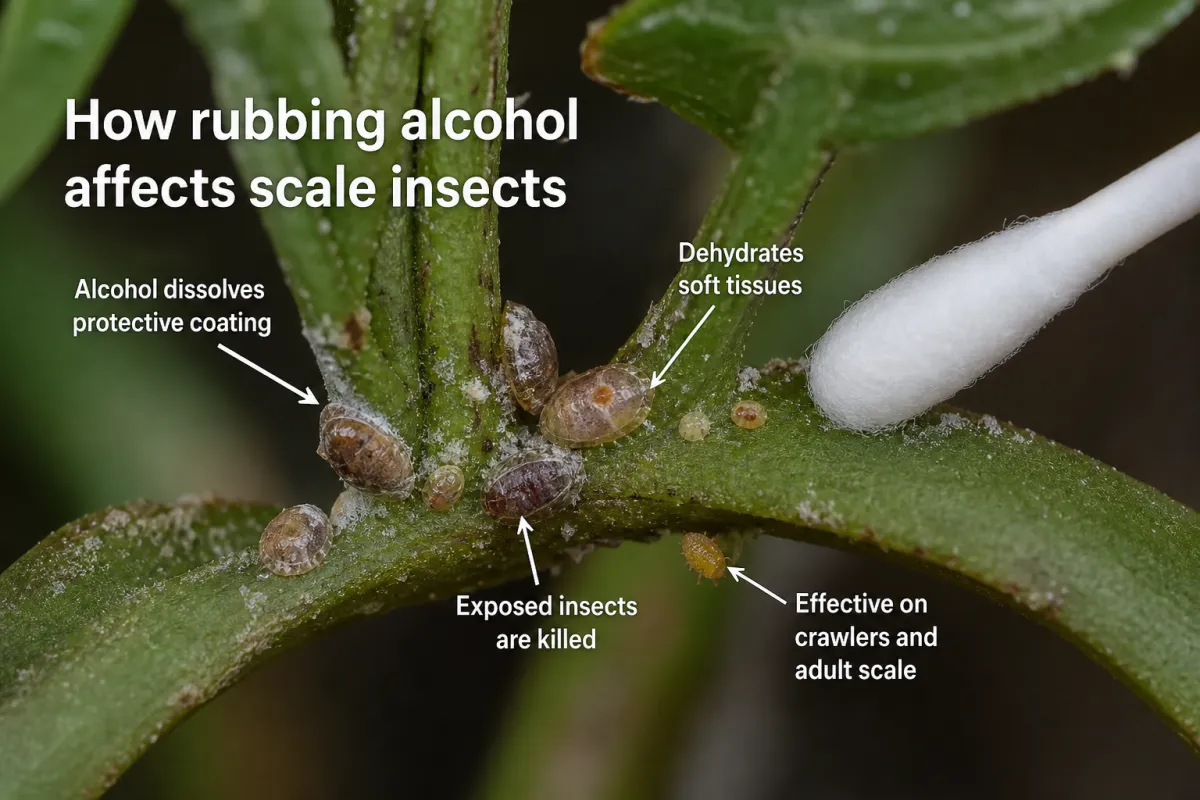
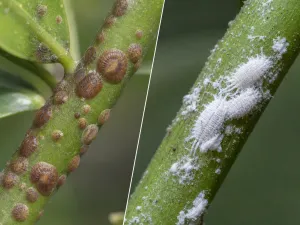
Rubbing alcohol works on scale by damaging the insect’s protective outer coating and dehydrating its body. That is important because many species attach themselves tightly to stems and leaf veins, where they are sheltered by a waxy, shell-like covering. Contact with alcohol can kill exposed individuals quickly, especially soft scale and crawlers, but it is not a magic spray that reaches every hidden pest or egg.
The key word is contact. Alcohol does not provide a long residual effect on the plant surface, so it only affects the insects it actually touches. If a colony is tucked under leaf bases, inside branch crotches, or beneath dense foliage, some pests may survive the first pass. This is why careful inspection and repeat treatment matter more than simply using a stronger mix.
Another practical point is that scale are often at mixed life stages at the same time. Adults may be easier to spot, while newly hatched crawlers can be tiny and mobile. Alcohol tends to be most reliable when you physically target visible pests and follow up before any survivors can rebuild the population. If you are confirming the pest first, a guide to scale insects can help distinguish them from mealybugs, edema, or corky spots.
Why alcohol is useful but limited
Unlike heavier horticultural oils, rubbing alcohol evaporates fast. That makes it convenient for spot treatment, especially on houseplants, but it also means coverage must be deliberate. A quick mist over the top of the plant often misses the undersides of leaves and the sheltered edges of stems where colonies begin.
Alcohol also does not correct the plant stress that allowed the infestation to worsen. Weak light, erratic watering, stale indoor air, or excessive nitrogen feeding can all encourage soft, vulnerable growth that pests exploit. Treatment should be paired with better basic care so the plant can replace damaged tissue and resist reinfestation.
When alcohol treatment is suitable
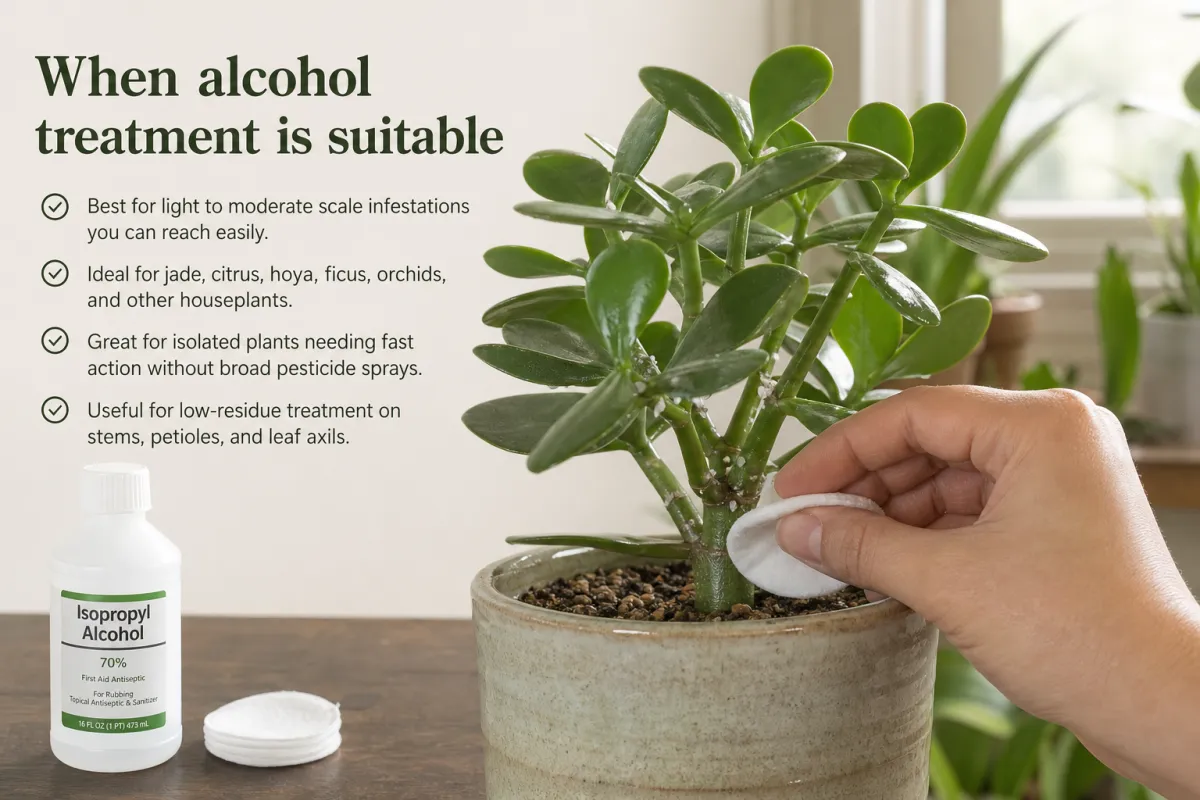
Alcohol treatment is most suitable for light to moderate infestations where you can inspect and reach most of the plant. It is especially practical for potted houseplants, compact shrubs in containers, and individual stems or leaves with clusters of pests. For a small infestation, manually wiping scale off with alcohol can be enough to stop the problem before it spreads.
It is less suitable when a plant is heavily infested across every stem, badly weakened, or too large to treat thoroughly. In those cases, physical pruning, insecticidal soap, horticultural oil, or a broader management plan may be more realistic. Alcohol is a useful tool, but not always the only or best one.
Best situations for using alcohol
In practice, alcohol works well under these conditions:
- The plant has a limited number of affected leaves or stems.
- You can isolate the plant from others during treatment and monitoring.
- The infestation is on smooth, sturdy foliage that can be wiped without tearing.
- You are dealing with visible pests on houseplants, especially common cases of indoor scale.
When to choose another method first
If the plant is already stressed from drought, root rot, low temperatures, or scorching sun, alcohol may add more strain. Likewise, large outdoor shrubs with bark crevices and dense branch structure are difficult to treat thoroughly by hand. For those cases, selective pruning and broader advice for outdoor scale are often more efficient than repeated swabbing.
If more than about one-third of the plant is covered, I usually treat alcohol as a cleanup tool rather than the main solution. Removing the worst stems first saves time and lets you focus the alcohol where it can actually make a difference.
Which alcohol concentration to use
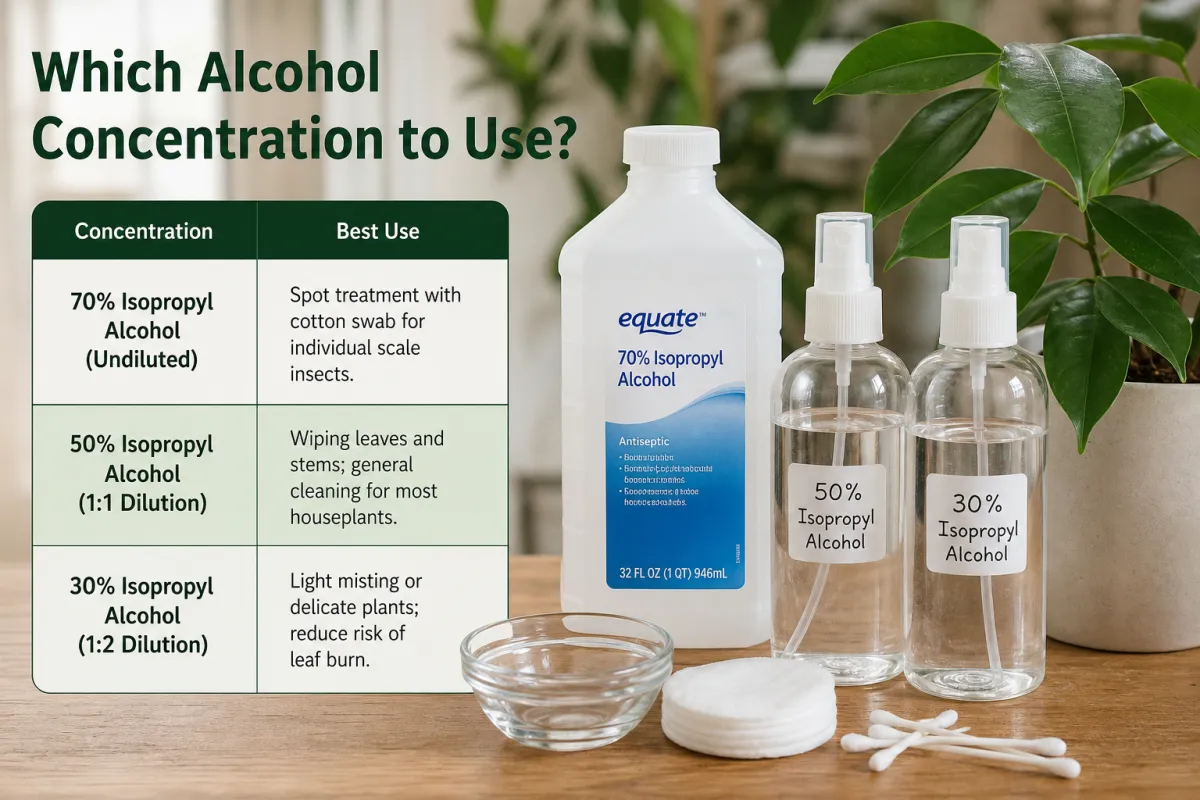
The safest starting point for most plants is a diluted isopropyl alcohol solution rather than full-strength rubbing alcohol straight from the bottle. Many growers use 70% isopropyl alcohol as the base product, then dilute it with water for broader leaf treatment. Full-strength application can be acceptable for a cotton swab touching individual pests, but spraying or wiping large areas with undiluted alcohol increases the risk of leaf burn.
Practical concentration choices
The right strength depends on how you are applying it and how delicate the plant is.
| Application method | Common alcohol source | Practical use |
|---|---|---|
| Cotton swab on individual scale | 70% isopropyl alcohol | Often used nearly as sold, with careful spot contact only on the insects. |
| Light wipe over a small leaf section | 70% isopropyl alcohol mixed 1:1 with water | Good starting point for many foliage plants after a patch test. |
| Spray or broader wipe on sensitive plants | 70% isopropyl alcohol diluted further | Try 1 part alcohol to 2 parts water for a gentler first trial. |
If you only have 91% or 99% isopropyl alcohol, dilute it before use. A strong product evaporates rapidly but can damage the waxy cuticle on leaves even faster. For example, mixing 250 ml (8.5 fl oz) of 91% alcohol with 250 ml (8.5 fl oz) of water gives a noticeably safer solution than using the original strength.
What to avoid
- Do not use alcohol with added fragrance, colorants, or skin conditioners.
- Avoid soaking the potting mix; alcohol should target the pests, not the root zone.
- Do not assume more strength means better control. Better coverage usually matters more than a harsher mix.
If your plant sits in strong sun, bright window heat, or outdoor temperatures above 29°C (85°F), apply treatment later in the day when surfaces are cooler. Warm leaves are more likely to show spotting after alcohol exposure.
Plants that may be sensitive to alcohol
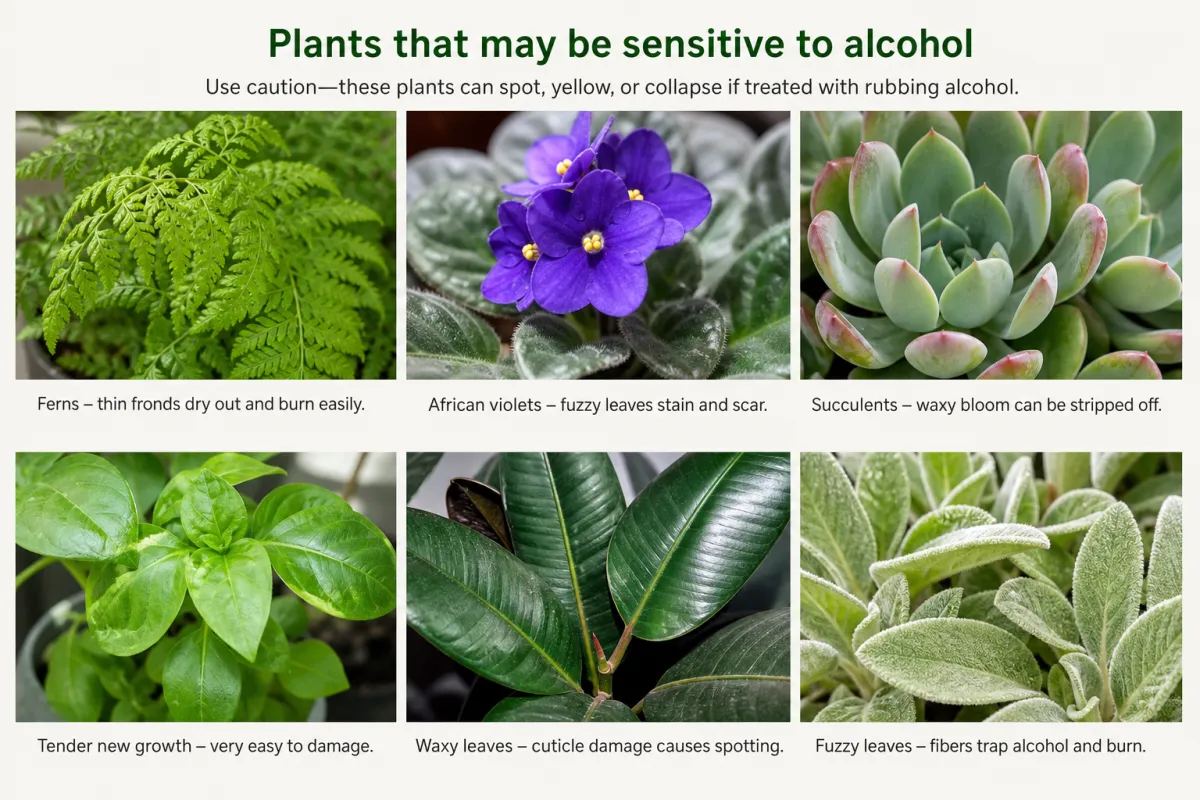
Not all plants respond the same way. Some have thick, leathery foliage that tolerates careful wiping well, while others mark, wilt, or develop translucent patches after even mild solutions. Sensitivity depends on leaf texture, natural wax layers, hairiness, and the general health of the plant.
Plants with very thin leaves are often the first to show trouble. Ferns, prayer plants, some begonias, and delicate foliage tropicals can react badly. Succulents may seem tough, but certain kinds with powdery bloom or a heavy farina can be scarred if alcohol strips that protective surface away. New growth is usually more vulnerable than older leaves.
Groups that deserve extra caution
- Ferns and maidenhair types with thin fronds.
- Velvety or hairy leaves, such as some African violets and gloxinia relatives.
- Waxy succulents with a blue or silvery coating.
- Tender herbs and soft annuals grown indoors.
- Plants already stressed by underwatering, overwatering, cold drafts, or recent repotting.
Why sensitivity varies
Alcohol can dissolve some surface waxes that help regulate water loss. On sturdy leaves this may be minor, but on fine-textured foliage it can lead to dry patches, edge browning, or bleached-looking spots. A plant in low humidity, below about 40%, is already losing moisture faster, so treatment may be harder on it than on the same plant grown in air closer to 50 to 60% humidity.
When I am unsure about a plant, I look at the leaves before I look at the pest. Anything thin, velvety, heavily coated, or newly unfurled gets the gentlest possible approach, even if that means slower treatment.
How to test a small area first
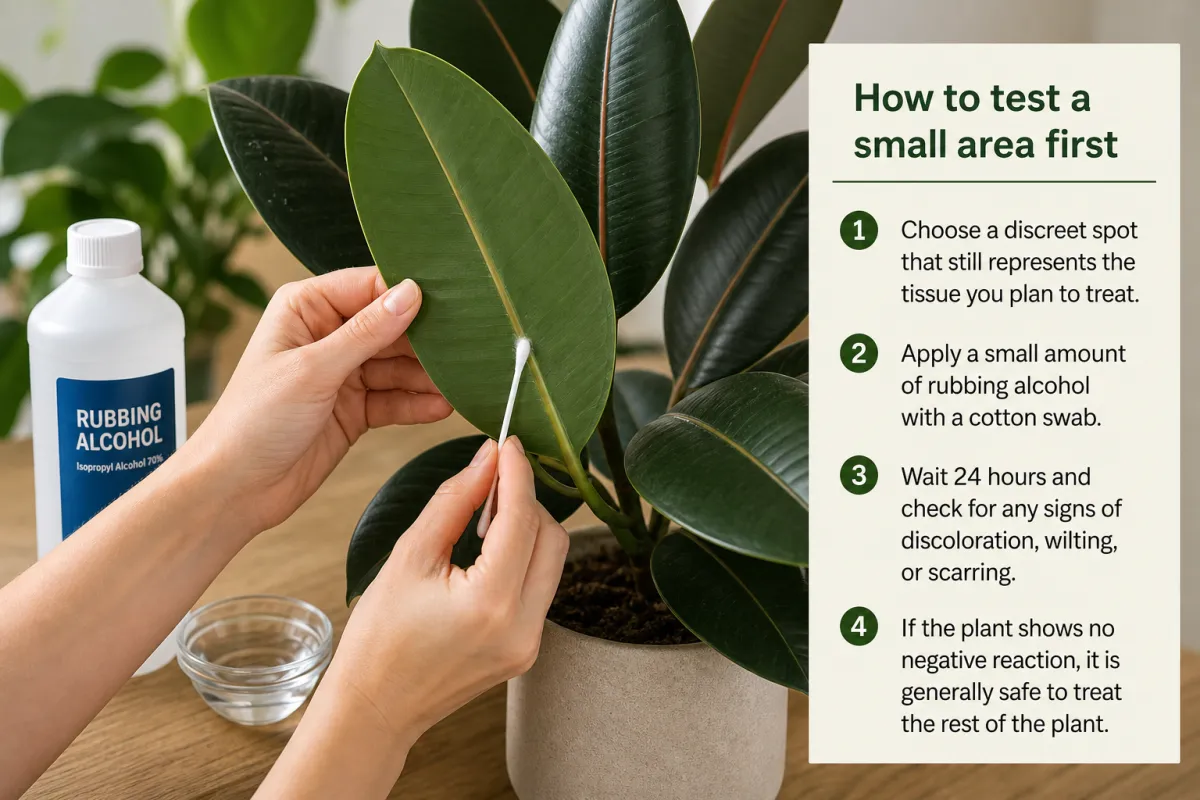
Patch testing is the simplest way to prevent unnecessary damage. Before treating the whole plant, apply your chosen alcohol solution to one small, inconspicuous area. A lower leaf, the back of a leaf, or a short section of stem works well. The goal is to see how the tissue reacts after the alcohol evaporates and the plant has had time to respond.
A simple test routine
A careful test does not take long, but it should be deliberate.
- Choose a small section with both leaf and stem tissue if possible.
- Apply the solution with a cotton swab or soft cloth rather than drenching the area.
- Keep the plant out of direct sun and strong heat while the test area dries.
- Wait 24 hours, and ideally 48 hours, before treating the rest of the plant.
If the area stays normal, with no browning, translucent patches, crisp edges, or limp tissue, the solution is probably acceptable for that plant. If the test spot shows damage, dilute further or switch methods. This pause is especially valuable on collector plants, variegated foliage, and species with thin leaves.
What counts as a bad reaction
Minor temporary dullness on the leaf surface can happen, especially if the plant had dust or residue, but actual tissue injury is different. Watch for water-soaked looking spots, pale bleach marks, sudden yellowing, or tissue collapse. These may appear within a few hours or only after the leaf dries completely.
Testing also reveals whether your cloth, swab, or spray technique is too aggressive. Sometimes it is not the alcohol itself, but hard rubbing on soft leaves that causes scarring.
How to remove scale with a cotton swab
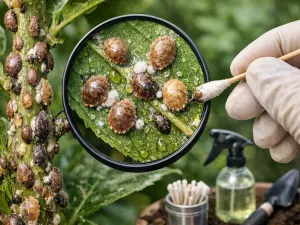
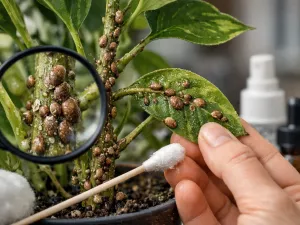
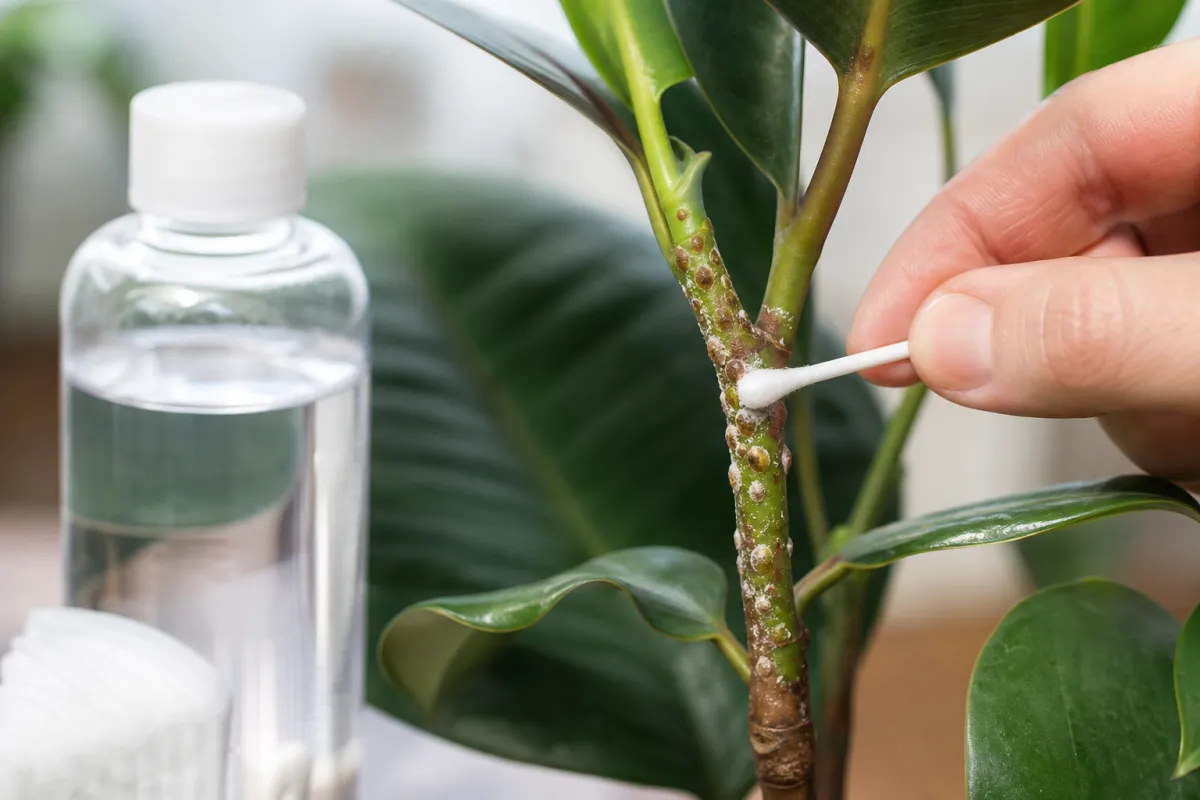
Using a cotton swab is one of the most precise ways to deal with visible scale. It combines chemical contact and physical removal, which is why it often works better than spraying alone on small infestations. The method is slow, but it lets you target the pests without unnecessarily wetting healthy tissue.
Step-by-step technique
Work in good light, and rotate the pot so you can see stems and undersides clearly.
- Dip a cotton swab into alcohol or your diluted mix, then blot off excess so it is damp rather than dripping.
- Press the swab onto each scale insect for a moment to wet it thoroughly.
- Gently rub or lift the pest away from the stem or leaf.
- Replace the swab when it becomes dirty, sticky, or frayed.
- Wipe the treated spot with a clean damp cloth if the plant is known to be sensitive.
Do not scrape hard with a fingernail or tool. On soft stems, bark can tear more easily than people expect, and those wounds create entry points for fungal and bacterial problems. If a scale insect does not come off easily, moisten it again and try a gentler second pass.
Disposal and cleanup
After treatment, discard used swabs and wipe down the work surface. If honeydew is present, clean it from leaves, pot rims, and nearby shelves. The sticky residue attracts dust and can support sooty mold, making it harder to inspect the plant later. It is also wise to check neighboring plants within about 30 cm (12 in) to 60 cm (24 in), especially if foliage was touching.
Treating leaves, stems and hidden crevices
Scale insects rarely stay only on the obvious leaf surface. Many gather along the midrib, where the leaf joins the stem, under overlapping sheaths, or in branching angles where a casual glance misses them. A careful treatment plan should follow the plant’s structure rather than just its outline.
Where to inspect most closely
- Leaf undersides, especially along the central vein.
- The junction where petioles meet stems.
- Branch crotches and bark fissures on woody houseplants.
- Old leaf bases on palms, dracaenas, and similar plants.
- Areas beneath clips, stakes, ties, and decorative moss.
Use a soft cloth or cotton pad for broader surfaces, and a swab for tighter spaces. On thick stems, you can wipe along the length of the stem in sections of 10 to 15 cm (4 to 6 in). On fine foliage, hold the leaf from underneath so you do not crease it while cleaning the top or underside.
Balancing coverage and plant safety
The aim is complete contact without saturating the plant. Alcohol should not run into the crown of rosette plants or drip heavily into the potting mix. If a plant has tightly folded centers, such as some bromeliads or bird’s nest forms, use a lightly damp swab rather than a spray. Pooled liquid in those centers can linger and stress tissue.
Hidden crevices are where repeat infestations often begin. After the obvious pests are gone, I check the stem joints with a flashlight from the side, not from above, because the angled light makes small bumps stand out better.
Once treatment is complete, place the plant where air movement is gentle but steady so surfaces dry reasonably fast. Avoid direct midday sun during this period. Good aftercare matters: keep watering consistent, avoid overfeeding for a week or two, and remove heavily infested dead leaves so they do not keep sheltering survivors.
How often to repeat the treatment
One treatment is rarely enough. Because alcohol only kills what it touches, overlooked insects and newly hatched crawlers may appear after the first session. Repeating the process at measured intervals gives you a better chance of interrupting the life cycle without overhandling the plant.
A realistic repeat schedule
For most houseplants, recheck the plant every 5 to 7 days. If you still see live scale, repeat targeted treatment at that time. Continue until you have had at least 2 to 3 weeks with no new insects visible. For stubborn cases, this may mean three or four rounds rather than one dramatic application.
The exact timing depends on temperature and growth rate. In warmer indoor conditions around 21 to 24°C (70 to 75°F), crawler activity may progress faster than in a cool room at 16 to 18°C (61 to 64°F). That is another reason weekly inspection is useful even if the plant looked clean immediately after wiping.
What to do between rounds
- Inspect with a magnifying glass if possible, especially along veins and stem joints.
- Wipe away fresh honeydew so new activity is easier to spot.
- Keep the plant isolated if practical until it stays clean for several weeks.
- Support recovery with stable watering, suitable light, and no unnecessary stress.
Resist the urge to treat daily unless the infestation is extremely localized and you are only dabbing individual insects. Frequent broad alcohol use can stress foliage more than the pests do. Steady follow-up works better than constant reapplication.
Common mistakes and signs of plant damage
Most problems with alcohol treatment come from using too much, treating under the wrong conditions, or assuming the plant can tolerate rough handling. Knowing the common mistakes helps you avoid turning a manageable pest issue into foliage damage.
Mistakes that reduce success
- Using undiluted alcohol over large leaf areas without patch testing first.
- Treating in direct sun or on hot leaves above about 29°C (85°F).
- Missing hidden colonies in leaf axils, undersides, and branch joints.
- Stopping after one treatment even though eggs or crawlers remain.
- Ignoring plant care issues such as weak light, stale air, or overfeeding.
How damage shows up
Alcohol injury usually appears as pale or brown patches, dry crisp edges, or a bleached look that follows the wiped area. On delicate leaves, tissue may first seem water-soaked and then turn papery as it dries. Mechanical damage from scrubbing often looks different: you may see streaks, tears, or bruised spots where the surface was rubbed too hard.
If only a few leaves are affected, stop treatment, improve conditions, and let the plant recover before trying a more dilute solution. Remove badly scarred leaves only if they are mostly damaged or if they block inspection. Otherwise, leaving them in place for a while can still help the plant photosynthesize.
When to stop and reassess
Pause alcohol use if the plant shows repeated spotting after each application, if new leaves emerge distorted, or if the infestation seems to be spreading despite careful work. At that point, a different approach may be more appropriate. Sometimes pruning the worst sections, improving light, and switching to insecticidal soap or horticultural oil is safer than forcing a method the plant clearly dislikes.
Frequently asked questions
Can I spray rubbing alcohol directly on the whole plant?
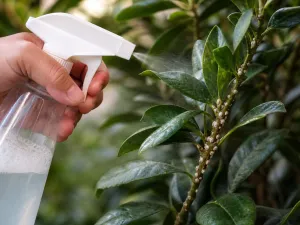
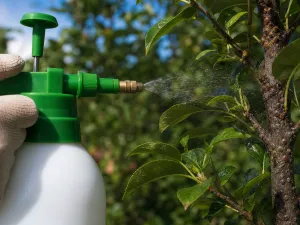
You can, but it is riskier than spot treatment. Broad spraying is best reserved for sturdy plants that have passed a patch test. Even then, use a diluted solution, avoid hot or sunny conditions, and do not soak the crown or potting mix. On delicate species, wiping or swabbing is usually safer.
Is 70% or 91% isopropyl alcohol better?
For most home use, 70% is easier to manage because it is less harsh than 91% or 99% and still effective on direct contact. Stronger alcohol should usually be diluted before plant treatment. The main advantage comes from careful coverage, not from maximizing strength.
Will alcohol kill scale eggs?
It may affect some exposed eggs, but it is not reliable enough to assume the problem is finished after one pass. That is why repeat inspections every 5 to 7 days matter. Newly hatched crawlers are often what reappear first.
Should I rinse the plant after treatment?
On sturdy plants treated with a cotton swab, rinsing is often unnecessary. On sensitive foliage or after wiping a larger area, a light rinse or a wipe with plain water after the alcohol has done its job can reduce the chance of leaf marking. Just avoid leaving water trapped in the crown or in tight leaf folds.
Can I use this method on edible plants or herbs?
Use extra caution. Small edible plants often have tender leaves that damage easily, and any treatment on plants you plan to harvest should be approached conservatively. If you do treat, use plain isopropyl alcohol with no additives, test first, and wash harvested parts thoroughly. For culinary herbs, removing infested growth may be simpler than repeated alcohol applications.
What else should I do besides treating the insects?
Support the plant so it can recover. Give it the correct light level, water only when the growing mix needs it, avoid heavy fertilizer for a short period, and prune dead or heavily infested material. A healthier plant is easier to inspect and less likely to become a long-term host for returning pests.