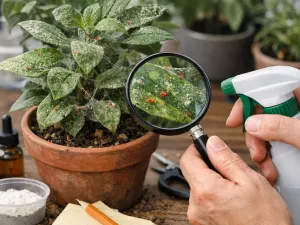
Spider Mites in Winter – Indoor Risk Factors

 Here we why spider mites become a bigger problem indoors in winter, especially because heating creates warm, dry conditions. It also explains common care mistakes, signs of infestation on houseplants, and how to adjust plant care to prevent outbreaks and keep plants healthy year-round.
- Why spider mites thrive indoors during winter
- How heating systems create ideal conditions
- Common winter mistakes that increase infestations
- Signs of mites in indoor plants during cold season
- How to prevent outbreaks in winter months
- Adjusting plant care for indoor conditions
- Maintaining plant health year-round
Spider mite problems indoors in winter are usually caused less by the season itself than by the environment around houseplants. Dry heated air, poor airflow, dusty leaves, and the stress of short days and low light can all weaken plants and make them easier targets. Understanding these indoor risk factors helps you notice early warning signs, improve growing conditions, and prevent a minor infestation from turning into a larger outbreak.
Why spider mites thrive indoors during winter

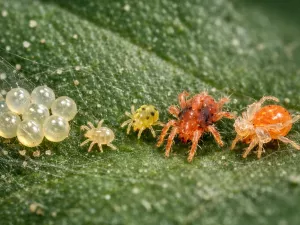
Spider mites often seem to appear out of nowhere once plants move indoors, but winter conditions strongly favor them. These pests are not insects but tiny arachnids, and they multiply fastest when air is dry, temperatures are steady, and plants are under mild stress. A heated home provides all three conditions at once, especially when windows stay closed for long periods.
Outdoors, rain, wind, cooler nights, and natural predators help keep mite populations in check. Indoors, that balancing effect disappears. A single unnoticed colony on the underside of a leaf can expand quickly because there is little environmental pressure slowing it down. This is why houseplants that looked healthy in autumn may begin declining by midwinter.
Dry air speeds up their life cycle
Low humidity is one of the biggest reasons winter infestations become severe. Many common indoor plants prefer humidity above 40 to 50 percent, while heated rooms can drop to 20 to 30 percent. In that dry air, foliage loses moisture faster, leaf tissue becomes more vulnerable, and mites reproduce more efficiently.
Plants with thin, tender leaves are especially exposed. Calatheas, ivy, dracaena, crotons, and many palms often show damage early, but even tougher plants can become hosts if the room stays dry for weeks.
- Less moisture in leaves: Dry conditions make plant tissue easier for mites to pierce and feed on.
- Faster breeding: Warm, dry rooms can shorten the time between generations.
- Reduced plant resilience: Indoor stress weakens natural defenses, so small populations become large ones quickly.
Indoor plants lose their natural protection
When plants are outside in warmer months, beneficial insects and weather disturbances interrupt pest buildup. Indoors, there are no rain showers washing foliage, no cool nights slowing activity, and usually no predators feeding on eggs and adults. Dust also settles more heavily on leaves inside, creating a surface mites seem to exploit.
Another factor is proximity. Houseplants are often grouped close together on shelves, stands, or windowsills. That makes it easy for mites to move from one plant to the next, especially when leaves touch. A problem that starts on one stressed plant can spread across a collection in a short time.
Editor’s note: If you bring plants indoors for winter, isolate them for at least 10 to 14 days before placing them with the rest of your collection. That short waiting period often reveals hidden pest issues before they spread.
How heating systems create ideal conditions

Heating systems do more than warm a room. They change humidity, air movement, and the way potting soil dries, all of which affect how vulnerable a plant becomes to mite damage. The problem is rarely the temperature alone. It is the combination of warmth and dryness, especially when plants sit close to vents, radiators, or baseboard heaters.
Many indoor spaces stay within a narrow temperature range all winter, often around 20 to 24°C (68 to 75°F). That consistency may feel comfortable for people, but it removes the natural fluctuations that can slow pest development. If the air is also dry, spider mites can remain active instead of going dormant.
Forced-air heat and low humidity
Forced-air systems are particularly hard on foliage because they push warm, dry air through rooms repeatedly. Plants near vents may experience constant moisture loss from leaves and faster drying in the root zone. Even if the whole room seems fine, the microclimate near a vent can be much harsher.
Symptoms of heat-related stress and mite damage often overlap. Leaves may look dull, pale, stippled, or slightly curled. Gardeners sometimes respond by watering more heavily, but extra water does not solve dry air and can create root problems at the same time.
Radiators, baseboards, and hot windowsills
Plants placed above radiators or close to baseboard heaters are exposed to repeated heat pulses. This can warm the pot, dry the soil unevenly, and stress roots. South-facing windows in winter can add another layer of strain: cold glass at night, bright sun by day, and dry indoor heat around the plant.
That combination creates unstable conditions. Mites take advantage of this kind of stress because weakened plants are less able to replace damaged cells and maintain healthy foliage.
| Heating situation | Effect on plants | Why mites benefit |
|---|---|---|
| Forced-air vent nearby | Leaves dry quickly and soil moisture drops faster | Dry foliage and steady warmth support rapid reproduction |
| Radiator or baseboard heat | Root zone may overheat and dry unevenly | Plant stress increases susceptibility to feeding damage |
| Sunny winter windowsill | Temperature swings between day and night | Stressed plants become easier hosts |
| Closed room with little ventilation | Stale air and dust buildup on leaves | Mites remain undisturbed and colonies go unnoticed longer |
Common winter mistakes that increase infestations

Winter pest outbreaks are often linked to care habits that seem harmless. Most are not dramatic errors but small routine choices that create stress over time. Once spider mites are present, these mistakes help them establish faster and make treatment less effective.
Understanding the pattern matters because many gardeners focus only on killing the pests. Long-term control depends just as much on removing the conditions that favored them in the first place.
Overheating and crowding plants
One common mistake is placing plants where they look attractive rather than where conditions stay stable. A decorative stand beside a heater, fireplace, or hot window may expose leaves to dry air every day. Grouping many plants tightly together can help humidity slightly, but if foliage overlaps and one plant is infested, mites spread more easily.
Spacing matters most when plants have dense canopies. Air should move gently around leaves without blasting them with heat.
Cleaning too little and inspecting too late
Dusty leaves are more than a cosmetic issue. Dust reduces light absorption and gives you fewer visual clues when mite stippling first appears. Many winter infestations become serious simply because the undersides of leaves are not checked until webbing is visible, which usually means the colony is already advanced.
Plants brought in from outdoors are another frequent source. Even if they looked clean in autumn, eggs or small populations may have been present before the move indoors.
- Skipping quarantine: New or recently moved plants can introduce pests to the whole collection.
- Ignoring leaf undersides: Early colonies usually start where they are hardest to see.
- Letting dust accumulate: Dirty foliage hides early damage and reduces plant vigor.
- Keeping stressed plants too close together: Mites move easily when leaves touch.
Watering by habit instead of by need
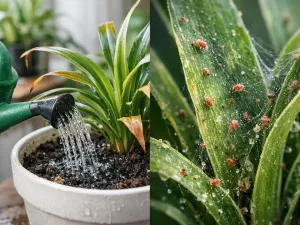
Winter watering mistakes tend to go in both directions. Some plants stay too dry because their owner follows a summer schedule but forgets the drying effect of indoor heat. Others stay too wet because lower light means the soil is not being used as quickly. Either extreme weakens roots and slows recovery from mite feeding.
Rather than watering on a fixed day, check the potting mix with a finger or moisture meter and judge each plant by species, pot size, and room conditions. A fern in a 15 cm (6 in) nursery pot will not dry at the same rate as a rubber plant in a 25 cm (10 in) container.
Practical tip: If mites keep returning, look beyond sprays. Repeated outbreaks often point to a placement issue such as a vent overhead, a radiator below, or a room that stays too dry all season.
Signs of mites in indoor plants during cold season

Spider mites are small enough to escape notice at first, so the earliest clues usually come from the plant rather than the pest itself. Winter damage can be mistaken for underwatering, low humidity, or general seasonal decline. The key is to look for a pattern: fine stippling, dull leaves, and damage that begins subtly but spreads steadily.
Because indoor light is weaker in winter, plants may already grow more slowly. That makes pest injury more obvious over time. New growth may emerge smaller, older leaves may fade unevenly, and the plant can lose its healthy sheen.
Early symptoms to catch before webbing appears
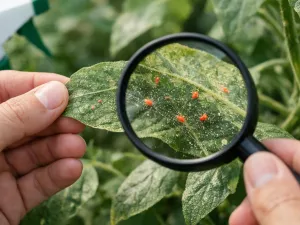
At the beginning of an infestation, leaves often develop tiny pale dots where mites have fed. This speckling may look silvery or yellowish, especially on dark green foliage. If you turn the leaf over, you may see very fine movement along the veins or near the midrib.
A simple check is to tap a leaf over white paper. Small moving specks can indicate mites, though a hand lens gives a clearer confirmation. Catching them at this stage is much easier than waiting until webbing forms.
- Stippled leaves: Tiny pale or yellow dots scattered across the surface.
- Dull or gray-green color: Foliage loses its fresh, healthy look.
- Fine leaf curling: Edges may tighten slightly as damage increases.
- Patchy yellowing: Not uniform like nutrient issues, but irregular and progressive.
Advanced signs that suggest a larger colony
Once populations build, the signs become easier to identify. Fine webbing may appear between leaves, at stem joints, or along the underside of foliage. Leaves can dry out, crisp at the edges, and drop earlier than expected. Tender new growth is often hit hardest because it is easiest for mites to feed on.
Some plants show damage differently. Palms may develop a washed-out look, ivy often becomes brittle, and dracaenas can show widespread stippling before any webbing is obvious. Knowing how your plant normally looks in winter helps you notice when damage is more than seasonal slowdown.
| Sign | What it usually means | Best next check |
|---|---|---|
| Fine pale speckling | Early feeding damage | Inspect leaf undersides with a hand lens |
| Leaf bronzing or dullness | Ongoing feeding over a wider area | Check several leaves on the same stem |
| Thin webbing near nodes | Established infestation | Isolate the plant immediately |
| Leaf drop with dry, stippled foliage | Advanced stress and pest pressure | Review humidity, watering, and nearby plants |
How to prevent outbreaks in winter months

Prevention in winter is mostly about reducing stress and spotting trouble early. You do not need tropical greenhouse conditions, but you do need to avoid the driest, hottest, and most stagnant parts of the home. A plant that is well placed, kept clean, and checked regularly is far less likely to host a major mite problem.
Preventive care also works best when it is simple enough to repeat. A weekly check, better spacing, and a small humidity adjustment usually do more than occasional dramatic interventions.
Build a winter inspection routine
Regular observation is your strongest tool. Choose one day each week to inspect leaves, especially the undersides and the points where leaf stems meet the main stem. This takes only a few minutes but catches most infestations before they become severe.
Wiping leaves with a soft damp cloth also helps. It removes dust, improves light capture, and gives you a close look at the plant’s condition. For plants with many small leaves, a lukewarm rinse can be useful if the species tolerates it and the plant can dry in a warm room afterward.
- Check the most vulnerable plants first, such as ivy, palms, calatheas, and crotons.
- Look under leaves and near new growth, not just at the top surface.
- Remove dust before it becomes heavy enough to hide early damage.
- Separate any suspicious plant by at least 1 to 2 m (3 to 6.5 ft) if possible.
Improve the indoor environment without overcorrecting
Raising humidity slightly can make a real difference, but it should be done in a controlled way. A humidifier is usually more effective than misting, which gives only a brief increase in moisture around the plant. Aim for a moderate range that suits both plants and the home rather than trying to create tropical levels everywhere.
Placement is just as important. Move plants away from direct heat sources, and avoid pressing foliage against cold window glass. If a room is especially dry, consider keeping the most sensitive plants together in a brighter, more stable area.
- Use a humidifier: Even a modest increase can reduce stress on foliage.
- Rotate plants if needed: The plant nearest the vent is often the first to decline.
- Quarantine arrivals: New purchases and outdoor-returned plants should stay separate at first.
- Prune heavily infested growth: Removing the worst leaves can reduce pressure and improve access for follow-up care.
Editor’s note: Pebble trays can help a little in very small spaces, but they rarely change humidity enough for a whole room. If winter air is consistently below 30 percent, a humidifier is usually the more reliable solution.
Adjusting plant care for indoor conditions
Winter care should reflect how differently plants behave indoors during the cold season. Growth slows, light levels drop, and evaporation patterns change. If care stays exactly the same as it was in summer, plants often become stressed, and stressed plants are easier targets for mites.
The goal is not to push active growth in winter but to maintain steady health. That means balancing water, light, feeding, and grooming so the plant stays resilient until stronger spring conditions return.
Watering and soil management
Indoor winter watering should be based on actual soil moisture, not the calendar. Let the top layer dry to the level appropriate for the species, then water thoroughly so excess drains away. Never leave roots standing in water for long periods, especially in lower light, because weak roots recover poorly from pest pressure.
Potting mix also matters. Old compacted soil can stay wet in some areas and bone dry in others, making moisture management difficult. If a plant has been in the same mix for years and shows repeated winter stress, repotting into a fresher, better-aerated medium in the proper season may help long term.
Light and feeding adjustments
Plants in winter often need brighter placement than they did in summer because daylight is shorter and weaker. Move them closer to a suitable window if the species tolerates it, but avoid direct contact with cold glass. If natural light is poor, a grow light placed at the correct distance can reduce stress. Distances vary by fixture, but many houseplant setups work well when lights are positioned around 20 to 45 cm (8 to 18 in) above the foliage.
Fertilizer should usually be reduced during the cold season unless the plant is actively growing under strong light. Heavy feeding in low light can lead to weak, soft growth that is more vulnerable to pests and general decline.
Pruning and hygiene
Removing badly damaged leaves improves appearance and helps you monitor new growth more clearly. It also reduces the number of hiding places for mites. Use clean scissors or pruners and avoid stripping too much foliage at once, since the plant still needs leaves to recover.
Routine hygiene is simple but valuable. Empty saucers after watering, remove fallen leaves from the soil surface, and clean shelves or windowsills where dust and debris collect. These steps do not eliminate mites by themselves, but they create a healthier indoor growing environment.
- Water deeply, then wait: Avoid frequent shallow watering that leaves roots unevenly moist.
- Pause heavy feeding: Resume stronger fertilizing when growth picks up in spring.
- Increase usable light: Better light helps plants maintain stronger foliage.
- Trim selectively: Remove the worst leaves without over-pruning the plant.
Maintaining plant health year-round
Spider mite prevention is easiest when plant care stays consistent across the whole year. Winter outbreaks often reveal weaknesses that began earlier, such as poor spacing, neglected cleaning, exhausted soil, or plants kept in the wrong light. A healthy plant is not immune to pests, but it is more likely to tolerate minor feeding and recover quickly after treatment.
Year-round care means thinking in seasons. Spring and summer are the best times to strengthen plants through proper repotting, balanced feeding, and active growth management. Autumn is the time to inspect, clean, and prepare plants before indoor conditions become harsher. Winter then becomes a maintenance phase rather than a rescue operation.
Seasonal habits that reduce future problems
Good habits build resilience over time. Rotate plants occasionally so growth stays balanced, refresh the top layer of potting mix when it becomes crusted, and review whether each plant still suits its location. A specimen that struggles every winter in one room may simply need a brighter or more humid spot.
It also helps to keep brief notes. If a palm develops mites every January, that pattern tells you something useful about the room, the heating cycle, or your care routine. Small records often reveal causes that memory misses.
| Season | Main focus | Benefit for mite prevention |
|---|---|---|
| Spring | Repot if needed, restart feeding, check roots and new growth | Builds strong growth before stress periods |
| Summer | Maintain even watering, wash foliage, inspect outdoor plants | Reduces hidden populations before indoor season |
| Autumn | Clean plants, quarantine movers, adjust placement indoors | Prevents pests from entering the winter setup |
| Winter | Monitor humidity, reduce stress, inspect weekly | Catches outbreaks early and limits spread |
Over time, the most effective approach is a steady one: place plants well, water according to conditions, keep leaves clean, and respond quickly to the first signs of trouble. Indoor winter air may always favor spider mites to some degree, but healthy plants in stable conditions are far less likely to suffer serious infestations.