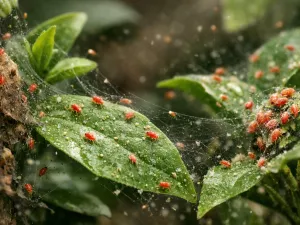
Watering Mistakes and Spider Mites

 The article explains how watering stress can attract spider mites. It covers the different effects of overwatering and underwatering, why weakened plants are more vulnerable, common watering mistakes, signs your routine needs adjusting, and how balanced watering and proper care help prevent infestations.
- How plant stress from watering attracts spider mites
- Difference between overwatering and underwatering effects
- Why weak plants are more vulnerable to mites
- Common watering mistakes that increase infestations
- How to balance watering to reduce pest risk
- Signs your watering routine needs adjustment
- Preventing mites through proper plant care
Spider mite outbreaks often begin with inconsistent watering rather than simple bad luck. When plants stay too dry, root stress weakens growth and dusty leaves make it easier for these tiny pests to spread quickly. By understanding how moisture affects overall plant health, you can identify the real cause sooner, improve your care routine, and stop a minor infestation from becoming a persistent, hard-to-control problem.
How plant stress from watering attracts spider mites

Spider mites rarely appear because of a single bad watering day. More often, they take advantage of a plant that has been under steady stress for a while. When roots are too dry, too wet, or repeatedly pushed from one extreme to the other, the plant has fewer resources to maintain strong new growth, balanced sap flow, and resilient leaf tissue. That weakened condition makes it easier for mites to feed and multiply.
These pests are especially quick to build up on indoor plants, greenhouse crops, and container specimens where the root zone depends entirely on the grower. A plant that cannot regulate moisture well often produces thinner, less vigorous foliage. Spider mites prefer that kind of tissue because they pierce leaf cells and feed on the contents, causing stippling, dullness, and a tired overall look.
Stress changes the plant before pests become obvious
Watering problems affect more than leaf turgor. They also influence nutrient uptake, root respiration, and the plant’s ability to replace damaged cells. A healthy plant can often tolerate a small number of mites without showing major decline, but a stressed one loses that buffer quickly.
- Dry roots reduce water pressure inside the plant, so leaves lose firmness and become easier for mites to exploit.
- Waterlogged roots struggle to take up oxygen, which slows growth and weakens the plant from below.
- Repeated swings between drought and saturation create chronic stress that is often worse than a single mistake.
- Reduced growth means the plant cannot outgrow minor feeding damage as easily.
Why mites seem to appear “suddenly” after watering issues
Spider mites are tiny and often go unnoticed until leaves are already speckled or webbing becomes visible. If a plant has been watered poorly for two or three weeks, the pest population may have been building quietly the whole time. Warm, dry air speeds this up, which is why stressed houseplants near heaters, bright windows, or vents are frequent targets.
The connection is not that watering directly creates mites. Instead, poor moisture management lowers plant resistance and creates conditions where mites can reproduce faster than the plant can recover. Once that balance tips, the infestation seems to arrive overnight.
Editor’s note: If mites keep returning after treatment, look at root health before changing sprays again. A plant with damaged roots often cannot hold leaves well enough to recover, even when the pest count drops.
Difference between overwatering and underwatering effects

Overwatering and underwatering can both lead to mite trouble, but they do so in different ways. One deprives roots of oxygen, while the other deprives the whole plant of moisture. Because the leaf symptoms can overlap, gardeners sometimes respond in the wrong direction and make the problem worse.
Understanding the difference matters because the fix for each condition is not simply “water more” or “water less.” The real goal is to restore a healthy root environment and a steady moisture pattern.
How underwatering affects leaves and pest pressure
When a plant stays too dry, it conserves moisture by slowing growth and sacrificing older leaves first. Foliage may curl, crisp at the edges, or feel thin and papery. This kind of stress often lines up with classic spider mite outbreaks, especially on palms, ivy, calathea relatives, beans, and many common houseplants.
Dry conditions also tend to coincide with low humidity and warm air, both of which favor rapid mite reproduction. A thirsty plant is therefore facing two pressures at once: weaker tissue and a pest that thrives in the same environment.
How overwatering weakens a plant differently
Overwatered plants can look deceptively soft and lush at first, but the root system may already be struggling. Saturated soil reduces air spaces, and roots need oxygen to function. If they remain wet for too long, nutrient uptake drops, roots begin to die back, and leaves may yellow or wilt even though the mix is damp.
Spider mites do not prefer soggy soil itself, but they readily exploit the weakened top growth that follows root stress. In this case, the infestation is a secondary problem attached to poor root performance rather than surface dryness alone.
| Condition | Typical root-zone issue | Common leaf response | How mite risk increases |
|---|---|---|---|
| Underwatering | Roots dry out and stop supplying moisture evenly | Curling, crisp edges, drooping, dull color | Leaves become stressed in warm, dry conditions that favor mites |
| Overwatering | Roots lose oxygen in saturated mix | Yellowing, limp growth, stalled development | Weak growth cannot resist feeding or recover quickly |
| Irregular watering | Roots cycle between stress states | Leaf drop, uneven growth, mixed symptoms | Chronic stress lowers resilience over time |
| Shallow frequent watering | Only upper soil stays moist | Surface roots dominate, plant wilts quickly | Plant becomes drought-prone and easier to infest |
Why weak plants are more vulnerable to mites

A vigorous plant is not immune to spider mites, but it is far better equipped to cope with them. Strong roots, balanced moisture, and active growth allow the plant to replace damaged tissue and maintain thicker, healthier leaves. Weak plants, by contrast, are already spending their energy on survival, so even light feeding can push them into visible decline.
This is why two plants in the same room can have very different outcomes. One may carry a few mites with little damage, while the other declines fast. The difference is often not the pest alone but the plant’s overall condition.
Root health drives above-ground resistance
Leaves only stay resilient when roots are functioning well. Healthy roots absorb water, move nutrients, and support steady growth. If watering mistakes have reduced root mass, the plant may not be able to support all its foliage. Those leaves become easier targets because they are already under internal strain.
Even after watering is corrected, recovery takes time. New roots must form before the canopy can fully rebound. During that window, spider mites can spread quickly if plants are not monitored closely.
Weak growth invites faster visible damage
Spider mites feed by puncturing leaf cells, and weak plants show the effects sooner. Instead of bouncing back, they develop pale stippling, bronzing, and leaf drop. New growth may emerge smaller than normal, and damaged leaves often dry out around the margins more quickly than they would on a healthy specimen.
- Slower replacement means damaged leaves remain on the plant longer, reducing its appearance and photosynthesis.
- Poor nutrient uptake limits the plant’s ability to build strong new tissue.
- Stress hormones rise when the plant is struggling, which often coincides with reduced vigor and poorer pest tolerance.
- Thin foliage is less able to withstand repeated feeding.
Practical recommendation: Do not judge recovery by old leaves alone. If the newest leaves are larger, cleaner, and more evenly colored after 10 to 21 days, the plant is moving in the right direction even if older foliage still looks rough.
Common watering mistakes that increase infestations

Most watering errors are not dramatic. They are small habits repeated over time: a pot left bone dry every weekend, a saucer that stays full, or a grower who waters on a fixed schedule without checking the soil first. These routines can quietly weaken plants until spider mites gain the upper hand.
The biggest issue is inconsistency. Plants can adapt to many conditions better than they can adapt to constant fluctuation. A stable root environment gives them the best chance to resist pests and recover from minor damage.
Habits that dry plants out too much
Some plants suffer because they are not watered deeply enough. A quick splash may moisten only the top few centimeters of soil, leaving the lower root ball dry. This encourages shallow roots and makes the plant wilt sooner between waterings.
- Watering too lightly so moisture never reaches the full root zone.
- Waiting for severe wilt before watering again, especially with thin-leaved houseplants.
- Using a pot that is too small so the mix dries in a day or two during warm weather.
- Ignoring seasonal changes when brighter spring light increases water use.
Habits that keep roots too wet
Other plants are stressed because the potting mix never gets enough air. This often happens in decorative containers without drainage, dense old soil, or oversized pots that hold moisture for too long. The leaves may droop, and growers sometimes misread that wilt as thirst, adding even more water.
- Watering by the calendar instead of checking the actual moisture level.
- Leaving runoff in saucers for hours or days after watering.
- Using heavy soil that compacts and drains poorly around roots.
- Repotting into a much larger container where unused soil stays wet too long.
Environmental mismatches that magnify the problem
Watering cannot be separated from light, temperature, and airflow. A plant in strong sun or near a heater may need water much sooner than the same plant in a cooler room. Likewise, a plant kept in low light but watered heavily will stay wet longer and weaken over time.
When growers focus only on the amount of water and ignore the environment, they often create the exact stress pattern that favors mite outbreaks.
How to balance watering to reduce pest risk

The best watering routine is not rigid; it is responsive. Plants need enough moisture to support active growth, but they also need oxygen around the roots. Balancing those two needs reduces stress and makes it harder for spider mites to turn a minor issue into a serious infestation.
This balance starts with the root ball, not the calendar. Check how the potting mix feels below the surface, how heavy the pot is, and how quickly the plant is using water under current conditions. A plant in active growth during warm weather may need a very different schedule from the same plant in winter.
Build a practical watering method
A reliable routine usually combines observation with a few simple checks. This is more accurate than watering every plant on the same day.
- Check the top 2.5 to 5 cm (1 to 2 in) of the mix with a finger or moisture probe, depending on the plant type.
- Lift the pot when dry and again after watering so you learn the weight difference.
- Water thoroughly until excess drains out, then empty the saucer after a short period.
- Wait until the plant reaches the right dryness level for its species before watering again.
Match the routine to plant type and conditions
Not every plant should dry the same amount between waterings. A fern or peace lily may need more even moisture than a jade plant or snake plant. Pot size, root density, and room temperature also matter. In summer, a container on a bright windowsill may dry twice as fast as one 1 m (3.3 ft) away from the same window.
If mites have been a recurring issue, review the setup as a whole. Better drainage, a more suitable pot size, brighter but not scorching light, and improved humidity can all support a more stable watering rhythm.
Practical recommendation: If you are unsure whether a plant is too dry or too wet, inspect the root zone before treating the leaves again. A five-minute check can prevent weeks of guessing.
Signs your watering routine needs adjustment
Plants usually give several warnings before watering problems become severe. The challenge is that those warnings are often subtle at first and easy to confuse with nutrient issues, sun stress, or natural aging. When spider mites are present, reading the plant correctly becomes even more important because the wrong watering response can intensify both stress and pest damage.
Look for patterns rather than single events. One droopy afternoon after a hot day is not the same as repeated wilting, yellowing, or leaf drop over several weeks.
Clues in the soil and pot
The growing medium often reveals more than the leaves do. If water runs straight down the sides of the pot, the mix may have become too dry and shrunken. If the surface stays wet for many days, the soil may be compacted or the pot too large for the current root system.
- Very fast drying can mean root binding, too much heat, or a potting mix with poor water retention.
- Very slow drying may point to low light, dense soil, cold conditions, or root damage.
- Musty odor suggests stale, poorly aerated conditions around roots.
- Crusted or hard soil surface often indicates uneven wetting and poor absorption.
Clues in the foliage
Leaf symptoms become more useful when read together. Spider mite stippling plus crispy edges often leans toward dryness or inconsistent watering. Yellowing with limp stems and stalled growth may suggest excess moisture and root stress. New leaves that emerge smaller than usual can indicate the plant has been struggling for some time.
Watch how quickly the plant responds after watering. A thirsty plant often perks up within hours, while an overwatered one usually does not improve immediately and may continue to decline despite damp soil.
| Visible sign | What it may suggest | Why it matters for mite problems |
|---|---|---|
| Dry tips and crisp margins | Chronic dryness or uneven watering | Stressed leaf tissue is easier for mites to damage |
| Yellow lower leaves with wet soil | Overwatering or poor drainage | Weak roots reduce the plant’s ability to recover |
| Pot feels extremely light every day | Root-bound plant or very high water demand | Frequent drought stress can trigger recurring outbreaks |
| Soil remains soggy for a week or more | Low uptake, compacted mix, or oversized pot | Root decline weakens foliage and prolongs stress |
Preventing mites through proper plant care
Good watering is one part of prevention, but it works best as part of a broader care routine. Spider mites are most troublesome when plants are already under pressure from poor light, stale air, nutrient imbalance, or neglected grooming. Prevention means keeping the plant strong enough that a few mites do not become a major outbreak.
That does not require perfect conditions. It requires consistency. A plant with suitable light, a well-draining mix, regular inspection, and sensible feeding is far less likely to suffer repeated infestations than one living at the edge of its tolerance.
Core care practices that support resistance
Healthy plants are easier to monitor and easier to treat. Dust-free leaves, stable moisture, and active growth make it simpler to spot early mite activity before webbing spreads.
- Use the right soil so water moves through the pot while still reaching the root ball evenly.
- Give appropriate light because plants in dim conditions use less water and weaken if watered too heavily.
- Feed moderately during active growth instead of pushing soft, weak growth with excessive fertilizer.
- Prune badly damaged leaves when necessary so the plant can direct energy into healthy growth.
- Inspect leaf undersides weekly, especially during warm, dry periods.
Simple prevention habits for indoor and outdoor plants
Indoor plants benefit from occasional rinsing of foliage, especially broad-leaved species that collect dust. Outdoors, steady irrigation and reduced drought stress are often more important than humidity itself. In both settings, avoid letting a plant cycle repeatedly from severe dryness to saturation.
If you bring plants indoors for winter or move nursery plants into a collection, isolate them for a short period and inspect them closely. Spider mites spread easily from plant to plant, and a stressed newcomer can become the starting point for a wider problem.
Proper plant care will not guarantee that mites never appear, but it greatly lowers the odds of a damaging outbreak. More importantly, it gives the plant enough strength to recover quickly if pests do show up.