Aphids by Color – Identification and Meaning

 Here we why aphids appear in different colors on plants and what green, black, white, and yellow aphids can suggest about species, damage risk, and infestation stage. It also explains how to identify them by appearance, whether color changes treatment, and the best control methods for all types.
- Why aphids appear in different colors on plants
- Differences between green, black, white, and yellow aphids
- What aphid color may indicate about infestation stage
- Which types are most harmful to plants
- How to identify aphid species by appearance
- Does color affect treatment methods
- Best control strategies for all aphid types
Seeing aphids in different colors can help you figure out what is attacking your plants and how urgently you should respond. Green, black, yellow, red, and pale or white-looking aphids may indicate different species, preferred host plants, or stages of development, so color is not just a minor detail. For gardeners and houseplant owners, recognizing these visual clues early makes it much easier to spot infestations and choose the right treatment before damage spreads.
Why aphids appear in different colors on plants

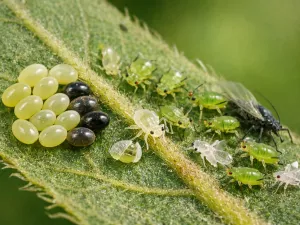
Aphids are not all the same shade because color is influenced by species, age, host plant, and even the season. Gardeners often assume that green insects on roses and black ones on beans must be unrelated pests, but many aphids are simply adapted to blend into the plant tissue they feed on. Their body pigments can range from pale yellow-green to dark brown, black, pink, gray, or almost white.
Color also changes with life stage and environment. Young aphids are often paler than mature adults, and winged forms may look darker or more patterned than wingless ones. Cool weather, crowded colonies, and changes in plant sap quality can all alter how an infestation looks from one week to the next.
Species differences are the main reason
The biggest factor is species identity. Green peach aphids, cabbage aphids, melon aphids, oleander aphids, and black bean aphids all have their own typical appearance. Some species are highly variable and may show several colors within the same colony, while others are more consistent.
- Green species often blend into soft new growth and leaf undersides.
- Black or very dark species are common on stems, flower buds, and broad-leaved vegetables.
- Yellow species are frequently seen on milkweed, peppers, and tender houseplants.
- White-looking aphids may actually be pale aphids or aphids covered in waxy material.
Host plants can influence appearance
The same general type of aphid may look slightly different depending on what it is feeding on. Sap composition varies between roses, brassicas, citrus, peppers, and indoor foliage plants. That affects body tone, transparency, and how quickly the insects develop. On heavily fertilized plants with lush, nitrogen-rich growth, aphids often appear plumper and more vivid.
New growth is especially attractive because it contains softer tissue and easier-to-access sap. That is why colonies often seem brighter in color near shoot tips and flower buds.
Seasonal and colony conditions matter
During spring and early summer, aphids usually reproduce rapidly and colonies can contain many pale juveniles. Later in the season, stress, crowding, predators, and changing weather may produce more winged adults, which are often darker. A colony that looked light green in May can appear mixed green and black by midsummer without necessarily being a second pest.
Editor’s note: If color seems to change suddenly, inspect with a hand lens before treating. What looks like a new aphid outbreak is sometimes a mix of old skins, winged adults, and parasitized aphids rather than a completely different infestation.
Differences between green, black, white, and yellow aphids

Color is useful for quick field recognition, but it should be treated as a starting point rather than a final diagnosis. Green, black, white, and yellow aphids differ not only in appearance but also in the plants they favor, how visible they are, and the kind of damage they tend to highlight first.
For home gardeners, the most practical approach is to connect color with plant location and colony behavior. A pale cluster hidden on the underside of a leaf may need a different inspection method than a dark colony packed onto bean stems.
The table below shows broad patterns gardeners commonly see.
| Color seen | Typical look | Common places found | Useful clue |
|---|---|---|---|
| Green | Soft-bodied, translucent to bright green, often hard to spot on foliage | Rose tips, peppers, lettuce, herbs, fruit tree shoots | Often discovered after leaves begin curling or sticky honeydew appears |
| Black | Dark brown to black, usually more obvious against green tissue | Beans, nasturtiums, viburnum, some ornamentals and vegetables | Colonies can look dense and dramatic even when numbers are moderate |
| White | Pale cream to white, or wax-coated and dusty-looking | Cabbage family plants, indoor plants, leaf undersides, protected crevices | May be mistaken for mealybugs, shed skins, or mildew at first glance |
| Yellow | Bright yellow to yellow-orange, sometimes with dark legs or cornicles | Milkweed, peppers, citrus, greenhouse crops | Often easy to spot early because they contrast strongly with leaves |
Green aphids
These are among the most common and most easily overlooked. Because they blend into leaves and stems, gardeners often notice the plant symptoms first: puckered leaves, distorted buds, or sticky residue on nearby surfaces. Green aphids are frequent on roses, peppers, leafy greens, and many houseplants.
Black aphids
Black aphids tend to stand out visually, especially on tender stems. Their dark color can make an infestation look worse than it is, but they are still serious feeders and can multiply quickly. On broad beans, for example, they often crowd the growing tips and flower clusters, causing severe distortion if left unchecked.
White aphids
True white aphids are less common than pale green or wax-covered aphids that simply appear white. Cabbage aphids often have a gray-white, powdery look because of wax on the body. This coating can make contact sprays less effective unless coverage is very thorough.
Yellow aphids
Yellow aphids are easy to notice and can build up rapidly on warm, sheltered plants. Oleander aphids, often found on milkweed, are a good example. Their bright color makes them conspicuous, but visibility does not always mean they are more dangerous than green or black species.
What aphid color may indicate about infestation stage

Color can sometimes hint at how far an infestation has progressed, although it should never be used alone. Early colonies often contain many pale juveniles clustered tightly on the newest growth. As numbers increase, you may see a broader mix of sizes, shades, winged adults, and white shed skins. The plant itself also starts showing more obvious stress.
What matters most is the combination of color, density, and plant symptoms. A few yellow aphids on one stem can be an early-stage issue, while a mixed colony of green adults, dark winged forms, and white cast skins usually points to an established population.
Early signs
At the beginning, aphids are usually concentrated on soft tissue: shoot tips, flower buds, or the undersides of the youngest leaves. They may look pale because many are immature nymphs. Damage is often subtle at this stage.
- Light leaf curling or puckering
- Small groups near buds or fresh shoots
- Little or no visible honeydew
- Few ants present
Established colonies
As the infestation develops, colonies become denser and more mixed in appearance. You may see adults and nymphs together, plus white skins left behind after molting. Honeydew becomes more noticeable, and ants may begin moving among the aphids to collect it.
Darker individuals may appear when winged adults develop. These winged forms are a sign that the colony is crowded or the plant is becoming less suitable, and the aphids are preparing to spread.
Advanced infestation clues
By the time aphids are firmly established, color is only one part of the picture. The plant usually gives clearer warning signs than the insects themselves.
- New leaves emerge twisted or stunted.
- Buds fail to open cleanly or flowers become deformed.
- Sticky honeydew coats leaves, pots, or nearby furniture.
- Sooty mold begins growing on the sugary residue.
- Winged aphids appear and start colonizing nearby plants.
Practical tip: White flecks around a colony are often shed skins, not a second pest. Their presence usually means the aphids have been feeding long enough to molt repeatedly, so act before they spread to neighboring plants.
Which types are most harmful to plants

No single color is automatically the most destructive. Harm depends more on aphid species, host plant sensitivity, colony size, and whether viruses are being transmitted. A small visible colony of yellow aphids may be less damaging than a hidden population of green aphids tucked inside curled leaves.
That said, some aphid groups are especially troublesome because they reproduce fast, target valuable crops, or carry plant diseases. Seedlings, flowering annuals, peppers, brassicas, cucurbits, roses, and indoor ornamentals can all suffer quickly when sap is removed from tender growth.
Plants most at risk
Young and soft-growing plants are the easiest for aphids to exploit. Excess nitrogen fertilizer often pushes lush growth that aphids love, especially in spring. Plants under drought stress can also struggle more because they have less resilience to repeated feeding.
- Seedlings can be stunted permanently by even modest feeding.
- Flowering plants may lose buds or produce distorted blooms.
- Vegetables can suffer reduced yield when growing tips are attacked.
- Houseplants often decline slowly because infestations go unnoticed indoors.
Most damaging situations
The worst aphid problems usually involve one or more of these factors:
- Colonies feeding on the newest growth where development is most easily disrupted
- Heavy honeydew production that leads to sooty mold
- Virus transmission in crops such as peppers, potatoes, cucurbits, or leafy greens
- Protected environments such as greenhouses or indoor rooms where natural predators are scarce
Color versus real threat
Black aphids can look alarming because they are so visible, while green aphids often cause more hidden distortion before they are noticed. White waxy aphids can be persistent because their coating helps them resist poor spray coverage. Yellow aphids are easy to spot early, which can actually make them easier to manage if you respond quickly.
In practical terms, the most harmful aphid is the one feeding unnoticed on active growth for several days or weeks. Regular inspection matters more than judging danger by color alone.
How to identify aphid species by appearance

Accurate identification starts with more than body color. To tell aphid species apart, look at size, shape, waxiness, leg color, the presence of wings, and the pair of tube-like structures near the rear called cornicles. Host plant identity is also one of the best clues, since many aphids strongly prefer certain crops or ornamentals.
You do not need a laboratory setup for useful identification. A simple hand lens and careful observation in good light are enough to separate many common garden aphids from similar pests such as whiteflies, mealybugs, scale crawlers, or spider mite clusters.
Key features to inspect
Start by checking one colony closely rather than scanning the whole plant at once. Aphids often gather on the undersides of leaves, on stems near buds, or around flower stalks.
- Body shape: Pear-shaped bodies are typical of aphids.
- Cornicles: Small rear tubes help distinguish aphids from many other soft-bodied pests.
- Wings: Winged adults usually have darker thoraxes and clearer segmentation.
- Wax or dusting: A powdery coating is common in some species such as cabbage aphids.
- Host plant: Milkweed, roses, brassicas, beans, and peppers each tend to attract particular species.
Common look-alikes
Several pests are mistaken for aphids because they cluster in groups or leave sticky residue. Whiteflies flutter when disturbed, while aphids usually stay put. Mealybugs look cottony and are more segmented, often hiding in leaf joints. Spider mites are much smaller and usually create fine webbing rather than obvious pear-shaped colonies.
A practical identification routine
If you are trying to narrow down the species in the garden or greenhouse, use a repeatable check rather than relying on a quick glance.
- Inspect the youngest leaves and stems first.
- Note the main body color, but also whether the insects are shiny, waxy, or translucent.
- Check for cornicles with a hand lens.
- See whether ants are attending the colony, which often confirms honeydew-producing sap feeders.
- Match the insects to the host plant before deciding on likely species.
Editor’s note: If the insects are bright yellow-orange on milkweed, identification is often straightforward. On mixed vegetable beds, host plant and body shape are usually more reliable than color alone.
Does color affect treatment methods

In most cases, treatment is based on aphid biology rather than color. All aphids feed by piercing plant tissue and sucking sap, so the core control methods are similar: remove colonies physically, improve plant growing conditions, and use low-impact sprays when needed. However, color can hint at features that affect how well a treatment works, especially visibility and waxiness.
For example, green aphids are easier to miss during follow-up checks, while white waxy aphids may need more careful spray coverage. Black aphids are easier to see and monitor, which can help you judge whether control measures are working after 2 to 3 days (48 to 72 hours).
When treatment needs adjusting
The method itself may stay the same, but the application can change depending on what you are seeing on the plant.
- Pale or hidden colonies: Spend more time checking leaf undersides and tightly folded growth.
- Waxy white aphids: Use thorough contact coverage because wax can reduce spray reach.
- Dense black colonies on tips: Pinching out badly infested shoot ends can be faster than spraying.
- Mixed colonies with winged adults: Inspect nearby plants because spread is already underway.
Sprays and contact control
Insecticidal soap and horticultural oils work by contact, so they must hit the aphids directly. That means color matters mainly because it affects visibility. On leafy crops and houseplants, rotate the pot or gently lift leaves to reach hidden groups. Spray in the cooler part of the day and avoid applying oils to drought-stressed plants or in strong sun.
When using any spray, test a small area first and wait 24 hours before treating the whole plant, especially on tender herbs, ferns, or fuzzy-leaved species.
What color does not change
Color does not change the need for basic plant care. Overfed, soft growth remains attractive to aphids regardless of species. Poor airflow, cramped spacing, and inconsistent watering all make infestations harder to manage. A healthier plant recovers faster after feeding damage and tolerates occasional aphids better than a stressed one.
Best control strategies for all aphid types
The most effective aphid control combines monitoring, physical removal, balanced growing conditions, and timely treatment. Waiting for a heavy outbreak usually leads to curled leaves, sticky honeydew, and spread to nearby plants. Whether the aphids are green, black, white, or yellow, the goal is the same: reduce numbers early and make the plant less inviting.
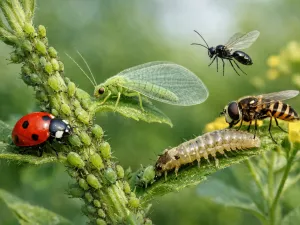
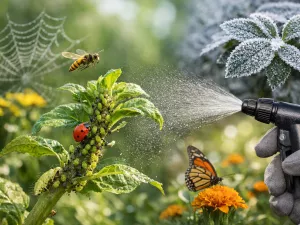
Good control also depends on where the plant is growing. Outdoor plants often benefit from natural predators such as lady beetles, lacewings, hoverfly larvae, and parasitic wasps. Indoor plants and greenhouse crops usually need more hands-on management because those natural checks are limited.
Start with non-chemical control
Physical and cultural methods are often enough for light to moderate infestations, especially if you catch them early.
- Rinse with water: A firm spray from a hose can knock aphids off sturdy outdoor plants. Support stems with one hand to avoid breakage.
- Prune heavily infested tips: Remove the worst growth and dispose of it away from the garden.
- Wipe or pinch colonies: On houseplants, this is often quicker than repeated spraying.
- Control ants: Ants protect aphids from predators, so reducing ant activity improves natural control.
Improve plant conditions
Plants that are pushed into soft, lush growth tend to attract more aphids. Adjusting care can reduce repeat outbreaks.
- Avoid excessive nitrogen fertilizer, especially during active aphid season.
- Water consistently so plants are not weakened by drought stress.
- Space plants for airflow rather than crowding leaves together.
- Inspect new purchases before bringing them into a greenhouse or home.
Use low-impact treatments correctly
If colonies persist, insecticidal soap or horticultural oil can be very effective when applied properly. Coverage matters more than strength. Reapply according to the product label, often every 5 to 7 days, until new growth is clean. For small indoor plants, a sink or shower rinse before spraying can improve results by reducing colony size first.
Avoid broad-spectrum insecticides unless the situation is severe and targeted methods have failed. They can kill beneficial insects that would otherwise help suppress future outbreaks.
A simple response plan
When aphids keep returning, a routine is more reliable than one heavy treatment.
- Inspect tender growth twice weekly during active growth.
- Remove or rinse off the first visible colonies.
- Follow up after 2 to 3 days (48 to 72 hours) to catch survivors.
- Treat with soap or oil only if numbers continue increasing.
- Review fertilizer, watering, and plant spacing to prevent repeat flare-ups.
Across all colors, early action is what protects plants best. The shade of the aphid helps with recognition, but consistent observation, clean growing practices, and prompt control are what keep damage minor and plants growing strongly.