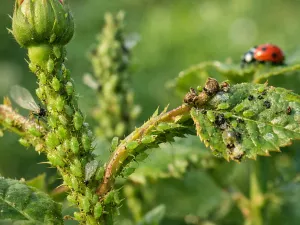
Companion Plants That Repel Aphids

 This article explains which companion plants can naturally deter aphids, how plant pairings reduce pest pressure, and the best companions for common crops. It also covers designing pest-resistant layouts, the limits of companion planting, and combining it with other natural methods to build a balanced garden.
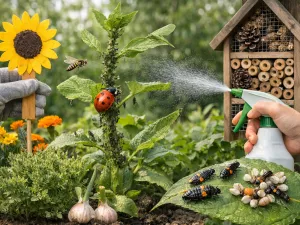
Aphid-resistant companion planting offers gardeners an easy, low-spray way to reduce pest pressure. By mixing strongly scented or beneficial partner plants among vegetables, herbs, and flowers, you can make crops less attractive to aphids while inviting pollinators and other helpful insects. This simple approach supports a healthier garden, improves balance among plants and insects, and can make routine care easier throughout the growing season.
Which companion plants deter aphids naturally

Some plants seem to make life harder for aphids by confusing them with scent, masking the smell of a host crop, or attracting insects that feed on them. Companion planting does not create an invisible shield, but it can reduce how quickly colonies build up and make a bed less inviting overall. The most useful companions are usually strongly aromatic herbs, flowering annuals that draw beneficial insects, and a few alliums with pungent foliage.
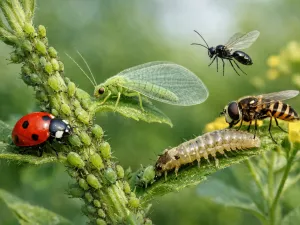
It helps to think in terms of disruption rather than total prevention. Aphids locate suitable plants partly by smell and visual cues, so mixed plantings can interrupt that process. At the same time, flowers that offer nectar and pollen support hoverflies, lacewings, parasitic wasps, and ladybirds, all of which help keep sap-sucking pests in check.
Reliable plant groups to include
The best companions are those that fit your climate and growing style while also providing a practical benefit. A herb that thrives in dry, sunny soil will not help much if it struggles beside a thirsty crop in partial shade.
- Alliums: Chives, garlic, onions, and ornamental alliums have a sharp scent that may help mask nearby crops. Chives are especially useful because they stay compact and are easy to tuck between vegetables.
- Aromatic herbs: Mint, catmint, sage, thyme, oregano, dill, fennel, and coriander can confuse pests and also feed beneficial insects when allowed to flower. Keep mint in containers if it tends to run.
- Flowering annuals: Marigolds, calendula, nasturtiums, sweet alyssum, and cosmos are often used to diversify the bed. Alyssum is particularly valuable for hoverflies, while calendula flowers over a long season.
- Strongly scented ornamentals: Lavender and nepeta can help around borders where aphids move in from nearby planting.
Plants that work in different ways
Not every companion acts by repelling pests directly. Some are more useful because they attract predators, and a few are grown as sacrificial plants. Nasturtiums are a good example: they often draw aphids away from beans, brassicas, or roses. That does not mean the aphids disappear, but it can concentrate them on a plant you can inspect, wash off, or remove.
Flower shape matters too. Tiny open flowers such as alyssum, dill, coriander, and fennel are easier for small beneficial insects to use than double blooms. If your goal is pest balance rather than just decoration, choose simple flowers and let a few herbs bolt naturally.
Editor’s note: A companion plant only earns its place if it grows well. A stressed herb with dry roots or poor light will not flower properly, and that means fewer beneficial insects when you need them most.
Spacing also affects results. A clump of chives planted 60 cm (24 in) away from a lettuce row may still help, but a few clumps woven through the bed usually do more. Aim for repeated pockets of scent and flowers rather than one isolated patch at the far end of the garden.
How plant combinations reduce pest pressure

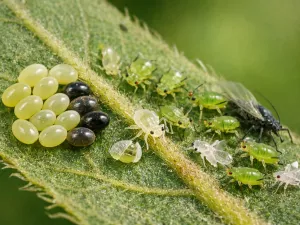
Aphids multiply fast, especially on soft new growth fed by high nitrogen and steady moisture. Mixed planting reduces that pressure by making crops harder to find, slowing the spread from plant to plant, and supporting a wider web of predators. The effect is cumulative: one companion may do little on its own, but several well-chosen plants can noticeably change how a bed functions.
Monocultures are easy for pests to exploit. A long row of the same crop offers a clear target and uninterrupted feeding. By contrast, alternating textures, heights, and scents breaks up that pattern. Even when aphids arrive, they often establish more slowly in a diverse planting than in a single-crop block.
Scent masking and visual disruption
Many host plants release chemical signals that insects use to locate them. Strongly scented herbs and alliums can blur those signals. Dense mixed foliage also changes the visual outline of a crop, making it less obvious to winged aphids searching for a landing spot.
This is one reason interplanting often works better than simply placing a companion at the edge of the bed. Repetition matters. A border of marigolds may look attractive, but a few marigolds, alyssum, and chives distributed through the planting create more points of interference.
Predator support through nectar and shelter
Beneficial insects need more than prey. Many adults feed on nectar or pollen, and some need sheltered places to rest and breed. If your garden only offers vegetables, predators may visit briefly and move on. If it includes small flowers across the season, they are more likely to stay.
- Hoverflies: Adults feed on nectar; larvae eat aphids in large numbers.
- Lacewings: Adults use flowering plants, while larvae hunt soft-bodied pests.
- Parasitic wasps: Tiny flowers such as dill and coriander are especially useful.
- Ladybirds: Need prey, shelter, and a garden not routinely sprayed with broad-spectrum products.
Why plant health still matters
Companion planting works best when the crop itself is not under stress. Aphids are strongly attracted to lush, tender growth, so overfeeding with nitrogen can undo the benefit of a carefully planned layout. Likewise, irregular watering can force a flush of soft regrowth that pests exploit.
Keep moisture even, especially for leafy crops. Water deeply rather than little and often, aiming to moisten the root zone to around 15 to 20 cm (6 to 8 in) where practical. Mulch can help maintain steady soil moisture and reduce stress, which in turn makes plants less vulnerable to heavy attack.
Best companion plants for common crops

The most effective pairings depend on crop type, growth habit, and local conditions. A compact herb that suits tomatoes in full sun may be a poor match for lettuce in cooler, moister soil. The combinations below are practical starting points rather than rigid rules, and they work best when basic care such as feeding, spacing, and watering is already right.
Try to match root competition and light needs as well as pest goals. Tall, vigorous companions can overcrowd slower vegetables, while thirsty annuals can compete with shallow-rooted crops in containers or raised beds.
| Crop | Useful companions | Why they help | Placement tip |
|---|---|---|---|
| Roses | Chives, garlic, lavender, sweet alyssum, calendula | Alliums add scent; flowers attract hoverflies and ladybirds | Plant chives 20 to 30 cm (8 to 12 in) from the base and edge with alyssum where light reaches the soil |
| Broad beans and runner beans | Nasturtiums, dill, coriander, marigolds | Nasturtiums can draw aphids away; umbellifer flowers support predators | Place nasturtiums at row ends and thread dill between bean groups with 30 cm (12 in) spacing |
| Brassicas | Mint in pots, thyme, sage, nasturtiums, alyssum | Strong scent may confuse pests; alyssum supports hoverflies | Keep mint contained and set flowering plants at intervals through the bed |
| Lettuce | Chives, coriander, dill, calendula | Compact herbs fit well without heavy shading and attract beneficial insects | Use small clumps every 45 cm (18 in) and avoid crowding the lettuce hearts |
| Tomatoes | Basil, chives, calendula, alyssum | Aromatic foliage and nectar-rich flowers increase diversity around a pest-prone crop | Keep airflow open; underplant rather than packing the stem base tightly |
| Peppers and chillies | Basil, oregano, marigolds, alyssum | Provides scent, pollinator activity, and predator support in warm beds | Allow 25 to 30 cm (10 to 12 in) around each pepper to prevent stagnant growth |
Care details that improve results
Companion plants only help if they stay vigorous. Herbs grown for scent need adequate sun, usually at least 6 hours daily, and reasonably free-draining soil. Flowering annuals need deadheading or regular picking to keep producing, unless you are deliberately letting them set seed for wildlife.
Feeding should be moderate. Too much high-nitrogen fertiliser can push soft growth in both the crop and the companions, which often increases aphid pressure instead of lowering it. For most mixed beds, a balanced slow-release feed applied at label rate in spring is enough, with liquid feeding reserved for hungry container plants or visibly pale growth.
Editor’s note: If you use nasturtiums as a trap crop, inspect them twice a week. Once they are heavily infested, cut back the worst stems or wash them off with water so they do not become an aphid nursery beside the main crop.
How to design pest-resistant plant layouts

A good layout spreads useful companions through the garden instead of clustering them in one decorative corner. The aim is to create repeated scent breaks, regular nectar sources, and enough airflow that crops remain healthy. Design matters as much as plant choice, because crowded or shaded beds can become weak and pest-prone even when they contain the right species.
Start by identifying the crops that usually attract aphids in your garden. These often include roses, beans, brassicas, peppers, and tender spring growth on many ornamentals. Build your planting plan around those hotspots first, then connect them with flowering strips or pockets of herbs.
Use repetition rather than one-off planting
One clump of alyssum at the end of a raised bed is less effective than several small groups spaced along it. Repeating a few reliable companions creates continuity for beneficial insects and makes the whole area more complex from a pest’s point of view.
- Choose 2 to 4 companion species suited to the bed’s light and moisture.
- Repeat them every 60 to 90 cm (24 to 36 in) through longer beds.
- Mix upright and low-growing forms so flowers are available at different heights.
- Leave enough room for air movement and harvesting access.
Match layout to watering and soil conditions
Plants with very different water needs should not be forced into the same pocket just because they are said to be good companions. Lavender and thyme dislike persistently wet soil, while lettuce and basil need more regular moisture. If you group by irrigation needs first, your mixed planting will be easier to manage and healthier overall.
Raised beds dry out faster than open ground, and containers dry faster still. In pots, use fewer companion plants and choose compact ones such as chives, basil, or alyssum so the main crop is not robbed of root space. Check containers daily in warm weather, especially above 25°C (77°F), because drought stress can trigger pest flare-ups quickly.
Practical spacing and maintenance
Dense planting can backfire. Aphids enjoy sheltered, soft growth, and poor airflow encourages a generally weak canopy. Keep enough room around stems for light and inspection. Remove badly infested shoot tips promptly, and pinch back leggy herbs so they stay bushy instead of sprawling into the crop.
- Low edging: Use alyssum or calendula along the front of beds where they can flower freely.
- Mid-layer fillers: Chives, basil, and coriander fit well between larger vegetables.
- Border anchors: Lavender, sage, and nepeta suit sunny edges with freer drainage.
- Trap plants: Position nasturtiums slightly away from the most valuable crop so inspection and removal are easy.
Pruning is part of layout management. If companions become too large, cut them back before they shade the crop. A herb that flowers lightly but keeps airflow open is usually more useful than one huge specimen dominating the bed.
Limitations of companion planting

Companion planting is helpful, but it is not a guaranteed cure. Aphids arrive on the wind, reproduce rapidly, and exploit weak or overfed growth. In a heavy outbreak, even a well-planted bed can still need direct action. Understanding those limits prevents disappointment and helps you use companions as part of a wider strategy rather than expecting them to solve every problem alone.
Results also vary by region, season, and pest species. What works well in a dry, sunny kitchen garden may be less effective in a cool, sheltered urban plot. Local aphid pressure, nearby host plants, and the presence or absence of natural predators all affect the outcome.
Common reasons companion planting underperforms
When gardeners say a pairing did not work, the issue is often not the idea itself but the conditions around it. A few practical weaknesses show up repeatedly.
- Poor plant health: Crops stressed by drought, waterlogging, or nutrient imbalance attract pests more readily.
- Too little diversity: One or two companion plants are rarely enough in a large bed.
- Wrong placement: A scented herb at the edge may do less than several plants woven through the crop.
- Lack of flowers: If herbs are constantly cut before blooming, beneficial insects lose a food source.
- Overcrowding: Dense growth reduces airflow and makes inspection difficult.
Situations where direct control is still needed
Fresh spring growth, greenhouse crops, and heavily fertilised containers can all support explosive aphid populations. In those cases, companions may slow the problem but not stop it. Tender shoot tips on roses and broad beans often need hand removal or a strong water spray even in diverse plantings.
There is also a timing issue. Beneficial insects often arrive after aphids appear, because the prey attracts them. That means some damage may occur before natural control catches up. Patience helps, but so does early monitoring. Check the undersides of leaves and the softest growing tips at least once or twice a week during active growth.
Editor’s note: If ants are farming aphids for honeydew, companion planting will struggle to keep up. Break that relationship first by managing ant access to stems and nearby nesting spots.
Finally, some recommendations are overstated. Not every strongly scented plant truly repels aphids in every setting, and visual appeal should not be confused with proven effect. Use observation in your own garden as the final test.
Combining natural deterrents with other methods
The strongest approach is layered. Companion plants support the garden ecosystem, while simple hands-on methods deal with outbreaks before they spread. This combination is more reliable than relying on any single tactic, especially in spring when aphid numbers can rise very quickly.
Begin with monitoring. Look at the softest shoot tips, flower buds, and leaf undersides. If you catch the first small colonies early, control is much easier and less disruptive to beneficial insects already working in the bed.
Low-impact methods that pair well with companion planting
These options fit naturally into a wildlife-friendly garden and can be used as needed rather than on a fixed schedule.
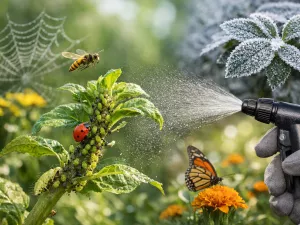
- Water spray: A firm jet from a hose can dislodge aphids from sturdy plants. Spray in the morning so foliage dries quickly, and repeat after 2 to 3 days if needed.
- Pinching out infested tips: On beans, roses, and some herbs, removing the worst 5 to 10 cm (2 to 4 in) of infested growth can stop a colony from expanding.
- Balanced feeding: Avoid repeated high-nitrogen feeds that create lush, soft growth. Use a balanced fertiliser and only top up when growth or leaf colour shows a real need.
- Steady watering: Keep moisture even to avoid stress and sudden flushes of weak regrowth. Mulch where appropriate to reduce swings in soil moisture.
- Ant control: Reduce ant traffic around infested plants so predators can reach aphids more effectively.
When to use sprays carefully
If aphids are overwhelming a plant, insecticidal soap or a soft soap product may be justified, but it should be used carefully and locally. Spray only the affected plant parts, follow the label exactly, and avoid treating open flowers where pollinators and beneficial insects are active. Broad-spectrum insecticides often kill the very predators companion planting is meant to support.
Test any spray on a small section first, especially on tender leaves in hot weather above 27°C (81°F). Some plants can scorch. Repeat applications may be needed because soaps work by contact rather than long residual action.
Support the predators you already have
Natural enemies need continuity. If you remove every flowering weed, cut down all seed heads, and spray at the first sign of pests, the garden never develops a stable predator population. A few untidy corners, sequential flowers, and restraint with treatments can make a big difference over time.
That does not mean neglect. It means choosing interventions that solve the immediate problem without collapsing the wider balance you are trying to build.
Building a balanced and pest-resistant garden
A garden that resists aphids well is usually one that is diverse, well maintained, and observed closely. Companion plants are part of that picture, but so are soil care, sensible feeding, watering discipline, pruning, and seasonal monitoring. The goal is not a pest-free space. It is a garden where outbreaks stay small enough that plants continue to grow and produce well.
Healthy soil is the foundation. Add compost or well-rotted organic matter to improve structure, but avoid overdoing rich manures around crops already prone to soft, sappy growth. In containers, refresh potting mix regularly and do not let roots become badly congested, as stressed plants are easier targets.
Season-by-season habits that make a difference
Small regular actions are more effective than occasional dramatic ones. A few minutes of weekly attention can prevent the need for heavier control later.
- In early spring, place companion plants before aphid-prone crops put on rapid new growth.
- As the season warms, inspect new shoots weekly and remove isolated colonies quickly.
- Keep flowering companions productive by trimming, deadheading, or allowing selected herbs to bloom.
- Water deeply during dry spells, aiming to wet the root zone rather than just the surface.
- At the end of the season, note which pairings worked best and adjust next year’s layout.
Think in systems, not single fixes
Alyssum under roses, chives among lettuce, dill near beans, and nasturtiums at the edge of a brassica bed can all contribute to lower pest pressure. But their real value appears when they are combined with moderate feeding, correct spacing, and quick response to the first signs of trouble. That is how a garden becomes resilient rather than simply attractive.
If you are starting from scratch, begin small. Trial two or three combinations in one bed, keep notes, and compare them with an unplanted control area if possible. Over a season or two, patterns emerge. You will learn which companions thrive in your soil, which flowers bring in the most hoverflies, and which crops need extra support. That practical knowledge is more useful than any fixed list.
Done well, companion planting turns pest management into garden design. The result is a space that looks richer, supports more life, and gives aphids fewer easy opportunities to take over.