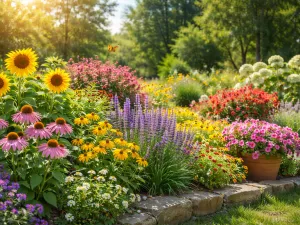
Low-Maintenance Plants for Sunny Spots

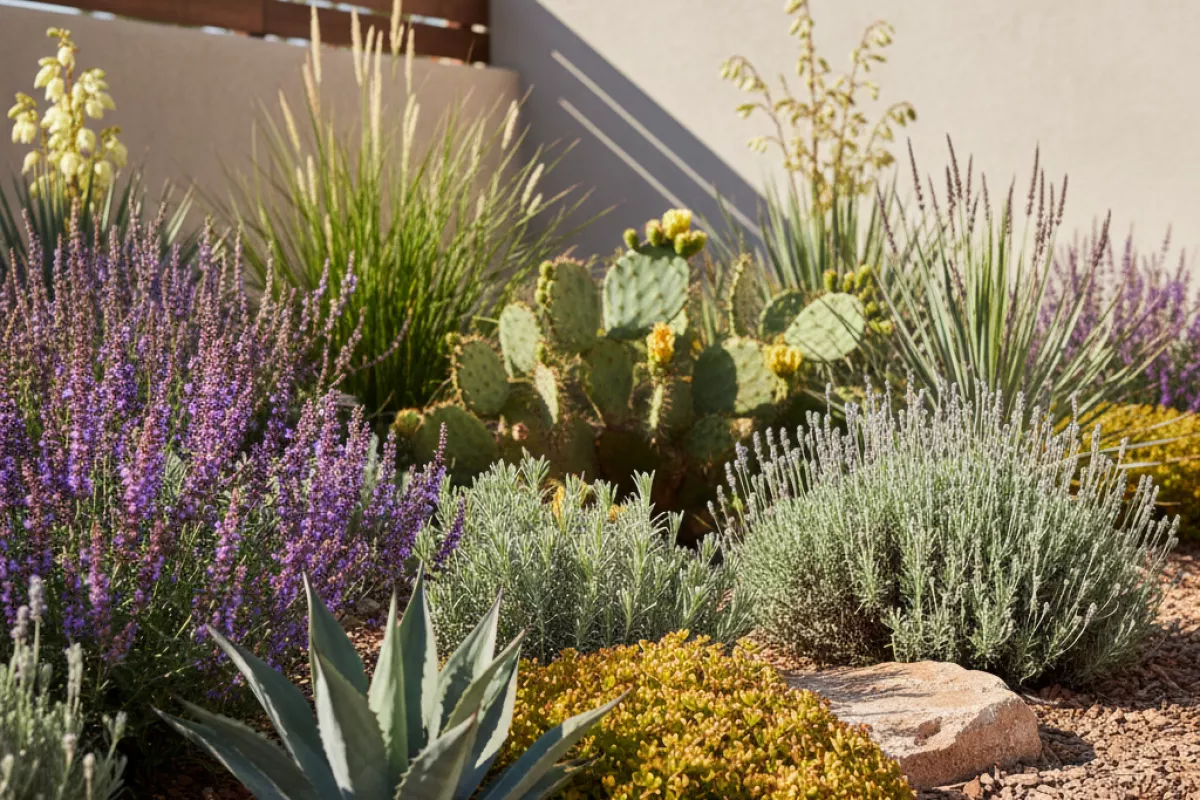 This article explains what makes a sun plant low maintenance, the traits that cut down care, and the best easy species. It covers simple watering and feeding, how to avoid overcare mistakes, where to place plants in sunny spots, and a long-term routine.
Need greenery that stays happy in bright light? Choose easy-care plants made for sun-drenched spots. The best options tolerate heat, dry spells, and reflective patios with little watering or fuss. This guide highlights reliable choices and simple care tips so your containers, beds, or balcony planters keep thriving all season long.
What defines low-maintenance sun plants
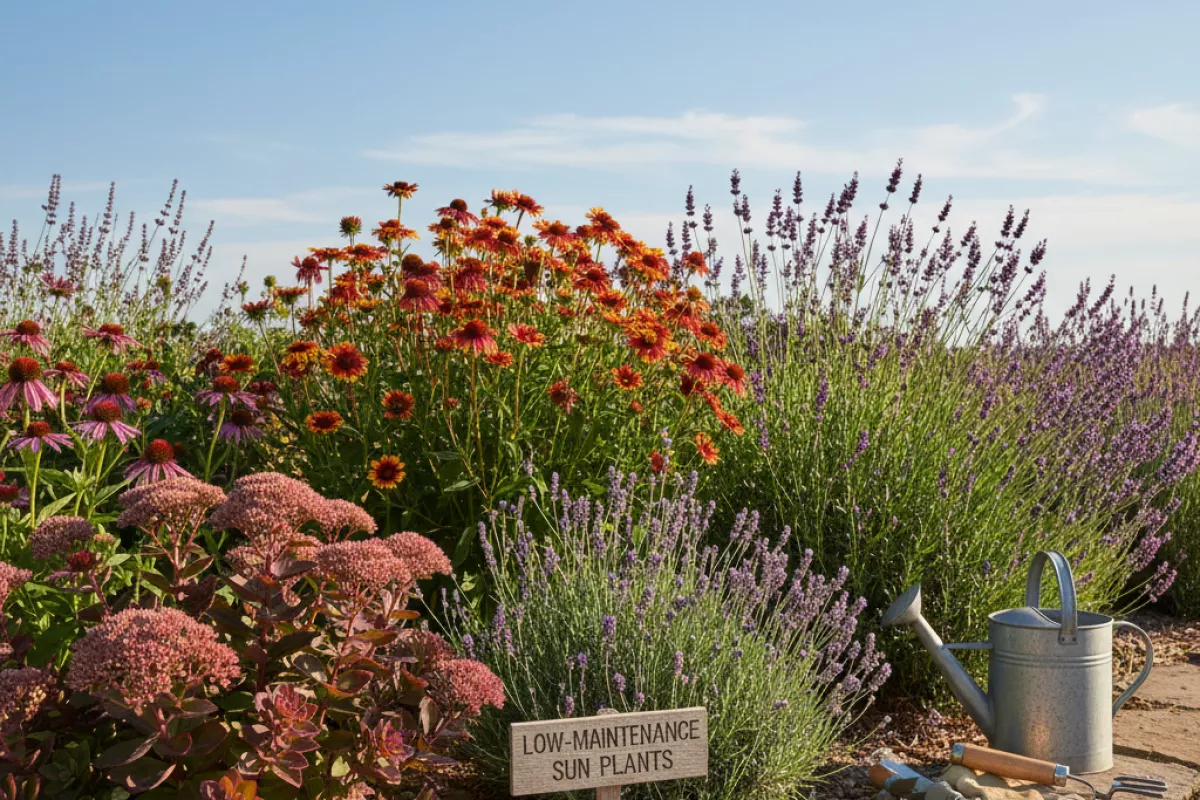
These are the plants that stay tidy and healthy in bright, direct light without you having to constantly water, feed, stake, or fuss over them. They’re typically adapted to heat and drying winds, and they recover quickly from the occasional missed watering once established.
In practice, “easy care” in a sunny bed or container comes down to a handful of traits you can look for on a plant tag or in a description.
| Trait to look for | What it means for your workload | Common clues in plant descriptions |
|---|---|---|
| Drought tolerance after establishment | Less frequent deep watering once roots are settled; fewer emergencies during hot spells | “Drought-tolerant,” “xeric,” “once established” (often after 1 season) |
| Heat and full-sun resilience | Leaves and blooms hold up instead of scorching or collapsing in intense afternoon light | “Full sun,” “heat tolerant,” “handles reflected heat” |
| Slow to moderate growth | Less pruning, fewer cutbacks, and less crowding of neighbors | “Compact,” “mounded,” “clumping,” mature size listed clearly |
| Self-cleaning or low-deadheading flowers | Fewer spent blooms to remove; longer-looking display with minimal grooming | “Self-cleaning,” “no deadheading required,” “continuous bloom” |
| Sturdy stems and a stable habit | Less staking and fewer mid-season “rescues” after wind or heavy rain | “Upright,” “sturdy,” “doesn’t flop,” “good for exposed sites” |
| Lean-soil tolerance | Less fertilizing; fewer issues from overfeeding (like weak, floppy growth) | “Poor soil tolerant,” “prefers average to dry,” “doesn’t need rich soil” |
| Pest and disease resistance | Less monitoring and fewer treatments; better performance in humid heat | “Resistant to powdery mildew,” “deer/rabbit resistant” (varies by area) |
| Evergreen or tidy winter structure (where hardy) | Less seasonal cleanup and a neater look outside the main growing season | “Evergreen,” “semi-evergreen,” “good winter interest” |
A quick reality check: even the toughest sun lovers need a short “startup” period. Plan on regular watering during the first few weeks after planting, then taper to deeper, less frequent soakings. As a rough guide, aim to wet the root zone to about 15–20 cm (6–8 in) deep rather than sprinkling the surface.
Also, low-effort doesn’t mean zero-effort. The easiest wins usually come from matching the plant to the site: full sun (often 6+ hours), well-draining soil, and enough space for its mature width so you’re not forced into constant trimming later.
Traits that reduce care needs
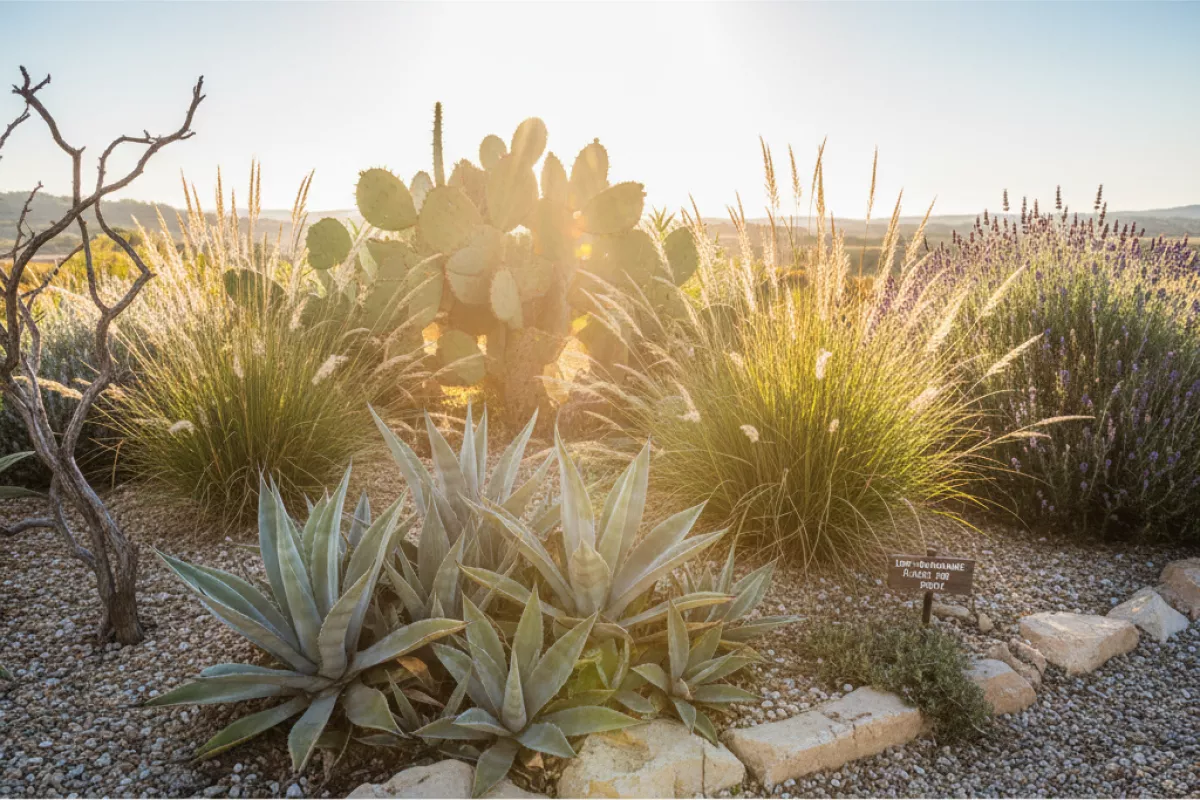
Low-effort success in full sun usually comes down to how a plant handles heat, bright light, and inconsistent watering. When a species is built to store moisture, limit evaporation, or keep growing without constant feeding, you spend less time correcting problems and more time simply enjoying the planting.
| Plant trait | Why it helps in sunny spots | What you’ll notice |
|---|---|---|
| Drought tolerance (deep roots, succulent leaves, or waxy cuticles) | Reduces dependence on frequent watering when soil dries quickly in strong sun. | Leaves stay firm instead of wilting after a hot afternoon; fewer “emergency” soakings. |
| Heat and sun resistance (thick leaves, silver/gray foliage, fine hairs) | Limits sunscald and slows moisture loss under intense light. | Less leaf bleaching or crisping; plants look steady through heat waves. |
| Compact or mounding growth habit | Needs less staking and tends to shade its own root zone, which helps conserve moisture. | Fewer floppy stems; less fussing with supports and reshaping. |
| Self-cleaning flowers or tidy foliage | Minimizes deadheading and cleanup while still looking presentable. | Blooms drop on their own; beds don’t look messy between maintenance days. |
| Slow to moderate growth rate | Reduces pruning and keeps plants from outgrowing their space too quickly. | Less frequent cutting back; containers stay balanced longer. |
| Lean-soil tolerance (doesn’t demand rich fertilizer) | Prevents weak, floppy growth that can happen with heavy feeding in bright conditions. | Fewer nutrient “rescues”; sturdier stems and more consistent form. |
| Pest and disease resilience | Fewer interventions are needed, especially when stressed plants would otherwise attract problems. | Less spotting, fewer chewed leaves, and reduced need for treatments. |
- Look for leaves that feel substantial (thicker, leathery, or slightly fuzzy). Those textures often signal better performance in hot, bright exposures.
- Match the trait to your watering reality: if you can only water weekly in summer, prioritize drought-tolerant types over plants that “like” sun but still want evenly moist soil.
- Plan for soil and container heat: pots can heat up fast; choosing plants with heat tolerance matters even more in containers, especially smaller ones under about 30 cm (12 in) wide.
Best species for easy upkeep
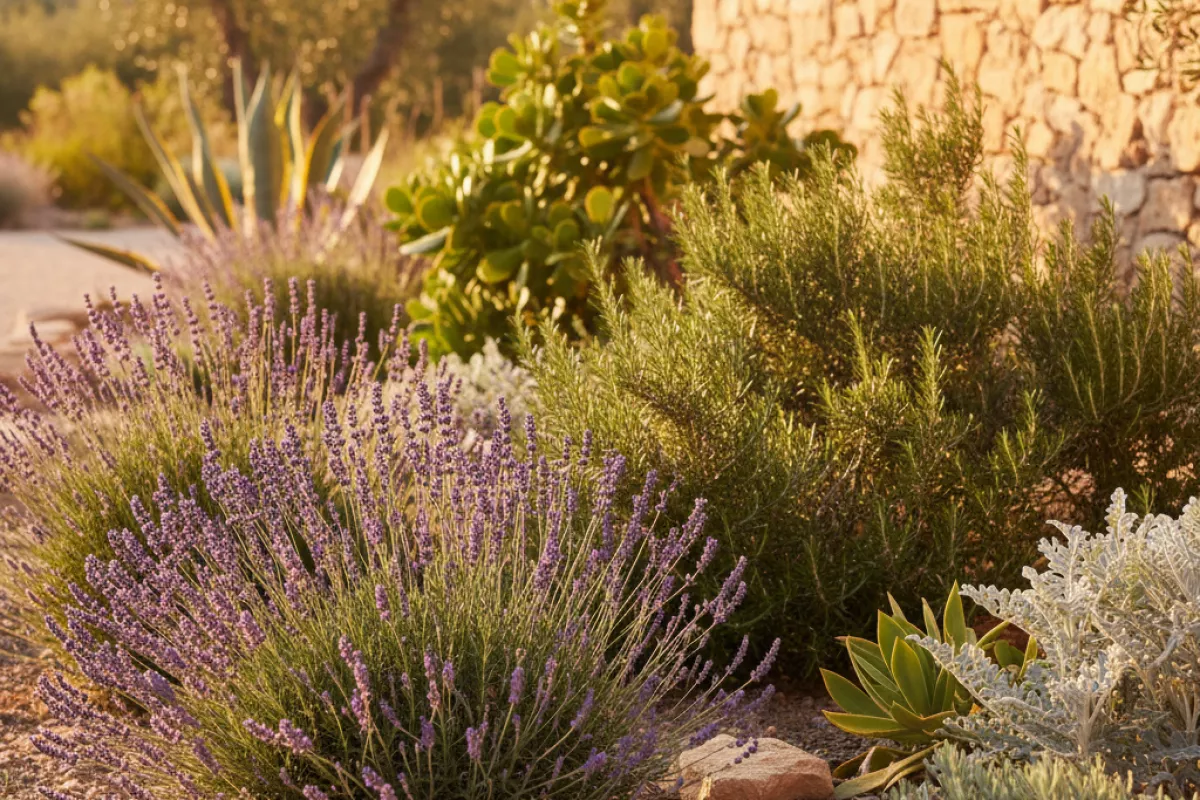
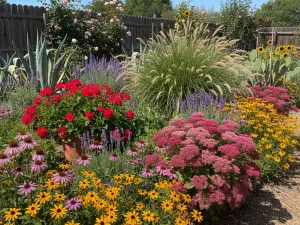
For bright, sun-soaked areas, the simplest choices are plants that naturally handle heat, reflected light, and occasional missed waterings. Look for thick leaves, silvery foliage, or plants labeled “drought-tolerant”—those traits usually mean less fuss once they’re established.
- Lavender (Lavandula): Thrives in full sun and lean soil. Water regularly for the first 2–4 weeks, then let the top 5 cm (2 in) dry before watering again. Prune lightly after flowering to keep it compact.
- Rosemary (Salvia rosmarinus): A tough, sun-loving herb that prefers drying out between waterings. Give it a pot with sharp drainage; avoid constantly damp soil, especially in cooler months.
- Sedum / stonecrop (Sedum spp.): Stores water in its leaves, so it’s forgiving in hot spots. Great for containers and borders; too much water is usually the only way to upset it.
- Hens-and-chicks (Sempervivum): Handles intense sun and poor soil without complaint. Keep watering minimal; if planted in a pot, make sure excess water can drain quickly.
- Yarrow (Achillea): Reliable in sunny beds with average-to-poor soil. Deadhead spent blooms for a tidier look, but it will still perform even if you don’t.
- Blanket flower (Gaillardia): Blooms well in heat and doesn’t demand rich soil. Once established, it’s mostly “water during long dry spells” and otherwise leave it alone.
- Daylily (Hemerocallis): A hardy perennial that tolerates sun and variable watering. Cut back old flower stalks when convenient; divide clumps every few years if they get crowded.
- Lantana (Lantana camara): Loves hot, bright exposures and keeps flowering with minimal care. Let it dry slightly between waterings; pinch tips early on if you want a fuller shape.
If your sunny spot is in a container, choose a potting mix that drains fast and use a pot with drainage holes—most “easy” sun plants fail from staying wet, not from being a little dry. A 5 cm (2 in) layer of gravel mulch or coarse bark on top can also slow evaporation and cut down on how often you need to water.
Watering and feeding basics
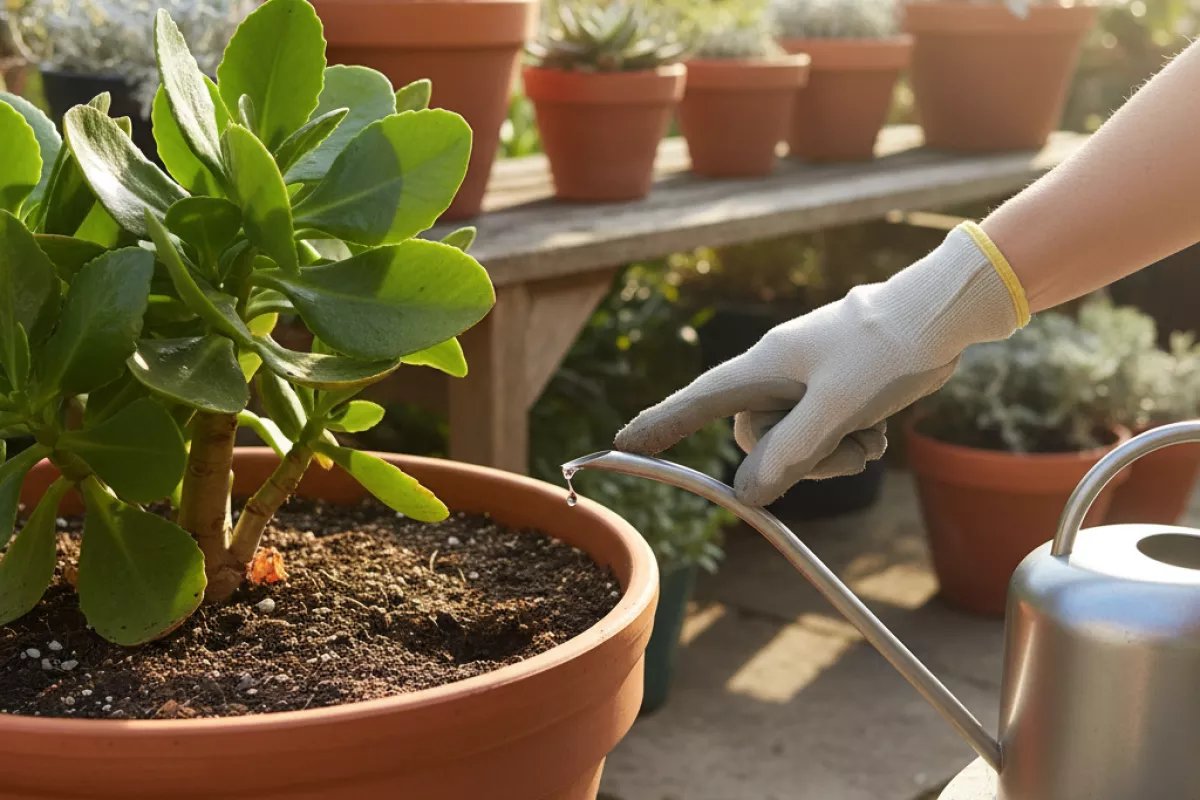
In bright, exposed areas, the goal is to water less often but more thoroughly, so roots grow down instead of staying near the surface. Let the top 5 cm (2 in) of soil dry before watering again, then soak the root zone until water drains freely. Early morning is usually best because plants can take up moisture before the heat peaks.
- Check before you pour: Push a finger 5–7 cm (2–3 in) into the soil. If it’s dry at that depth, it’s time. If it’s cool and damp, wait.
- Water at the base: Aim for the soil, not the leaves. This reduces waste and helps prevent sun-scorch on wet foliage.
- Use a deep-watering rhythm: For established, sun-tough plants, a longer soak 1–2 times per week is usually better than daily splashes. In containers, expect to water more often because pots heat up and dry faster.
- Mulch makes a big difference: Add 5–8 cm (2–3 in) of mulch to slow evaporation and keep roots cooler. Keep mulch a few cm (about 1 in) away from stems to avoid rot.
- Watch for “heat wilt”: Some plants droop in the afternoon even when soil is moist. If they perk up in the evening, don’t automatically add water—overwatering can be worse than a hot day.
| Situation in a sunny spot | What to do | Why it helps |
|---|---|---|
| Newly planted (first 2–4 weeks) | Keep soil evenly moist; water when the top 2–3 cm (1 in) dries | Supports root establishment before the plant can handle longer dry spells |
| Established in the ground | Let the top 5 cm (2 in) dry, then water deeply | Encourages deeper roots and better drought tolerance |
| Containers in full sun | Check daily in hot weather; water until it runs out the bottom | Pots dry quickly and salts build up faster without a thorough soak |
| Heat wave above 32°C (90°F) | Water early; consider temporary afternoon shade if possible | Reduces stress when evaporation is high and roots can’t keep up |
| Leaves yellowing with damp soil | Pause watering; improve drainage or reduce frequency | Often signals too much moisture and low oxygen around roots |
Feeding should be light and timed. In strong sun, heavy fertilizer can push soft growth that needs more water and is easier to scorch. For most low-effort plants, a single application of slow-release fertilizer in spring is enough; follow the label rate and avoid “extra for faster growth.” If you prefer liquid feed, use a half-strength dose every 2–4 weeks during active growth, and always water the soil first so nutrients don’t hit dry roots.
One more simple habit: flush container soil occasionally to prevent fertilizer salts from accumulating. Every 4–6 weeks, water until you get steady drainage for 30–60 seconds, or roughly 2–3 times the pot’s volume (for example, 4–6 L for a 2 L pot (about 1–1.5 gal for a 0.5 gal pot)). This keeps roots healthier and reduces leaf-tip burn.
How to avoid overcare mistakes
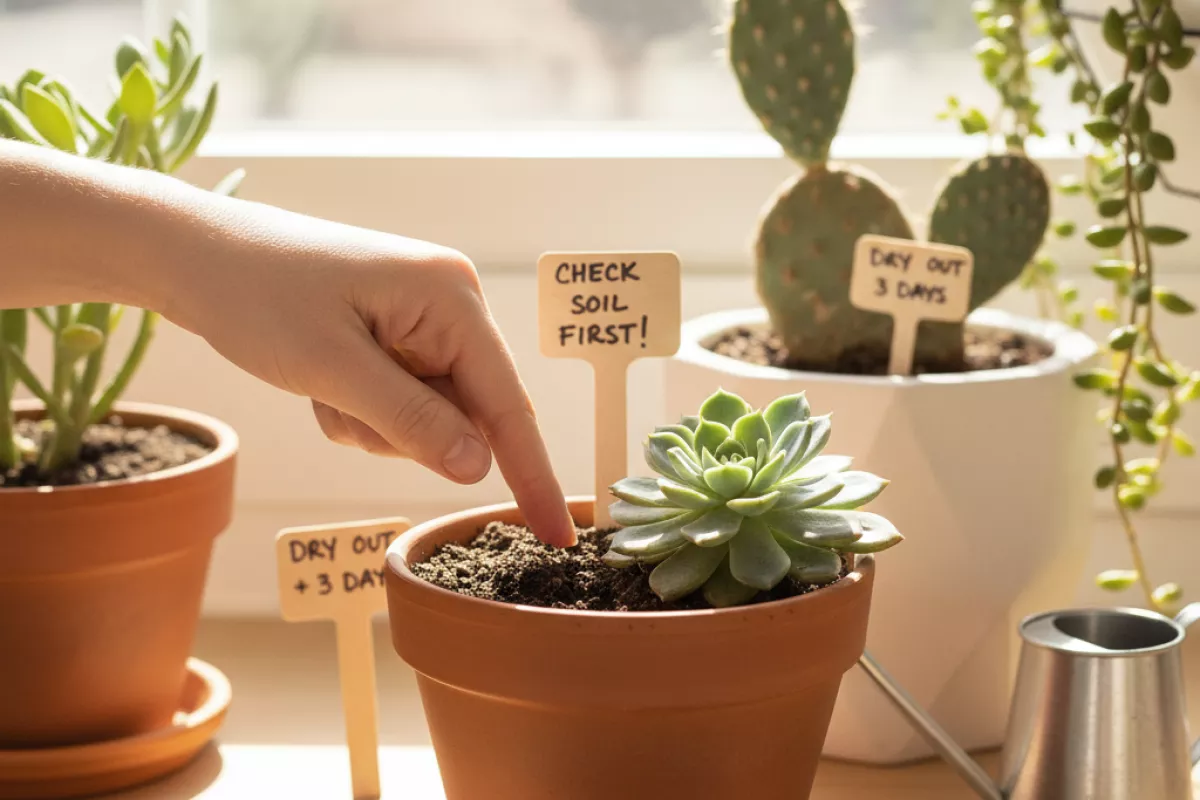
Most “low-effort” sun lovers fail because they get too much attention: extra water, frequent feeding, and constant repotting. In bright, warm spots, plants can look thirsty even when the potting mix is still wet, so it helps to rely on simple checks instead of instincts.
- Water by soil dryness, not by schedule. Push a finger 5 cm (2 in) into the mix. If it’s damp, wait. For succulents and cacti, let the pot dry out fully, then wait another 2–3 days before watering again.
- Use the “lift test” for containers. Pick up the pot after a thorough watering and remember the weight. When it feels noticeably lighter, that’s a better cue than droopy leaves, which can also happen from heat stress.
- Match the pot to the plant’s pace. Oversized pots hold moisture longer and can keep roots too wet. As a rule, step up only 2–5 cm (1–2 in) in diameter when repotting.
- Choose fast-draining mix and don’t “improve” it with too much compost. For drought-tolerant plants, a gritty blend (with perlite/pumice) prevents soggy roots. Rich mixes can stay wet longer in deep containers, especially indoors.
- Fertilize lightly and only in active growth. In strong light, it’s tempting to feed often, but excess fertilizer causes weak, floppy growth and salt buildup. Use half-strength and apply every 4–6 weeks during spring and summer, then pause in fall and winter.
- Don’t mist sun plants as a “hydration fix.” Misting doesn’t replace watering, and on fuzzy or thick-leaved plants it can encourage spotting or rot. If humidity is truly low, use a pebble tray or group plants instead.
- Resist constant pruning and repositioning. Frequent trimming and moving can stall growth. If a plant is leaning, rotate the pot a quarter turn every 1–2 weeks rather than relocating it daily.
| Overcare habit | What you’ll notice | Better approach |
|---|---|---|
| Watering “just in case” | Yellowing leaves, soft stems, fungus gnats, soil that stays dark and damp | Wait until the top 5 cm (2 in) is dry; ensure the pot has drainage holes |
| Repotting too often | Plant looks stalled, wilts after repotting, roots are sparse or damaged | Repot only when roots circle the pot or emerge from holes; size up 2–5 cm (1–2 in) |
| Over-fertilizing | Leaf tip burn, crusty white buildup on soil, lots of weak new growth | Feed at half-strength every 4–6 weeks in the growing season; flush with water occasionally |
| “Saving” a heat-stressed plant with extra water | Midday droop that recovers in evening; leaves feel warm but soil is still moist | Provide temporary shade during peak sun, improve airflow, and water only when dry |
If you’re unsure whether a plant needs help, pause for 24 hours and re-check the soil. In sunny windows and patios, patience is often the most practical care tool: you’ll avoid root problems and end up with sturdier, more self-sufficient plants.
Placement tips for sunny areas
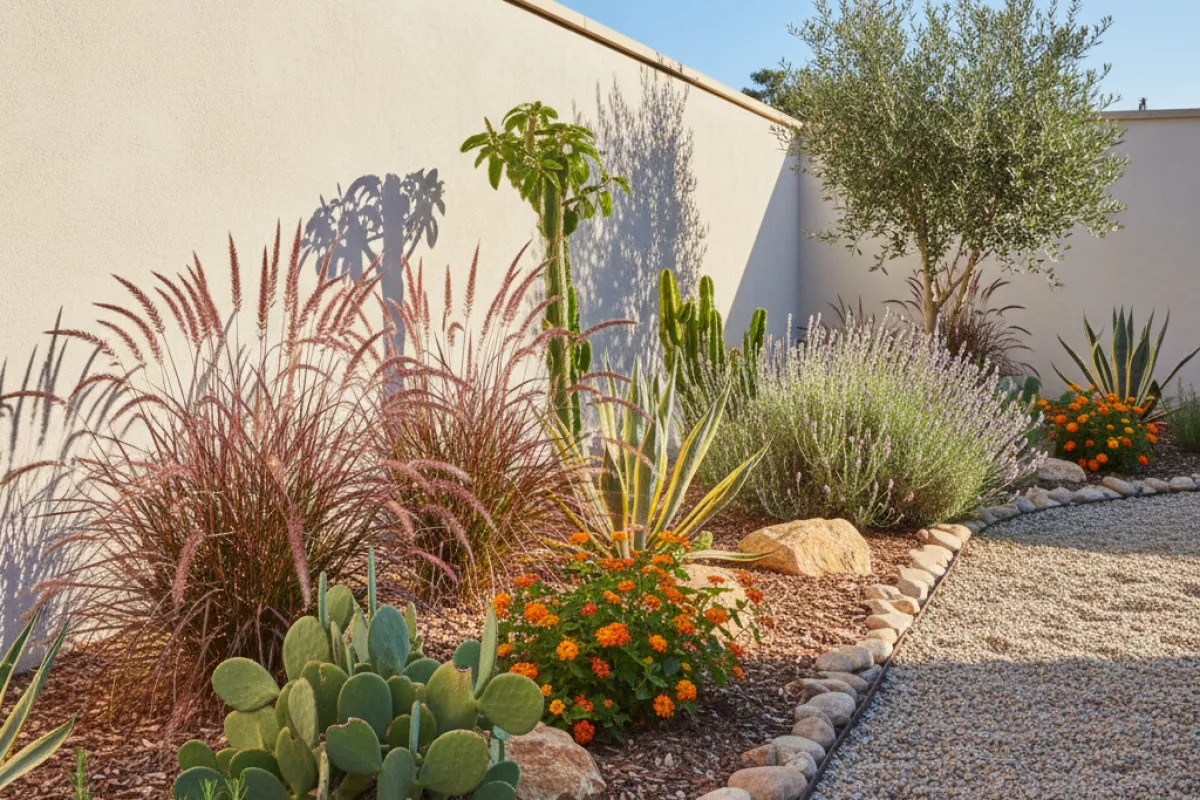
Start by watching how sunlight moves across the space for a day or two. “Full sun” isn’t just brightness—it’s usually 6–8+ hours of direct light, and the hottest exposure (often west-facing) can be much harsher than gentle morning sun. Matching each plant to the type of sun it gets is the quickest way to keep care low.
- Use microclimates to your advantage. Plant heat-tolerant choices near reflective surfaces like light-colored walls, gravel paths, or paving. Put less tough sun-lovers where they’ll get a little relief—near a fence line, behind a boulder, or on the east side of taller plants.
- Give roots the conditions they need, not just the leaves. In bright, exposed spots, soil can bake even when the plant looks fine. Add a 5–8 cm (2–3 in) layer of mulch to slow evaporation and keep temperatures steadier; keep mulch a few cm (about 1 in) away from stems to prevent rot.
- Space for airflow, but don’t overexpose the soil. Crowding can trap heat and invite mildew, while wide gaps leave bare ground that dries fast. Aim for mature-width spacing so plants touch lightly at full size, shading the soil without smothering each other.
- Group by water needs. Place drought-tolerant plants together so you can water deeply but less often. Keep thirstier picks closer to a hose, spigot, or downspout outlet (as long as drainage is good) so they don’t turn into the “high-maintenance corner.”
- Plan for wind and reflected heat. Rooftops, balconies, and open yards dry out quickly. A permeable windbreak (like a slatted screen) reduces stress more effectively than a solid wall, which can create turbulent gusts.
- Think in layers for natural shade. Use taller, sun-tough shrubs or ornamental grasses to cast light afternoon shade on shorter plants. This is especially helpful in regions where summer highs regularly reach 32°C (90°F) or more.
- Match containers to exposure. In pots, roots heat up faster than in-ground plantings. Choose larger containers (at least 30 cm / 12 in wide for many perennials) and consider light-colored pots to reduce heat buildup; ensure drainage holes are unobstructed.
| Sunny spot condition | Simple placement approach | Why it helps low maintenance |
|---|---|---|
| Morning sun, afternoon shade | Place “full sun to part shade” plants here; reserve hottest zones for tougher choices | Reduces heat stress and watering frequency |
| All-day sun with reflected heat (near walls/paving) | Use heat- and drought-tolerant plants; add mulch and prioritize deep watering | Prevents scorch and keeps soil from drying out too fast |
| Slope or raised bed | Put the most drought-tolerant plants at the top; slightly thirstier ones lower down | Works with gravity and runoff instead of fighting it |
| Windy, exposed area | Cluster plants and add a permeable screen; avoid tiny, shallow-rooted placements | Limits rapid moisture loss and breakage |
After planting, water deeply to encourage roots to grow downward, then gradually extend the time between waterings. A simple check is to feel the soil 5–8 cm (2–3 in) down; if it’s dry at that depth, it’s time to water. This routine supports sturdy, sun-ready growth without turning into a daily chore.
Long-term care routine
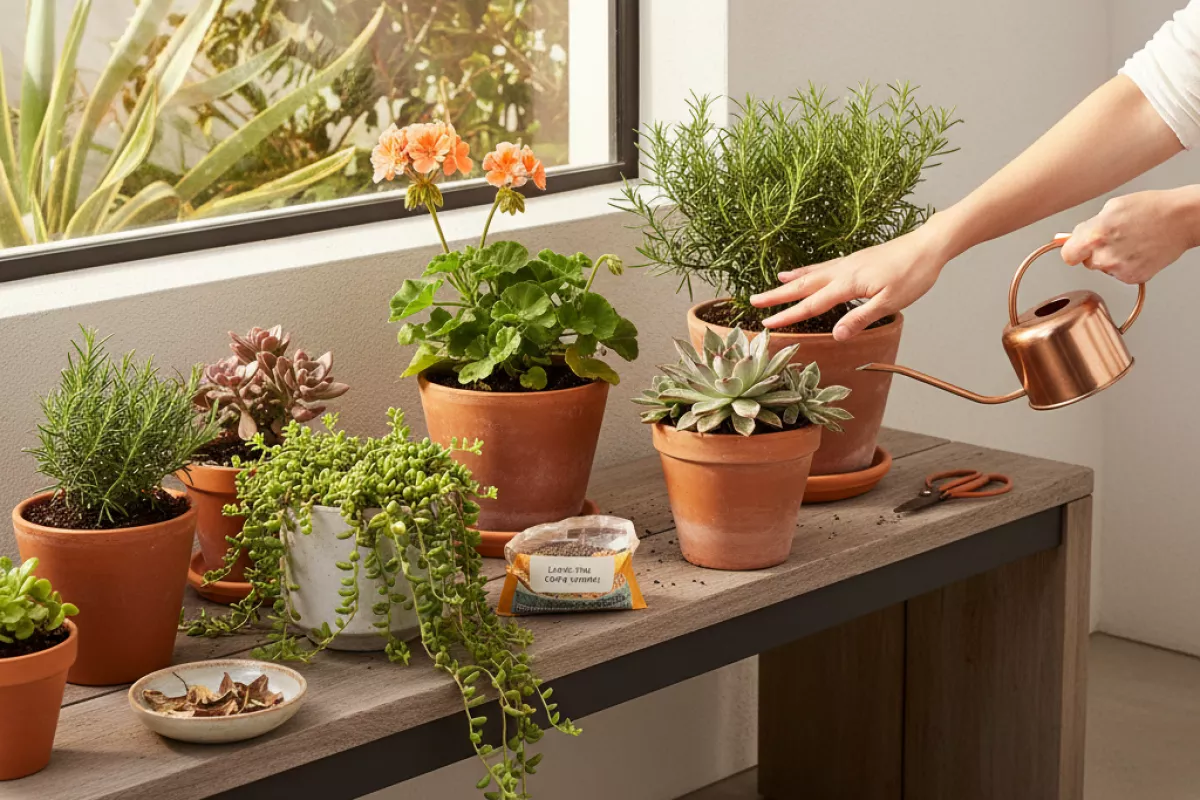
Sun-loving, low-effort plants stay that way when you stick to a simple rhythm: check moisture before you water, feed lightly during active growth, and do small cleanups before problems build. The goal isn’t constant attention—it’s quick, regular passes that keep roots healthy and growth compact.
- Weekly (or every 7–10 days): Do a fast “touch test” on the soil. If the top 2–5 cm (1–2 in) is dry, water deeply; if it’s still cool and damp, wait. In containers, water until a little drains out, then empty saucers so roots don’t sit in water.
- Every 2–4 weeks in the growing season: Rotate pots a quarter turn so one side doesn’t stretch toward the light. Wipe dust off leaves with a damp cloth—clean leaves handle bright light better and you’ll spot pests sooner.
- Monthly: Inspect for pests (especially under leaves and at leaf joints). If you see sticky residue, webbing, or clusters of tiny insects, rinse the plant and follow up with insecticidal soap as directed. Catching issues early is what keeps care low-key.
- Feeding schedule: Use a balanced fertilizer at half strength about every 4–6 weeks during spring and summer. Skip feeding in winter or whenever growth slows; over-fertilizing in strong sun can cause weak, floppy growth or leaf burn.
- Pruning and deadheading: Remove spent blooms and crispy leaves as you notice them. For shrubby sun plants, a light trim after a flush of flowers keeps them dense; avoid heavy pruning during heat waves above 32°C (90°F).
- Mulch and top-dress (outdoors): Add 2–5 cm (1–2 in) of mulch to reduce evaporation and keep soil temperatures steadier. Keep mulch a few centimeters (about 1 in) away from stems to prevent rot.
- Soil and drainage check: Once or twice a year, confirm water can move through the potting mix. If water pools on top or runs down the pot’s sides, the mix may be compacted—gently loosen the surface or refresh the top layer.
| Timing | What to do | Why it matters in sunny spots |
|---|---|---|
| Early spring | Refresh 2–3 cm (1 in) of potting mix or compost; start light feeding | Replaces depleted nutrients and supports new growth without pushing soft, sun-sensitive tissue |
| Late spring | Check drainage holes; add mulch 2–5 cm (1–2 in) outdoors | Prevents heat stress from rapid drying and reduces watering frequency |
| Mid-summer | Water early morning; pause heavy pruning when temps exceed 32°C (90°F) | Morning watering reduces evaporation; avoiding big cuts limits sunscald and stress |
| Early fall | Reduce fertilizer; trim lightly; remove weak or damaged growth | Helps plants harden off and prevents late, tender growth that struggles as light changes |
| Winter (indoors or mild climates) | Water less often; keep leaves clean; watch for pests | Lower light means slower drying; dusty leaves and dry indoor air can invite mites |
If you’re unsure whether a plant is “thirsty” or just warm, prioritize the soil over the leaves. Many tough, sun-tolerant choices can look slightly droopy in afternoon heat yet recover by evening; watering only when the root zone is actually drying prevents the most common long-term issue: chronic overwatering.