Tall Plants That Love Full Sun

 Learn why tall plants need strong light, which tall species thrive in sunny spots, and how to stake them. It also covers where to place them for visual balance, how to water bigger plants, prevent wind damage, and handle seasonal maintenance.
In a bright yard, tall sun-loving plants can add height and structure, turning open, exposed areas into useful borders and privacy screens. Match each plant’s mature size and wind tolerance to your site, and provide steady water while it establishes. With the right choices and a bit of early care, full sun becomes an advantage rather than a challenge.
Why tall plants need strong light
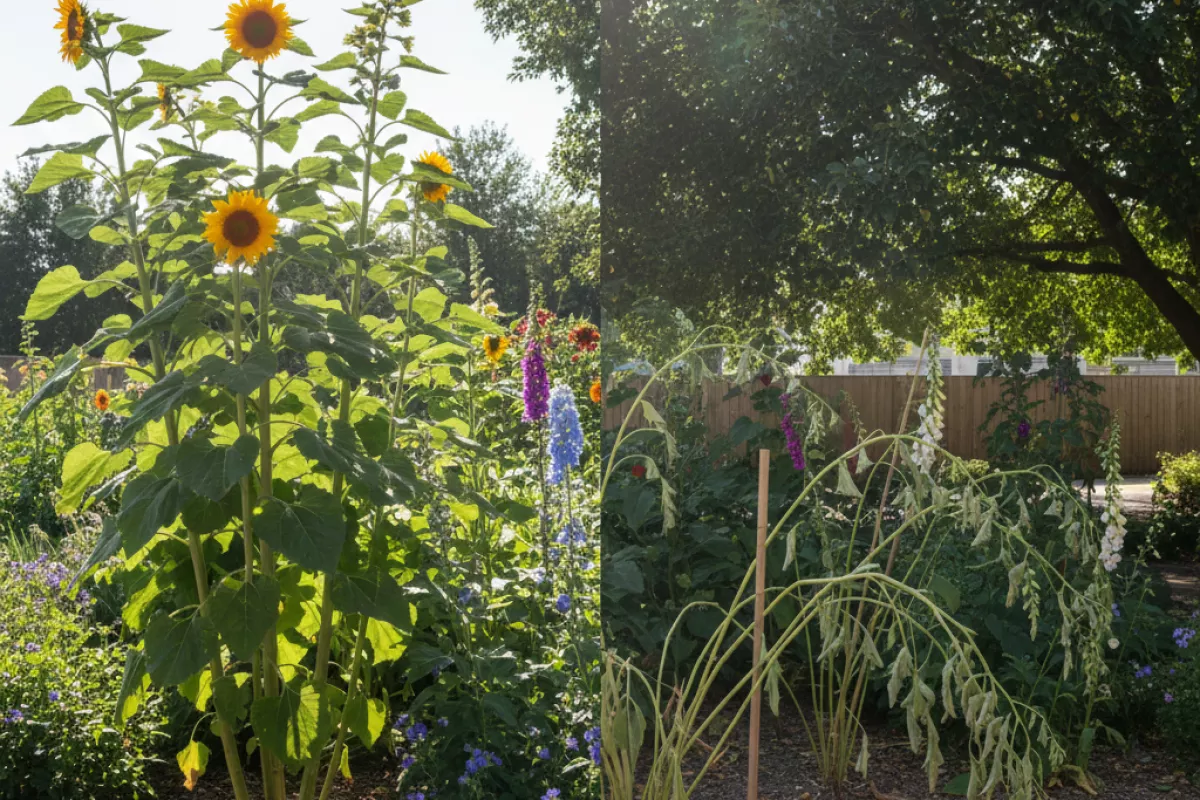
Height changes the light math. As stems rise, plants invest more energy in support tissues, bigger leaves, and longer water columns, so they rely on brighter exposure to pay for that growth through photosynthesis. In weaker conditions, many tall species respond by stretching toward the sun, which can leave them thin, floppy, and more likely to lean or snap.
Full sun also helps keep growth compact and sturdy. Stronger light encourages shorter internodes (the spaces between leaves), thicker stems, and better branching, which is exactly what you want when a plant is trying to hold itself upright through wind, rain, and the weight of blooms or seed heads.
- More “building materials” required: Taller plants need extra carbohydrates to produce lignin and cellulose for rigid stems, plus larger root systems to anchor them.
- Better flower and seed production: Many sun-loving tall plants set more buds and hold color longer when light levels are high; shade often means fewer blooms and delayed flowering.
- Reduced flopping and legginess: Bright exposure typically leads to thicker stems and tighter growth; low light often triggers elongation that makes staking more necessary.
- Improved airflow and drying: In sunny spots, foliage dries faster after rain or irrigation, which can lower the risk of mildew on dense, shoulder-high plantings.
- Stronger root performance: Warm, well-lit soil generally supports faster root activity, helping tall plants keep up with water demand during hot afternoons.
In practical terms, “full sun” usually means about 6–8 hours of direct light. If a tall plant is getting less, you can often spot the signs early: it leans toward the brightest direction, produces wide gaps between leaves, or needs frequent staking. Moving it to a brighter bed (or thinning nearby shrubs) often fixes the problem more effectively than extra fertilizer, which can push even softer growth when light is limited.
Best tall species for sunny areas
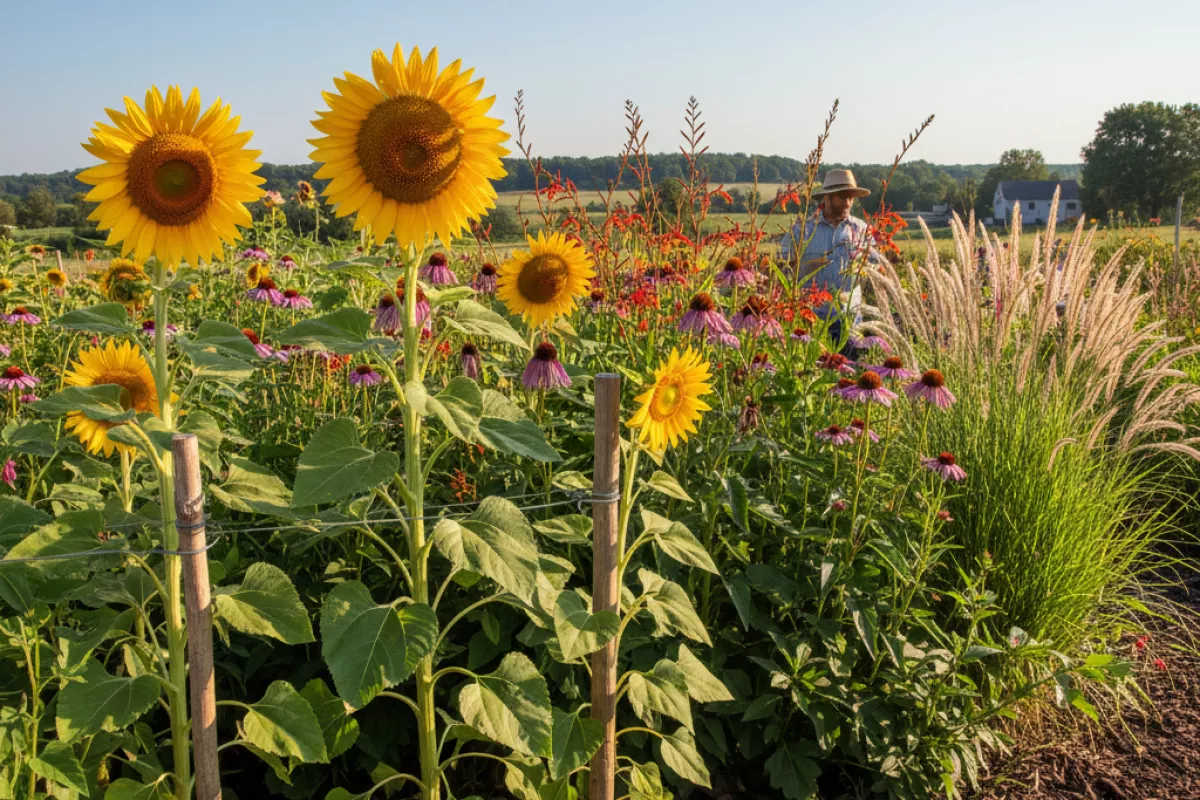
Choose tall sun-lovers based on what your site does in midsummer: bakes and dries out, stays evenly moist, or swings between the two. Height is only half the story; wind tolerance, staking needs, and how long a plant holds its shape in heat matter just as much.
| Plant (common name) | Typical height | Best fit | Notes for full sun success |
|---|---|---|---|
| Sunflower (Helianthus annuus) | 1.8–3.7 m (6–12 ft) | Fast seasonal height, cutting gardens | Give sturdy support in windy spots; water deeply during bud set for fuller blooms. |
| Hollyhock (Alcea rosea) | 1.5–2.7 m (5–9 ft) | Back-of-border color, cottage-style beds | Airflow helps prevent rust; plant where stems can lean on a fence or wall if needed. |
| Delphinium (Delphinium spp.) | 1.2–2.1 m (4–7 ft) | Cooler-summer sun, dramatic spikes | Stake early; appreciates consistent moisture and afternoon shade in very hot climates. |
| Joe-Pye weed (Eutrochium spp.) | 1.2–2.4 m (4–8 ft) | Moist soils, pollinator plantings | Thrives where irrigation or natural moisture is reliable; cut back by 15–30 cm (6–12 in) in late spring to reduce flopping. |
| Giant coneflower (Rudbeckia maxima) | 1.5–2.4 m (5–8 ft) | Heat-tolerant structure | Handles bright exposure and leaner soils once established; leave seedheads for winter interest. |
| Ornamental grass: switchgrass (Panicum virgatum) | 0.9–2.1 m (3–7 ft) | Low-maintenance screening, movement | Stays upright in sun with moderate water; cut back to 10–20 cm (4–8 in) in late winter before new growth. |
| Ornamental grass: miscanthus (Miscanthus sinensis) | 1.5–3.0 m (5–10 ft) | Tall privacy clumps, strong vertical form | Give room for mature spread; divide every few years if the center thins. |
| Rose of Sharon (Hibiscus syriacus) | 2.4–3.7 m (8–12 ft) | Flowering shrub for hot, bright sites | Blooms later in summer; prune in late winter to shape and encourage new flowering wood. |
- For dry, reflective heat: lean toward tough perennials and grasses (switchgrass, giant coneflower) and avoid anything that sulks without regular moisture.
- For consistently moist beds: Joe-Pye weed and similar tall natives can get impressively large without constant staking.
- For windy exposures: pick plants with flexible stems or clumping bases (ornamental grasses) and stake early rather than trying to rescue toppled stems later.
- For long bloom windows: mix one “spike” plant (hollyhock or delphinium) with something that flowers later (Rose of Sharon) so the height doesn’t disappear after early summer.
Spacing helps tall plants handle intense light: crowding traps humidity and encourages weak, stretchy growth. As a rule, give big growers enough room that you can slip your hand between stems, and water at the base so foliage dries quickly in the sun.
Support and staking considerations
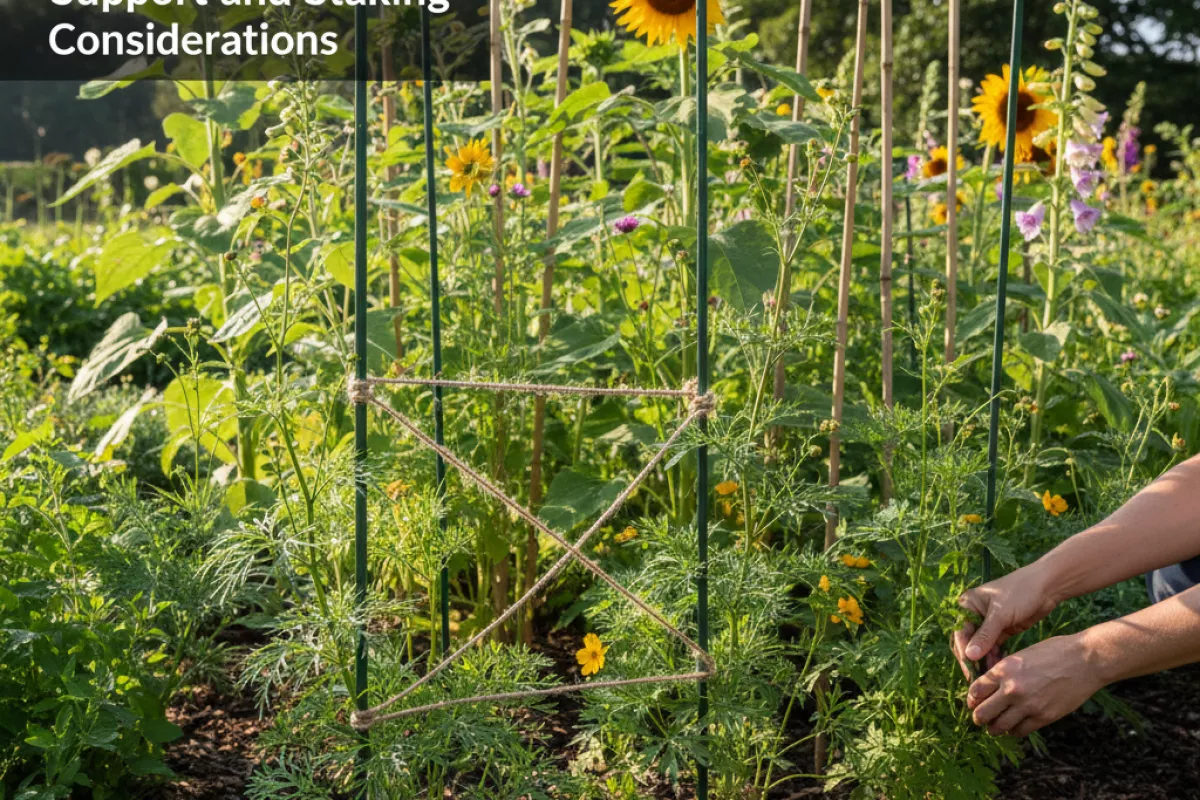
Keeping sun-loving tall plants upright usually comes down to two things: giving stems something to lean on before they flop, and placing supports in a way that doesn’t damage roots later. If you wait until a plant is already leaning, you often end up tying too tightly or pushing stakes through the root zone.
- Stake early, not late. Install supports when plants are about 30–45 cm (12–18 in) tall, or as soon as you see rapid vertical growth. Early staking lets stems grow around the support naturally and reduces breakage in summer storms.
- Match the support to the plant’s structure. Single-stem growers (like many sunflowers) do well with one sturdy stake; clump-formers (like many ornamental grasses and tall perennials) are easier to manage with a ring or grid support that holds multiple stems.
- Choose the right height. Aim for a stake that reaches about two-thirds of the mature height. For a plant expected to reach 180 cm (6 ft), a 120 cm (4 ft) stake is often enough because the top can sway without snapping.
- Use soft ties and leave room to thicken. Tie in a figure-eight (one loop around the stake, one around the stem) so the plant doesn’t rub. Check ties every 2–3 weeks and loosen if the stem is swelling.
- Anchor for wind, not just weight. In exposed full-sun spots, drive stakes 20–30 cm (8–12 in) into the soil. If your soil is sandy or frequently irrigated, go deeper: about 30–45 cm (12–18 in) for very tall plants.
- Support the heaviest point. Flower heads and seed clusters act like sails. Add a second tie just below the bloom zone, especially after rain when stems are heavier and more likely to kink.
- Group plants to help each other. Planting in drifts or small clumps creates a living windbreak. Spacing that’s too wide can make each stem take the full force of gusts; spacing that’s too tight can increase mildew, so keep airflow in mind.
- Water and feed in a way that discourages flopping. Deep watering encourages stronger roots, while frequent shallow watering can lead to weak anchorage. Also go easy on high-nitrogen fertilizer; it can push soft, fast growth that bends easily.
- Know when to prune instead of prop. For some tall perennials, a “Chelsea chop” style trim of about 10–20 cm (4–8 in) in late spring can reduce final height and improve branching, making staking less necessary.
- Protect roots when installing hardware. Place stakes a few centimeters away from the crown and angle them slightly outward if needed. If you meet resistance, stop and reposition rather than forcing through roots.
If you’re unsure whether a plant needs help, watch it after a windy day or a heavy watering: a slight lean that doesn’t rebound is your cue. A simple, well-placed support system is usually less noticeable than emergency ties added after stems have already sprawled.
Placement for visual balance
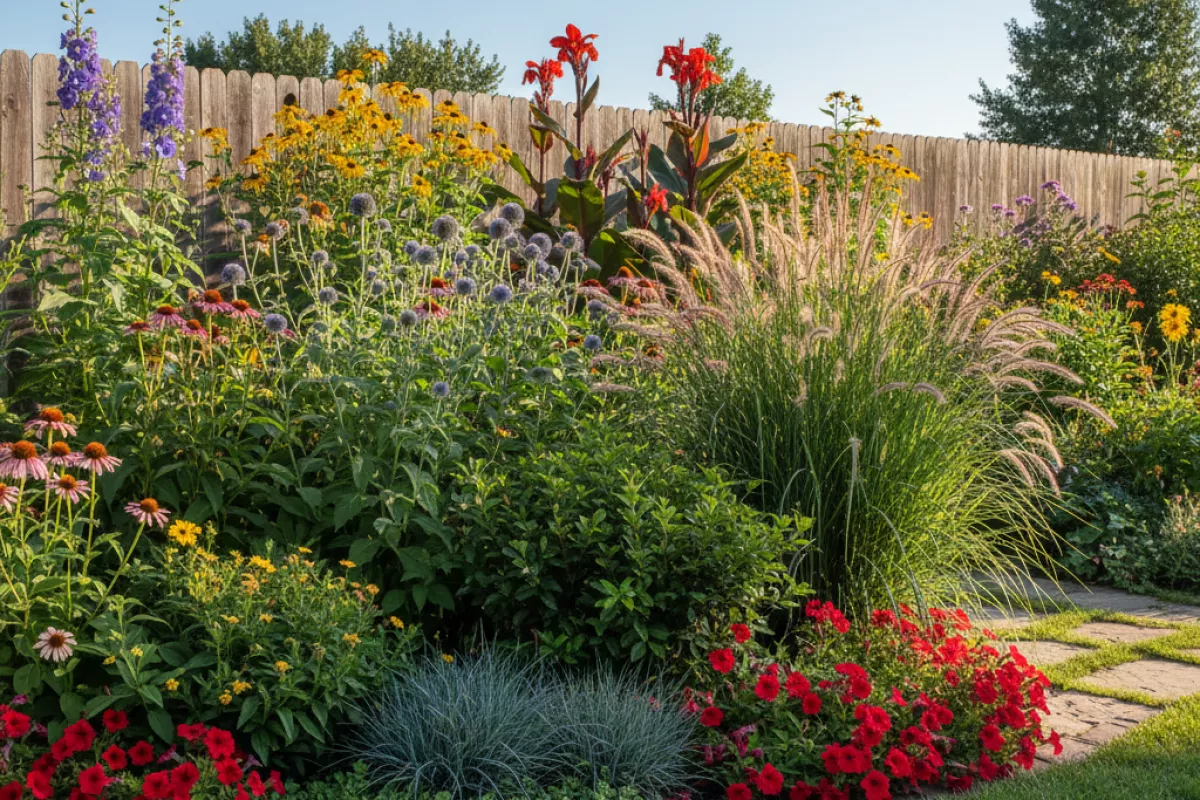
Use height the way you’d use light and shadow in a photo: it guides the eye. Tall, sun-loving plants can make a bed feel intentional, but only if their scale matches the space and they’re anchored with mid-height and low growers so the planting doesn’t read as a wall.
- Start with the viewing angle. If the bed is viewed mostly from one side (along a fence or property line), place the tallest plants at the back and step down toward the front. If it’s viewed from all sides (an island bed), keep the tallest group near the center and taper outward.
- Work in groups, not single spikes. Repeating a tall plant in clumps of 3–7 usually looks calmer than scattering single stems. Leave enough breathing room so each clump reads as a shape, not a tangle.
- Mind mature width as much as height. A plant that reaches 1.8 m (6 ft) tall but spreads 1.2 m (4 ft) wide needs a different footprint than a narrow 1.8 m (6 ft) column. Check both dimensions before you commit to a spot.
- Use “bookends” to frame views. Two tall groupings at either end of a border can define the space and make the middle feel more inviting. This works especially well along paths and patios.
- Keep paths and sightlines comfortable. Near walkways, place the tallest plants at least 45–60 cm (18–24 in) back from the edge so they don’t lean into the path as they bulk up or sway in wind.
- Balance weight, not symmetry. One large, dark mass can be balanced by two smaller, lighter groups on the other side. Think in terms of visual “heaviness” (density, leaf size, and color), not mirror-image layouts.
- Layer for a clean transition. Put mid-height plants (about 60–120 cm (24–47 in)) in front of the tallest, then edge with low growers (under 30–45 cm (12–18 in)). This keeps the base of tall stems from looking bare.
- Plan for seasonal gaps. If a tall bloomer peaks in late summer, pair it with an earlier performer nearby so the area doesn’t look empty for months. Even a strong foliage plant can carry the scene when flowers fade.
- Account for sun direction and shadows. In full sun, taller plants can cast shade on shorter neighbors. Place sun-hungry, low plants on the south or west side of taller clumps in the Northern Hemisphere (north or east in the Southern Hemisphere) to reduce unwanted shading.
When in doubt, mock it up: set empty nursery pots where you plan to plant and step back to view from your most common angles. Adjust until the tall plants feel like anchors rather than obstacles, then plant with enough spacing to match their mature size.
Watering needs for larger plants
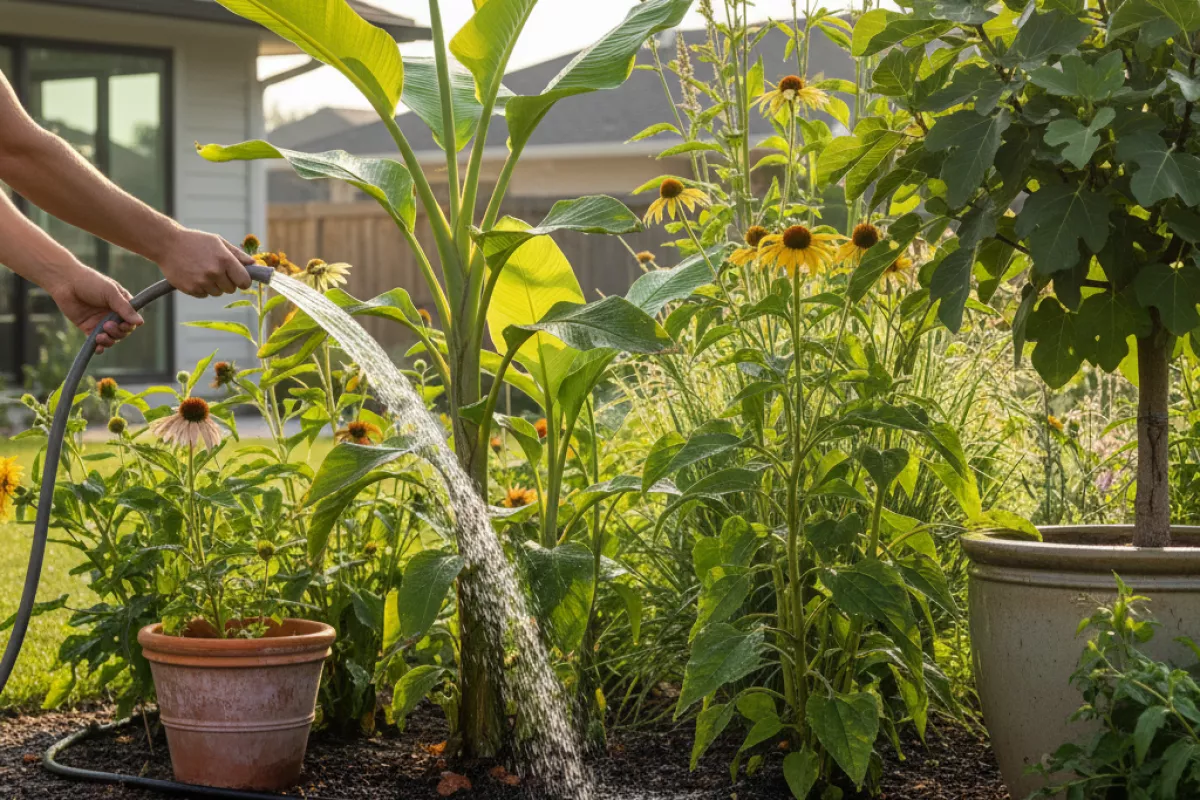
Big, sun-soaked plants don’t just need “more” water—they need it delivered in a way that reaches deep roots and doesn’t evaporate before it helps. The goal is slow, thorough soakings that wet the root zone, followed by enough drying time to keep roots oxygenated.
As a rule, water less often but more deeply. A quick splash encourages shallow roots, which makes tall plants more likely to wilt in heat and topple in wind. Plan to water early in the morning so moisture soaks in before midday sun ramps up.
- Water at the base, not the leaves: Aim the hose or drip line at the soil surface to reduce evaporation and lower the risk of leaf diseases.
- Soak the full root area: For established tall plants, wet soil out to the drip line (the outer edge of the canopy), not just the stem.
- Check depth before stopping: You want moisture to penetrate about 15–30 cm (6–12 in) for many large ornamentals; deeper-rooted shrubs and small trees may benefit from 30–45 cm (12–18 in) when soil allows.
- Use mulch to slow drying: A 5–8 cm (2–3 in) layer of organic mulch keeps soil cooler and reduces surface evaporation. Keep mulch a few cm (about 1–2 in) back from stems to prevent rot.
- Adjust for soil type: Sandy soil needs smaller, more frequent soakings; clay needs slower application and longer gaps so water can infiltrate without puddling.
- Watering signs to watch: Wilting at midday can be normal in extreme heat, but wilting that persists into evening, dull/gray-green leaves, or crispy edges usually means the root zone is too dry.
| Situation | What to do | Why it helps |
|---|---|---|
| Newly planted tall shrubs or trees (first 2–8 weeks) | Water slowly until the top 15–20 cm (6–8 in) is evenly moist; repeat when the top 5 cm (2 in) dries | Supports new root growth without keeping the planting hole soggy |
| Heat wave above 32°C (90°F) | Deep soak in the morning; add a second light soil soak only if the top 5–8 cm (2–3 in) dries by late afternoon | Prevents stress while avoiding constant saturation |
| Windy, low-humidity days | Prioritize deep watering and mulch; avoid frequent shallow watering | Wind increases transpiration, and shallow watering worsens surface drying |
| Containers with tall sun plants | Water until it drains from the bottom; recheck later the same day in hot weather; consider 2–5 cm (1–2 in) mulch on top | Pots heat up and dry faster than in-ground soil |
| Clay soil that puddles | Apply water in cycles (for example, 5–10 minutes on, 20–30 minutes off); stop if runoff starts | Improves infiltration and reduces wasted water |
If you’re unsure, use the simple “finger test” or a soil probe: if the soil is dry at 8–10 cm (3–4 in), it’s time to water; if it’s still cool and damp, wait. Consistency matters more than a strict schedule, because full-sun beds can swing from soaked to dry quickly depending on temperature, wind, and soil.
Preventing wind damage
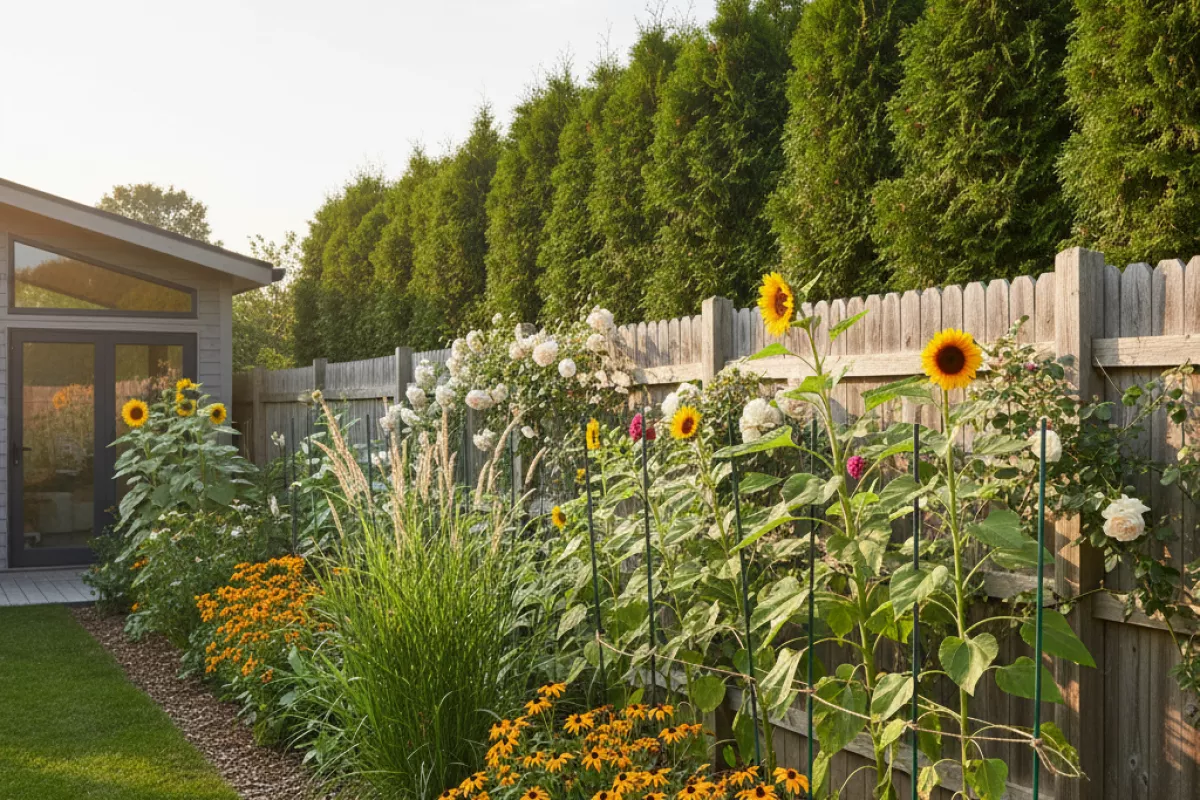
Wind can turn tall, sun-loving plants into levers: stems bend, roots loosen, and flower heads snap off right when they’re at their best. The goal is to reduce strain on the plant and give it steady support without restricting growth.
- Start with smart placement. Put the tallest varieties where they get full light but not the full blast of prevailing gusts—near a fence, hedge, or the lee side of a shed. Leave enough space for airflow so foliage dries quickly after rain.
- Build stronger stems early. Avoid overfeeding with high-nitrogen fertilizer, which can push soft, fast growth that flops. Water deeply but less often so roots chase moisture downward rather than staying shallow.
- Stake before the plant needs it. Add supports when stems are 30–45 cm (12–18 in) tall, not after they’ve already leaned. Early support guides upright growth and prevents sudden breakage during the first big storm.
- Match the support to the plant’s shape. Use a ring or grid support for clump-formers, a single sturdy stake for a main stem, or a tripod/teepee for plants with multiple tall canes. For very top-heavy bloomers, two stakes with soft ties can be steadier than one.
- Tie correctly. Use soft, wide ties (cloth strips or plant tape) and make a loose figure-eight: one loop around the stake, one around the stem. Leave room for thickening so the tie doesn’t girdle as the season progresses.
- Prune and pinch with purpose. If a plant tolerates it, pinching early can create shorter, bushier growth that resists gusts. For heavy flower heads, selective thinning reduces sail area while keeping the plant looking full.
- Keep soil anchored. A 5–8 cm (2–3 in) layer of mulch helps prevent soil erosion and reduces rapid drying that weakens root hold. Keep mulch a few centimeters away from the crown to avoid rot.
- Check after weather swings. After strong winds or soaking rain, press the soil back around any loosened base, retie supports, and remove damaged stems cleanly to prevent tearing and disease entry.
| Wind issue you see | What to do (quick fix and longer-term) |
|---|---|
| Leaning stems but no cracks | Install a stake or ring support and retie loosely; next season, place supports at 30–45 cm (12–18 in) height and avoid excess nitrogen. |
| Stems snapping near the top | Deadhead or trim back to a strong node; thin heavy flower clusters and use two-point support (two stakes or a cage) to reduce whipping. |
| Whole plant rocking or lifting after rain | Firm soil around the root zone and water in to settle; improve root depth with deep watering and add mulch 5–8 cm (2–3 in) to stabilize soil. |
| Plants flopping outward in a clump | Use a peony ring/grid support early; divide overcrowded clumps in the dormant season so new shoots aren’t competing and stretching. |
If you’re gardening in a consistently breezy spot, consider making the bed a little “wind-friendly”: group tall plants in drifts so they support each other, and keep the tallest stems slightly back from the edge where gusts hit hardest.
Seasonal maintenance tips
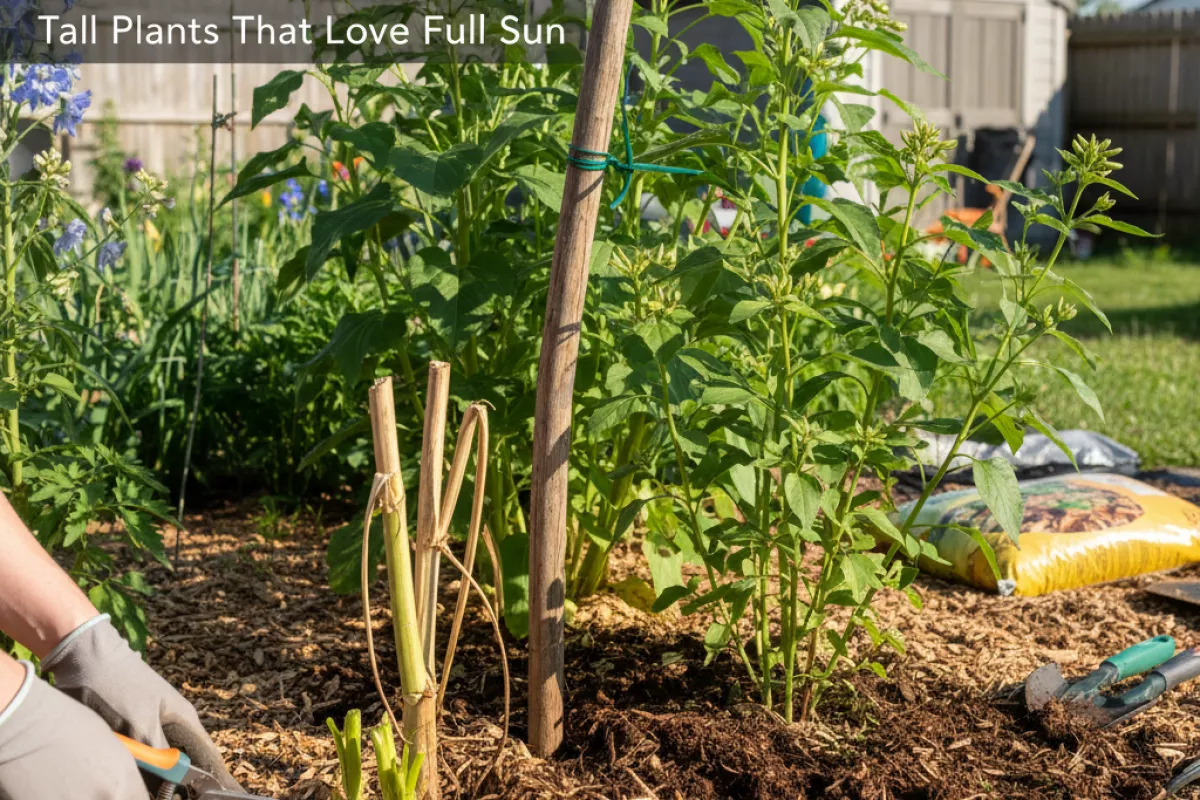
Keep tall, sun-loving plants looking upright and blooming by matching care to the weather. The main levers are water timing, feeding, staking, and a little strategic pruning so stems don’t flop when growth speeds up.
| Season | What to do | Why it helps tall full-sun plants |
|---|---|---|
| Spring |
|
Early support prevents leaning later, and compost plus mulch stabilizes moisture as sun and wind ramp up. |
| Summer |
|
Consistent moisture and restrained feeding reduce top-heavy, weak growth that can topple in full sun. |
| Fall |
|
Backing off nitrogen and tidying disease helps plants harden off while keeping next year’s growth vigorous. |
| Winter |
|
Winter protection is less about warmth and more about preventing freeze-thaw heaving and soggy roots. |
If you’re unsure whether to cut back in fall or spring, let the plant’s structure guide you: hollow or brittle stems often look better removed, while sturdy stalks can be left to shelter crowns and support beneficial insects. Either way, keep mulch from touching stems to avoid rot in sunny beds that still get cool, damp nights.