Best Flowering Plants for Full Sun

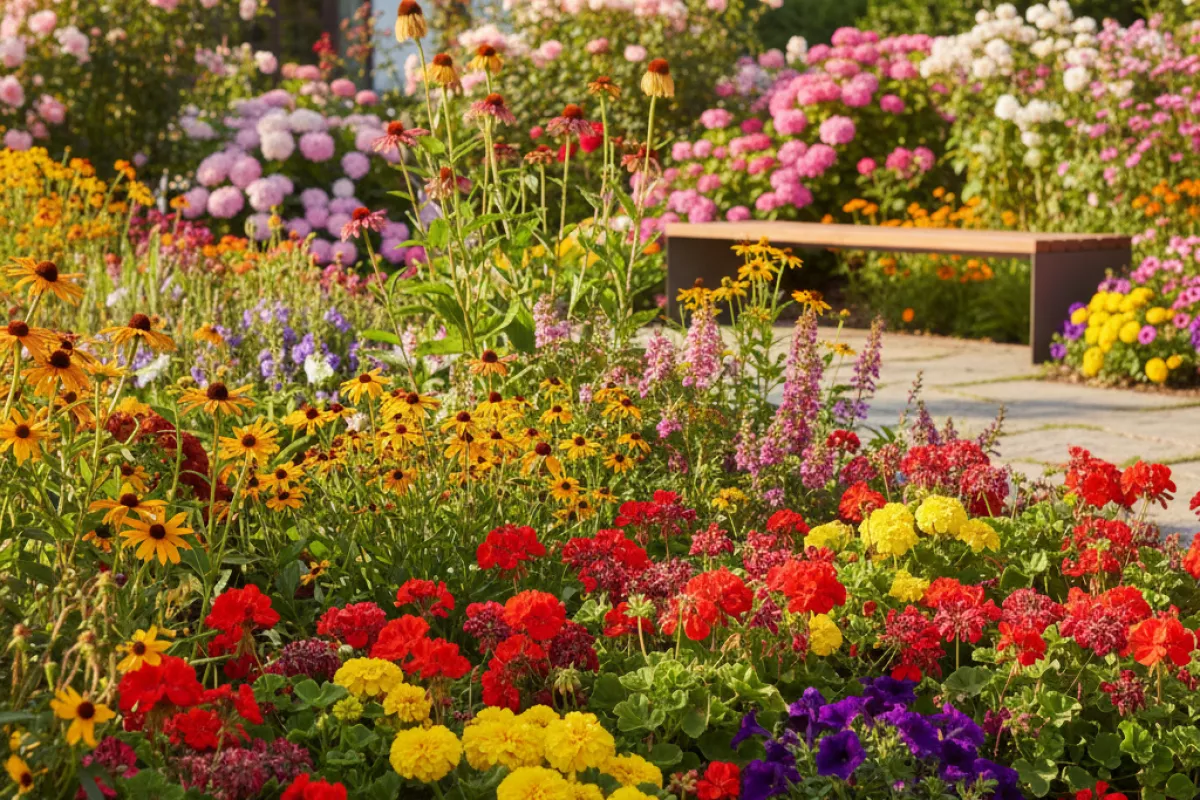 Explains why flowering plants need strong light, what defines sun-loving bloomers, and the best species for bright gardens. Covers soil nutrients, deadheading and pruning, watering during flowering, encouraging repeat blooms, and preventing sun damage to flowers.
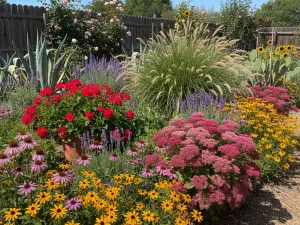
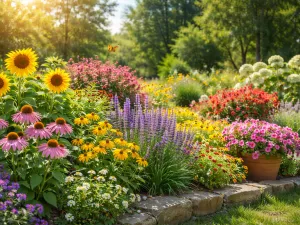
Selecting flowering plants that thrive in full, all-day sun saves time, water, and frustration while keeping garden beds and containers bright for months. This guide highlights dependable full-sun bloomers that tolerate heat, recover after dry spells, and continue flowering with simple watering, feeding, and occasional pruning, so your space stays colorful with minimal effort.
Why flowering plants need strong light
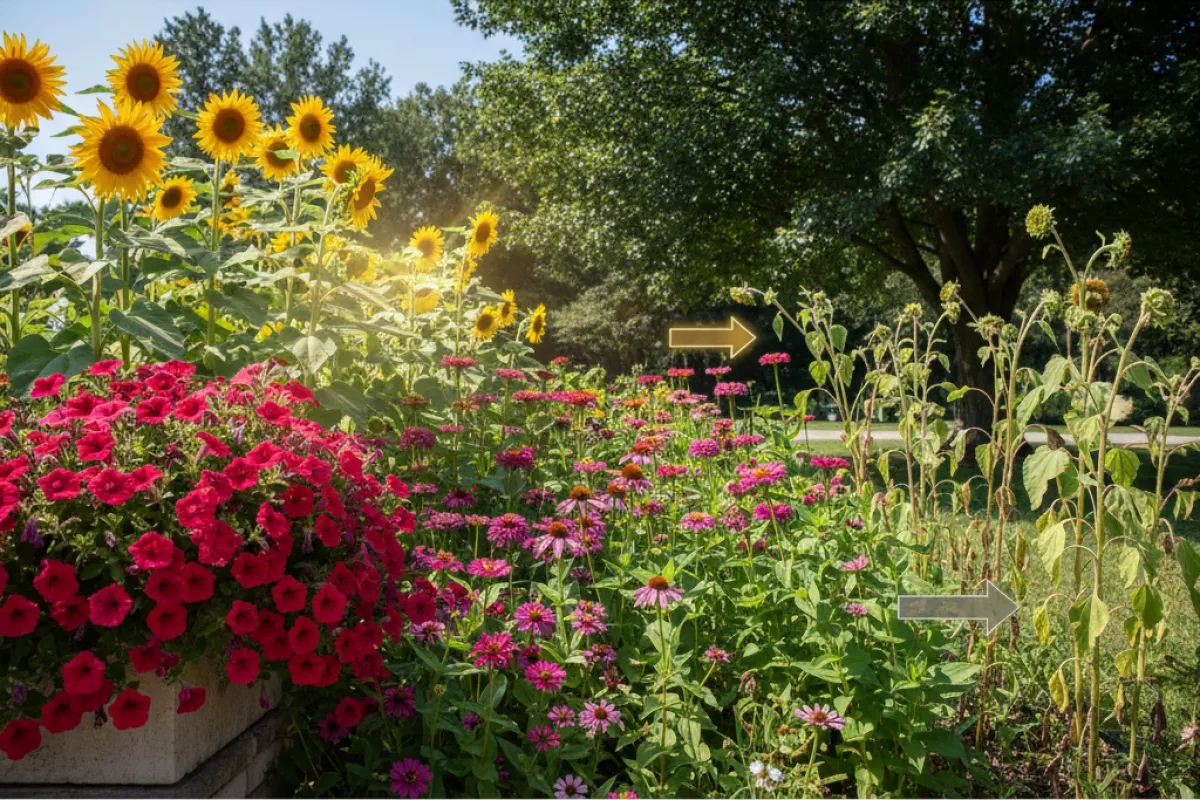
Bright exposure is what lets many bloomers build enough energy to set buds, open flowers, and keep going through the season. In lower light, plants often stay alive but shift their priorities to stretching for the sun, making fewer blooms and weaker stems.
- More photosynthesis = more flowers. Strong sun drives higher sugar production, which fuels bud formation, petal development, and repeat blooming. When light is limited, energy goes to basic survival and leaf growth instead of flowering.
- Tighter, sturdier growth. Adequate sun helps keep internodes short, so plants look fuller and are less likely to flop. In shade, many varieties become leggy and may need staking because stems elongate while staying thin.
- Better bloom color and fragrance. Many pigments (like anthocyanins) intensify with higher light, and some scented plants produce more aromatic oils after sunny, warm days. The same cultivar can look noticeably paler in partial shade.
- More buds, longer bloom windows. Full-sun species often set a larger number of flower buds when they receive consistent light. If the plant can’t “charge up” daily, it may bloom in short bursts rather than continuously.
- Improved resilience against rot and mildew. Sun and airflow dry leaves and the soil surface faster after rain or irrigation, reducing the time fungi have to establish. This matters most for dense, mounding plants where moisture can linger.
“Full sun” typically means about 6–8 hours of direct light per day. That’s roughly 360–480 minutes (6–8 hr). Morning sun is often gentler, while intense afternoon exposure can be tough in hot climates, so some “sun lovers” still appreciate a little late-day shade when temperatures climb.
If a plant that’s labeled for full sun isn’t flowering well, the cause is often not just light. Over-fertilizing with nitrogen can push leafy growth at the expense of blooms, and inconsistent watering can cause bud drop even in bright conditions. Still, for many flowering plants, strong light is the foundation that makes everything else—nutrition, pruning, and watering—work as intended.
Characteristics of sun-loving bloomers
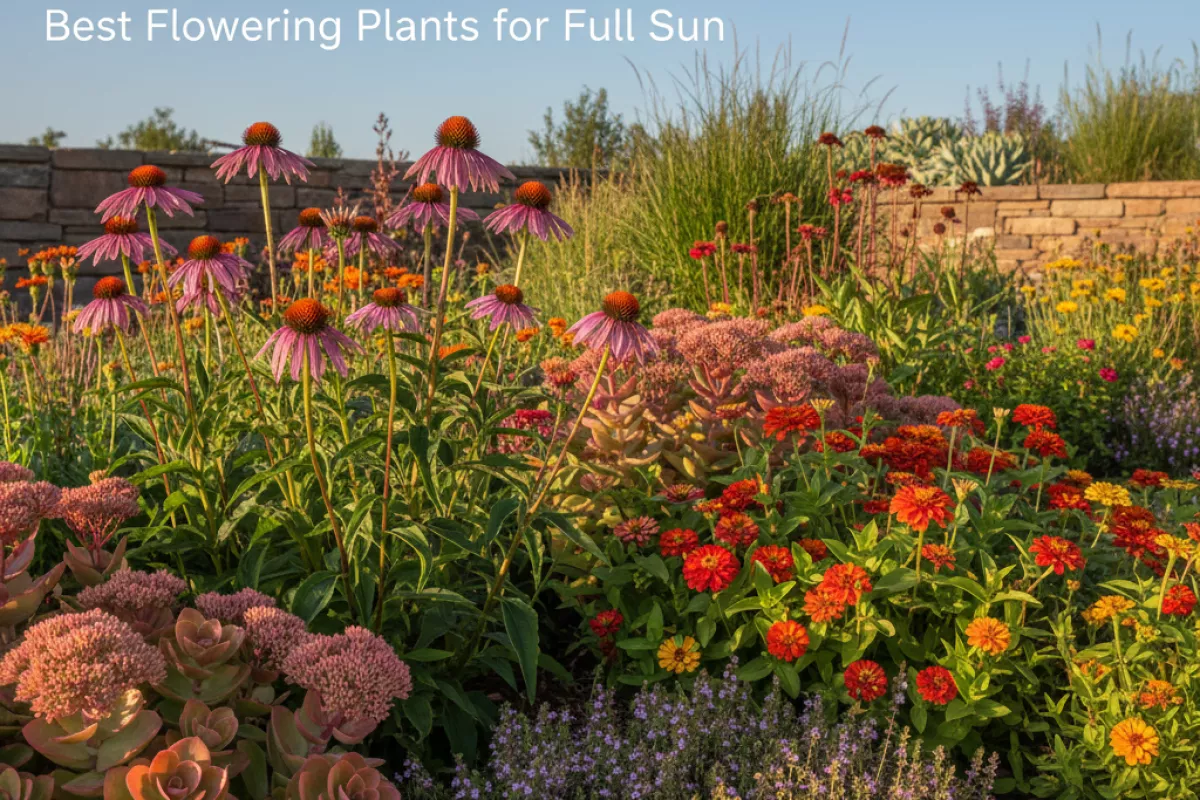
Plants that thrive in bright, direct light tend to share a few practical traits: they handle heat without wilting, keep flowering even when days are long, and recover quickly after a dry spell. You’ll usually see sturdier stems, smaller or thicker leaves, and a growth habit that stays tidy instead of stretching toward shade.
- High light tolerance: They perform best with about 6–8+ hours of direct sun per day and often bloom more heavily as light increases.
- Heat resilience: Many are adapted to hot afternoons, with leaves that resist scorching and flowers that don’t collapse as soon as temperatures climb.
- Drought-smart structure: Look for waxy, fuzzy, narrow, or leathery foliage; these features slow water loss and help the plant stay perky between waterings.
- Root systems built for dry cycles: Sun-friendly bloomers often develop deeper or denser roots, letting them tap moisture below the surface once established.
- Fast rebound after stress: If a plant droops on a very warm day, the right full-sun choices typically recover by evening once watered or as temperatures drop.
- Flowering triggered by sun: Many set more buds when they receive consistent brightness; in partial shade they may produce more leaves than blooms.
- Preference for well-drained soil: Constantly wet roots are a common failure point in sunny spots, especially in containers where heat speeds up both drying and waterlogging mistakes.
- Maintenance that matches the pace: Regular deadheading and light trimming can keep them blooming, but they usually don’t require fussy care beyond sun, drainage, and timely watering.
One detail that surprises people is that “full sun” doesn’t automatically mean “never water.” In the first few weeks after planting, most flowering plants need evenly moist soil while roots expand. After that, the best performers in open exposure are the ones that can handle a soak-and-dry rhythm rather than staying constantly damp.
It also helps to match the plant to the microclimate. A bed that gets morning sun and afternoon sun reflected off a wall can feel much hotter than an open lawn. In those extra-bright pockets, choosing varieties with tougher foliage and giving them a mulch layer around 5–8 cm (2–3 in) can reduce stress without reducing light.
Best species for bright gardens
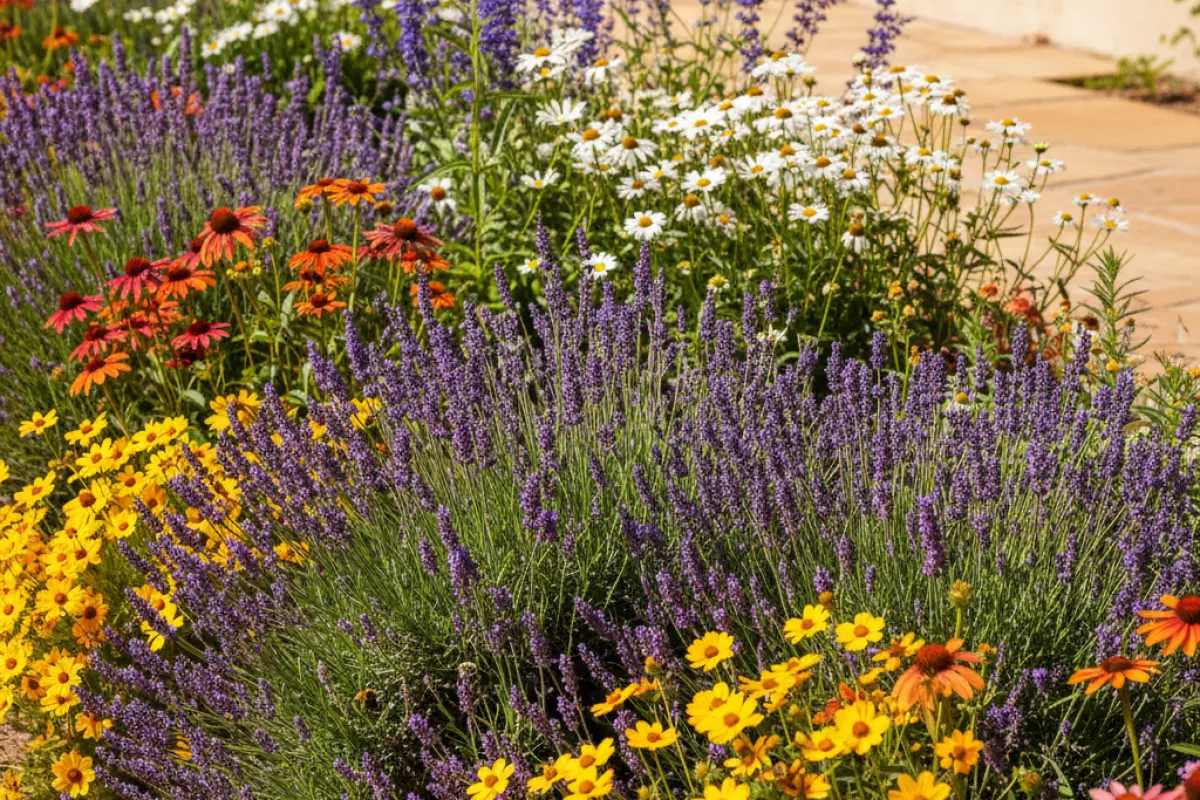
For sunny beds and borders, the easiest wins come from plants that naturally handle strong light, reflected heat, and faster-drying soil. Start by matching each species to your conditions: how many hours of direct sun you get, whether the spot bakes near paving, and how often you can water. The options below are reliable bloomers in full sun, with notes on what they like and what to watch for.
| Plant | Bloom window | Height | What it’s best at | Care notes for full sun |
|---|---|---|---|---|
| Lavender (Lavandula) | Late spring to summer | 45–90 cm (18–35 in) | Heat tolerance, fragrance, pollinators | Needs sharp drainage; avoid rich, wet soil; shear lightly after flowering. |
| Black-eyed Susan (Rudbeckia) | Summer to early fall | 60–90 cm (24–35 in) | Long bloom, tough in mixed borders | Deadhead for more flowers; divides well every 3–4 years. |
| Coneflower (Echinacea) | Summer | 60–120 cm (24–47 in) | Pollinator support, drought resilience once established | Water regularly the first season; leave some seedheads for birds. |
| Blanket flower (Gaillardia) | Early summer to fall | 30–60 cm (12–24 in) | Nonstop color in hot, open sites | Prefers lean soil; too much fertilizer can reduce flowering. |
| Salvia (ornamental sage) | Late spring to fall (varies) | 30–90 cm (12–35 in) | Repeat bloom, hummingbirds and bees | Cut back spent flower spikes to trigger fresh flushes. |
| Daylily (Hemerocallis) | Early to late summer (by cultivar) | 45–90 cm (18–35 in) | Low-fuss mass planting, slopes | More sun usually means more flowers; water during bud set for best show. |
| Zinnia (Zinnia elegans) | Summer to frost | 25–90 cm (10–35 in) | Fast color from seed, cutting garden | Space plants for airflow; water at the base to reduce mildew risk. |
| Marigold (Tagetes) | Summer to frost | 20–60 cm (8–24 in) | Edging, containers, steady bloom | Pinch early for bushiness; don’t overwater in hot spells. |
| Portulaca / moss rose (Portulaca grandiflora) | Summer | 10–20 cm (4–8 in) | Hot, dry spots; rock gardens; hanging baskets | Thrives on neglect; needs excellent drainage and full sun to open blooms. |
| Lantana (Lantana camara) | Summer to fall | 30–120 cm (12–47 in) | Heat and humidity tolerance, containers | Let soil dry slightly between waterings; pinch tips for a fuller shape. |
If your sunny area is also windy or sits beside a wall that radiates heat, prioritize plants with tougher leaves and deep roots (lavender, salvia, gaillardia). In richer, regularly watered beds, taller bloomers like coneflower and rudbeckia fill space quickly without flopping as long as they get at least 6–8 hours of direct sun.
- For nonstop color in containers: zinnia, marigold, lantana, and portulaca handle bright exposure well as long as pots drain freely.
- For low-water landscapes: lavender, blanket flower, and coneflower are good choices once established; mulch 5 cm (2 in) to slow evaporation.
- For pollinator-friendly planting: salvia, echinacea, and rudbeckia offer nectar and pollen through peak summer.
- For a tidy look with minimal effort: daylilies form clean clumps; remove spent flower stalks and divide when crowded.
Soil nutrients for abundant blooms
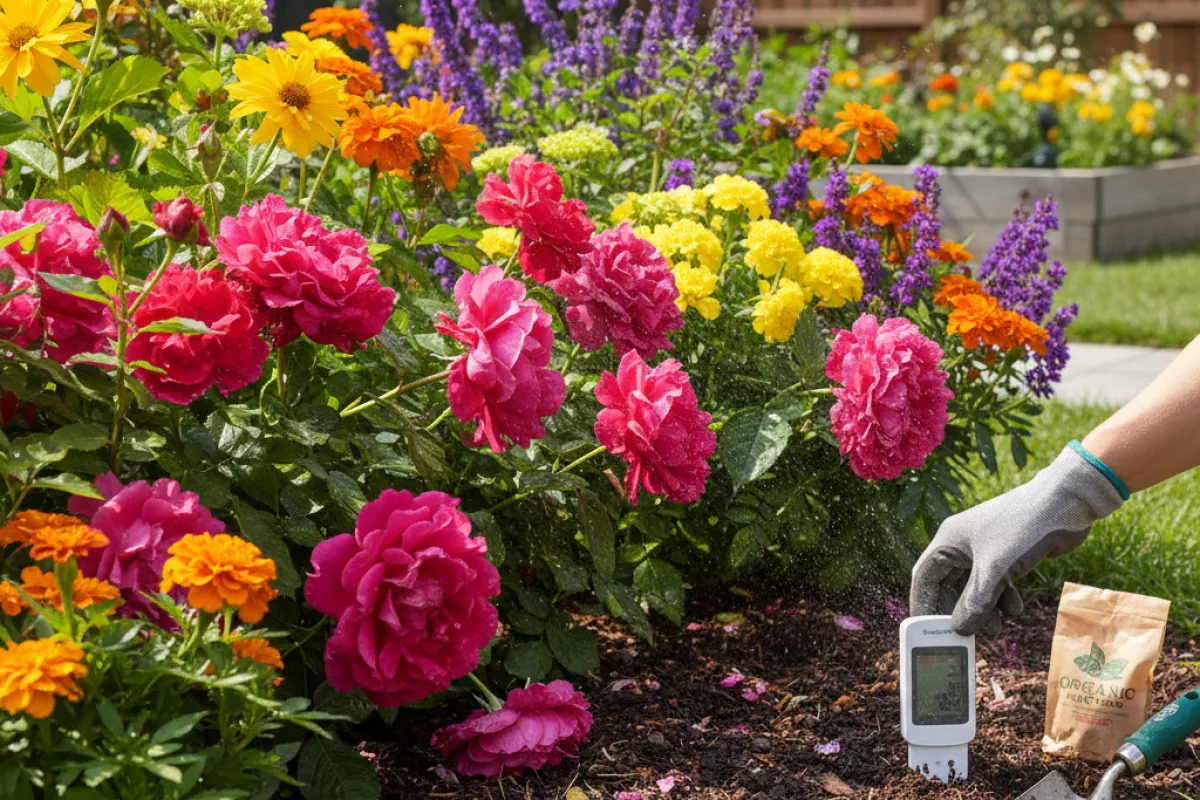
Big, repeat flowering in full sun comes down to two things: steady nutrition and soil that lets roots breathe. If the bed is compacted or low in organic matter, plants may stay green but produce fewer buds. Start by aiming for a loose, crumbly texture and consistent moisture so nutrients can actually move into the root zone.
Before adding anything, it helps to know what you’re working with. A basic soil test is the cleanest way to avoid over-fertilizing, especially with phosphorus, which can build up and interfere with micronutrient uptake. Most sun-loving bloomers are happiest in slightly acidic to neutral ground, roughly pH 6.0–7.0.
- Build the base with organic matter: Mix in 5–8 cm (2–3 in) of finished compost across the top 15–20 cm (6–8 in) of soil. This improves nutrient holding, drainage, and microbial activity without pushing plants into soft, leafy growth.
- Use nitrogen with restraint: Too much N often means tall stems and fewer flowers. If foliage is pale, use a modest, slow-release source and avoid frequent high-N feeds during peak budding.
- Prioritize potassium for flower performance: Potassium supports bud formation, stem strength, and heat tolerance. It’s especially helpful for long-blooming annuals and perennials that face hot afternoons.
- Don’t overdo phosphorus: Phosphorus helps roots and early establishment, but extra doesn’t automatically mean more blooms. If your soil already tests medium to high, skip “bloom booster” products and focus on overall balance.
- Watch key micronutrients: Iron and magnesium issues show up as yellowing between leaf veins, often when pH is too high. Correcting pH is usually more effective than repeatedly adding supplements.
- Mulch to keep nutrients available: Apply 5–7.5 cm (2–3 in) of mulch, keeping it a few cm (about 1 in) away from crowns and stems. Mulch moderates soil temperature and reduces nutrient loss from drying and re-wetting.
| What you see in the plant | Likely nutrient/soil issue | Practical fix |
|---|---|---|
| Lush leaves, few flowers | Too much nitrogen; overly rich soil | Back off high-N fertilizer; switch to a balanced or lower-N feed and keep watering even |
| Weak stems, flowers fade quickly in heat | Low potassium; inconsistent moisture | Use a fertilizer with adequate K; mulch and water deeply to maintain steady moisture |
| Slow to establish, poor early growth | Low phosphorus or cold, compacted soil | Loosen soil and add compost; only add P if a test shows it’s low |
| Yellowing between veins on newer leaves | Iron tied up by high pH | Adjust pH toward 6.0–7.0; consider chelated iron as a short-term assist |
| Older leaves yellow between veins | Magnesium deficiency | Apply magnesium as needed (for example, according to label rates) and avoid excess potassium, which can compete |
For feeding frequency, let the plant type guide you. Heavy bloomers in containers usually need more regular, lighter doses because nutrients leach out with watering, while in-ground perennials do better with a spring top-dress and a midseason check-in. If you’re unsure, err on the side of less and observe: steady growth and repeated buds beat fast growth that collapses in summer heat.
Deadheading and pruning techniques
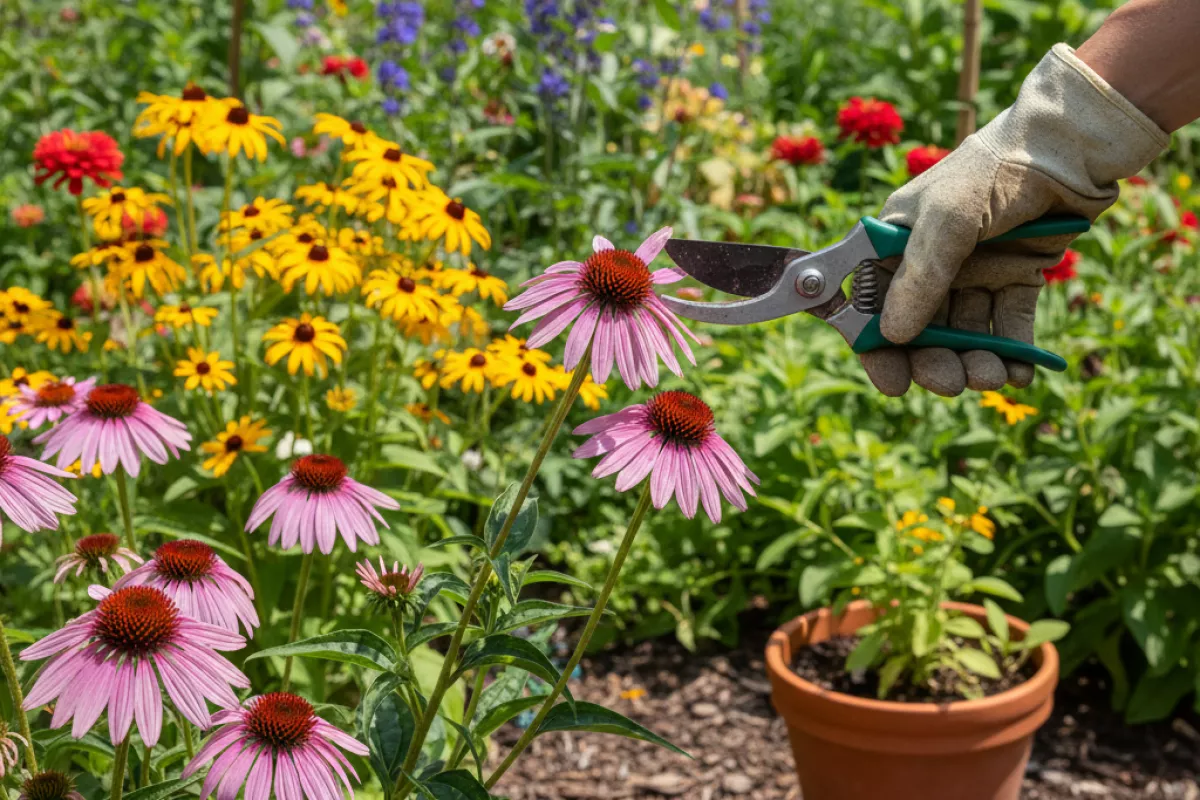
Regularly removing spent blooms and shaping growth keeps full-sun flowers producing instead of putting energy into seed. In hot, bright sites, this also improves airflow through the plant, which can reduce stress and help foliage dry faster after watering.
- Deadhead early and often: Snip faded flowers as soon as petals collapse. For single blooms, cut the stem back to the first set of healthy leaves or a visible bud. For clustered flowers, remove the whole cluster down to the next strong side shoot.
- Follow the stem to a “node”: Make cuts just above a leaf joint (node) so the plant can branch cleanly. Leaving long, bare stubs tends to die back and looks messy.
- Use the right cut for the plant type: Pinch soft stems with fingers for tender annuals; use clean pruners for thicker stems on perennials and shrubs. If stems are woody, a sharp bypass pruner makes a cleaner cut than scissors.
- Don’t remove too much at once in heat: In peak summer, avoid taking more than about one-third of the plant in a single session. A lighter trim prevents sunscald on suddenly exposed stems and reduces shock.
- Try “shearing” only when it fits: Mounding plants with many small flowers (like some bedding annuals) can be lightly sheared to reset bloom. After shearing, water deeply and consider a small feed if growth is slow.
- Know when to leave seed heads: Some sun-lovers look good in seed and may self-sow. If you want volunteers next year, leave a few late-season flowers to mature while continuing to remove most faded blooms.
- Time bigger pruning to the growth cycle: Do harder shaping after a flush of bloom or in the plant’s dormant season (varies by species). For repeat bloomers, a midseason cutback can trigger a second wave of flowers.
| Plant habit | What to do | Where to cut | Why it helps in full sun |
|---|---|---|---|
| Single large blooms on stems | Remove each faded flower | Back to first strong leaf set or bud | Redirects energy to new buds; keeps stems from flopping |
| Flower clusters (sprays) | Take the whole spent cluster | Down to the next side shoot or leaf node | Encourages branching and a fresh flush of blooms |
| Mounding, many small flowers | Light shear to tidy and restart | Trim the top growth evenly, then clean up stragglers | Prevents a tired, leggy look after heat waves |
| Upright perennials that get leggy | Cut back after first bloom | Reduce height by about one-third | Promotes sturdier regrowth and often a second bloom cycle |
Keep tools clean, especially when moving between plants. A quick wipe with isopropyl alcohol helps prevent spreading problems, and sharp blades make smaller wounds that heal faster in strong sun.
Water after a heavy trim, ideally at the base of the plant, and avoid pruning right before extreme heat. If a day is forecast above 32°C (90°F), wait until the cooler morning after the heat breaks so new cuts don’t dry out as quickly.
Watering during flowering periods

When plants are setting buds and pushing blooms in full sun, their water use spikes and the margin for error shrinks. Too little moisture can lead to dropped buds and smaller flowers; too much can dilute oxygen around the roots and invite rot. The goal is steady, deep moisture in the root zone, with the soil surface allowed to dry slightly between soakings.
Start by checking moisture where the roots actually are: dig or probe down about 5–8 cm (2–3 in). If it feels dry at that depth, it’s time to water; if it’s still cool and damp, wait. This simple check beats watering on a calendar, especially during heat waves or windy spells that can double how fast beds dry out.
- Water early in the day. Morning irrigation reduces evaporation and gives foliage time to dry, which helps limit fungal issues. If mornings aren’t possible, late afternoon is better than night in humid areas.
- Soak deeply, not lightly. Aim to moisten the top 15–20 cm (6–8 in) of soil so roots grow down instead of staying near the surface. Shallow daily sprinkles often create weak, heat-stressed plants.
- Keep water off petals when you can. Drip lines or a slow hose at the base prevents spotting on delicate blooms and reduces disease pressure.
- Mulch to stabilize moisture. A 5–7.5 cm (2–3 in) layer of organic mulch buffers midday heat, slows evaporation, and reduces the “boom-bust” cycle of wet-to-bone-dry that can shorten flowering.
- Adjust for containers. Pots in full sun can need water far more often than in-ground plants because the root zone heats up and dries faster. Water until you see runoff, then empty saucers so roots don’t sit in water.
| Situation in full sun | What to do with watering | Why it helps flowering |
|---|---|---|
| Newly planted (first 2–3 weeks) | Keep the root ball evenly moist; check daily in hot weather and water when the top 5 cm (2 in) dries | Prevents bud drop while roots establish and reduces transplant stress |
| Heat wave above 32°C (90°F) | Water earlier and more deeply; consider a second light soak only if soil dries below 5–8 cm (2–3 in) | Maintains turgor so flowers open fully instead of wilting midday |
| Windy, low-humidity days | Increase frequency slightly; prioritize mulching and slow, targeted irrigation at the base | Wind accelerates transpiration, which can shrink blooms and shorten display time |
| Heavy clay soil | Water less often but longer; wait until the top 5–8 cm (2–3 in) dries before repeating | Reduces root suffocation and rot that can stall blooming |
| Sandy soil | Water more often with thorough soakings; add compost and mulch to hold moisture | Prevents rapid dry-down that causes buds to abort |
| Container plants in sun | Check daily; water until runoff, then recheck later on extreme days above 35°C (95°F) | Small soil volume dries fast, and moisture swings can reduce flower size |
If you’re unsure whether you’re overdoing it, watch the plant and the soil together. Wilting that improves quickly after watering points to dryness; wilting with consistently wet soil can signal root stress. During peak bloom, consistency matters more than perfection: steady moisture, good drainage, and a cooler root zone will keep full-sun flowering plants performing longer.
Encouraging repeat blooming
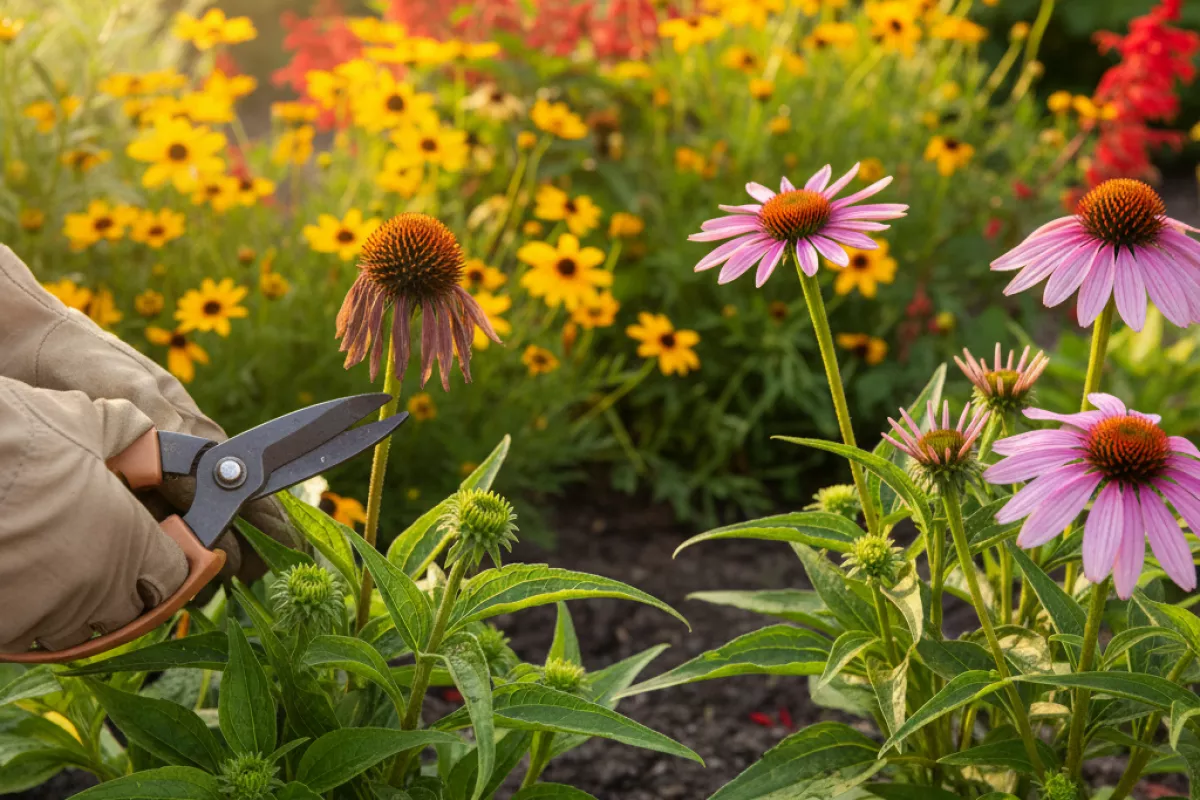
Getting sun-loving flowers to cycle back into bloom usually comes down to three things: removing spent flowers at the right time, keeping growth steady (not stressed), and avoiding fertilizer habits that push leaves instead of buds. Most full-sun plants are willing to rebloom if you help them finish one round cleanly and recover quickly for the next.
- Deadhead promptly, but don’t scalp the plant. Snip faded blooms before they set seed. For single flowers, cut back to the first strong set of leaves; for flower spikes, remove the spent portion down to a side bud. If you cut too low, you may remove developing buds and delay the next flush.
- Shear “mounding” bloomers after the first wave. Plants like blanket flower, catmint, and many salvias often respond to a light haircut. Reduce the plant by about 1/3 of its height (30%); that’s roughly 10 cm (4 in) off a 30 cm (12 in) plant. Water afterward to reduce stress.
- Water deeply, then let the surface dry slightly. In full sun, inconsistent moisture is a common reason for a long pause between bloom cycles. Aim for thorough soakings that reach the root zone, then wait until the top 2–5 cm (1–2 in) of soil is dry before watering again (containers dry faster than beds).
- Feed lightly and at the right time. Too much nitrogen can mean lush foliage and fewer flowers. Use a balanced or bloom-leaning fertilizer at half strength, especially for containers, and apply after deadheading or shearing when new growth starts. If you’re using compost, a thin layer of about 1–2 cm (0.5–0.75 in) is often enough.
- Don’t let plants overheat at the roots. A 5–7 cm (2–3 in) mulch layer keeps soil temperatures steadier and reduces moisture swings. Keep mulch a few centimeters away from the crown (about 2–5 cm / 1–2 in) to prevent rot.
- Pinch early for bushier plants and more bud sites. For many annuals and tender perennials, pinching young stems by 2–3 cm (1 in) encourages branching, which usually translates to more flowers later. Stop pinching once buds are forming.
- Support heavy bloomers before they flop. Stems that fall over waste energy and shade their own leaves. A simple stake or ring support installed early keeps plants upright so they can keep producing.
- Watch for “bloom blockers.” Heat waves, drought stress, and pest pressure can all pause flowering. Check undersides of leaves for aphids and mites, and remove damaged blooms and foliage so the plant doesn’t spend resources on failing parts.
If a plant still won’t rebloom, it may be a once-and-done bloomer by nature, or it may need a stronger midseason cutback. As a rule, if the plant has plenty of healthy leaves but no new buds after 2–3 weeks (14–21 days) of consistent care, try a slightly harder trim (up to 1/2, about 50%) and follow with deep watering and a light feeding.
Preventing sun damage to flowers
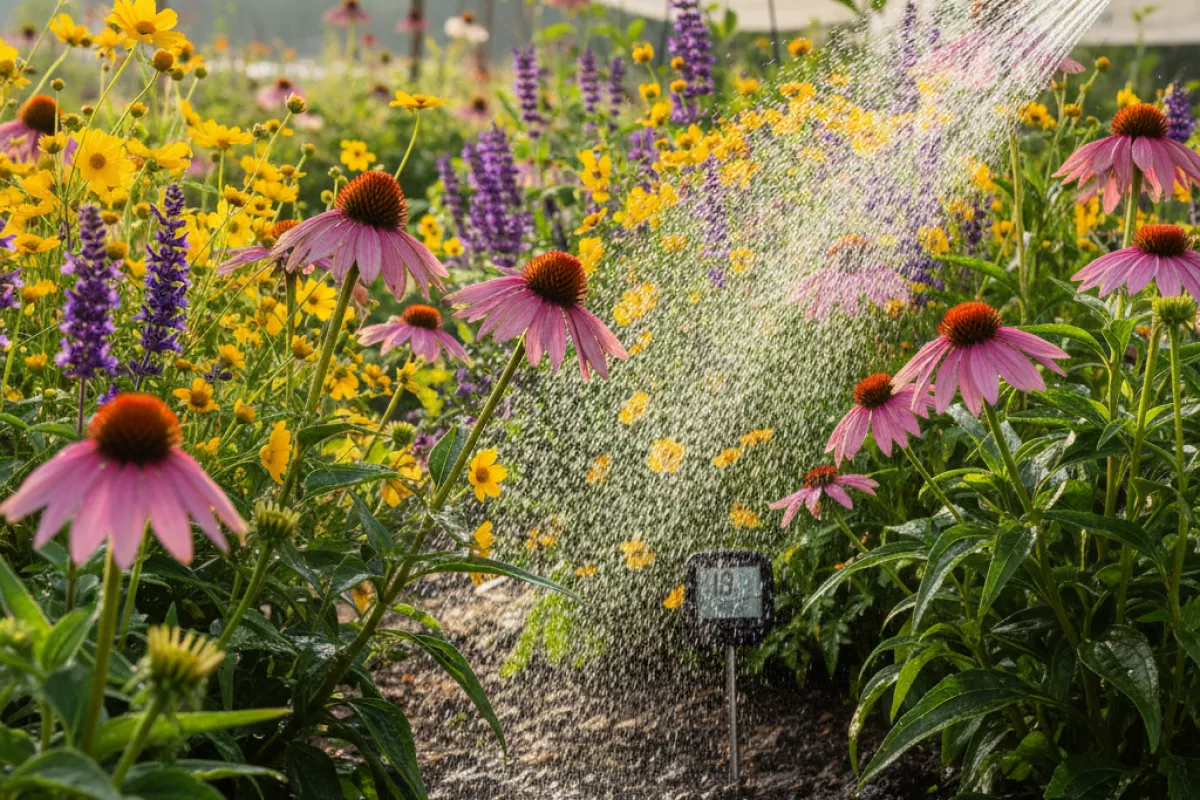
Too much intense light and heat can bleach petals, crisp leaf edges, and shorten bloom time even on plants labeled “full sun.” The goal isn’t to reduce sun overall, but to smooth out the harshest parts of the day and keep plants hydrated enough to cool themselves.
- Water for deep roots, not daily sprinkles. Give a thorough soak so moisture reaches 15–20 cm (6–8 in) down, then let the top layer dry slightly before watering again. Early morning watering reduces evaporation and helps plants handle afternoon heat.
- Mulch to stabilize soil temperature. A 5–8 cm (2–3 in) layer of shredded bark, compost, or leaf mold keeps roots cooler and reduces moisture loss. Keep mulch a few cm (about 1 in) back from stems to prevent rot.
- Use temporary shade during extreme heat. When temperatures spike above about 32°C (90°F), a shade cloth or even a light sheet on stakes for the 2–4 hottest hours can prevent petal scorch. Remove it once the heat wave passes so plants still get the light they need for flowering.
- Match the plant to the microclimate. South- and west-facing walls reflect heat; place tougher, heat-tolerant bloomers there and reserve more delicate varieties for spots with afternoon shade. Containers heat up faster than in-ground beds, so they need extra attention.
- Adjust fertilizing to avoid tender, burn-prone growth. Heavy nitrogen pushes soft leaves that scorch more easily. Use a balanced, slow-release feed and avoid fertilizing right before a hot spell.
- Protect blossoms from splash and salt. Overhead watering can spot petals in strong sun, and hard-water salts can build up in pots. Water at the base and flush containers occasionally with enough water to run out the bottom.
- Deadhead and prune strategically. Removing spent blooms helps redirect energy to new flowers, but avoid hard pruning during peak heat; it exposes inner growth that hasn’t acclimated to full sun.
| What you see | Likely cause | What to do next |
|---|---|---|
| Petals fade or look “washed out” within a day | Midday UV and heat bleaching pigments | Add brief afternoon shade during heat waves; choose darker-pigmented or heat-tolerant cultivars for the hottest spots |
| Brown, crispy leaf edges while veins stay greener | Water stress and hot, drying wind | Deep-water to 15–20 cm (6–8 in); mulch 5–8 cm (2–3 in); consider a windbreak |
| Leaves droop at midday but recover by evening | Normal heat wilt (temporary loss of turgor) | Check soil before watering; if soil is moist, don’t add more—provide short-term shade when above 32°C (90°F) |
| Bleached patches on leaves or flowers, especially on the sun-facing side | Sunscald after sudden exposure (e.g., moved pot, recent pruning) | Re-acclimate with partial shade for 7–10 days; avoid heavy pruning during peak sun |
| Bud drop or flowers dry before opening | Heat stress plus inconsistent moisture | Water consistently in the morning; increase organic matter in soil; move containers to morning sun/afternoon shade during extreme heat |
If you’re unsure whether a plant is actually suffering, check the soil 5–8 cm (2–3 in) down. Sun-loving flowers can look dramatic in the afternoon, but consistent moisture, cooler roots, and a little protection during the hottest hours usually make the difference between “surviving” and blooming well.