Yellow Leaves and Slow Growth in Plants

 This article explains why plants slow down or stay stagnant when energy, nutrients, roots, or light are limited. It covers common deficiencies, environmental stress, warning patterns of long-term weak growth, and practical steps to restore steady development.
- Why plants slow down when energy and resources are limited
- How weak growth reflects underlying nutrient or root issues
- Common deficiencies that reduce plant development speed
- Environmental factors that limit photosynthesis and growth
- Why plants remain stagnant even with regular care
- How to identify long-term growth weakness patterns
- Steps to restore plant strength and steady development
When plants develop pale leaves and produce little new growth, the problem is often simpler than it first appears. For both gardeners and indoor plant owners, these signs usually suggest an issue with light, watering, root health, nutrients, or temperature. Learning to notice these clues early makes it easier to choose the right solution and help the plant recover before it becomes weaker or more stressed.
Why plants slow down when energy and resources are limited

Yellowing leaves and sluggish growth often appear together because both are signs that a plant is operating on a reduced budget. Growth depends on energy from light, water moving through tissues, and a steady supply of minerals from the root zone. When one of those inputs drops, the plant starts conserving resources. It may stop producing fresh leaves, shorten internodes, or allow older foliage to fade so nutrients can be redirected to newer tissue.
This slowdown is not always a disease problem. In many cases, it is a survival response. A plant that cannot support full growth will prioritize the parts most likely to keep it alive, such as the crown, roots, or newest leaves. That is why yellow leaves near the bottom and a lack of new shoots often happen at the same time.
How the energy balance affects growth
Plants make sugars through photosynthesis, then spend those sugars on maintenance, root activity, leaf production, and repair. If light is weak, roots are stressed, or temperatures are outside the ideal range, the plant may produce less energy than it needs. Once that happens, visible growth slows first because expansion takes more resources than simply staying alive.
- Low light: Less sugar production means slower cell division and weaker stems.
- Root stress: Damaged or waterlogged roots absorb less water and fewer nutrients, even if the soil contains them.
- Nutrient shortage: The plant cannot build chlorophyll, proteins, or new tissue efficiently.
- Temperature stress: Cool conditions slow metabolism, while excessive heat increases water loss and strain.
Why yellow leaves appear during slow growth
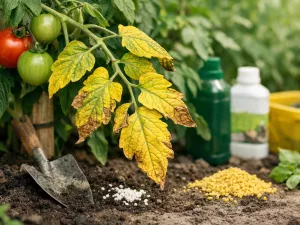
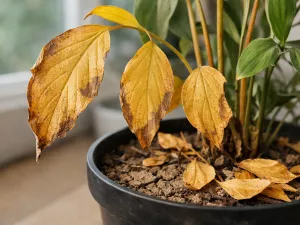
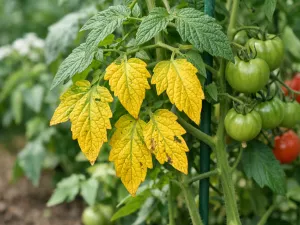
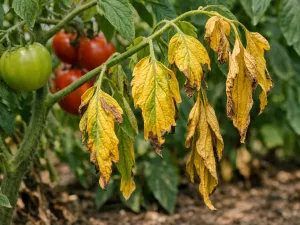
Yellowing is commonly linked to chlorophyll loss. When a plant lacks enough nitrogen, magnesium, iron, or general energy, it may break down chlorophyll in older leaves and move usable nutrients elsewhere. That process leaves foliage pale green, mottled, or fully yellow. If the shortage continues, leaves may brown at the edges, drop early, and leave the plant with too little surface area to recover quickly.
The pattern matters. Uniform yellowing on older leaves often points to mobile nutrient shortages or chronic watering problems, while yellowing on new leaves can suggest iron-related issues or root damage that limits uptake.
A plant that has stopped growing is not always asking for more fertilizer. If roots are cold, compacted, or constantly wet, added feed can make the problem worse by increasing salt stress before uptake improves.
How weak growth reflects underlying nutrient or root issues

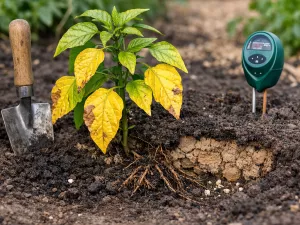
Weak growth is often the visible result of hidden trouble below the soil surface. Leaves may stay small, stems may remain thin, and new shoots may emerge slowly because the root system cannot supply enough water and minerals. Even healthy-looking soil can hide compaction, poor drainage, or roots circling tightly in a pot.
Nutrient problems and root problems are closely linked. A plant may be sitting in nutrient-rich compost yet still show deficiency symptoms because roots are damaged, oxygen-starved, or unable to expand. That is why feeding alone does not always restore vigor.
Root conditions that commonly reduce growth
Roots need both moisture and air. When soil stays saturated, oxygen levels drop and fine feeder roots begin to fail. When soil becomes bone dry repeatedly, root hairs die back and uptake becomes erratic. In containers, roots can also become crowded, leaving little fresh mix to hold moisture and nutrients.
- Waterlogging: Leads to root suffocation, yellow leaves, and soft, weak growth.
- Compaction: Restricts root spread and reduces access to air pockets.
- Root binding: Common in pots; growth stalls because roots circle instead of branching outward.
- Salt buildup: Excess fertilizer residue can burn roots and interfere with water uptake.
- Cold soil: Slows root activity, especially below about 10°C (50°F) for many warm-growing houseplants.
When nutrient symptoms are really uptake symptoms
A plant can show yellow leaves because nutrients are unavailable, not because they are absent. Soil pH, excess moisture, and root damage all affect how easily minerals move into the plant. Iron, for example, may be present in the soil but inaccessible in alkaline conditions. Nitrogen may be washed out by repeated heavy watering outdoors or exhausted in a potting mix that has not been refreshed for months.
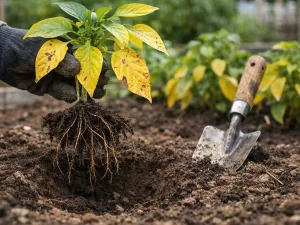
If growth is weak and the soil has a sour smell, stays wet for many days, or the plant lifts easily from the pot with a dense root mass, the root system deserves attention before any feeding schedule is increased.
A practical check is to compare top growth with root space. A plant in a 12 cm (5 in) nursery pot that dries out in less than 24 hours may be root-bound, while one that stays wet for more than 7 days in the same pot may be sitting in a mix that is too dense or poorly drained.
Common deficiencies that reduce plant development speed

Nutrient deficiencies rarely look identical across all plants, but certain patterns appear again and again. Some shortages mainly affect older leaves because the plant can move those nutrients to new growth. Others show first on new leaves because the nutrient is less mobile inside the plant. Knowing where yellowing starts helps narrow the cause and prevents random treatment.
Deficiencies also develop at different speeds. A fast-growing tomato or peace lily may show signs quickly when feeding is inadequate, while a slower plant may decline gradually over several weeks.
| Deficiency | Typical leaf pattern | Effect on growth | Common context |
|---|---|---|---|
| Nitrogen | Older leaves turn pale green to yellow evenly | Overall slow growth, smaller leaves, reduced vigor | Exhausted potting mix, heavy rain leaching, underfeeding |
| Iron | New leaves yellow between green veins | Weak new growth and poor color | High pH soil, cold wet roots, poor drainage |
| Magnesium | Older leaves yellow between veins, often with green veins remaining | Reduced photosynthesis and gradual slowdown | Imbalanced feeding, frequent watering, depleted container mix |
| Potassium | Leaf edges yellow or scorch, often on older leaves | Weak stems, poor resilience, slower development | Heavy feeders, flowering plants, sandy soil |
| Phosphorus | Dull, dark, or purplish leaves rather than bright yellowing in many species | Stunted roots and delayed growth | Cold soil, poor root activity, low available phosphorus |
Reading the plant before treating
It helps to match symptoms with recent care. If yellowing began after a long period without feeding, a deficiency is more likely. If it started after repotting into dense soil or after overwatering, uptake trouble is a stronger suspect. Plants under low light can also develop deficiency-like symptoms because they are using nutrients slowly and roots are less active.
- Older leaves first: Often linked to nitrogen or magnesium shortages.
- Newest leaves first: More often associated with iron or severe root dysfunction.
- Yellowing with crispy edges: Can point to potassium issues, dry spells, or salt buildup.
- Pale plant with no real elongation: Frequently tied to low nitrogen, weak light, or root restriction.
If only one or two old leaves are yellowing while the rest of the plant is pushing healthy new growth, that can be normal aging. Worry more when the yellowing spreads faster than new growth appears.
Environmental factors that limit photosynthesis and growth

Even with decent soil and regular feeding, plants cannot grow well if the surrounding conditions block photosynthesis or stress the tissues. Light, temperature, humidity, airflow, and watering rhythm all shape how efficiently a plant can turn resources into new growth. Yellow leaves often become more noticeable when environmental stress lasts long enough to reduce chlorophyll production.
Light quality and duration
Insufficient light is one of the most common causes of slow development indoors. A plant placed too far from a bright window may survive but not thrive. It will often produce smaller leaves, stretch toward the light, and gradually lose lower foliage. Outdoors, dense shade or overcrowding can create the same effect.
As a practical guide, many foliage houseplants perform much better within 1 m (3 ft) of a bright window than at 2.5 m (8 ft) across the room. Sun-loving species usually need several hours of direct light, while shade-tolerant plants still require bright indirect conditions to maintain steady growth.
Temperature and seasonal slowdown
Growth naturally slows when temperatures drop or daylight shortens. In cool rooms, root uptake declines and the plant uses water more slowly. If watering stays on a summer schedule, roots can remain wet too long and leaves may yellow. Heat can also cause slowdown by increasing transpiration faster than roots can replace moisture.
- Too cool: Metabolism slows, roots absorb less, and leaves may pale.
- Too hot: Stress rises, moisture demand increases, and tender growth can stall.
- Sharp fluctuations: Drafts, heaters, and cold windows can trigger repeated stress responses.
Watering habits and oxygen in the root zone
Plants need a wet-dry balance suited to their species. Constantly damp soil reduces oxygen around roots, while severe drying can interrupt nutrient flow and damage fine root hairs. Both extremes can produce the same outward symptom: yellow leaves and little new growth.
Instead of watering by calendar alone, check the root zone. For many container plants, watering is best when the top 2-5 cm (1-2 in) of mix has dried, though thirsty tropicals and drought-tolerant succulents differ widely. Matching the watering rhythm to season, pot size, and light level is often more effective than increasing fertilizer.
If a plant is in lower winter light, expect slower drying and slower growth. That is the time to reduce watering frequency, not to push extra feed in hopes of forcing fresh leaves.
Why plants remain stagnant even with regular care

Many struggling plants are not neglected at all. They are watered, fed, and checked often, yet they remain static for months. This usually happens when the routine is consistent but mismatched to the plant’s actual needs. Regular care can still be ineffective if the soil is tired, the pot is the wrong size, the light is too weak, or pruning has been mistimed.
Another common issue is doing one thing correctly while another factor quietly blocks progress. A plant may receive balanced fertilizer but sit in a dark corner. It may be watered carefully but remain root-bound. It may have enough light but be planted in a heavy mix that stays cold and wet.
Care routines that look helpful but hold plants back
Some habits create chronic low-level stress rather than immediate damage. Because the decline is gradual, they are easy to miss.
- Small frequent watering: Moistens the surface but may leave deeper roots dry or encourage shallow rooting.
- Constant low-dose feeding: Can lead to salt accumulation if the pot is never flushed thoroughly.
- Oversized pots: Hold excess moisture around a small root ball and slow root recovery.
- No repotting for years: Leaves the plant in depleted, compacted mix with limited nutrient reserves.
- Heavy pruning during stress: Reduces leaf area when the plant already has limited energy.
Why “doing more” is not always the answer
When growth stalls, the instinct is often to add more fertilizer, more water, or more interventions. But plants recover best when the limiting factor is identified and corrected. If roots are damaged, stronger feed can worsen the problem. If light is poor, extra nutrients may not be used efficiently. If the plant is seasonally dormant or semi-dormant, forcing growth can create weak, pale shoots.
A better approach is to review the whole setup: light exposure, root condition, drainage, feeding history, and recent environmental changes. The goal is not more care, but more accurate care.
How to identify long-term growth weakness patterns

Long-term weakness usually leaves clues that are more obvious over time than in a single day’s inspection. Looking at growth patterns over several weeks helps separate temporary stress from chronic decline. A plant that pauses briefly after repotting is different from one that has produced no meaningful new growth for three months during its active season.
Tracking changes makes diagnosis more reliable. Instead of focusing only on the yellow leaves you see now, compare leaf size, stem thickness, spacing between leaves, and how quickly the soil dries compared with earlier months.
Signs of a chronic problem rather than a short setback
Persistent weakness tends to show in structure as well as color. New leaves may emerge smaller than older ones, stems may stay thin, and lower leaves may yellow one after another without a burst of replacement growth.
- Repeated lower leaf loss: Older leaves yellow and drop while the canopy does not fill back in.
- Smaller new growth: Each new leaf is reduced in size, suggesting limited energy or root capacity.
- Slow drying soil: Can indicate reduced root activity or poor aeration.
- Very fast drying soil: Often points to a congested root system with little remaining potting mix.
- Short, stalled shoots: Buds form but fail to extend normally.
Useful observations to record
A simple log can reveal patterns that memory misses. Note when yellowing began, how often you water, whether the pot feels lighter faster or slower than before, and whether the plant is in active season. If possible, take a photo every 2 weeks. Comparing images often shows gradual thinning or color loss that is hard to notice day to day.
It also helps to inspect the root zone and soil surface. White crust on the soil can suggest fertilizer salts. Fungus gnats often point to consistently wet compost. Roots emerging heavily from drainage holes may indicate crowding. These details help explain why growth remains weak despite attention.
| Pattern observed | What it may suggest | Best next check |
|---|---|---|
| Yellowing starts on oldest leaves and spreads slowly | Nitrogen shortage, inconsistent watering, or natural aging accelerated by stress | Review feeding history and check root moisture deeper in the pot |
| New leaves are pale and undersized | Iron uptake issue, root stress, or weak light | Check drainage, pH tendency, and light level |
| No growth in warm bright conditions for 6-8 weeks | Root binding, depleted mix, or hidden root damage | Slide plant from pot and inspect root density and smell |
| Leaves yellow after every watering cycle | Overwatering, poor aeration, or root rot beginning | Assess drying time and soil structure |
Steps to restore plant strength and steady development
Recovery is usually gradual. Once leaves have turned fully yellow, they rarely green up again, so the real measure of success is healthier new growth. The aim is to remove the main limitation, support root function, and let the plant rebuild energy reserves. Quick fixes are less effective than a steady correction of light, watering, soil, and feeding.
A practical recovery sequence
Working in the right order prevents additional stress. Start with diagnosis, then correct the growing conditions before pushing fertilizer.
- Check light first. Move the plant to brighter appropriate conditions if it has been in a dim spot. Increase exposure gradually over 5-7 days to avoid scorch, especially if shifting toward direct sun.
- Inspect moisture and drainage. Water thoroughly until excess drains, then allow the mix to dry to the plant’s preferred level before watering again. If the soil stays wet for too long, consider repotting into a more open mix.
- Examine the roots. If roots are circling densely or the mix has broken down into a heavy mass, repot into a container only 2-5 cm (1-2 in) wider than the current root ball.
- Trim only what is necessary. Remove fully yellow or dead leaves, but avoid heavy pruning while the plant is trying to recover unless there is rot or severe damage.
- Resume feeding lightly. Once active growth restarts, use a balanced fertilizer at half strength according to the product label. For example, if the label recommends 10 ml per 1 L (0.34 fl oz per 34 fl oz), start with 5 ml per 1 L (0.17 fl oz per 34 fl oz).
- Monitor new growth. Watch the next two to four leaves or shoots. Improvement in color, size, and pace is a better sign than the condition of old foliage.
When repotting makes the biggest difference
Repotting is especially useful when the plant is root-bound, the potting mix has collapsed, or watering has become difficult to manage. Choose a mix suited to the species: airy and fast-draining for succulents and many aroids, more moisture-retentive for ferns and thirsty tropicals. A pot with drainage holes is essential for long-term recovery.
After repotting, avoid saturating the plant repeatedly out of caution. Water enough to settle the mix, then let the roots search into the fresh medium. Too much water in a newly upsized pot can slow recovery instead of helping it.
How to judge whether the plant is recovering
Recovery signs are subtle at first. You may notice that the plant uses water more predictably, new leaves emerge with stronger color, and stems feel firmer. Outdoors, stronger growth often appears within 2-4 weeks in warm weather. Indoors, especially in cooler seasons, improvement can take 4-8 weeks.
- Good signs: Larger new leaves, richer green color, shorter time between new shoots, steadier water use.
- Warning signs: Continued yellowing on new growth, sour-smelling soil, blackened roots, or complete lack of growth in suitable conditions.
If the plant still declines after correcting light, watering, and root conditions, consider less obvious issues such as pest damage, unsuitable pH, or species-specific dormancy. But in most cases, yellow leaves with slow growth improve once the plant has enough light, a functioning root system, and a feeding routine that matches its growth rate rather than trying to force it.