Yellow Leaves With Curling or Drooping

 This article explains what leaf curling and drooping can mean in plants, including water stress, heat, humidity, airflow, and nutrient issues. It also shows how to tell dehydration from root problems, restore hydration balance, and prevent the issue from coming back.
- What curling and drooping indicate in plants
- Water stress and its effect on leaf structure
- Heat, humidity, and airflow impact on leaves
- Nutrient issues linked to leaf deformation
- How to distinguish between dehydration and root problems
- Steps to restore proper plant hydration balance
- Preventing recurring leaf curling and drooping
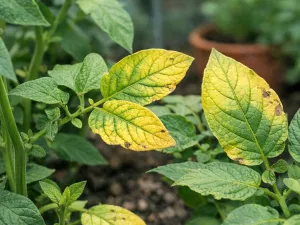
Yellow leaves that also curl or droop usually signal plant stress, not one specific disease. Start by checking recent watering habits, light exposure, temperature changes, and the condition of the roots, because small care problems often appear this way before stronger symptoms develop. Looking closely at these basics can help you identify the cause early, and early action gives the plant a much better chance to recover and grow normally again.
What curling and drooping indicate in plants

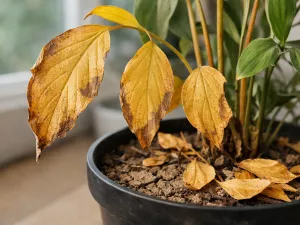
Yellow leaves that curl, sag, or hang limply are not a single problem by themselves. They are a plant’s way of showing that normal water movement, cell pressure, or root function has been disrupted. In many cases, the leaf is reacting to stress before the rest of the plant shows obvious decline, which is why these changes are useful early warning signs.
Leaf curling often happens when the plant is trying to reduce moisture loss. By rolling or folding inward, the leaf exposes less surface area to dry air, heat, or strong light. Drooping is different. It usually points to a loss of internal pressure in the leaf and stem tissues, though it can also happen when roots are damaged and can no longer support the top growth properly.
What the shape change can tell you
The exact pattern matters. A leaf that curls upward, twists, and stays firm suggests a different issue from one that turns yellow, feels soft, and hangs down. Looking closely at texture, speed of change, and where the damage appears can help narrow the cause before you change your care routine.
- Upward curling: often linked to heat stress, intense light, or low humidity.
- Downward curling: can point to overwatering, root stress, or excess fertilizer salts.
- Soft drooping: commonly seen with underwatering or roots sitting in poorly aerated soil.
- Yellowing with crisp edges: more often tied to dehydration, dry air, or irregular watering.
- Yellowing with limp tissue: often suggests waterlogged roots or reduced oxygen in the potting mix.
Why yellowing appears alongside distortion
When a leaf can no longer function efficiently, chlorophyll breaks down and green fades to pale yellow. That can happen because the plant is short of water, because the roots are damaged, or because nutrients are present in the soil but no longer moving well through the plant. New growth may stay smaller and misshapen, while older leaves may yellow first if the plant is reallocating resources.
It helps to think of yellowing, curling, and drooping as a combined stress signal rather than three separate symptoms. The more quickly these signs appear together, the more likely the problem involves watering, roots, or temperature extremes rather than normal aging.
If only one or two of the oldest leaves are yellowing while the rest of the plant looks firm and active, that may be normal leaf turnover rather than a health crisis. Widespread curling or drooping, however, deserves a closer check within a day or two.
Water stress and its effect on leaf structure

Water stress changes the physical structure of leaves because plant cells rely on water pressure to stay expanded. When moisture is too low, cells lose firmness and leaves wilt, curl, or become papery at the edges. When moisture is too high, roots struggle to take up oxygen, and the leaves can droop even though the soil is wet.
This is why both under- and overwatering can produce similar-looking symptoms. The difference is in the route that led there. One deprives the plant of available moisture; the other weakens the roots until they can no longer move water upward effectively.
How underwatering changes leaves
In dry conditions, the plant conserves what water it has. Leaves may fold inward, feel thinner than usual, and turn yellow as older foliage is sacrificed first. The potting mix often pulls away from the sides of the pot, especially in peat-heavy blends that have dried too far. If the drought cycle repeats often, leaf tips become brown and brittle.
Underwatering is not just about frequency. A plant can be watered regularly and still stay too dry if the root ball has become compacted, hydrophobic, or too crowded to absorb moisture evenly.
How overwatering changes leaves
When roots stay in saturated soil, oxygen levels drop. Fine feeder roots begin to fail, and the plant reacts as though it is thirsty because damaged roots cannot keep pace with the needs of the leaves. In this case, foliage may droop heavily, yellow from the lower part of the plant upward, and feel soft rather than crisp.
Persistent wetness also encourages root rot organisms. Once roots are affected, leaves may curl downward, lose shine, and decline even after watering schedules are corrected unless the soil and root health are addressed.
- Dry stress clues: lightweight pot, dry top 5 cm (2 in) or more, crisp margins, rapid perk-up after watering.
- Wet stress clues: heavy pot, sour smell from soil, fungus gnats, soft yellow leaves, slow recovery after watering changes.
- Irregular watering clues: mixed symptoms, including yellowing, edge burn, and alternating limp and stiff leaves.
Repeated swings between very dry and very wet conditions are especially hard on leaf structure. Cells expand and collapse unevenly, which can leave foliage curled, puckered, or permanently distorted even after the plant stabilizes.
Heat, humidity, and airflow impact on leaves

Environmental conditions above the soil line strongly affect how leaves hold their shape. High temperatures increase water loss through transpiration, while low humidity speeds evaporation from leaf surfaces. Poor airflow can make matters worse by trapping heat around the plant, but harsh drafts can also stress leaves and dry them too quickly.
Plants that are close to a south- or west-facing window, a radiator, a heater vent, or reflective glass often show curling before they show severe yellowing. The leaf is trying to protect itself from excessive moisture loss and tissue damage.
Heat stress versus dry air
Heat stress usually causes leaves to curl upward or inward during the hottest part of the day. The surface may feel warm, and the side facing the light can bleach or yellow first. Dry air, by contrast, often causes thinner leaves to lose flexibility over time, leading to edge curl, tip browning, and a tired, dull appearance.
Indoor plants commonly struggle when room temperatures rise above 27°C (81°F) and humidity falls below about 40 percent. Tropical species tend to show deformation sooner than tougher foliage plants, especially if they are in small pots that dry rapidly.
Airflow problems that mimic watering issues
Still air can keep soil damp for too long and encourage fungal problems, while strong direct airflow from fans or vents can make leaves droop as if the plant needs water. The difference is that the soil may still be adequately moist. This is why location matters as much as the watering can.
- Too much heat: upward curl, faded patches, midday droop, fast drying soil.
- Low humidity: curled edges, brown tips, thin or crinkled new leaves.
- Stagnant air: prolonged damp soil, weak stems, increased disease pressure.
- Cold or hot drafts: sudden drooping, patchy yellowing, leaf drop near windows or vents.
If a plant declines every afternoon but looks better by morning, check temperature and sun exposure before assuming a nutrient problem. Temporary wilting in heat often points to demand outpacing root supply, not a lack of fertilizer.
Improving conditions does not require turning the growing area into a greenhouse. Moving the plant 30 to 60 cm (12 to 24 in) back from intense glass, raising humidity modestly, and allowing gentle air movement are often enough to stop further leaf distortion.
Nutrient issues linked to leaf deformation

Not every curled or drooping yellow leaf is caused by water alone. Nutrient imbalances can weaken leaf tissue, interfere with chlorophyll production, and distort new growth. The challenge is that feeding problems often overlap with watering issues, because roots must be healthy and active to absorb nutrients properly.
A true deficiency tends to develop gradually, while fertilizer burn or salt buildup can appear more suddenly. In both cases, leaves may yellow and deform because the plant cannot maintain balanced growth.
Deficiencies that affect shape and color
Calcium, magnesium, potassium, and nitrogen can all influence leaf form in different ways. Calcium shortages often show up in new growth, which may emerge twisted, crumpled, or stuck. Magnesium deficiency usually appears first on older leaves as yellowing between veins. Potassium issues can lead to edge yellowing and curl, while low nitrogen often causes overall pale growth and early leaf drop rather than dramatic twisting.
These symptoms are more common in exhausted potting mix, very fast-growing plants, or specimens that have gone many months without feeding during active growth.
Excess fertilizer and salt accumulation
Too much fertilizer can damage roots and create leaf symptoms that look like drought. Salts in the soil draw water away from root tissues, leaving leaves curled, drooping, or scorched at the edges. This is especially common when concentrated liquid feed is used on already dry soil or when plants are fertilized heavily in low light.
White crust on the soil surface or around the pot rim often points to buildup. In that situation, adding more fertilizer usually worsens the problem.
| Issue | Typical leaf pattern | Where it appears first | Useful check |
|---|---|---|---|
| Nitrogen shortage | General yellowing, slower growth, mild droop | Older leaves | Has the plant been unfed for a full growing season? |
| Magnesium shortage | Yellowing between veins, possible curling with age | Older leaves | Is the potting mix old or repeatedly leached? |
| Calcium shortage | Misshapen, weak, or stuck new leaves | Newest growth | Is watering erratic or root uptake impaired? |
| Fertilizer excess | Burnt tips, downward curl, limp foliage despite moist soil | Across the plant | Is there crusting on soil or recent heavy feeding? |
Before correcting a nutrient issue, make sure the soil moisture and root condition are reasonable. Feeding a stressed plant in soggy or bone-dry mix rarely solves the underlying problem and can intensify leaf damage.
How to distinguish between dehydration and root problems

Dehydration and root trouble can look frustratingly similar from above the soil. In both cases, leaves may droop, curl, and yellow because the canopy is not receiving enough water. The difference is whether the roots are temporarily short of moisture or physically unable to take it up.
The best way to tell is to combine several clues instead of relying on one symptom. Soil feel, pot weight, smell, recovery speed, and root appearance all matter more than leaf color alone.
Signs that point to simple dehydration
A dehydrated plant usually has dry soil, a noticeably lighter pot, and leaves that feel limp but not mushy. After a thorough watering, many plants begin to improve within a few hours, though badly dried specimens may need a full day. The stems remain structurally sound, and the soil does not smell sour.
- Pot feels light: much lighter than usual when lifted.
- Soil is dry below the surface: not just the top 2 cm (1 in), but deeper into the root zone.
- Leaves recover fairly quickly: posture improves after watering.
- No foul odor: the mix smells earthy or neutral.
Signs that suggest root damage or rot
Root problems are more likely when the soil stays wet for days, the plant remains limp after watering, or yellowing spreads despite regular care. If removed from the pot, healthy roots are generally pale and firm, while damaged roots may be brown, gray, or black and feel soft or stringy.
Rootbound plants create another variation. They may dry out very quickly and droop often, but the issue is not lack of watering effort. The dense root mass leaves too little soil to hold moisture, so the plant swings into stress repeatedly.
| Clue | More consistent with dehydration | More consistent with root problems |
|---|---|---|
| Soil condition | Dry, shrinking from pot edges | Wet for too long or compacted |
| Leaf texture | Limp, sometimes crisp at edges | Soft, heavy, sometimes yellow all over |
| Response after watering | Improves within hours to 24 hours | Little or no improvement |
| Root inspection | Firm but dry roots | Dark, mushy, or sparse feeder roots |
When in doubt, do not keep watering a drooping plant just because it looks thirsty. If the pot is already heavy, more water can push stressed roots further into decline.
If you suspect root trouble, inspect the drainage holes and the lower root zone. A plant with healthy moisture levels but failing roots needs a different fix from one that simply missed a watering.
Steps to restore proper plant hydration balance

Restoring balance is not about giving more water at once. It means getting the roots back into a zone where they can absorb moisture steadily and breathe properly between waterings. The right approach depends on whether the plant is too dry, too wet, or trapped in a cycle of both.
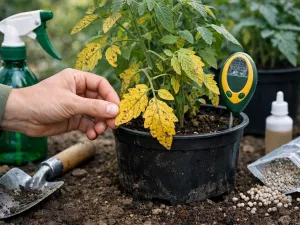
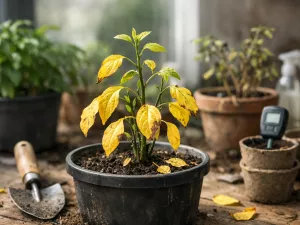
Start by checking the root zone, not just the leaf symptoms. A plant with curled yellow leaves may need a deep soak, a drier interval, a repot, or a change in environment. Acting too quickly without checking can prolong the problem.
For plants that have dried out too far
If the potting mix has become hard and water runs straight through, rehydration needs to be gradual and thorough. Dry peat-based mixes often repel water at first, so a quick pour may leave the center of the root ball dry.
- Move the plant out of direct sun and into bright, indirect light for recovery.
- Water slowly until the mix is evenly moist and excess drains out.
- If the root ball is very dry, soak the pot in a basin of water for 15 to 30 minutes, then let it drain fully.
- Remove leaves that are fully yellow and collapsed, but keep any partly green leaves that can still contribute energy.
- Resume watering only when the appropriate depth of soil has dried again, based on the plant type.
For plants staying too wet
When overwatering is the issue, the goal is to restore oxygen around the roots. That may mean waiting longer between waterings, improving drainage, or replacing exhausted mix that stays soggy too long.
- Stop watering until the upper root zone begins to dry.
- Check that the pot has open drainage holes and is not sitting in collected water.
- Increase airflow and place the plant in suitable light so the mix dries at a healthy pace.
- If roots smell sour or appear mushy, trim damaged sections and repot into fresh, airy mix.
- Hold fertilizer until clear new growth appears.
Adjusting the setup for long-term stability
Hydration balance depends on the whole setup: pot size, mix texture, light level, temperature, and plant size. A small plant in a large pot often stays wet too long, while a rootbound plant in a tiny pot may dry within a day. Matching the container to the root system is often more effective than changing watering frequency alone.
- Use an airy mix: add bark, perlite, or similar material if the current soil compacts easily.
- Choose the right pot size: usually only 2.5 to 5 cm (1 to 2 in) wider than the root ball when repotting.
- Water thoroughly, not shallowly: aim to moisten the full root zone and let excess drain.
- Match care to season: plants often need less water in winter and more in warm, bright periods.
Recovery is rarely instant. Leaves that have already yellowed heavily may not return to green, but new growth should emerge firmer and flatter once the root zone is stable.
Preventing recurring leaf curling and drooping
Prevention comes from consistency more than intensity. Most plants tolerate an occasional mistake, but repeated swings in moisture, temperature, or feeding are what lead to ongoing yellowing and distorted leaves. A steady routine allows roots to function predictably and leaves to maintain normal structure.
The best preventive care is based on observation. Rather than watering on a fixed calendar, learn how quickly the pot dries in your home, how the leaves normally feel, and how seasonal changes affect demand. This makes it easier to catch stress before yellowing spreads.
Build a reliable care routine
A practical routine should include checking soil moisture, monitoring light exposure, and adjusting feeding to the plant’s growth rate. Fast-growing plants in bright rooms may need attention every few days, while slower plants in cooler conditions may need far less frequent watering.
- Check before watering: use your finger, a wooden skewer, or pot weight to judge moisture in the root zone.
- Keep light appropriate: avoid sudden moves from shade to harsh direct sun.
- Refresh old potting mix: repot when the soil breaks down or drains poorly.
- Feed moderately: during active growth, use a balanced fertilizer at a suitable rate rather than frequent heavy doses.
- Watch humidity-sensitive plants: keep them away from heater vents, radiators, and cold drafts.
When pruning and cleanup help
Removing badly damaged leaves improves appearance and helps you monitor whether the problem is continuing. It also reduces the plant’s effort spent maintaining tissue that will not recover. However, avoid stripping too many leaves at once, especially from a stressed plant that still needs foliage to produce energy.
Clean pots, fresh drainage trays, and good spacing between plants also reduce disease pressure and improve airflow. These small maintenance habits often prevent the damp, stagnant conditions that lead to root issues and repeated drooping.
A simple notebook or phone reminder can be surprisingly useful. Recording when you watered, repotted, or moved a plant often reveals patterns that are easy to miss when symptoms appear weeks later.
If a plant repeatedly shows curled yellow leaves despite careful watering, reassess the full growing setup. The recurring trigger may be compacted soil, a pot without enough drainage, excessive afternoon sun, or roots that have outgrown their container. Solving the pattern is what stops the symptoms from returning.