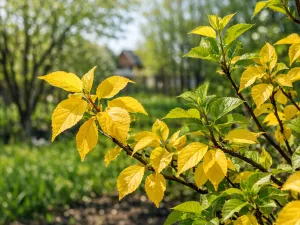
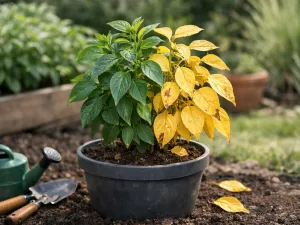
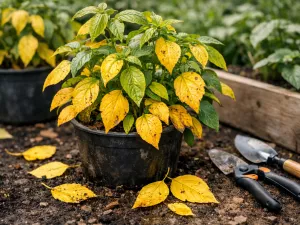
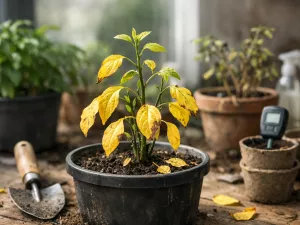
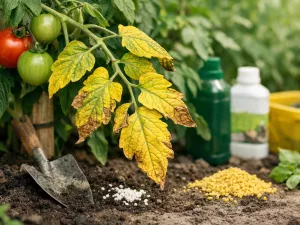
Yellow Leaves During Active Plant Growth

 This article explains why rapid growth can overload a plant’s nutrient demand, create temporary internal imbalances, and outpace root uptake. It covers stress signs, why aggressive feeding can backfire, and how to balance nutrients and watering to stabilize growth.
- Why rapid growth can overload plant nutrient demand
- How fast development creates temporary internal imbalances
- Why plants outgrow their root and nutrient supply systems
- Common stress signals during intense growth phases
- How aggressive feeding can worsen plant imbalance
- Balancing nutrients and watering during peak growth periods
- How to stabilize plants during rapid growth without slowing them down
When leaves begin turning yellow while a plant is still producing fresh growth, it usually signals stress rather than normal aging. Common causes include inconsistent watering, poor drainage, root damage, nutrient deficiencies, or sudden shifts in light and temperature. Checking whether older or newer leaves are affected, along with reviewing recent care and environmental changes, can help identify the problem early and prevent slower growth or further decline.
Why rapid growth can overload plant nutrient demand

Yellowing leaves during an otherwise vigorous growth phase often confuse growers because the plant does not look weak overall. In many cases, the problem is not a lack of life but a surge in demand. When stems lengthen quickly, new leaves expand, and roots push into fresh media, the plant uses stored nutrients faster than the root zone can replace them.
This is especially common in spring, after repotting, or when light levels suddenly improve. A plant that was stable under moderate conditions may begin building tissue at a much faster rate, and that accelerated pace can expose shortages that were previously hidden. Nitrogen, magnesium, iron, and potassium are frequent pressure points, but the pattern depends on species, soil type, and watering habits.
Why healthy growth can still trigger chlorosis
Rapid development creates a mismatch between what the plant needs each day and what the root system can absorb each day. Even if fertilizer is present in the potting mix, uptake depends on moisture balance, root health, temperature, and pH. If any one of those factors lags behind, leaves may fade while the plant continues pushing new growth.
- Nitrogen demand rises first as the plant builds new green tissue and expands leaf area.
- Magnesium shortages show up next when older leaves are drained to support younger ones.
- Iron can become limiting in fast-growing tips, especially in alkaline or repeatedly saturated media.
- Potassium stress appears when stems and leaf edges are developing quickly but transport inside the plant is uneven.
When the pace of growth changes faster than the care routine
A common issue is that the plant has changed, but the routine has not. A specimen moved from a dim shelf to a bright window may start using water and nutrients two or three times faster within a week. If feeding remains light and watering remains irregular, older leaves often yellow first because the plant reallocates resources to newer growth.
Container plants are particularly vulnerable because their nutrient reservoir is limited. In a small pot, roots can empty available nutrition from the upper root zone quickly, especially if the plant is watered heavily and soluble nutrients are washed through before they are fully used.
Editor’s note: If a plant is growing fast and yellowing at the same time, do not assume it needs a dramatic fertilizer increase. First check whether the pot is drying much faster than before. A simple shift in water use often explains why nutrient delivery has fallen behind.
How fast development creates temporary internal imbalances

Not every yellow leaf during active growth means the soil is empty. Sometimes the plant has nutrients available, but internal movement is uneven. Fast growth can temporarily favor new shoots, flower spikes, or top growth over older foliage, leading to a short-lived imbalance in distribution rather than a true deficiency across the whole plant.
Plants constantly move sugars, water, and minerals from one area to another. During intense development, the newest tissues become strong sinks for resources. That can leave older leaves looking pale, especially if the plant is also adjusting to stronger light, longer days, or warmer temperatures around 24°C (75°F) to 29°C (84°F).
Resource shifting inside the plant
Mobile nutrients such as nitrogen, phosphorus, potassium, and magnesium can be moved from older leaves to younger tissues. When growth is fast, this transfer becomes more obvious. The plant is not necessarily failing; it is prioritizing where resources go. The result can look alarming because lower leaves yellow while the top remains lush.
Immobile nutrients behave differently. Iron and calcium are not easily relocated, so when uptake slows or conditions interfere with absorption, the newest leaves often show symptoms first. This is why the location of yellowing matters as much as the color itself.
Temporary imbalance versus ongoing deficiency
A short burst of pale foliage may correct itself once watering, root expansion, and feeding catch up. A persistent pattern usually means something in the growing conditions is blocking recovery. The easiest way to separate the two is to watch where symptoms continue to spread over 7 to 14 days.
- Temporary imbalance often affects a limited set of leaves and slows once conditions stabilize.
- Ongoing deficiency keeps advancing into new leaves or across the whole plant.
- Transport-related stress may show as yellowing between veins, uneven leaf color, or fading after heavy watering.
- Root-zone interference is more likely when the pot stays wet for several days or dries bone dry repeatedly.
Another clue is timing. If yellowing starts right after a growth flush, a pruning session, or a move to brighter conditions, internal redistribution is a strong possibility. If it develops slowly in unchanged conditions, the problem is more likely tied to depleted media, poor pH, or chronic root stress.
Why plants outgrow their root and nutrient supply systems

Leaves and stems can expand faster than roots adapt, especially in containers. A plant may look full above the soil while the root system is still too small, too crowded, or too compromised to keep pace. This mismatch often leads to yellow leaves because the top is demanding more water and dissolved nutrients than the roots can reliably deliver.
Root limitations do not always mean the plant is root-bound in the classic sense. Sometimes the issue is a dense, aging mix, compacted media, a pot that dries unevenly, or roots circling the outer edge while the center remains poorly used. In all of these cases, supply falls behind demand during peak growth.
Signs the root zone is the real bottleneck
When roots are limiting performance, the symptoms usually involve both color and water behavior. The plant may wilt sooner, need water more often, or stay wet too long after a thorough soak. Yellowing then appears because nutrient uptake depends on active, oxygenated roots.
- Very fast drying can mean the root mass has filled most of the pot and is using moisture rapidly.
- Slow drying can point to compacted mix or damaged roots that are not absorbing efficiently.
- Water running straight through suggests dry pockets or a root-bound mass that resists rewetting.
- Yellow lower leaves with stalled recovery often indicate the root system is not supporting the canopy well enough.
Container limits during active growth
In a nursery pot only 15 cm (6 in) wide, a fast-growing plant can exhaust both water and available nutrition quickly. Even if fertilizer is added, roots need enough room and oxygen to absorb it. A cramped or degraded root zone turns feeding into guesswork because nutrients may either wash out too fast or accumulate in salts the plant cannot use properly.
Repotting is not always the immediate answer, but it becomes important when the plant dries in less than 24 hours in warm conditions, or when roots circle heavily and the mix no longer rehydrates evenly. Moving up just one pot size, such as from 15 cm (6 in) to 18 cm (7 in), is usually safer than jumping several sizes at once.
Practical recommendation: If you suspect the plant has outgrown its pot, check the root ball after normal watering rather than when it is fully dry. Moist roots are easier to inspect without tearing, and you get a more accurate picture of how evenly the mix is being used.
Common stress signals during intense growth phases

Yellow leaves rarely appear alone. During periods of strong growth, plants often show a cluster of smaller warning signs before major decline sets in. Learning to read those signals early helps you correct the cause while the plant is still actively building new tissue.
Some symptoms are easy to misread. Soft, pale leaves may be mistaken for overwatering when the real issue is nutrient dilution from frequent watering. Brown tips may be blamed on dryness when they are actually linked to salt buildup from repeated feeding. The context matters: growth speed, pot size, temperature, and recent care changes all shape what the symptoms mean.
What to watch on leaves, stems, and soil
Look beyond a single yellow leaf. The pattern across the plant tells a clearer story than one damaged leaf ever will. Compare older foliage, middle growth, and the newest tips.
| Signal | What it often suggests during fast growth | What to check next |
|---|---|---|
| Older leaves turning evenly yellow | Mobile nutrients are being pulled upward, often nitrogen-related | Feeding frequency, pot size, and how quickly the mix dries |
| Yellowing between veins | Magnesium or iron uptake issues, often linked to pH or wet roots | Watering pattern, fertilizer type, and media condition |
| Small new leaves or weak tips | Growth demand is high but root supply is lagging | Root crowding, temperature, and light intensity |
| Crisp tips with pale foliage | Salt stress mixed with inconsistent uptake | Recent feeding strength and whether runoff is excessive or absent |
| Droop despite moist soil | Roots are oxygen-starved or damaged | Drainage, compaction, and how long the pot stays wet |
Environmental clues that sharpen diagnosis
Strong light, warm rooms, and moving air all increase transpiration. That can help a plant grow quickly, but it also raises the margin for error. A plant near a south-facing window or under grow lights for 12 to 14 hours daily may need more frequent but more precise care than the same plant in moderate light.
Watch for these paired clues:
- Yellowing plus stretched growth often points to low light rather than simple nutrient shortage.
- Yellowing plus scorched patches may indicate sudden sun exposure on tender leaves.
- Yellowing plus constantly wet mix suggests root stress is blocking uptake.
- Yellowing plus rapid drying can mean the plant has entered a stronger feeding and watering phase than the routine supports.
How aggressive feeding can worsen plant imbalance

When leaves turn yellow during active growth, the instinct is often to add more fertilizer immediately. That can help in some cases, but aggressive feeding often makes the situation worse. If the root zone is stressed, compacted, too dry, or too wet, a stronger fertilizer dose does not solve the uptake problem. It simply raises salt concentration around already struggling roots.
Plants absorb nutrients in balance with water. When fertilizer is pushed too hard, roots may take up water less efficiently, leaf tips can burn, and existing yellowing may spread because the plant is now dealing with both deficiency symptoms and fertilizer stress at the same time.
Why more fertilizer is not always more nutrition
Soluble feeds work best when the plant is hydrated, actively rooted, and growing in a stable medium. A plant in distress cannot use high concentrations well. Even organic feeds can create problems if applied too often in a small container where breakdown is uneven and airflow in the mix is poor.
- High concentration can scorch fine roots and reduce uptake.
- Frequent feeding without runoff may leave salts behind in the potting mix.
- Layering multiple products can create excesses of one nutrient that interfere with another.
- Feeding dry soil increases the chance of root burn, especially in warm weather.
Imbalance caused by nutrient antagonism
Too much of one nutrient can suppress access to another. For example, excess potassium may interfere with magnesium uptake, and heavy phosphorus use can complicate micronutrient availability. This is one reason yellow leaves may continue even after repeated feeding.
A safer approach is usually to reduce concentration and improve consistency. Many houseplants and container ornamentals respond better to a diluted feed applied regularly than to a full-strength dose applied occasionally. For example, using a balanced fertilizer at one-quarter to one-half strength every 1 to 2 weeks during strong growth is often gentler than monthly heavy feeding. Always follow the product label first, then adjust based on the plant’s response.
Editor’s note: If a plant has been fed heavily and yellowing is getting worse, pause fertilizer before changing products. Flush the pot with plain water only if the mix drains freely and the plant is not already staying wet too long. Otherwise, solve the root-zone issue first.
Balancing nutrients and watering during peak growth periods

The most reliable way to prevent yellow leaves during strong growth is to treat watering and feeding as one system. Nutrients move into the plant dissolved in water, so an erratic watering pattern often creates nutrient problems even when fertilizer is technically present. During peak growth, the goal is not maximum input but steady availability.
Plants in active development usually benefit from a rhythm: thorough watering, enough drainage and airflow for roots, and measured feeding that matches the pace of growth. This balance is easier to maintain when you observe drying speed rather than watering by the calendar alone.
How to match water use with nutrient supply
If a pot is drying much faster than it did a month ago, the plant is likely using more water because growth has accelerated. That means nutrients are also moving through the system faster. Instead of simply watering more often, make sure each watering fully moistens the root ball so nutrients can be absorbed evenly.
- Check the root zone before watering. For many plants, the top 2.5 cm to 5 cm (1 in to 2 in) can dry slightly while the lower mix remains lightly moist.
- Water thoroughly until the entire root ball is rehydrated, not just the surface.
- Allow excess water to drain so roots still receive oxygen.
- Feed at a moderate strength on a schedule that reflects active growth, not dormant-season habits.
- Reassess every 7 to 10 days rather than assuming the same pattern will hold all season.
Useful adjustments during growth surges
Small changes often work better than dramatic ones. If yellowing appears while the plant is otherwise growing well, aim to smooth out the care routine rather than overcorrecting.
- Increase light gradually so growth does not outrun the root system overnight.
- Use a balanced fertilizer unless the plant has a known species-specific need.
- Refresh tired potting mix if watering has become uneven or the media smells stale.
- Avoid severe pruning during recovery, because the plant still needs leaf area to regulate growth and energy use.
- Watch room temperature above 30°C (86°F), where water use can spike and uptake can become erratic.
For outdoor containers, frequent rain can also wash nutrients from the mix. In that case, yellowing may come from leaching rather than underfeeding alone. A controlled, moderate feeding plan usually works better than trying to replace everything with one strong application.
How to stabilize plants during rapid growth without slowing them down
Stabilizing a fast-growing plant is about removing friction, not forcing it to stop. If the plant is otherwise healthy, you usually do not need to cut it back, move it into lower light, or flood it with supplements. The best results come from restoring even uptake so growth can continue without draining older leaves.
Start by identifying the weakest link: root space, watering consistency, feeding strength, or light transition. Once that bottleneck is corrected, yellowing often slows and new growth emerges with better color. Existing yellow leaves may not turn green again, but they help you judge whether the problem is still active.
A practical stabilization plan
Use a calm, step-by-step approach over the next two weeks. This gives the plant time to respond without piling on new stress.
- Inspect where yellowing is occurring: older leaves, new leaves, or throughout the plant.
- Check how long the pot takes to dry after a full watering.
- Examine the root zone if the plant is drying in less than 24 to 36 hours, or staying wet longer than 5 to 7 days.
- Resume or adjust feeding at a moderate level rather than a corrective heavy dose.
- Keep light bright but stable, avoiding sudden jumps in direct sun.
- Remove only fully yellow leaves once the plant has produced healthy replacement growth.
When to repot, prune, or simply wait
Repot when roots have clearly filled the container, watering has become uneven, or the mix no longer supports steady moisture. Prune only if the top growth is badly out of proportion to the root system or if damaged stems are diverting energy. In many cases, waiting is the right move after making one or two targeted corrections, because plants need time to rebalance internally.
If new leaves are coming in greener within 10 to 14 days, the plant is recovering. If yellowing continues into fresh growth despite stable watering and moderate feeding, look more closely at pH, root health, or species-specific nutrient needs.
Practical recommendation: Track one plant for two weeks with simple notes on watering date, drying speed, and leaf color. Patterns become obvious quickly, and that record is often more useful than guessing based on memory.
The key is to support the growth surge rather than fight it. A plant in active development needs consistent moisture, accessible nutrients, enough root room, and stable light. When those pieces line up, yellow leaves stop being a mystery and become an early signal that the system needs fine-tuning.