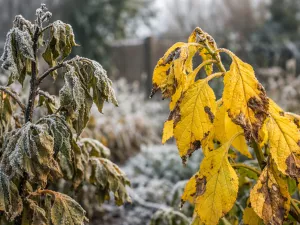
Dry or Brittle Yellow Leaves Explained

 This article explains why leaves turn dry and brittle, covering dehydration, low humidity, heat, airflow, and nutrient imbalance. It also shows how to tell when damage is permanent, restore moisture balance, and prevent the problem long term.
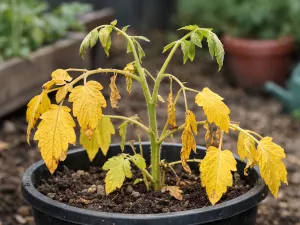
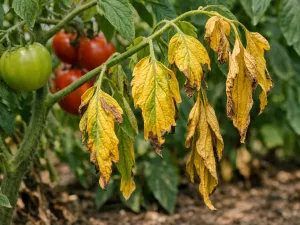
Yellow leaves that feel dry, crisp, or fragile usually signal stress rather than normal aging. In many cases, the problem comes from inconsistent watering, very low humidity, too much direct light, or roots that are damaged or crowded. Paying attention to this combination of color and texture can help you identify the cause sooner, make the right adjustment, and protect the rest of the plant from further decline.
Why leaves become dry and lose flexibility

Leaves stay supple when plant cells are full of water and the leaf surface is protected by healthy tissue. When that internal moisture drops, the leaf loses pressure, its surface dries, and the blade begins to feel papery rather than soft. Yellowing often appears alongside this change because stressed leaves stop producing chlorophyll efficiently and begin breaking down older tissue.
Dryness and brittleness are symptoms, not a single diagnosis. A thirsty root ball can cause it, but so can hot air, damaged roots, excess fertilizer, or a plant that has been sitting in poor soil for too long. The pattern matters: crispy edges suggest one type of stress, while whole-leaf yellowing with a stiff texture points to another.
What healthy leaf flexibility depends on
A flexible leaf relies on a steady supply of water moving from roots to stems and into the leaf veins. It also depends on roots being able to absorb moisture, soil holding enough water without staying waterlogged, and air conditions that do not pull water out faster than the plant can replace it.
- Cell turgor: Water pressure inside cells keeps leaves firm but bendable.
- Root function: Fine feeder roots must be alive and active to supply moisture.
- Leaf surface health: A damaged cuticle allows faster moisture loss.
- Balanced growth: Leaves formed under stress are often thinner and dry out faster.
Why yellowing often appears with dryness
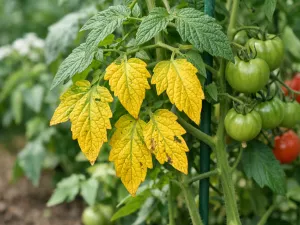
Yellow leaves are frequently older leaves the plant is sacrificing first. When resources are limited, the plant moves nutrients away from weaker or shaded foliage. If stress continues, those yellow leaves dry out completely and become brittle enough to crack when touched.
That is why timing matters. A leaf that turns pale, then yellow, then crisp over several days tells a different story than a leaf that stays green but develops brown, dry edges after a hot afternoon. Looking at both color and texture gives a more accurate picture than color alone.
Editor’s note: If only the oldest, lowest leaves are yellowing and drying while new growth looks strong, the issue may be mild stress rather than a serious decline. If new leaves are also stiff, small, or discolored, check roots and environment sooner.
Dehydration and low humidity effects on plants

Dehydration is the most obvious cause of leaves that feel dry, thin, or brittle. When the potting mix becomes too dry, roots cannot supply enough water to replace what leaves are losing through transpiration. The result is a plant that may first droop, then recover poorly, and eventually develop yellow, crisp foliage.
Low humidity creates a related but slightly different problem. Even when the soil is not bone dry, very dry air can pull moisture from leaves faster than the plant can move it upward. This is especially common in heated homes during winter, near radiators, or in rooms where humidity regularly falls below 40%.
How underwatering shows up
Plants that are repeatedly allowed to dry too far often show a recognizable sequence. Leaf tips and edges dry first, the color dulls, and then yellowing spreads as tissues fail. In severe cases, the potting mix may shrink away from the pot edge, causing water to run straight through without soaking the root ball.
- Early stage: Slight drooping, dull leaves, dry topsoil.
- Moderate stage: Yellowing lower leaves, curling margins, reduced flexibility.
- Advanced stage: Crispy tips, brittle blades, leaf drop, and stalled growth.
Low humidity versus dry soil
These two stresses can look similar, but they are not identical. Dry soil affects the whole plant’s water supply, while low humidity often damages leaf edges and thinner leaves first. Tropical houseplants such as calathea, fern, and peace lily tend to react quickly to dry air, while succulents usually tolerate it better.
| Condition | Typical clues | Where damage appears first | Best first check |
|---|---|---|---|
| Dry soil | Pot feels light, mix is dry several centimeters down, plant may wilt | Often lower or older leaves, then wider plant stress | Check moisture 5 cm (2 in) below the surface |
| Low humidity | Soil may still be slightly moist, but tips crisp and edges brown or yellow | Leaf margins and thinner foliage | Measure room humidity and note nearby heat sources |
| Both together | Rapid decline, curling, crisp patches, repeated yellowing | Across many leaves at once | Review watering schedule and room conditions together |
| Hydrophobic root ball | Water runs through quickly, center stays dry | Whole plant shows thirst despite recent watering | Lift pot and inspect whether the root ball is evenly wet |
When humidity is the main issue, occasional misting gives only brief relief. A more reliable fix is grouping plants, moving them away from heating vents, or using a humidifier to keep the air around 50% to 60% humidity for moisture-loving species.
How heat and airflow contribute to dryness

Warm temperatures increase the rate at which plants lose water. Strong airflow does the same by constantly replacing the humid layer of air that normally sits around a leaf surface. Together, heat and moving air can dry foliage surprisingly fast, even when watering seems reasonable on paper.
This problem often appears indoors where plants are placed near south-facing windows, radiators, wood stoves, space heaters, or air-conditioning vents. Outdoors, reflected heat from walls, paving, and containers can create similar stress. Leaves may bleach yellow, then become thin and brittle, especially on the side facing the heat source.
Common indoor and outdoor triggers
Plants do not need extreme conditions to suffer. A steady stream of warm air or a few hours of intense afternoon sun through glass can be enough to push a plant beyond its comfort zone.
- Heating vents: Constant hot, dry air strips moisture from leaves.
- Radiators and stoves: Nearby foliage can overheat even if the room feels comfortable.
- Air conditioners and fans: Cool air still increases evaporation when it blows directly on leaves.
- Sunny windows: Glass can intensify heat, especially above 27°C (81°F).
- Hot patios and balconies: Pots dry faster when surrounded by stone or concrete.
How to tell environmental scorch from simple thirst
Heat and airflow damage often shows up unevenly. One side of the plant may look worse, or the leaves nearest the vent may crisp while the rest remain fairly normal. Underwatering, by contrast, usually affects the plant more uniformly unless the root ball is drying unevenly.
Another clue is timing. If leaves become dry after a weather shift, after turning on indoor heating, or after moving a plant to a brighter window, the environment is likely playing a major role. A plant can also be watered correctly and still show dry foliage if the surrounding air is too harsh for that species.
Practical recommendation: Hold your hand where the leaves sit for 30 seconds. If the air feels hot, forceful, or noticeably dry, the plant is feeling it too. Moving the pot just 30 cm to 60 cm (12 in to 24 in) can make a visible difference.
Nutrient imbalances linked to brittle leaves

Not every dry yellow leaf is caused by lack of water. Nutrient problems can weaken leaf tissue, interfere with chlorophyll production, and make foliage age prematurely. The result may be yellowing that later turns dry and fragile, especially when feeding issues combine with inconsistent watering or compacted soil.
Both deficiency and excess can be involved. A plant that has not been fed for months may produce weak foliage, while one receiving too much fertilizer can suffer root burn. Damaged roots absorb water poorly, so leaves end up dry even though the potting mix may not look especially dry.
Deficiencies that affect leaf quality
Several nutrients influence leaf strength and color. Nitrogen supports green growth, potassium helps regulate water movement, and magnesium contributes to chlorophyll. Deficiencies rarely create identical symptoms across all species, but they often reduce resilience and speed up yellowing.
- Nitrogen shortage: Older leaves yellow first and may dry as the plant reallocates resources.
- Potassium shortage: Margins can yellow, scorch, and become crisp.
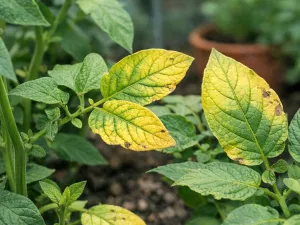
- Magnesium shortage: Interveinal yellowing may appear before tissue weakens.
- Calcium-related issues: New growth may distort and develop weak edges in some plants.
When excess fertilizer is the real problem
Overfeeding is often overlooked because gardeners assume yellow leaves mean the plant needs more fertilizer. In reality, salts from concentrated feed can build up in the potting mix and injure roots. Once roots are stressed, the plant struggles to balance water, and leaves may yellow at the tips or edges before turning brittle.
Look for a white crust on the soil surface or pot rim, sudden browning after feeding, or a plant that declines despite regular watering. If fertilizer burn is suspected, flushing the soil thoroughly with clean water can help, provided the pot drains well.
Soil condition and pH matter too
Sometimes nutrients are present but unavailable. Old potting mix can become compacted, exhausted, or chemically imbalanced, making it hard for roots to take up what they need. This is common in houseplants left in the same soil for more than 18 to 24 months, or about 1.5 to 2 years.
If a plant has been in the same container for a long time, repotting into fresh mix may solve more than feeding alone. Good soil structure improves both nutrition and moisture retention, which is why brittle foliage often improves after root and soil issues are corrected together.
Signs of irreversible leaf damage

Some yellow leaves can recover partially if the stress is corrected early, but fully dried tissue does not turn green and soft again. Once cells have collapsed and the leaf has become crisp, that part of the leaf is permanently damaged. The goal then shifts from saving the leaf to protecting the rest of the plant.
Knowing when damage is irreversible helps avoid overreacting. Gardeners sometimes increase watering, feeding, and misting all at once in an attempt to reverse crisp foliage, which can create new problems. It is better to assess whether the leaf is still functioning or whether it has already reached the point of no return.
Clear signs a leaf will not recover
Permanent damage usually has a dry, papery feel and a fixed color pattern. If the tissue cracks when bent or feels hollow and thin, it is no longer active.
- Crispy texture: The leaf snaps or crumbles instead of bending.
- Tan or brown patches: Dead areas stay dry and do not regain color after watering.
- Fully yellow, limp-then-stiff leaves: These often drop soon after stress passes.
- Dry tips spreading inward: The dead portion remains dead even if the rest stabilizes.
- Shriveled leaf blades: Severe dehydration can permanently collapse tissue.
What can still be saved
If a leaf is only partly affected, the green portion may still photosynthesize and support the plant. Leaves with minor yellowing but no crispness can sometimes stabilize once watering, humidity, or feeding is corrected. New growth is the best indicator of recovery, not the appearance of old damaged leaves.
Pruning decisions should be practical. Remove leaves that are mostly dead, diseased, or visually obstructive. Keep partly healthy leaves if the plant is already weak and still benefiting from the remaining green tissue.
Editor’s note: A useful rule is the one-third test. If more than about one-third of a leaf is dry and dead, trimming or removing it is usually worthwhile. If most of it is still green, let the plant use it while you correct the cause.
How to restore moisture balance in plants

Restoring moisture balance means more than simply watering more often. The roots need even hydration, the soil must hold moisture without becoming stagnant, and the surrounding air should not be excessively drying. The best recovery plan addresses the plant, the potting mix, and the room conditions together.
Start by checking the root zone. If the soil is bone dry, compacted, or pulling away from the pot, a quick splash of water may not penetrate properly. If the soil is wet but the leaves are still dry, root damage or environmental stress may be interfering with uptake.
Step-by-step recovery approach
A careful reset gives the plant the best chance to produce healthy new leaves. Sudden extremes, such as soaking a drought-stressed plant every day, can stress roots further.
- Assess soil moisture: Insert a finger or moisture probe 5 cm to 7 cm (2 in to 3 in) deep to confirm whether the root zone is dry, moist, or soggy.
- Rehydrate thoroughly: Water until excess drains from the bottom, then empty any saucer so roots are not left standing in water.
- Soak hydrophobic soil if needed: For very dry root balls, place the pot in shallow water for 15 to 30 minutes so moisture can wick upward evenly.
- Adjust placement: Move the plant away from direct vents, radiators, or harsh afternoon sun.
- Increase humidity sensibly: Use a humidifier or group plants rather than relying only on misting.
- Trim dead tissue: Remove fully crisp leaves so the plant can focus on healthy growth.
When repotting helps
If water rushes through the pot, roots circle densely, or the mix has become heavy and depleted, repotting may be the better solution. Choose a container only 2 cm to 5 cm (1 in to 2 in) wider than the current root ball, and use fresh mix suited to the plant type. Moisture-loving tropical plants usually prefer a mix that retains some water, while succulents need faster drainage.
After repotting, keep conditions stable for a couple of weeks. Avoid heavy feeding until the plant resumes active growth, because fresh soil and stressed roots are a poor combination for concentrated fertilizer.
Preventing dry leaf conditions long-term
Long-term prevention depends on consistency. Plants rarely suffer because of one imperfect watering or one warm day; they decline when stress repeats often enough to weaken roots and foliage. A routine that matches the plant’s species, pot size, light level, and season is the most reliable defense against yellow, brittle leaves.
Instead of watering by the calendar alone, watch how fast the soil actually dries. A plant in bright summer light may need water twice as often as the same plant in winter. Likewise, a terracotta pot loses moisture faster than a plastic nursery pot, and a root-bound plant dries more quickly than one with room to grow.
Habits that reduce recurring dryness
Small adjustments make a bigger difference than dramatic rescue measures. The aim is to keep moisture levels even and avoid repeated swings between drought and saturation.
- Match watering to season: Check more often during warm, bright periods and less often during cool, low-light months.
- Use the right potting mix: Choose a blend that suits the species rather than a one-size-fits-all soil.
- Monitor humidity: Keep sensitive tropical plants around 50% to 60% humidity when possible.
- Feed moderately: Use diluted fertilizer during active growth instead of frequent strong doses.
- Refresh old soil: Repot before the mix becomes compacted and exhausted.
- Inspect plant placement: Recheck locations whenever seasons change or heating and cooling systems switch on.
A practical troubleshooting rhythm
It helps to build a simple habit of observation. Once a week, lift the pot, feel the soil, and scan the leaves for changes in color and texture. This catches problems before leaves become fully brittle.
If you keep several plants, note which ones are naturally thirstier and which prefer to dry slightly between waterings. Grouping plants with similar needs makes care easier and reduces accidental stress caused by treating every plant the same way.
Practical recommendation: Keep a short seasonal note on your phone for each problem plant. Record where it sits, how quickly the soil dries, and when yellowing appears. Patterns usually become obvious within a month and make future care much easier.
When moisture, light, airflow, and feeding are in balance, new growth should emerge softer, greener, and more resilient. Old damaged leaves may never improve, but healthy replacement foliage is the clearest sign that the underlying problem has been solved.