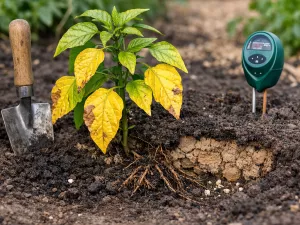
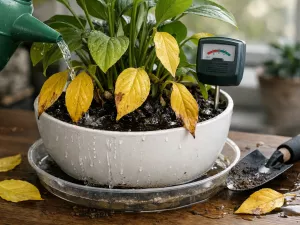
Nutrient Deficiency Causing Yellow Leaves

 Here we the nutrient deficiencies that most often cause yellow leaves, especially nitrogen, iron, magnesium, and potassium, and explains how each one affects plant health.
- Which missing nutrients most commonly cause yellow leaves
- Roles of nitrogen, iron, magnesium, and potassium in plant health
- How different deficiencies develop based on soil conditions
- Why plants cannot absorb nutrients even when they are present
- Common causes of nutrient depletion in soil and containers
- How to choose targeted fertilizers based on deficiency type
- How to restore nutrient balance without overfeeding plants
Yellowing leaves are often blamed on watering, but a nutrient deficiency may be the real cause. Learning how different shortages appear helps you respond early, avoid unnecessary fixes, and keep plants growing well. This guide shows what yellow leaves can reveal, how to recognize common nutrient-related symptoms, and when to act before overall plant health declines and recovery becomes more difficult.
Which missing nutrients most commonly cause yellow leaves

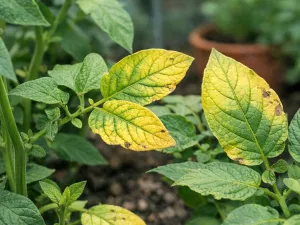
Yellowing foliage is often described as chlorosis, but the pattern matters more than the color alone. Some nutrient shortages show up on older leaves first, while others affect the newest growth. That difference helps narrow down whether the plant is moving nutrients from old tissue to new growth, or whether the missing element cannot be relocated once the plant has used what little it has.
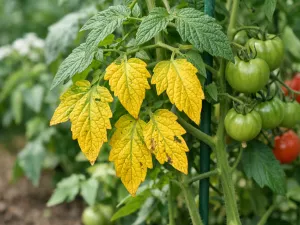
In everyday gardening, the most common nutrient-related causes of pale or yellow leaves are shortages of nitrogen, iron, magnesium, and potassium. Each one creates a slightly different look. Nitrogen usually causes a general fading of older leaves. Iron often makes young leaves yellow while the veins stay green. Magnesium commonly produces interveinal yellowing on older leaves, and potassium tends to cause yellowing or browning around leaf edges.
Typical yellowing patterns to look for
Leaf position and vein color are useful clues before you reach for fertilizer. A quick visual check can often tell you whether the problem is likely nutritional or whether it may be tied to watering, root stress, or temperature damage instead.
- Nitrogen deficiency: older, lower leaves turn evenly light green, then yellow, while newer leaves may stay smaller than normal.
- Iron deficiency: the newest leaves become yellow or pale cream, but the veins remain noticeably greener.
- Magnesium deficiency: older leaves show yellowing between veins, often with a green midrib or green patches.
- Potassium deficiency: leaf edges begin to yellow, then scorch brown, especially on mature leaves.
- Sulfur deficiency: less common, but can resemble nitrogen shortage except it usually appears first on younger leaves.
These symptoms can overlap, especially in container plants that have been underfed for a long time. A plant may also show more than one deficiency at once if the potting mix is exhausted or the soil pH is far out of range.
Editor’s note: If only one or two leaves are yellowing at the base of an otherwise healthy plant, that may be normal aging rather than a nutrient issue. Look for a pattern across several leaves before making changes.
When yellow leaves are not caused by missing nutrients
Not every pale leaf points to poor feeding. Overwatering, compacted soil, cold roots, and root damage can all prevent normal chlorophyll production. In those cases, adding more fertilizer may worsen stress rather than solve it.
Before treating a plant, check whether the soil stays soggy, whether drainage holes are blocked, and whether the plant recently experienced a cold spell below 10°C (50°F) or intense heat above 32°C (90°F). Environmental stress often mimics nutrient deficiency because roots stop functioning normally under poor conditions.
Roles of nitrogen, iron, magnesium, and potassium in plant health

These four nutrients are involved in different jobs inside the plant, which is why their deficiencies look different. Understanding what each nutrient does makes it easier to connect symptoms with the underlying problem instead of treating every yellow leaf the same way.
Nitrogen and leafy growth
Nitrogen drives the production of chlorophyll, amino acids, and soft green growth. Plants use a lot of it during active growth, especially leafy vegetables, tropical houseplants, and lawns. When nitrogen is short, the plant redirects what it has from older leaves to younger ones, so the oldest foliage fades first.
A nitrogen-starved plant often grows slowly, produces smaller leaves, and looks thin rather than full. In flowering plants, bloom count may drop because the plant lacks the energy to support both foliage and flowers.
Iron and new leaf color
Iron is essential for chlorophyll formation, but unlike nitrogen, it is not easily moved from old leaves to new ones. That is why iron deficiency appears in fresh growth first. New leaves may emerge pale yellow, almost white in severe cases, while the veins stay green for a time.
This is especially common in plants growing in alkaline soil or in mixes watered repeatedly with hard water. Even when iron is present in the soil, the roots may not be able to take it up efficiently.
Magnesium and chlorophyll support
Magnesium sits at the center of the chlorophyll molecule, so it is directly tied to green leaf color and photosynthesis. Because plants can move magnesium from older leaves to younger ones, deficiency usually starts lower down on the plant.
It often shows as yellowing between veins while the veins themselves remain greener. In severe cases, older leaves may develop reddish or brown patches before dropping.
Potassium and stress resistance
Potassium does not build chlorophyll in the same direct way as nitrogen or magnesium, but it regulates water movement, enzyme activity, and overall resilience. Plants with enough potassium handle drought, heat, and disease pressure better. When it is lacking, leaves may yellow at the margins and later develop scorched edges.
Potassium deficiency is more likely in fast-growing fruiting plants such as tomatoes, peppers, and roses, especially when they are watered often and fed mainly with high-nitrogen products.
- Best clue for nitrogen: whole older leaves yellow fairly evenly.
- Best clue for iron: newest leaves yellow first with greener veins.
- Best clue for magnesium: older leaves yellow between veins.
- Best clue for potassium: yellowing starts at edges or tips, then browns.
How different deficiencies develop based on soil conditions

Deficiencies do not develop in a vacuum. Soil texture, pH, drainage, organic matter, and watering habits all influence which nutrients stay available and which become locked away. Two gardens can receive the same fertilizer and still show different yellowing problems because the root environment is not the same.
Soil pH and nutrient availability
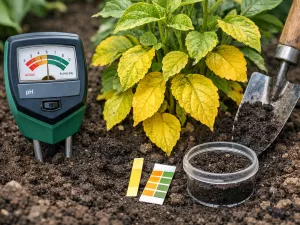
pH affects how soluble nutrients are in the root zone. In alkaline soil, especially above pH 7.5, iron, manganese, and sometimes magnesium become less available. In very acidic soil, below about pH 5.5, calcium and magnesium may be low while some micronutrients become overly available and stress roots.
Many ornamental plants and vegetables perform best in a slightly acidic to neutral range around pH 6.0 to 7.0. Blueberries, azaleas, and camellias prefer more acidic conditions, often around pH 4.5 to 5.5. When they are planted in neutral or alkaline ground, yellow leaves are common even if fertilizer is applied regularly.
Drainage, compaction, and oxygen levels
Roots need oxygen as much as they need moisture. In compacted or waterlogged soil, roots cannot absorb nutrients efficiently, and deficiencies begin to appear. Iron chlorosis is especially common in heavy, poorly drained ground because stressed roots lose uptake efficiency.
Clay soils can hold nutrients well, but if they stay saturated after rain, roots may decline quickly. Sandy soils have the opposite problem: they drain fast and nutrients leach out more easily, especially nitrogen and potassium.
Organic matter and nutrient buffering
Soils rich in composted organic matter usually hold nutrients more steadily and support better microbial activity. This reduces the sharp swings that often lead to deficiency symptoms. In thin, depleted soil with little organic matter, nutrients wash away faster and roots face more temperature stress.
| Soil condition | Deficiency risk it increases | Why it happens |
|---|---|---|
| Alkaline soil above pH 7.5 | Iron, manganese, sometimes magnesium | Micronutrients become less soluble and harder for roots to absorb |
| Sandy soil with frequent watering | Nitrogen and potassium | Nutrients leach below the root zone quickly |
| Heavy compacted clay | Iron and general uptake problems | Low oxygen reduces root function and nutrient absorption |
| Low-organic-matter soil | Multiple deficiencies over time | Poor nutrient storage and weak microbial support |
Practical recommendation: If yellowing repeats year after year in the same bed, test the soil before changing fertilizers again. Repeated feeding will not fix a pH problem, and pH is often the hidden cause.
Why plants cannot absorb nutrients even when they are present

A plant can sit in nutrient-rich soil and still show yellow leaves if the roots cannot access what is there. This is one of the most common reasons gardeners overfertilize. The issue is not always absence of nutrients; often it is poor uptake caused by root stress, pH imbalance, or salt buildup.
Root damage and poor root activity
Healthy roots absorb water and dissolved minerals through fine root hairs. When those roots are damaged by overwatering, transplant shock, rot, pests, or extreme temperatures, nutrient uptake slows sharply. A plant in cold spring soil below 12°C (54°F) may temporarily show deficiency symptoms because root metabolism is sluggish.
Similarly, roots packed tightly in a pot can circle and compress, leaving little fresh media to explore. Even if fertilizer is present, the plant may not absorb it evenly because water movement through the root ball is poor.
Salt buildup from fertilizer or hard water
Excess fertilizer salts can interfere with water uptake and burn delicate roots. Hard tap water can also leave mineral deposits in containers over time. Once salts accumulate, the root zone becomes chemically stressful, and the plant may respond with yellowing that resembles deficiency.
Signs of salt trouble include white crust on the soil surface or pot rim, brown leaf tips, and a plant that wilts even when the mix is damp. In that situation, adding more feed usually makes matters worse.
Incorrect pH and nutrient lockout
Nutrient lockout happens when nutrients are present but unavailable because the pH is outside the plant’s preferred range. Iron is the classic example. A shrub growing in alkaline ground may have plenty of iron in the soil, yet new leaves still emerge yellow because the roots cannot take it in.
- Too wet: roots lose oxygen and stop absorbing efficiently.
- Too dry: nutrient movement through the soil slows down.
- Too cold: root activity drops, especially in spring.
- Too much salt: roots are stressed and can be damaged.
- Wrong pH: nutrients become chemically unavailable.
When yellowing appears suddenly after repotting, after a heatwave above 35°C (95°F), or after a period of constant rain, think about root function first. Correcting the growing conditions often improves leaf color more effectively than immediate feeding.
Common causes of nutrient depletion in soil and containers

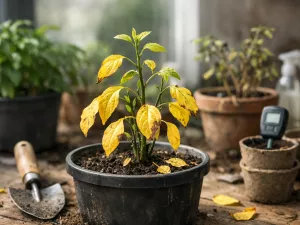
Nutrients are constantly being removed, washed away, tied up, or used faster than they are replaced. This happens in garden beds, but it happens much faster in pots because the root zone is small and watering is frequent. A plant that looked healthy early in the season can begin to yellow simply because it has used up the available supply.
Heavy feeding by fast-growing plants
Vegetables, annual flowers, bananas, cannas, roses, and many houseplants in active growth consume nutrients quickly. Fruiting crops are especially demanding. Tomatoes in a container, for example, can exhaust a small volume of potting mix within weeks during warm weather.
If the plant is watered daily in summer, nitrogen and potassium may wash through the pot long before the season ends. In raised beds, repeated harvests remove nutrients from the soil unless compost and fertilizer are added back.
Leaching from rain and irrigation
Water-soluble nutrients move downward with repeated watering. Nitrogen in nitrate form is especially prone to leaching, and potassium can also be lost from sandy or heavily watered soils. Containers are most vulnerable because excess water exits through drainage holes every time the pot is soaked.
Outdoor pots exposed to frequent summer storms can lose nutrients even if you are feeding on schedule. Hanging baskets and small herb pots often show yellowing first because they dry and are watered so often.
Old potting mix and exhausted organic matter
Potting mix does not stay fertile indefinitely. Over time, bark, coir, and composted materials break down, shrink, and hold water differently. Nutrient reserves decline, and the root zone becomes less balanced. A houseplant that has lived in the same mix for two or three years may begin to yellow despite careful watering.
- Frequent watering: flushes nutrients out of pots and sandy soils.
- No seasonal feeding: leaves plants dependent on a shrinking nutrient supply.
- Repeated cropping: vegetables and cut flowers remove nutrients from beds.
- Small containers: hold less media, so depletion happens faster.
- Aged potting mix: loses fertility and structure over time.
Editor’s note: If a potted plant needs water every day and still looks hungry, the container may simply be too small. Moving up by 5 cm to 8 cm (2 in to 3 in) in pot diameter often improves both watering stability and nutrient retention.
How to choose targeted fertilizers based on deficiency type

The best fertilizer depends on what is actually missing and why. A balanced general feed is useful for routine maintenance, but targeted correction works better when symptoms clearly point to one nutrient. The goal is to match the product to the deficiency without creating excesses that trigger new problems.
When a general fertilizer is enough
If the plant is pale overall, growth is weak, and it has not been fed for a long time, a balanced fertilizer may be the right first step. This is often true for container plants, annuals, and hungry houseplants in active growth. Look for a complete product that includes both macronutrients and trace elements.
Slow-release granules are useful for steady feeding in pots and borders, while liquid feeds help when a quicker response is needed. Always apply to moist soil rather than bone-dry roots.
When to use a specific nutrient product
Some yellowing patterns call for more precise treatment. Iron chlorosis in alkaline conditions often responds better to chelated iron than to a standard all-purpose feed. Magnesium deficiency may improve with magnesium sulfate, while potassium shortage is better addressed with a potash-rich fertilizer than with a high-nitrogen lawn feed.
| Deficiency pattern | Most useful fertilizer approach | What to avoid |
|---|---|---|
| Older leaves yellow evenly, slow growth | Balanced feed or nitrogen-containing fertilizer | Adding iron first without signs of iron chlorosis |
| New leaves yellow with green veins | Chelated iron, plus pH correction if needed | Repeated high-nitrogen feeding alone |
| Older leaves yellow between veins | Magnesium supplement or complete feed with Mg | Heavy potassium feeding, which can worsen Mg uptake |
| Leaf edges yellow then scorch | Potash-rich fertilizer and even watering | Overusing fast nitrogen sources |
Reading labels more effectively
Fertilizer labels tell you the nutrient ratio, but they do not automatically tell you whether the product suits your problem. A high first number means more nitrogen. Products marketed for blooms often contain more phosphorus and potassium, but they may not help a plant that is simply short on nitrogen or iron.
For iron deficiency, check whether the label mentions chelated iron rather than only trace mineral content. For magnesium, make sure the product actually supplies magnesium rather than just a general micronutrient blend. In alkaline soils, choosing the right form matters as much as the nutrient itself.
How to restore nutrient balance without overfeeding plants
Correcting yellow leaves is not about feeding as much as possible. Plants recover best when the root zone is stabilized first, then nutrients are reintroduced in measured amounts. Overfeeding can burn roots, force weak growth, and create new imbalances, especially in pots.
Start with the growing conditions
Before applying anything, check moisture, drainage, root space, and light. A plant in deep shade may stay pale because it is not photosynthesizing well, even if nutrients are available. A waterlogged plant may need drier intervals and better drainage more than it needs fertilizer.
If the pot is packed with roots, repot into fresh mix. If the soil surface shows salt crust, flush the container with plain water until excess drains freely. A practical flush is to run enough water through the pot to equal roughly twice the container volume, allowing it to drain fully. For a 5 L pot (1.3 gal), that means about 10 L (2.6 gal) of water.
Refeed gradually
Once the plant is in stable conditions, begin with a reduced-strength feeding rather than a full dose. Half-strength liquid fertilizer applied once, followed by observation over 7 to 14 days, is safer than repeated strong applications. New growth is the best indicator of improvement; badly yellowed old leaves may not turn fully green again.
- Confirm the likely deficiency pattern and rule out watering stress.
- Correct pH or drainage issues if they are obvious.
- Use the most suitable fertilizer at a light initial rate.
- Watch new leaves for color improvement over the next 1 to 2 weeks.
- Resume a regular, moderate feeding schedule only after recovery begins.
Build long-term balance
Lasting improvement comes from steady care rather than rescue treatments alone. In garden beds, add compost annually and test soil every few years. In containers, refresh or replace potting mix regularly and feed according to the plant’s growth rate and season.
Many houseplants need less fertilizer in winter, while outdoor annuals and vegetables need more during active growth. Matching feeding to the plant’s actual demand prevents both depletion and excess. If you are unsure, underfeed slightly and monitor new growth rather than trying to force a quick fix.
Practical recommendation: Judge recovery by the leaves that form after treatment, not by the oldest damaged ones. Once tissue has turned yellow, it often stays marked even when the plant is back on track.
Yellow leaves caused by nutrient problems are usually manageable when you read the pattern carefully, improve root conditions, and feed with precision. A measured approach protects the plant from further stress and restores healthy green growth more reliably than repeated heavy applications.