Why Leaves Turn Yellow Before Falling

 This article explains why aging leaves turn yellow before they drop: plants break down chlorophyll, reabsorb nutrients, and shed older leaves first. It also covers normal aging vs early decline, lifecycle effects, and when yellowing is completely natural.
- How leaf aging naturally leads to yellowing before shedding
- Why plants break down chlorophyll at the end of a leaf’s life
- How nutrients are reabsorbed before leaves drop
- What normal aging looks like compared to early leaf decline
- Why older leaves yellow first while new growth stays green
- How plant lifecycle stages influence leaf turnover
- When leaf yellowing before falling is completely natural
Leaves turning from green to yellow before falling is often a normal part of seasonal change, especially in autumn, as plants break down chlorophyll and reabsorb nutrients. In garden and house plants, however, yellowing can also point to stress caused by overwatering, underwatering, low light, or nutrient deficiencies. Understanding these causes helps you tell natural leaf aging from signs of trouble and decide whether the plant simply needs time or better care.
How leaf aging naturally leads to yellowing before shedding

Leaves do not stay productive forever. Whether on a houseplant, shrub, vegetable, or tree, each leaf has a working life. As it ages, the plant gradually shifts resources away from that leaf and toward newer growth, roots, flowers, seeds, or storage tissues. One of the most visible signs of that transition is yellowing.
This process is called senescence, which is the orderly aging of plant tissue. It is not the same as sudden damage from drought, disease, or overwatering. In a naturally aging leaf, the plant is still in control. It is dismantling parts of the leaf in a planned way before eventually letting it drop.
What happens as a leaf reaches the end of its useful life
A mature leaf spends much of its life capturing light and making sugars. Over time, however, its efficiency declines. The plant then begins to reduce investment in that leaf. Green pigment fades, internal structures break down, and the leaf becomes less able to support itself.
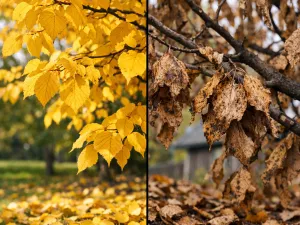
Yellowing often appears first because the green color that normally masks other pigments starts to disappear. The leaf may also become thinner, softer, or slightly papery before it falls. In many plants, this happens first on the oldest leaves near the base or interior of the plant.
- Early stage: the leaf still looks mostly healthy but loses some deep green color.
- Middle stage: yellowing spreads more evenly, often without spotting or collapse.
- Late stage: the leaf dries, loosens from the stem, and eventually detaches.
Why this is useful to the plant
Keeping every old leaf alive would cost energy, water, and nutrients. By retiring older foliage, the plant improves efficiency. This is especially important during seasonal change, after flowering, during periods of slower growth, or when a plant is redirecting energy into new shoots.
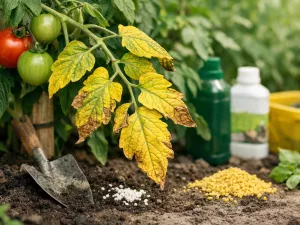
Gardeners often notice this on lower tomato leaves, older peace lily leaves, mature pothos foliage, and deciduous trees in autumn. In each case, a few yellowing leaves can be a normal sign that the plant is managing itself well rather than failing.
Editor’s note: If only one or two of the oldest leaves are turning yellow while the rest of the plant looks vigorous, resist the urge to “fix” something immediately. Many plant problems start when normal aging is mistaken for a crisis and watering or feeding is increased unnecessarily.
Why plants break down chlorophyll at the end of a leaf’s life

Chlorophyll is the green pigment that allows leaves to capture light for photosynthesis. It is essential, but it is also expensive for the plant to maintain. When a leaf is no longer worth supporting, the plant starts breaking chlorophyll down and recovering useful components from it.
That is why yellowing usually comes before leaf drop. Green fades first because chlorophyll is dismantled earlier than some other pigments. Once the green is removed, yellow carotenoids that were already present in the leaf become much easier to see.
Why chlorophyll is removed before the leaf is shed
A leaf contains valuable nitrogen, magnesium, and other materials tied up in the photosynthetic machinery. Chlorophyll itself contains magnesium, and the proteins associated with photosynthesis contain a great deal of nitrogen. Rather than discarding those nutrients, the plant salvages what it can.
This breakdown is not random decay. It is a controlled biochemical process. Enzymes dismantle chlorophyll into less reactive compounds, helping the plant avoid damage from leftover light-absorbing molecules in a leaf that is shutting down.
- Resource recovery: parts of the pigment system are taken apart so useful nutrients can be reused elsewhere.
- Energy savings: the plant stops spending resources on a leaf that contributes less and less.
- Protection: controlled breakdown reduces the risk of unstable pigment byproducts damaging cells.
- Preparation for drop: pigment loss is one step in the larger shutdown process before the leaf separates.
Why yellow is the color most people notice
In many common plants, yellow is the most obvious intermediate color because carotenoids remain visible after chlorophyll fades. Some species may show orange, bronze, or red as other pigments become more prominent, but yellow is especially common in aging foliage.
Indoor gardeners often see this on older philodendron or dracaena leaves. Outdoor growers may notice it on cucumbers, peppers, or deciduous shrubs. The key point is that the yellow color itself is often the result of pigment loss rather than the sudden appearance of a new problem.
How nutrients are reabsorbed before leaves drop

Before a leaf is shed, the plant tries to reclaim as much value from it as possible. This is one of the clearest reasons yellowing happens before falling. The leaf is being emptied, not simply abandoned. Nutrients move out through the plant’s transport system and are redirected to roots, stems, storage organs, or new growth.
The extent of this nutrient recovery depends on the plant species, the season, and growing conditions. A healthy plant with stable moisture and adequate light can often reabsorb nutrients more efficiently than a stressed plant that drops leaves prematurely.
Which nutrients are commonly moved out of older leaves
Some nutrients are mobile in plants, meaning they can be shifted from older tissue to newer tissue when needed. Nitrogen is one of the most important examples, which is why older leaves often yellow first during both normal aging and nutrient shortage. Magnesium and phosphorus can also be redistributed in many plants.
Calcium, by contrast, is much less mobile. That is one reason deficiencies of immobile nutrients often show up in new growth instead of old leaves. Understanding this helps gardeners tell the difference between ordinary turnover and a feeding issue.
| Nutrient | Mobility in plant | What gardeners often see |
|---|---|---|
| Nitrogen | Highly mobile | Older leaves lose green color first as the plant reallocates reserves |
| Magnesium | Mobile | Yellowing can start on older leaves, sometimes between veins |
| Phosphorus | Mobile | Older tissue may be sacrificed first when the plant is short on supply |
| Calcium | Poorly mobile | Problems usually appear in new growth rather than aging lower leaves |
How care affects nutrient recovery
If the root zone is constantly waterlogged, extremely dry, or packed into exhausted soil, the plant may shed leaves less gracefully. Instead of a slow, even yellowing followed by drop, leaves may yellow quickly, brown at the edges, or fall while still partly green. That can mean the plant is under stress rather than simply completing normal turnover.
Good basic care supports cleaner leaf aging:
- Water thoroughly, then allow the potting mix or soil to dry to the level appropriate for the species.
- Use a container with drainage holes for indoor plants so old leaves are not being shed in response to root stress.
- Refresh potting mix when it has broken down and stays wet too long.
- Feed during active growth at a moderate rate rather than applying heavy fertilizer after yellowing has already started.
Practical tip: If a houseplant is dropping one old yellow leaf every few weeks but is also rootbound, check whether the pot dries out in less than 24 hours. If so, moving up by about 2.5 cm (1 in) in pot diameter may reduce stress-related leaf loss without overpotting.
What normal aging looks like compared to early leaf decline

Not every yellow leaf is harmless, and this is where observation matters. Natural aging usually follows a predictable pattern: the oldest leaves fade first, the rest of the plant remains healthy, and the yellowing is relatively gradual. Early decline caused by stress tends to be messier, faster, or more widespread.
Gardeners get the best results by looking at the whole plant rather than reacting to one symptom in isolation. Soil moisture, light exposure, growth rate, and the position of affected leaves all provide useful clues.
Signs that point to normal turnover
A naturally aging leaf usually looks tired but not chaotic. It may yellow evenly from tip to base or across the whole blade, then dry and detach. The plant continues to produce healthy new leaves, and stems remain firm.
- Location: mostly lower, inner, or oldest leaves are affected.
- Pace: yellowing develops over days or weeks, not overnight.
- Pattern: the leaf often turns a fairly even yellow before browning.
- Plant condition: new growth stays normal in size, color, and shape.
Signs that suggest something is wrong
When yellowing appears on many leaves at once, especially young leaves, it is less likely to be simple aging. The same is true if leaves are limp, spotted, scorched, curled, or dropping while still soft and greenish. These patterns often point to watering problems, low light, root damage, temperature stress, or pests.
| Feature | Normal aging | Early decline or stress |
|---|---|---|
| Which leaves change first | Oldest leaves, usually low on the plant | Random leaves or large numbers at once, including newer ones |
| Color change | Gradual, often even yellowing | Blotchy yellowing, browning edges, spotting, or pale new growth |
| Plant vigor | New growth remains healthy | Growth slows, wilts, or becomes distorted |
| Leaf drop | After yellowing is well advanced | Sudden drop, sometimes before full yellowing |
If you are unsure, check the root zone before changing anything else. Soil that smells sour, stays wet for more than 7 days in many indoor setups, or has become bone dry and shrunk from the pot edge can explain yellowing more often than fertilizer does.
Why older leaves yellow first while new growth stays green

Older leaves are often the first to yellow because they are the plant’s most expendable tissues. New leaves are more valuable: they photosynthesize more efficiently, support future growth, and often sit in better light. When resources are limited or when the plant is naturally cycling old foliage out, it makes sense to keep the youngest leaves functioning.
This pattern is especially common in actively growing plants. A vine pushing fresh shoots, a vegetable setting fruit, or a houseplant emerging from winter dormancy may redirect nutrients from older leaves to support newer parts. The result is a healthy top with a few yellowing leaves lower down.
How nutrient mobility explains the pattern
Mobile nutrients can be moved from old leaves into new tissue. Nitrogen is the classic example. If the plant wants to build fresh foliage or support flowering, it can reclaim nitrogen from mature leaves that have already done much of their work.
That is why gardeners so often see a lower leaf turn pale while the crown or tips remain green. It can happen during normal aging, but it can also happen when feeding has been light for too long. The pattern alone does not diagnose the cause, but it does explain why older leaves are usually first in line.
When this pattern is normal and when to look closer
A few yellow lower leaves on an otherwise strong plant are usually not a concern. It becomes more important to investigate when the process speeds up, climbs rapidly upward, or is paired with weak new growth. Then the plant may be short of nutrients, rootbound, under-watered, or receiving too little light to support all its foliage.
- Usually normal: one or two old leaves yellow as new leaves expand.
- Worth monitoring: lower leaves yellow repeatedly during a growth spurt in poor or exhausted potting mix.
- Needs troubleshooting: many leaves yellow from bottom to top and new leaves become smaller or paler.
Practical recommendation: Before adding fertilizer, check light. A plant kept too far from a window may shed older leaves simply because it cannot support them all. Moving it closer by 30 to 60 cm (12 to 24 in), if the species tolerates that light level, can make more difference than feeding alone.
How plant lifecycle stages influence leaf turnover

Leaf yellowing and drop are not only about the age of individual leaves. They are also shaped by the plant’s wider lifecycle. A seedling, a fast-growing summer annual, a flowering houseplant, and a deciduous tree in autumn all manage foliage differently because their priorities are different.
At each stage, the plant decides where energy should go. Sometimes that means holding leaves for as long as possible. At other times, it means shedding older foliage to support flowering, fruiting, dormancy, or survival through seasonal stress.
Growth, flowering, fruiting, and dormancy
During active vegetative growth, plants usually keep producing new leaves while retiring a few old ones in the background. During flowering and fruiting, however, demand for water and nutrients increases. Some plants respond by sacrificing older leaves more quickly, especially if conditions are not ideal.
As dormancy approaches, many species become much more deliberate about leaf shutdown. Deciduous trees are the most obvious example, but many bulbs, tuberous plants, and seasonal ornamentals do the same. Yellowing before dieback is often part of storing energy for the next cycle.
- Seedling stage: the oldest starter leaves may yellow once true leaves take over.
- Active growth: occasional lower leaf loss is common as the canopy expands.
- Flowering or fruiting: resource demand rises, so older leaves may be retired sooner.
- Dormancy preparation: broad yellowing can be natural if the species normally dies back seasonally.
Why seasonal care matters
Gardeners often run into trouble by treating every season the same. A plant entering a slower phase usually needs less water and often less fertilizer. If the soil stays wet while the plant is naturally reducing leaf activity, yellowing can become stress-related instead of orderly and seasonal.
Practical care should match the lifecycle stage:
- Reduce watering frequency when growth slows, but do not let roots sit bone dry unless the species requires a dry rest.
- Pause heavy feeding outside the main growth period.
- Delay hard pruning if the plant is actively reabsorbing nutrients from aging leaves.
- Remove fully dead leaves once they detach easily, rather than pulling on partly active ones.
This is especially relevant for amaryllis, caladium, alocasia, hosta, and many deciduous shrubs. Yellowing in these plants may reflect a seasonal shift rather than a problem to correct.
When leaf yellowing before falling is completely natural
Leaf yellowing before drop is completely natural when it fits the plant’s normal pattern, timing, and overall health. The clearest examples are old lower leaves on an otherwise vigorous plant, seasonal color change on deciduous species, and planned dieback in plants entering dormancy. In these cases, the yellowing is part of good internal housekeeping.
The most useful question is not “Is this leaf yellow?” but “Does the whole plant still look and behave normally?” If growth is appropriate for the season, stems are sound, roots are not under obvious stress, and only older foliage is affected, the answer is often yes.
Situations where yellowing is usually harmless
Many common gardening scenarios involve normal leaf turnover. Recognizing them helps prevent overwatering, overfeeding, and unnecessary pruning.
- One or two old houseplant leaves yellowing: common on pothos, philodendron, peace lily, dracaena, and rubber plant.
- Lower leaves fading after rapid new growth: often seen on tomatoes, peppers, cucumbers, and climbing vines.
- Autumn color change: expected in deciduous trees and shrubs before leaf fall.
- Seasonal dieback: normal in bulbs, tuberous plants, and species with a dormant period.
Simple checks before deciding it is natural
Even when yellowing looks normal, a quick review of growing conditions is worthwhile. This is not because every yellow leaf signals danger, but because stress can mimic natural aging. A brief check can confirm that the plant is simply cycling older foliage out.
- Look at which leaves are affected first. Oldest and lowest is the most reassuring pattern.
- Check soil moisture 2.5 to 5 cm (1 to 2 in) below the surface, or deeper for larger pots and garden plants.
- Assess whether the plant is in a seasonal transition such as autumn cooling or post-bloom slowdown.
- Inspect new growth for healthy color, normal size, and absence of distortion or pests.
If those checks look good, let the process finish naturally. You can remove the leaf once it comes away with a gentle tug or clip it off with clean pruners. Avoid stripping many partly yellow leaves too early, since the plant may still be reclaiming nutrients from them.
In practical gardening terms, natural yellowing before leaf drop is a sign of plant economy. The leaf has done its job, the plant has taken back what it can, and shedding it is simply the final step.