Yellow Leaves During Spring Growth Period

 Here we how spring transition restarts plant metabolism and growth, why roots and shoots wake up at different speeds, and how temperature swings can cause short-term stress and temporary imbalances.
- How spring transition affects plant metabolism and growth restart
- Why roots and shoots adapt at different speeds in early season
- Temporary imbalances during the shift from dormancy to active growth
- How changing temperatures create short-term plant stress
- Signs of normal spring adjustment vs underlying issues
- Best ways to support plants during early growth phase
- When spring yellowing becomes a problem that needs correction
If leaves begin turning yellow just as spring growth starts, the problem is often linked to care rather than a major decline. Before making big changes, check what has shifted recently in watering, light, temperature, or soil conditions. Small stresses can show up quickly during active growth, and early attention can prevent further damage. Identifying the cause soon helps protect tender new leaves and keeps the plant healthier through the season.
How spring transition affects plant metabolism and growth restart

When days lengthen and temperatures begin to rise, plants shift out of their winter conservation mode and restart active growth. That change is not instant. A plant that looked stable through winter may suddenly show pale or yellow leaves in spring because its metabolism is speeding up before all of its support systems are fully aligned. This is especially common in container plants, shrubs, fruit trees, and overwintered houseplants moved back into brighter conditions.
During dormancy or semi-dormancy, plants reduce water use, nutrient uptake, and sugar production. In spring, buds swell, leaf cells expand, and the plant starts moving stored carbohydrates from roots, stems, and older wood into fresh growth. New leaves often appear before the root system is working at full capacity, so temporary color changes can happen even in otherwise healthy plants.
What changes first inside the plant
Light exposure usually triggers the first visible response. Longer daylight encourages hormone activity, especially growth-promoting signals that tell buds to open and shoots to extend. Once leaves begin to unfold, the plant needs more water, nitrogen, magnesium, and iron to build chlorophyll and support photosynthesis.
If any one of those resources lags behind, the newest growth may emerge lighter than expected. That does not always mean deficiency in the soil. It can simply mean the plant is drawing on reserves while waiting for root activity and soil warmth to catch up.
- Stored energy use: Early spring growth often relies on carbohydrates saved from the previous season.
- Rising water demand: Expanding leaves lose more moisture, so sap flow must increase.
- Higher nutrient demand: Chlorophyll production depends on available nitrogen, iron, and magnesium.
- Faster cell division: Tender new tissues develop quickly and are more sensitive to stress.
Why yellowing appears during restart
Yellow leaves in spring are often linked to timing rather than damage. A plant may be producing new top growth while roots remain in cool, slow soil. The result is a short-lived mismatch: leaves are asking for more than the roots can deliver. In many cases, the color improves once temperatures stabilize and the soil becomes more biologically active.
Plants that were heavily pruned, recently repotted, or exposed to a sudden jump in sun are more likely to show this response. Their internal balance has to be rebuilt at the same time growth is restarting.
Editor’s note: Early spring yellowing is often most noticeable on fast growers because they push new tissue before conditions are fully favorable. Resist the urge to correct every pale leaf with fertilizer right away; timing matters as much as nutrients.
Why roots and shoots adapt at different speeds in early season

One of the main reasons leaves turn yellow during spring growth is that the above-ground and below-ground parts of the plant do not wake up at the same rate. Shoots respond quickly to light and air temperature, while roots depend much more on soil temperature, oxygen levels, and moisture balance. This uneven restart is a normal feature of the season.
A warm week can push buds open and encourage new leaves, but if the root zone is still cold or waterlogged, nutrient uptake stays limited. The plant then has to support tender new growth with incomplete supply lines. That is why yellowing often appears after a burst of spring growth rather than before it.
Air warms faster than soil
Gardeners often notice mild afternoons and assume the whole plant is ready to grow. In reality, the root zone may still be several degrees cooler. Soil at 8°C (46°F) behaves very differently from soil at 15°C (59°F). Root membranes, beneficial microbes, and fine feeder roots all work more slowly in cold ground, especially in heavy clay or shaded beds.
Containers can create the opposite problem. Pots warm quickly in sun but also cool rapidly at night, so roots experience repeated swings that slow steady adaptation. This stop-start pattern can lead to pale foliage, weak leaf expansion, or slight tip yellowing.
Different jobs, different pace
Shoots are designed to capture light. Roots are designed to secure water and dissolved nutrients. In spring, the plant often prioritizes visible growth first because new leaves are needed to resume full photosynthesis. But without enough active roots, that new growth may be under-supplied for a short period.
- Shoots respond to day length: Bud break is often triggered by light and warming air.
- Roots respond to soil conditions: Cool, compacted, or wet soil delays uptake.
- Fine roots are fragile: They may have been reduced over winter or damaged by freeze-thaw cycles.
- Transport takes time: Even when uptake improves, nutrients are not redistributed instantly through the plant.
This difference in pace explains why a plant can look active on top while still behaving cautiously below. It also explains why overwatering in early spring often makes yellowing worse. If roots are already slow, saturated soil reduces oxygen and further limits their ability to recover.
Temporary imbalances during the shift from dormancy to active growth

The move from dormancy to active growth is rarely smooth. Plants go through a brief period where water use, nutrient demand, hormone signaling, and photosynthesis are all changing at once. Yellow leaves can be part of that adjustment, especially on older foliage that the plant no longer considers worth maintaining.
Some species naturally shed a few winter leaves as fresh growth begins. Others reallocate nutrients from older leaves into new shoots, causing those older leaves to fade, yellow, and drop. This can look alarming, but if the new growth is otherwise healthy and the pattern is limited, it may be a normal seasonal handoff.
Common short-term imbalances
These imbalances usually happen because one part of the plant’s system speeds up before another. The issue is not always a true deficiency in the soil. Sometimes nutrients are present but temporarily unavailable due to low soil temperature, pH conditions, or reduced root activity.
- Water imbalance: Leaves begin transpiring faster than roots can replace moisture.
- Nutrient lag: Nitrogen or iron may be present but not moving efficiently into new tissue.
- Light mismatch: A plant moved from winter shade to stronger spring sun may produce pale, stressed foliage.
- Reserve depletion: Stored energy can run low if spring growth starts early and weather turns cool again.
Which leaves yellow first matters
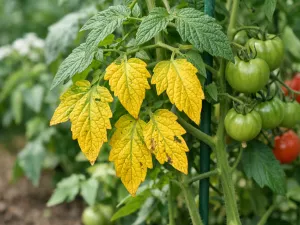
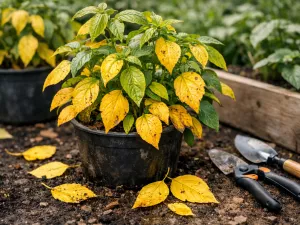
The location of yellowing gives useful clues. Older lower leaves often yellow first when the plant is reallocating nutrients upward. New leaves yellowing first can point more toward iron uptake problems, cold roots, or root stress. Uniform paling across the whole plant may suggest a broader issue such as overwatering, exhausted potting mix, or poor drainage.
Look at the pattern over 7 to 14 days rather than reacting to a single leaf. A plant in normal spring transition usually keeps pushing new growth even if a few older leaves fade. A plant with a deeper problem tends to stall, soften, or continue yellowing across multiple growth points.
Practical recommendation: Take two photos of the plant one week apart from the same angle. Spring adjustment often looks worse in the moment than it really is, and comparison photos make it easier to see whether fresh growth is improving or declining.
How changing temperatures create short-term plant stress

Spring weather is rarely steady. Warm days followed by cold nights can create repeated stress cycles that affect leaf color, water movement, and nutrient availability. Plants may begin growing during a mild spell, then struggle when temperatures drop again. This is one of the most common reasons for temporary yellowing in early season.
Even when frost does not occur, fluctuating temperatures can slow enzyme activity, reduce root uptake, and interrupt chlorophyll formation. Tender leaves are especially vulnerable because they have thin cell walls and high water content. A plant that looked vigorous after three warm days may appear pale after one cold night at 4°C (39°F).
How temperature swings affect plant function
Temperature changes influence both the plant and the soil around it. Air temperature affects transpiration and leaf expansion, while soil temperature affects root pressure and nutrient absorption. When these two move out of sync, stress symptoms appear quickly.
| Condition | Typical plant response | What you may see |
|---|---|---|
| Warm days, cold soil | Shoots grow faster than roots can supply | Pale new leaves, slight wilting by afternoon |
| Cold nights after bud break | Leaf tissue slows or is lightly damaged | Yellow patches, bronzing, stalled new growth |
| Sudden heat spike above 27°C (81°F) | Rapid moisture loss from tender foliage | Leaf edge yellowing or scorch on exposed sides |
| Repeated wet and cold periods | Reduced oxygen around roots | General yellowing, soft leaves, slow recovery |
Plants most likely to react
Newly planted shrubs, citrus, tomatoes, herbs, roses, hydrangeas, and many houseplants moved outdoors are especially sensitive. Their tissues are either actively expanding or not yet acclimated to outdoor fluctuations. Plants in raised beds may warm earlier, while those in low spots or dense clay stay colder longer.
If yellowing follows a weather swing and then stabilizes as conditions even out, the cause is often temporary stress rather than disease. However, repeated swings can weaken plants enough to expose underlying drainage, root, or feeding problems that were already present.
Signs of normal spring adjustment vs underlying issues

Not every yellow leaf is a warning sign. The key is to judge the pattern, speed, and overall condition of the plant. Normal spring adjustment tends to be limited, temporary, and followed by steady improvement. Deeper problems usually spread, intensify, or interfere with new growth.
It helps to assess the whole plant rather than focusing on one symptom. Leaf color, stem firmness, soil condition, and growth rate together tell a more accurate story than yellowing alone.
What usually points to a normal seasonal response
If the plant is actively producing new shoots and the yellowing is mostly on older leaves, there is a good chance it is simply adjusting. Mild color variation in fresh growth can also be normal as chlorophyll develops fully over several days.
- Limited spread: Only a small number of leaves are affected.
- Older leaves first: Lower or interior foliage yellows while tips continue growing.
- Firm stems: Growth remains upright, not limp or blackened.
- Gradual improvement: New leaves deepen in color as weather settles.
What suggests a real problem
When yellowing is widespread, fast-moving, or paired with poor vigor, closer correction is needed. Overwatering is a frequent cause in spring because gardeners see new growth and increase watering before roots are fully active. Nutrient lockout, compacted soil, root damage, and late cold injury can produce similar symptoms.
- Newest leaves stay yellow: Often linked to iron uptake issues, root stress, or unsuitable pH.
- Leaves yellow and drop rapidly: Often related to water stress or root disturbance.
- Soft stems or sour soil smell: Suggests excess moisture and poor aeration.
- No new growth after 2 to 3 weeks: Indicates the plant is not moving through the adjustment phase.
- Spots, lesions, or distorted leaves: More likely to involve disease, pests, or chemical injury.
A simple hands-on check helps. Push a finger 5 cm (2 in) into the soil. If it is still wet and cold several days after watering, the roots may be under stress. If the top looks dry but the root ball inside a pot is still soaked, drainage may be the real issue rather than lack of water.
Editor’s note: Yellowing with strong, steady new growth usually buys you time to observe. Yellowing with stalled growth, limp stems, or a wet root zone deserves action much sooner.
Best ways to support plants during early growth phase

Plants recovering from winter do best with steady, moderate care rather than aggressive intervention. The goal is to support roots, avoid extra stress, and let the plant complete its seasonal transition. Most spring yellowing improves faster when watering, light, and feeding are adjusted gently instead of all at once.
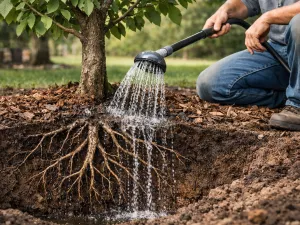
Good support starts with the root zone. Soil that is evenly moist, airy, and warming gradually gives the plant the best chance to match top growth with healthy uptake. Sudden heavy feeding, hard pruning, or constant watering can interrupt that process.
Watering and soil management
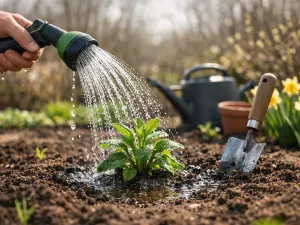
Water according to actual soil moisture, not just the calendar. In early spring, many plants need less water than their visible growth suggests because evaporation is still moderate and roots are not yet fully active. For containers, water until a little drains through, then wait until the top 2.5 to 5 cm (1 to 2 in) feels drier before watering again, depending on the plant.
- Check drainage: Empty saucers and make sure pots are not sitting in water.
- Loosen surface crust: Gently break compacted topsoil without disturbing roots.
- Mulch lightly: A layer of 2.5 to 5 cm (1 to 2 in) helps stabilize moisture and temperature outdoors.
- Avoid cold soaking: Do not keep heavy soils constantly wet during cool spells.
Light, feeding, and pruning choices
If a plant has been indoors or in winter shade, increase sun exposure gradually. Tender spring leaves can yellow or scorch if moved too quickly into strong midday light. Feed only after active growth is clearly underway and roots are functioning. A diluted balanced fertilizer at half strength is usually safer than a full early dose, especially for potted plants.
- Wait for visible new growth to expand, not just buds to swell.
- Use a mild feed rather than a high-nitrogen push.
- Prune only dead or clearly damaged material first.
- Delay major shaping until the plant shows stable growth and color.
For houseplants returning to brighter conditions, rotate them every few days so one side does not take all the stress. For garden plants, protect tender growth during late cold snaps with breathable covers rather than plastic touching the leaves.
When spring yellowing becomes a problem that needs correction
Seasonal yellowing stops being harmless when it continues beyond the brief adjustment window or begins affecting the plant’s overall vigor. If the color decline lasts more than 2 to 3 weeks after stable spring weather arrives, or if the plant keeps losing leaves without replacing them, it is time to investigate and correct the cause.
The first step is to identify whether the issue is environmental, nutritional, or root-related. Correcting the wrong problem can make the plant worse. For example, adding fertilizer to a waterlogged root zone often increases stress instead of solving pale leaves.
Situations that call for action
These signs suggest the plant is not simply transitioning but struggling to function normally.
- Yellowing spreads upward: More of the canopy is affected each week.
- New growth is small or distorted: The plant lacks enough healthy support to develop properly.
- Soil stays wet for too long: Especially longer than 4 to 5 days in a pot after watering, depending on size and weather.
- Interveinal chlorosis persists: Green veins with yellow tissue between them may point to iron, magnesium, or pH-related uptake problems.
- Roots look brown or smell sour: This indicates root decline rather than a simple feeding issue.
How to correct the likely cause
Start with the basics: drainage, moisture, and root health. If the soil is compacted, improve aeration around the root zone. If the plant is in a pot with exhausted mix, repot into a fresh, free-draining medium once active growth is established. If pH is likely interfering with nutrient uptake, use a plant-appropriate amendment rather than repeated general fertilizer.
When feeding is needed, choose the nutrient that matches the symptom pattern. Pale older leaves may respond to balanced nutrition, while yellow new leaves with green veins may need iron support if pH is too high. Always water before applying fertilizer to avoid stressing tender roots.
If late frost damage is involved, remove only tissue that is clearly dead after new growth resumes. Pruning too early can expose still-living tissue and reduce the plant’s ability to recover. For severe cases, especially shrubs or fruiting plants, inspect the crown and root flare for rot, mechanical injury, or girdling roots.
Practical recommendation: If you suspect a nutrient issue, test the soil or potting mix before making repeated applications. One targeted correction is better than several guesswork treatments that push weak roots harder.
Spring yellowing is common, but persistent decline is not something to ignore. Once the weather has settled and the plant should be growing steadily, ongoing chlorosis, poor vigor, and wet roots usually mean there is a correctable problem below the surface or in the care routine. A careful diagnosis saves more plants than a fast reaction.