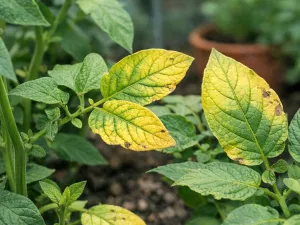
How Overwatering Causes Yellow Leaves

 This article explains how frequent watering disrupts soil drying, weakens roots, and causes early signs that can look like nutrient problems before yellowing starts. It also covers plant-specific watering, safe fixes for overwatering, and building a reliable routine.
- Why frequent watering disrupts natural soil drying cycles
- How roots weaken when constantly exposed to excess moisture
- Early behavioral signs plants show before yellowing appears
- Why overwatering often mimics nutrient deficiencies
- How watering schedules should change based on plant type
- Simple ways to fix overwatering without harming roots
- How to build a reliable watering routine for long-term plant health
Yellowing foliage often begins when a plant receives more water than its roots can handle, reducing oxygen in the soil and putting the whole plant under stress. Because the symptoms can resemble dryness, many gardeners respond by watering again, which only worsens the issue. Understanding how excess moisture affects roots and leaves makes it easier to recognize the warning signs early, correct your care routine, and prevent long-term damage.
Why frequent watering disrupts natural soil drying cycles

Healthy roots do not want constant saturation. In most pots and garden soils, moisture should move through a cycle: the root zone becomes evenly moist after watering, plants absorb what they need, air gradually returns to the pore spaces, and then the next watering resets the balance. When that drying phase never happens, the soil stays heavy and oxygen-poor, which creates the conditions that lead to yellow leaves.
Many growers assume that more frequent watering means more consistent care, but roots rely on both water and air. Soil particles hold moisture in tiny spaces, and those same spaces also need to hold oxygen between waterings. If they remain filled with water day after day, the root environment shifts from supportive to stressful.
Why the dry-down period matters
The interval between waterings is not a sign of neglect. It is part of how soil functions. As excess moisture drains and evaporates, fresh air is pulled back into the growing medium. That air exchange supports root respiration, microbial balance, and nutrient uptake.
- Air returns to the root zone: Drying creates space for oxygen, which roots need to stay active.
- Root growth improves: Slightly drier conditions encourage roots to spread in search of moisture rather than staying shallow and weak.
- Microbes stay balanced: Constant wetness favors harmful organisms that thrive in soggy conditions.
- Salt buildup is easier to manage: Proper watering and drainage help move excess fertilizer salts through the soil instead of trapping them around roots.
What happens when the cycle is interrupted
Frequent small drinks are often worse than a thorough watering followed by a pause. Light daily watering may keep only the top few centimeters moist while the lower root zone remains stale and compacted. In containers, this can produce a misleading surface: the top looks dry, but the lower half of the pot is still wet.
That mismatch is one reason overwatering is so common indoors. Decorative cachepots, low light, cool rooms, and dense potting mixes all slow drying. A plant sitting in a room at 18°C (64°F) with limited airflow may use far less water than the same plant in bright conditions at 24°C (75°F).
Editor’s note: If you are unsure whether a plant is thirsty, check deeper than the surface. A finger test at 5 cm (2 in) or a wooden skewer inserted near the root ball usually tells you more than the look of the top layer.
Natural drying cycles are also shaped by the container itself. Plastic pots hold moisture longer than unglazed terracotta, and a large pot around a small root ball stays wet much longer than a snug container. When watering frequency ignores those factors, the soil remains wet longer than the plant can tolerate, and yellowing often follows.
How roots weaken when constantly exposed to excess moisture

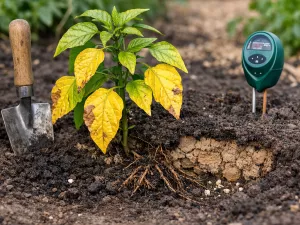
Yellow leaves are often a symptom of trouble below the soil line. Roots are living tissue, and they need oxygen to convert stored energy into growth. When they sit in saturated soil for too long, they cannot respire properly. The first result is reduced function; the next can be tissue breakdown.
Weak roots absorb less water and fewer nutrients, even though the pot is wet. This is why an overwatered plant can look limp and tired at the same time. The leaves are surrounded by moisture in the soil, but the damaged roots cannot move that moisture upward effectively.
From healthy roots to stressed roots
Strong roots are usually pale, firm, and slightly springy. Stressed roots become soft, darker, and sometimes have a sour smell. Once the root surface is damaged, fungi and bacteria can move in more easily, especially in stagnant, poorly aerated mixes.
- Oxygen shortage: Saturated soil blocks the air spaces roots depend on.
- Reduced uptake: Water, nitrogen, magnesium, and iron become harder for the plant to absorb when roots are impaired.
- Cell damage: Prolonged moisture weakens root tissue and makes rot more likely.
- Slower recovery: A plant with damaged roots cannot quickly bounce back, even after watering is corrected.
Why root stress leads to leaf yellowing
Leaves turn yellow because the plant starts rationing resources. Older leaves may lose color first as the plant redirects what little energy and nutrients it can still move. In more severe cases, newer leaves also pale because the root system is no longer supporting normal growth.
The process can be gradual or fast depending on temperature, soil structure, and plant type. A peace lily in dense mix may decline within a week of repeated saturation, while a woody shrub outdoors may take longer to show the same stress. Either way, the root system is usually affected before the foliage makes the problem obvious.
Once roots are weakened, adding fertilizer rarely helps. In fact, feeding a stressed plant can worsen the problem by increasing salt concentration around already damaged roots. Restoring oxygen and improving drainage are more useful first steps than trying to push new growth.
Early behavioral signs plants show before yellowing appears

Plants usually give warnings before leaves actually turn yellow. These early signs are easy to miss because they can look subtle or inconsistent from day to day. Paying attention to posture, growth speed, and soil behavior often reveals the issue sooner than leaf color does.
One of the most common clues is a plant that seems droopy even though the soil feels wet. Many people respond by watering again, which deepens the problem. The droop is not always thirst; it can be the first sign that roots are struggling in low-oxygen conditions.
Changes in leaf and stem behavior
Before chlorosis becomes visible, the plant may start behaving differently. Leaves can lose firmness, stems may feel less upright, and new growth may emerge smaller than normal. These changes happen because root performance is declining before tissue color changes enough to be obvious.
- Persistent drooping in wet soil: The plant does not perk up even though moisture is present.
- Slowed growth: New leaves open more slowly or stay undersized.
- Leaf curling or soft texture: Foliage may feel thinner or less resilient than usual.
- Edema or blistering: Some plants develop corky spots or water-soaked bumps when uptake and transpiration are out of balance.
- Leaf drop without crisp edges: Leaves may fall while still soft rather than drying brown first.
Soil and pot clues worth noticing
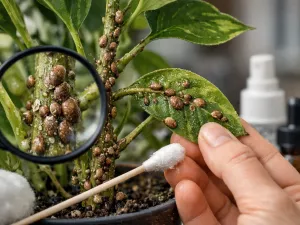
The container can tell you as much as the plant. If the pot stays heavy for several days, the lower root zone is probably not drying enough. Fungus gnats are another common warning, since they thrive in consistently damp organic matter. Green algae or moss on the soil surface can also indicate that the top layer rarely dries.
Another clue is a stale smell from the drainage holes or the potting mix. Healthy soil smells earthy. Sour or swampy odors suggest poor aeration and possible root decline.
Practical tip: Lift the pot right after a full watering and again when it is ready for the next one. Learning that weight difference is one of the fastest ways to judge moisture accurately without guessing.
Spotting these signs early matters because correction is easier before roots begin to rot. Once yellowing spreads widely, recovery usually takes longer and may require repotting or pruning damaged growth.
Why overwatering often mimics nutrient deficiencies

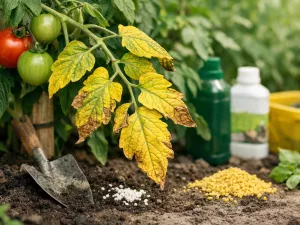
Overwatering can look almost identical to a feeding problem. Leaves may turn pale, veins may remain slightly greener than the tissue around them, and growth may stall. It is easy to assume the plant needs fertilizer, but the real issue is often that wet, stressed roots cannot absorb nutrients properly.
This confusion happens because nutrient uptake is an active process. Even when fertilizer is present in the soil, roots must be healthy enough to take it in. If they are oxygen-starved or beginning to rot, the plant behaves as though nutrients are missing, even when the potting mix contains plenty.
Why symptoms overlap
Nitrogen, magnesium, and iron deficiencies all affect leaf color, but so does root stress. The pattern may not be textbook-perfect, especially in houseplants growing under variable indoor conditions. A waterlogged root ball can trigger general chlorosis, weak stems, and poor new growth that closely resemble underfeeding.
There is also a second layer to the problem: excess water can wash nutrients out of very fast-draining mixes, while in heavy soils it can lock roots into conditions where uptake slows sharply. So overwatering can both reduce access to nutrients and, in some cases, physically move them out of the root zone.
| Symptom | Possible nutrient issue | How overwatering creates a similar look |
|---|---|---|
| Older leaves turning pale yellow | Nitrogen shortage | Damaged roots cannot absorb available nitrogen efficiently |
| Interveinal yellowing on mature leaves | Magnesium deficiency | Constantly wet soil reduces root function and slows uptake |
| New growth pale or weak | Iron-related chlorosis | Waterlogged roots struggle to support active new growth |
| Overall stunting | General underfeeding | Low oxygen in the root zone limits nutrient transport and energy use |
How to tell the difference before adding fertilizer
Look at the full picture rather than the leaf color alone. If the soil stays wet for too long, the pot feels heavy, and the plant has recently been watered often, root stress is more likely than a true deficiency. On the other hand, if the mix dries at a normal rate and the plant has not been fed for months during active growth, nutrition may deserve a closer look.
Adding fertilizer to a saturated pot can increase stress instead of solving it. Salts accumulate around compromised roots, which may burn already weakened tissue. It is usually smarter to correct watering and drainage first, then reassess color and growth after the plant stabilizes.
How watering schedules should change based on plant type

No fixed calendar works for every plant. Water needs depend on leaf thickness, root structure, growth speed, pot size, light levels, and season. A fern in active growth uses water very differently from a snake plant storing moisture in its leaves. Using the same routine for both often leads to overwatering one of them.
Plant type is the starting point, but environment still matters. A tropical plant in bright summer light may need water twice as often as the same plant in winter near a cool window. Rather than watering every three or four days automatically, adjust the schedule to how quickly that specific plant actually dries.
General watering patterns by plant group
These are not rigid rules, but they offer a reliable framework. The goal is to match watering frequency to how the plant naturally grows and stores water.
- Succulents and cacti: Let the mix dry almost completely before watering again. In many homes, that may mean every 10 to 21 days, depending on light and pot size.
- Tropical foliage plants: Water when the top 2.5 to 5 cm (1 to 2 in) of the mix has dried, not while it is still evenly wet below the surface.
- Ferns and moisture lovers: Keep the soil lightly and consistently moist, but not waterlogged. They dislike full drought but still need air around the roots.
- Woody herbs like rosemary: Allow a clear dry-down period. Heavy, wet soil quickly causes decline.
- Seedlings and cuttings: They need more even moisture than mature plants, but they also need excellent drainage and airflow.
Factors that change the timetable
The same species can need very different care under different conditions. A pothos in a 12 cm (5 in) terracotta pot may dry much faster than one in a 20 cm (8 in) plastic pot. Light, airflow, and temperature all change how quickly water leaves the soil.
- More light: Faster growth and quicker drying.
- Cooler rooms: Slower evaporation and lower water use.
- Larger pots: Longer drying times, especially if the root ball is small.
- Dense mixes: More moisture retention and greater overwatering risk.
- Active growth season: Spring and summer usually increase demand compared with winter dormancy or slow growth.
Editor’s note: If a plant keeps staying wet too long, changing the potting mix is often more effective than simply watering less. A coarse, airy mix can correct recurring problems that careful scheduling alone cannot fix.
When watering is tailored to plant type and conditions, roots stay stronger and leaf color remains more stable. That is why observation consistently works better than a one-size-fits-all calendar.
Simple ways to fix overwatering without harming roots

Correcting excess moisture is less about dramatic rescue measures and more about reducing stress. The safest approach is to restore air to the root zone while avoiding further damage. Tugging a plant out of its pot too soon or exposing roots unnecessarily can make recovery harder, especially if the plant is already weak.
Start by stopping all routine watering until the soil has partially dried. Then assess whether the problem is mild, moderate, or severe. A mildly overwatered plant may recover with better drying conditions alone, while a badly affected one may need repotting and root cleanup.
What to do first
The immediate goal is to help the pot dry at a steady pace without shocking the plant. Better light, warmth, and airflow can all help, as long as they stay within the plant’s normal comfort range.
- Move the plant out of any standing water or decorative outer pot that traps drainage.
- Pause watering until the root zone begins to dry to the depth appropriate for that plant.
- Increase airflow with open space around the pot or a gentle fan nearby, not directly blasting the foliage.
- Make sure the plant is receiving suitable light so it can resume normal water use.
- Remove any yellow leaves that come away easily, but do not strip the plant aggressively.
When repotting is the better option
If the soil smells sour, the pot stays wet for a week or more, or roots are visibly black and mushy, repotting may be necessary. Use a clean container with drainage holes and a fresh mix suited to the plant. Trim only clearly dead roots with clean scissors; healthy roots should be left intact.
After repotting, water lightly enough to settle the mix around the roots, then allow the plant to recover before watering again. Avoid fertilizer for at least one to two weeks, or longer if the plant is still stressed.
- Use fresh mix: Old, compacted soil often holds too much water and too little air.
- Choose the right pot size: Going only 2.5 to 5 cm (1 to 2 in) wider than the root ball helps prevent excess wet soil around the roots.
- Skip heavy pruning: The plant still needs foliage to produce energy while roots recover.
- Hold off on feeding: Let root function return before adding nutrients.
Recovery takes patience. Existing yellow leaves usually do not turn green again, so improvement is measured by firmer growth, steadier posture, and healthy new leaves rather than cosmetic reversal of old damage.
How to build a reliable watering routine for long-term plant health
The best long-term solution is not watering less at random. It is creating a repeatable method that responds to the plant, the season, and the soil. A reliable routine prevents both soggy roots and unnecessary drought, which is why it is one of the most important habits for keeping foliage green and growth steady.
Instead of relying on memory alone, combine observation with a few simple checks. This makes watering more accurate and helps you notice changes before they become visible as yellow leaves.
A practical routine that works
Consistency comes from checking the same indicators each time. Once you know how quickly a plant dries in your conditions, watering becomes much easier and far less guesswork-driven.
- Check moisture below the surface rather than judging by the top layer alone.
- Lift the pot to judge weight if it is small enough to handle safely.
- Water thoroughly until excess drains out, then empty any saucer after several minutes.
- Record how many days it took to reach the correct dryness level.
- Recheck the schedule when seasons, light levels, or room temperature change.
Habits that prevent repeat problems
Routine is not only about timing. It also includes the setup around the plant. Good drainage, suitable soil texture, and realistic feeding all support a healthier moisture balance over time.
- Match pot to root size: Oversized pots stay wet too long.
- Use drainage holes: Without them, even careful growers struggle to manage moisture reliably.
- Refresh compacted mix: Repot when soil breaks down and loses structure.
- Adjust in winter: Shorter days and cooler temperatures usually mean less frequent watering.
- Feed only during active growth: Fertilizer works best when roots are healthy and the plant is actually using nutrients.
A simple notebook or phone reminder can help, but avoid turning it into a rigid calendar. The note should remind you to check the plant, not force you to water it. Over time, you will recognize the rhythm of each plant: how the leaves feel, how heavy the pot is, and how quickly the mix dries under changing conditions.
That kind of observation is what prevents yellowing in the first place. When roots get the right balance of moisture and air, the plant can absorb nutrients properly, support new growth, and maintain stronger, greener foliage for the long term.