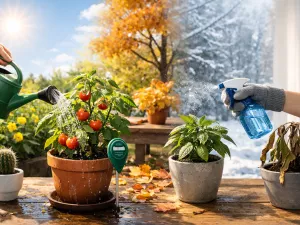
Seasonal Yellow Leaves or Serious Problem

 This article explains how seasonal cycles affect leaf color in different plants and which ones yellow naturally as part of normal development. It also shows how timing helps tell normal seasonal change from stress, what warning signs suggest a deeper problem, how to check plant condition, and when to act or leave it alone.
- How seasonal cycles affect leaf color across different plants
- Key differences between natural seasonal yellowing and plant stress
- Which plants change leaf color as part of normal development
- How timing helps identify normal vs abnormal yellowing
- Warning signs that suggest a deeper problem beyond seasonality
- How to assess plant condition during seasonal transitions
- When to take action and when to leave plants undisturbed
Yellow leaves do not always mean a plant is in trouble. In many cases, older leaves fade naturally as seasons change or growth shifts. What matters is the pattern and timing. If only a few lower leaves turn yellow, the change may be normal. But if yellowing spreads quickly or affects much of the plant, it can signal stress from watering problems, poor light, crowded roots, or missing nutrients.
How seasonal cycles affect leaf color across different plants

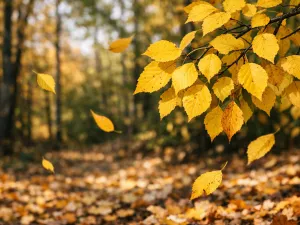
Yellow leaves are not always a sign that something has gone wrong. In many plants, changing color is part of a normal seasonal rhythm tied to light levels, temperature, and growth rate. As days shorten or weather shifts, plants often move nutrients out of older leaves before shedding them, and that process can reveal yellow pigments that were hidden by green chlorophyll during active growth.
The pattern varies a great deal by plant type. Deciduous trees and shrubs often show the most obvious autumn change, while herbaceous perennials may yellow as they die back for winter dormancy. Houseplants can also react to seasonal changes indoors, though the signals are usually softer and more gradual because temperatures stay more stable.
Why leaves lose green color
Green color comes mainly from chlorophyll, which plants maintain when they are actively photosynthesizing. When growth slows, chlorophyll breaks down first. If the plant is preparing for dormancy or shedding old foliage, yellow carotenoid pigments become more visible. This is why a leaf can turn pale green, then yellow, before drying and dropping.
That process is especially common when nights become cooler, often below 10°C (50°F), and daylight hours decline. In outdoor beds, the change may happen quickly after the first few cold spells. Indoors, the trigger is more often reduced light near windows during late autumn and winter.
How plant groups respond differently
Not all plants follow the same script. Knowing the general category your plant belongs to helps you interpret what you are seeing more accurately.
- Deciduous trees and shrubs: Maples, birches, hydrangeas, and many roses naturally yellow and drop older leaves as part of autumn shutdown.
- Herbaceous perennials: Hostas, peonies, daylilies, and many flowering border plants yellow from the base as top growth dies back after flowering or before winter.
- Bulbs and tubers: Daffodils, tulips, caladiums, and some begonias need foliage to age and yellow naturally so energy can return to the bulb or tuber.
- Evergreens: Pines, hollies, camellias, and many conifers keep foliage longer, but still shed older inner leaves or needles on a seasonal cycle.
- Tropical houseplants: Plants such as pothos, monstera, and ficus do not have a true cold-season dormancy in the same way, but they may slow down and sacrifice a few older leaves when winter light drops.
A useful rule in the garden is to look at the whole plant before reacting to one yellow leaf. Seasonal change usually appears in an orderly way, while trouble tends to look uneven, sudden, or messy.
Regional climate also matters. In mild coastal areas, yellowing may be delayed by several weeks compared with colder inland gardens. In hot climates, some plants enter a summer rest instead of a winter one, and yellow leaves can appear during intense heat or drought even when the calendar says they should be growing.
Key differences between natural seasonal yellowing and plant stress

It is easy to confuse a normal seasonal fade with a care problem because both can produce yellow foliage. The difference is usually found in the pattern. Natural aging tends to be gradual, predictable, and concentrated on older leaves. Stress-related yellowing is more likely to be patchy, fast-moving, or paired with other symptoms such as wilting, spotting, or stem decline.
Instead of asking only whether leaves are yellow, ask which leaves, how fast, and what else is happening. Those three questions often tell you more than color alone.
Patterns that usually indicate a normal cycle
When yellowing is seasonal, the plant often continues to look structurally sound. Stems remain firm, roots are not sour-smelling, and the leaf drop follows a logical order from oldest to newest growth.
- Lower or inner leaves yellow first.
- The change happens over days or weeks, not overnight.
- New growth is absent because the plant is slowing down naturally.
- Leaf color change matches the time of year for that species.
- The rest of the plant remains free of major spotting, collapse, or rot.
Patterns that point to stress or damage
Stress yellowing often comes with signs that the plant is struggling to function. Overwatering, underwatering, nutrient imbalance, root crowding, poor drainage, low light, or pest activity can all interfere with chlorophyll production and trigger yellow leaves.
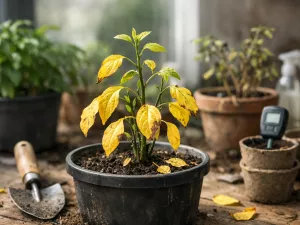
- Overwatering: Leaves turn soft yellow, soil stays wet for several days, and roots may smell stale or rotten.
- Underwatering: Leaves yellow and crisp, potting mix pulls away from the pot edge, and stems may droop.
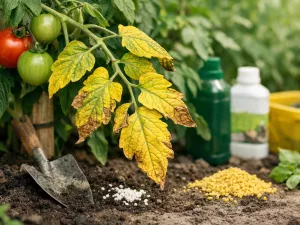
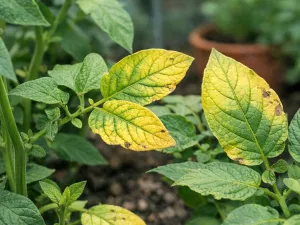
- Nutrient deficiency: Yellowing follows vein patterns or affects newer leaves first, especially with iron deficiency.
- Low light: Growth becomes stretched, leaves are smaller, and yellowing is paired with weak stems.
- Pests: Fine speckling, sticky residue, webbing, or distorted new growth appears along with discoloration.
A practical difference is reversibility. Seasonal yellowing is not something to “fix”; the plant is completing a cycle. Stress yellowing often continues unless the underlying issue is corrected, whether that means adjusting watering, moving the plant to brighter light, or repotting into a freer-draining mix.
For container plants, lift the pot after watering and again two days later. If it still feels heavy and the top 2.5 cm (1 in) remains wet, drainage may be too slow. If it feels extremely light within a day and leaves are limp, the plant may be drying out too fast for its current conditions.
Which plants change leaf color as part of normal development

Some yellow leaves have little to do with season and everything to do with age, flowering, or the plant’s growth habit. Many species routinely discard older foliage as they produce new stems, roots, or storage organs. In these cases, a few yellow leaves are simply part of development rather than a warning sign.
This is especially common in fast-growing houseplants, clump-forming perennials, and plants that grow from bulbs, rhizomes, or tubers. If the plant is otherwise healthy and still producing normal growth in the right season, a limited amount of yellowing can be expected.
Plants that naturally shed older leaves
Some plants regularly retire their oldest foliage from the bottom up. This can happen year-round, though it may become more noticeable during slower seasons.
- Pothos and philodendron: Older leaves near the base may yellow as vines extend and the plant redirects energy to new tips.
- Monstera: Mature plants often lose an occasional lower leaf while producing larger upper leaves.
- Ficus: A few leaves may yellow after a move, during lower winter light, or as older foliage is replaced.
- Palms: Individual fronds naturally age, yellow, then brown as new fronds emerge from the center.
- Snake plant: Less frequent, but an old leaf can fade as the clump expands.
Plants that yellow after flowering or before dormancy
Another common pattern appears after bloom or at the end of a growing cycle. The foliage is not failing; it is finishing its work.
- Daffodils and tulips: Leaves should be left until they yellow fully so bulbs can recharge for next year.
- Daylilies and hostas: Foliage often declines naturally late in the season, especially after flowering or frost.
- Caladiums and tuberous begonias: Yellowing often signals entry into dormancy as temperatures cool below about 15°C (59°F).
- Onion and garlic: Yellowing tops are part of bulb maturity and harvest timing.
Do not cut back bulb foliage while it is still green just to tidy the bed. Those leaves are feeding next year’s flowers, and removing them too early often means weaker bloom.
When normal development becomes questionable
Even plants that naturally shed leaves can still develop real problems. The key is scale. One or two aging leaves are normal; half the plant turning yellow at once is not. If yellowing spreads rapidly, reaches fresh growth, or is paired with blackened stems, soggy compost, or stalled growth, look beyond normal aging.
For indoor growers, fertilizing should match active growth. Feeding a slow-growing plant heavily in winter can lead to salt buildup, root stress, and leaf yellowing. A balanced liquid feed at half strength during active growth, such as every 2 to 4 weeks, is usually enough for many foliage plants, while dormant or resting plants often need none at all.
How timing helps identify normal vs abnormal yellowing

The calendar is one of the best diagnostic tools available. Plants respond not just to care, but to season, day length, and temperature trends. Yellowing that appears at the expected point in the plant’s yearly cycle is more likely to be normal. Yellowing that appears out of season deserves a closer look.
Timing should be judged against both the species and the local climate. A hydrangea in a cool northern garden may begin to decline weeks before one in a warmer region. A houseplant next to a bright south-facing window may keep growing through winter, while the same plant in a dim room may slow sharply by late autumn.
Seasonal timing clues
Look at when the change started and whether it matches recent weather or indoor conditions. A sudden drop in light after clocks change, a cold snap, or the end of flowering can all explain yellowing that would otherwise seem worrying.
| Situation | Timing that often suggests normal change | Timing that may suggest a problem |
|---|---|---|
| Deciduous shrubs | Late autumn after cooler nights and shorter days | Midsummer yellowing during active growth without heat stress explanation |
| Bulb foliage | Several weeks after flowering as leaves fade gradually | Yellowing before flowering finishes or while leaves are still small |
| Houseplants | Late autumn to winter when light drops and growth slows | Rapid yellowing in spring or summer despite stable care and good light |
| Perennials | End of season or after first frost | Early-season yellowing before the plant has filled out |
How fast the change happens matters
Natural yellowing usually unfolds at a measured pace. You may notice a leaf fading over one to three weeks, then dropping cleanly. Abnormal yellowing often accelerates after a stress event such as missed watering, waterlogged soil, root disturbance, or a sudden move from shade to strong sun.
If several leaves yellow within 48 hours after repotting, for example, transplant shock may be involved. If a container plant begins yellowing right after being moved outdoors into colder nights below 7°C (45°F), temperature stress is a more likely explanation than seasonal aging.
Keep a simple plant log for tricky specimens. A note of watering dates, fertilizer use, room temperature, and when yellowing began can reveal patterns that memory often misses.
Timing also helps prevent unnecessary intervention. Gardeners sometimes water more, feed more, or prune harder when a plant is simply winding down for the year. Matching your response to the plant’s season avoids turning a normal transition into avoidable stress.
Warning signs that suggest a deeper problem beyond seasonality

Seasonal yellowing tends to be tidy and limited. When the plant shows additional symptoms, the issue may go beyond normal leaf turnover. These warning signs matter because they suggest the plant is not just aging leaves, but struggling with roots, pests, disease, or unsuitable growing conditions.
One of the most important clues is whether the newest growth is affected. Seasonal decline usually starts with old leaves. If fresh leaves are pale, distorted, or dropping, the plant may be dealing with an active problem that needs attention.
Visual symptoms that deserve investigation
Color alone rarely tells the full story. The combination of yellowing with texture changes, spotting, or stem issues is much more revealing.
- Black or mushy stems: Often linked to rot from excess moisture or cold damage.
- Brown-edged yellow leaves: Can point to drought stress, salt buildup, or inconsistent watering.
- Interveinal yellowing: Yellow tissue with green veins may indicate nutrient issues such as iron or magnesium deficiency.
- Spots or halos: Fungal or bacterial leaf problems are more likely when yellowing is patchy and marked.
- Wilting in wet soil: A classic sign that roots may be damaged and unable to take up water.
- Sticky leaves or webbing: Suggests sap-feeding pests such as scale, aphids, or spider mites.
Root and soil clues
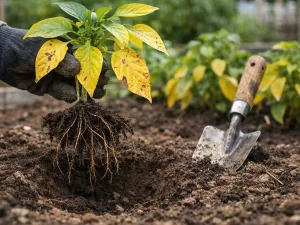
What is happening below the surface often explains what appears above it. If a plant is in a pot, slide it out carefully and inspect the root ball. Healthy roots are usually firm and pale to tan. Rotten roots are dark, soft, and may smell sour. Severely root-bound plants may have dense circling roots with very little visible compost left.
In garden beds, poor drainage can create similar problems. After rain or irrigation, water should not sit around the root zone for long. If soil remains saturated for more than 24 hours in heavy ground, roots may be starved of oxygen. Amending structure over time, raising the planting area by 10 to 20 cm (4 to 8 in), or redirecting runoff can help more than simply watering less.
Environmental red flags
Sometimes the plant is healthy enough, but the setting has changed. Watch for these common triggers:
- Cold drafts from doors, vents, or single-pane windows.
- Heat from radiators or heaters drying the root zone too quickly.
- Sudden full sun after a period in shade.
- Compacted soil that limits root spread and drainage.
- Repeated heavy feeding that leaves fertilizer salts in the potting mix.
If yellowing is accompanied by poor vigor, investigate sooner rather than later. A plant in true seasonal decline can wait. A plant with failing roots, pests, or stem damage usually improves only after the cause is addressed.
How to assess plant condition during seasonal transitions

When plants move from active growth into rest, or from indoor shelter back outdoors, a quick assessment helps you decide whether yellow leaves are expected or a sign to adjust care. The goal is not to react to every fading leaf, but to check the plant as a whole: foliage, stems, roots, moisture, and environment.
A calm inspection is more useful than immediate pruning or feeding. During transitions, many plants need less intervention, not more. A simple routine can prevent both neglect and overcorrection.
A practical inspection routine
Use the same order each time so you do not miss obvious clues. This works for both houseplants and garden specimens.
- Check the pattern: Note whether yellowing is on old leaves, lower leaves, inner growth, or new tips.
- Feel the soil: Test moisture 2.5 to 5 cm (1 to 2 in) below the surface rather than judging by the top alone.
- Examine stems: Look for firmness, discoloration, shriveling, or mushy sections near the base.
- Inspect leaf undersides: Search for mites, scale, aphids, eggs, or sticky residue.
- Review light: Compare current light levels with those during the plant’s healthiest period.
- Consider recent changes: Repotting, moving location, heating season, cold nights, or fertilizer use can all explain symptoms.
What healthy seasonal slowdown looks like
A plant entering a normal rest period may drink less, stop producing new leaves, and allow older foliage to fade. Stems remain sound, roots stay healthy, and the plant does not collapse. In containers, the compost should dry more slowly than in summer, which means watering intervals often need to be extended.
For many indoor plants, that means checking moisture every few days but watering only when needed. If you previously watered every 5 days in bright summer conditions, the same plant may need water only every 10 to 14 days in winter, depending on room temperature, pot size, and light.
Adjustments that support the plant without forcing growth
Seasonal transitions are usually a time for moderation. The aim is to maintain stable conditions rather than push fresh growth the plant cannot support.
- Reduce watering frequency if evaporation and growth have slowed.
- Pause or reduce fertilizer unless the plant is clearly in active growth.
- Remove fully yellow leaves, but leave partly green foliage that is still feeding bulbs or roots.
- Improve light exposure by moving pots closer to a bright window, while avoiding cold glass contact.
- Increase air circulation around crowded plants to reduce fungal issues.
Outdoor plants benefit from similar restraint. Avoid heavy pruning just before dormancy unless you are removing diseased or broken material. A light mulch layer of 5 to 7.5 cm (2 to 3 in) can help regulate soil temperature, but keep it a few centimeters away from stems and crowns to prevent rot.
When to take action and when to leave plants undisturbed
The hardest part of dealing with yellow leaves is knowing when to step in. Many plant problems are made worse by well-meant overcare. Watering more, feeding more, or repotting at the wrong time can stress a plant that was only following its natural cycle. On the other hand, ignoring clear signs of root or pest trouble can allow damage to spread.
The best approach is to match your response to the evidence. If the plant is healthy overall and the yellowing fits the season or growth stage, disturbance should be minimal. If symptoms point to stress, act on the cause rather than treating yellow leaves as the problem itself.
When it is best to leave the plant alone
Sometimes the right decision is patience. Let the plant complete its transition if these points apply:
- Yellowing is limited to older leaves and happens gradually.
- The timing matches autumn, post-flowering decline, or expected dormancy.
- Stems are firm and roots appear healthy.
- There are no pests, spots, or signs of rot.
- The soil moisture level is appropriate for the species.
In these cases, remove only leaves that are fully yellow or dry, and continue basic care at a reduced pace. For bulbs and tubers, wait until foliage has yellowed naturally before cutting it back. For deciduous shrubs, leaf drop is part of the process and does not need correction.
When action is needed
Intervention is justified when yellowing is a symptom of ongoing stress. The response should be targeted and proportionate.
- Adjust watering: Correct soil moisture first, since both drought and waterlogging quickly affect leaf color.
- Improve drainage: Repot into a freer mix or use a container with drainage holes if roots are staying wet too long.
- Change light conditions: Move plants gradually into brighter light if growth is weak and pale.
- Treat pests: Isolate affected houseplants and use an appropriate treatment before the infestation spreads.
- Check feeding: Flush pots with clean water if fertilizer salts are suspected, or feed lightly during active growth if deficiency is likely.
If you are unsure whether to repot a yellowing plant in winter, wait unless the roots are clearly rotting or the compost has collapsed. Repotting during low-light months often adds stress when a simpler watering correction would have solved the issue.
Pruning should also be selective. Remove dead, diseased, or collapsed leaves promptly, but avoid stripping a plant of all fading foliage at once if some of it is still functioning. A partly yellow leaf may still be moving nutrients back into the plant.
In the end, yellow leaves are useful signals. Some announce a normal seasonal pause; others point to care issues that can be corrected. The difference lies in pattern, timing, and the plant’s overall condition. Read those clues well, and you will know when to act and when to let nature finish the job.