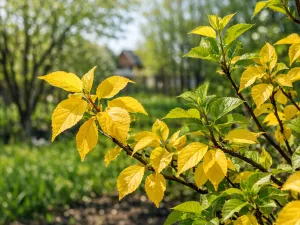
Heat Stress and Sun Damage on Leaves

 This article explains how high heat disrupts plant metabolism and growth, affects the whole plant beyond sunlit leaves, and causes internal moisture loss. It also covers early stress signs, heat damage in shade, cooling steps, and long-term heat-wave protection.
- How high temperatures disrupt plant metabolism and growth
- Why heat stress affects the whole plant, not just exposed leaves
- How plants lose moisture internally during prolonged heat
- Early warning signs of heat stress before visible damage
- Why heat stress can occur even without direct sunlight
- How to cool plants and stabilize growing conditions
- Long-term strategies to protect plants from extreme heat waves
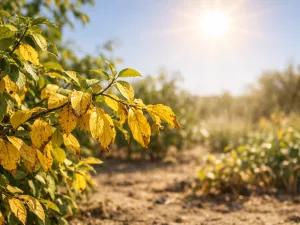
When leaves begin to look faded, dry, or scorched, the problem is often too much heat and strong sunlight rather than disease. High temperatures and direct exposure can damage plant tissue quickly, especially during long, bright afternoons. By learning these signs early, gardeners can respond before the stress becomes severe. Simple checks can reveal whether a plant needs more shade, more consistent watering, or just a little time to recover.
How high temperatures disrupt plant metabolism and growth

Heat does far more than make leaves feel hot to the touch. When temperatures rise beyond what a plant is adapted to handle, basic internal processes begin to slow down, misfire, or consume more energy than they produce. A plant that normally grows steadily in warm weather can stall quickly once daytime heat remains high and nights stay warm as well.
Most garden plants perform best within a fairly narrow temperature range. Once leaf and root temperatures climb too far, enzymes involved in photosynthesis and respiration become less efficient. The plant then spends more energy trying to stay alive than it can gain from making sugars, which is why growth often pauses during a heat wave even if the plant is still green.
Photosynthesis drops while respiration rises
Plants rely on photosynthesis to build carbohydrates, but that process becomes less efficient in excessive heat. At the same time, respiration speeds up, meaning the plant burns through stored energy faster. This imbalance leaves less fuel for new leaves, flowers, fruit, and root development.
That is why heat-stressed plants may look unchanged for a few days, then suddenly stop pushing new growth. Tomatoes may hold flowers without setting fruit, lettuce may become bitter, and ornamentals may produce smaller leaves or shorter stems.
- Reduced sugar production: Less photosynthesis means less energy for growth and repair.
- Higher energy demand: Warm nights above 24°C (75°F) often prevent plants from recovering after hot days.
- Poor flowering and fruit set: Pollen can lose viability in sustained heat, especially above 32°C (90°F) for many crops.
- Slower root expansion: Roots under heat stress absorb water and nutrients less effectively.
Cell damage and nutrient imbalance
Extreme heat can destabilize cell membranes and interfere with nutrient movement. Calcium, potassium, and magnesium may still be present in the soil, but the plant cannot always move them where they are needed. This can lead to distorted new growth, weak stems, and leaf edge burn that resembles a fertilizer problem.
Gardeners sometimes respond by feeding more, but heavy fertilizer during heat stress often makes things worse. Extra salts in the root zone increase osmotic stress, making it harder for roots to take up water.
Editor’s note: If a plant has stopped growing during a hot spell, resist the urge to “boost” it with strong feed. Recovery usually comes faster from cooler roots, steadier moisture, and temporary shade than from added fertilizer.
Heat also affects texture and flavor. Herbs can become coarse, leafy greens can bolt, and fruiting plants may produce misshapen fruit. The problem is not only the air temperature; dark containers, paving, walls, and reflected light can push leaf temperatures far above the reported forecast.
Why heat stress affects the whole plant, not just exposed leaves

Scorched leaves are the most visible symptom, but heat stress is a whole-plant problem. A plant functions as one connected system, with roots, stems, leaves, and growing points constantly exchanging water, sugars, and hormones. When one part overheats or dries out, the rest of the plant feels the strain.
This is why a specimen with only a few damaged leaves may still wilt, stop flowering, or shed buds. The issue is not limited to the tissue facing the sun. Once the internal water balance shifts and metabolism slows, every active part of the plant is affected.
The root zone is often under more stress than the foliage
Roots are protected from direct sunlight, but they can still overheat badly. In containers, potting mix can reach damaging temperatures much faster than garden soil. Black nursery pots, metal planters, and shallow raised beds heat quickly, especially when exposed to afternoon sun.
Warm roots absorb water less efficiently and may suffer fine-root dieback. Since those fine roots do most of the water uptake, the plant can look thirsty even when the soil is not completely dry.
- Container plants: Root temperatures can spike after only a few hours of intense sun.
- New transplants: Limited root systems cannot buffer sudden heat well.
- Plants in compacted soil: Restricted roots struggle to access deeper, cooler moisture.
Hormonal and structural responses spread the stress
When water loss rises, plants produce signals that tell stomata to close, leaves to droop, and growth to slow. These responses help survival, but they also reduce photosynthesis and delay development. Flower buds may abort, fruit may drop early, and tender new leaves can emerge smaller than normal.
Even shaded leaves may suffer because the plant is reallocating resources away from expansion and toward survival. In severe heat, stems can soften, cambium tissue can be injured, and bark on young trees may crack or sunscald on the southwest side in the northern hemisphere.
The practical takeaway is simple: do not judge severity by leaf scorch alone. Check the root zone, recent growth, buds, and overall vigor. A plant can be under serious heat pressure before the top growth shows dramatic damage.
How plants lose moisture internally during prolonged heat

Plants are always moving water upward from the roots through the stems and out through tiny pores called stomata. In moderate weather, this flow supports cooling, nutrient transport, and cell pressure. During prolonged heat, that internal system can become unbalanced. Water leaves the foliage faster than the roots can replace it, especially when the air is dry or the root zone is hot.
This moisture loss is not just about the soil drying out. A plant can experience internal dehydration even when the surface still feels slightly damp. The key issue is whether the roots can supply water quickly enough to match demand.
Transpiration speeds up in hot, dry, windy conditions
High temperatures increase evaporation from leaf surfaces. Wind strips away the humid boundary layer around the leaf, and low humidity pulls even more moisture outward. Together, these conditions can push transpiration beyond the plant’s ability to keep tissues hydrated.
Once that happens, cells lose turgor pressure. Leaves soften, curl, or fold to reduce exposed surface area. If the stress continues, the plant starts sacrificing older leaves and outer growth to protect the crown, stem, or developing fruit.
Why internal drought can happen before soil looks dry
Water movement depends on root health, soil structure, and temperature. In heavy soil, roots may be shallow and oxygen-poor. In peat-heavy potting mixes, the top may appear moist while the interior has become unevenly dry. In very hot containers, roots may temporarily stop functioning well even though water is present.
These are common reasons a gardener waters, yet the plant still wilts by afternoon. The problem is not always lack of water in absolute terms; it is often poor delivery inside the plant.
| Condition | What happens inside the plant | Typical visible effect |
|---|---|---|
| Hot air above 30°C (86°F) | Transpiration demand rises sharply | Midday drooping, faster drying |
| Low humidity below 35% | Leaves lose water faster to the air | Curling edges, crisp margins |
| Root zone above 29°C (84°F) | Water uptake becomes less efficient | Wilting despite damp soil |
| Strong wind | Boundary layer is removed from leaves | Rapid flagging and scorch |
| Salt buildup from overfeeding | Roots struggle to pull in water | Leaf burn that worsens in heat |
For this reason, deep, even watering is usually more effective than frequent light splashing. Moisture must reach the active root zone, not just wet the top 2 cm (1 in) of soil. Mulch also helps by slowing evaporation and keeping root temperatures steadier.
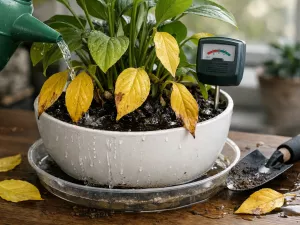
Practical tip: If a plant wilts daily but perks up at sunset, inspect the container or root zone before watering again. Repeated shallow watering can train roots to stay near the hottest surface instead of growing deeper into cooler soil.
Early warning signs of heat stress before visible damage

By the time leaves bleach, crisp, or turn brown, the plant has already been under strain for a while. Catching the earlier signals gives you a much better chance of preventing lasting damage. These early signs are often subtle and easy to mistake for temporary thirst or normal afternoon softness.
Look for changes in behavior, not just color. Plants under heat pressure often alter posture, growth rate, and flowering patterns before any obvious scorch appears.
Changes in leaf posture and texture
One of the first clues is a shift in how leaves are held. They may angle downward, fold inward, or look dull instead of glossy. Thin-leaved plants often feel softer by midday, while thicker leaves may become slightly puckered or cupped.
If the plant recovers fully by early evening, that suggests temporary stress. If it remains limp into the night or looks worse each day, the problem is progressing beyond normal heat avoidance.
- Leaf cupping: A common response that reduces surface area exposed to heat.
- Loss of sheen: Waxy or glossy leaves may look flat when water balance is off.
- Subtle gray-green cast: Some plants take on a dull tone before bleaching.
- Tender tips hanging: New growth often flags before mature leaves do.
Growth and flowering begin to stall
Heat stress often shows up first in reduced performance. New leaves emerge smaller, flower buds pause, and fruiting plants may drop blossoms. This is especially common in peppers, beans, cucumbers, and tomatoes during stretches above 35°C (95°F), particularly when nights stay above 24°C (75°F).
Herbs may produce shorter internodes and stronger, harsher flavor. Leafy greens can become upright and tense before they bolt. These shifts are useful warning signs even when the foliage still looks mostly healthy.
What to check before symptoms become severe
A quick daily inspection during hot weather can reveal patterns before damage becomes permanent. Focus on the hottest part of the day and again after sunset to see whether the plant is recovering.
- Feel the soil 5 cm to 8 cm (2 in to 3 in) below the surface, not just the top crust.
- Check whether the pot itself is hot to the touch, especially on the sun-facing side.
- Compare morning posture with mid-afternoon posture.
- Look at buds, shoot tips, and the newest leaves for slowdown or distortion.
- Notice whether mulch has thinned and exposed the root zone.
These early checks help separate heat stress from pests, nutrient issues, or disease. A plant that looks tired only in the afternoon but rebounds overnight usually needs environmental adjustment. A plant that keeps declining despite cooler evenings may have root damage or another underlying problem.
Why heat stress can occur even without direct sunlight

Many gardeners assume that if a plant is in shade, it is safe from heat stress. Shade helps, but it does not eliminate the problem. Plants can overheat in bright indirect light, enclosed spaces, and humid conditions where air movement is poor. Heat load comes from the whole environment, not only from direct rays hitting the leaf surface.
This is especially true in greenhouses, sunrooms, conservatories, patios surrounded by walls, and balconies with reflected heat. In these spaces, the air itself can become stressful even when the leaves are not in full sun.
Hot air, trapped humidity, and poor ventilation
When air stagnates, leaves cannot cool themselves efficiently. Transpiration depends partly on moving air carrying heat and moisture away from the leaf surface. In a closed greenhouse or crowded indoor growing area, the plant may sit in warm, humid air that reduces cooling while still increasing metabolic stress.
High humidity is not always protective. It can slow water loss somewhat, but if temperatures remain high and roots are warm, the plant still struggles. Some species then close stomata, limiting cooling and photosynthesis at the same time.
Reflected and radiant heat matter
Walls, paving, gravel, glass, and metal surfaces absorb heat during the day and radiate it back toward plants. A shaded plant beside a brick wall may experience more stress than one receiving gentle morning sun in an open bed. Containers on concrete can heat from below, and indoor plants near windows may be exposed to greenhouse-like buildup.
- Patios and courtyards: Heat bounces between hard surfaces and lingers into the evening.
- Greenhouses: Air temperatures can exceed outdoor readings by 5°C to 10°C (9°F to 18°F) without active ventilation.
- Indoor windowsills: Glass plus still air can create hot pockets around foliage.
- Shade cloth areas: Lower light does not always mean lower ambient temperature.
Plants can also suffer after a sudden move from cool indoor conditions to a bright but not fully sunny outdoor spot. The leaves may avoid sunburn yet still lose water faster than the roots can support. That is why hardening off matters even for positions described as part shade.
Editor’s note: If a shaded plant keeps wilting, look around it rather than above it. Warm walls, paving, and poor airflow often explain stress that direct sun alone does not.
How to cool plants and stabilize growing conditions

Once temperatures spike, the goal is not to force growth but to reduce stress and help the plant maintain water balance. Fast, sensible intervention can prevent leaf scorch, flower drop, and root injury. The best approach combines cooling the root zone, reducing peak exposure, and keeping moisture more even.
What works depends on whether the plant is in the ground, in a container, indoors, or under cover. The common principle is to lower extremes rather than making abrupt changes.
Immediate cooling measures
Start with the simplest actions that reduce heat load without shocking the plant. Temporary shade during the hottest hours is often more effective than extra feeding or repeated misting. Water should be applied to the soil thoroughly, ideally early in the morning, so roots have access before midday demand rises.
- Move containers: Shift pots out of late afternoon sun or away from heat-reflecting walls.
- Use shade cloth: A 30% to 50% shade level can protect many ornamentals and vegetables during extreme afternoons.
- Water deeply: Saturate the root zone rather than giving frequent light sprinkles.
- Add mulch: A layer 5 cm to 8 cm (2 in to 3 in) deep helps keep soil cooler and slows evaporation.
- Improve airflow: Space pots apart and open vents or doors in enclosed growing spaces.
What not to do in peak heat
Some common reactions can worsen stress. Pruning heavily removes leaf area the plant uses for energy and cooling. Strong fertilizer increases salt concentration around roots. Watering the foliage in full sun can waste water and, in humid settings, encourage disease without cooling the root zone enough to matter.
If a plant is severely wilted, do not place it from intense heat straight into a cold, dark room. Sudden environmental swings can compound stress. Aim for moderated conditions instead: bright shade, cooler roots, and steady moisture.
Practical stabilization by growing situation
Different setups need different adjustments. Matching the response to the growing environment improves recovery and prevents repeated stress cycles.
| Growing situation | Best short-term action | Main benefit |
|---|---|---|
| Containers on a patio | Cluster pots together and shade the containers themselves | Reduces root-zone overheating |
| Vegetable beds | Water at dawn and add organic mulch | Improves deeper moisture retention |
| Greenhouse plants | Vent early and use shading before midday | Prevents heat buildup before it peaks |
| Indoor plants near windows | Pull back 30 cm to 60 cm (12 in to 24 in) from hot glass | Lowers radiant heat exposure |
Recovery is usually gradual. Damaged leaf tissue rarely turns green again, but new growth should improve once conditions stabilize. Watch for stronger morning posture, resumed bud development, and less afternoon collapse over the next several days.
Long-term strategies to protect plants from extreme heat waves
Short-term rescue helps, but repeated heat waves call for a more durable plan. Gardens that handle extreme weather well usually have one thing in common: they are designed to buffer temperature swings rather than react to them at the last minute. Soil structure, plant placement, watering systems, and variety choice all influence how well plants cope.
Long-term protection is about resilience. A plant with deeper roots, cooler soil, and the right exposure will withstand heat much better than one growing in a stressed site, even if both receive the same amount of water.
Build a cooler root environment
Healthy soil acts like a reservoir. Adding compost improves water-holding capacity in sandy ground and improves structure in heavier soils, allowing roots to explore more deeply. Mulch should be maintained before summer arrives, not only after the first scorch appears.
In containers, choose larger pots whenever possible. A pot 35 cm to 45 cm wide (14 in to 18 in) holds moisture and stays cooler far better than a small nursery pot. Light-colored or double-potted containers also reduce overheating.
Match plants to exposure and climate reality
Many traditional planting plans no longer suit hotter summers. Afternoon sun that was once manageable may now be too intense for certain hydrangeas, lettuces, ferns, or young shrubs. Repositioning sensitive plants to morning sun and afternoon shade can make a major difference without reducing total light too much.
It also helps to choose varieties known for heat tolerance. This is especially important for vegetables and annuals. Heat-tolerant cultivars often continue setting flowers and maintaining leaf quality at temperatures that stop standard varieties.
- Prioritize morning sun: Gentler light supports growth without the harshest afternoon stress.
- Plant windbreaks carefully: Reduce hot drying wind while keeping enough airflow for cooling.
- Use drip irrigation: Delivers water steadily to roots with less evaporation loss.
- Group by water needs: Plants with similar demand are easier to irrigate correctly during heat events.
- Acclimate new plants: Harden off over 7 to 10 days before exposing them to summer conditions.
Prepare before the forecast turns severe
The best time to protect plants from a heat wave is before it arrives. Install shade supports in advance, check irrigation lines, top up mulch, and water deeply the day before extreme heat if the soil is already drying. Young trees may need trunk protection, and recently planted shrubs often benefit from temporary shade for their first summer.
Keep records of which areas of the garden overheat first. South- and west-facing walls, raised beds near paving, and upper balconies often become trouble spots. Once you know where stress builds fastest, you can redesign those areas with tougher species, larger containers, or seasonal shading.
Practical recommendation: Treat each heat wave as a site test. The plants that repeatedly struggle are telling you something about root space, exposure, or watering rhythm, and those clues are more useful than any single rescue treatment.
With a resilient setup, plants are less likely to swing from lush growth to collapse whenever temperatures surge. The aim is not to eliminate all stress, which is impossible in extreme weather, but to keep it below the threshold where lasting damage begins.